Biko (Filipino Coconut Sticky Rice Cake with Latik)
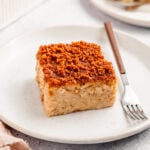
Biko is the Filipino coconut sticky rice cake: glutinous rice cooked down in coconut milk and dark brown sugar, pressed into a tray and scattered with crisp golden latik. One pan, three core ingredients, no oven.
- Prep Time: 10 minutes
- Cool: 20 minutes
- Cook Time: 1 hour
- Total Time: 1 hour 30 minutes
- Yield: 12 squares 1x
- Category: Dessert
- Method: Stovetop
- Cuisine: Filipino
Ingredients
Units
Scale
Sticky Rice
- 2 cups (400 g) glutinous rice
- 1 1/2 cups (375 ml) water
- 1 can (400 ml) full fat coconut milk
Caramel Base (Kalamay)
- 1 can (400 ml) full fat coconut milk
- 1 1/4 cups (250 g) dark brown sugar, or muscovado
- 1/2 teaspoon fine salt
- 1 teaspoon vanilla extract, optional
Latik Topping
- 1 can (400 ml) coconut cream
Instructions
- Rinse the glutinous rice in cold water two or three times, until the water runs mostly clear. Drain well. Do not soak it.
- Make the latik first. Pour the coconut cream into a small saucepan over medium low heat and simmer, stirring every few minutes, for 25 to 35 minutes, until it splits into clear oil and pale solids and the solids toast to golden curds.
- The moment the curds are deep gold, strain them out and spread them on paper towel. Keep the strained coconut oil for greasing the dish.
- Put the rinsed rice, water and the first can of coconut milk in a heavy based pot. Bring to a boil, then turn the heat to low, cover, and cook for 15 to 18 minutes, until the liquid is absorbed and the rice is just tender. Take it off the heat and leave it covered.
- In a wide, heavy pan or wok, combine the second can of coconut milk, the brown sugar and the salt. Bring to a simmer over medium heat, stirring until the sugar dissolves.
- Keep it simmering for 12 to 15 minutes, stirring often, until it thickens to a loose caramel that coats the back of a spoon. Scoop out about 1/3 cup and set it aside for the top.
- Add the cooked rice to the remaining caramel. Stir and fold constantly with a sturdy wooden spoon for 10 to 15 minutes, until it pulls together into a thick, glossy mass that comes away from the sides of the pan.
- Stir through the vanilla if using. Grease a 23 by 33 cm (9 by 13 inch) dish with the reserved coconut oil and press the mixture in firmly with an oiled spoon or oiled hands, levelling the top.
- Spread the reserved 1/3 cup of caramel over the surface, then scatter the latik generously across the whole thing.
- Cool for at least 20 minutes before cutting into 12 squares or diamonds with an oiled knife. Serve warm or at room temperature.
Notes
- Glutinous rice only. Jasmine, basmati and ordinary short grain do not have the waxy starch that makes biko hold together. Despite the name it contains no gluten.
- Sugar changes everything. Muscovado gives the deep mahogany colour seen in Filipino bakeries. Ordinary dark brown sugar gives a lighter caramel colour and a cleaner flavour. Both are correct.
- Latik shortcut: if the coconut cream refuses to split it was probably stabilised. Skim the thick solids off two chilled cans of full fat coconut milk and toast those instead.
- Do not rush the final stir. The 10 to 15 minutes of folding rice through caramel is what takes it from sweet rice pudding to biko.
- Banana leaf is traditional as a liner and adds a light grassy scent, but greased paper works perfectly well.
- Keeps covered at room temperature for 2 days and in the fridge for 5. It firms up cold, so microwave a square for 15 to 20 seconds to bring back the chew. Store the latik separately or it softens.
- Freeze cut squares wrapped individually for up to 2 months. Reheat from frozen in the microwave for about a minute.
Nutrition
- Serving Size: 1 square
Find it online: https://zhangcatherine.com/biko/