Warabimochi (Japanese Jiggly Mochi) with Kinako and Kuromitsu
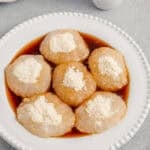
Warabimochi is the wobbly, translucent Japanese mochi made from starch rather than glutinous rice, dusted in nutty kinako and drenched in dark kuromitsu syrup. It takes one saucepan, ten minutes of stirring and no special equipment.
- Prep Time: 5 minutes
- Setting Time: 1 to 2 hours
- Cook Time: 10 minutes
- Total Time: 2 hours 15 minutes
- Yield: 4 servings 1x
- Category: Dessert
- Method: Stovetop
- Cuisine: Japanese
Ingredients
Units
Scale
Warabimochi
- 1/2 cup (70 g) warabimochiko (bracken starch), or sweet potato or tapioca starch
- 1/4 cup (50 g) granulated sugar
- 1 3/4 cups (420 ml) water
Kinako coating
- 1/4 cup (30 g) kinako (roasted soybean flour)
- 2 tablespoons granulated sugar
- Pinch of salt
Kuromitsu
- 1/2 cup (100 g) kurozato (Japanese black sugar) or dark brown sugar
- 1/4 cup (60 ml) water
Instructions
- Stir the kinako, sugar and salt together in a small bowl until evenly combined, and set it aside. Prepare a bowl of ice water.
- Make the kuromitsu: combine the black sugar and water in a small saucepan and simmer over low heat for 3 to 4 minutes until lightly syrupy, then cool. Skip this step if you already have kuromitsu made.
- In a saucepan off the heat, whisk the starch, sugar and water together until completely smooth with no lumps at all. Lumps now become grainy mochi later, so whisk properly before any heat goes near it.
- Cook over medium heat, stirring constantly with a spatula. The mixture will look milky white at first, then start to turn translucent and become very thick and stretchy, about 5 to 8 minutes.
- Once it is fully translucent with no white streaks left, keep stirring for 1 more minute to cook it through.
- Working quickly, either spread the mochi into a lightly oiled dish, or drop spoonfuls straight into the ice water to set their shape.
- Let it cool until set but still soft and jiggly. Do not refrigerate it for long, since extended cold turns warabimochi cloudy and firm.
- Cut or pull it into bite size pieces with a wet knife or wet scissors. Dust generously with the kinako mixture and drizzle with kuromitsu just before serving.
Notes
- Starch choice: true warabimochiko (bracken starch) gives the most authentic melt in the mouth texture, but it is expensive and hard to find. Sweet potato or tapioca starch is the common substitute and works very well.
- Serve fresh: warabimochi is at its best the day it is made, at room temperature or only lightly chilled. Refrigeration firms and clouds the starch, so make it close to serving time.
- Matcha version: whisk 1 teaspoon of matcha into the dry starch before adding the water for a green, matcha forward wobble.
- Kuromitsu: the syrup keeps for weeks in the fridge, so it is worth making a double batch while you have the pan out.
- Troubleshooting: grainy texture means lumps were not fully dissolved before heating, too soft means it was undercooked so keep going until fully translucent, and too firm or cloudy means it was refrigerated too long.
Nutrition
- Serving Size: 1 plate
Find it online: https://zhangcatherine.com/warabimochi/