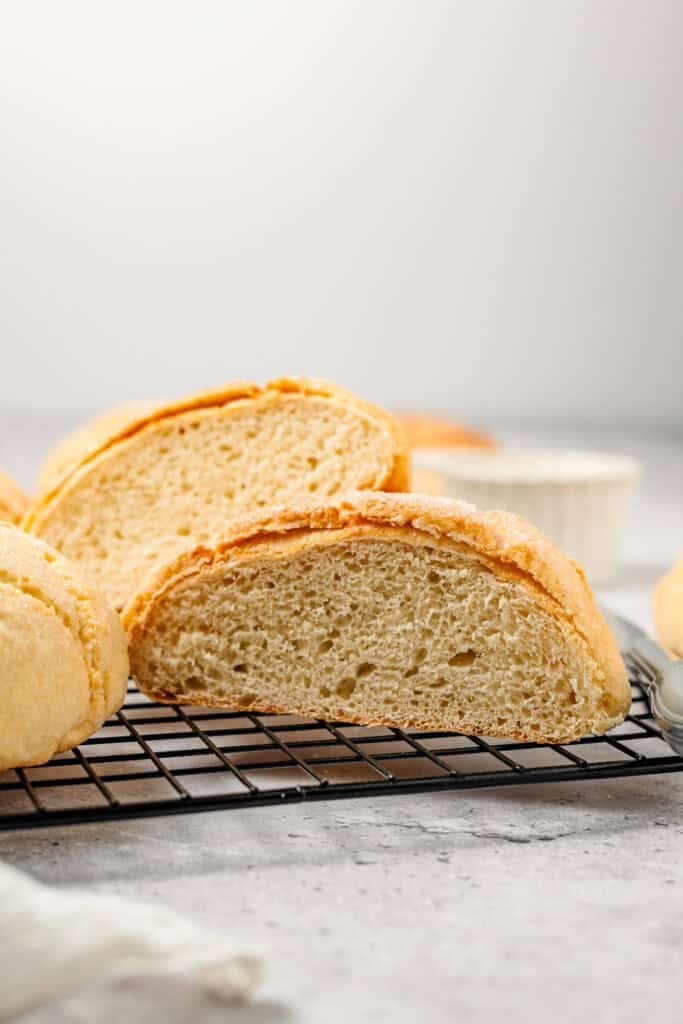
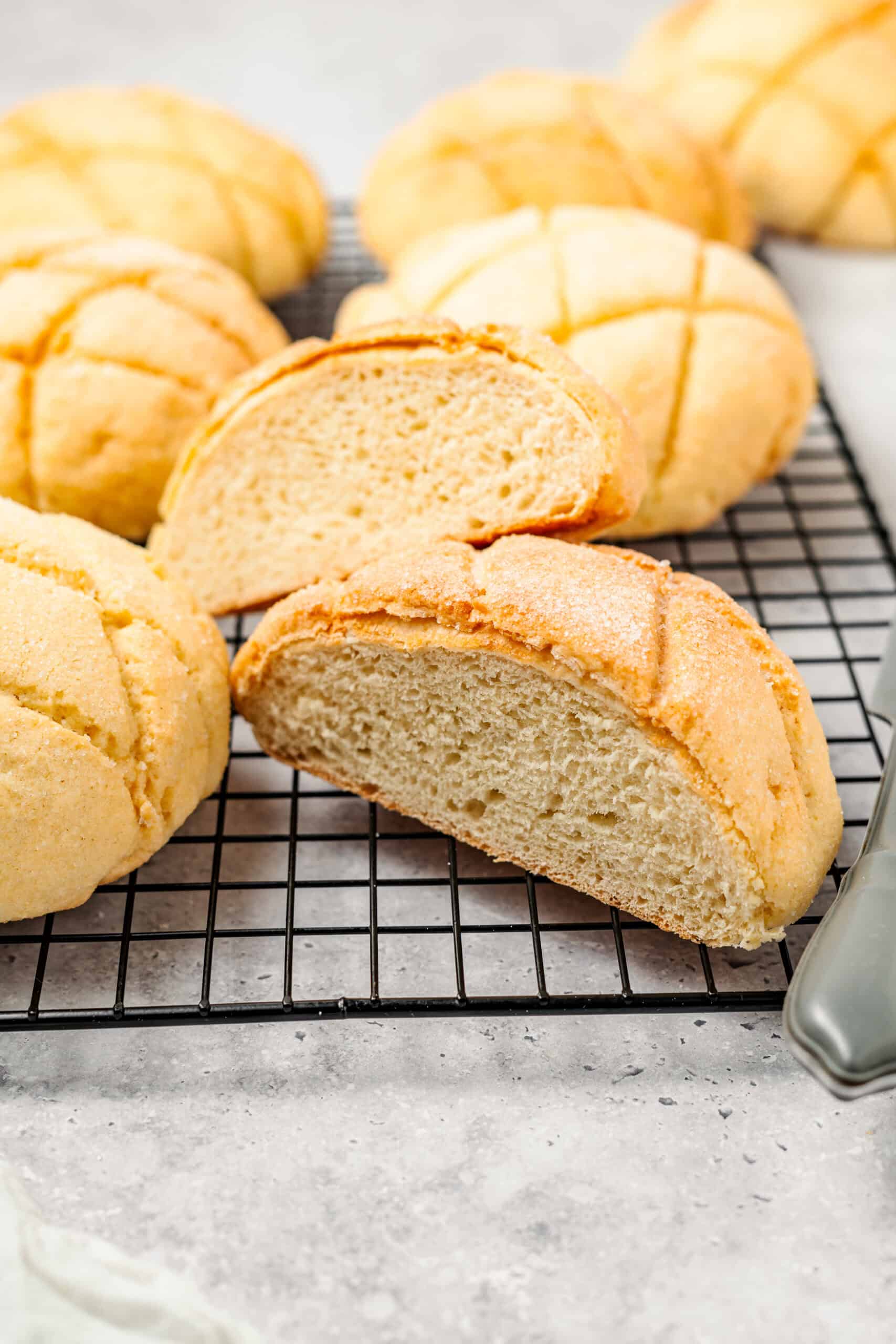
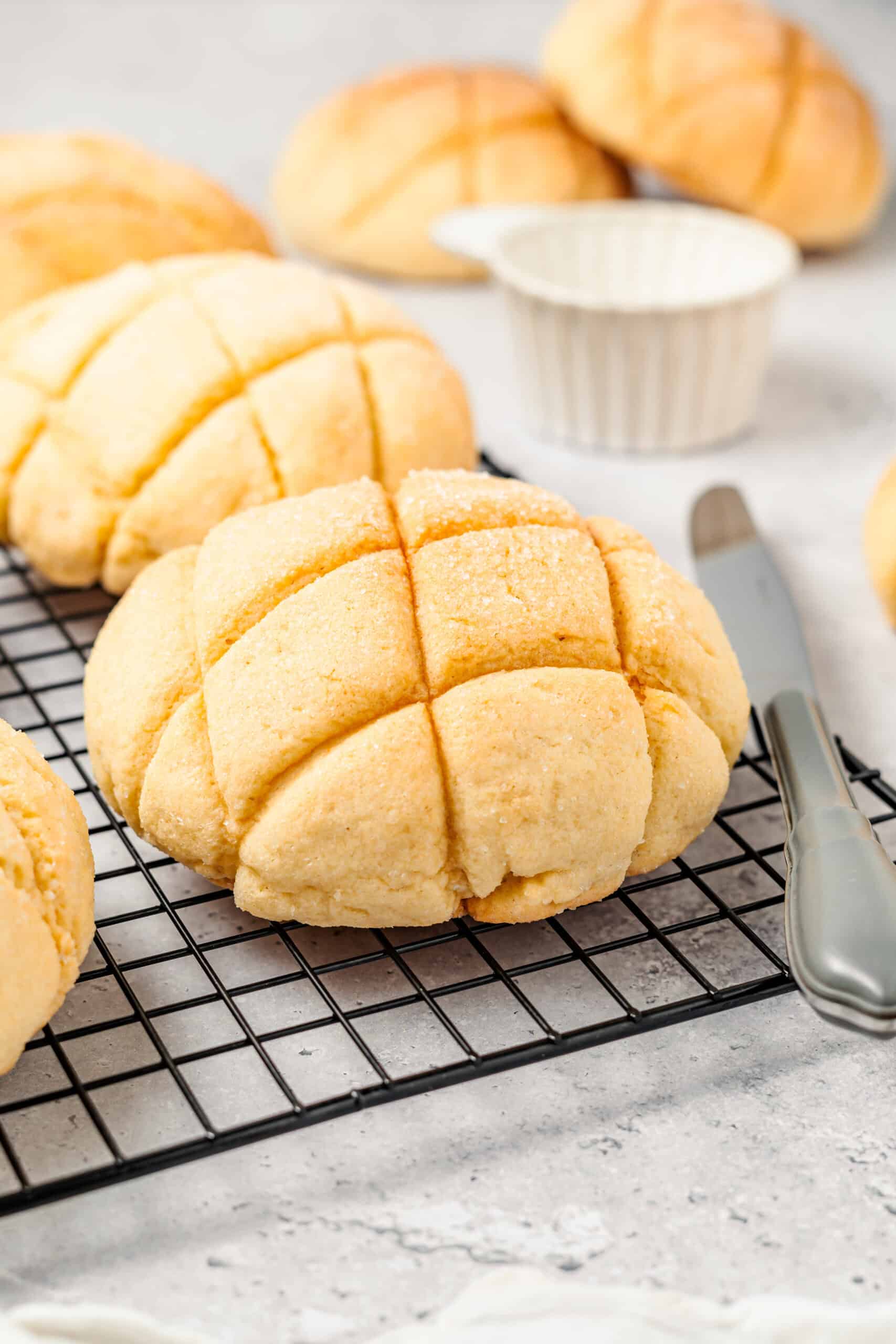
Some bakes feel like a quiet weekend treat, and this Melon Pan is exactly that for me. It’s soft, cosy, and a little fancy, but still very doable at home. The inside is light and fluffy like a milk bread bun, while the top bakes into a crisp cookie shell with a sweet, sandy bite. I’ve tested this style of Japanese bakery bread in small batches, and the first few were not cute at all.
The cookie dough topping cracked too much, then the buns proofed too far and lost their shape. Once I cooled the water roux fully and kept the topping soft but not sticky, everything clicked. It’s one of those bakes that feels special without asking you to rush.
What is Melon Pan
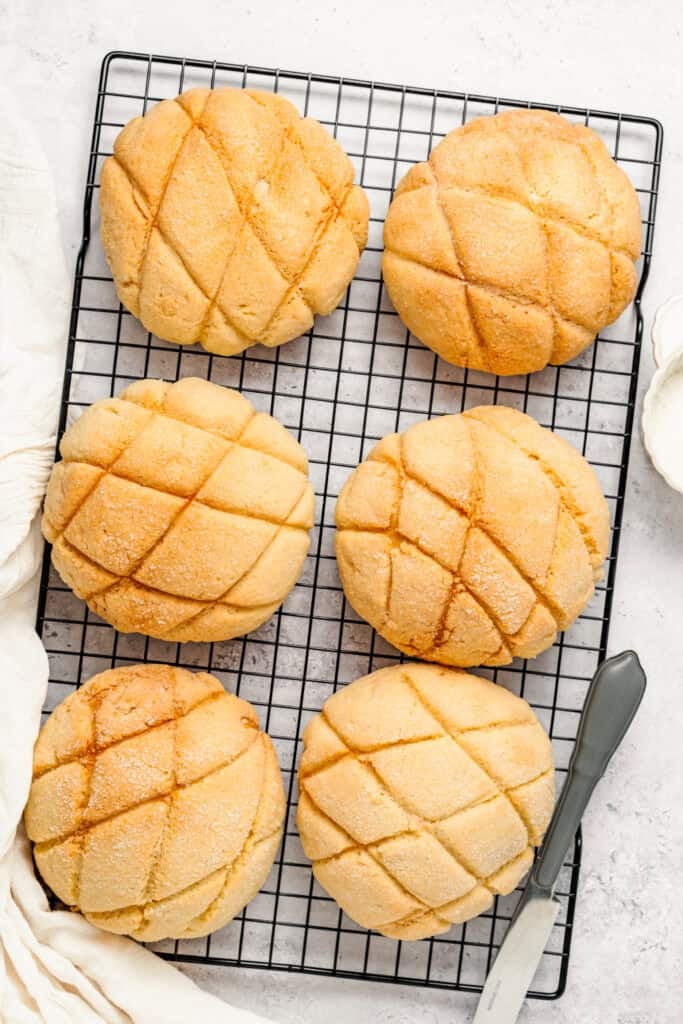
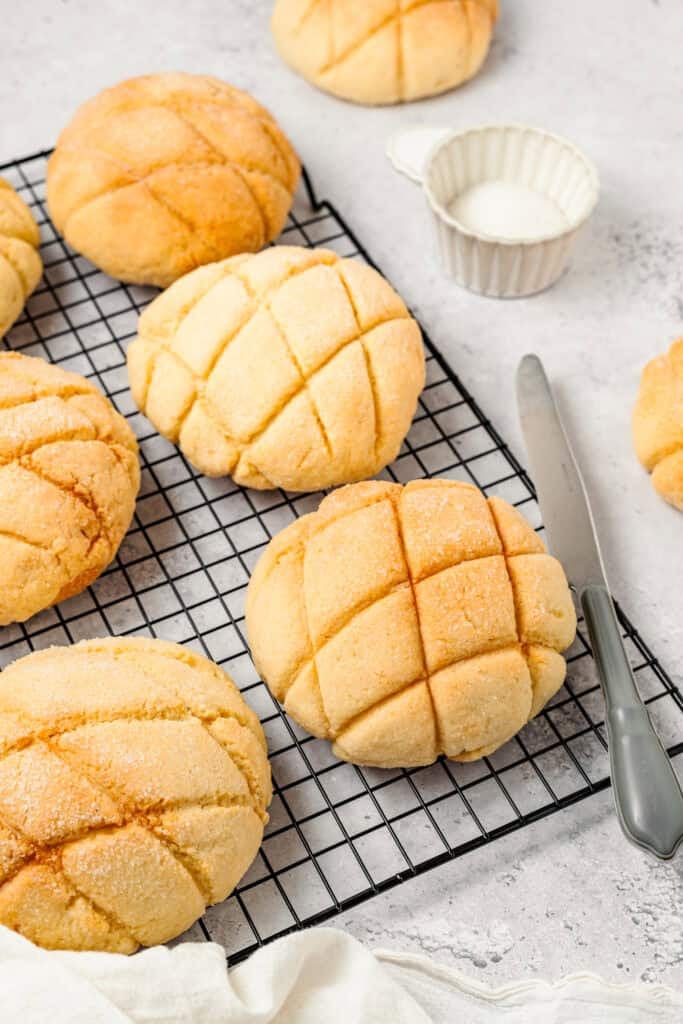
Melon Pan is a Japanese sweet bread made with a soft Japanese bun wrapped in a crunchy cookie crust. It usually has no melon flavour. The name comes from the scored cookie crust, which looks a little like rock melon, cantaloupe, or melon skin after baking.
The magic is in the contrast. You get tender sweet bread dough underneath and a sugar cookie topping on top. When baked well, the bread stays soft, while the crust turns crisp, light, and golden.
Where is Melon Pan from: Japan
Melon Pan comes from Japan, where it’s sold in bakeries, convenience stores, train stations, and cafés. It’s part of that lovely Japanese bakery bread world where simple buns are shaped with care and made to feel a little playful.
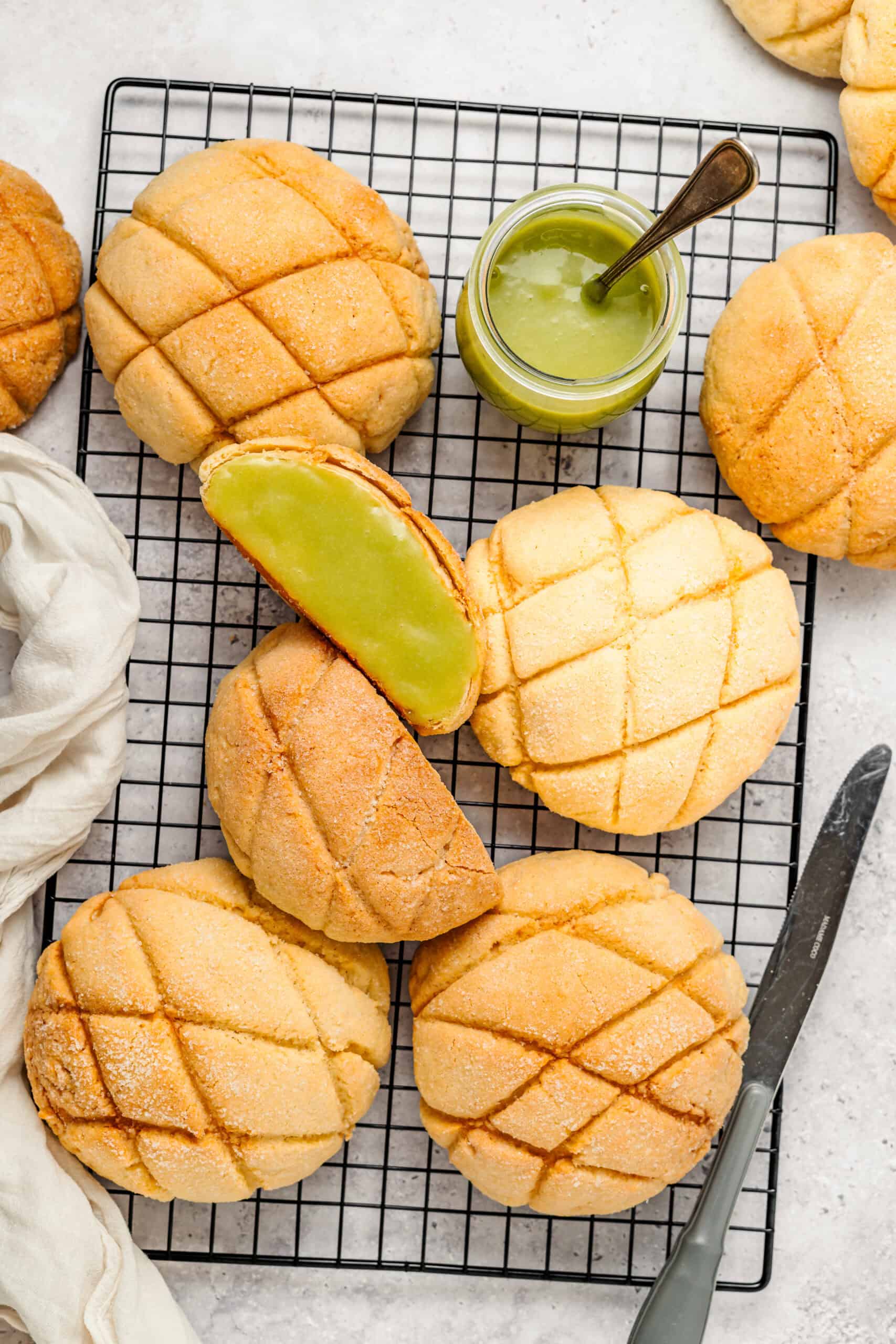
You’ll also see versions across Asia, from plain melon pan to matcha melon pan, chocolate melon pan, custard filled melon pan, and even turtle melon pan. The classic version is still the one I come back to most.
How to make it
To make it, you first cook a small water roux, then mix a soft milk bread bun dough. While the dough rises, you make the cookie crust topping, chill it briefly, then wrap it over the proofed bread rolls. Score the top, coat with sugar, proof again, and bake until softly golden.
At-a-Glance, What You’ll Need Before We Start Rolling
Yield
Prep Time
Cook Time
Difficulty
Storage
10 buns
45 minutes active, plus proofing
15 to 18 minutes
Medium
Best same day. Store airtight 1 to 2 days, or freeze up to 1 month.
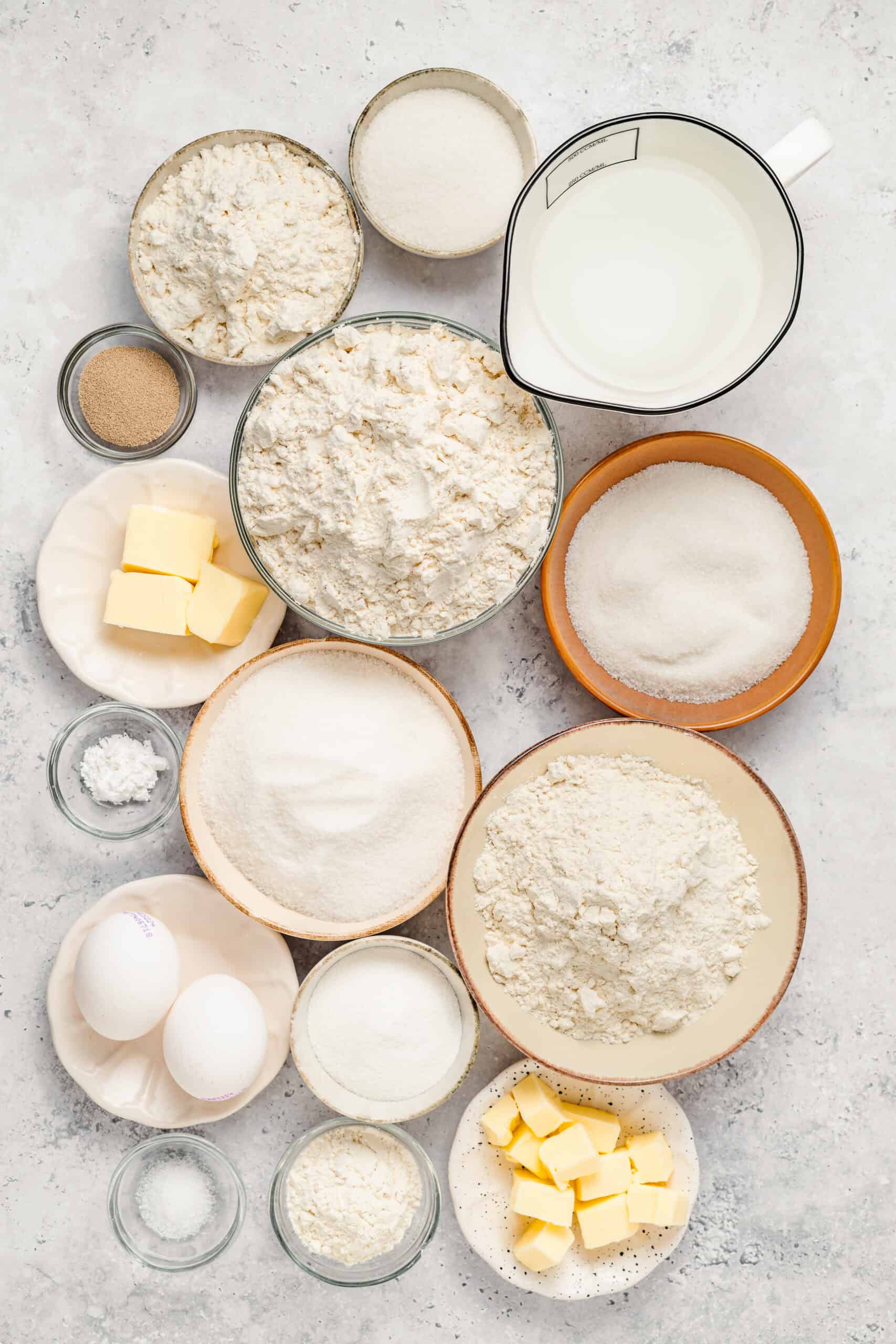
Ingredients
Water roux make first, cool fully
Bread flour: Gives the roux body and helps the bun stay soft after baking.
Water: Hydrates the flour and makes a smooth paste that keeps the bread tender.
Milk bun dough
Bread flour: Builds the chewy, fluffy structure of the bun.
All-purpose flour: Softens the dough so it is not too tough.
Milk powder: Adds creamy flavour and helps the bread brown well.
Granulated sugar: Feeds the yeast and gives the bun a gentle sweetness.
Salt: Balances the sugar and makes the bread taste fuller.
Instant dry yeast: Makes the dough rise and gives it a light crumb.
Egg: Adds richness, colour, and softness.
Water: Hydrates the dough and keeps it light.
Water roux: Locks in moisture for a soft milk bread texture.
Unsalted butter: Adds flavour, softness, and a smooth dough feel.
Cookie topping
Unsalted butter: Gives the cookie shell its rich, tender bite.
Granulated sugar: Sweetens the topping and helps it crisp.
Egg: Binds the cookie dough and helps it bake evenly.
Cake flour: Keeps the topping delicate and crisp instead of hard.
Baking powder: Gives the cookie crust a little lift and lightness.
To assemble and finish
Granulated sugar: Creates that sparkly, crisp top and classic bakery crunch.
Optional, My Favourite Extras That Add a Little Magic
Pandan kaya: A creamy coconut jam that adds a soft, fragrant centre or dipping side.
Kaya jam: Lovely as a filling after baking, especially when you want a kaya toast mood.
Coconut jam: Adds mellow sweetness and a smooth tropical note.
Coconut egg jam: Richer than plain coconut jam, with a custard-like finish.
Pandan coconut jam: Gives the bun a green, floral, aromatic pandan flavor.
Homemade kaya: Best when you want a fresher, less sweet spread.
Easy pandan kaya: A good shortcut when you want the flavour without a long cook.
Quick pandan kaya: Handy for a same-day bake.
10 minute kaya: Great for a fast filling, though it may be softer than slow-cooked kaya.
Hainanese kaya: Smooth and rich, lovely with buttered toast or warm buns.
Nyonya kaya: Often more fragrant, especially with pandan leaves.
Southeast Asian coconut jam: A broad style that works well with this soft Japanese bun.
Singapore kaya: Sweet, smooth, and perfect with a crisp cookie crust.
Malaysian kaya: Rich and aromatic, especially if made with coconut cream.
Selai srikaya: Indonesian-style coconut custard spread with a lush texture.
Srikaya jam: Another name you may see for coconut custard jam.
Sangkhaya: Thai-style custard that can lean more pandan or pumpkin, depending on the version.
Sweet coconut spread: A simple way to describe kaya if readers are new to it.
Creamy coconut spread: Best for serving beside warm buns.
Pandan spread: Adds colour, scent, and café-style flair.
Breakfast spread: Makes leftovers feel like a bakery breakfast.
Toast spread: Works well because this bun already has that kaya toast energy.
Kaya toast: A classic pairing idea with butter and coconut jam.
Singapore kaya toast: Inspires the butter-and-kaya serving style.
Roti bakar: Indonesian-style toast that works as a flavour reference.
Coconut milk jam: Smooth and mellow if you want a lighter coconut flavour.
Coconut cream jam: Richer, thicker, and better for filling.
Egg yolk kaya: Gives a silky custard texture.
Egg custard jam: A rich, creamy spread that pairs well with soft bread.
Coconut custard spread: A gentle filling for buns that should not taste too heavy.
Pandan custard: A softer filling option if you prefer pastry cream vibes.
Green kaya: A bright pandan kaya style that looks beautiful inside the bun.
Green coconut jam: Another simple name for pandan coconut jam.
Substitutions, Smart Ingredient Swaps That Still Taste Amazing
Bread flour swap: Use all-purpose flour if needed, but the bun will be a touch less chewy.
Cake flour swap: Use all-purpose flour with a spoonful replaced by cornflour for a softer cookie topping.
Milk powder swap: Leave it out if you must, but the dough will taste less milky.
Water swap: Use milk in the dough for a richer bun, but watch the browning.
Granulated sugar swap: Caster sugar works well in both dough and topping.
Butter swap: Use plant-based butter for a dairy-light version, but choose one made for baking.
Pandan paste swap: Use pandan essence if that is what you have, but use a light hand.
Fresh pandan extract swap: Blend pandan leaves or screwpine leaves with water, then strain the pandan juice.
Palm sugar swap: Use coconut sugar or gula melaka in homemade kaya for a caramel note.
White sugar swap: Use white sugar when you want green kaya to stay bright.
STEPS
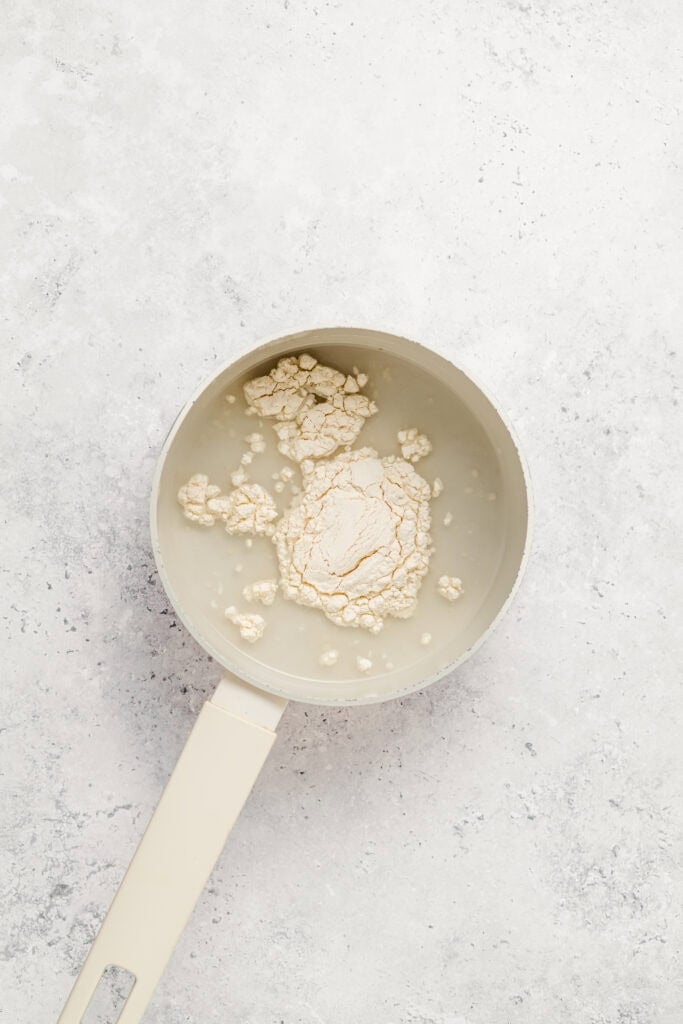
Make the water roux: combine the bread flour and water in a small saucepan. Whisk over medium heat for about 5 minutes, until thickened and semi-translucent. Remove from heat, transfer to a small bowl, cover with cling wrap touching the surface, and cool for 1 hour or until room temperature before use.
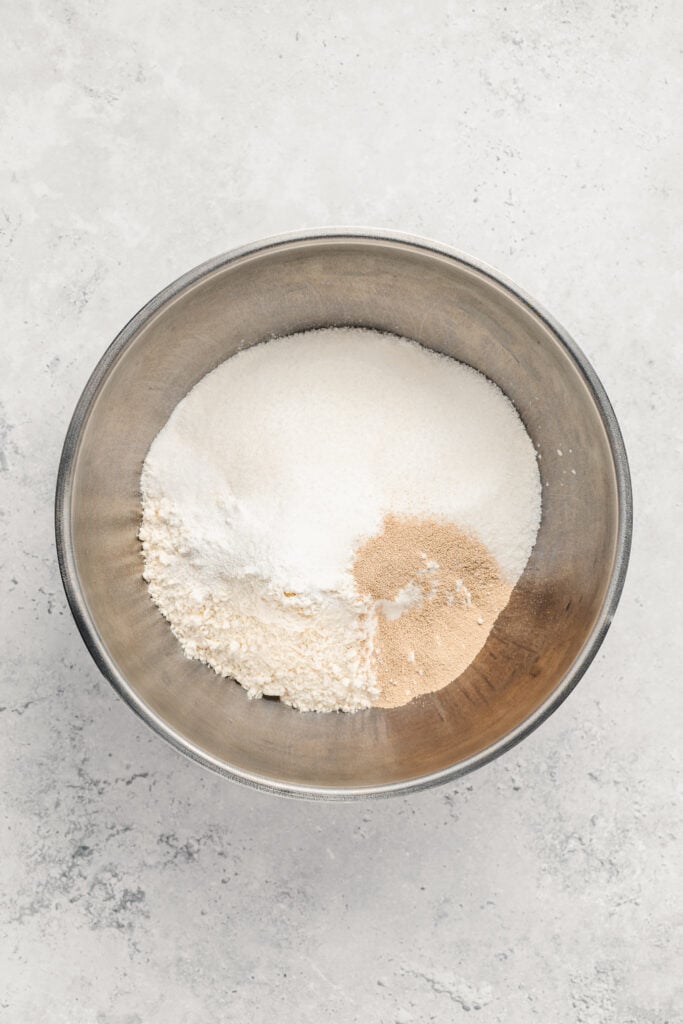
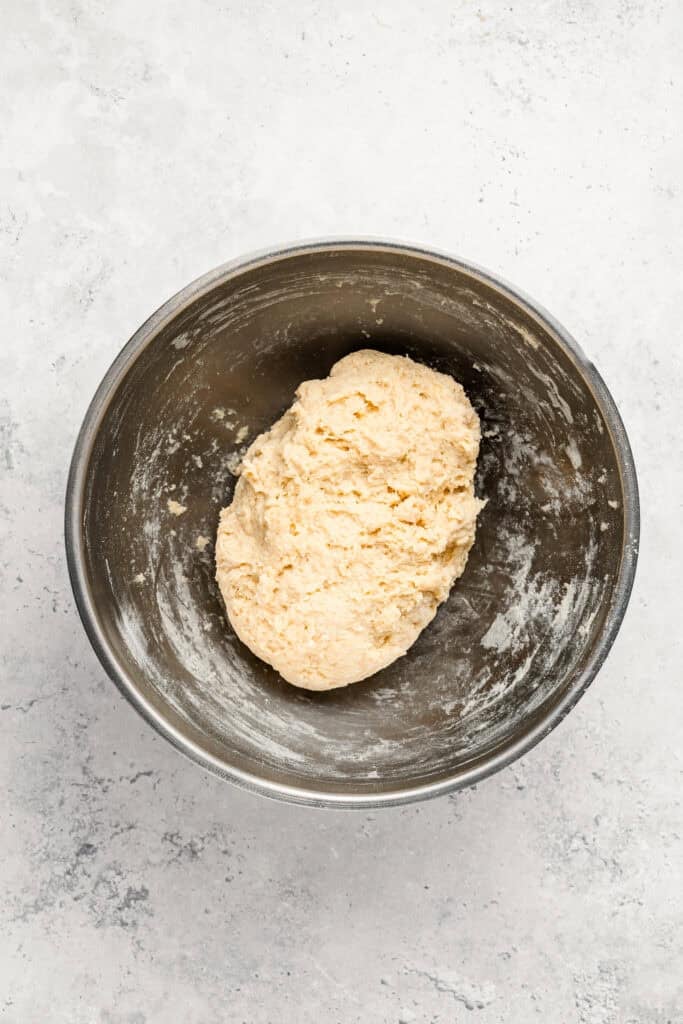
Make the dough: combine the bread flour, all-purpose flour, milk powder, sugar, salt and yeast in the bowl of a stand mixer fitted with a dough hook. Add the egg, lukewarm water and cooled roux. Mix on medium for about 3 minutes until a rough dough forms. (The added water should be at body temperature, too cold delays the yeast, too hot kills it.)
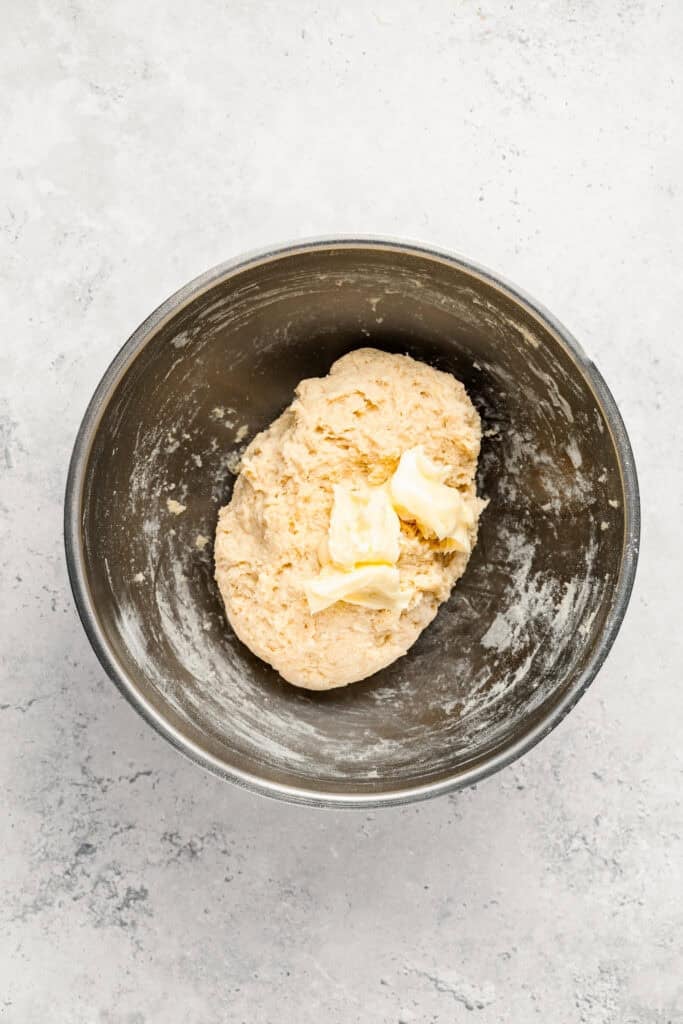
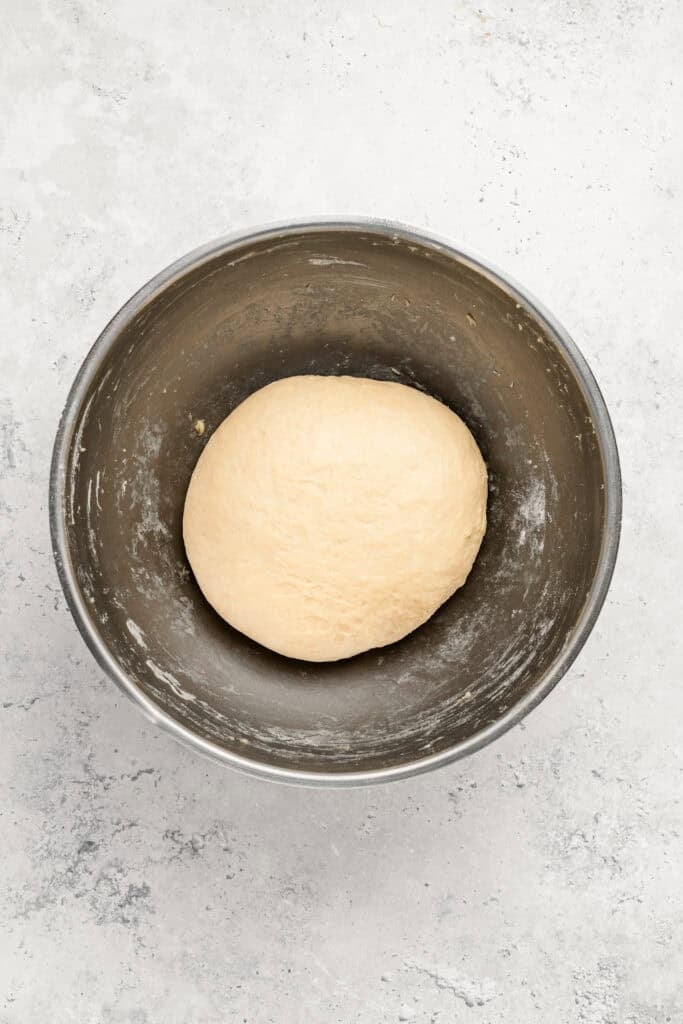
Add the softened butter and continue to knead on medium for 20 minutes, until the dough passes the windowpane test (it can be stretched into a thin sheet that resembles a windowpane without tearing).
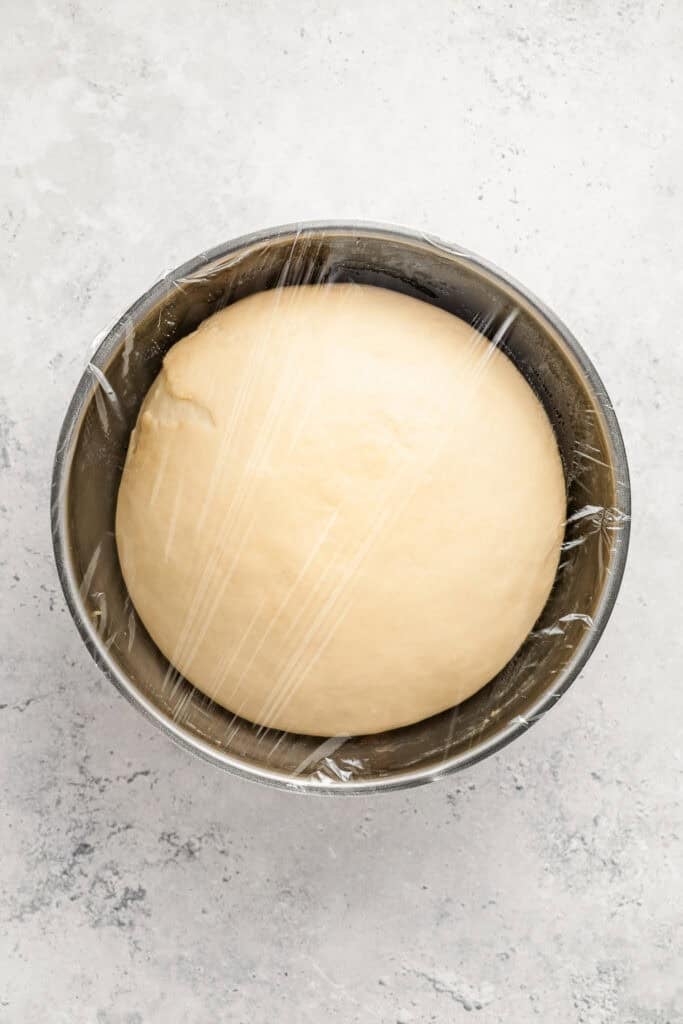
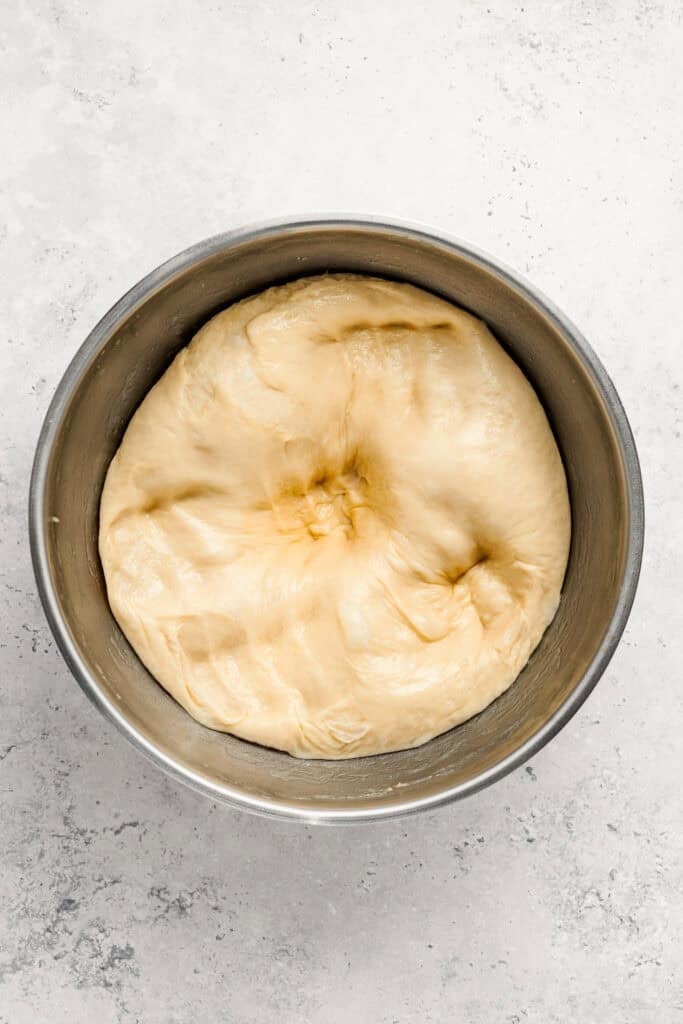
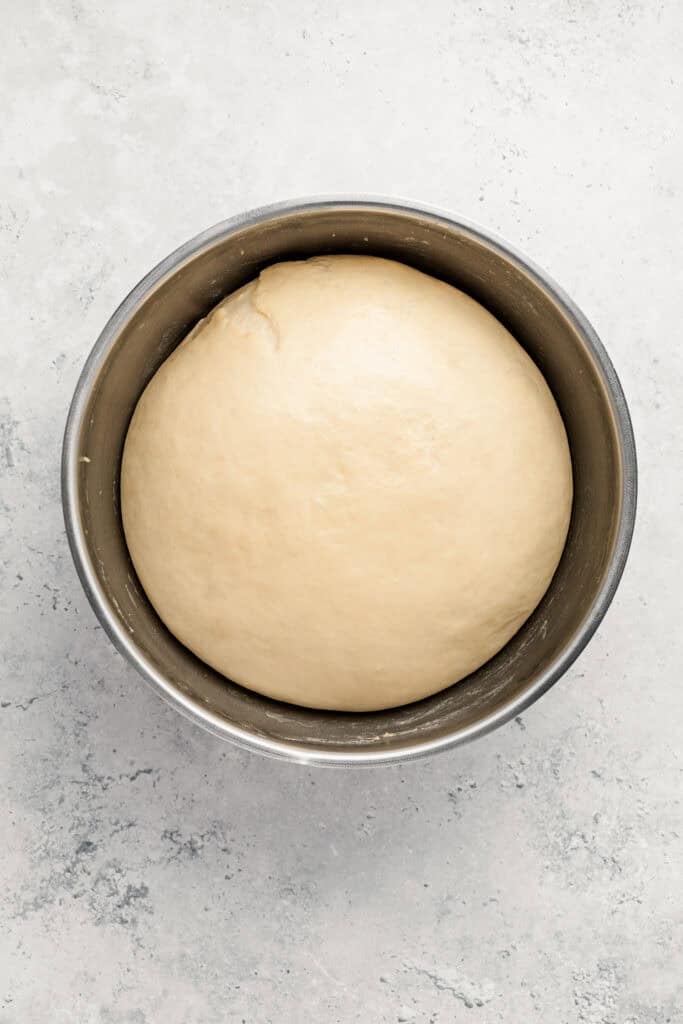
Shape into a ball and place in a large oiled bowl for the first proof. Cover loosely with cling wrap and place in a warm spot for 1 to 2 hours, until doubled. (Turned-off oven with a mug of hot water is ideal.) The dough is ready when a floured finger pressed into the center leaves a hole that doesn’t bounce back.
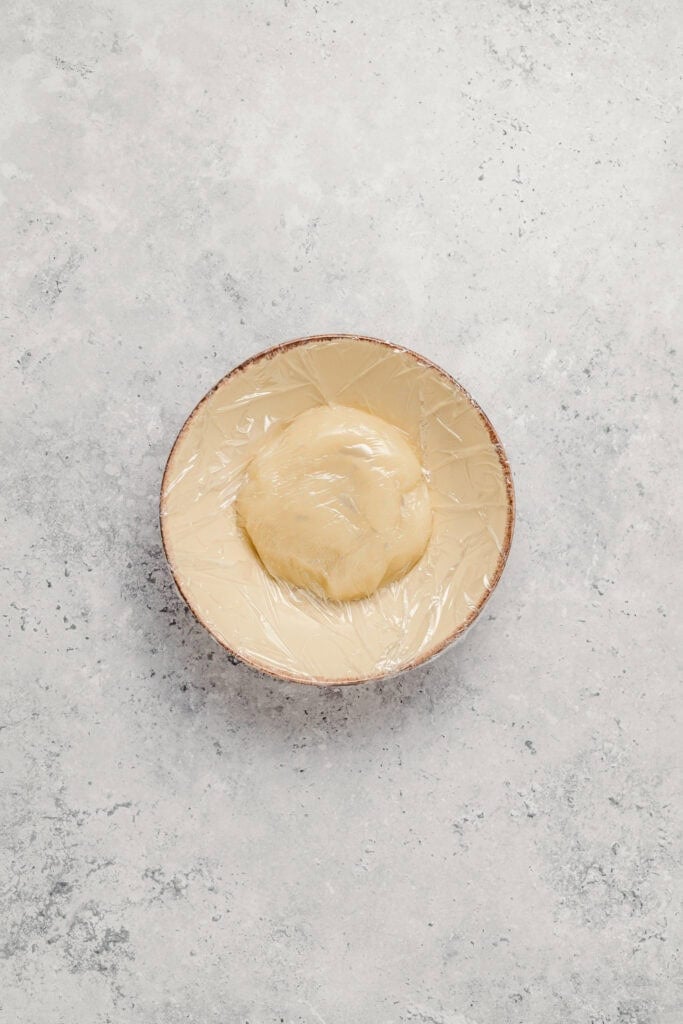
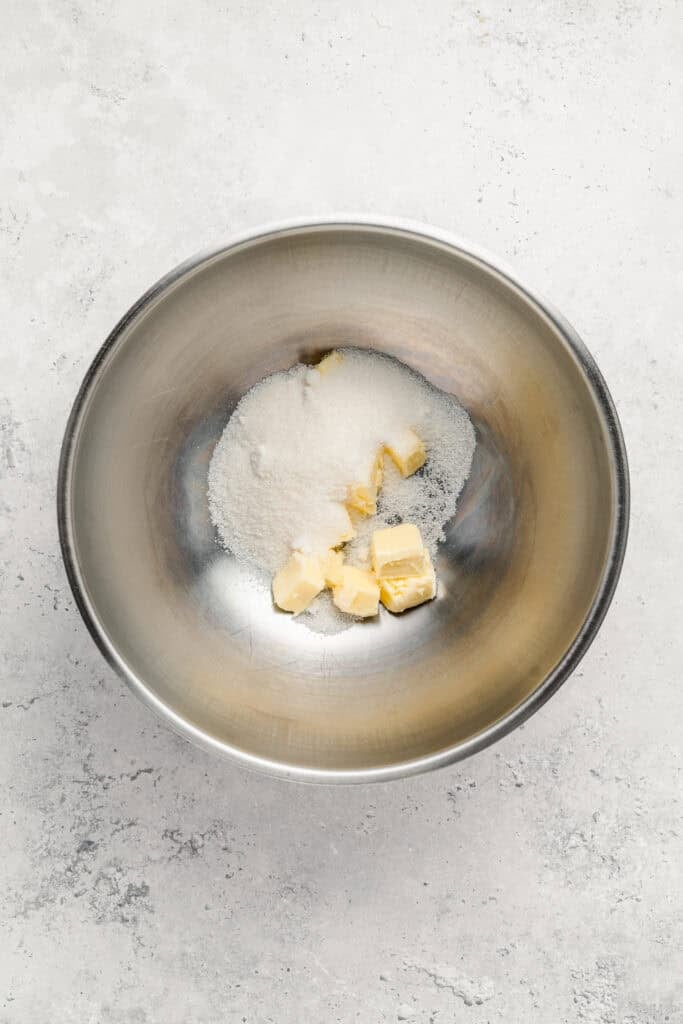
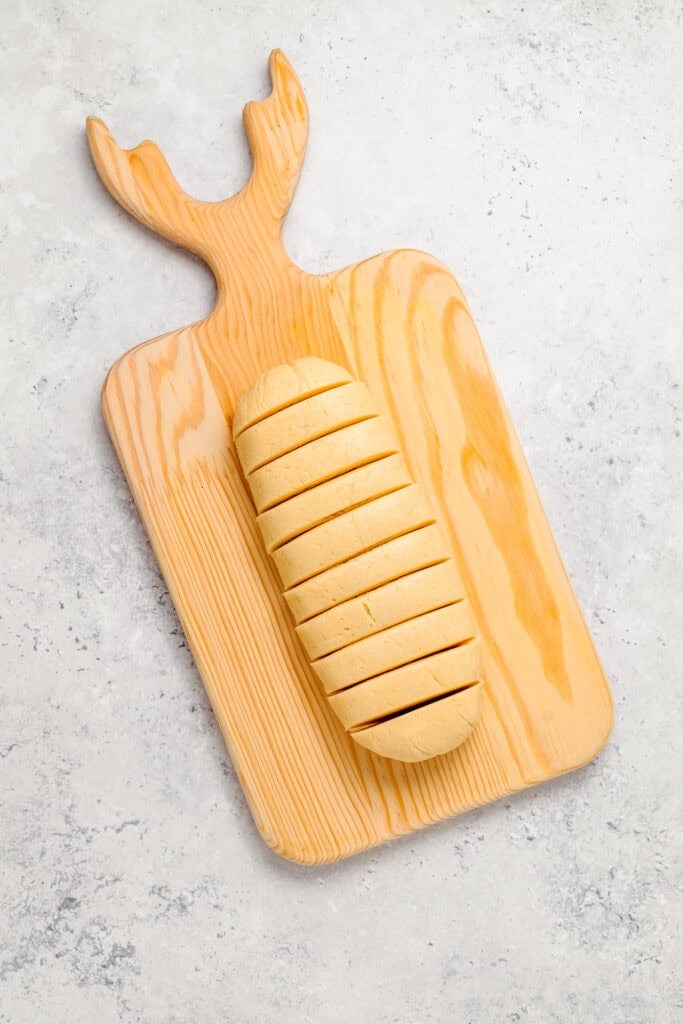
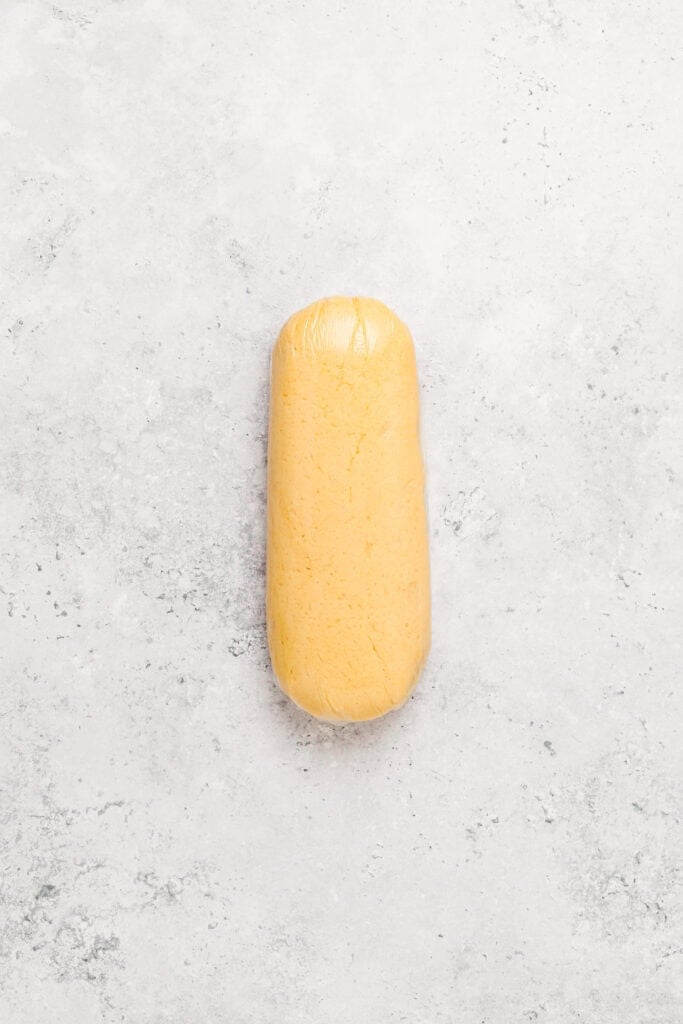
While the dough proofs, make the cookie topping: cream the softened butter and 100 g sugar in a stand mixer on medium speed until light and fluffy (about 2 minutes). Beat in the egg until combined. Sift in the cake flour and baking powder and beat on low until just combined. Wrap the cookie dough in cling wrap and refrigerate at least 1 hour, until completely chilled.
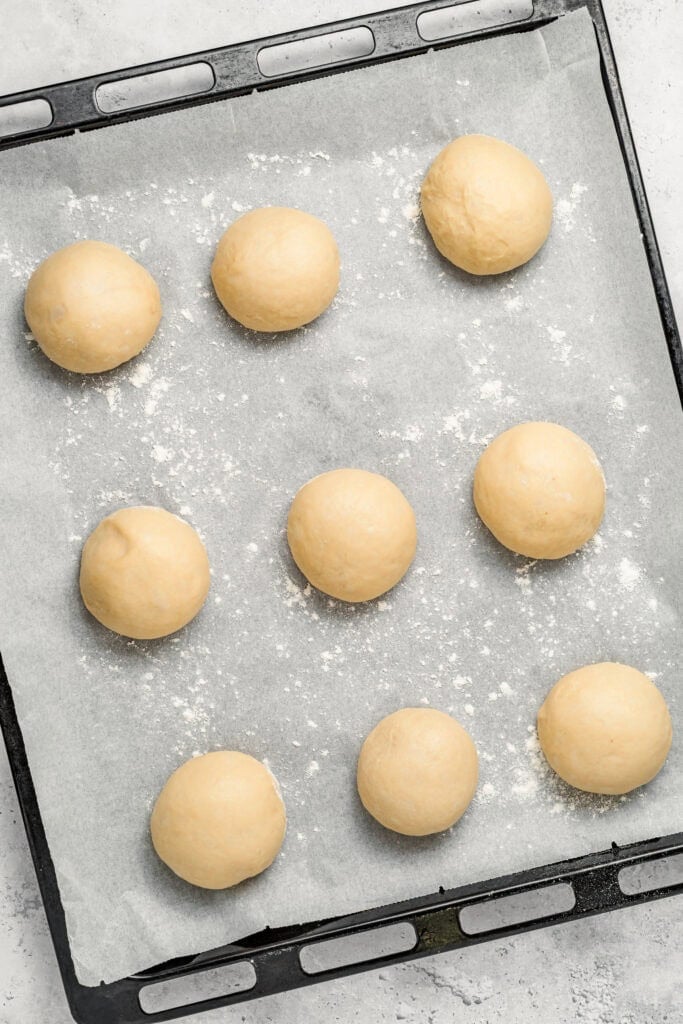
After the first proof, gently press the air out of the dough on a lightly floured surface. Divide into 10 equal portions (about 80 g each) and roll into smooth balls.
Remove the cookie dough from the fridge and divide into 10 equal portions (about 35 g each).
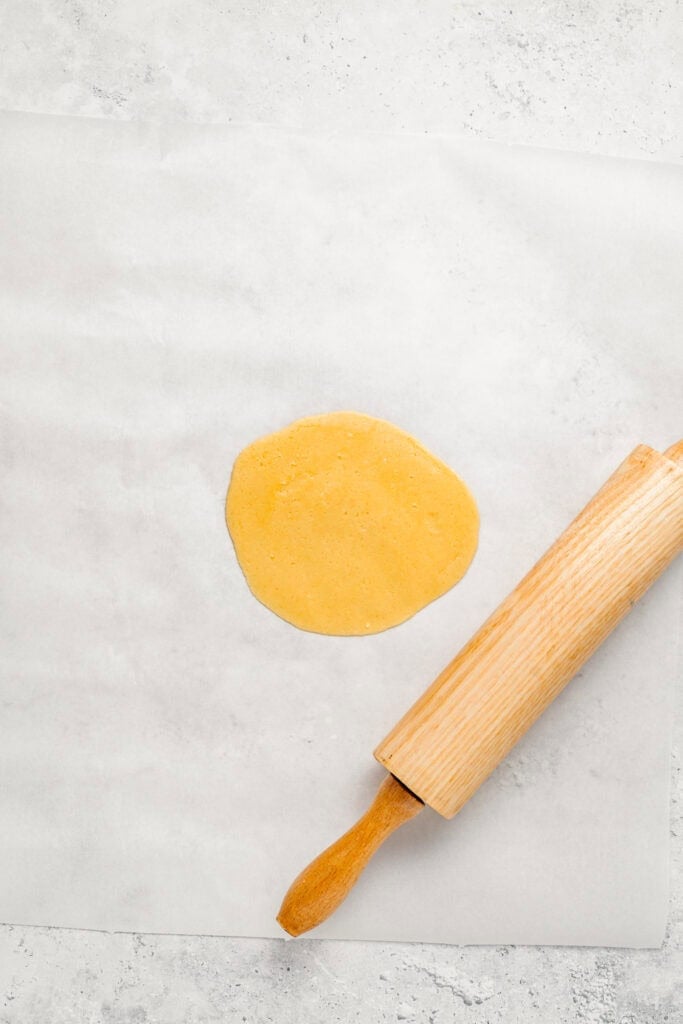
Place each cookie portion between two pieces of baking paper and roll into a 2 mm-thick round, roughly 10 cm (4 inches) across, large enough to cover the top and sides of a bun.
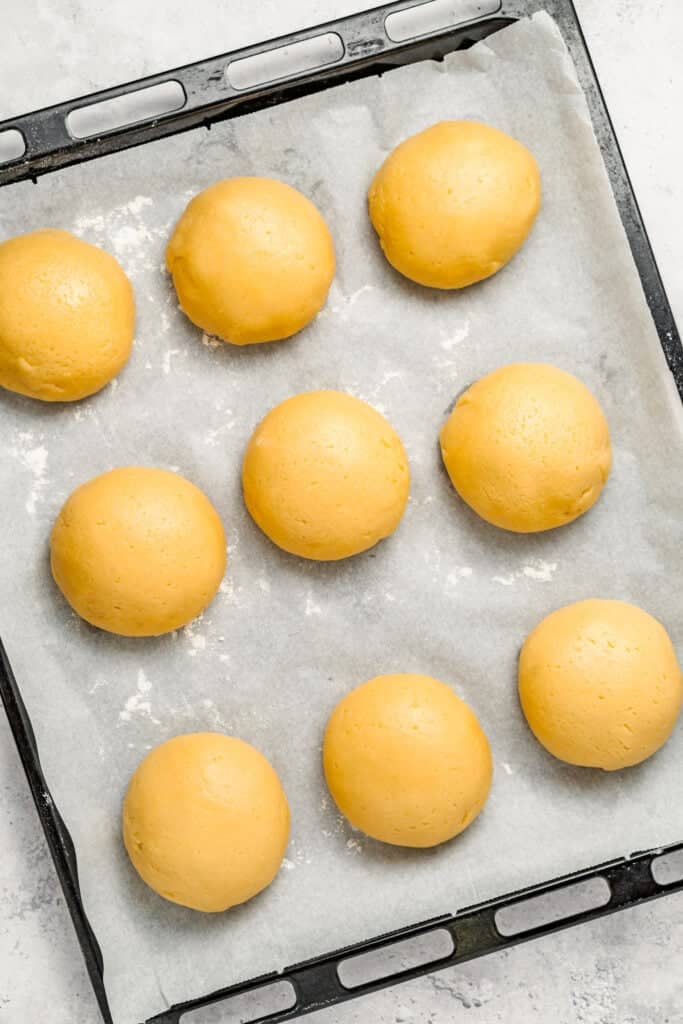
Top each dough ball with a cookie round, gently pressing it down over the top and sides (the bottom of the bun stays uncovered).
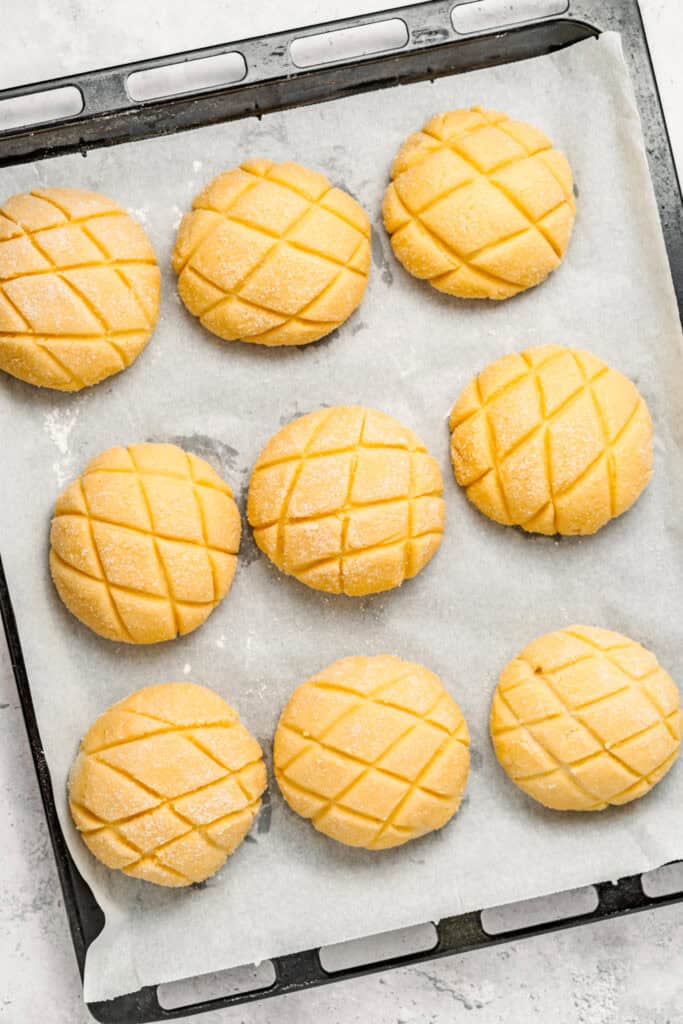
Place the 200 g of granulated sugar in a shallow bowl. Roll the cookie-dough side of each bun in the sugar to coat. Use the back of a knife to score a 3×3 crisscross pattern into the cookie surface, press just deep enough to mark, not cut through.
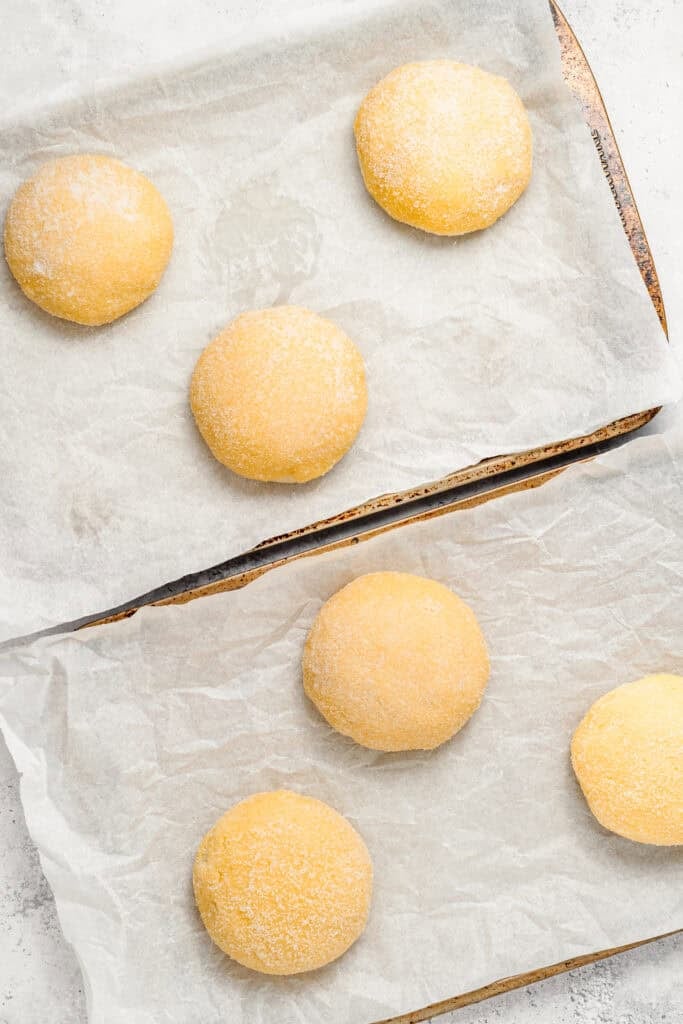
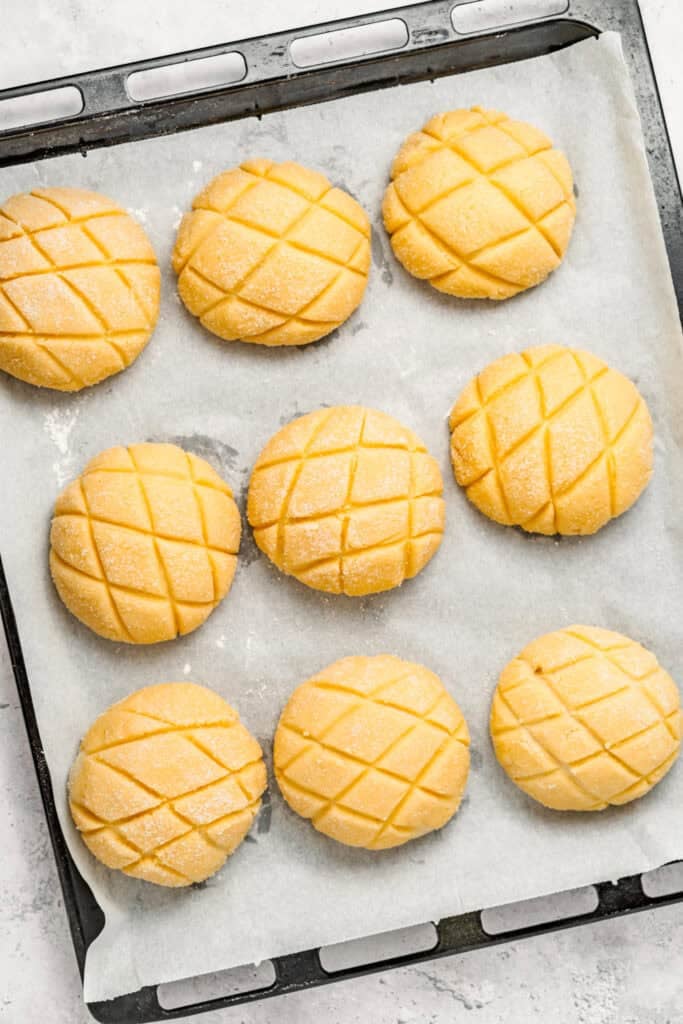
Arrange the buns on one or two baking trays lined with baking paper, leaving 3 inches (8 cm) between buns so they don’t join as they bake. Cover loosely with cling wrap and place in a warm spot for 30 minutes to 1 hour, until visibly puffed (they don’t need to fully double in size, over-proofing breaks the cookie crust pattern).
Cookies on Grill
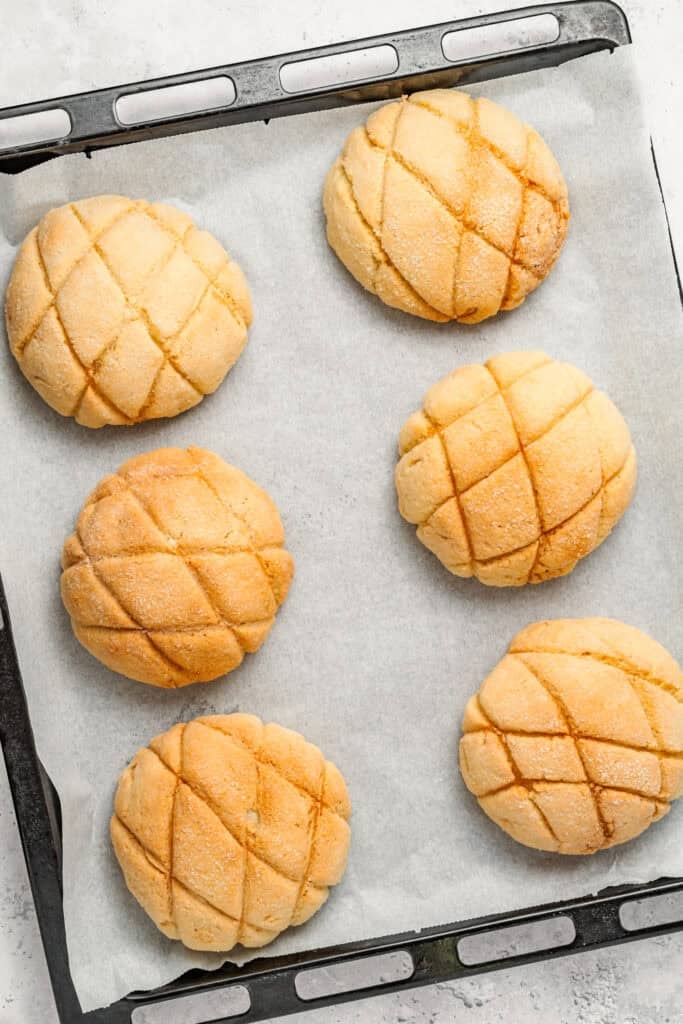
Preheat the oven to 350°F (180°C). Bake the buns for 13 to 15 minutes, until the cookie crust is lightly golden brown and the crisscross pattern has opened up cleanly. Cool on a wire rack for at least 30 minutes before serving.
Troubleshooting, Quick Fixes I’ve Learned from My Bakery Kitchen
Issue
What probably happened
Quick fix
Cookie crust cracked too much
Cookie dough was too cold or too thin
Let it soften for 5 minutes, then roll slightly thicker
Buns spread flat
Dough was over-proofed or too warm
Proof until puffy, not huge, and keep the tray out of hot spots
Bread feels dry
Dough needed more kneading or baked too long
Knead until elastic and check the oven early
Topping slid off
Cookie disc was too warm or bun was oily
Chill topping lightly and avoid flouring the bun surface too much
Pattern disappeared
Scoring was too shallow
Cut clear lines, but don’t slice through to the bread
Comparison, How This Recipe Stacks Up Against Other Desserts
Dessert
Texture
Best for
Japanese melon pan
Soft bread with crunchy cookie crust
A cosy bakery-style snack with a cute look
Pineapple bun
Fluffy bun with a crumbly golden top
Hong Kong café vibes and milk tea pairing
Mexican concha
Slightly denser bread with patterned sugar topping
Colourful sweet bread with coffee or hot chocolate
Tips, My Personal Tricks for a Professional-Looking Result
Cool the water roux completely
This is a tiny step, but it matters. If the roux is warm, the dough can feel sticky and the yeast can become stressed.
I like to make it first, then spread it thin in a bowl so it cools faster.
Love soft bakery buns with crisp toppings? My Pineapple Bun has the same irresistible contrast of fluffy bread and sweet cookie crust.
Keep the cookie dough soft, not floppy
The topping should bend without breaking. If it’s too soft, it will tear and slide.
If it feels greasy, chill it for 10 minutes. If it cracks at the edges, let it sit on the bench for a few minutes.
Roll the bread dough into tight balls
A tight surface gives you round, cute bread buns. Loose dough tends to bake unevenly and can make the melon skin pattern look messy.
Use your palm to drag each dough ball gently against the bench. It should feel smooth and springy.
Score with confidence
A faint pattern won’t show well after proofing. A deep cut can expose the bread.
Aim for a clear criss-cross pattern that cuts into the cookie crust topping, not the bun underneath.
Don’t over-proof after wrapping
The cookie shell is heavier than the bread dough. If the buns rise too much, the crust can split and lose its neat shape.
Look for puffed buns that still spring back slowly when touched.
Bake gently for coloured toppings
For matcha melon pan, pink bread topping, or green cookie crust, bake a little lower. This keeps the colours pretty and avoids too much browning.
It’s a small café trick, but it makes a big visual difference.
If you enjoy sweet bakery breads with a crunchy top, my Coffee Buns are packed with buttery flavour and a fragrant coffee crust.
Variations, Fun Twists and Flavours Inspired by Dessert Experiments
Matcha melon pan
Add 6 to 8 g matcha powder to the cookie topping and reduce the cake flour by the same amount. The earthy matcha flavor balances the sweet crust so nicely.
This version looks lovely with a melon skin pattern and a light granulated sugar coating.
Chocolate melon pan
Replace 15 g of cake flour in the topping with cocoa powder. You’ll get a deeper, chocolatey crust that tastes like a soft biscuit on bread.
A little chocolate custard inside makes it extra rich.
Strawberry melon pan
Add a little freeze-dried strawberry powder to the cookie dough topping. It gives a pretty pink bread topping and a soft berry flavour.
You can pair it with whipped cream filling for a café-style finish.
Custard filled melon pan
Pipe thick vanilla custard into cooled buns from the base. This keeps the crisp cookie crust clean and neat.
Make sure the custard is chilled and thick, not runny.
Cream filled melon pan
Slice the cooled bun halfway through and pipe in lightly sweetened cream. It turns the bread bun filling into something soft, cool, and cloud-like.
Eat this version the same day for the best texture.
Turtle melon pan
Shape small dough pieces into a head and legs, then cover the body with green cookie crust. Add black sesame eyes after baking or before baking if they sit well.
It’s cute, playful, and perfect if you love kawaii bread design.
Serving Suggestions, How I Like to Present These for Maximum ‘Wow’
Serve warm with milk tea
A warm bun with a crisp cookie shell and a cup of milk tea is simple and perfect. The soft bread soaks up the creamy tea flavour in the best way.
This is my favourite lazy afternoon treat.
Slice and fill with cream
Cut the bun open once cool and pipe in whipped cream filling. Dust with a little powdered sugar crust look on top.
It makes the bun feel elegant without much extra work.
Pair with fresh fruit
Serve plain melon pan with strawberries, melon slices, or mango. The fruit keeps the plate fresh and light.
It’s lovely for brunch when you want something sweet but not too heavy.
Make a dessert board
Place the buns with matcha, chocolate, and strawberry versions on one board. Add small bowls of jam, custard, and cream.
It looks generous and social, but each part is easy to prep.
Toast the next day
Pop leftover buns in a toaster oven for a few minutes. The crunchy cookie crust comes back, and the inside warms through.
Don’t microwave if you want a crisp top.
Serve mini buns for parties
Divide the dough into 12 smaller pieces instead of 8. They bake faster and look adorable on a tray.
Mini colourful melon pan works well for birthdays, dessert tables, and café-style boxes.
Common Mistakes to Avoid, Lessons I’ve Learned After Dozens of Batches
Adding hot water roux to the dough
Hot roux can weaken or damage yeast. It also makes the dough sticky in a frustrating way.
Let it cool fully before mixing.
Using too much flour while kneading
A little flour is fine, but too much makes the bread dry. The dough should feel soft and slightly tacky.
Use a scraper instead of adding handfuls of flour.
Chilling the cookie dough until hard
Hard cookie dough cracks when you wrap it around the bun. It should feel cool, smooth, and flexible.
Think soft clay, not fridge-cold biscuit dough.
Wrapping the cookie crust around the whole bun
Leave the base of the bun uncovered. The bread needs room to rise and grip the tray.
If the whole bun is sealed in cookie dough, the shape can become heavy and uneven.
Proofing until the buns look huge
Bigger isn’t better here. Over-proofed bread rolls can collapse or lose the scored cookie crust.
Stop when they look puffy and light.
Baking too hot
A hot oven browns the sugar cookie topping before the bread is fully baked. It can also make matcha powder baking turn dull.
Moderate heat gives a softer crumb and prettier top.
If you liked this recipe make sure to leave me a comment and rating down below. I’d love to know how it went! Also, don’t forget to tag me on Instagram @catherine.desserts.
Indulge in Melon Pan Recipe, a fluffy sweet bun crowned with crisp cookie perfection!
Author:Catherine Zhang
Prep Time:45 minutes
Cook Time:15 minutes
Total Time:1 hour
Yield:10 buns 1x
Category:Breads
Method:Intermediate
Cuisine:Japanese
Ingredients
Scale
Water roux (make first, cool fully):
3 tbsp (24 g) bread flour
1/2 cup (120 ml) water
Milk bun dough:
2 3/4 cups (380 g) bread flour
3/4 cup (90 g) all-purpose flour
1/4 cup (27 g) milk powder
1/3 cup + 1 tbsp (78 g) granulated sugar
3/4 tsp salt
2 1/4 tsp (7 g) instant dry yeast
1 large egg, lightly beaten
2/3 cup (160 ml) water, lukewarm (body temperature)
All of the cooled water roux (from above)
3 tbsp (45 g) unsalted butter, softened, cubed
Cookie topping:
1/4 cup (60 g) unsalted butter, softened
1/2 cup (100 g) granulated sugar
1 large egg
1 1/2 cups (175 g) cake flour
1/2 tsp baking powder
To assemble & finish:
1 cup (200 g) granulated sugar, for rolling
Instructions
Make the water roux: combine the bread flour and water in a small saucepan. Whisk over medium heat for about 5 minutes, until thickened and semi-translucent. Remove from heat, transfer to a small bowl, cover with cling wrap touching the surface, and cool for 1 hour or until room temperature before use.
Make the dough: combine the bread flour, all-purpose flour, milk powder, sugar, salt and yeast in the bowl of a stand mixer fitted with a dough hook. Add the egg, lukewarm water and cooled roux. Mix on medium for about 3 minutes until a rough dough forms. (The added water should be at body temperature — too cold delays the yeast, too hot kills it.)
Add the softened butter and continue to knead on medium for 20 minutes, until the dough passes the windowpane test (it can be stretched into a thin sheet that resembles a windowpane without tearing).
Shape into a ball and place in a large oiled bowl for the first proof. Cover loosely with cling wrap and place in a warm spot for 1 to 2 hours, until doubled. (Turned-off oven with a mug of hot water is ideal.) The dough is ready when a floured finger pressed into the center leaves a hole that doesn’t bounce back.
While the dough proofs, make the cookie topping: cream the softened butter and 100 g sugar in a stand mixer on medium speed until light and fluffy (about 2 minutes). Beat in the egg until combined. Sift in the cake flour and baking powder and beat on low until just combined. Wrap the cookie dough in cling wrap and refrigerate at least 1 hour, until completely chilled.
After the first proof, gently press the air out of the dough on a lightly floured surface. Divide into 10 equal portions (about 80 g each) and roll into smooth balls.
Remove the cookie dough from the fridge and divide into 10 equal portions (about 35 g each).
Place each cookie portion between two pieces of baking paper and roll into a 2 mm-thick round, roughly 10 cm (4 inches) across — large enough to cover the top and sides of a bun.
Top each dough ball with a cookie round, gently pressing it down over the top and sides (the bottom of the bun stays uncovered).
Place the 200 g of granulated sugar in a shallow bowl. Roll the cookie-dough side of each bun in the sugar to coat. Use the back of a knife to score a 3×3 crisscross pattern into the cookie surface — press just deep enough to mark, not cut through.
Arrange the buns on one or two baking trays lined with baking paper, leaving 3 inches (8 cm) between buns so they don’t join as they bake. Cover loosely with cling wrap and place in a warm spot for 30 minutes to 1 hour, until visibly puffed (they don’t need to fully double in size — over-proofing breaks the cookie crust pattern).
Preheat the oven to 350°F (180°C). Bake the buns for 13 to 15 minutes, until the cookie crust is lightly golden brown and the crisscross pattern has opened up cleanly. Cool on a wire rack for at least 30 minutes before serving.
Notes
Two doughs, one bake: the milk bun dough is yeasted (rises in the oven, soft interior), the cookie topping is unleavened (crisps and cracks open along the score lines). The contrast is the whole point.
Cookie topping that’s too cold won’t stretch over the ball; too warm and it tears. Pull it from the fridge as the dough finishes its first proof — it should be firm but pliable when you roll it.
Score depth matters: too shallow and the pattern disappears in the bake; too deep and the topping splits into separate pieces. Aim for about a third of the way through the cookie dough.
Second proof is shorter than for plain milk buns. Over-proofed melon pan = the cookie cracks across, not along the score lines, and the result looks lumpy. Watch the buns, not the clock.
Flavor variations (for future posts): swap 1 tbsp of cake flour for 1 tbsp matcha or cocoa powder in the cookie topping; or add 1 tbsp freeze-dried strawberry/raspberry/lychee powder for a fruit version (this is the strawberries-and-cream variant’s base).
Storage: best the day they’re baked. Day-2 buns refresh well with 5 minutes in a 300°F (150°C) oven.
Craving more? Browse every bread recipe in one place.
Catherine Zhang
My name is Catherine, a food blogger and dessert lover. If I look familiar you may have seen me on NETFLIX's Zumbo’s Just Desserts S2!
As an Australian-Chinese pastry chef and recipe developer I share recipes and tips on desserts inspired by amazing flavours, fresh produce and of course my Asian background.