
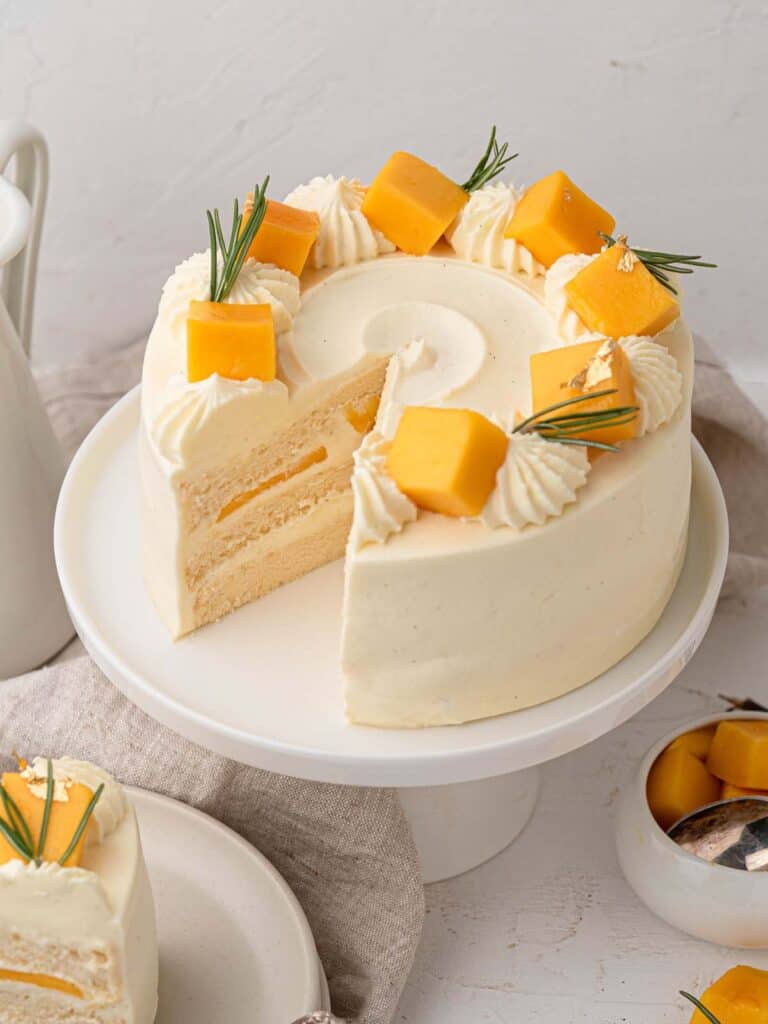
This Asian style mango cake is made up of fluffy cotton soft sponge cake, fresh and juicy mango, all topped with a light vanilla whipped cream
This is the Asian bakery-style mango cake I keep coming back to: layers of cotton soft sponge cake, fresh juicy mango, and a light vanilla whipped cream. If you searched for a fresh mango cake recipe that tastes like the ones from your favorite Asian bakery, this fluffy, not-too-sweet version is built to be soft, stable, and full of real mango.
I’ve always said that Japanese-style strawberry shortcake is my favourite cake, but this mango cake comes pretty close. What can go wrong with layers of cotton soft sponge cake and fresh mango! This cake is just like those mango cakes you’ll find in Asian bakeries, but even better. Filled to the brim with mango and the softest sponge cake you’ll ever bake, once you bake this you’ll have a hard time going back to the bakery!
UPDATE: I’ve updated this cake for an even lighter and fluffier sponge, with a more fool-proof method! If you are looking for the original recipe for a 6 inch cake, click here

At-a-Glance, What You’ll Need Before We Start Rolling
| Yield | Prep Time | Cook Time | Difficulty | Storage |
|---|---|---|---|---|
| 1 x 8-inch cake (serves 8 to 10) | 30 minutes | 1 hour | Intermediate | Store covered in the fridge for up to 3 days. Best eaten within 24 hours for peak fluffiness. |
The perfect cotton soft sponge cake
This sponge cake base is the one you’ve been looking for. I’ve spent my entire baking career trying to find the perfect cotton sponge cake with the softest pillowy texture, while having enough height and structure to fill with fruit and cream. I posted my strawberry shortcake recipe a year or 2 ago, and while I still love that sponge cake recipe, this one is more fool-proof, fluffy, and delicious! Follow all these tips for the cotton sponge cake of your dreams.
Use an aluminum cake tin without a non-stick coating
It is important to use a cake tin without a non-stick coating when making soft sponge cakes! The sides of the cake tin act as a wall for the batter to crawl while it bakes. This ensures the cake has tall sides and a good structure. On the other hand, the batter would simply slide down the walls of a non-stick cake tin.
There is no need to grease the sides as well, simply line the base with baking paper and pour the batter in.
Whisk the egg yolks with cornstarch
Cornstarch is one of the most important ingredients for a tender sponge cake that can hold itself together. By replacing some of the flour with cornstarch we are reducing the amount of gluten being developed during the mixing process, resulting in a softer sponge cake. Whisking cornstarch won’t make the cake tougher, unlike flour, so make sure you give the cornstarch and other wet ingredients a good whisk to fully incorporate it before folding in the flour.
Mix the flour until just combined
Unlike cornstarch, flour can cause a cake to get tough or gummy if overmixed. This is because flour has the tendency to form gluten networks the more you mix it. Gluten gives bread structure and its chewy texture, but that’s not what we want in a cake. After sifting the flour into the egg yolk mixture use a whisk to fold the flour in gently until just combined.
Whisk the egg whites and sure to a strong, stiff meringue
A strong meringue base is one of the most important steps to ensuring the success of the cake. To ensure you whip up a stable meringue make sure you use a clean whisk and bowl. I like to wipe down my whisk and bowl with white vinegar or lemon juice before adding my egg whites. You can also add a 1/4 tsp of cream of tartar to your egg whites once foamy to help stabilise the meringue. The resulting meringue should be fluffy, shiny and stand at stiff peaks.

Lighten the egg yolk mixture before adding it to the remaining meringue
When making sponge cakes the most typical method is adding the meringue to the egg yolk mixture and folding until just combined. I find that this method increases the possibility of undermixing. When you undermix a sponge cake there will be a separation of the meringue and egg yolk mixture during baking- this is what causes a rubbery egg-like base.
To prevent this from happening add 1/3 of the meringue to the egg yolk mixture and mix until well combined. Then transfer the lightened egg yolk mixture to your meringue and fold until just combined. This method prevents the meringue from deflating while ensuring the ingredients are well incorporated.
Bake in a water bath
A water bath is important for so many reasons. Having a waterbath helps to even out the oven temperature, creating a moist environment for the cake to rise without sudden rises and large cracks. A waterbath also helps to give the sponge a softer texture as it helps the batter retain moisture as it bakes.
Be careful not to use too much water in the waterbath as this can cause the oven temperature to lower, and the cake will take a lot longer to bake. I recommend filling a large baking tray with enough boiling water that it comes 1cm up the side of the cake tin. Don’t worry if the waterbath dries out during the baking process, as it is primarily needed during the initial stages of the cake baking.
Drop the cake on the counter right after baking
After you remove the cake from the oven hold it about 15cm from your countertop and drop the cake. This process removes any hot air that is being held in the sponge cake and prevents it from shrinking too much as it cools. You’ll notice that the cake shrinks slightly after dropping it, however, that is completely normal. Without dropping it, it would shrink even more as it cools.
Cool completely before unmoulding and slicing
As this cake is so soft and tender it is very fragile when warm. Make sure the cake has cooled completely before trying to unmould it. To unmould run a thin knife or spatula around the edges of the cake tin and invert to remove it.

How to frost with whipped cream
There are a couple of tips to help you frost with whipped cream and achieve a smooth finish! Whipped cream can be difficult to work with because of how temperature-sensitive and fickle it is, but with a bit of practice you’ll be frosting cakes with ease!
Do I need to stabilise the whipped cream?
Stabilising your whipped cream isn’t necessary when frosting cakes. I find that trying to stabilise the whipped cream can mess with the texture and consistency of the cream and make it even easier to curdle. Instead, work with good quality heavy or thickened cream as they already have thickening agents incorporated.
Work quickly
My biggest tip when working with whipped cream is to work quickly. The faster you frost your cake the less likely it’ll start melting and curdling. If you find that your whipped cream is starting to melt pop your cake and cream back into the fridge to chill for half an hour before continuing.

Don’t overwhip your cream
It is so easy to overwhip your cream, and the more you work with it the more it’ll whip as well. When whipping your cream only whip to medium stiff peaks. At this consistency it is thick enough to hold up when frosting, while having a smooth finish. If the cream is whipped to stiff peaks it can cause the cream to look grainy and clumpy, while being difficult to spread over the cake with a smooth finish.
I like to whip my cream to medium peaks and hand whip until I reach the right consistency. Since cream is very fickle it’ll turn from medium peaks to stiff peaks in no time when attached to a stand mixer or electric mixer. Hand whisking gives you complete control over the cream, ensuring no overwhipping occurs!
Use a turntable
Having a turntable is a lifesaver when icing cakes. Use the momentum of the turntable and hold your palette knife or scraper lightly on the cream, this should be enough to spread and smoothen the cream over the cake.
Use a scraper for the edges
A bench scraper is the best tool for creating sharp and clean edges on your cake. Once you have a decent layer of cream on the edges of your cake, hold the bench scraper lightly against the edge of the cake and spin the turn table. This way you’ll get an even and smooth finish around the edges.
Troubleshooting, Quick Fixes I’ve Learned from My Bakery Kitchen
| Issue | What Probably Happened | My Fix |
|---|---|---|
| Sponge shrank after baking | The oven temperature was too high or you skipped the “drop on counter” step. | Lower the temp slightly next time and always drop it right after baking to release hot air. |
| Cake stuck to the tin | You greased the sides (oops) or used a non-stick tin. | Use an aluminium tin and only line the base with baking paper, it needs grip to climb. |
| Whipped cream curdled | Over-whipped or the cream got too warm. | Chill your bowl, whisk, and cream before whipping, and stop at medium-stiff peaks. |
| Cake cracked on top | The oven was too hot or the water bath was too shallow. | Add enough hot water to reach 1 cm up the tin and bake low and slow. |
| Sponge too dense | The meringue wasn’t stiff enough or you overmixed. | Whisk meringue till glossy stiff peaks, and fold gently using big, slow movements. |
Comparison, How This Recipe Stacks Up Against Other Desserts
| Dessert | Texture & Flavour | Why You’d Pick This One |
|---|---|---|
| Mango Cake (this recipe) | Light, airy, and cotton-soft sponge with silky whipped cream and juicy mango. | Feels like eating a cloud layered with sunshine. Elegant, simple, and bakery-style without the stress. |
| Mango Cheesecake | Dense, creamy, and tangy with a rich mango swirl. | Perfect when you’re after something indulgent and creamy rather than fluffy. |
| Mango Mousse Cake | Feather-light mousse with a soft biscuit base. | Great for no-bake days when the oven is off-limits but the mango cravings are real. |
Tips for perfect mango cake
Mango variety selection for silk-soft flavor
Choose mango varieties such as Alphonso, Ataulfo, or Carabao, they’re luxuriously smooth and fragrant, with virtually no fibers. Each bite melts like a tropical daydream against the cotton-soft sponge, and I’m cheering you on for picking the best!
Can’t get enough of mango’s golden charm? Try this creamy-sweet Mango Float for a no-bake twist that melts in your mouth.
Citrus brush for lasting freshness
Just before decorating, gently brush mango slices with a whisper of lemon or lime juice. This little citrus “seal” keeps them from turning brown and adds a delicate zing, your layers will stay vibrant and alluring.
Warm-knife slicing for graceful serving
For perfectly poised slices, dip your knife in hot water, wipe it dry, and then slice. The warm blade glides through the cream and sponge effortlessly, leaving clean edges that make presentation feel like a hug in cake form.
Love silky textures and tropical flair? My Mango Pancake wraps that flavor in fluffy crepes, pure dessert bliss!
Chill layers before assembly
Let your cake layers chill in the fridge for about 10 to 15 minutes before frosting. A cool base embraces the whipped cream more gently, making layering smoother and your workmanship shine with calm confidence.
Variations
Mango mousse no-bake version
Let’s get whisk(y), and dreamy! Swap out the sponge entirely or layer it instead with a mango-infused mousse set with gelatin or agar. The result is light, airy, and fridge-chilled, a dreamy delight when oven time isn’t on your side.
Tropical coconut-mango fusion
Bring a beachy breeze to your baking. Fold in toasted coconut into the batter, or finish with a coconut-cream frosting and a flurry of coconut flakes. This island-inspired combo plays beautifully with mango’s brightness.
If you love creamy, chilled treats, the Mango Pudding is your next tropical escape, silky, smooth, and sunshine in a spoon!
Mango float-style layered treat
Inspired by a Filipino fave, layer sponge or graham crackers with whipped cream, ripe mango, and a drizzle of sweetened condensed milk. Chill it overnight, and you’ll find a fridge-set delight that’s effortless yet utterly indulgent.
Cardamom-saffron scented sponge
Elevate the flavor with a pinch of fragrant cardamom and a few saffron threads mixed into your dry ingredients. The sponge blooms with floral spice, transforming this cake into a cuisine-forward celebration.
Serving Suggestions
Mint or floral accents
Top each slice with a small sprig of fresh mint or delicate edible flowers. It’s a picture-perfect touch that perfumes the air and adds a graceful pop of color, so charmingly Catherine.
Pair with cool surprises
Place a scoop of vanilla, coconut, or mango sorbet by the side, or offer a small bowl of tropical fruit salad. The cold, juicy companions refresh the palate and complement the cake’s airy sweetness.
Chill before slicing and serving
After assembling, let the cake rest in the fridge for at least 10 minutes before slicing. The chilled cream firms just enough for neat, graceful slices, like showing up for an event in your favorite dress.
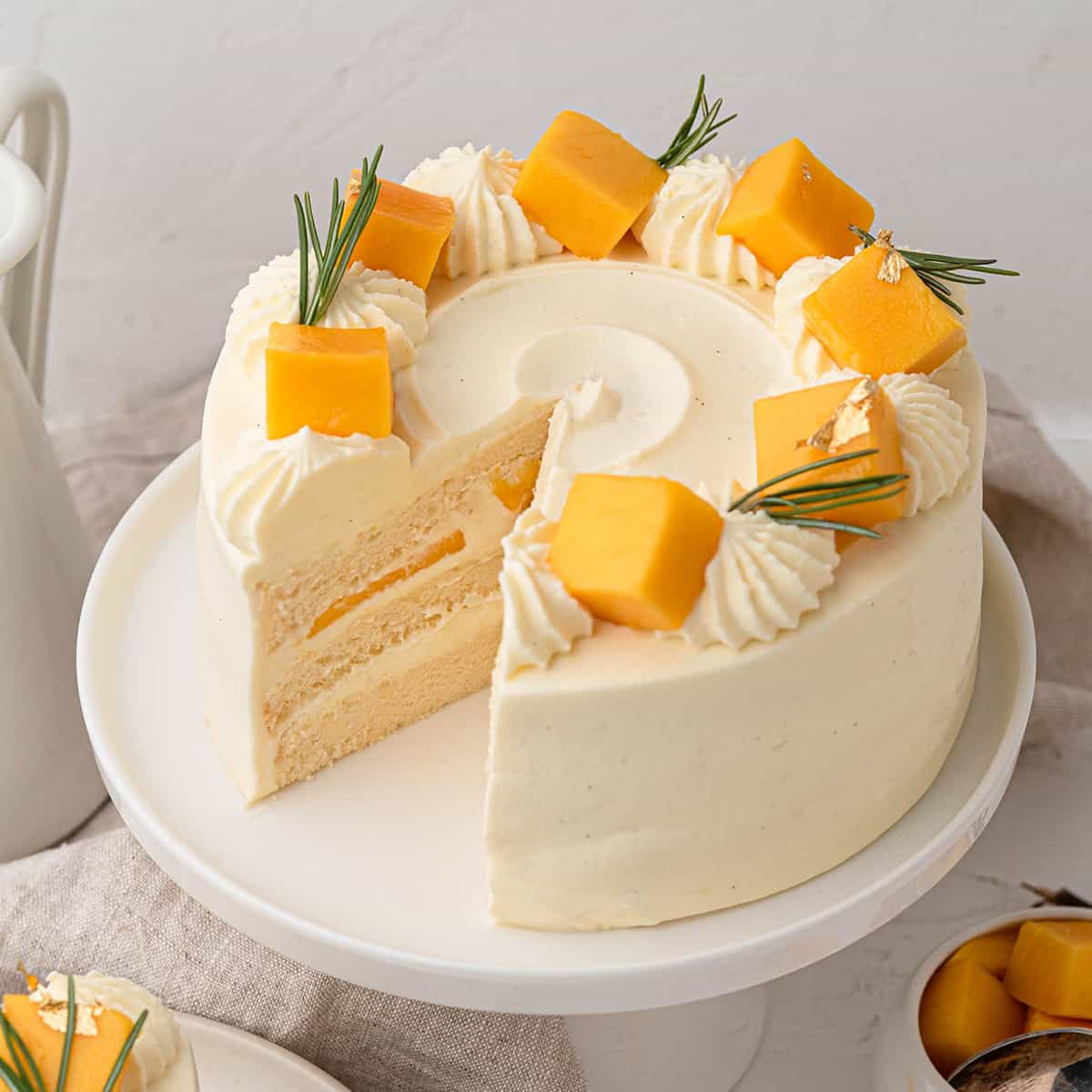
Present on a pedestal cake stand
Give your cake a moment in the spotlight, display it on a pedestal stand with a decorative parchment or doily beneath. It creates a sense of joyful style and ceremony, as if every slice is a special gift.
Common Mistakes to Avoid
Using fibrous mango types
Stringy, fibrous mangoes can interrupt the silkiness of your sponge. Opt for velvety Alphonso or Ataulfo, smooth sweetness blends, not distracts, from your fluffy layers.
Decorating too early
If mango slices go on too soon, they can dull and lose their glow. Wait until just before serving, and consider that citrus brush to preserve their sunny aura.
Skipping moisture protection for layers
Dry sponge layers can throw off the dreamy texture. A quick swipe of mango syrup or sweetened milk keeps each layer tender, no crumbling, just soft harmony.
Overwhipping the cream
Whip to medium-stiff peaks, not the stiffest. Overwhipped cream turns grainy and resists smoothing. Stop just when it’s holding form but still silky enough to coax into a perfect sweep.
Ignoring cooling time
A cake that’s trimmed from the tin before fully cooled is a recipe for collapse and layer slippage. Give it time; that patience is part of what makes the final reveal so rewarding.
Original Recipe
For those of you looking for the original recipe for a 6-inch mango cake that has been living on this blog post for the past couple years, please see the recipe below!
Main Ingredients
Cotton Sponge Cake
- 3 Egg yolks, Room temperature gives the sponge a smoother texture.
- 45ml Milk (3 tbsp), Whole milk adds that delicate richness without weighing the sponge down.
- 35ml Vegetable oil (2 tbsp + 1 tsp), Neutral oil keeps the crumb soft and moist.
- 40g Cornstarch (⅓ cup), My secret for that cotton-soft bite.
- 40g All-purpose flour, Gives structure while letting the cornstarch shine.
- 3 Egg whites, The key to airy lift.
- 65g White sugar (⅓ cup), Adds sweetness and stabilises your meringue.
- Pinch of salt, A little salt makes the mango flavour pop.
Optional, My Favourite Extras That Add a Little Magic
- ½ tsp mango extract, Turns that subtle fruitiness into a tropical punch.
- 1 tbsp coconut cream, Adds a creamy island twist to the whipped cream.
- Zest of ½ lime, Brightens the mango’s natural sweetness.
- Chopped pistachios or toasted coconut flakes, For a bit of crunch and café-style finish.
Substitutions, Smart Ingredient Swaps That Still Taste Amazing
- Cornstarch → Potato starch, Similar lightness, just a touch denser.
- Vegetable oil → Light olive oil, Keeps the crumb soft, adds a mild fruity note.
- Thickened cream → Heavy cream (min. 35% fat), Both whip well and hold shape.
- Fresh mango → Frozen mango chunks (thawed and patted dry), Perfect when mangoes are out of season.
- Preheat the oven to 160°C fan forced
- Line the bottom of a 6-inch cake tin with parchment paper
- In a medium-sized bowl whisk the egg yolks, milk, vegetable oil and cornstarch together
- Sift in the flour and salt, and whisk until just combined
- In the bowl of a stand mixer fitted with a whisk attachment whip the egg whites with sugar until stiff peaks
- In three additions fold the meringue into the egg yolk mixture, being careful not to deflate the bubbles
- Transfer the cake batter to the cake tin
- Fill a larger baking tray with 1cm of boiling water and place the cake tin in the tray
- Bake for 60 minutes, or until it springs back when touched
- Cool on a wire rack
- Once cooled run a knife around the edge of the cake tin and invert the pan
- Wrap in cling wrap and place in the fridge until assembly
- Vanilla Whipped Cream
- Combine the cream, sugar, and vanilla extract in the bowl of a stand mixer fitted with a whisk attachment and whisk until medium stiff peaks.
- Reserve in the fridge until assembly
- Peel the mangoes and cut one mango into 6 large cubes
- Thinly slice the remaining mango
- Cut the cake into three equal layers
- Place a cake layer on a turn table and spread over a thin layer of cream
- Place the thinly sliced pieces of mango over the cream and top with more cream
- Top with another sheet of sponge
- Repeat and cover with the final sponge layer
- Using a palette knife spread cover the cake in a thin layer of cream, spinning the turntable as you go to create a smooth finish
- Place the remaining cream in a piping bag fitted with a star tip and pipe a border around the edge of the cake
- Decorate with the cubes of mango and place in the fridge to set for 1 to 2 hours before enjoying
Frequently Asked Questions
The questions readers ask most before making this mango cake.
What kind of mango is best for mango cake?
Choose a sweet, low-fiber mango so the pieces stay silky and the flavor comes through. Ataulfo (also called honey or Champagne) mangoes and ripe Alphonso mangoes are ideal. Avoid stringy, fibrous mangoes, since the fibers are noticeable against the soft sponge and cream.
Is the cotton soft sponge essential, or can I use a boxed cake?
The cotton soft sponge is what makes this cake taste like an Asian bakery cake: light, fluffy, and able to soak up a little of the mango juices without turning heavy. You can use another sponge, but a dense or buttery cake will feel much richer and less like the original. I really recommend the sponge in this recipe.
How do I stop the whipped cream from sliding off?
Whip the cream until it holds firm peaks but stop before it turns grainy, and keep everything cold. If you live somewhere warm, stabilise the cream with a little mascarpone, cream cheese, or a whipped cream stabiliser so it holds its shape on the layers and the sides of the cake.
How far ahead can I make mango cake, and how do I store it?
Mango cake is a fresh cream cake, so keep it refrigerated and enjoy it within 2 to 3 days. You can bake the sponge a day ahead and assemble the next day. Brush the layers with a little syrup to keep them moist, and add any mango garnish close to serving so it stays bright.
Why did my sponge turn dense or deflate?
A dense or sunken sponge usually comes from a meringue that was underwhipped or overfolded. Whip the egg whites to a strong, stiff meringue, fold gently so you do not knock out the air, and bake in a water bath. Cool the cake completely before unmoulding so it sets without collapsing.
Frequently Asked Questions
How long does this cake last?
This cake will last up to 3 days in the fridge if stored in an airtight container.
Can I use a different fruit?
Yes definitely! Feel free to change up the fruits to suit your tastes, or even do a combination of your favourites.
Why did my sponge cake deflate?
If your sponge cake deflated too much it is most likely because the cake was underbaked. This could be because of a couple of different factors:
- The oven temperature was too low
- There was too much water in the water bath
- The cake wasn’t baked for long enough
My sponge cake had giant cracks
This sponge will crack as it bakes, this is essential when making chiffon or super light cakes as you want the sponge to rise and gain as much air as possible. However, the cracks should be quite small. Large cracks could be due to a couple of reasons:
- The oven temperature was too high
- There wasn’t enough water in the water bath
- The meringue wasn’t beaten well
Why doesn’t this recipe use butter?
This recipe doesn’t use any butter, and instead uses vegetable oil. Due to the nature of butter it will firm up when chilled. As this cake is kept chilled and frosted in whipped cream, using butter in the sponge cake will only cause it to firm up and lose its fluffy texture. While butter acts as a fat while adding extra flavor, vegetable oil acts as a fat that can bring a fluffier texture.
Why doesn’t this recipe use baking powder?
Baking powder is used in most cakes to bring volume and rise, however, this cake is leavened with the air incorporated into the egg whites, giving it an airy texture without the need to add chemical leaveners like baking powder or baking soda.
What mango variety is best for baking
Alphonso, Ataulfo, and Carabao mangoes are top picks, they bring a luxurious, fiber-free sweetness and creamy texture that complements a light sponge beautifully.
How can I keep mango slices from browning?
Brushing them lightly with lemon or lime juice before arranging slows oxidation and preserves their radiant color. Your cake stays as fresh-looking as it tastes.
Can I make a mango cake without baking?
Absolutely! Try a mango mousse version, layer pre-baked or store-bought sponge with mango mousse (set using gelatin or agar) and chill. A no-oven, dreamy delight.
How long does the cake stay fresh?
Stored in an airtight container in the fridge, your cake remains tender and flavorful for up to 3 days. You can even freeze unfrosted sponge layers and assemble just before serving for that freshly baked feeling.
Any ideas for dietary swaps?
For gluten-free, use a 1:1 gf flour blend. For eggless, flax eggs or mashed banana work beautifully. Mango’s moisture helps hold everything together in a soft, tender crumb.

Let’s Get Cooking
If you liked this recipe make sure to leave me a comment and rating down below. I’d love to know how it went! Also, don’t forget to tag me on Instagram @catherine.desserts.
Follow me on Facebook, Pinterest, YouTube, and TikTok for more of my baking creations and updates!
Mango Cake Recipe

This Asian style mango cake is made up of fluffy cotton soft sponge cake, fresh and juicy mango, all topped with a light vanilla whipped cream
- Prep Time: 30 minutes
- Cook Time: 60 minutes
- Total Time: 1 hour 30 minutes
- Yield: 1 x 8 inch cake 1x
- Category: Cake
- Method: Intermediate
- Cuisine: Asian
Ingredients
Light sponge cake
- 4 Large egg yolks
- 1 1/2 tbsp hot water
- 2 tsp Vanilla essence
- 2 tbsp Vegetable oil
- 65g Granulated sugar (I) (1/3 cup)
- 40g All purpose flour (1/3 cup)
- 60g Cornstarch (1/2 cup)
- 1/4 tsp Baking powder
- Pinch of salt
- 4 Egg whites
- 65g Granulated sugar (II) (1/3 cup)
Whipped Cream
- 600ml Whipped Cream (2 1/2 cups)
- 100g Granulated sugar (1/2 cup)
- 1 tsp Vanilla extract
Assembly
- 3–4 Large Mangoes, peeled and sliced
Instructions
Lighty sponge cake
- Preheat your oven to 160°C (320°F) and line the bottom of an 8-inch cake tin
- In a large bowl, combine the hot water and 65g of granulated sugar.
- Add the egg yolks and vanilla essence to the mixture, whisking until it doubles in size and becomes light and fluffy.
- Mix in the oil
- Sift in the dry ingredients (all-purpose flour, baking powder, and cornstarch). Gently fold until just combined.
- In another large bowl, beat the egg whites until foamy. Gradually add the remaining 65g of granulated sugar and continue beating until stiff peaks form.
- Carefully fold the egg whites into the egg yolk mixture until well combined.
- Pour the batter evenly into the prepared cake tins and bake for about 40-50 minutes, or until the cake is level and springs back when pressed in the center.
- Turn the cakes upside down and cool on a wire rack. Once cooled, place them in the fridge to chill completely.
- Once chilled, unmold the cakes and gently rub the outer crust to remove the caramelized layer. Set aside until assembly.
Whipped Cream
- In a large bowl, combine the thickened cream, granulated sugar, and vanilla extract.
- Whisk on high speed until stiff peaks form.
- Transfer the whipped cream into a piping bag fitted with a large round tip.
Vanilla Whipped Cream
- Combine the cream, sugar, and vanilla extract in the bowl of a stand mixer fitted with a whisk attachment and whisk until medium stiff peaks.
- Reserve in the fridge until assembly
Assembly
- Peel the mangoes and cut one mango into large cubes
- Thinly slice the remaining mango
- Cut the cake into three equal layers
- Place a cake layer on a turn table and spread over a thin layer of cream
- Place the thinly sliced pieces of mango over the cream and top with more cream
- Top with another sheet of sponge
- Repeat and cover with the final sponge layer
- Using a palette knife spread cover the cake in a thin layer of cream, spinning the turntable as you go to create a smooth finish
- Place the remaining cream in a piping bag fitted with a star tip and pipe a border around the edge of the cake
- Decorate with the cubes of mango and place in the fridge to set for 1-2 hours before enjoying



Hi Catherine,
How do I prevent the mango from turning brown?
You can toss the mango in some lemon juice 🙂
Hello Catherine,
What kind of mangoes do you recommend for this cake?
What whipping cream is best to use?
Isn’t 60 minutes too long?
Hi Catherine. Really wanna try making this cake, however, it’s really hard to find Canola oil in Portugal. What do you recommend as a substitute?
Thank you so much ????
Hi Catherine,
Can I use cake flour instead of the APF + cornstarch? If so, what would the measurement for the cake flour be in cups? Thank you!
Hi Jessica, I haven’t tested the recipe with cake flour, but you can replace the flour and cornstarch with cake flour if you’d like. It’d be the same measurements! 🙂
Instructions calls for 6″ tin. Is that 6″ dia? How tall. I see they are available 2,3,4″ tall.
Thanks
Yes 6 inches in diameter, Mine is 4 inches tall 🙂
Hello ! Catherine … would you please answer a question… can we add mango to the batter.
Love this cake recipe, have made it twice now, one mango cake and then second time did a pistachio crumb around the cake. I’m about to make a 3rd one but a pandan version.
This Asian-style mango cake sounds absolutely heavenly! The soft, fluffy sponge combined with fresh, juicy mango and light vanilla whipped cream must create a perfect balance of textures and flavors. It’s the ideal dessert for anyone who loves fruity, light, and refreshing treats!
Hi there, can you make this the day before and then store in a cake carrier until the next day?
Can I just order the mango cake from u direct?
Looks SO OUTRAGEOUSLY
Awesome!!
Are you a food bagger or BLOGGER? JUST KIDDING! ja,ja,ja,ja. You are GREAT, THANKS MA’AM!
This is an amazing recipe! I made it for my dad’s birthday and everyone loved it.
Thanks Michelle!
Hi the cake Looks amazing but somehow it never comes out right. When i do the Egg yolks mixture and add the dry ingredients it Ends up being not as watery as in the Video. What am i doing wrong?
Hi Catherine,
So excited to try this recipe out. Could you clarify the height of your 6 inch cake pan you use? is 2in height ok?
Mine was about 3 inches, I would recommend something a little taller, hope that helps!
I was wondering if you have made this cake in an 8inch before and ratios would it be if possible? Thank you.
I’m also wondering how this recipe is if I double it for a 9″ pan. Luba, did you try? Did you ever hear back from Catherine?
Hi Luba, I would multipy all the ingredient quantities by 4/3 🙂
Hello Catherine, thanks for this great recipe – I am looking forward to making this for my twin nieces who specifically asked I bake this amazing cake for their birthday 🙂 I need to bake it in an 8 inch cake tin but I am confused by the advice you have given. What does 4/3 mean? Your steer would be gratefully received.
Hi Janet, I bake it in a 6 inch tin, but if you were to bake it in a 8 inch tin you can by multiplying all the ingredient gram amounts by 4/3 or 1.33 to get the new measurement. Hope that helps!
Hey Catherine, great recipe, however if the pan is 8inch in diametre compared to 6 inch, the increase is volume is 1.76/1. (76%)
However 4/3 is only increasing the ingredients by 33%.
I think you need to increase the ingredients by 76%, this is because the diametre of the pan has a quadratic relationship with volume and thus ingredients.
Hello would this recipe be able to be made into cupcakes? Or if I want to add mango flavor to the cake itself would that change any liquid ratios? Thanks
Hi Sherri, I haven’t tried baking these as cupcakes, but I’m sure it’ll work. Just adjust the bake time to around 15 to 20 minutes. I wouldn’t add mango to the sponge cake as it can cause it to become gummy, rather try adding a mango whipped cream on top, or making a mango puree and filling the cupcakes! ????
I have used this recipe many times and love it so much, I am currently in the middle of another bake. I realized I had no milk so I used thickened cream instead I hope it turns out ok
how many minuts should i bake if the size the pan 4 inchs
I would bake for about 35-40 minutes 🙂
I don’t usually leave comments and reviews but I tried this cake recipe and it is absolutely perfect! My parents are super picky with sugar levels and they were very happy with this one. They said it’s even better than the ones in the Chinese bakeries!! Thank you so much for this recipe. It’s a definite keeper.
Hi Pauliee, aww thank you so much, so glad your parents loved it too 🙂
Hi, just wanted to point out that the actual instructions you include in the recipe itself do not match the tips and tricks in the write up at the start of your post. Great cake but would be nice to have all the info in one place! I forgot the water bath because of this but it still turned out very nicely.
Hi Catherine!
Would it be ok to substitute fresh mango with frozen mango(thawed of course)?
It’s hard to find nice mango at this time of year 🙁
Hi Jess, yes! Fresh mango is delicious, but frozen mango would be just as good. Hope you like it 🙂
If I was to double the recipe,what size cake pan should I use?
If I’m using 2x the recipe and make 1 cake in 9.5inch, how should I adjust baking time?
I have a convection oven, what temperature would you recommend I bake at? Thanks!!
Hi Daphne, you can bake these at the same temperature as the recipe states! Hope you like the recipe 🙂
Hi Catherine,
My cake tin is 8.6 inches. Would it be a good idea to do 1 and 1/2 of the recipe so I can still make it a 3 layer cake?
So glad I followed you after watching Zumbo’s Just Desserts! This sponge cake recipe truly is the one that I have been looking for, after too many sponge trials!! Such a good recipe and I’m so excited to try all your other recipes!!! A couple of questions:
1. How high is your 6-inch cake pan? It looked like too much batter to put into my 3-inch high 6-inch pan, so I baked it in an 8-inch pan as that’s the next size I have. It came out great but will scale up next time for more height. But yeah wanted to know if the 3-inch height is enough for the cake to rise?
2. Does this recipe work for sheet cakes? I like to make mini cakes sometimes and was wondering if I could bake this in a flat tray to chomp out little circles!
Thank you so much for posting this up for free!! It’s insanely good and I really hope you gain lots of success from all your blog posting! <3 <3
Hi Sheryl, I’m so glad you loved the recipe! My cake tin is a little taller at 4 inches, the cake then rises to the top for a tall and fluffy cake. I would get a cake tin that is a little deeper. As for the sheet cake, I’ve never tried it, but imagine that it would work well, I’d definitely double the recipe for it. Wishing you luck with your baking!
Hi Catherine,
After sifting in the flour, the batter seems sticky. Izit normal?
Yes, the batter will be a little sticky, once you fold the meringue in it’ll be at the perfect consistency 🙂
Hi!
I’m trying to make this for my dads birthday as his favourite is mango cake.
I used the 6” cake recipe (the one above) and my cake shrinked up after it cooled 🙁 I got the egg whites to stiff peaks, but after folding in the egg yolks it was still a little clumpy ????????♀️
if I do not have a 6-inch cake pan that is over 4-inches tall, could I just split the batter among the tins I do have?
Yes defintely! Make sure you adjust the bake time accordingly, otherwise the cakes will overbake. Try baking them for 35-40 minutes 🙂
We are are you located? Love to place an order of the mango cake.
Unfortunately don’t sell cakes anymore! Although you can bake one ????
Can I bake the cake a few days before and freeze it before I assemble?
Yes you can! Wrap the baked sponge in cling wrap and freeze, then defrost on your countertop for a couple of hours before frosting.
Turned out great! Beautiful texture, lots of mango flavour, not too sweet.
So glad it turned out well!!
The cake is so soft and has the perfect texture. Instead of putting mangoes, I filled and topped it with strawberries and custards. Definitely going to be using this recipe more often.
That sounds absolutely delicious!
Hi again!! I use this sponge recipe as base for almost all my cakes..????
I need to make a cake for a baby shower and was wondering if and when can I add color to the batter to make it a pink / blue cake.
Thank you
Is there something I can use other than vanilla paste?
You can use vanilla extract instead 🙂
Do you have a video of this recipe?
can you stack this cake?
I wouldn’t recommend it as it is very soft 🙂
Thank you so much for sharing this awesome mango cake recipe and for giving every necessary detail to get it right! I made it for a get together, and everyone who tried it was raving about it. Very soft and fluffy, not too sweet and a crowd pleaser. This cake recipe is definitely a keeper!
Aww so glad it was a hit!
The cake was light, fluffy and not very sweet! my family loves it.
So happy that i found your recipe!
My cake has a big crack on top, and some parts of the cake was abit harder. izit because i didnt fold them evenly?
The crack comes from how the egg whites were handled. Don’t overbeat your meringue and fold your batter carefully but thoroughly so it is completely combined. The harder bits of cake it definitely from not folding enough. Hope that helps!
Hi I would like to know about frosting with cream vanilla and sugar how would it hold ? Normally whipped cream doesn’t stay well with so much moisture
As long as you keep it chilled and whipped to stiff peaks there shouldn’t be any problems 🙂
Oh my tried this recipe but placed it in paper cup/ mini boxes. Heck of a crack!!! Like volcano erupted! Lol!!! Maybe 160C is too high for a cup cake? I know I bet the meringue well.
Btw can we add vanilla in d batter ..the eggy smell is quite strong actually.
Yes you can add vanilla to the batter! As for the crack, it would probably be because of the baking vessel. It works best in an aluminum cake tin, I haven’t tried baking them in paper cups, but I’m sure it still tastes yum 🙂 Also don’t forget the hot water bath for less cracks!
Hi Catherine, today I tried making the mango cake in a tin…no 6 by 4 inch tin thus I made it in a 7 by 3 inch. Turns out fabulous no cracking. Thank you.
PS: my decoration isn’t great but the taste of the cake is amazing. Wish I can tag a photo here ????
I’m so glad it turned out well! A 7 inch cake tin works perfectly too as it is only a little bigger ????
hi i really want to try this recipe out but can i also use buttercream frosting instead of a whipped cream frosting?
hi catherine
can i bake the cake without a water bath?
Hi Nicole, without the water bath the cake will turn out a lot drier and with a much larger crack. While it’s possible I wouldn’t recommend it ????
Hi Catherine, can I know wat type of milk u referring in ur ingredients?
Just regular whole milk ????
Super clear instructions. Every sponge cake i’ve attempted to make in the past were all too dense, gummy, and nothing like the Chinese or Korean bakeries. Made this for my mom’s birthday and she said it was better than some bakeries we’ve bought from! Thanks for sharing this recipe. It’s great for the summer when mango is cheap and sweet.
Sooo glad you loved it! One of my favourite sponge cake recipes ????
Thanks for the recipe! Baked it for my husband’s bday and everyone love it. Sponge recipe was perfect and its not overpowering everything else. Lovely.
So glad everyone loved it!!
Hi Catherine, how long should I bake it for if I double the recipe for a 10” pan?
My cake didn’t rise AT ALL. And then I realised this recipe has no baking Soda!!
Absolutely loved it. Made it for a dinner party and everyone had seconds ????
can I use 8×8 instead of 6in
If should I double the recipe
Hi Catherine! I am intending to use this recipe to make an earl grey cake, and was wondering how would you recommend i incorporate the flavour into the cake? Should I infuse a teabag with the milk (for the sponge cake), or should i find a way to incorporate it into the whipped cream itself? Any advice would be greatly appreciated hehe <3
(btw i LOVE all your posts, and you're my go to baker for trusty recipes!! I've made macarons using your recipe 3x without failing a single time, something i have not been able to achieve with other recipes. THANK YOU SO MUCH)
My go to cake recipe whenever there’s an occasion. My fam love this so much when I bake this cake!
Hi Catherine,
Can you substitute the sugar for maple syrup? Or any sugar free alternatives?
Hi Catherine,
I have to say, this is gorgeous recipe for a chiffon cake. It’s become my go to base Chiffon cake recipe. I have adapted and tested it multiple times since finding it and I have to say hats off to you. I primarily make 4inch mini cakes and these are an absolute treat. I have made both matcha and chocolate versions of this recipe with great success. Planning on attempting an Earl grey version soon.
All that to say, scaled up or down, adapted or not, this is a solid chiffon cake recipe and I absolutely love it.
Thanks so much for sharing. ????
Cake looks beautiful, but wondering, could you fill some layers with pastry cream and then top with whipped cream or will it not hold up in this cake?
Really great recipe!! I was able to make it successfully and it turned out amazing! 🙂
Hey Catherine, do I need to boil oil and milk together for the batter?
Rather than using corn starch, can I just use cake flour, it has reduced gluten?
I live in Canada n not able to find thickened milk. Suggestions for replacement?
Hi, for reference, at what scale did you do the recopie to make a cake the size of the reference picture? Thank you
Hi can i make icecream cake with dis sponge n my tun is 6 inches but 2 inch in height. Shd i half d rcp n baking tym shd b what. Plan to make tmrw
Thnks
Is white sugar you’re referring to powder sugar or granulated sugar?
This recipe turned out amazingly! Catherine, I really appreciate all the details and troubleshooting information you included in the recipe. I was really worried because it was my first time making it but it was delicious!
Hi Catherine,
Thank you for posting this recipe. Some years ago I tasted a pillowy cotton super soft mango cake at a Chinese restaurant. It was factory made and delicious.
The recipe had mango in the batter. If I used mango pulp in the batter, should I halve the amount of milk I am using?
Hi Catherine – I made this cake and it came out so good. So light and fluffy, really melt in the mouth texture. I filled it with cream and pineapple as I didn’t have mangoes and it was a huge hit. Thanks for this awesome recipe
Hey Catherine,
Whenever I add the flour to the cornstarch/yolk/oil/mix mixture, it always ends up clumpy, even after I strain it. Do you recommend anything for this?
Hi Catherine! So i tried making this today and the egg yolk mixture was so thick and the batter was super clumpy???? any tips?
Hi Catherine, when you say drop the cake, does it matter if is it right side up (so open side up) or down?
I’m my country we don’t have Thickened cream
Can I use whipped cream?
Hi, how can I stabilize the whipped cream? Should I add gelatin or something else and how?
Hello,
Please confirm the amount of flour. I do Think it’s Correct. You have 40g, how much is that in cups?
What kind of vegetable oil do you use please? Would love to make this cake for my sons birthday this weekend 🙂
Eve
I’ve made this recipe so many times and it never disappoints! Amazing 😀
Ilove this . ❤️❤️ Kam sa ham ni da
Hi Catherine, my guest find the frostings too sweet. Is it possible to whip up the double cream without any sugar to frost the cake?
What leaves did you used for the topper of mango cake?
Hi there! Is it ok to use a mango american buttercream for the top and sides frosting and fill it with whipped cream? Or will buttercream be too heavy for this soft cake?
I MADE THE UBE CAKE. IT WAS WONDERFUL!!! I WILL BE MAKING IT AGAIN. THANKS
Hi, can I make this as a sheet cake? If yes, what should I be careful about?
hi catherine!!
i’ve been wanting to make this cake for my dad and i seen in the comments that you said if you do an 8inch cake tin, to 1.33 times the recipe but i was wondering what if i use a 9inch pan? and how would the baking time differ? i tried to calculate the difference on my own but typically a 6 to 8inch would be 1.77x the ingredients so i’m guessing the conversion is a bit different for this cake!
Hey just wondering can I use a square pan for this or does it have to be round?
Have made this cake before and it’s a family favorite!
I will be going on vacation and my dad’s birthday is the day we get back. Would i be able to freeze the whole cake and thaw?
Very delicious ????
Hi Catherine,
Is it better to use one 8 in cake pan and cut the cake into layers or divide the mix between 3 tins? If so, how long would be the baking time?
Thanks 🙂
Hey Catherine,
I m going to bake this cake for my husband’s birthday but i dont have aluminum cake tin so can i use black one if no if i buy aluminum one can i bake it in single tin
Thanks
Hi Catherine
I have made this cake few times now it’s one of my families favourite!! Previously you had 6 inch recipe has it been changed? Would it be possible to get 6 inch recipe?
Hi Catherine,
Am I able to make the new recipe in a single 20cm cake tin that’s 10cm deep?
Hi !
In the video you used two cake tins. I only have one. Is it okay just use one?
Can I add between the layers of the cake mango curd instead of mango slices?.
Thank you in advance for your response!.
Hi, your recipe says to cut the cake into 3 equal layers, but your video shows you holding up 2 cake tins and sliced them to have a total of 4 layers. Then, the final product has 3 layers. Can you pls clarify how many cakes in total I should make for the mango sponge cake as pictured?
Hello, just wondering why the other two versions have milk but you have omitted milk in this version?
I really love this cake and have made it numerous times! I did have a question about changing the flavor of the cake, for example if I wanted to make the chiffon cake pandan flavored, would adding a few drops of pandan extract be fine?
Hi catherine, I only have an 8-inch cake tin, and so I’m wondering if i could bake the entire recipe in a single cake tin or would you recommend baking them in 2 batches? Also, would there be any adjustment in the baking temp or duration if I bake them altogether in a single cake tin?
I made this cake for Mother’s Day, since my mom loves mangoes, and I just have to say 10/10!! I LOVE IT!! It was so fluffy, perfectly sweet but not too sweet. I love it so much I’m going to make it again this weekend. The recipe was easy to follow and the outcome was amazing.
I’m going to try out other recipes you have because I’m confident they’ll all be as good as this one!
Hi Catherine, I’ve been watching you on instagram for a while and I figured it was finally time to test out one of your recipes and this one seemed really yummy to make. I do have a question though, is the aluminum cake pan absolutely required or would a non stick cake pan work as well? Would the non stick cake pan effect the taste of the cake?
I am preparing to make this recipe for my son’s birthday as he requested “mango cake”. I have always used powdered sugar for whipped cream. May I ask why you chose granulated sugar? How do you prevent the whipped cream from having a gritty texture?
I was successful making this cake (my daughter’s request to make a mango cake) for her 25th birthday. I found your recipe and everyone was happy and satisfied with it. Thank you.
Hello, can i cook the batter in 3 seperate shallow 6inch pans? If so, how long should i bake? Also, can i sub the veg. oil to avocado, olive oil, or melted butter? Last, can i premake this cake the night before and still be fresh the next day? Thanks so much.
Hi! Do I need 1 cake Tin or 2 using the updated recipe?
Hi 🙂 – quick question. The 8 inch cake recipe – do we divide the batter into two 8 inch pans? It says “cake tins” but didn’t see how many. Sorry if I missed it 🙂
Amazing 🤩
I made it with blackberries and everyone it
Hi Catherine, I’ve just unmoulded the cakes and waiting for them to cool. They look good so far. Thanks for sharing your recipe.
Just wanted to clarify:
1) recipe mentions a cake tin then two cake tins. Then to slice the cake into 3 layers. The video shows two cake tins and each sliced into half. Which is it, and if using 1 tin, then 8-inch? If two tins, then 6-inch each?
2) The recipe doesn’t mention unmoulding the cake from the tin then cooling it upside down. The video demonstrates that but doesn’t mention/show putting it in the fridge first.
3) Does putting it to chill just make it easier for the crumb layer to be removed? Put in fridge wrapped? I’m concerned about the cake drying out.
Thanks in advance 🙂
I made this cake over the weekend, and can say it is so delicious! My family loved it. So easy to make as well!!
I did a mango puree in the middle instead of the mango pieces, and I also put a coconut simple syrup on the cake.
Thank you for the recipe Catherine!
amazing recipe, I didn’t think I’d be able to do it as I’d never made anything like it before but omg was so good and easy (apart from the hand whipping lol)
Did you add a syrup to the mangoes on top to make them shiny and moist?
do you use one or two 8 inch cake pans for the updated recipe?
do you use one or two-8 inch cake pans for the updated recipe?
The recipe is so beautifully described that even a mid level home baker like me was brave enough to make it. Thank you for sharing such a wonderful recipe. It’s really good.
The recipe calls for one 8” tin, and then proceeds to say “distribute into panS evenly” and flip the cakeS etc, so, plural tins. It would be great if you revise and clarify if there are two or 1 tins.