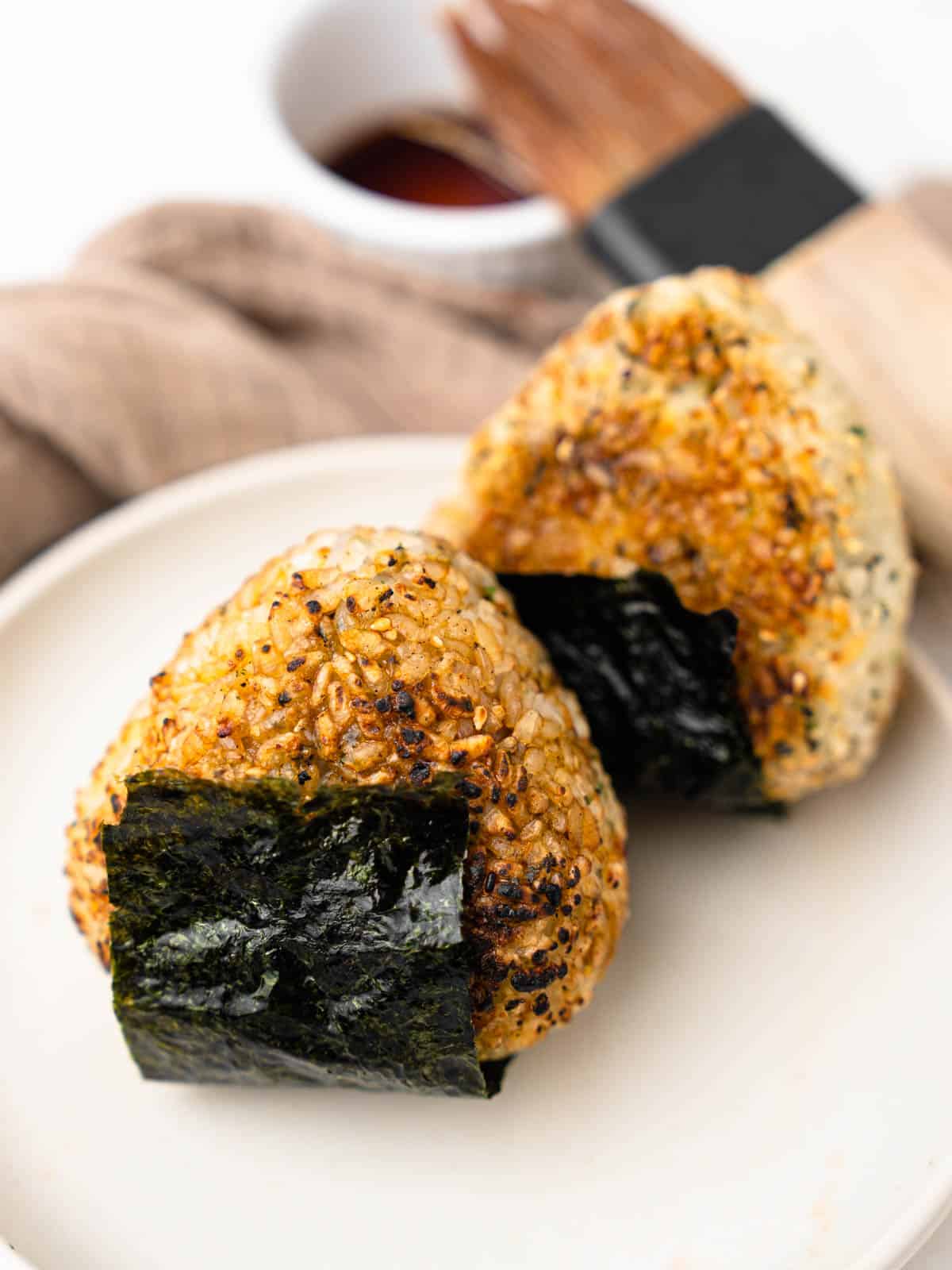
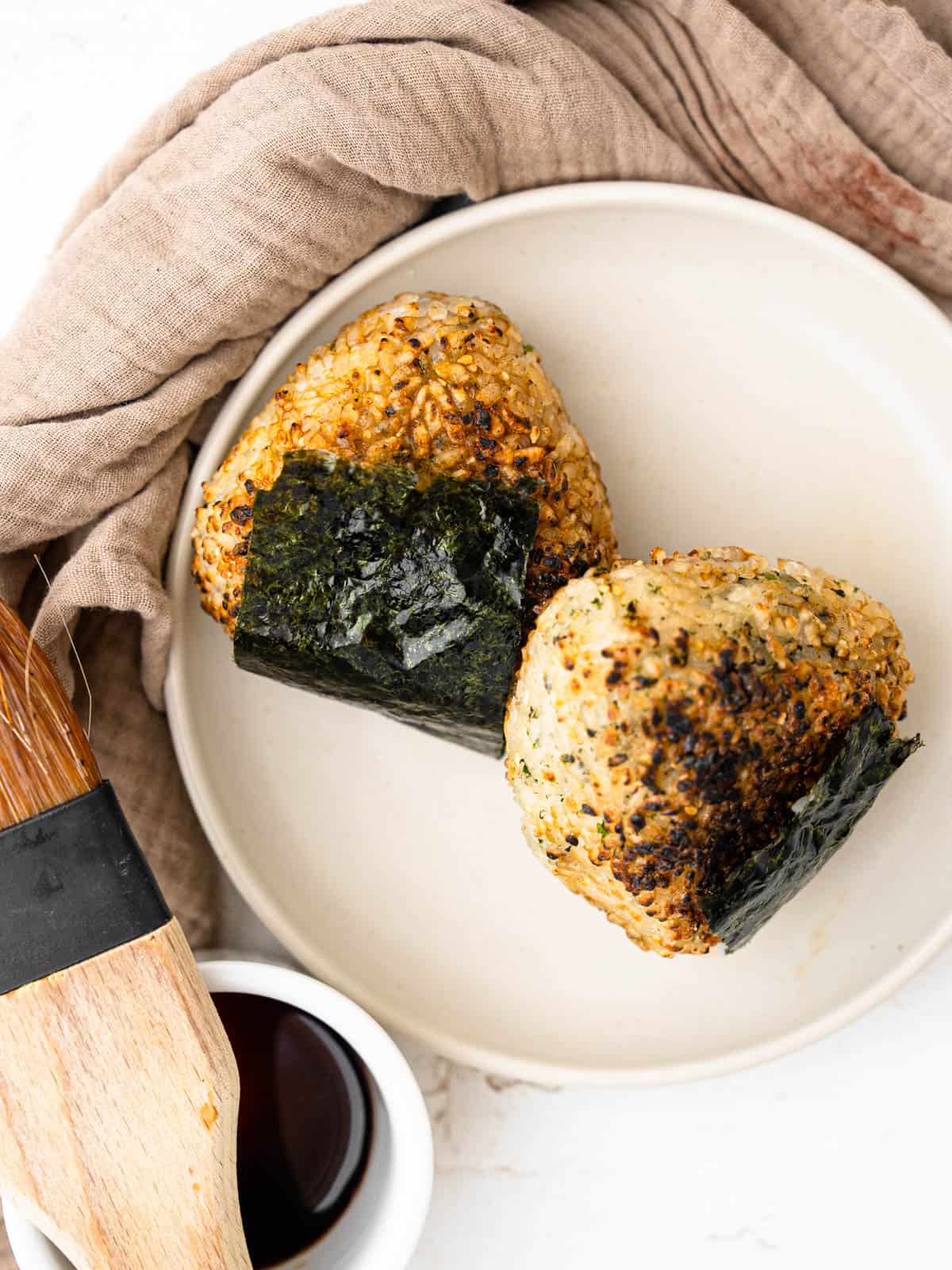
Fragrant grilled Japanese rice seasoned with seaweed and grilled with a brushing of savory soy sauce, the perfect yaki onigiri
Yaki onigiri is one of those cosy snacks I crave when I want something simple but still a little special. The outside turns crisp and golden, the soy sauce gets savoury and glossy, and the inside stays soft, warm, and fluffy. I love the way the rice smells when it hits a hot pan, especially when the edges start to toast. I first tested this at home after wanting a quick lunch that felt more fun than plain rice, and the first few batches taught me a lot. Some fell apart, some stuck to the pan, and one had a very dramatic cheese leak. Once I shaped the rice while it was still warm and brushed the soy sauce near the end, everything clicked. It’s comforting, crisp, and very easy to make your own.
What is yaki onigiri?
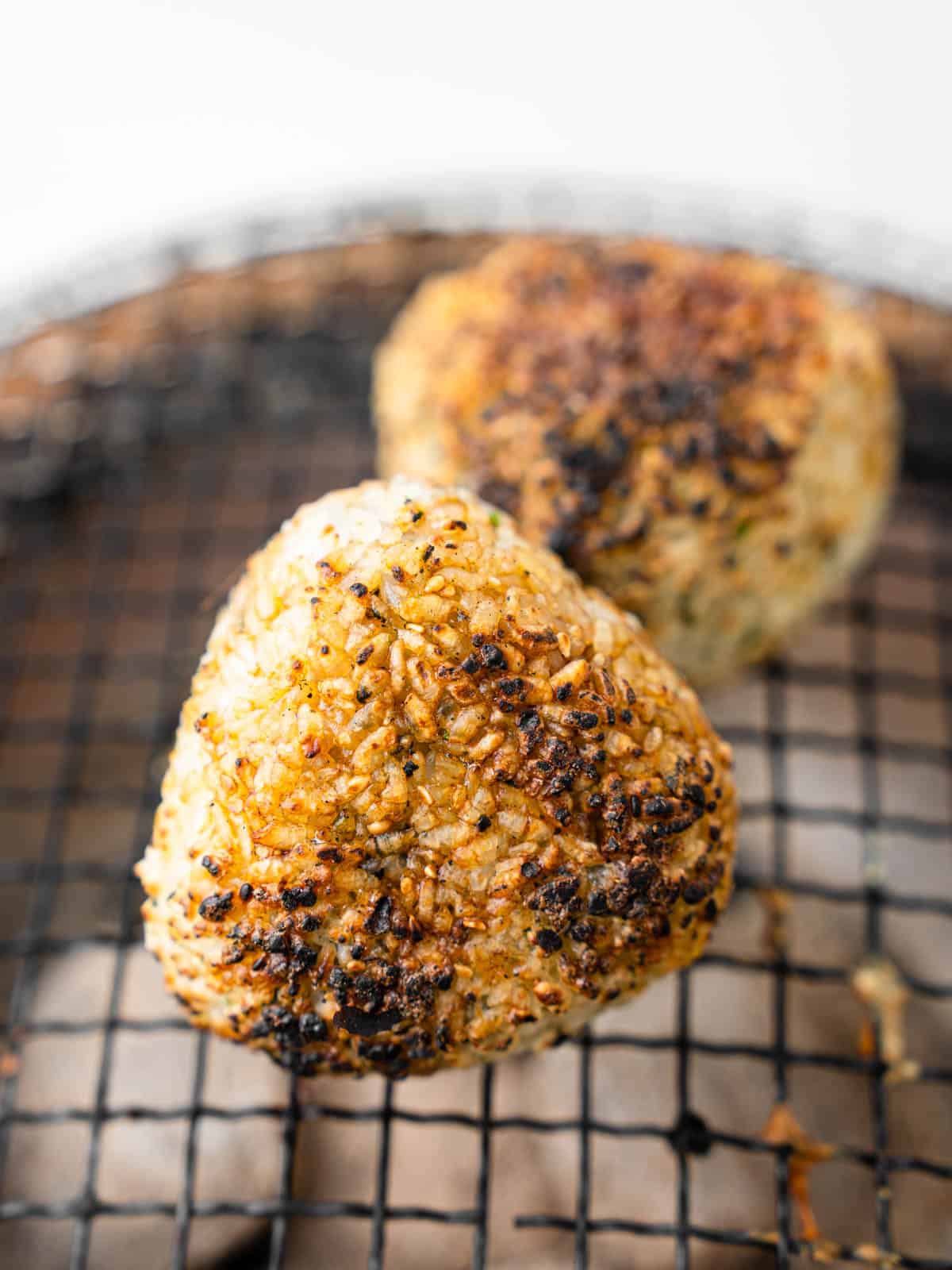
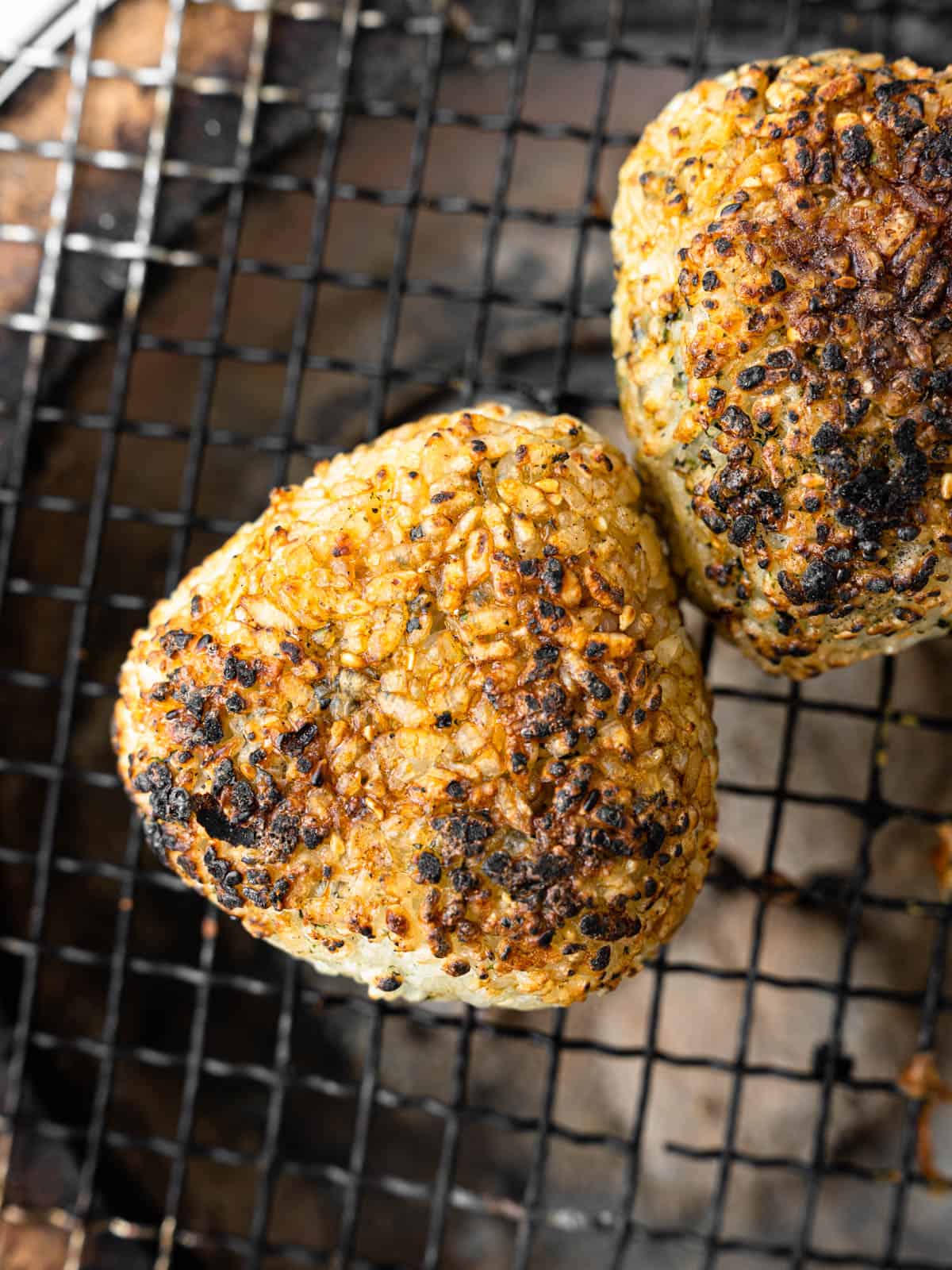
Yaki onigiri directly translates to grilled rice ball in English, which is exactly what it is. These Japanese grilled rice balls are toasted over a grill or in a frypan until the outside is crispy and brushed in soy sauce for a salty, savory touch. Sometimes they are also brushed with miso or unagi sauce!
The inside is typically plain fluffy white rice, but you can fill it with whatever filling you like.
These ones are filled with mozzarella cheese for a fun, cheesy pull. I’ve also seasoned the rice with some furikake. Furikake is a Japanese seaweed seasoning used in rice, which gives it a delicious flavor.
At-a-Glance Specs, What You’ll Need Before We Start Rolling
| Yield | Prep Time | Cook Time | Difficulty | Storage |
| 6 onigiri | 15 minutes | 45 minutes | Easy | Best fresh, leftovers up to 2 days in the fridge |
Ingredients
- Short-grain rice: Make sure you use short-grain rice as this kind of rice is slightly stickier and easier to work with than regular medium, long-grain, or jasmine rice. Just search for sushi rice at your local supermarket!
- Water: You can’t skip water when you cook the rice!
- Furikake: This is optional, but I like to add some of this seaweed seasoning to the rice for a delicious umami flavor. If you don’t have any feel free to leave it out, it’s not essential. You can also use sesame seeds or seaweed flakes as a substitute!
- Soy sauce: Soy sauce gives the rice balls that salty, savory flavor! Some people even use seasoned soy sauces like teriyaki sauce, unagi sauce, or mentsuyu for a different flavor.
- Mozzarella cheese: This is totally optional, but a delicious stretchy surprise when you bite into your rice ball.
Optional, My Favourite Extras That Add a Little Magic
- Furikake
Furikake adds seaweed, sesame, and umami flavour. I like mixing it through warm rice so the flavour spreads evenly. - Mozzarella cheese
Mozzarella gives you that soft, stretchy centre. Keep it right in the middle so it melts without escaping. - Nori strips
Nori makes the onigiri easier to hold and adds seaweed flavour. Add it just before serving if you want it to stay crisp. - Sesame seeds
Sesame seeds add a nutty little crunch. Sprinkle them over the warm glaze so they stick nicely. - Spring onion
Spring onion adds colour and freshness. Add it after grilling so it stays bright. - Butter
Butter makes the crust richer and more golden. Use a little, because yaki onigiri should be crisp, not greasy.
Substitutions, Smart Ingredient Swaps That Still Taste Amazing
- Tamari instead of soy sauce
Tamari gives a similar savoury flavour and can work for gluten-free cooking. Check the label to be sure. - Miso glaze instead of soy sauce
Miso gives a deeper, richer flavour. Brush it on near the end so it caramelises without burning. - Teriyaki sauce
Teriyaki gives a sweet and glossy finish. Use a thin layer because sweet sauces can darken fast. - Mentsuyu
Mentsuyu adds soy, sweetness, and dashi flavour in one step. It is a lovely shortcut when you want more depth. - Vegan cheese
Vegan cheese can work for a dairy-free filling. Choose one that melts well and keep it sealed in the centre. - Sesame seeds or seaweed flakes instead of furikake
These still give a toasty, savoury finish. They are simple and easy to find.
Troubleshooting, Quick Fixes I’ve Learned from My Bakery Kitchen
| Problem | Why It Happens | Quick Fix |
| Onigiri falls apart | Rice is cold, dry, or loosely shaped | Use warm short-grain rice and press firmly |
| Rice sticks to the pan | Pan is not hot enough or not lightly oiled | Preheat well and use a thin layer of oil |
| Soy sauce burns | Sauce was added too early | Toast first, then brush near the end |
| Crust is not crisp | Rice was moved too soon | Let it sit until the crust forms |
| Cheese leaks out | Filling is too close to the edge | Keep filling centred and seal the rice well |
Comparison, How This Recipe Stacks Up Against Other Rice Dishes
| Dish | Texture | Best For |
| Yaki Onigiri | Crisp outside, fluffy inside | Grilled snack, lunch, or side |
| Regular Onigiri | Soft, sticky, portable | Bento, picnic, or quick meal |
| Crispy Rice | Crunchy base, soft centre | Small bites with toppings |
Tips, My Personal Tricks for a Professional-Looking Result
Shape the Rice While It Is Warm
Warm rice sticks together much better than cold rice. It should be cool enough to touch, but still soft and tacky.
When I tested these at home, warm rice was the difference between neat triangles and rice confetti. Cold rice was not in a cooperative mood.
Wet Your Hands Before Shaping
Lightly wet hands stop the rice from sticking to your palms. You do not need much water, just enough to keep things smooth.
This makes shaping easier and keeps the surface neat. It is one of those tiny steps that makes you feel instantly more in control.
Press Firmly, But Do Not Crush the Rice
The onigiri needs to be firm enough to grill, but not smashed into paste. Think compact, not squashed.
You still want the inside to feel fluffy. A crisp jacket is lovely, but a rice brick with ambition is not the goal.
Make Flat Sides for Better Browning
Flat sides give the rice more contact with the pan or grill. More contact means more golden crust.
At TuCha, I think about surface contact a lot, even with simple snacks. Colour means flavour, and flavour is the whole point.
Let the First Side Set Before Flipping
Once the onigiri hits the pan, give it time. If you move it too soon, it can tear.
Wait until the crust forms and the rice releases more easily. During my Zumbo’s days, I learned that texture often rewards patience.
Brush Soy Sauce Near the End
Toast the rice first, then brush on the soy sauce. This keeps the outside crisp and helps the sauce glaze instead of soak in.
I learned this after a few smoky pan moments. Tasty, yes. Dramatic, also yes.
Keep Fillings Thick and Centred
Wet fillings can loosen the rice from the inside. If you use tuna mayo, kimchi, or salmon, keep it thick and tidy.
The filling should sit in the centre like a polite guest. It should not wander out the sides.
Chill Loose Onigiri Briefly Before Grilling
If the shaped rice feels soft or wobbly, chill it for a short time. This helps it firm up before grilling.
Do not chill too long, though. Cold rice can dry out and become harder to crisp nicely.
Variations, Fun Twists and Flavours Inspired by My TuCha Dessert Experiments
Miso Butter Yaki Onigiri
Brush the toasted rice with miso and melted butter near the end. The flavour is rich, savoury, and a little sweet.
This version feels cosy and deeply snackable. It is the one I would make on a cold night with a bowl of soup.
Teriyaki Yaki Onigiri
Use a light teriyaki glaze instead of plain soy sauce. Brush it on late so it turns glossy without burning.
It gives the rice a sweet-salty finish. Very simple, very crowd-friendly.
Mentsuyu Yaki Onigiri
Brush the rice with mentsuyu for a deeper dashi-style flavour. It gives you soy, sweetness, and savoury depth in one go.
This is a great pantry shortcut. Big flavour, tiny effort.
Sesame Soy Yaki Onigiri
Mix soy sauce with a little sesame oil and brush it on near the end. Finish with toasted sesame seeds.
It smells nutty and warm as it hits the pan. This one is simple but feels very satisfying.
Spicy Gochujang Soy Yaki Onigiri
Mix a little gochujang with soy sauce for a spicy twist. Keep it light so it does not take over the rice.
This is lovely with mozzarella inside. Cheese and chilli know how to have a little drama.
Garlic Butter Soy Yaki Onigiri
Melt butter with a little garlic and soy sauce, then brush it over the toasted rice. Keep the heat medium so the garlic and butter do not burn.
It is not the most traditional version, but it is very tasty. Sometimes the snack wants to be a bit cheeky.
Salmon Mayo Yaki Onigiri
Fill the centre with cooked salmon and a little mayo. Keep the filling thick so the rice stays firm.
The outside gets crisp while the centre stays soft and savoury. It is perfect for lunch.
Kimchi Cheese Yaki Onigiri
Add chopped kimchi and mozzarella to the centre. Drain the kimchi well first so the rice does not get wet.
This version is spicy, cheesy, and very camera-friendly when cut open. The cheese pull does the talking.
Serving Suggestions, How I Like to Present These for Maximum ‘Wow’
Serve with Miso Soup
Yaki onigiri and miso soup are a cosy little pair. The crisp rice and warm soup feel simple and complete.
This is my favourite way to turn a snack into a small meal. It feels calm, warm, and comforting.
Add Nori Just Before Serving
Wrap a strip of nori around the grilled onigiri right before eating. It adds seaweed flavour and makes it easier to hold.
If you add it too early, it softens. Still tasty, just less crisp and less camera-ready.
Serve with Japanese Pickles
Pickled cucumber, takuan, or ginger adds a bright crunch beside the rice. The sharp flavour balances the salty glaze.
It makes the plate feel fresher. Small side, big difference.
Make a Bento Box
Pack yaki onigiri with tamagoyaki, edamame, cucumber salad, or grilled tofu. Let the rice cool before packing so it does not steam everything.
Cheese-filled ones are best warm. Plain, salmon, or miso mushroom versions travel better.
Serve with Yakitori or Grilled Tofu
Yaki onigiri is lovely beside grilled skewers or tofu. The smoky rice works well with savoury grilled flavours.
It gives proper izakaya-at-home energy. I fully support that kind of dinner.
Make Yaki Onigiri Chazuke
Place one grilled rice ball in a bowl and pour over hot dashi, green tea, or light broth. Add spring onion, sesame, nori, or a little wasabi.
The crisp edges soften into the broth. It becomes gentle, warm, and perfect for a tired day.
Add a Small Dipping Sauce
Serve with chilli crisp mayo, kewpie mayo, or extra soy glaze on the side. A little dip makes the rice feel playful.
Do not drown it, though. Yaki onigiri likes a dip, not a swim.
Serve Straight from the Pan
Yaki onigiri is best when the outside is crisp and the inside is warm. If there is cheese, this is when the pull is at its best.
It is very much a gather-round-the-pan snack. No fancy plating needed.
Common Mistakes to Avoid, Lessons I’ve Learned After Dozens of Batches
Using Long-Grain Rice
Long-grain rice does not stick together the same way. It can fall apart when shaped or grilled.
Use short-grain rice or sushi rice. Sticky rice is the secret glue here.
Shaping with Cold, Dry Rice
Cold rice can crack and crumble. It is much harder to press into a neat shape.
Shape while the rice is still warm. Warm rice is far more helpful and much less dramatic.
Making the Filling Too Wet
Wet fillings can loosen the rice from the centre. Tuna mayo, kimchi, or salmon should be thick, not runny.
Drain or squeeze fillings if needed. The centre should be tasty, not soggy.
Brushing Soy Sauce Too Early
Soy sauce can burn if it goes onto the rice too soon. It can also make the surface wet before the crust forms.
Toast first, then brush. Let the rice get its crispy little jacket before adding the glaze.
Flipping Too Soon
If the crust has not formed, the onigiri can stick or tear. This is where patience really matters.
Let the first side cook until it releases more easily. If it fights you, it probably needs more time.
Using Too Much Oil
A little oil helps stop sticking. Too much can make the rice greasy.
Use a light coating on the pan or grill. Yaki onigiri should be crisp, not oily.
Overfilling with Cheese
Too much cheese can burst out while cooking. A small cube in the centre is enough.
Seal the rice well around it. We want cheese pull, not cheese puddle.
Reheating for Too Long
Rice can dry out and turn hard if overheated. This happens quickly, especially in the microwave.
Warm it gently, then crisp it in a pan or air fryer if you can. Do not let it go from snack to stone.
Frequently Asked Questions
Why Is My Yaki Onigiri Falling Apart?It may be the wrong rice, cold rice, loose shaping, or a wet filling. Short-grain rice works best because it is sticky enough to hold together. Shape it while warm, press firmly, and let the first side form a crust before flipping.
It may be the wrong rice, cold rice, loose shaping, or a wet filling.
Short-grain rice works best because it is sticky enough to hold together. Shape it while warm, press firmly, and let the first side form a crust before flipping.
Can I Make Yaki Onigiri with Leftover Rice?
Yes, but warm it first so it becomes soft and sticky again. Cold rice can be dry and hard to shape.
If it still feels dry, sprinkle over a little water before reheating. Keep it soft, not wet.
When Should I Brush Soy Sauce on Yaki Onigiri?
Brush soy sauce after the rice has started to toast. The surface should have a light crust first.
If you brush too early, the sauce can soak in, make the rice wet, or burn before the onigiri crisps.
Can I Make Yaki Onigiri in the Air Fryer?
Yes. Brush the shaped onigiri lightly with oil and air fry until the outside starts to crisp.
Then brush with soy sauce near the end and air fry again briefly. Watch it closely because the glaze can darken fast.
Can I Make Yaki Onigiri in the Oven?
Yes, though the oven may not give the same deep crust as a pan or grill.
Place the onigiri on a lined tray and brush lightly with oil. Bake until the outside firms, then brush with soy sauce near the end.
How Do I Stop Yaki Onigiri from Sticking?
Preheat the pan and use a light layer of oil. Do not move the onigiri too soon.
Once the rice forms a crust, it should release more easily. If it sticks, give it another moment.
Can I Freeze Yaki Onigiri?
Yes. You can freeze them shaped and ungrilled, or freeze them after grilling.
Wrap each one well. Reheat gently, then crisp in a pan, oven, or air fryer.
Can I Make Yaki Onigiri Gluten-Free?
Yes. Use tamari instead of soy sauce.
Also check the furikake and sauces, as some can contain wheat.
Can I Make Yaki Onigiri Vegan?
Yes. Skip the mozzarella and check that your furikake is vegan.
Use sesame seeds, nori flakes, miso glaze, mushrooms, or vegan cheese for flavour.
What Is the Best Filling for Yaki Onigiri?
The best fillings are thick and not too wet.
Mozzarella, salmon flakes, tuna mayo, miso mushrooms, umeboshi, and teriyaki salmon all work well. Keep the filling in the centre and seal the rice around it.
How Do I Reheat Yaki Onigiri Without Drying It Out?
Warm it gently first, then crisp it.
A short microwave can soften the rice, and a pan or air fryer can bring back the crust. Do not overheat it, because rice dries quickly.
What Sauce Can I Use Besides Soy Sauce?
Miso butter, teriyaki, mentsuyu, unagi-style sauce, sesame soy, or garlic butter soy all work well.
Brush lightly and add the sauce near the end so it glazes instead of burns.
Let’s Get Cooking
If you liked this recipe make sure to leave me a comment and rating down below. I’d love to know how it went! Also, don’t forget to tag me on Instagram @catherine.desserts.
Follow me on Facebook, Pinterest, YouTube, and TikTok for more of my baking creations and updates!
Yaki Onigiri
Fragrant grilled Japanese rice seasoned with seaweed and grilled with a brushing of savory soy sauce
- Prep Time: 15 minutes
- Cook Time: 45 minutes
- Total Time: 1 hour
- Yield: 6 Onigiri 1x
- Category: Rice
- Method: Easy
- Cuisine: Japanese
Ingredients
- 2 cups Uncooked short-grain white rice
- 480ml Water (2 cups)
- 1/4 cup Furikake, aka Japanese seaweed seasoning, optional
- 60ml Soy sauce (1/4 cup)
- 6 cubes of Mozzarella cheese, optional
Instructions
- Wash the uncooked rice under running water until the water runs clear
- Combine the rice and water in a rice cooker and cook until done (or use your preferred method of cooking rice)
- Once cooked allow the rice to cool slightly, it should be cool enough to hold with your hands
- Add the furikake and mix until combined
- Divide the rice into 6 portions and roll into a rough ball
- Add a piece of cheese in the center of each ball (optional)
- Using your hands or an onigiri mold shape each ball of rice into a triangular shape (If using your hands: cup one hand into a “C” shape and hold the other palm beneath flat, then continue to rotate the ball of rice, using the cupped hand to form the three points of the triangle)
- Preheat a charcoal grill or frypan (use a little vegetable oil or butter to prevent the rice ball from sticking)
- Add the rice ball a cook on both sides until lightly toated
- Using a pastry brush both sides of the onigiri with soy sauce
- Continue to cook, turning occasionally, until the onigiri is cooked to your preferred level of char
- Serve immediately!