Classic Shortbread Cookies
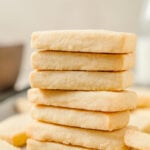
Classic shortbread cookies with a clean snap and a sandy, buttery crumb. Five ingredients, cool butter and a low oven, baked as traditional fingers.
- Prep Time: 15 minutes
- Chill Time: 30 minutes
- Cook Time: 20 minutes
- Total Time: 1 hour 5 minutes
- Yield: About 24 fingers 1x
- Category: Cookies
- Method: Baking
- Cuisine: Scottish
Ingredients
Units
Scale
Shortbread
- 225 g (1 cup, 2 sticks) unsalted butter, at cool room temperature
- 100 g (1/2 cup) granulated sugar, plus 2 tablespoons for sprinkling
- 1 teaspoon vanilla extract
- 1/2 teaspoon fine sea salt
- 280 g (2 1/4 cups) all purpose flour
- 40 g (1/3 cup) cornstarch
Instructions
- Put the butter and sugar in a large bowl and beat with a hand mixer on low, or a wooden spoon, for about 1 minute, until just combined and creamy. Do not whip it light and fluffy. Shortbread wants as little air as possible, which is what gives it that dense, sandy snap.
- Beat in the vanilla and salt.
- Sift the flour and cornstarch over the butter and mix on low, or fold with a spatula, until no dry flour is visible and the mixture looks like coarse, clumpy crumbs. Press the crumbs together with your hands into one smooth mass. Stop as soon as it holds together.
- Place the dough between two sheets of baking paper and roll to an even 1 cm (3/8 inch) thickness, roughly a 20 x 25 cm (8 x 10 inch) rectangle. Slide it onto a tray, still in the paper, and chill for 30 minutes until firm.
- Preheat the oven to 160C (325F). Line two baking trays with baking paper.
- Trim the edges of the chilled dough and cut it into fingers about 2.5 x 6 cm (1 x 2 1/2 inches). Re roll the trimmings once. Space the fingers 2 cm apart on the trays, prick each one three times down the middle with a fork, and sprinkle the tops with the extra sugar.
- Bake for 18 to 22 minutes, until the cookies are set, matte on top and only the faintest gold at the edges. They should still look pale. Rotate the trays halfway.
- Leave on the trays for 10 minutes, then move to a wire rack to cool completely. They crisp as they cool.
Notes
- Butter temperature is everything. Butter that is too warm makes a greasy dough that spreads and bakes tough. Aim for about 18C (65F): cool to the touch, bendable, never shiny. If the kitchen is warm, cut the butter into cubes straight from the fridge and let it sit 20 minutes.
- Why cornstarch: it lowers the protein in the flour, which is what gives the melt in the mouth texture. Rice flour does the same job in the same quantity.
- Do not skip the chill. Cold dough holds its edges and keeps the fork marks crisp. Warm dough spreads into blobs.
- Pale is correct. Shortbread is done when it is set and matte, not golden. Brown shortbread tastes bitter and dry. Pull it before you think it is ready.
- Shapes: for rounds, roll the same thickness and stamp with a 5 cm (2 inch) cutter, about 28 cookies. For a slab, press the dough into a lined 20 cm (8 inch) square tin, dock all over, score into 16 bars before baking, bake 35 to 40 minutes at the same temperature, then re cut the score lines while warm.
- Make ahead and storage: the rolled, chilled dough keeps in the fridge for 3 days and freezes for 3 months (cut the fingers first, freeze on a tray, bake from frozen with 2 extra minutes). Baked cookies keep in an airtight tin for 1 week, and they are better on day two.
- Troubleshooting: cookies spread, the butter was too soft or the dough was not chilled. Cookies crumble when cut, the dough was over mixed or too dry, so press it together with a little more hand warmth rather than adding liquid. Tough cookies, the butter and sugar were whipped too long and the flour was over worked.
Nutrition
- Serving Size: 1 finger
Find it online: https://zhangcatherine.com/shortbread-cookies-recipe/