What is tanghulu?
Tanghulu is a traditional Chinese snack made by skewering fruits, typically strawberries, grapes, or hawthorn berries, on long bamboo sticks, dipping them in a hot sugar syrup, and allowing the syrup to harden into a crispy shell around the fruit. It’s known for its sweet and crunchy exterior with juicy fruit inside. Tanghulu is popular during festivals, especially in northern China, and it’s enjoyed as a street food treat. The name “tanghulu” comes from the Chinese words “tang” (sugar) and “hulu” (bottle gourd), referring to the resemblance of the hardened syrup coating to a gourd. Tanghulu has surged in popularity in recent years, largely due to its captivating presence on social media platforms such as Instagram, TikTok, and Weibo. With its vibrant colors and glossy exterior, tanghulu makes for visually stunning content that spreads rapidly across these channels, garnering attention from food enthusiasts worldwide.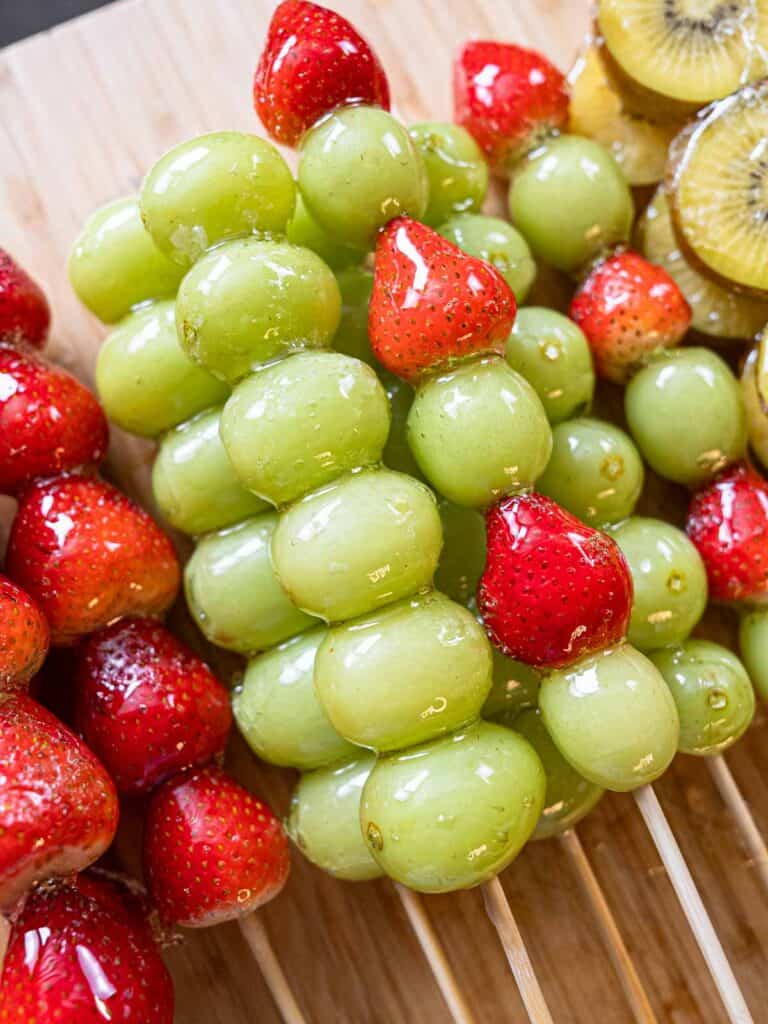
How to make candied fruit
- In a frypan combine the sugar and water. Heat over medium heat, stirring constantly until the sugar dissolves completely.
- Once the sugar is dissolved, increase the heat to medium-high and bring the mixture to a boil. Reduce the heat to low and let it simmer until the syrup reaches 300F/150C


- Dip each skewered fruit into the hot sugar mixture, ensuring it’s evenly coated. You can use a spoon to help coat the fruit if needed. Allow any excess syrup to drip off.
- Once each skewer is coated immediately dunk them into the bowl of ice water. This rapid cooling process helps to harden the sugar glaze quickly. Allow them to sit in the ice water for a minute or two until the glaze is set and hardened.


How to prevent crystalisation
One of the biggest issues when making tanghulu is crystallization. Crystallization is when the sugar crystals start joining together, this causes the sugar to get lumpy and grainy. You won’t be able to get that clear, glossy finish tanghulu has. Here are some tips to prevent this from happening.- Use Clean Equipment: Ensure all utensils, pots, and equipment used in sugar preparation are clean and free of any sugar residue. Even a small amount of sugar left on the sides of the pot can cause crystallization.
- Add Acid: Adding a small amount of acid, such as lemon juice or cream of tartar, to the sugar syrup can help prevent crystallization by interfering with the formation of sugar crystals.
- Avoid Stirring: Once the sugar has dissolved in water, avoid stirring the mixture excessively. Stirring can introduce sugar crystals to the solution, leading to crystallization. If stirring is necessary, use a clean utensil and do so gently.
- Use a Lid: Covering the pot with a lid while the sugar syrup is heating can help prevent crystallization by trapping steam, which helps dissolve any sugar crystals that may have formed on the sides of the pot.
- Wash Down Crystals: As the sugar syrup heats up, use a wet pastry brush or a clean brush dipped in water to wash down any sugar crystals that may have formed on the sides of the pot. This helps prevent them from falling back into the syrup and causing crystallization.
- Avoid Disturbing the Solution: Once the sugar syrup reaches the desired temperature, avoid moving or disturbing the pot unnecessarily until it has cooled down. Any sudden movements can cause sugar crystals to form.
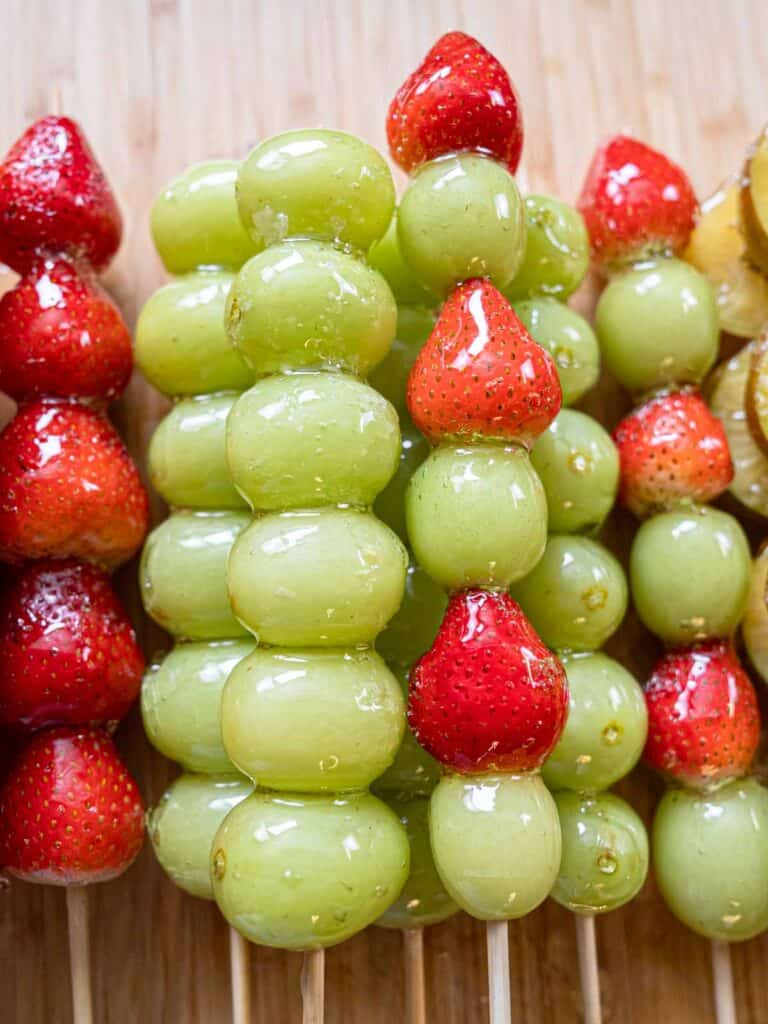
At-a-Glance Specs, What You’ll Need Before We Start Rolling
| Yield | Prep Time | Cook Time | Difficulty | Storage |
| 6 skewers | 10 minutes | 15 minutes | Easy to medium | Best served straight away. Can be held for about 1 hour in a cool, dry place. The shell may soften in the fridge, freezer, or humid weather |
Ingredients
- Sugar: The primary ingredient in tanghulu, sugar forms the hard candy shell that surrounds the fruit. When heated and melted with water, sugar creates a syrup that, when cooled, hardens into a shiny shell around the fruit.
- Water: Water is used to dissolve the sugar and create the syrup. It also helps regulate the consistency of the syrup, ensuring it’s not too thick or too thin.
- Fruit: The fruit, such as strawberries, grapes, or kiwi, provides the juicy and flavorful center of the tanghulu. It contrasts with the crunchy sugar coating, providing a burst of freshness and natural sweetness.
- Skewers: Skewers are used to hold the fruit pieces together and facilitate dipping them into the sugar syrup. They also make it easier to handle and eat the tanghulu.
Making tanghulu without a candy thermometer
Yes, you can make tanghulu without a candy thermometer. While a candy thermometer can help ensure precise temperature control, it’s not essential for making tanghulu. Here’s how you can make tanghulu without a candy thermometer:Visual Cues
Instead of relying on specific temperature readings, you can observe visual cues to determine when the sugar syrup is ready. When the sugar has completely dissolved in the water and the mixture comes to a boil, it will start to thicken slightly. The bubbles will start to become very clear and the mixture will be much thickerTest the Syrup
You can also perform a simple “cold water test” to check the readiness of the syrup. Drop a small amount of the hot syrup into a bowl of cold water. If it forms a hard ball that is crunchy, and doesn’t stick to your teeth when you eat it then it’s ready
Optional, My Favourite Extras That Add a Little Magic
- Lemon juice A tiny splash can help reduce sugar crystals. Keep it light so the syrup still sets clear.
- Cream of tartar A small pinch can help the syrup stay smooth. I use it only when I want a little extra insurance.
- Sesame seeds Sprinkle them on before the shell sets. They add a light nutty note and a lovely Chinese dessert-shop feel.
- Crushed nuts Finely chopped nuts add crunch and colour. Add them quickly while the shell is still tacky.
- Coloured sugar A tiny sprinkle gives party energy. Keep it light so the shell still stays crisp.
- Citrus zest A small amount can add a fresh note to the syrup. Too much can make the flavour feel busy, so go gently.

Substitutions, Smart Ingredient Swaps That Still Taste Amazing
- White granulated sugar Swap with rock sugar if you want a more traditional feel. It may take longer to dissolve, so give it time.
- Bamboo skewers Swap with sturdy wooden skewers. Choose long ones so your hands stay away from the syrup.
- Ice bath Swap with a silicone mat or wax paper. The ice bath sets the shell fast, while a mat gives a cleaner dry finish.
- Strawberries Swap with grapes for an easier first batch. Grapes are smoother, drier, and more forgiving.
- Mixed fruit Swap with one fruit type if you are new to tanghulu. One fruit type gives a more even coating and less stress.
- Frypan Swap with a small heavy-bottomed saucepan. A frypan makes long skewers easier to dip, while a saucepan gives deeper syrup.
Troubleshooting, Quick Fixes I’ve Learned from My Bakery Kitchen
| Issue | Why It Happens | Quick Fix |
| Tanghulu is sticky | Syrup did not reach hard-crack stage | Cook to 300F or 150C and test in cold water |
| Sugar shell slides off | Fruit was wet | Pat fruit dry, then air-dry before dipping |
| Syrup crystallises | Sugar crystals fell back into the pan | Stop stirring once dissolved and wash down the sides |
| Coating is too thick | Too much syrup stayed on the fruit | Let excess syrup drip off before cooling |
| Shell softens quickly | Humidity, fridge moisture, or juicy fruit | Serve straight away and use firm dry fruit |
Comparison, How This Recipe Stacks Up Against Other Desserts
| Dessert | Texture and Flavour | When I’d Make It |
| Tanghulu | Juicy fruit with a thin crisp sugar shell | When I want a fresh crunchy dessert |
| Candied apple | Firm apple with a thicker candy coating | When I want a fair-style sweet |
| Caramel apple | Chewy, buttery, rich, and sweet | When I want something soft and cosy |
| Fresh fruit skewers | Juicy, light, and simple | When I want fruit without the sugar crack |

Tips, My Personal Tricks for a Professional-Looking Result
Dry the Fruit Until It Feels Almost Too Dry
Fruit can look dry on the outside and still hide water near leaves, stems, or skewer holes. In a shop kitchen, I’d never dip wet fruit because one tray can go sticky before it even reaches the counter. Pat the fruit dry, then let it air-dry for a little while. That extra wait is worth it.Start with Grapes Before Juicy Cut Fruit
Grapes are smooth, firm, and easy to dry. If this is your first batch, start there before moving to kiwi, mango, pineapple, or citrus. Cut fruit releases juice fast, and juice is the tiny villain in this recipe.Use a Thermometer for Your First Batch
Tanghulu needs hard-crack syrup, not almost-there syrup. A thermometer makes this much easier. Aim for 300F or 150C, then use the cold water test if you want a backup check.Set Up the Whole Station First
Once the syrup is ready, it moves fast. Have your skewers, ice bath, tray, silicone mat, and toppings ready before the syrup hits temperature. My Zumbo days taught me that pressure is fine, but scrambling with hot sugar is not the vibe.Let the Extra Syrup Drip Off
A thin shell gives the cleanest crack. After dipping, hold the skewer over the pan for a second so the extra syrup falls away. Too much syrup can make the shell thick, sharp, or sticky.Keep the Syrup Calm Once It Boils
Stir only until the sugar dissolves. After that, leave it alone. Too much stirring can invite crystals, and sugar work is already dramatic enough without giving it extra reasons to misbehave.Watch the Weather Before You Start
Tanghulu loves cool, dry weather. If your kitchen is warm or humid, the shell can soften faster. Make it close to serving time, especially if you want that loud glassy crack for photos or video.Use Long Skewers for Safety
Hot sugar is much hotter than boiling water and it sticks to skin. Use long skewers so your fingers stay away from the syrup. I love a viral dessert moment, but I love safe hands more.Keep a Dry Cooling Option Ready
An ice bath works fast, but a silicone mat gives a cleaner dry finish. I like having both ready. If the shell looks perfect after dipping, I’ll set it on a silicone mat. If it feels sticky, the ice bath can help it harden quickly.Clean the Pan with Simmering Water
Do not scrape hard sugar from the pan like you are fighting for your life. Add hot water, bring it to a simmer, and let the sugar melt back into the water. Then wash the pan as normal. Calm cleanup is the best cleanup.
Variations, Fun Twists and Flavours Inspired by My TuCha Dessert Experiments
Grape Tanghulu
Grapes are the most beginner-friendly fruit for tanghulu. They are smooth, firm, and easy to dry, so the sugar shell sticks well. They also give that little juicy pop under the crackly shell.Strawberry Tanghulu
Strawberries are bright, classic, and very camera-ready. The trick is drying them well around the leafy tops. Water loves hiding there, and it can ruin the shell before you even get your first crunch.Blueberry Tanghulu
Blueberries make tiny candy-like bites. They can be fiddly to skewer, but they look like little glossy jewels once coated. Use a few on each skewer so they feel neat and easy to eat.Mandarin Tanghulu
Mandarin segments look beautiful under a clear shell. They are juicy, so dry them well and serve them straight away. This is not the version I would make hours ahead, but fresh from the kitchen it is lovely.Hawthorn-Style Tanghulu
Hawthorn berries are the traditional fruit for tanghulu. They are tart, firm, and bright, which works beautifully with the sweet candy shell. If you can find them, they give the most classic Chinese street-snack feel.Mixed Fruit Tanghulu
Mixed skewers look colourful and fun, but choose fruit with similar firmness. Grapes, strawberries, and blueberries work well together. Avoid mixing very wet cut fruit with firm whole fruit unless you plan to serve it right away.Sesame Tanghulu
Sprinkle sesame seeds over the sugar shell before it sets. It adds a light nutty flavour and a more grown-up finish. I love this when I want the skewers to feel a little more dessert-shop than party table.Sparkly Party Tanghulu
Add a tiny pinch of coloured sugar before the shell hardens. Keep it light so the candy stays crisp. A little sparkle gives the skewer birthday energy without turning it into a sugar costume.Mini Tanghulu Bites
Use short skewers and add two or three pieces of fruit. They are easier to eat, easier to serve, and less messy for guests. This is the version I’d make for a party tray.Bubble Tea Tanghulu
Serve small grape or strawberry tanghulu beside bubble tea. At TuCha, I always think about texture first. This pairing gives cold tea, juicy fruit, and a crisp sugar crack in one little moment.Serving Suggestions, How I Like to Present These for Maximum Wow
Serve Immediately for the Best Crack
Tanghulu is best right after the shell sets. That first bite should be glossy, crisp, and loud in the best way. If it sits too long, the shell can soften and lose its magic.Build a Tanghulu Fruit Bouquet
Place the skewers upright in a jar or vase for a bright dessert display. It looks dramatic with very little work. Just make sure the base is stable so no one gets a surprise sugar sword moment.Serve on a Chilled Platter
A chilled platter can help the shell stay crisp for a little longer. It is not magic, but it gives you a bit more time for photos or serving. Keep the platter dry so moisture does not sneak in.Make Mini Party Skewers
Short skewers are easier for guests to hold and eat. Use two or three pieces of fruit on each one. They look cute lined up on a tray and feel less messy than long street-style skewers.Pair with Milk Tea or Fruit Tea
Serve tanghulu beside cold milk tea, jasmine tea, or fruit tea. The drink softens the sweetness, and the fruit brings crunch and juice. It feels like a little café treat without needing a full dessert plate.Add Plain Fresh Fruit on the Side
A bowl of plain fresh fruit keeps the tray balanced. It gives guests a lighter bite between the candy-coated pieces. It also makes the whole display look fuller and more colourful.Use a Silicone Mat for a Clean Finish
If you are skipping the ice bath, place the dipped skewers on a silicone mat. It helps the shell set without sticking too much. This gives a cleaner finish for photos and serving.Keep the Display Dry
Moisture is the enemy of tanghulu. Do not cover it with anything damp, and do not place it near steam or wet fruit. Keep it cool and dry until serving.Serve with a Crunch Moment
Tanghulu is one of those desserts people want to hear. Serve it fresh and let that first bite do the talking. The crack is half the fun, especially if you are filming it.Make a Simple Dessert Board
Place mini tanghulu skewers with plain fruit, tea cakes, or mochi. The crisp shell gives contrast to soft desserts. It feels playful but still clean and elegant.Common Mistakes to Avoid, Lessons I’ve Learned After Dozens of Batches
Using Fruit That Is Still Damp
Wet fruit is the biggest tanghulu problem. The sugar shell can slide off, bubble, or turn sticky. Dry the fruit well, then dry it again like you are being slightly dramatic.Cooking the Syrup Almost Enough
Almost hard-crack is not enough for tanghulu. If the syrup is chewy in the cold water test, keep cooking. You want a clean snap, not a bendy little sugar noodle.Stirring After the Syrup Starts Boiling
Once the sugar dissolves, stop stirring. Extra stirring can bring sugar crystals back into the syrup. Sugar likes a calm environment, which is honestly relatable.Letting the Syrup Go Too Dark
Clear and glossy is the goal. If the syrup starts to turn amber, it is heading towards caramel. That can taste bitter and make the shell look darker than you want.Dipping Too Slowly
The syrup thickens as it cools. Dip, turn, drip, and move on. If you wait too long, the shell can become thick and uneven.Making the Shell Too Thick
A thick shell can feel hard to bite. Let the extra syrup drip off before cooling. The goal is a thin glassy shell, not fruit in a candy helmet.Ignoring Humidity
Humid weather can make tanghulu sticky faster. If it is warm and damp, make the skewers close to serving time. Tanghulu is a fresh-crack kind of dessert.Using Very Wet Cut Fruit
Kiwi, mango, pineapple, and citrus can work, but they release juice. Use them only when you plan to serve the tanghulu straight away. Whole firm fruit is much more forgiving.Touching Hot Sugar
Hot sugar can burn badly and cling to skin. Use long skewers, keep kids away from the stove, and do not touch the syrup. Safety always comes before the viral crunch.Trusting the Fridge Too Much
The fridge can add moisture and soften the candy shell. Use it only for short holding if you must. For the best texture, serve tanghulu fresh.Frequently Asked Questions
Why Is My Tanghulu Sticky?
Why Did My Tanghulu Not Harden?
The syrup was probably undercooked.
Aim for 300F or 150C. If you are using the cold water test, the syrup should harden fast and snap when bent. If it bends, keep cooking.
Why Is My Tanghulu Chewy Instead of Crunchy?
Chewy tanghulu means the syrup did not cook far enough.
It may look thick in the pan, but that does not always mean it is ready. The cold water test should give you a brittle snap, not a soft chew.
What Is the Best Fruit for Tanghulu?
Grapes are the easiest for beginners.
They are firm, smooth, and easy to dry. Strawberries are classic too, but dry them well near the leaves. Avoid very soft fruit for your first try.
Can I Use Cut Fruit Like Kiwi or Mango?
Yes, but it is harder.
Cut fruit releases juice, and juice softens the sugar shell. If you use kiwi, mango, pineapple, or citrus, dry the pieces well and serve them straight away.
How Do I Dry Fruit for Tanghulu?
Wash the fruit, pat it dry with paper towel, then let it air-dry.
Check the tops, bottoms, seams, and skewer holes. Those tiny water drops can cause big sugar drama.
Can I Make Tanghulu Without a Candy Thermometer?
Yes, but a thermometer makes it easier.
Use the cold water test. Drop a little syrup into ice water. If it hardens into a brittle piece that cracks cleanly, it is ready.
Can I Make Tanghulu in the Microwave?
I do not recommend it.
Hot sugar can become dangerously hot, and microwave containers can overheat or crack. A pan gives you more control and keeps the process safer.
How Long Does Tanghulu Stay Crunchy?
Tanghulu is crunchiest right after it sets.
In a cool, dry room, it may stay crisp for a short time. In humid weather, it can soften much faster.
Can I Store Tanghulu in the Fridge?
You can, but the shell may soften.
Fridges add moisture, and sugar pulls that moisture in. If you need to hold tanghulu briefly, use an airtight container and eat it soon.
Can I Freeze Tanghulu?
You can freeze leftovers, but the texture may change.
The shell can crack, soften, or turn sticky once thawed. I would not freeze tanghulu for a party or photo-ready dessert.
Why Does the Sugar Slide Off the Fruit?
The fruit is usually wet.
Dry the fruit very well before skewering. If you use cut fruit, serve it quickly because juice can soften the shell from underneath.
Why Is My Syrup Crystallising?
Sugar crystals may have fallen back into the syrup.
Use clean equipment, stop stirring once the sugar dissolves, and wash down the sides of the pan with a wet pastry brush if needed.
How Do I Clean the Pan After Making Tanghulu?
Add hot water to the pan and bring it to a simmer.
The hardened sugar will dissolve back into the water. Once it melts, pour it away carefully and wash the pan as usual.
Is Tanghulu Safe for Kids to Make?
Kids can help wash and skewer fruit, but an adult should handle the syrup.
Hot sugar is extremely hot and sticky. This is not the part of the recipe to freestyle.
Why Did My Tanghulu Turn Amber?
The syrup cooked too long or the heat was too high.
Tanghulu syrup should stay mostly clear. If it turns amber, it may taste more like caramel and less like a clean sugar shell.
Can I Make Tanghulu Ahead of Time?
Only a little ahead.
It is best served fresh, but you can make it about 1 hour ahead in a cool, dry place. The longer it sits, the more the shell can soften.
What Pan Should I Use for Tanghulu?
A frypan is good for dipping long skewers.
A small heavy-bottomed saucepan gives a deeper pool of syrup. Use what feels safer and easier for your setup.
Why Is My Tanghulu Shell Too Thick?
Too much syrup stayed on the fruit, or the syrup cooled and thickened while you were dipping.
Tanghulu (Candied Fruit)
A thin layer of crunchy sugar coated on sweet, juicy fruit, tanghulu is the trendiest dessert at the moment and now you can make it at home!
- Prep Time: 10 minutes
- Cook Time: 15 minutes
- Total Time: 25 minutes
- Yield: 6 skewers
- Category: Candy
- Method: Easy
- Cuisine: Chinese
Ingredients
-
2 cups granulated sugar
-
1 cup water
-
6 long skewers
-
40 pieces of fruit (strawberries, grapes, kiwi, etc.)
Instructions
-
Wash and dry the fruit thoroughly. You can use a variety of fruits like strawberries, grapes, kiwi, or any other fruits of your choice. Ensure they are ripe but firm.
-
Thread the fruits onto the skewers, ensuring they are touching, leaving some space at the end for handling. Mix and match the fruits to create colorful combinations.
-
Prepare a large bowl of ice water
-
In a frypan combine the sugar and water. Heat over medium heat, stirring constantly until the sugar dissolves completely.
-
Once the sugar is dissolved, increase the heat to medium-high and bring the mixture to a boil. Reduce the heat to low and let it simmer until the syrup reaches 300F/150C,
-
Dip each skewered fruit into the sugar syrup, ensuring it’s evenly coated. You can use a spoon to help coat the fruit if needed. Allow any excess syrup to drip off.
-
Once each skewer is coated immediately dunk them into the ice bath. This rapid cooling process helps to harden the sugar glaze quickly. Allow them to sit in the ice water for a minute or two until the glaze is set and hardened.
-
Once the sugar glaze has hardened and the tanghulu is ready, serve them immediately as a delightful sweet treat!