
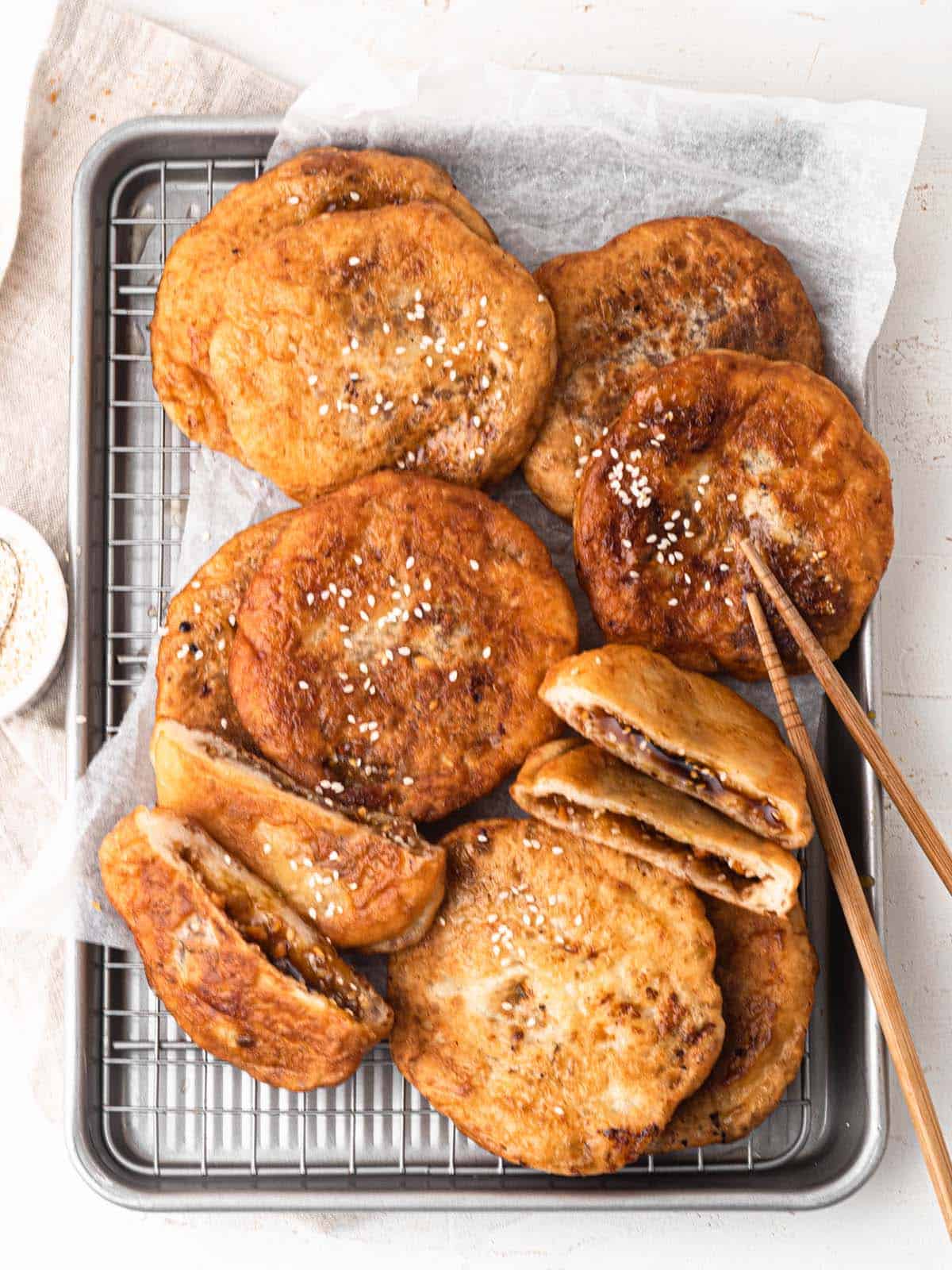
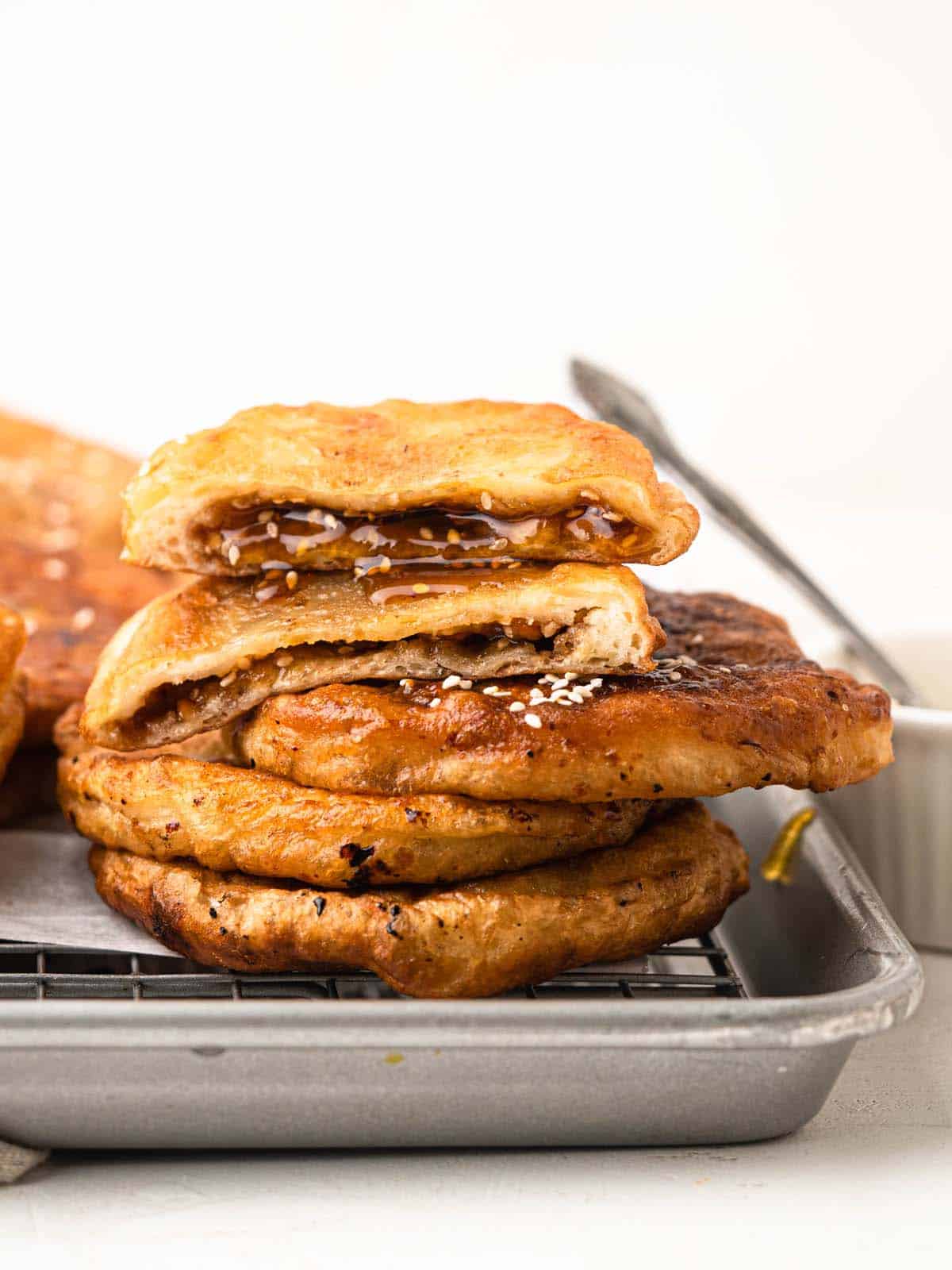
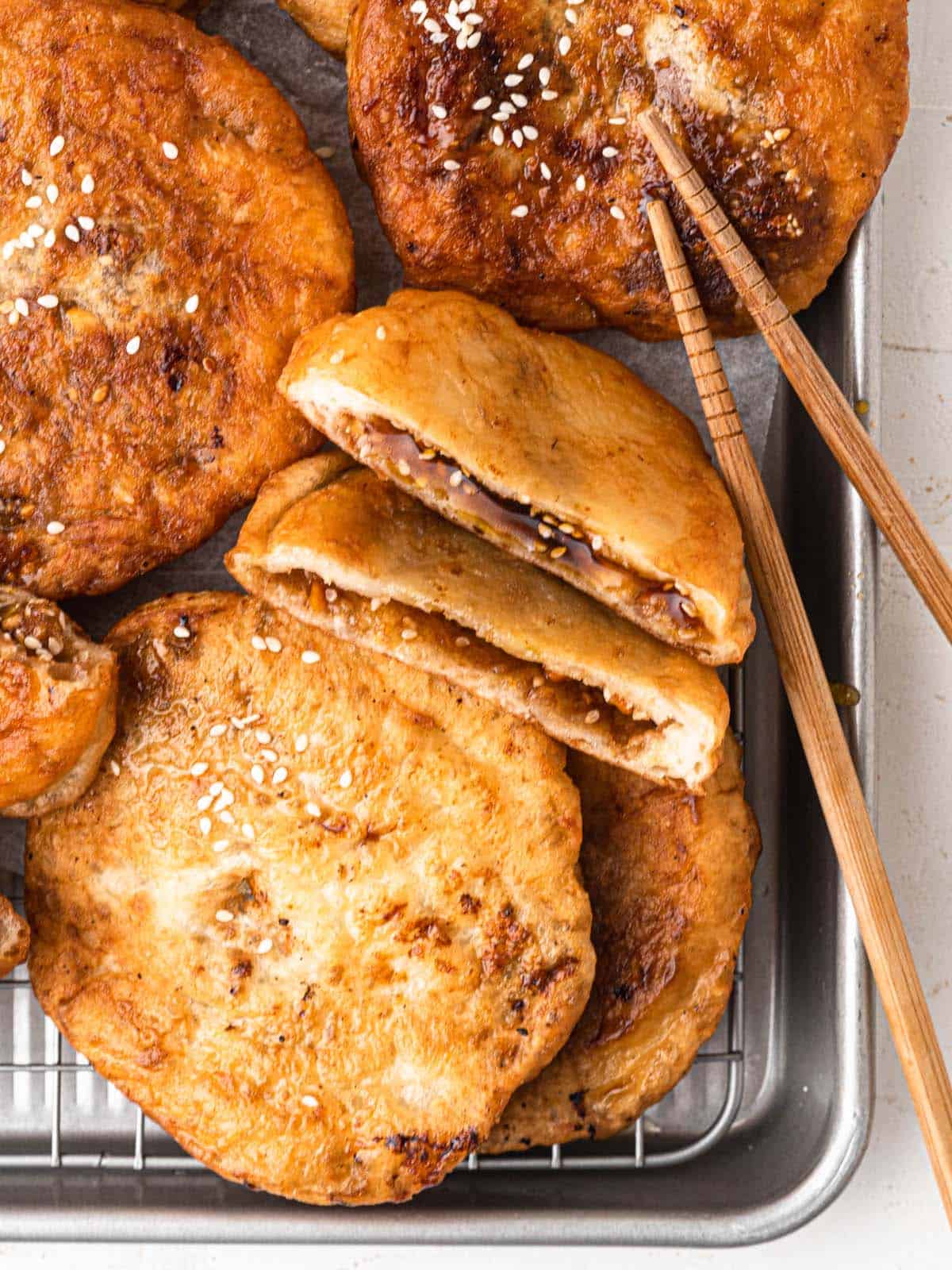
A classic Korean street food, hotteok is a delicious fried Korean-style sweet pancake filled with brown sugar syrup, nuts, and seeds.
Hotteok is the kind of treat I crave when the weather turns cool and I want something warm, crisp, and comforting in my hands. It looks simple, but that soft chewy dough and molten brown sugar centre make it feel so special. I first fell for hotteok when I lived in South Korea for university, usually eating it fresh from a street stall while trying not to burn my mouth on the syrup. Later, when I tested it at home, I had a few messy batches with sugar leaking into the pan and dough sticking to my fingers. Once I learned to oil my hands, seal the dough well, and press it gently as it fried, everything clicked. It’s a cosy street-food dessert that feels playful, warm, and very worth the sticky fingers.
What is Hotteok?
Hotteok is a popular Korean street food brought to South Korea by Chinese immigrants in the 1920s. This traditional Korean filled pancake is made from a yeasted dough containing flour, water, milk, and sugar.
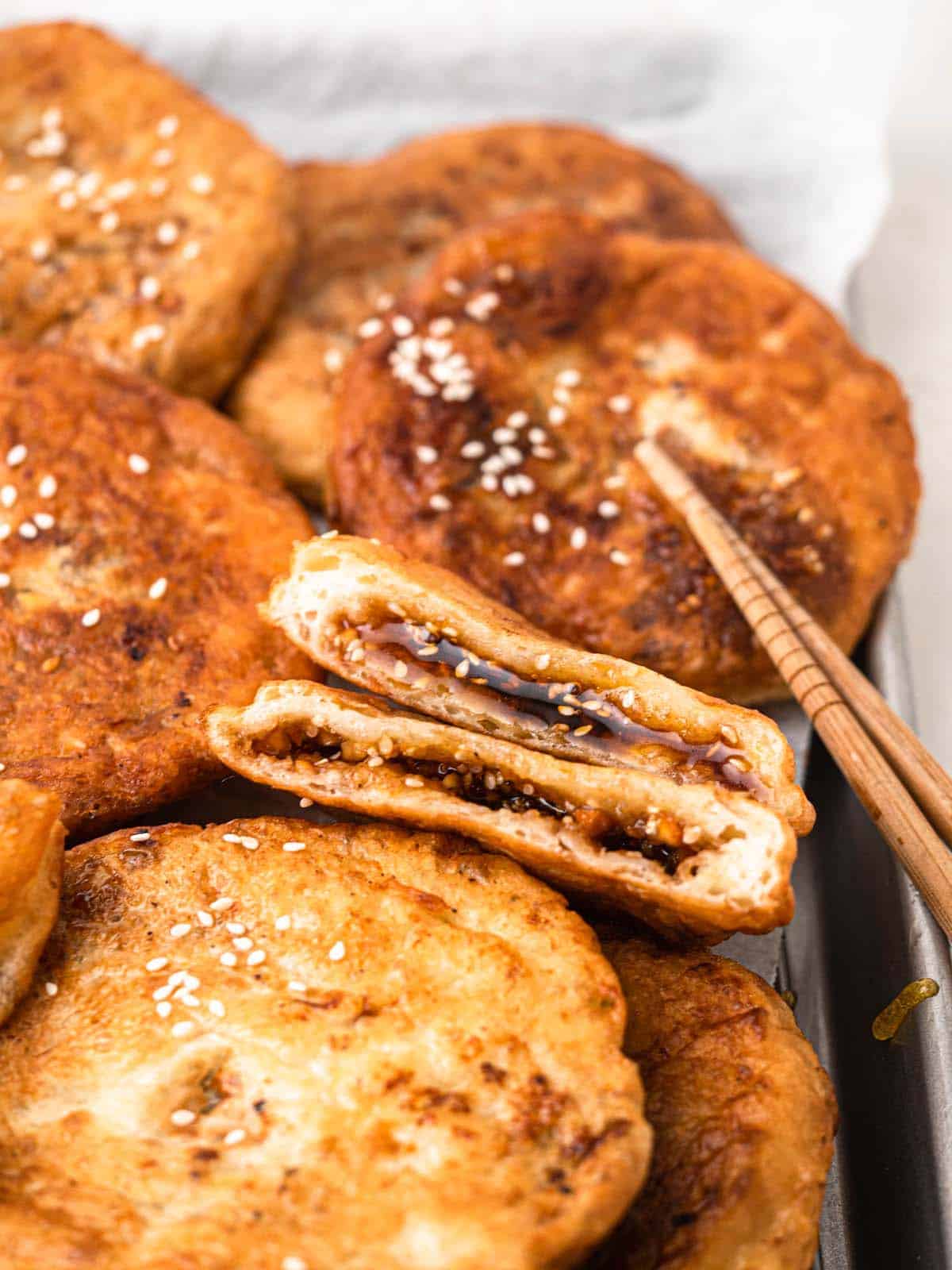
This dough is then filled with a brown sugar filling. Some of the most common variations include brown sugar, honey, sunflower seeds, peanuts, and cinnamon.
These balls of dough are then shallow fried to golden, crispy perfection. Their flat and round shape are shaped using a circular, flat stainless steel tool that is used to press the dough down onto the griddle as they fry.
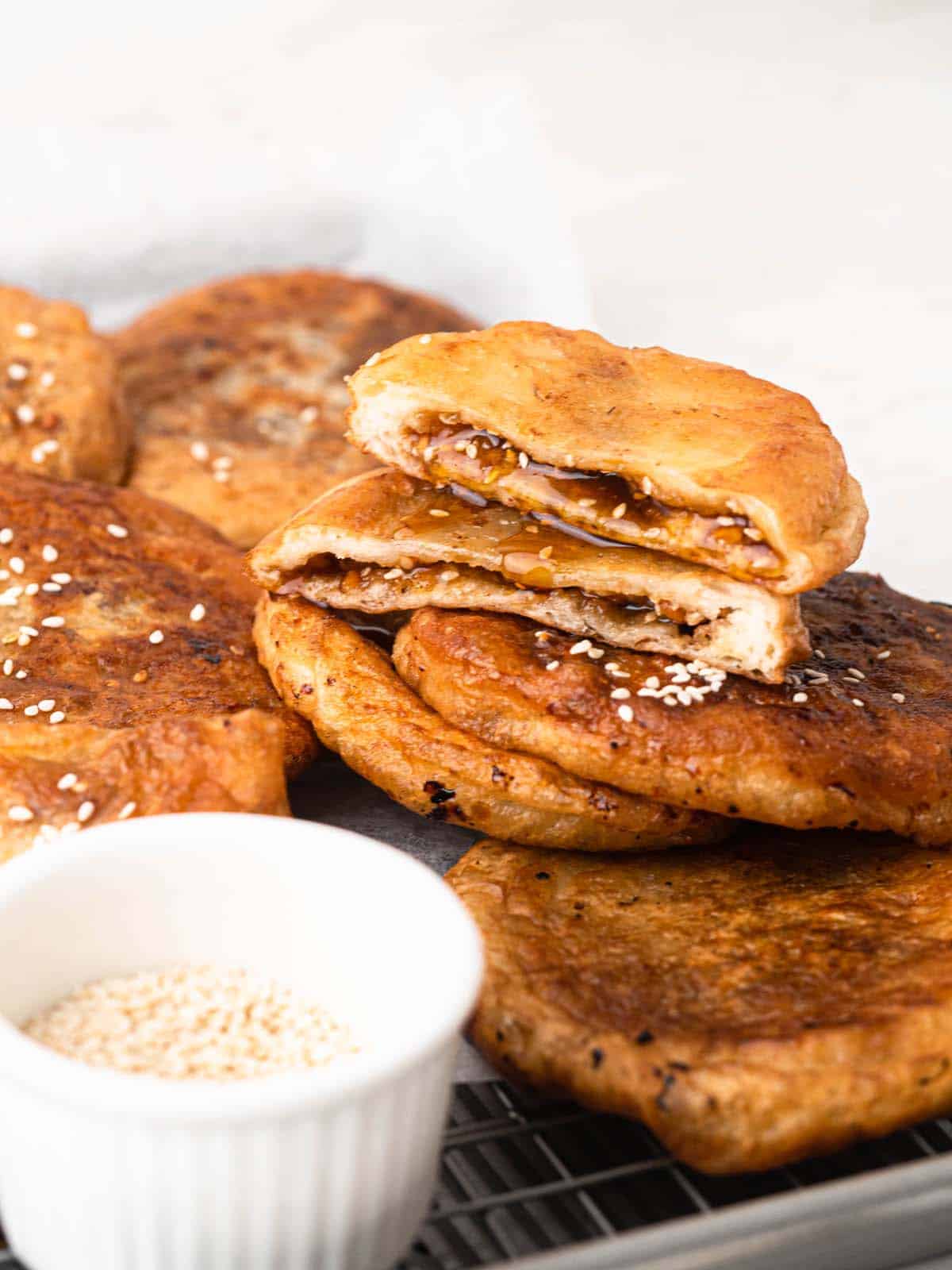
The resulting pancake is served hot with a crisp exterior and molten brown sugar interior. These Korean sweet pancakes are perfect as a snack on a cold day!
Other kinds of hotteok
While the traditional hotteok is made with brown sugar cinnamon filling there are so many newer variations of hotteok. A couple of popular variations include cheese hotteok, pizza hotteok, and yachae hotteok which is filled with Korean glass noodles and vegetables.
As the dough is so versatile there are so many different ways to fill them. You can use this hotteok recipe as a base and fill them with whatever filling you like.
At-a-Glance Specs, What You’ll Need Before We Start Rolling
| Yield | Prep Time | Cook Time | Difficulty | Storage |
| 12 pancakes | 30 minutes | 30 minutes | Easy | Dough keeps up to 3 days in the fridge, cooked hotteok can be frozen |
Ingredients to make hotteok
The ingredients needed to make hotteok are fairly simple and should be in most pantries with the exception of glutinous rice flour. That being said it’s so easy to find, so you’ll be up and cooking these in no time.
Dough
- Lukewarm water: Make sure your water is lukewarm and not too hot or cold. This is the perfect temperature for yeast to work and bring air to your dough.
- Granulated sugar: Sugar is fuel for yeast, giving them the energy to produce gas and proof the dough.
- Instant yeast: I like to use instant yeast as it doesn’t need to be activated to be used. If you don’t have instant yeast feel free to use active dry yeast, just make sure you activate it in the water and sugar for 5 minutes until bubbly before using it
- Oil: Oil adds suppleness to the dough and helps it crisp up. Try using a neutral oil like vegetable or canola which won’t add flavor to the dough.
- Salt: Salt helps to balance out the flavor of the hotteok
- All-purpose flour: Aka plain flour, makes up the body and structure of the dough
- Glutinous rice four: Aka sweet rice flour, gives the dough a little more crispiness and chew once fried up.
Filling
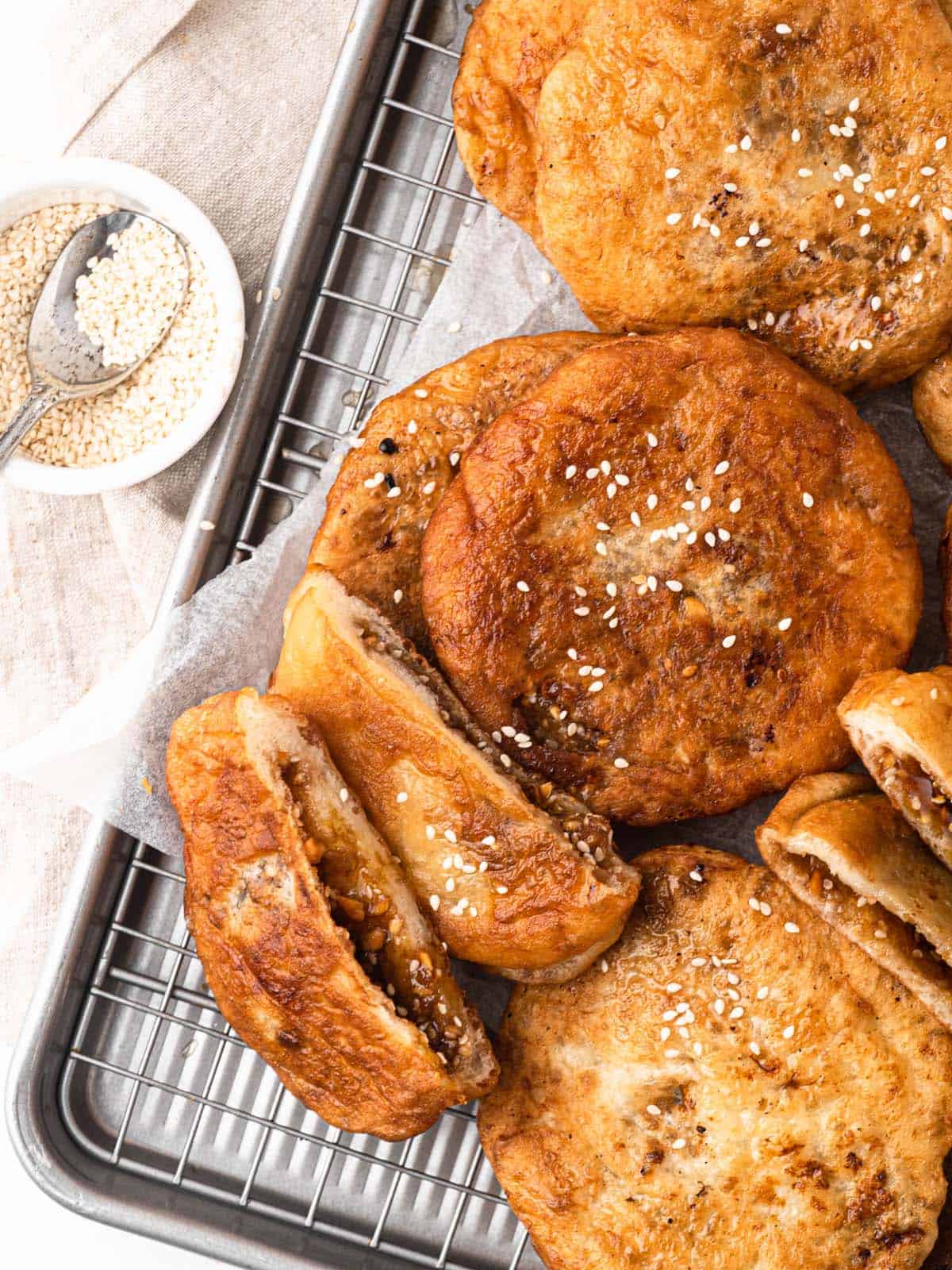
- Sesame seeds: Sesame seeds add a nutty fragrance to the filling. If you aren’t a fan feel free to leave them out.
- Peanuts, sunflower seeds, or pepitas: Take your pick or use a mix of them all. My personal favorite is a mix of peanuts and sunflower seeds.
- Brown sugar: Brown sugar gives the filling a delicious caramelized flavor.
- Granulated sugar: Using a mixture of brown sugar and granulated sugar prevents the filling from getting too dark while still maintaining the caramelized brown sugar flavor.
- Cinnamon powder: Cinnamon adds flavor to the sweet syrupy filling and works so well with the other nutty flavors.
Optional, My Favourite Extras That Add a Little Magic
- Black sesame powder
Add a little to the filling for a roasted, nutty flavour. It gives the hotteok a dark, glossy centre that looks beautiful when torn open. - Hojicha powder
Hojicha gives the brown sugar filling a soft roasted tea note. It feels very TuCha and works so well with cinnamon and nuts. - Matcha powder
Matcha adds a gentle bitter edge to the sweet filling. Keep it light so the flavour stays warm and balanced. - Chopped walnuts
Walnuts add earthy crunch. They make the filling feel a little more bakery-style. - Sweet red bean paste
Red bean gives a softer, less syrupy centre. It is lovely when you want something sweet but calmer than molten sugar. - Mozzarella cheese
Mozzarella makes a savoury cheese-pull version. Keep the filling small so the dough can seal neatly. - Nutella
Nutella melts into a chocolate-hazelnut centre. Use less than you think, because it warms quickly and loves to escape. - Dairy-free ice cream
Dairy-free ice cream works beautifully for serving. Vanilla, coconut, matcha, and black sesame all pair well with hotteok.
Substitutions, Smart Ingredient Swaps That Still Taste Amazing
- Active dry yeast instead of instant yeast
Active dry yeast works, but bloom it first in lukewarm water and sugar. Wait until it looks bubbly before mixing the dough. - Plain flour instead of all-purpose flour
Plain flour is the Australian name for the same style of flour. Use the same amount. - All-purpose flour instead of glutinous rice flour
You can use extra all-purpose flour if needed. The hotteok will still work, but it will be less chewy. - Almond milk instead of water
Almond milk gives the dough a slightly richer taste. Keep it lukewarm so the yeast still works properly. - Coconut sugar instead of brown sugar
Coconut sugar gives a deeper caramel flavour. It may melt a little differently, so the centre may be less syrupy. - Sunflower seeds or pepitas instead of peanuts
These are great swaps if you want to avoid peanuts. They still give crunch and a nutty feel. - Dairy-free cheese for savoury hotteok
Use a meltable dairy-free cheese if needed. Chill the filling first if it feels too soft.
Troubleshooting, Quick Fixes I’ve Learned from My Bakery Kitchen
| Problem | Why It Happens | Quick Fix |
| Dough did not rise | Water was too hot, yeast was old, or room was cold | Use lukewarm water, fresh yeast, and proof in a warm spot |
| Dough is hard to shape | Sticky dough is normal, but dry hands make it messy | Oil your hands instead of adding too much flour |
| Filling leaked | Dough was overfilled, thin, or not sealed well | Use less filling and pinch the seam firmly |
| Outside burnt but inside is doughy | Pan heat was too high | Lower the heat and cook a little longer |
| Hotteok burst while pressing | It was pressed too hard or too soon | Wait briefly, oil the spatula, and press gently |
Comparison, How This Recipe Stacks Up Against Other Desserts
| Dessert | Texture | Best For |
| Hotteok | Crisp outside, chewy dough, molten brown sugar centre | Korean street-food style snacking |
| Dorayaki | Soft cake-like pancakes with sweet filling | Gentle tea-time dessert |
| Stuffed Crepes | Thin soft wrapper with creamy or fruit filling | Light plated dessert |
Tips, My Personal Tricks for Crispy, Chewy Hotteok
Know That Sticky Dough Is Normal
Hotteok dough should feel soft, sticky, and a bit messy.
This is not bread dough, so don’t fight it with heaps of extra flour. Oil your hands and work with it gently. Sticky dough now means chewy street-food joy later.
Watch the Dough, Not Just the Clock
The dough should look puffy and bigger before you shape it.
A warm kitchen will move faster than a cold one. During testing, I always check how the dough looks first. Yeast has its own little schedule.
Gently Release the Gas Before Shaping
After the dough rises, stir or fold it gently to release large air bubbles.
Do not knead it hard. You are just calming the dough down so it is easier to portion, fill, and seal.
Keep the Filling Away from the Edges
Place the brown sugar filling right in the centre.
If sugar touches the edges, the seam will not seal as well. Sugar leaks taste lovely, but in the pan they turn into sticky caramel chaos.
Keep the Centre of the Dough Slightly Thicker
When you flatten the dough, do not make the middle too thin.
The centre has to hold the filling once the sugar melts. A slightly thicker base gives you more syrup safety.
Cook Seam Side Down First
Place the sealed side down in the pan first.
This gives the seam a chance to set before the sugar turns molten. It is a tiny step, but it saves a lot of pan drama.
Press Gently After the Dough Sets
Let the hotteok cook for about 30 seconds before pressing.
Use an oiled spatula and press slowly. You want a flat pancake, not a sugar explosion.
Control the Heat as You Fry
Start with a hot pan, then lower the heat if the outside browns too quickly.
The dough needs time to cook through. A golden outside with raw dough inside is not the street-food dream.
Use Enough Oil for Crisp Edges
The pan should have enough oil to coat the base.
You are not deep frying, but a dry pan will not give the same crisp crust. Add a little more oil between batches if the pan looks dry.
Let Hotteok Cool Before Biting
The filling stays very hot after frying.
Give it a minute before eating, especially if serving children. I know the crispy edge is tempting, but molten sugar does not play around.
Variations, Fun Twists and Flavours Inspired by My TuCha Dessert Experiments
Busan-Style Seed Hotteok
Use extra sunflower seeds, pumpkin seeds, sesame seeds, and chopped nuts in the filling.
This gives the centre more crunch and a proper street-food feel. It is warm, nutty, and very satisfying.
Black Sesame Hotteok
Add black sesame powder or paste to the sugar filling.
It gives the hotteok a roasted, nutty flavour that feels very TuCha to me. The dark centre also looks beautiful in tear-open photos.
Hojicha Brown Sugar Hotteok
Mix a little hojicha powder into the brown sugar filling.
The roasted tea flavour works beautifully with cinnamon and nuts. I would happily serve this with milk tea at TuCha.
Matcha Sugar Hotteok
Add a small amount of matcha powder to the filling.
The matcha gives a gentle bitter note that balances the sugar. Keep it light so the filling stays cosy, not grassy.
Red Bean Hotteok
Use sweet red bean paste instead of the brown sugar filling.
It is softer, less syrupy, and very comforting. Fry on medium heat so the paste warms through without the outside burning.
Nutella Hotteok
Fill the dough with a small spoon of Nutella.
It melts into a soft chocolate-hazelnut centre. Use less than you think, because Nutella likes to escape once it gets warm.
Mozzarella Cheese Hotteok
Fill the dough with mozzarella for a savoury cheese-pull version.
Seal it very well and press gently. The cheese pull is social-media friendly, but only if the cheese stays inside the pancake first.
Kimchi Cheese Hotteok
Use chopped kimchi and mozzarella for a spicy savoury version.
Squeeze the kimchi well before adding it. Too much liquid can make the dough split, and nobody wants kimchi leakage chaos.
Japchae-Style Hotteok
Fill the dough with a small amount of cooked glass noodles and vegetables.
Keep the filling dry and chopped small. Fry a little slower so the centre heats through.
Hotteok Ice Cream Sandwich
Let the hotteok cool slightly, then cut or fold it open and add ice cream.
Vanilla is classic, but matcha, black sesame, and hojicha ice cream are lovely too. Hot, cold, crisp, creamy. It is dessert theatre without the stress.
Serving Suggestions, How I Like to Present Hotteok for Maximum Comfort
Serve Straight from the Pan
Hotteok is at its best when it is warm, crisp, and fresh.
The outside should be golden, and the inside should still be molten. This is a make-it-and-eat-it dessert.
Pair with Bubble Tea
Serve hotteok with brown sugar boba, milk tea, hojicha latte, or iced matcha.
At TuCha, I love desserts that feel playful with drinks. Warm hotteok and cold milk tea are a very good match.
Make a Hotteok Ice Cream Plate
Cut the hotteok open and add a scoop of ice cream.
The cold cream melts into the brown sugar syrup. It is messy in the best way and very fun to serve.
Add Fresh Strawberries or Banana
Fresh fruit cuts through the fried dough and sweet filling.
Strawberries add brightness, while banana makes it feel soft and cosy. Both look lovely on a plate.
Dust with Soybean Powder
A light dusting of kkongkaru gives the hotteok a nutty finish.
The original version is already rich, so this adds flavour without making it too sweet.
Build a Korean Street-Food Snack Plate
Serve hotteok with roasted sweet potato, tteokkochi, fruit, and a cold drink.
It turns one pancake into a fun snack board. Very cosy, very shareable, very weekend afternoon.
Serve with Coffee or Hojicha
Coffee balances the sweetness, while hojicha adds a roasted tea flavour.
Both make the cinnamon and nuts taste warmer. It is simple, but it feels special.
Slice for Sharing
Cut each hotteok into halves or quarters if serving a group.
This lets everyone taste the molten centre without committing to a whole pancake. It also makes the syrupy middle look very camera-friendly.
Common Mistakes to Avoid, Lessons I’ve Learned After Dozens of Batches
Using Water That Is Too Hot
Hot water can kill the yeast before the dough even starts.
Use water that feels warm, not hot. If it is too hot for your finger, it is too hot for the yeast.
Adding Too Much Flour to the Dough
The dough is meant to be sticky.
If you add too much flour, the hotteok can turn dense and dry. Oil your hands instead and trust the process.
Shaping Before the Dough Has Risen
Flat dough makes heavy hotteok.
Wait until the dough looks puffy and airy. If your kitchen is cool, give it more time.
Letting Sugar Touch the Seam
Sugar on the edge makes the dough harder to seal.
Keep the filling in the centre and pinch the seam cleanly. A neat seal gives you a better chance of keeping the syrup inside.
Overfilling the Dough
Too much filling sounds fun until it melts and bursts out.
Use enough for a gooey centre, but not so much that the dough cannot close. Hotteok is generous, not reckless.
Pressing Too Hard
Pressing gives hotteok its flat shape, but too much pressure can split the dough.
Press slowly with an oiled spatula. My Zumbo’s days taught me that small technique details matter, and this is one of them.
Frying on Heat That Is Too High
High heat can burn the outside before the dough cooks through.
Lower the heat if the hotteok darkens too fast. You want golden and crisp, not bitter and raw.
Frying on Heat That Is Too Low
If the oil is not hot enough, the hotteok can soak it up.
The pan should sizzle gently when the dough goes in. If it looks pale and oily, raise the heat a little.
Eating It Too Fast
Fresh hotteok filling is molten and very hot.
Let it rest for a minute before biting. Sticky fingers are fun, burnt tongue is not.
Frequently Asked Questions
What Does Hotteok Taste Like?
Hotteok tastes like a crisp, chewy Korean sweet pancake with warm brown sugar syrup inside.
The filling is sweet, nutty, and lightly spiced with cinnamon. The outside is golden and crisp, while the centre is soft and molten.
Why Is My Hotteok Dough So Sticky?
Hotteok dough is meant to be sticky.
That soft dough helps create the chewy texture once fried. Oil your hands before shaping instead of adding lots of extra flour.
How Do I Know Hotteok Dough Has Proofed?
The dough should look bigger, puffier, and full of air.
It may have small bubbles on the surface. If the room is cold, give it more time rather than forcing the schedule.
Why Did My Hotteok Dough Not Rise?
The water may have been too hot, the yeast may be old, or the room may be too cold.
Use lukewarm water and fresh yeast. If your kitchen is chilly, place the bowl somewhere warm and cosy.
Should I Punch Down Hotteok Dough?
Yes, gently.
After the first rise, stir or fold the dough to release large gas bubbles. This makes it easier to shape and seal.
How Do I Stop Hotteok Filling from Leaking?
Keep the filling in the centre, do not overfill, and pinch the seam tightly.
Cook seam side down first. Press only after the dough has had a short moment to set in the pan.
Why Did My Hotteok Burst While Frying?
It may have been overfilled, sealed loosely, or pressed too hard.
Use a little less filling next time and keep the dough slightly thicker in the centre. Press gently, not like you are fighting the pancake.
What Heat Should I Use for Hotteok?
Start with a hot pan, then cook over medium to medium-high heat.
If the outside browns too fast, lower the heat. If it looks pale and oily, the pan is too cool.
How Much Oil Do I Need for Hotteok?
Use enough oil to coat the base of the pan well.
Hotteok is shallow-fried, not deep-fried. Add a little more oil between batches if the pan starts to look dry.
Can I Make Hotteok Without Glutinous Rice Flour?
Yes, but the texture will change.
Glutinous rice flour gives hotteok extra chew and crispness. If you use only all-purpose flour, it will still work, but it will be less chewy.
Can I Use Milk Instead of Water?
Yes, you can use milk or almond milk.
Milk makes the dough a little richer, while water keeps it lighter. Keep any liquid lukewarm so the yeast works properly.
Can I Make Hotteok Ahead?
Yes, you can keep the dough covered in the fridge for up to 3 days.
When you are ready, take out a portion, fill it, and fry it fresh. Freshly fried hotteok has the best crisp edge.
Can I Freeze Hotteok?
Yes, cooked hotteok can be frozen.
Let it cool fully, wrap it well, and freeze. Reheat in a pan, oven, or air fryer until hot and crisp.
Can I Freeze Hotteok Dough?
I prefer freezing cooked hotteok rather than filled raw dough.
The sugar filling can leak as it thaws. For the neatest result, fry first, cool fully, then freeze.
How Do I Reheat Frozen Hotteok?
Reheat it in an air fryer, oven, or oiled pan.
The air fryer gives a crisp outside. Be careful when biting in because the sugar centre can get very hot again.
Can I Air Fry Hotteok Instead of Frying?
I prefer pan-frying hotteok from scratch.
The pan gives better colour, crispness, and street-food texture. The air fryer is brilliant for reheating leftovers.
Can I Make Savoury Hotteok?
Yes, savoury hotteok is so fun.
Try mozzarella, kimchi cheese, japchae-style noodles, or vegetables. Use less wet filling and seal the dough well.
How Do I Keep Hotteok Crispy?
Serve it fresh from the pan and drain it well after frying.
For leftovers, reheat in an air fryer or hot pan. The microwave warms it, but it can make the outside soft.
Let’s Get Cooking
If you liked this recipe make sure to leave me a comment and rating down below. I’d love to know how it went! Also, don’t forget to tag me on Instagram @catherine.desserts.
Follow me on Facebook, Pinterest, YouTube, and TikTok for more of my baking creations and updates!
Hotteok Recipe
A classic Korean street food, hotteok is a delicious fried Korean-style sweet pancake filled with brown sugar syrup, nuts, and seeds.
- Prep Time: 30 minutes
- Cook Time: 30 minutes
- Total Time: 1 hour
- Yield: 12 Pancakes 1x
- Category: Asian Dessert
- Method: Easy
- Cuisine: Korean
Ingredients
Dough
- 300ml Lukewarm water (1 1/4 cup)
- 2 tbsp Granulated sugar
- 2 tsp Instant yeast
- 1 tbsp Vegetable oil
- 1 tsp Salt
- 300g All-purpose flour (2 1/2 cups)
- 35g Glutinous rice flour (1/4 cup)
Filling
- 35g Sesame seeds (1/4 cup)
- 35g Peanuts, sunflower seeds or pepitas (1/4 cup)
- 90g Brown sugar (1/2 cup)
- 100g Granulated sugar (1/2 cup)
- 1/2 tsp Cinnamon
Instructions
Dough
- In a large mixing bowl combine the sugar, yeast, all-purpose flour, glutinous rice flour and salt, whisk until well combined
- Add the warm water and oil, and mix until well combined
- Cover with cling wrap and allow it to double in size in a warm place
Filling
- Meanwhile, roughly chop the peanuts
- Combine the sesame seeds, peanuts, brown sugar, granulated sugar and cinnamon in a bowl
Assembly
- Heat a pan with a generous drizzle of vegetable oil over high heat
- Coat your hands in oil and pick up approx 80g/3oz of dough
- Flatten it between your palms and fill with 2 tablespoons of the filling
- Bring the edges together and pinch to seal
- Place the hotteok seam side down in your frypan and cook for 30 seconds
- Oil your spatula and lightly press down on the surface of the hotteok to flatten it
- Then flip the hotteok over and cook for another 1-2 minutes until golden brown
- Place on a wire rack or paper towel to drain
- Enjoy!



These were so good! I was expecting them to be super sweet but they weren’t! Would definetly make these again!! ♡