
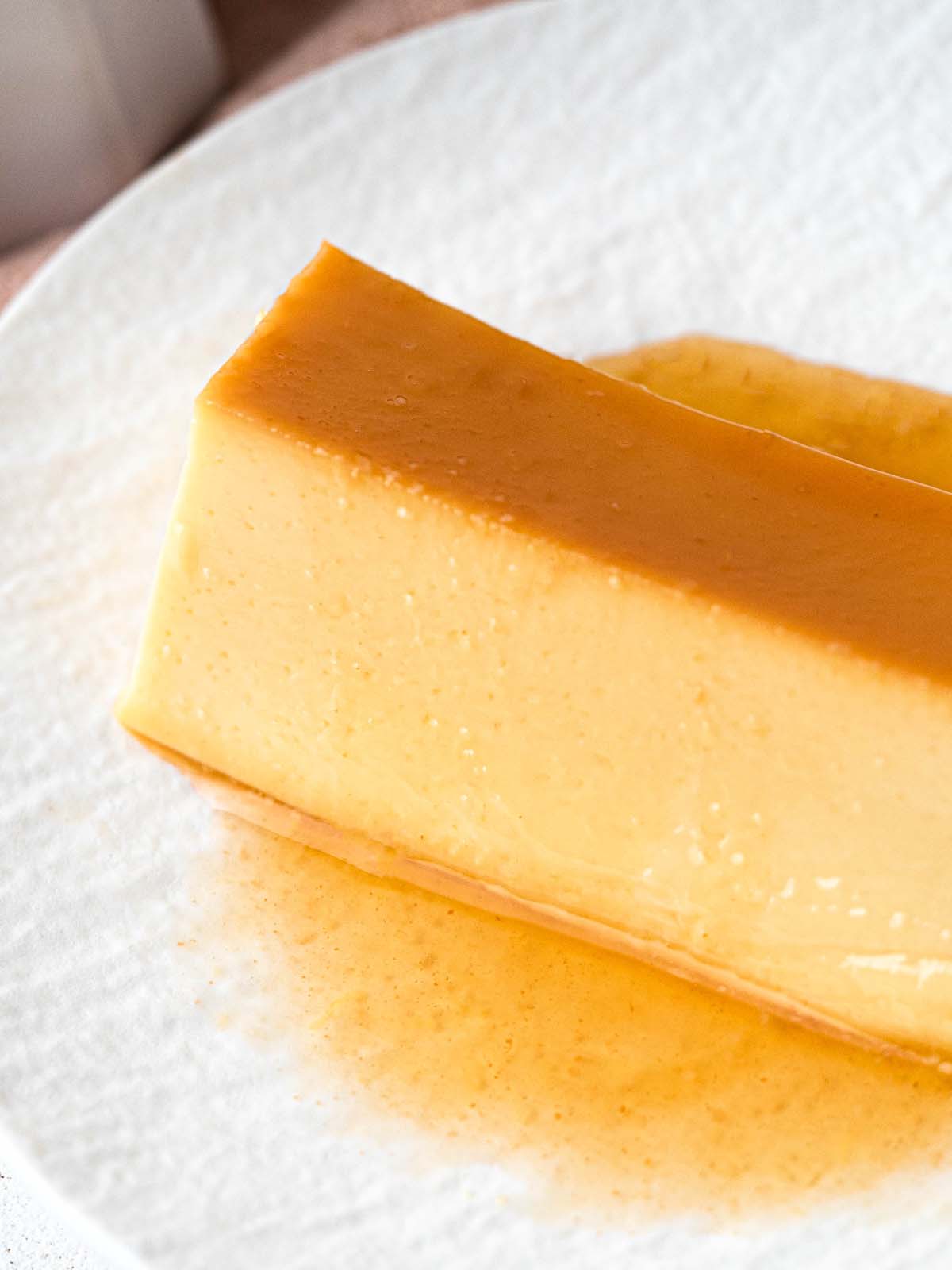
Creamy custard made from eggs and condensed milk, with a sweet caramel top, this Leche flan is baked to silky smooth perfection
What is leche flan?
If you are looking for a silky smooth baked custard you’ve come to the right place. Leche flan is a baked dessert made from eggs and milk with a caramelised top. Similar to its French counterpart creme caramel and Japanese counterpart purin, Leche flan is a classic Filipino dish adopted from the European creme caramel.
This delicious dessert is a staple in the Philipines and can’t be missed during celebrations and special events!
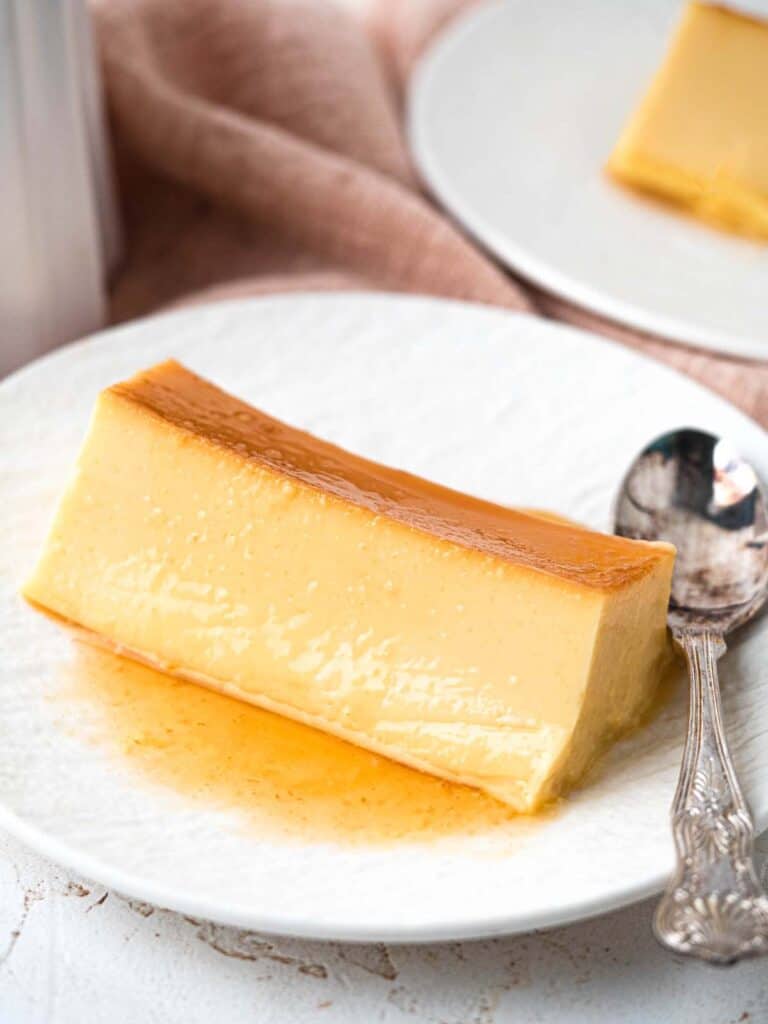
What is the difference between Leche flan and creme caramel?
There are a couple of significant differences that separate Leche flan from creme caramel, the first being the ingredients used.
Leche flan relies heavily on condensed milk and evaporated milk to bring sweetness and creaminess to the custard. On the other hand, creme caramel uses cream, fresh milk, and sugar to bring body and sweetness to the dessert. As a result, Leche flan is usually sweeter and richer in flavour with a creamier texture.
Leche flan also uses a larger ratio of egg yolks, while creme caramel tends to use whole eggs. As a result creme caramels usually have an eggier flavour as the egginess comes from egg whites.
Another large difference between the two is the vessel in which it is baked. Creme caramel is typically baked in small moulds and inverted or a classic pudding shape. On the other hand, Leche flan is typically baked in an ovular shaped, shallow metal mould called an Ilanera. Unlike a creme caramel where the sugar is cooked in a small saucepan on the side and poured into each ramekin, the sugar is cooked directly in the Ilanera and swirled around until caramelised and golden brown.
Of course, if you aren’t from a Filipino household it may be difficult to source an Ilanera, so this recipe is made in a regular loaf tin for ease!
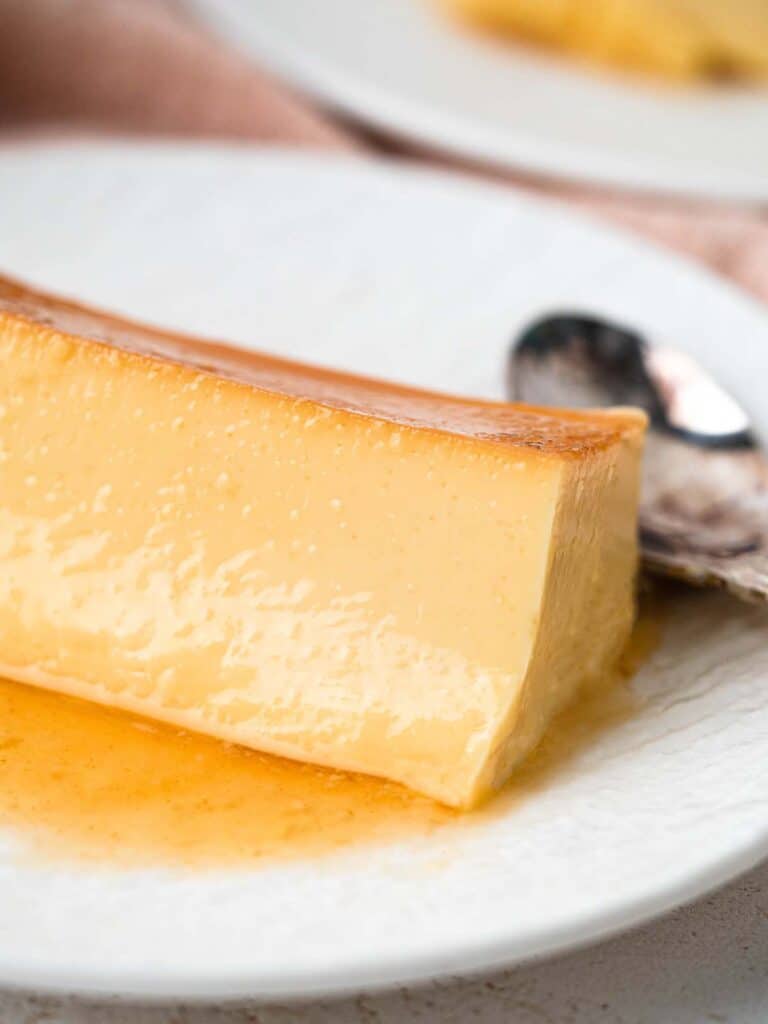
How to Caramelise Sugar
There are a couple of different ways in which you can caramelise sugar, but this recipe uses the wet method as it is the easiest and most fool-proof.
If you have an Ilanera you can put the sugar directly in the mould and cook it over the stovetop until melted and golden brown. Otherwise, follow the following tips for perfect caramel!
Cook over low/medium heat
While caramelising sugar can take some time, once it reaches golden brown it will burn very quickly. In order to prevent your sugar from burning and to help it cook consistently make sure you cook on low to medium heat.
Swirl, don’t stir
While the sugar is dissolving feel free to swirl the pan to help the sugar melt faster. I don’t recommend mixing as it invites the sugar to crystalise and stick to the stirring utensil!
Once the sugar has dissolved stop swirling and leave the pan on low heat until it reaches your desired golden brown colour.
Keep a close eye on it
The transition from beautiful golden brown to burnt sugar happens in a matter of seconds. Make sure you keep a close eye on your sugar, particularly near the end of the cooking process as it burns very easily!
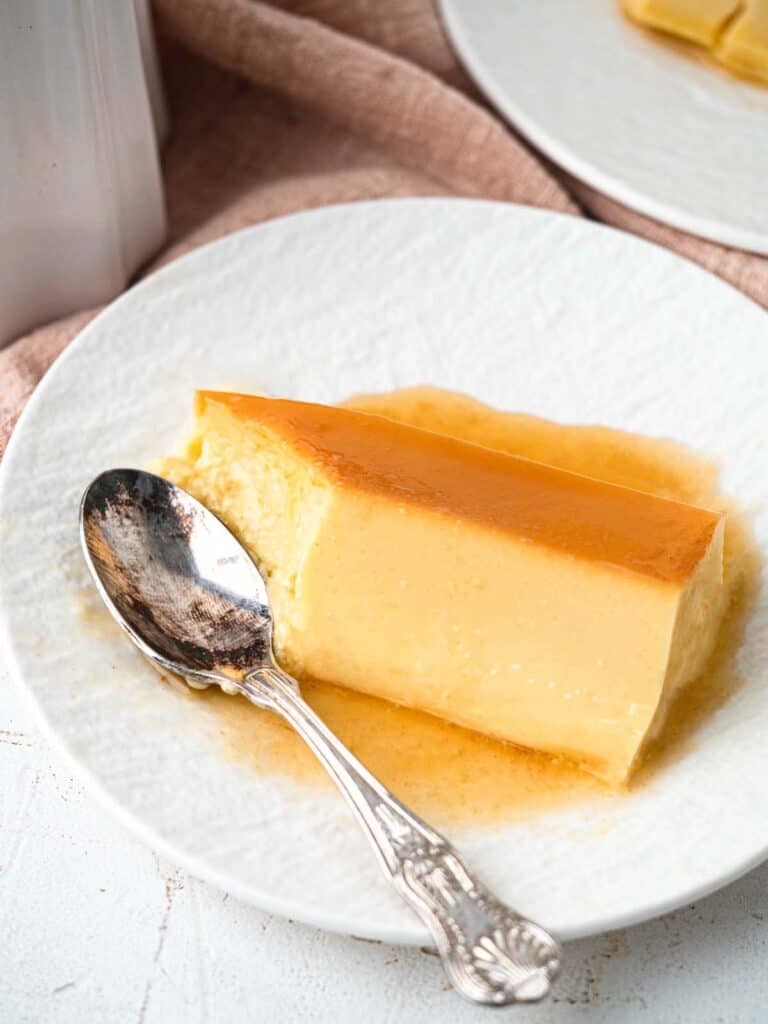
Tips for a silky smooth custard
As the custard is the only component of the dessert you want to create a silky smooth, bubble-free custard. The biggest issue people have when making leche flan is having air pockets and holes throughout their flan. Follow these tips below for the perfect consistency!
Stir in one direction
When mixing all your ingredients together it is important that you mix slowly and in one direction. Mixing the batter increases the number of air bubbles formed in the batter, so the less you mix the batter the better. Mixing it in two directions will only cause more movement in the batter and make more air bubbles.
Pour the batter through a sieve
After all your ingredients have been incorporated make sure you pour it through a fine-meshed sieve or cheesecloth at least twice. This process removes any lumps of egg, unincorporated condensed milk, and airbubbles for a silky smooth texture.
Don’t bake at a high temperature
Baking the flan at a high temperature can cause the custard to overheat and increase the chances of bubbling. It will also result in an inconsistent texture as the outer edges overbake, while the centre remains raw.
Don’t overbake
Overbaking the flan will give your flan a rubbery and grainy texture. Checking the doneness of your caramel is essential if you are looking for a smooth consistency.
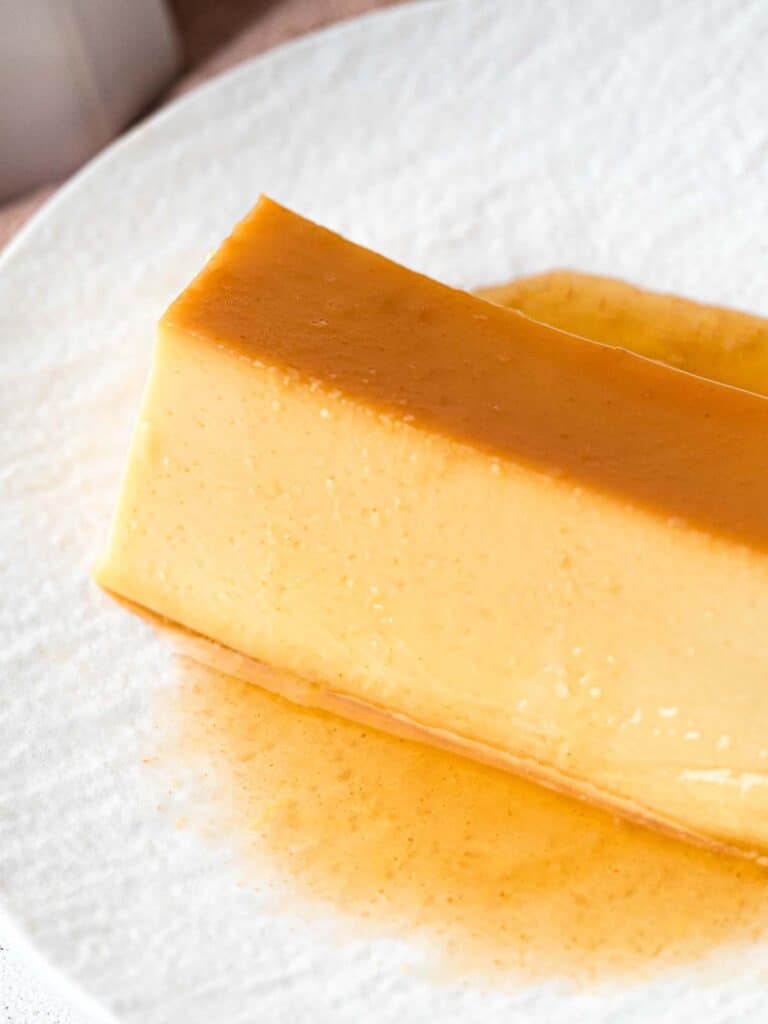
Additional Tips for Making Creamy Leche Flan
Use Room Temperature Eggs
Using eggs straight from the fridge can lead to a curdled or uneven custard. Letting the yolks come to room temperature ensures they blend more smoothly with the milk and sugar, reducing the risk of lumps and giving a silkier texture.
Tap the Mold to Remove Air Bubbles
After pouring the custard mixture into the mold, gently tap it on the counter. This helps bring trapped air bubbles to the surface, which can be skimmed off. It’s a small step that significantly improves the flan’s final texture.
Use Aluminum Llaneras for Better Heat Distribution
Traditional Filipino flans are steamed in oval aluminum molds called llaneras. These molds not only preserve cultural authenticity but also conduct heat more evenly, helping the flan set uniformly and reducing the risk of overcooking at the edges.
Variations of Creamy Leche Flan
Coffee Leche Flan
Add a teaspoon of instant espresso powder or 2 tablespoons of brewed strong coffee to the custard mix for a subtle mocha twist. This version is ideal for coffee lovers and adds a depth of flavor that complements the caramel topping.
Ube Leche Flan
Incorporate 2 to 3 tablespoons of ube halaya (purple yam jam) into the custard mixture. This vibrant variation is popular in Filipino fusion desserts and adds a pop of color and flavor. You can also top it with ube whipped cream for presentation.
Coconut Leche Flan
Substitute evaporated milk with full-fat coconut milk for a dairy-free alternative with tropical flavor. The coconut notes blend beautifully with the caramel, offering a fresh twist on the classic.
Serving Suggestions for Creamy Leche Flan
Garnish with Fresh Berries and Mint
After unmolding the flan, add a handful of fresh berries (like raspberries or blueberries) and a sprig of mint. The acidity of the fruit balances the sweetness and creates an elegant presentation.
Serve with Halo-Halo
Cut a small portion of flan and serve it as one of the toppings in halo-halo, a beloved Filipino shaved ice dessert. The creamy flan contrasts well with the icy texture and complements other ingredients like sweetened beans and jellies.
Drizzle with Extra Caramel or Dulce de Leche
For extra indulgence, pour additional caramel sauce or a light drizzle of dulce de leche over the top just before serving. This enhances both the visual appeal and the richness of the dessert.
Frequently Asked Questions
How Do You Know When The Flan Is Done?
There are couple of methods to check whether the flan is done
- When Jiggled the edges will be set while the centre has a slight jiggle
- A Toothpick inserted into the centre stands upright and comes out clean
Can I Use Less Eggs?
Unfortunately not! The eggs are what help the custard set, and without them, the flan would fall apart. While it may be a lot of egg yolks, the end result will be completely worth it!
Why Does My Flan Have Lots Of Bubbles?
There are a lot of potential factors for airbubbles.
- The batter was Overmixed
- The batter wasn’t poured through a Sieve
- The flan was baked at a higher Temperature
- The flan was Overbaked
Check out the section ‘Tips for a silky smooth custard’ above on how to troubleshoot these errors!
Why Is My Sugar Clumping Up And Not Caramelising?
Sugar can clump up or crystalise as it is cooking. Once the caramelisation starts it’s difficult to reverse, as the crystalised sugar encourages other sugar crystals in the caramel to solidify. This is usually caused by stirring the caramel, as this encourages the sugar to solidify.
When making your caramel only swirl your pan until the sugar has dissolved, then don’t move it! Let it sit and caramelise until it reaches the final golden brown. Don’t stress if it does crystalise, just wash your pan and start again!
How Long Does This Last?
The flan will last up to 3 days when stored in an airtight container in the fridge. As the flan sits it may begin to crack, however, this has no impact on the flavour!
How Should I Serve Leche Flan?
There are a lot of potential ways you can serve leche flan, whether that be on it’s own, with a dollop of cream, or cut up and used as a topping on desserts like halo halo. I’ve even seen leche flan donuts being made these days, and they look absolutely delicious!
Can I use coconut milk instead of evaporated milk?
Yes, full-fat coconut milk can be used as a substitute for evaporated milk to create a dairy-free version. This change also imparts a mild tropical flavor to the custard.
Why is my flan grainy or not smooth?
Grainy flan usually results from overcooking or cooking at too high a temperature. Always steam or bake the flan gently, and use a thermometer to keep the internal temperature around 160°F (71°C). Also, make sure to strain the custard to remove chalaza and air bubbles.
How can I store leche flan and how long does it last?
Leche flan should be kept in the refrigerator, covered tightly with plastic wrap or stored in an airtight container. It will keep well for up to 4 to 5 days. For best texture, let it sit at room temperature for 10 minutes before serving.
Let’s Get Cooking
If you liked this recipe make sure to leave me a comment and rating down below. I’d love to know how it went! Also, don’t forget to tag me on Instagram @catherine.desserts.
Follow me on Facebook, Pinterest, YouTube, and TikTok for more of my baking creations and updates!
Creamy Leche Flan
Creamy custard made from eggs and condensed milk, with a sweet caramel top, this Leche flan is baked to silky smooth perfection
- Prep Time: 15 mins
- Cook Time: 45 mins
- Total Time: 1 hour
- Yield: 9 x 5 inch slab 1x
- Category: Pudding
- Method: Easy
- Cuisine: Filipino
Ingredients
Caramel
- 100g White sugar (1/2 cup)
- 2 tbsp Water
Custard
- 14oz can of Condensed milk
- 360ml Whole milk (1 1/2 cup)
- 9 Large egg yolks
- 1 tbsp Vanilla extract
- Zest of 1 lemon
Instructions
Caramel
- Combine the sugar and water in a small saucepan over medium heat and cook, swirling the pan occasionally, until golden brown
- Remove from the heat and pour into the base of a 9 x 5 inch loaf tin
- Set aside to cool while the custard is being prepared
Custard
- Preheat oven to 175c/350F
- Combine the egg yolks, milk, vanilla extract and lemon zest in a large mixing bowl, and whisk until smooth
- Add the milk and whisk until just combined
- Slowly pour the batter through a fine-meshed sieve twice to remove an air-bubbles and chunks of lemon zest
- Cover pan with aluminum foil and place in a larger baking tray
- Fill the baking tray with boiling water, the water should reach halfway up the side of the loaf tin
- Bake for 45 minutes, then remove from the oven and cool in the tray for 30 minutes
- Remove the loaf tin from the hot water bath and chill in the fridge overnight, or a minimum of 6 hours
- Run a thin knife around the edge of the flan and invert onto a plate to unmould
- Cut into slices with a hot knife and enjoy



Hi Catherine,
Can we use whole eggs instead of just yolks? (Combine leche flan and creme caramel) 😀
If yes how many eggs should we use?