There’s something magical about a Basque cheesecake, that deeply caramelized top, the creamy heart, and how it wobbles just so when fresh from the oven. But when you swirl in trend flavors like matcha or ube, this rustic Spanish classic takes on a whole new life.
Lately, dessert lovers everywhere are asking the same question: Which one is better, Matcha Basque Cheesecake or Ube Basque Cheesecake? Both are visually stunning and packed with flavor, but they deliver completely different moods. One whispers calm and earthy elegance, the other sings in sweet, floral tones.
Let’s explore what makes each version so special, where they come from, and how to choose the right one for your next baking adventure.
At a Glance: Matcha Basque Cheesecake vs Ube Basque Cheesecake
| Feature | Matcha Basque Cheesecake | Ube Basque Cheesecake |
|---|---|---|
| Origin | Inspired by Japan’s love for matcha | Inspired by Filipino ube desserts |
| Key Ingredients | Cream cheese, sugar, eggs, heavy cream, matcha powder | Cream cheese, sugar, eggs, heavy cream, ube halaya or extract |
| Texture & Crumb | Silky, dense, slightly bitter from matcha | Soft, creamy, with a hint of chew from ube puree |
| Sweetness Level | Mildly sweet with earthy balance | Sweeter, rich, and subtly nutty |
| Moisture Content | Creamy center with set edges | Creamy and slightly custardy |
| Best Occasion | Afternoon tea, elegant dinner desserts | Birthdays, parties, or any colorful celebration |
Craving that toasty flavor and creamy center? Try my Burnt Basque Cheesecake for the classic version before exploring the flavors.
What Is Matcha Basque Cheesecake?

The matcha basque cheesecake is a Japanese-inspired twist on Spain’s iconic “tarta de queso.” It marries the lush creaminess of a Basque cheesecake with the earthy depth of ceremonial-grade matcha powder. Imagine cutting into a deep green center, smooth as silk, with a whisper of bitterness balanced by mellow sweetness.
The method stays true to the Basque technique: no crust, just a parchment-lined tin, and a high oven temperature that burns the top beautifully. As it bakes, the top caramelizes while the inside remains soft and wobbly, almost like a molten cheesecake.
When cooled, it tastes like a fusion between a Japanese souffle cheesecake and a rich New York-style one, dense yet airy, mellow yet bold. The matcha adds that grassy aroma and gentle astringency that pairs beautifully with the cream.
I like to serve it slightly chilled, dusted with a little extra matcha powder and paired with a hot cup of genmaicha. It’s elegant, refined, and quietly addictive.
Want the full matcha experience? Check out my Matcha Basque Cheesecake recipe for the perfect balance of bitter and sweet.
What Is Ube Basque Cheesecake?
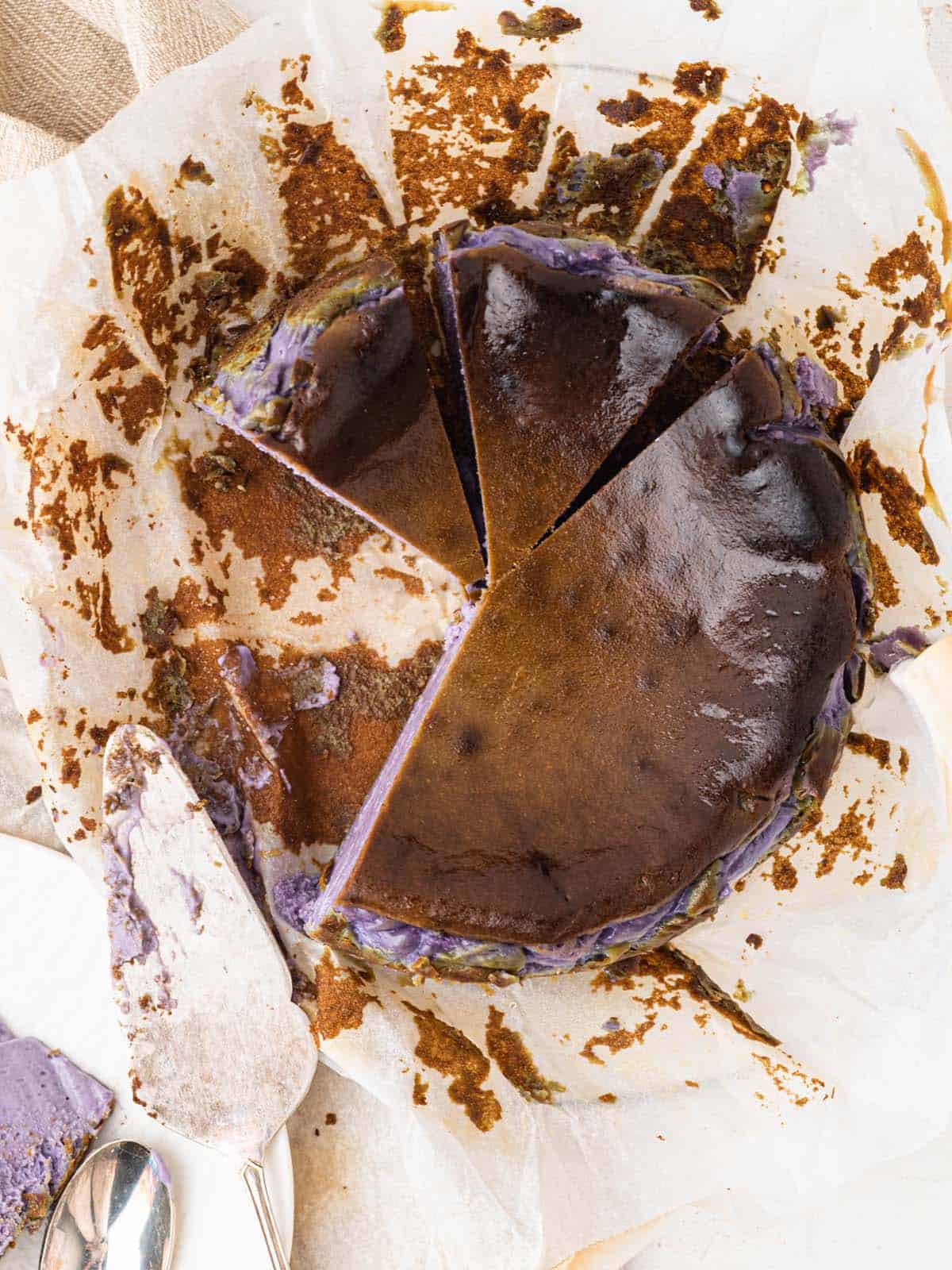
Now, if matcha is the serene minimalist, ube basque cheesecake is its vibrant, tropical cousin. Originating from the Philippines, ube, or purple yam, has become a global sensation thanks to its naturally vivid hue and nostalgic flavor.
This version keeps the burnt Basque structure but adds ube halaya (a sweet purple yam jam) or ube extract into the batter. The result? A cheesecake that’s gloriously purple, with a texture that feels a touch thicker and creamier than its matcha counterpart.
Its flavor is dreamy, sweet, buttery, and faintly nutty, like a cross between vanilla and coconut. The caramelized top contrasts beautifully with the purple center, creating a dessert that looks as good as it tastes.
And when chilled overnight, that deep color intensifies, making it the star of any dessert table. Every bite melts like velvet, leaving that signature ube aroma lingering softly.
If you adore the nutty sweetness of ube, try my Ube Basque Cheesecake, it’s creamy, colorful, and utterly crowd-pleasing.
Main Differences Between Matcha and Ube Basque Cheesecake
| Aspect | Matcha Basque Cheesecake | Ube Basque Cheesecake |
|---|---|---|
| Flavor Profile | Earthy, grassy, slightly bitter | Sweet, nutty, and vanilla-like |
| Color | Deep green | Vibrant purple |
| Ingredients | Matcha powder adds natural color and aroma | Ube halaya or extract for color and sweetness |
| Sweetness Level | Balanced and refined | Richer and sweeter |
| Mood & Pairings | Sophisticated, best with tea | Playful, perfect with coffee or tropical fruit |
Both start with the same simple base, cream cheese, sugar, eggs, and cream, but the added ingredient completely transforms the experience. Matcha leans toward contemplative calm, while ube bursts with joyful indulgence.
In flavor terms, matcha basque cheesecake feels like a quiet afternoon in Kyoto; ube basque cheesecake feels like a sunny morning in Manila.
Which One Should You Make?
If you’re after something elegant and balanced, the matcha version is your go-to. It’s perfect for minimalist dessert tables, afternoon tea, or as a gift for someone who enjoys subtle sophistication. The earthy notes pair wonderfully with black sesame or red bean treats.
On the other hand, the ube basque cheesecake shines when you want to celebrate. I love baking it for birthdays or festive gatherings, the color alone sparks conversation. Plus, kids and adults alike adore its creamy sweetness.
When I’m craving something cozy, I lean toward matcha. But when I’m hosting friends, ube always steals the spotlight.
I often bake the ube version for parties, the color pops beautifully on a dessert platter. For something more understated, matcha never disappoints.
Final Thoughts: Creamy Contrast, Same Basque Soul
Whether you choose the soothing matcha basque cheesecake or the vibrant ube basque cheesecake, both capture the heart of modern fusion baking, where East meets West in the creamiest, dreamiest way.
I always say: matcha soothes, ube delights. They share the same rustic charm of the original Basque cheesecake but tell different flavor stories.
So why not bake both? Set them side by side, slice them open, and let your taste buds decide their favorite.
Love this texture talk? Don’t miss my Matcha Basque Cheesecake and Ube Basque Cheesecake recipes for full details and baking tips.
Want more? Browse every ube recipe in one place.