
Soft and chewy matcha flavoured butter mochi baked with coconut milk for a creamy, buttery and delicious chewy treat
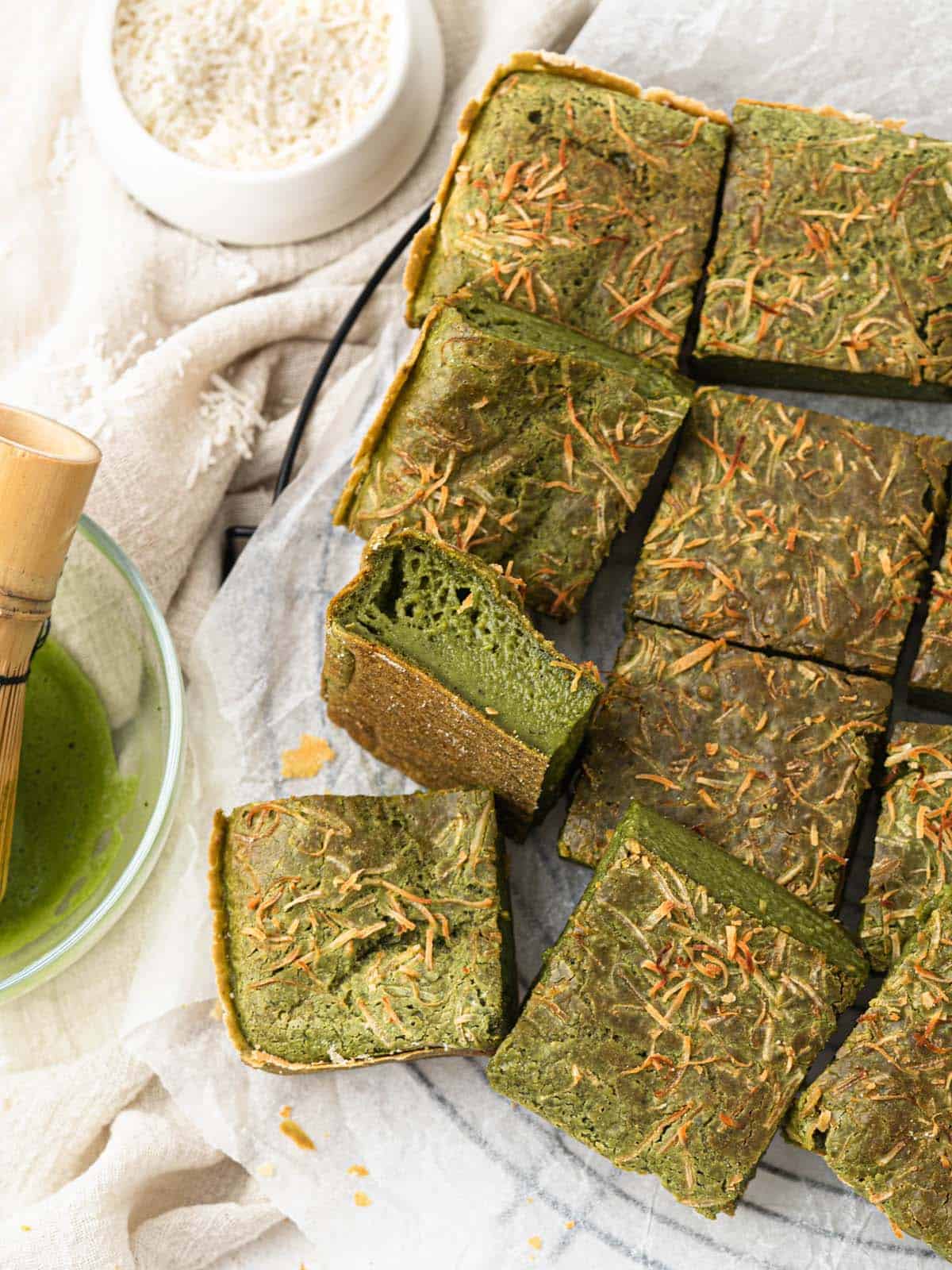
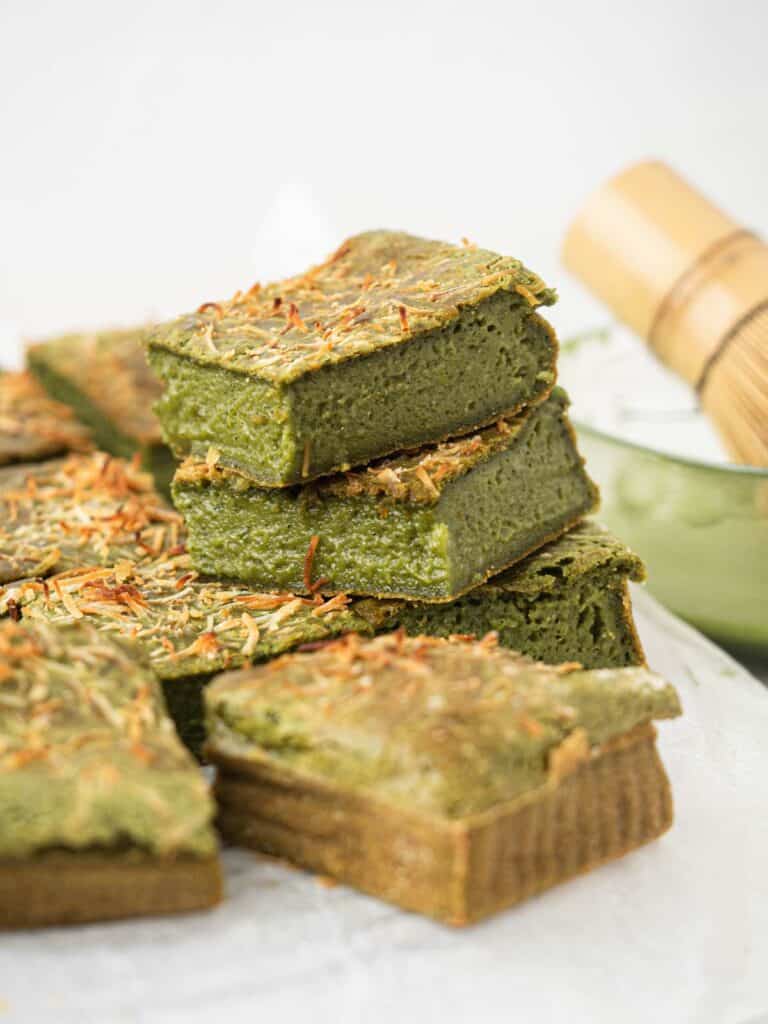
If you’re after a dessert that feels cosy, a little special, and still very easy to share, this matcha butter mochi is such a lovely one. It has crisp golden edges, a soft chewy centre, and that smooth matcha flavour wrapped in creamy coconut and butter. I first made this on a quiet afternoon when I wanted something simple but still full of texture. After a few tests, including one batch I cut far too early and instantly regretted, I learnt that patience is what gives you those clean, bouncy squares. It reminded me of my Zumbo’s days, where timing could change everything. At TuCha, I’m always drawn to desserts that feel playful but still comforting, and this one sits right there. I love how this brings together the chewy mochi textures I grew up enjoying with the playful café-style flavours we test at TuCha.
What is butter mochi?
Butter mochi is a delicious, sweet and chewy treat that originated in Hawaii. A fusion between Hawaii and Japan cultures this dessert came to be as many Japanese immigrated to Hawaii during the 1880s, bringing with them their food and culture. As a result, some delicious treats like this have now become a local treat!
Made from a mixture of butter, coconut milk, milk, eggs, and glutinous rice flour, this mochi is baked, rather than the traditional Japanese style which is steamed and pounded. The result is an incredibly fragrant and flavourful mochi with a soft interior and crisp exterior.
This version takes the traditional Hawaiian butter mochi a step further and adds a touch of matcha, aka green tea powder, for an earthy flavour that works with coconut for a unique bittersweet treat!
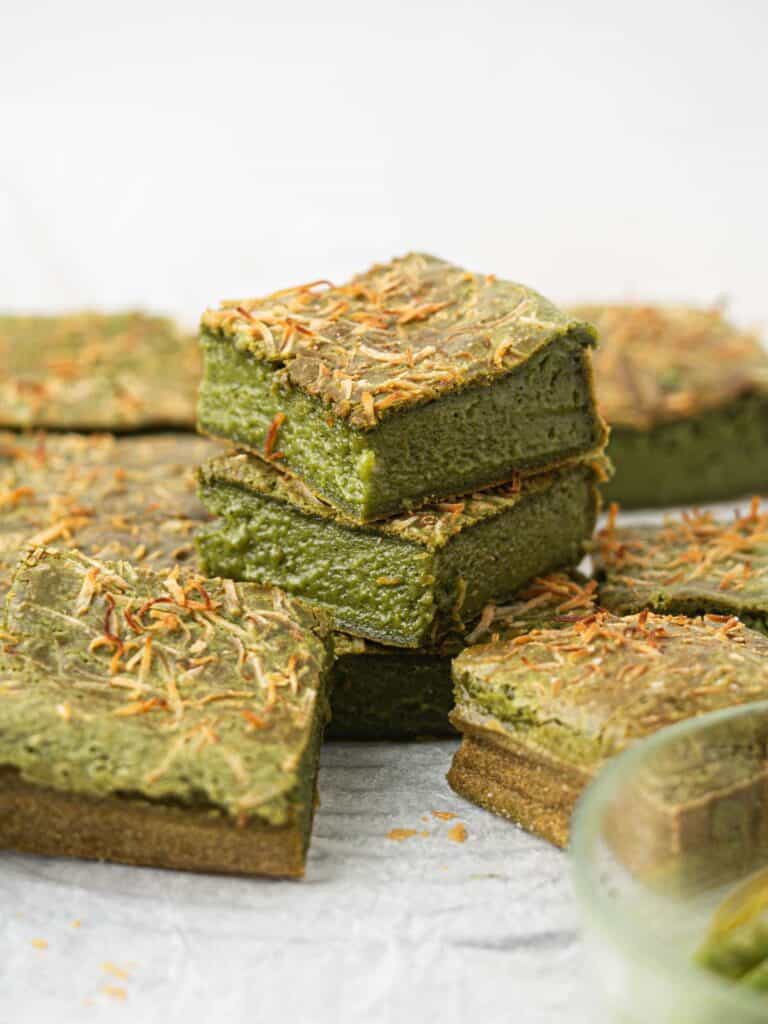
How to make the best butter mochi
Butter mochi is such an easy recipe that is perfect when you need a treat for a potluck or bake sale! All you need to do is whisk everything together and bake it up. That being said there are a couple of tips that can help you bring these to a whole other level.
Grease your pan with butter and dust with rice flour
One of my favourite parts of this treat are the edge pieces because they get the best of both worlds, a crisp and crunchy edge in combination with the soft and chewy mochi. Greasing the pan not only helps the butter unmould easily, it also increases the crispiness of the edge for the best texture.
Sift the matcha powder
Matcha powder has the tendency to clump up as it absorbs moisture from its surroundings. In order to prevent the batter from becoming speckled with clumps of matcha powder remember to sift the matcha powder. This will break it up and give you a smooth batter with an even green colour.
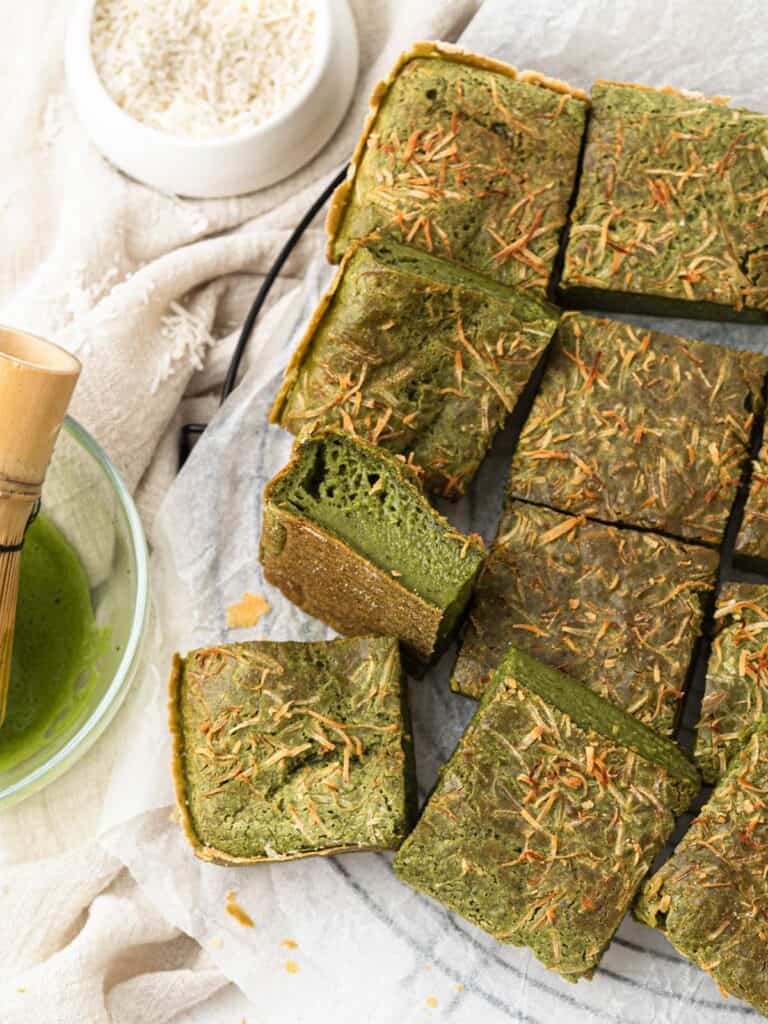
Whisk well
As this batter is made from glutinous rice flour rather than regular flour you don’t need to worry about over-whisking the batter. You want to make sure the batter is as smooth as possible so that the mochi doesn’t bake up with tough pockets of glutinous rice flour, so whisk well!
Don’t overbake
The mochi’s texture is dependent on the moisture levels in the mochi. That means that the more you bake the mochi past, the tougher it will get. Keep a close eye on them and once a toothpick inserted into the centre comes out with a few moist crumbs it’s ready!
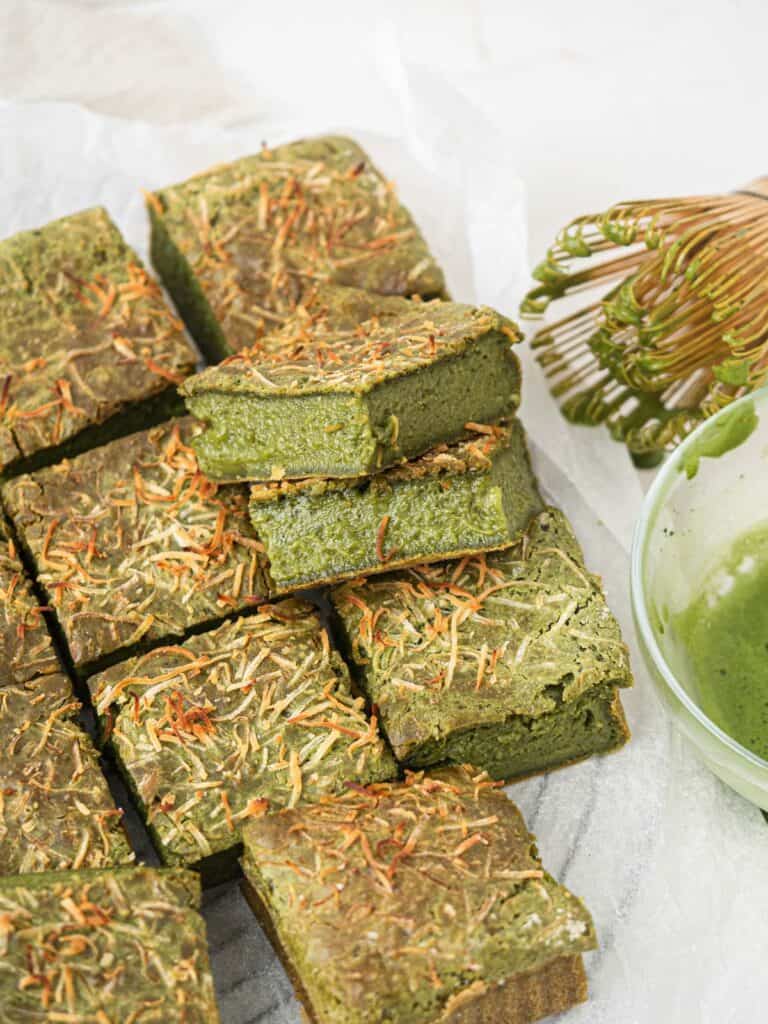
Customising this recipe
Original butter mochi
This recipe is super versatile and you can switch it up to your liking. If you’re looking for a more traditional butter mochi feel free to leave out the matcha powder, it’ll bake up to a perfect coconut flavoured treat. You can even replace the whole milk with coconut milk for an even more coconut forward flavour.
Extra coconut texture
A lot of people like to mix desiccated coconut into the batter to change up the texture. For this amount of batter, I like to mix in about 3/4 cup of desiccated coconut just before I pour it into the baking tray.
Chocolate
For a unique chocolate-flavored butter mochi replace the matcha powder with cocoa powder and stir in some chocolate chips before baking. You might think this is strange, but once you try the combination you’ll be hooked.
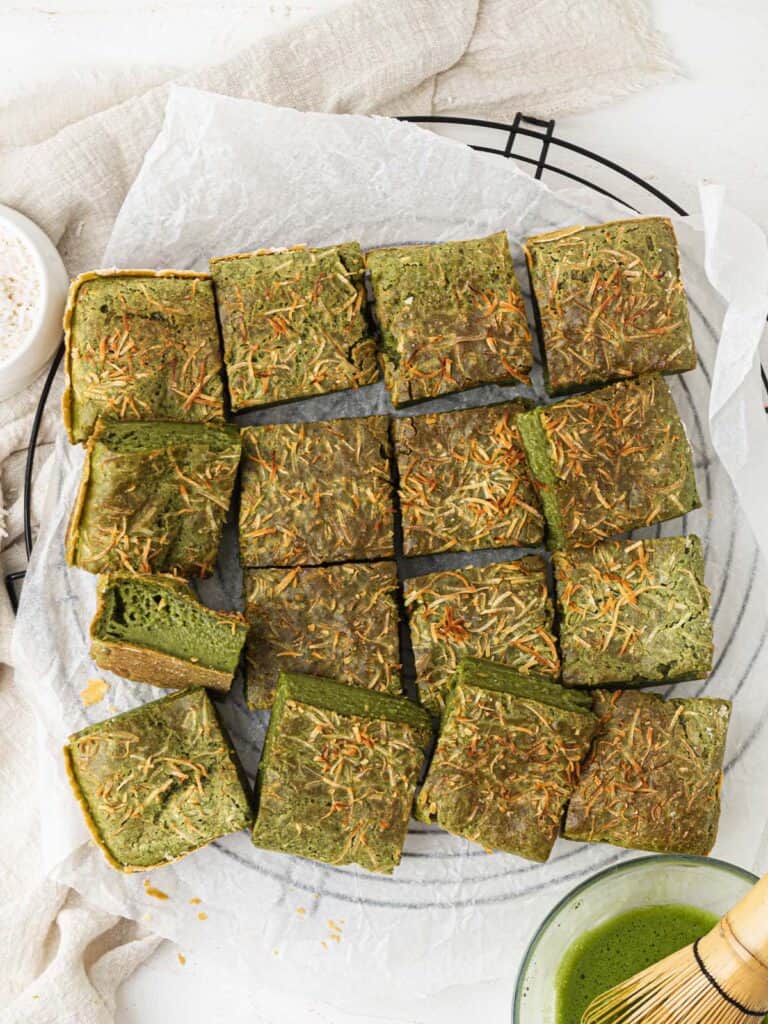
At-a-Glance Specs, What You’ll Need Before We Start Rolling
| Yield | Prep Time | Cook Time | Difficulty | Storage |
| 1 x 8-inch slab, about 9 to 16 squares | 15 minutes, plus 1 to 2 hours cooling | 45 minutes, up to 55 minutes if needed | Easy | Store airtight for up to 2 days at room temperature or up to 1 week in the fridge. Freeze slices if needed and warm before serving. |
Ingredients
Unsalted butter
An essential ingredient in ‘butter’ mochi. The butter gives the mochi their signature texture and buttery fragrance.
Coconut milk
Coconut milk is high in fat and perfect for enhancing the smooth mochi texture. The texture won’t be as smooth and bouncy if you use a lite coconut milk, so make sure you are using a full fat coconut milk made with at least 95% coconut. You can check the coconut percentage on the can. Many coconut milks are made with high percentages of water, resulting in a lower quality coconut milk with less flavour so make sure you check!
Whole milk
Milk plays the same role as coconut milk, just without the coconut flavour. As we are making a matcha flavoured butter mochi we don’t want to coconut flavour to be too prominent, otherwise the matcha flavour will be masked.
Eggs
The eggs give the mochi body, without it the butter mochi would’t be able to to hold itself in its slab like form.
Matcha powder
Matcha powder is important if we are making a matcha butter mochi! Make sure you use a high-quality cooking grade matcha powder or ceremonial grade for a bright green colour. The lower the quality of matcha, the browner your final result will be.
Glutinous rice flour
Glutinous rice flour is what makes this mochi! If you have access to mochiko, aka Japanese short-grain glutinous rice flour, then use it, this will give you the most authentic texture. However, if you can’t find mochiko, regular glutinous rice flour works fine. The glutinous rice flour found in most Asian grocery stores is the Thai brand with green writing, this will work perfectly too!
Baking powder
Baking powder gives the mochi a little more air, rather than it baking up to a super dense block.
Butter, for greasing
Don’t skip the butter for greasing. Not only will it help the butter mochi come out of the pan, but it also helps to give the edges a delicious crust.
Rice flour, for dusting
Dusting the pan with rice flour will help enhance the crust. However, if you don’t have rice flour feel free to use regular flour, it’ll work just as well.
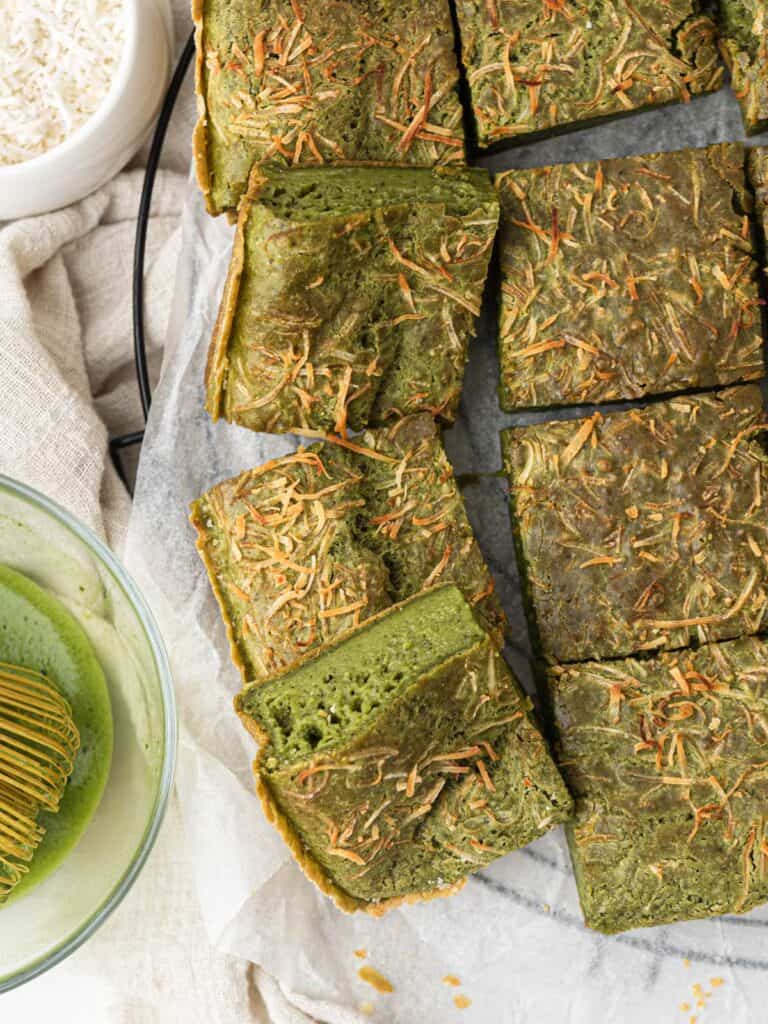
Optional, My Favourite Extras That Add a Little Magic
- Flaky salt: Add a tiny pinch over the coconut before baking. It balances the sweetness and makes the matcha taste smoother.
- White chocolate chips: Stir a small handful into the batter. The creamy sweetness softens matcha’s earthy edge.
- Black sesame seeds: Sprinkle them over the top before baking. They add a nutty finish and look lovely against the green mochi.
- Sweet red bean paste: Dot small spoonfuls through the batter. Keep them light so the mochi still bakes evenly.
- Toasted sesame topping: Use white or black sesame for a simple café-style finish. It gives a little crunch without making the mochi heavy.
- Matcha sugar dusting: Dust cooled slices with a very light mix of matcha and sugar. Keep it soft so it does not taste bitter.
- Vanilla ice cream: Serve a warm square with a small scoop. The cold cream and warm chew work beautifully together.
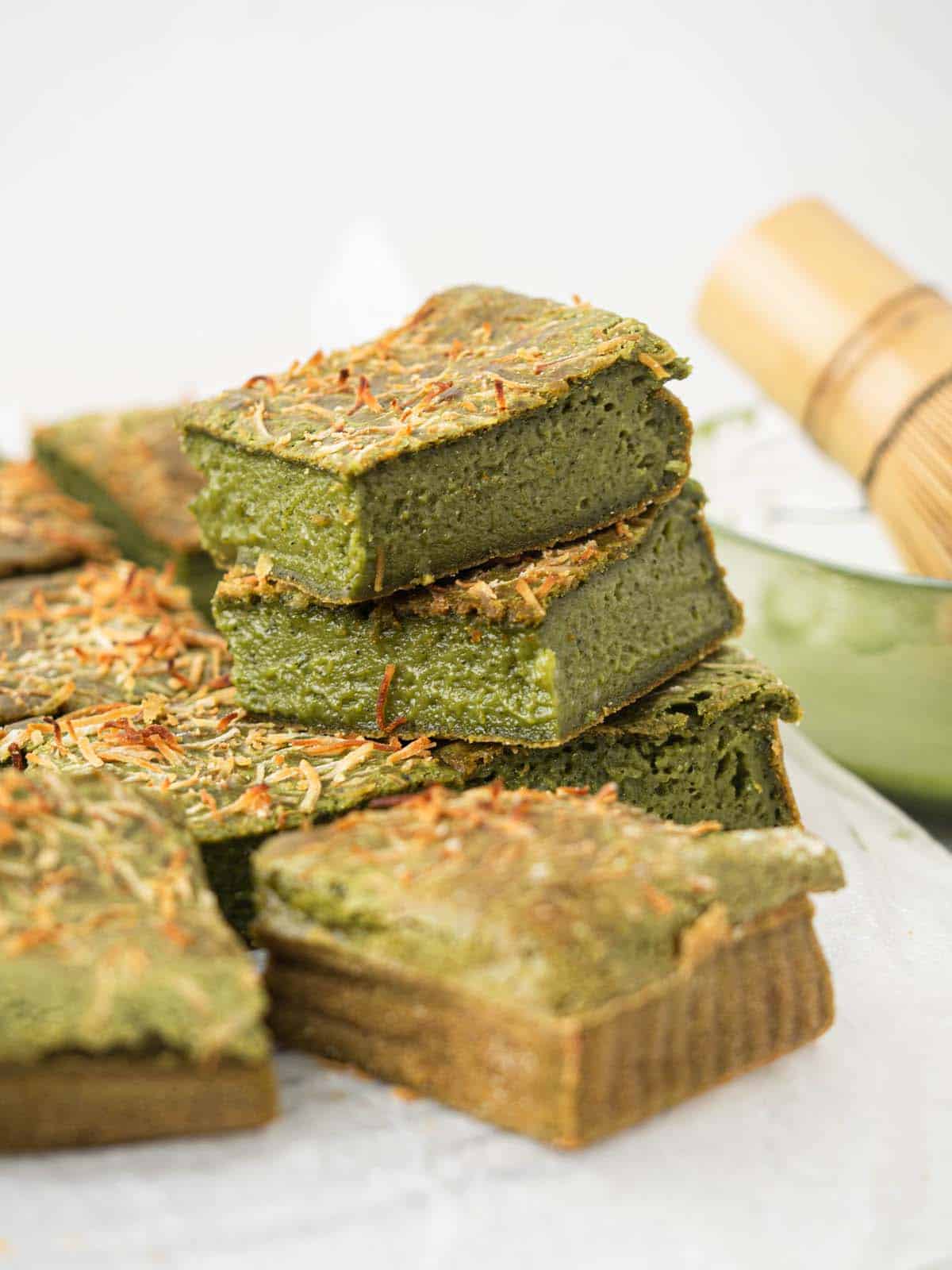
Substitutions, Smart Ingredient Swaps That Still Taste Amazing
- Glutinous rice flour: Use glutinous rice flour, sweet rice flour, or mochiko. Do not use tapioca flour if you want the classic butter mochi texture.
- Coconut milk: Use full-fat canned coconut milk. Avoid coconut drink from a carton because it is thinner and less rich.
- Whole milk: You can use oat milk, soy milk, almond milk, or skim milk. Oat milk gives the best non-dairy body.
- Unsalted butter: Salted butter can work. Skip any extra salt if you use it.
- Matcha powder: Use bright green culinary grade matcha. Ceremonial grade works, but you do not need it for baking.
- White sugar: You can reduce it a little, but do not cut too much. Matcha needs sweetness to taste smooth.
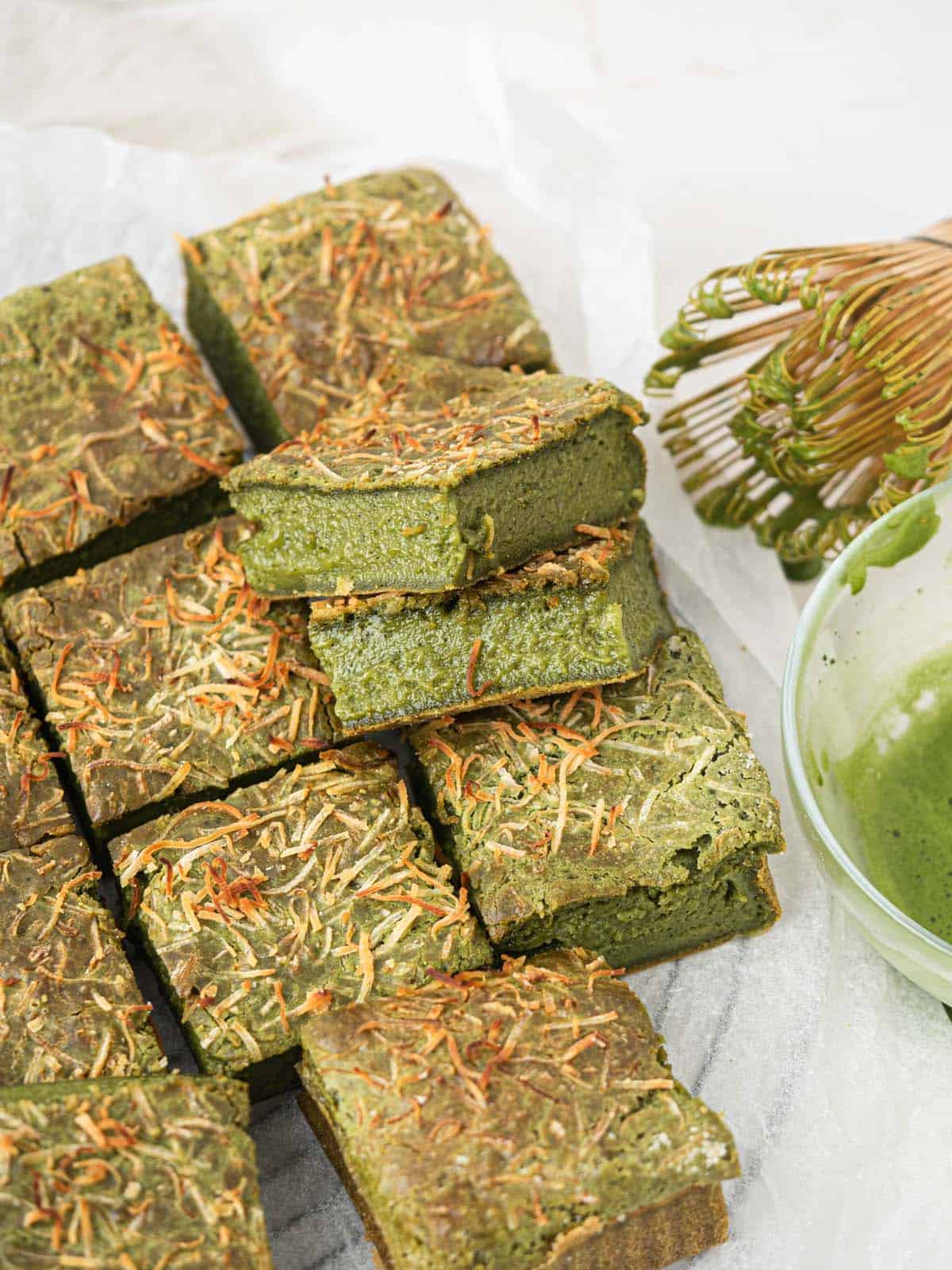
Troubleshooting, Quick Fixes I’ve Learned from My Bakery Kitchen
| Issue | What Probably Happened | Quick Fix |
| Mochi is too soft or wet | It was underbaked or sliced too soon | Bake until set, then cool fully before cutting |
| Matcha tastes bitter | Too much matcha or dull old matcha was used | Use fresh bright matcha and increase slowly |
| Matcha colour turned brown | Matcha was old, low quality, or the mochi baked too long | Use bright green matcha and check near the end of baking |
| Butter bits are in the batter | The wet ingredients were too cold | Use room temperature milk, coconut milk, and eggs |
| Slices look messy | The mochi was cut while warm or with a sticky knife | Cool fully and use an oiled or plastic knife |
Comparison, How This Recipe Stacks Up Against Other Desserts
| Dessert | Texture | Best For |
| Matcha butter mochi | Crisp edges, soft chewy centre, creamy coconut matcha flavour | Potlucks, bake sales, and simple matcha desserts |
| Classic butter mochi | Buttery, chewy, coconut-rich, without matcha | A more traditional Hawaiian-style tray bake |
| Matcha sponge cake | Light, airy, soft cake crumb | Layer cakes, birthdays, and cream-filled desserts |
Tips, My Personal Tricks for a Professional-Looking Result
Cool It Fully Before Slicing
Butter mochi needs time to settle after baking. If you cut it too soon, the centre can look wet and sticky.
At TuCha, we always let chewy bakes rest before cutting. Clean squares start with patience.
Tap the Pan Before Baking
Once the batter is in the tin, tap the pan gently on the bench. This helps pop large air bubbles and smooths the top.
It is a small step, but it gives the slab a neater finish. A little bench tap, a little green tea glow.
Mix the Matcha Into the Sugar First
The original post already covers sifting, but this is my extra little helper step. Whisking matcha into sugar helps spread it through the batter.
It keeps the colour smoother and helps avoid bitter green speckles.
Stir the Coconut Milk Well
Coconut milk can separate in the can. Stir it before measuring so the creamy part and liquid are even.
That fat is what gives matcha butter mochi its soft, bouncy bite. Do not leave the good stuff behind.
Use Room Temperature Wet Ingredients
Room temperature milk, coconut milk, and eggs mix more smoothly with melted butter. Cold liquid can make the butter firm up in small bits.
I learnt this one the fiddly way during testing. Smooth batter gives a smoother mochi cake.
Cut with an Oiled or Plastic Knife
Butter mochi is sticky in the best way, but it can cling to a knife. An oiled knife or plastic knife gives cleaner cuts.
If I am making a tray for sharing, this is the difference between homey and café-ready.
Cut Smaller Squares for Better Texture
Butter mochi is rich and chewy, so small squares work well. They feel neat, easy to serve, and not too heavy.
This also makes the tray go further for potlucks or dessert tables.
Let Leftovers Warm Gently
After the first day, the texture can firm up. A gentle warm-up brings back the chew.
Do not overheat it, though. We want soft and bouncy, not floppy.
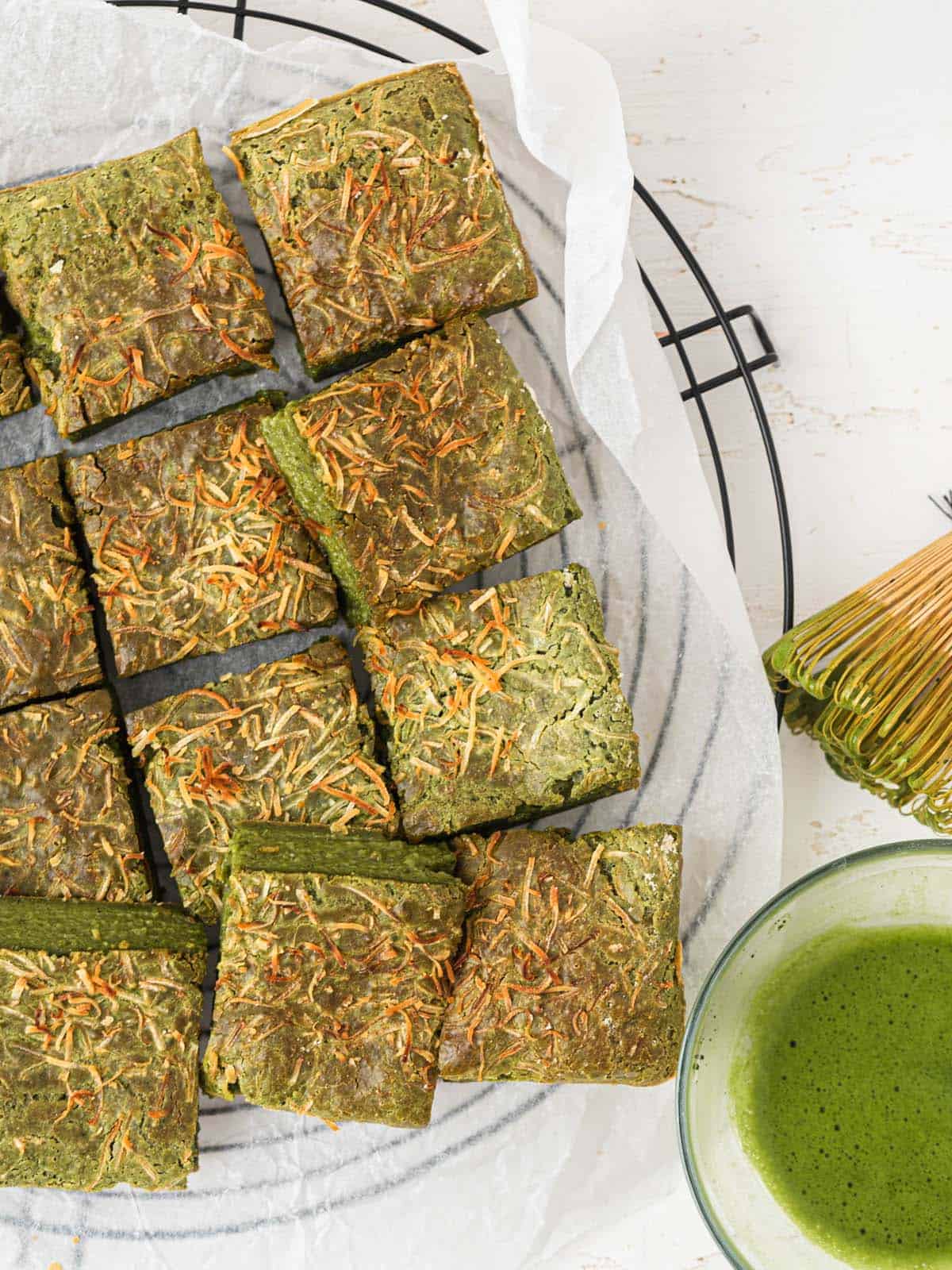
Variations, Fun Twists and Flavours Inspired by My TuCha Dessert Experiments
White Chocolate Matcha Butter Mochi
Stir white chocolate chips into the batter before baking. Matcha and white chocolate are a classic pair because the creamy sweetness softens the green tea bitterness.
It gives the mochi a gentle café-style finish.
Black Sesame Matcha Butter Mochi
Sprinkle black sesame seeds over the top before baking. They add a nutty flavour and a bold contrast against the green matcha.
This one feels very Asian dessert shop in the best way.
Hojicha Butter Mochi
Swap the matcha for hojicha powder for a roasted tea version. It tastes warmer, deeper, and a little less grassy.
This is the version I would serve with a creamy milk tea on a slow afternoon.
Matcha Red Bean Butter Mochi
Add small spoonfuls of sweet red bean paste through the batter. Matcha and red bean have that cosy flavour pairing I always come back to.
Keep the red bean light so the mochi still bakes evenly.
Pandan Coconut Butter Mochi
Swap the matcha for pandan extract and keep the coconut milk. The flavour becomes soft, fragrant, and a little tropical.
It is chewy, green, and very much a slice-and-share moment.
Ube Coconut Butter Mochi
Add ube halaya or ube extract for a purple coconut mochi cake. The flavour is creamy, earthy, and soft.
This one is very social-friendly because the colour does half the work for you.
Matcha Butter Mochi Muffins
Bake the batter in a greased and dusted muffin tin for small pieces with more crisp edges. Start checking earlier because smaller portions bake faster.
This is a fun option for dessert boxes or party trays.
Strawberry Matcha Butter Mochi
Serve the cooled squares with fresh strawberries or fold a few small berry pieces through the batter. The fruit makes the matcha taste brighter.
Keep the pieces small so the mochi still sets well.
Serving Suggestions, How I Like to Present These for Maximum Wow
Cut Into Small Squares for Sharing
Butter mochi is chewy and rich, so small squares are perfect. They look neat on a tray and are easy for people to grab.
This is very bake sale, potluck, and dessert-table friendly.
Serve Warm for the Softest Chew
A warm piece of matcha butter mochi has the softest, bounciest bite. If it has been sitting for a day, warm it gently before serving.
That little reheat brings back the chewy magic.
Pair with Milk Tea
At TuCha, I always think about what drink would sit beside a dessert. Matcha butter mochi is lovely with milk tea because the tea softens the sweetness.
Keep the drink light so the coconut and matcha can still shine.
Serve with Hojicha or Green Tea
If you want something less sweet, serve this with hot hojicha or green tea. The tea balances the buttery coconut flavour.
It makes the mochi feel calm, cosy, and a little elegant.
Add Vanilla Ice Cream
Serve a warm square with a scoop of vanilla ice cream. The warm chewy mochi and cold creamy ice cream are such a good contrast.
This turns a simple tray bake into a proper dessert moment.
Style the Edge Pieces at the Front
The edge pieces are the stars here. They have that crisp, golden outside with a chewy centre.
Put them at the front of the plate. Edge-piece energy deserves attention.
Build a Matcha Dessert Tray
Serve the squares with strawberries, milk tea, and a little extra coconut on the side. It turns one simple bake into a full café-style plate.
This is how I would style it when I want something simple but still pretty.
Pack It for a Potluck
Let the slab cool fully, cut it into small squares, and pack it in the same tray or a neat container. Butter mochi travels well once set.
It is easy to share, which is exactly why I love it.
Common Mistakes to Avoid, Lessons I’ve Learned After Dozens of Batches
Using Tapioca Flour Instead of Glutinous Rice Flour
Tapioca flour will not give you the same butter mochi texture. It becomes stretchy in a different way and will not bake into the same chewy slab.
Use glutinous rice flour or mochiko for that proper mochi cake bounce.
Cutting Before It Has Cooled
If you cut too soon, the centre can look wet and sticky. It needs time to set after baking.
Give it at least 1 to 2 hours before slicing. Your future clean squares will thank you.
Using Old or Dull Matcha
Old matcha can taste bitter and bake up brown instead of green. Fresh matcha should smell grassy and look bright.
If the powder looks dull before baking, the final colour will usually look dull too.
Skipping the Coconut Milk Stir
If you pour from the can without stirring, you might get too much watery liquid or too much cream. That can change the texture.
Stir first, then measure. It is simple, but it keeps the batter balanced.
Using Cold Wet Ingredients
Cold milk, coconut milk, or eggs can make melted butter firm up in the bowl. You may see tiny butter bits through the batter.
Room temperature ingredients mix more smoothly and give a better texture.
Reducing the Sugar Too Much
You can reduce the sugar a little, but do not remove too much. Matcha needs sweetness to taste smooth, not harsh.
A little sweetness keeps the green tea flavour soft and balanced.
Adding Too Much Matcha Too Fast
More matcha can be lovely, but it can also turn bitter quickly. Add a little extra first, then test from there.
Matcha should taste earthy and smooth, not sharp.
Baking in a Loaf Tin
A loaf tin is not ideal for butter mochi. The batter is dense and may bake unevenly in a deep tin.
Use a shallow square tray or muffin tin for better texture.
Frequently Asked Questions
Can I Use Tapioca Flour Instead of Glutinous Rice Flour
No, I would not use tapioca flour for this recipe. It gives a different stretch and will not bake into the same chewy butter mochi texture.
Use glutinous rice flour, sweet rice flour, or mochiko. That is what gives butter mochi its proper bounce.
Can I Use Almond Milk, Skim Milk, or Non-Dairy Milk
Yes, you can use almond milk, oat milk, soy milk, or skim milk in place of whole milk. The texture may be a little less rich, but it can still work.
Oat milk is my favourite non-dairy option because it has a bit more body.
Can I Add More Matcha Powder
Yes, but add it slowly. Too much matcha can make the mochi bitter, especially if the powder is older or lower quality.
I would add 1 to 2 extra teaspoons first, then see how you like it.
Can I Reduce the Sugar
You can reduce the sugar a little if you prefer it less sweet. I would not remove too much because sugar helps balance matcha’s bitterness.
Matcha needs a bit of sweetness to taste smooth and rounded.
Can I Make Matcha Butter Mochi Ahead
Yes, this is great for potlucks and bake sales. Bake it the day before, let it cool fully, then slice it into squares.
Warm the pieces gently before serving if you want to bring back that fresh chewy texture.
Is Matcha Butter Mochi Gluten-Free
It can be gluten-free because glutinous rice flour does not contain gluten. The word glutinous means sticky, not wheat gluten.
Check your matcha, baking powder, and toppings if you are baking for someone who needs strict gluten-free food.
Can I Bake This in a Muffin Tin
Yes, you can bake butter mochi in a muffin tin for more crisp edges. Grease and dust the tin well, then fill each cup partway.
Start checking earlier than the slab version because smaller portions bake faster.
Why Did My Matcha Butter Mochi Turn Brown
This usually happens when the matcha is old, dull, or lower quality. Overbaking can also make the colour darker.
Use fresh, bright green matcha and check the mochi near the end of baking.
Should Matcha Butter Mochi Be Eaten Warm or Cold
You can eat it at room temperature, but I love it slightly warm. The texture becomes softer and chewier.
If it has been in the fridge, warm it gently before serving.
Can I Make This Dairy-Free
You can make parts of it dairy-free by using oat milk or another non-dairy milk in place of whole milk. You can also test plant-based butter.
I would be honest here, though. The texture may change a little because butter and milk add richness.
How Do I Cut Butter Mochi Cleanly
Cool it fully first. Then use an oiled knife or plastic knife.
Wipe the knife between cuts if needed. Clean cuts make the green squares look extra pretty.
Can I Use Coconut Drink Instead of Canned Coconut Milk
I would avoid coconut drink from a carton. It is usually much thinner and will not give the same creamy, bouncy texture.
Use full-fat canned coconut milk and stir it well before measuring.
Let’s Get Cooking
If you liked this recipe make sure to leave me a comment and rating down below. I’d love to know how it went! Also, don’t forget to tag me on Instagram @catherine.desserts.
Follow me on Facebook, Pinterest, YouTube, and TikTok for more of my baking creations and updates!
Matcha Butter Mochi (Mochi Cake)
Soft and chewy matcha flavoured sweet mochi baked with coconut milk for a creamy, buttery and delicious chewy treat
- Prep Time: 15 minutes
- Cook Time: 45 minutes
- Total Time: 1 hour
- Yield: 8 x 8 inch slab 1x
- Category: Mochi
- Method: Easy
- Cuisine: Hawaiian
Ingredients
- 80g Unsalted butter (1/3 cup), melted
- 255g Coconut milk (1 cup), room temperature
- 360g Whole milk (1 1/2 cups), room temperature
- 3 Eggs
- 2 tbsp Matcha powder
- 340g Glutinous rice flour ( 1 1/2 cups)
- 300g White sugar
- 1 1/2 tsp Baking powder
- Butter, for greasing
- Rice flour, for dusting
- Shredded coconut, for sprinkling
Instructions
- Preheat the oven to 180C/350F and brush a 8 x 8 inch tray with melted butter, then dust with rice flour
- Combine the melted butter, coconut milk, whole milk and eggs together in a large bowl
- In another bowl combine the matcha powder, glutinous rice flour, sugar and baking powder, and whisk until well combined
- Pour the wet ingredients into the dry ingredients, and whisk until smooth
- Sprinkle over the shredded coconut
- Pour the batter into the greased tin and bake for 45-55 minutes, or until mochi is set and golden brown
- Remove from the oven and cool for 1-2 hours before slicing with an oiled knife
Love mochi? Find every type in one place in our complete guide to mochi recipes.
Love matcha? Find every matcha dessert in one place in our complete guide to matcha desserts.



You did not include sugar in the ingredients, nor mention sugar in your description. Is this recipe really made without any sugar? If so, that would be great, but all the other recipes require sugar.
Hi Tamara, that was my mistake! There is definitely sugar in it, I’ve updated the recipe now. Thank you for picking that up
I was wondering if I could use tapioca flour instead of glutinous rice flour
hi catherine, thank you for all the matcha recipes, love to try one of the recipe. can i substitute like almond milk, skim milk on regular milk?
Thank you,
Tess
Hi Catherine,
Can I use non-dairy milk instead of whole milk?
Thank you for this recipe.
This was a hit at home & work. So chewy and soft even after a few days.
Hi Catherine, if I am make a regular flavor, not matcha, how should I adjust the ingredients?
Easy to make and great texture! Will be making this again with maybe a bit more matcha powder though
Hello Catherine, can I substitute the matcha powder to purple sweet potato powder for a purple sweet potato mochi cake version?
Hello Catherine, Can i replace the matcha powder with purple sweet potato powder to make a purple sweet potato mochi version?