The first time I baked a Basque cheesecake, I thought I’d done something terribly wrong.
The top was almost black. The parchment crumpled wildly around the tin. The centre still trembled when I nudged the pan.
Then I sliced it.
That moment, that contrast, is exactly why people keep asking what is basque cheesecake. It’s a dessert that looks rebellious, tastes luxurious, and feels deeply comforting all at once. Burnt on top, custardy in the middle, and unapologetically imperfect.
Let’s slow down and savour it properly.
At a Glance: Basque Cheesecake Explained
| Feature | Details |
|---|---|
| Origin | Basque Country, Spain |
| Key Ingredients | Cream cheese, eggs, sugar, cream, flour |
| Texture & Mouthfeel | Burnt crust, creamy centre, almost molten |
| Typical Sweetness | Gently sweet, balanced, not cloying |
| Method Highlights | High heat, no water bath, no crust |
| Best Occasion | Dinner parties, café desserts, casual celebrations |
If you’re curious how this style adapts to modern flavours, my Burnt Basque Cheesecake recipe is the perfect starting point, simple, bold, and forgiving.
What Is a Basque Cheesecake?
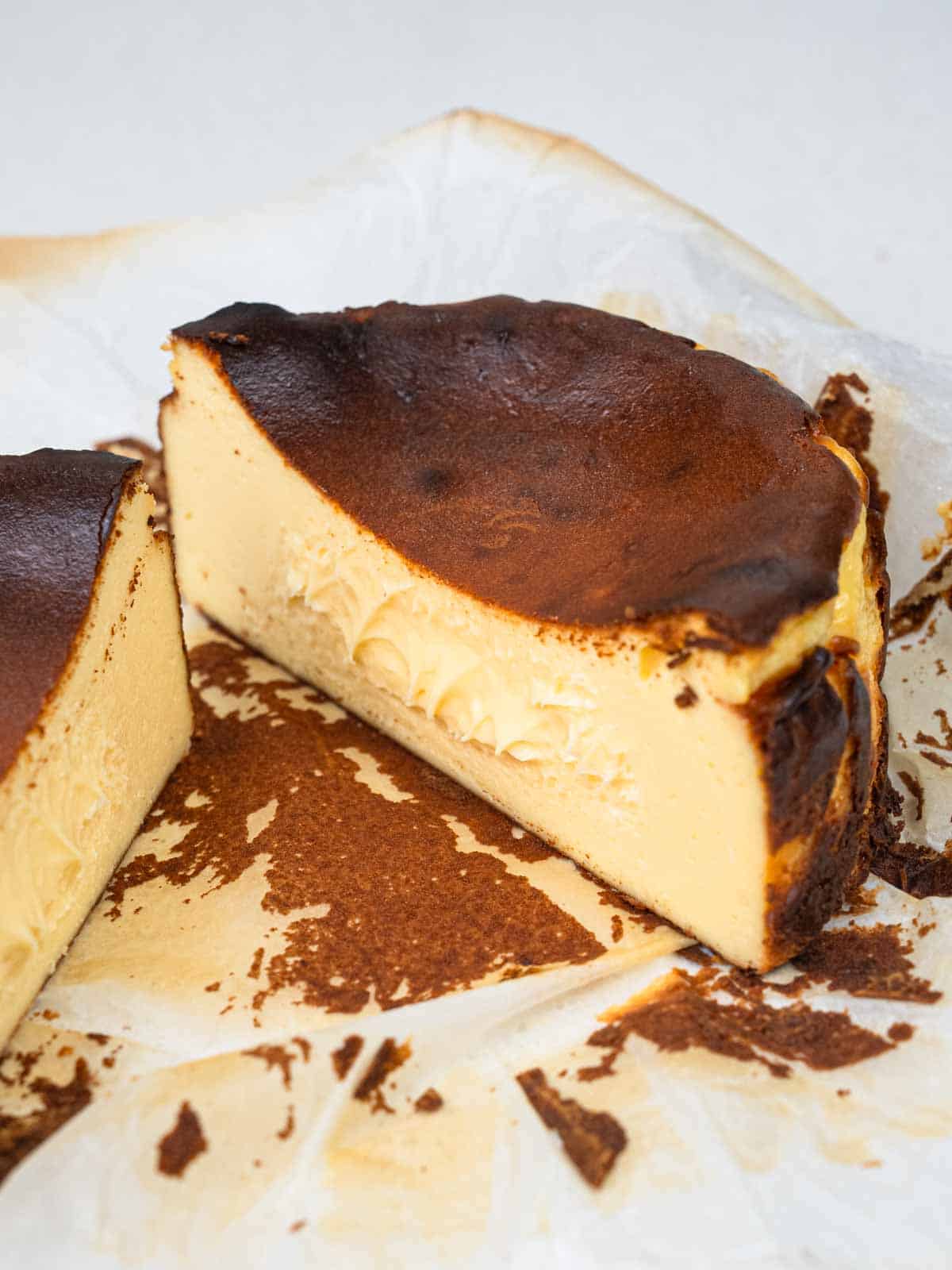
So, what is basque cheesecake really?
Basque cheesecake, also called Basque burnt cheesecake, originated in San Sebastián, Spain, at a small bar called La Viña in the early 1990s. Unlike classic cheesecakes, this one breaks almost every rule.
There’s no biscuit base.
No water bath.
No gentle, low-temperature bake.
Instead, the batter is poured into a parchment-lined tin and baked hot and fast. The result is a deeply caramelised, almost scorched top with a creamy, custard-like interior that sets as it cools.
Texturally, it sits somewhere between a baked custard and a traditional cheesecake. The edges are firm and sliceable. The centre stays soft, wobbling slightly like crème brûlée before chilling.
Flavour-wise, it’s rich but restrained. The bitterness from the burnt top balances the creaminess beautifully. That contrast is the soul of the dessert.
Culturally, Basque cheesecake reflects a very Spanish approach to food, rustic, confident, and unafraid of imperfection. The crumpled paper, the cracked surface, the uneven colour are not flaws. They’re part of its charm.
Why This Cheesecake Matters: Texture, Trend, and Technique
Basque cheesecake didn’t just become popular by accident.
In the last decade, it’s quietly taken over bakery menus, café counters, and social feeds around the world. And here’s why.
First, the texture. People are obsessed with creamy-centred desserts right now. Lava cakes, custard buns, molten brownies, Basque cheesecake delivers that same pleasure, but with less fuss.
Second, the technique. This cheesecake removes the fear factor. No cracked tops to stress over. No delicate temperature control. The darker the top, the better.
Third, the versatility. Once you understand what is basque cheesecake, you realise how adaptable it is. Matcha, chocolate, ube, pumpkin, even savoury variations, all work beautifully because the base is so forgiving.
That’s why recipes like Matcha Basque Cheesecake and Ube Basque Cheesecake have become global favourites.
It’s tradition meeting modern baking curiosity.
How To Make It: Basics of Method & Technique
Basque cheesecake is wonderfully simple, but small details matter.
Core Ingredients
- Full-fat cream cheese, softened
- White sugar
- Eggs
- Thickened cream or heavy cream
- A small amount of flour
That’s it. No gelatin. No sour cream required.
Equipment
- Springform tin
- Baking parchment (lots of it)
- Mixer or whisk
- Hot oven
Basic Method
- Line the tin generously with crumpled parchment, letting it overhang.
- Mix cream cheese and sugar until smooth.
- Add eggs one at a time, mixing gently.
- Pour in cream, then sift in flour.
- Bake at high heat until the top is deeply browned and the centre still jiggles.
Here’s the secret: don’t overbake. The cheesecake continues to set as it cools.
Variations to Try
- Chocolate for depth and bitterness
- Matcha for earthy balance
- Citrus zest for brightness
- Mini versions for portion control
If you love individual desserts, my Mini Basque Cheesecake is perfect for sharing, or not sharing at all.
Popular Basque Cheesecake Desserts
Once you understand what is basque cheesecake, the flavour possibilities open up beautifully.
Thai Tea Basque Cheesecake

The bold tea flavour adds warmth and colour while keeping that signature creamy centre. It’s aromatic, gently bitter, and stunning on the plate. You can find my version here: Thai Tea Basque Cheesecake.
Chocolate Basque Cheesecake

This variation leans into richness. Cocoa deepens the burnt notes, creating something closer to a baked chocolate custard. If you love intense desserts, try my Chocolate Basque Cheesecake.
Pumpkin Basque Cheesecake
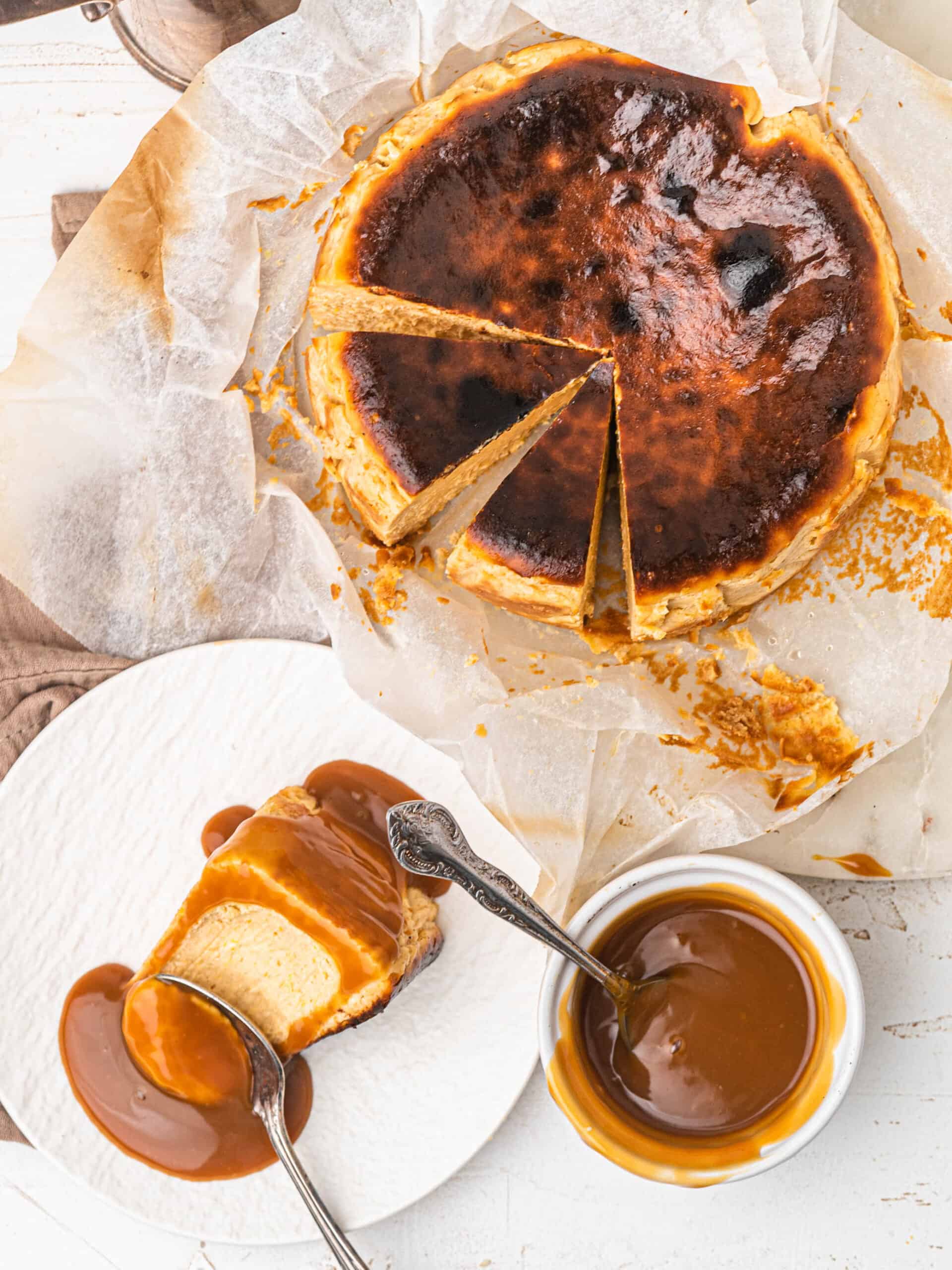
Perfect for cooler months, pumpkin adds moisture and spice without overpowering the base. It’s soft, fragrant, and ideal for autumn gatherings. The recipe lives here: Pumpkin Basque Cheesecake.
Each version keeps the spirit intact while telling a slightly different flavour story.
Final Thoughts: The Beauty of Burning It Bold
So, what is basque cheesecake at its heart?
It’s confidence in dessert form.
A reminder that perfection is overrated.
A celebration of contrast, bitter and sweet, soft and set, rustic and refined.
Whether you bake the classic version or explore flavours like matcha or chocolate, this cheesecake always invites you to relax and trust the process.
If you’re in the mood to experiment next, I’d suggest pairing it with something equally comforting, like my Japanese Soufflé Cheesecake or revisiting the bold original with Burnt Basque Cheesecake.
Slice it thick. Serve it simply. And enjoy every creamy bite.
Frequently Asked Questions
Is Basque cheesecake supposed to be burnt?
Yes. The dark top is intentional and adds flavour.
Does it need a crust?
No. Basque cheesecake is crustless by design.
Is it underbaked in the middle?
It should be soft and custardy, not raw.
Can I make it ahead of time?
Absolutely. It tastes even better chilled overnight.
Why does it crack?
Cracks are normal and encouraged. They add character.
How is it different from New York cheesecake?
It’s lighter, less sweet, and baked at a much higher temperature.