f you’ve walked past a trendy café lately, you’ve probably seen them: the adorable ring-shaped treats with a glossy glaze and a soft, chewy pull. The mochi donut has taken the world by storm, an irresistible cross between Japan’s beloved mochi and the classic American donut.
But beyond the pretty Instagram photos lies a fascinating story of texture, culture, and creativity. What makes a mochi donut so different? Why does its chew captivate dessert lovers everywhere? And when should you choose it over your usual fried treat?
Let’s explore the joy behind these bubble-shaped sweets, where they come from, how they’re made, and why they’ve become the dessert everyone’s talking about.
At a Glance: Mochi Donut Explained
| Feature | Description |
|---|---|
| Origin | Japan (inspired by mochi and American donuts, popularized in Hawaii and Korea) |
| Key Ingredients | Glutinous rice flour, sugar, eggs, butter or oil, milk, glaze |
| Texture & Mouthfeel | Soft, bouncy, chewy, like a cross between mochi and a light cake |
| Typical Sweetness | Mildly sweet, often balanced by flavored glazes |
| Method Highlights | Fried or baked from mochi batter; shaped into “pon de ring” balls |
| Best Occasion | Afternoon treat, café pairing, dessert gift boxes, celebrations |
For an easy at-home version that skips deep-frying, try my Baked Mochi Donuts, they’re crisp on the outside and chewy in the centre.
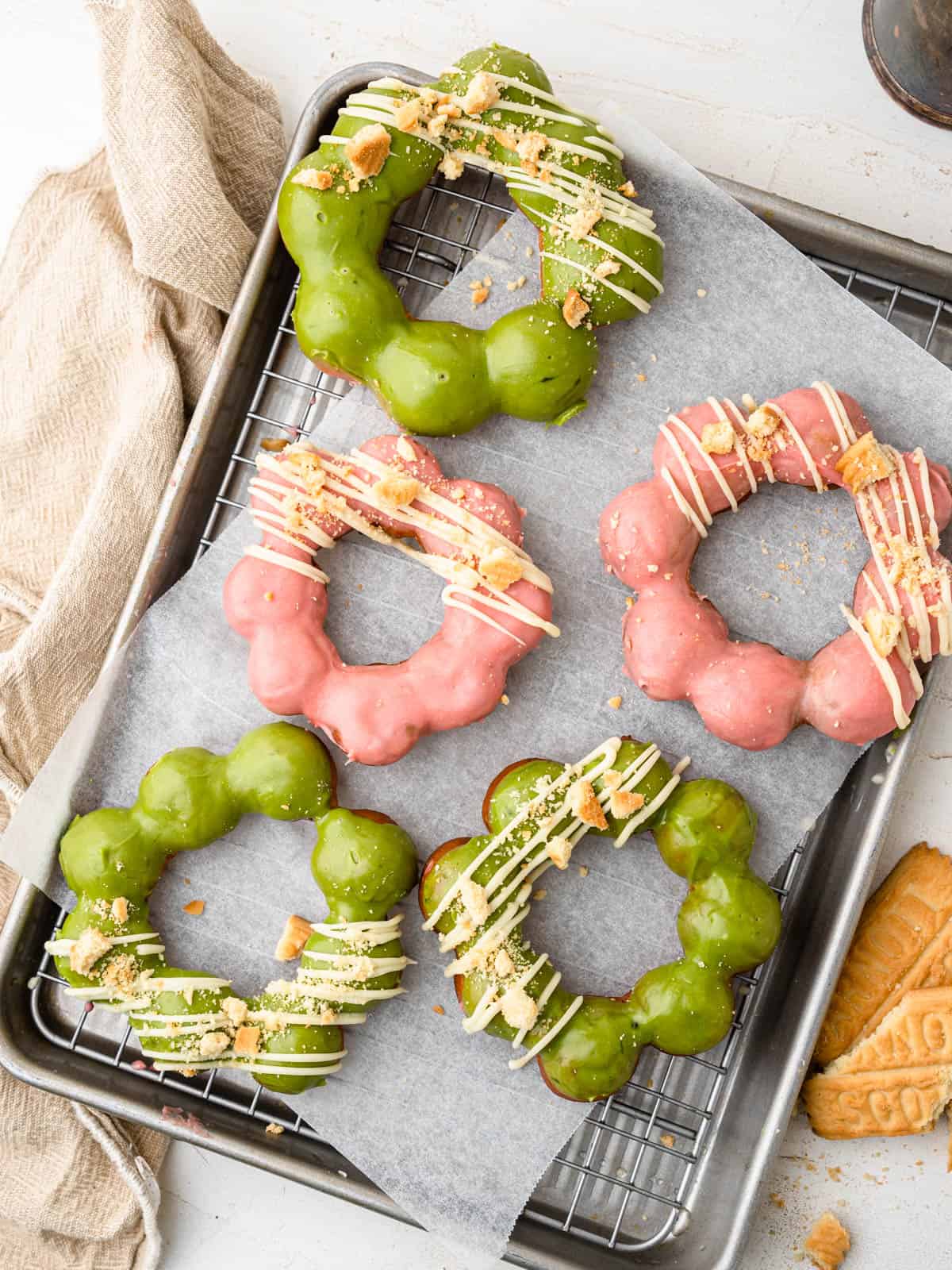
What Is Mochi Donut?
The mochi donut, or “pon de ring” as it’s affectionately known in Japan, is a delightful hybrid dessert. It fuses the chewy, stretchy texture of mochi, a traditional Japanese rice cake made from glutinous rice, with the round, indulgent form of a donut.
Unlike the dense crumb of a yeast or cake donut, mochi donuts have a springy bite that yields softly between your teeth. Imagine a donut that bounces back when you press it. That’s the magic of the mochi base.
The original concept was popularized by Mister Donut Japan in the early 2000s, where the “Pon de Ring” became a best-seller. The name nods to its playful ring of eight connected dough balls, meant to resemble a string of pearls or bubbles. Each piece can be pulled apart for an interactive eating experience.
Over time, the mochi donut evolved. Hawaiian bakeries infused it with island flair, adding coconut, ube, and matcha glazes. Korean cafés turned it into an art form, with shimmering pastel glazes and gold flakes. And now, across cities like Los Angeles, Sydney, and London, mochi donuts have become a dessert staple, a symbol of how texture-driven Asian desserts continue to shape global pastry trends.
Why This Dessert Matters (and Why It’s Trending)
Part of the mochi donut’s charm lies in how it feels as much as how it tastes. The chewiness, often described as QQ in Taiwanese food culture, is comforting and nostalgic. It’s that satisfying bounce that sets Asian-style desserts apart from Western pastries.
Unlike traditional donuts, which can lean oily or heavy, mochi donuts strike a balance between airiness and density. Their mild sweetness makes them a perfect canvas for flavor experimentation. You’ll often see toppings like black sesame glaze, yuzu sugar, or even crushed Biscoff for a caramel crunch (try it in my Biscoff Donuts).
The buzz also stems from versatility. Mochi donuts sit at the crossroads of cultural fusion, embracing Japanese tradition, Hawaiian innovation, and Western pastry aesthetics. They photograph beautifully, travel well, and deliver a uniquely textural joy that fits the modern dessert ethos: less sugar, more sensation.
How To Make It: The Basics of Method & Technique
Making mochi donuts is easier than it looks, and it all comes down to the right flour. You’ll need glutinous rice flour, not to be confused with regular rice flour. This key ingredient gives the donut its iconic chew.
Core Ingredients
- Glutinous rice flour (like Mochiko or Shiratamako)
- Sugar
- Baking powder
- Eggs
- Milk or cream
- Butter or neutral oil
- Flavoring (matcha, cocoa, vanilla)
- Glaze (optional: powdered sugar, milk, melted chocolate)
Equipment
- Mixing bowl and whisk
- Donut mold or parchment for shaping
- Deep fryer or oven
- Cooling rack
Step-by-Step Overview
- Mix the Batter, Combine glutinous rice flour, baking powder, and sugar. Whisk in milk, egg, and melted butter until smooth. The mixture should be slightly sticky but pourable.
- Shape the Rings, Pipe small dough balls into a circular mold or form “pon de ring” shapes by connecting balls on parchment.
- Fry or Bake, Deep-fry at 170°C (340°F) until golden brown, or bake at 180°C (350°F) for 15 to 18 minutes if you prefer a lighter texture.
- Glaze and Decorate, Once cooled, dip in your chosen glaze. Matcha, strawberry milk, or black sesame glazes are classic favorites.
- Enjoy Fresh, Mochi donuts are best eaten within a day while still tender and bouncy.
Flavor Variations
- Matcha White Chocolate, earthy and creamy
- Ube Coconut, tropical and nutty
- Biscoff Crunch, caramelized cookie glaze
- Black Sesame, nutty with deep aroma
- Brown Sugar Milk Tea, inspired by bubble tea flavor
If you’re after a lighter version that still delivers the same chew, explore my full guide on Mochi Donuts for both fried and baked methods.
Final Thoughts: The Joy of a Chewy Bite
The mochi donut is more than just a dessert, it’s a celebration of texture, culture, and creativity. Each bite captures that perfect moment between soft and crisp, sweet and subtle, familiar yet new.
Whether you enjoy them freshly glazed from a café or bake your own batch at home, these playful rings remind us how joy can live in the smallest details, a chewy pull, a glossy shine, a warm afternoon moment shared.
If you’re ready to bring this trend into your kitchen, start with my full Mochi Donuts Recipe or explore fun twists like Baked Mochi Donuts for a lighter treat.
Love mochi? Find every type in one place in our complete guide to mochi recipes.