Sachima is the chewy Chinese fried egg noodle candy I grew up pulling out of pink bakery boxes, and making it fresh at home turns a nostalgic snack into something genuinely spectacular.
If you spent any time near a Chinese grocery store growing up, you know sachima. It sat by the register in cellophane wrapped squares, faintly sweet, a little stale, and somehow impossible to stop eating. For years I assumed it was one of those things you simply bought, like it arrived in the world already sealed in plastic. Then I made a batch from scratch on a slow Sunday, and the fresh version was so far beyond the packaged one that I felt slightly cheated by every square I had ever eaten from a shelf.
The first time I tried it, I overcooked the syrup and ended up with a slab that shattered like glass and stuck to my teeth. The second time I underfried the noodles and they went soft and sad within an hour. It took a candy thermometer, a few burnt fingertips, and a much calmer approach to the tossing step before I landed on bars that were crisp at the edges, chewy in the center, and jeweled with dark raisins and toasted sesame. This is that recipe, with every mistake I made written in so you can skip them. If you have ever made my snowflake crisp, the working fast with hot syrup part will feel familiar.
What Is Sachima
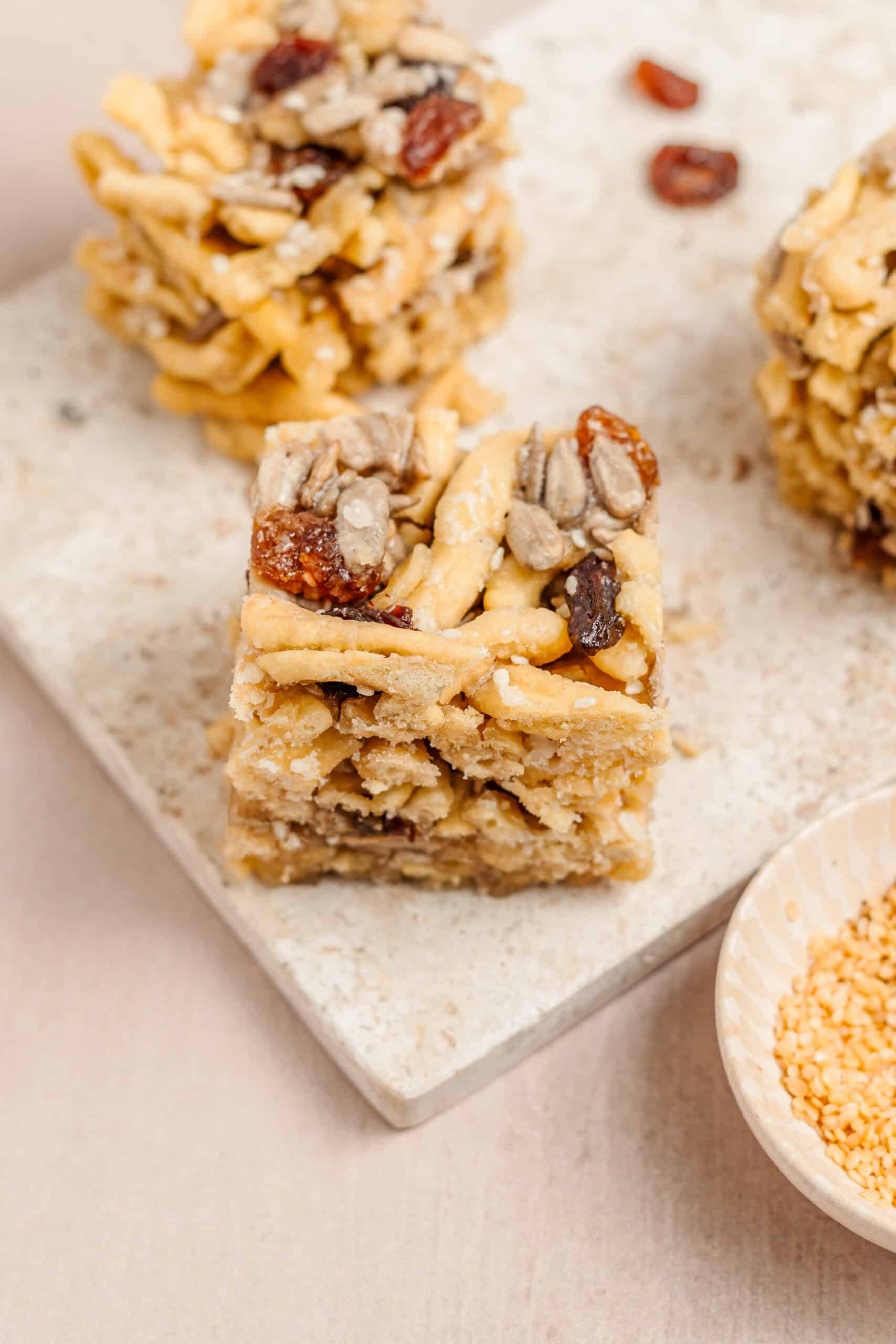
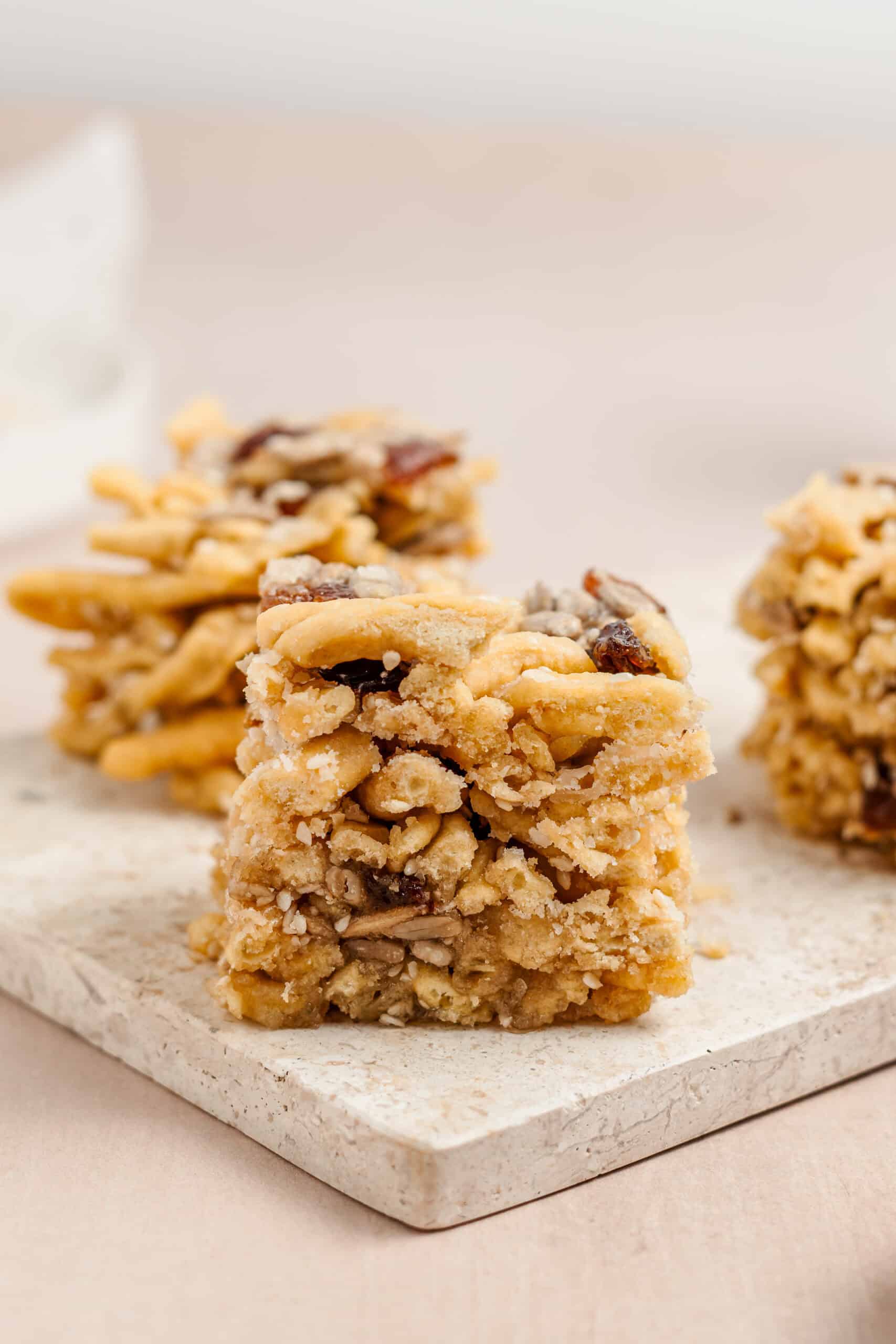
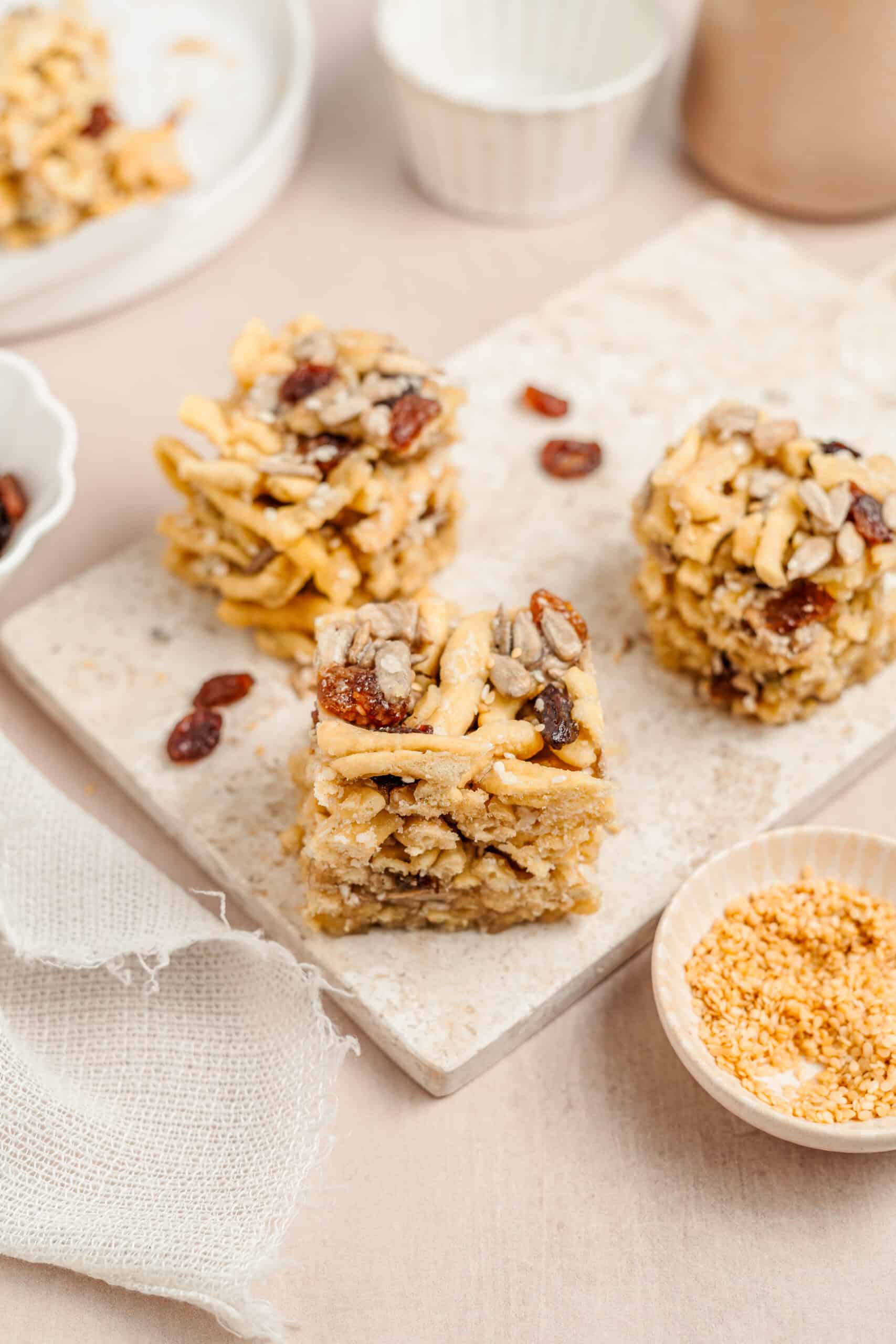
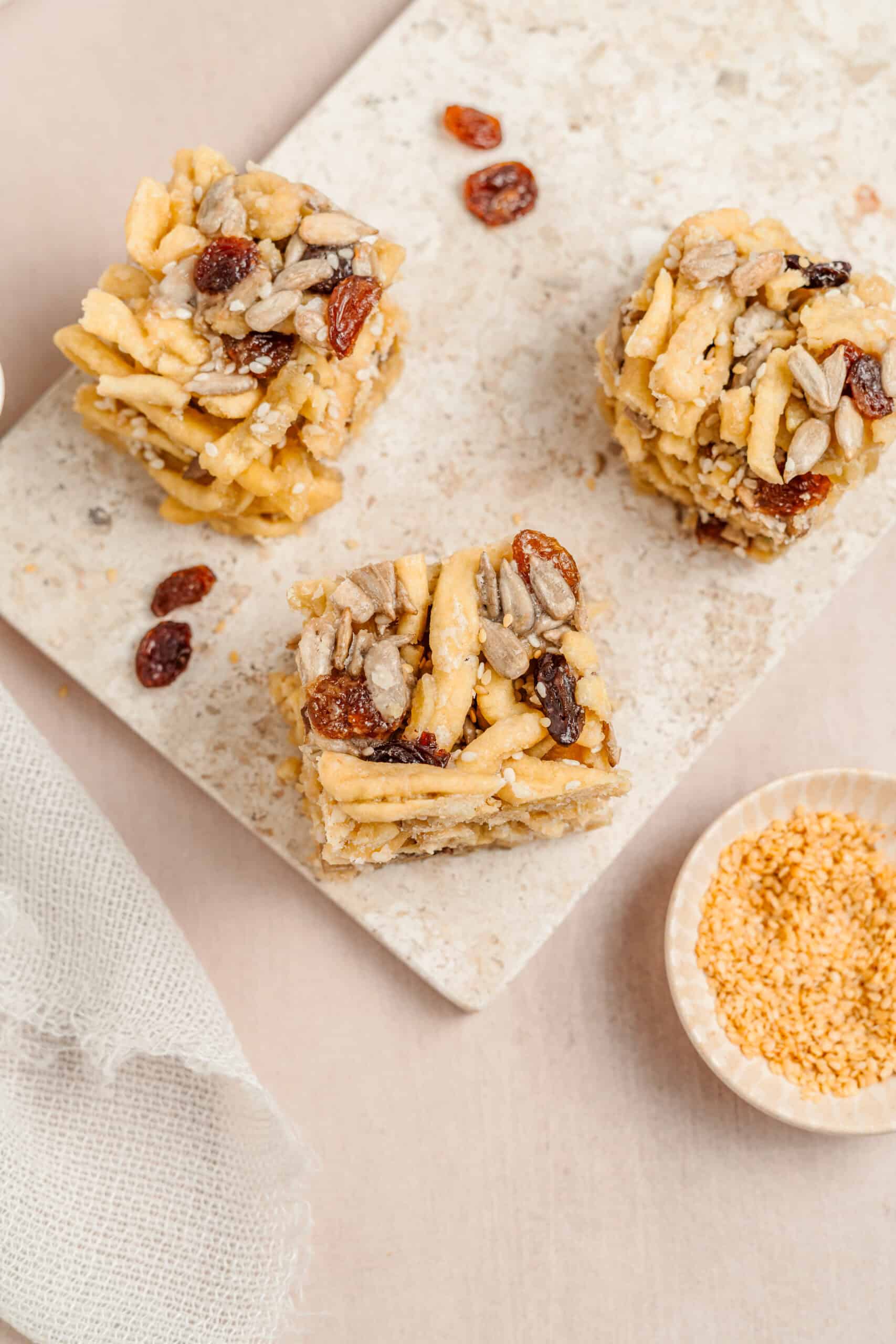
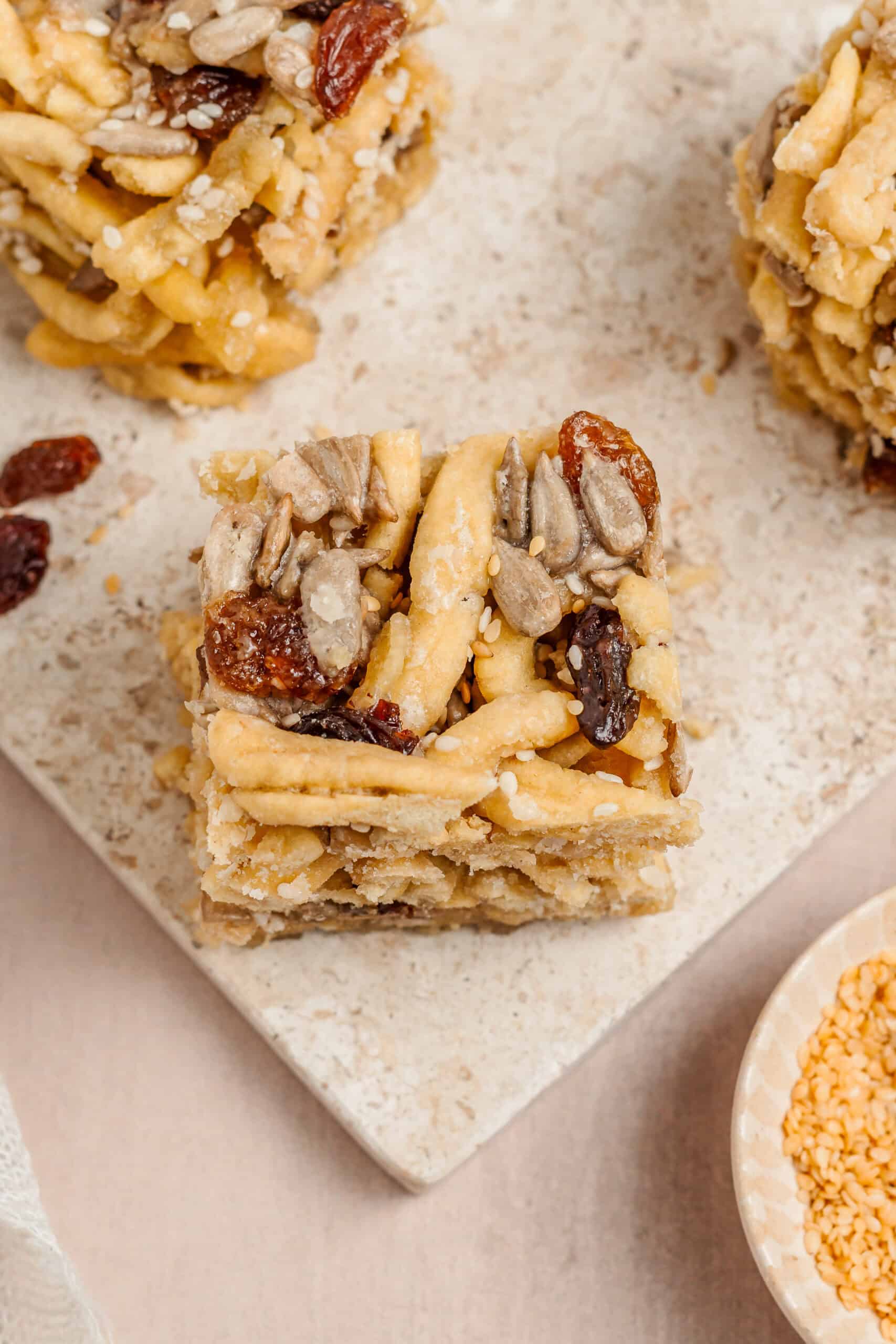
Sachima (萨其马) is a traditional Chinese pastry made from thin egg noodle strands that are deep fried until puffed, then bound together with a hot sugar and maltose syrup and pressed into a slab. Once it cools, you slice it into neat bars. The texture is the whole point: crisp and airy where the fried noodles meet the edge, chewy and dense in the middle where the syrup pools. It reads as candy and cake at the same time, which is exactly why it has stayed popular for a few hundred years.
The flavor is gently sweet with a soft mineral note from the maltose, and the raisins and sesame give it little bursts of tang and toast. It is technically a no bake recipe, since nothing goes in the oven, though you do fry and you do cook a syrup. If you love a chewy Chinese sweet, it sits happily next to nian gao on my list of childhood favorites worth making properly.
Where Sachima Comes From
Sachima has Manchu roots and came into wider Chinese cooking during the Qing dynasty, which is why you will sometimes see it described as a Manchu pastry. The name is a transliteration from Manchu rather than a description of the ingredients, so do not go looking for a literal meaning in the characters. Over time it spread across northern China and then everywhere, becoming a staple of bakery counters and holiday gift boxes.
Like a lot of festive Chinese sweets, it is tied to celebration and gifting, the same way mooncakes show up at the Mid Autumn Festival. It also belongs to a long family of Chinese pulled and pressed sugar candies. If you want to see how far that tradition can stretch, my dragon beard candy lives at the delicate, wispy end of the same idea.
How to Make Sachima
The process has three clear stages. First you make a stiff egg noodle dough, roll it thin, cut it into fine strands, and fry them in small batches until pale gold. Second you cook a sugar and maltose syrup to the soft ball stage, exactly 118 degrees Celsius, and stir in your raisins and sesame. Third you pour that hot syrup over the fried noodles, toss fast to coat every strand, press the mix into a lined pan, cool it, and cut.
None of the stages are hard on their own, but the tossing step moves quickly, so the trick is having everything ready before you cook the syrup. Fried noodles in a big bowl, mix ins measured, pan lined, spatula in hand. Do that and the rest is calm.
Sachima at a Glance
| Makes | Prep Time | Cook Time | Cooling | Total |
|---|---|---|---|---|
| 16 bars | 25 minutes | 35 minutes | 30 minutes | about 1.5 hours |
Ingredients
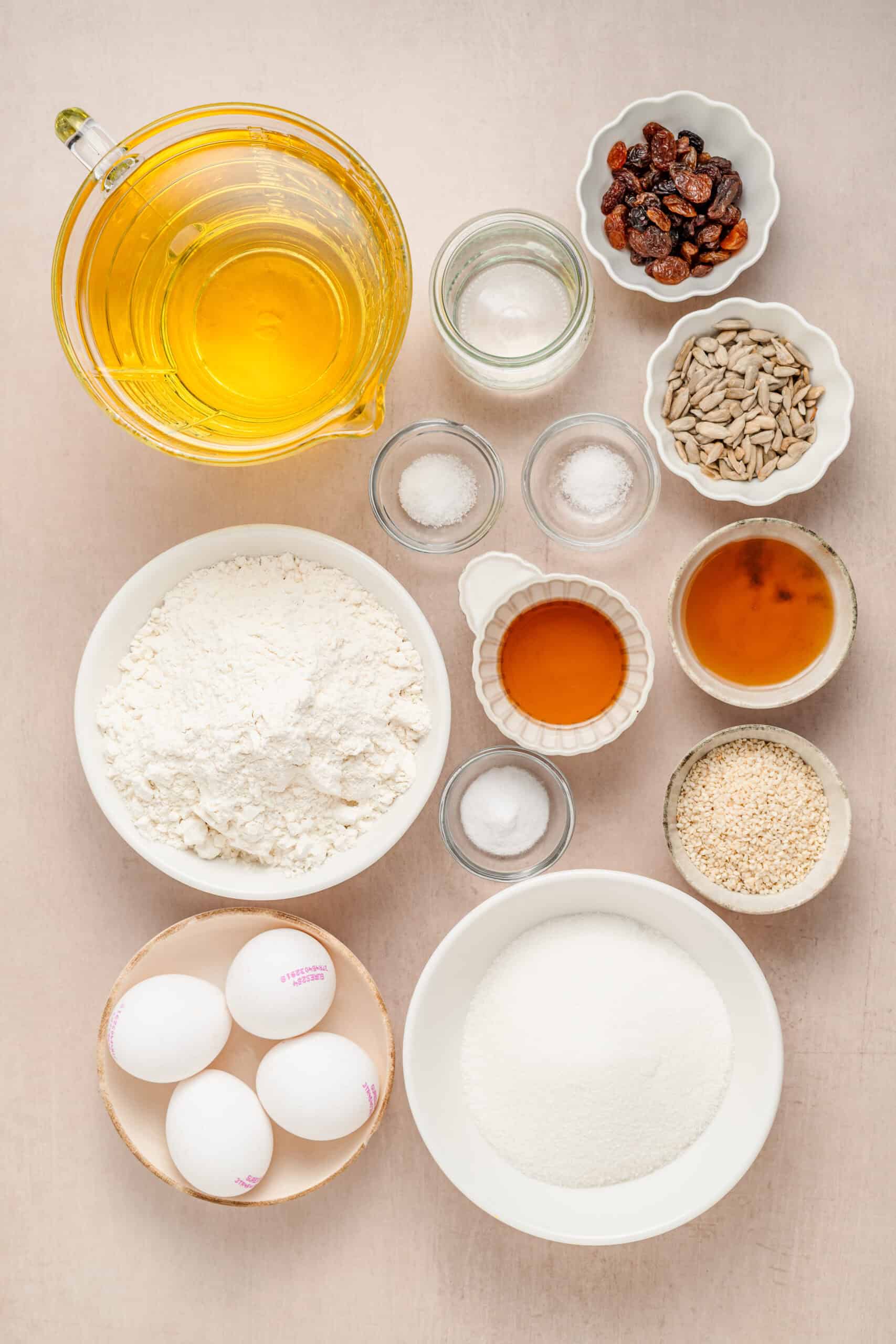
Here is what each part does and why it matters. Exact quantities live in the recipe card at the bottom of the post.
For the Fried Noodles
- Cake flour: its low protein keeps the strands tender and light rather than tough, and it fries up crisp instead of hard.
- Eggs: the only liquid in the dough, so they bind everything and give the classic golden color and rich flavor.
- Baking soda: a small amount helps the strands puff a little as they fry, which is what makes sachima airy instead of dense.
- Fine sea salt: a quarter teaspoon keeps the noodles from tasting flat once the sweet syrup goes on.
- Neutral oil: for deep frying, so use something with a high smoke point and no strong flavor.
For the Syrup Binder
- Granulated sugar: the backbone of the syrup, providing structure and the clean sweetness that holds the bars together.
- Maltose: the ingredient that makes sachima taste like sachima, adding that signature chewy pull and a soft malty note. It is worth seeking out.
- Corn syrup or golden syrup: a little extra invert sugar keeps the syrup smooth and helps stop it from crystallizing into grit.
- Water: loosens the sugar so it can cook evenly up to temperature.
- Fine sea salt: balances the sweetness so the finished bars taste rounded rather than cloying.
For the Mix Ins
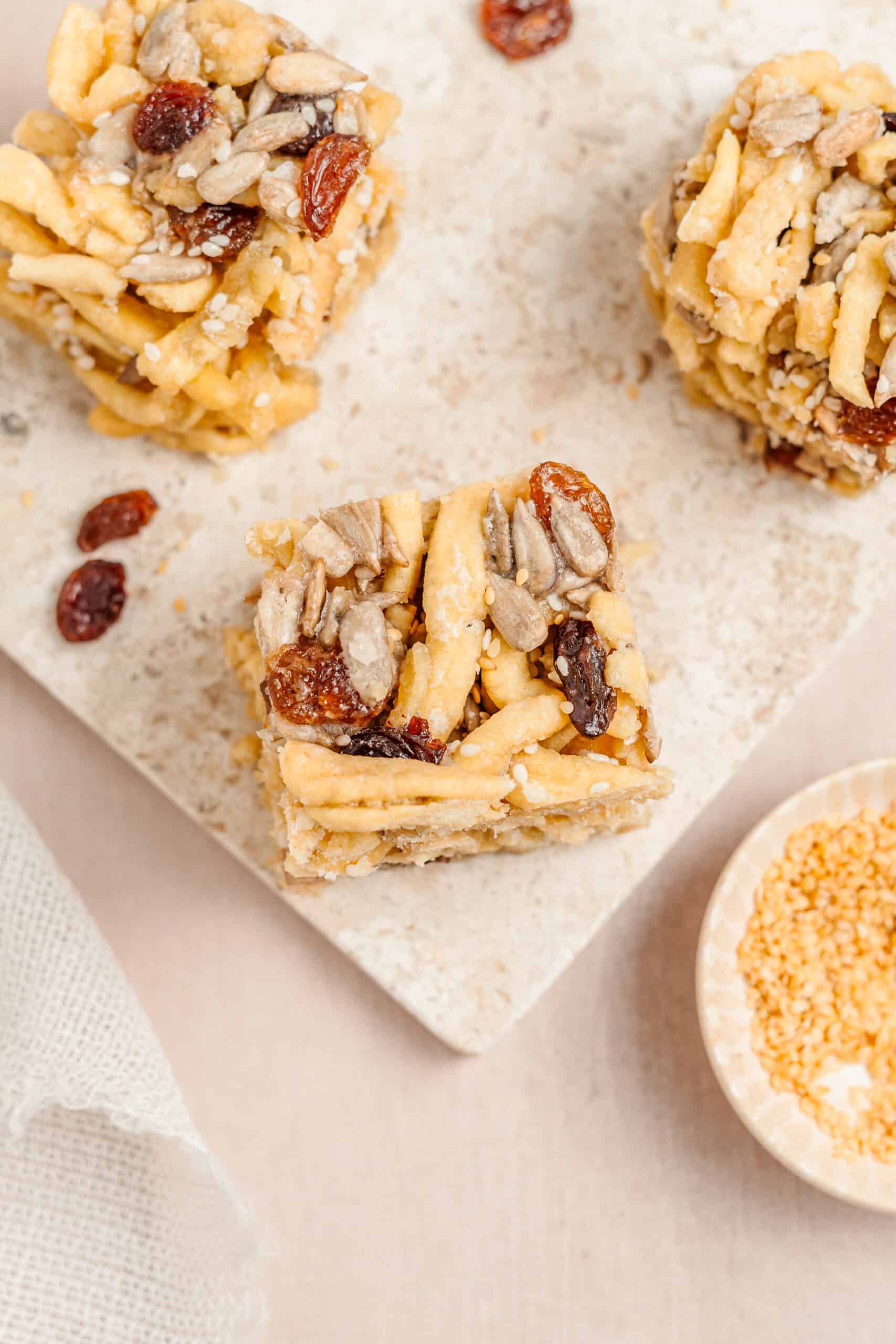
- Raisins: the traditional choice, they add chewy tang that cuts the sweetness and dots the bars with color.
- Roasted white sesame seeds: a nutty toasted note and gentle crunch, plus that classic bakery look scattered through the strands.
- Sunflower seeds or chopped nuts: optional, but a handful adds savory crunch if you like a bit more texture.
Optional: My Favourite Extras That Add a Little Magic
- Dried cranberries: swap in for half the raisins for a brighter, tarter pop that looks gorgeous against the golden noodles.
- Toasted black sesame: a spoonful alongside the white seeds deepens the flavor, the same toasty note I love in my black sesame cookies.
- Flaky salt on top: a tiny sprinkle before the slab sets makes the sweetness taste more interesting in every bite.
Substitutions: Smart Ingredient Swaps That Still Taste Amazing
- No maltose: use 30 g honey plus 30 g extra corn syrup. The chew will be slightly softer but still very good.
- No cake flour: make your own by replacing 2 tablespoons of every cup of all purpose flour with cornstarch, sifted well.
- No candy thermometer: use the cold water test, but honestly a thermometer removes all the guesswork and is the single best tool for this recipe.
How to Make Sachima Step by Step
- Sift the cake flour, baking soda, and salt into a bowl, add the eggs, and knead by hand into a stiff, smooth dough. Rest it, wrapped, for 20 minutes so it relaxes and rolls out without fighting you.
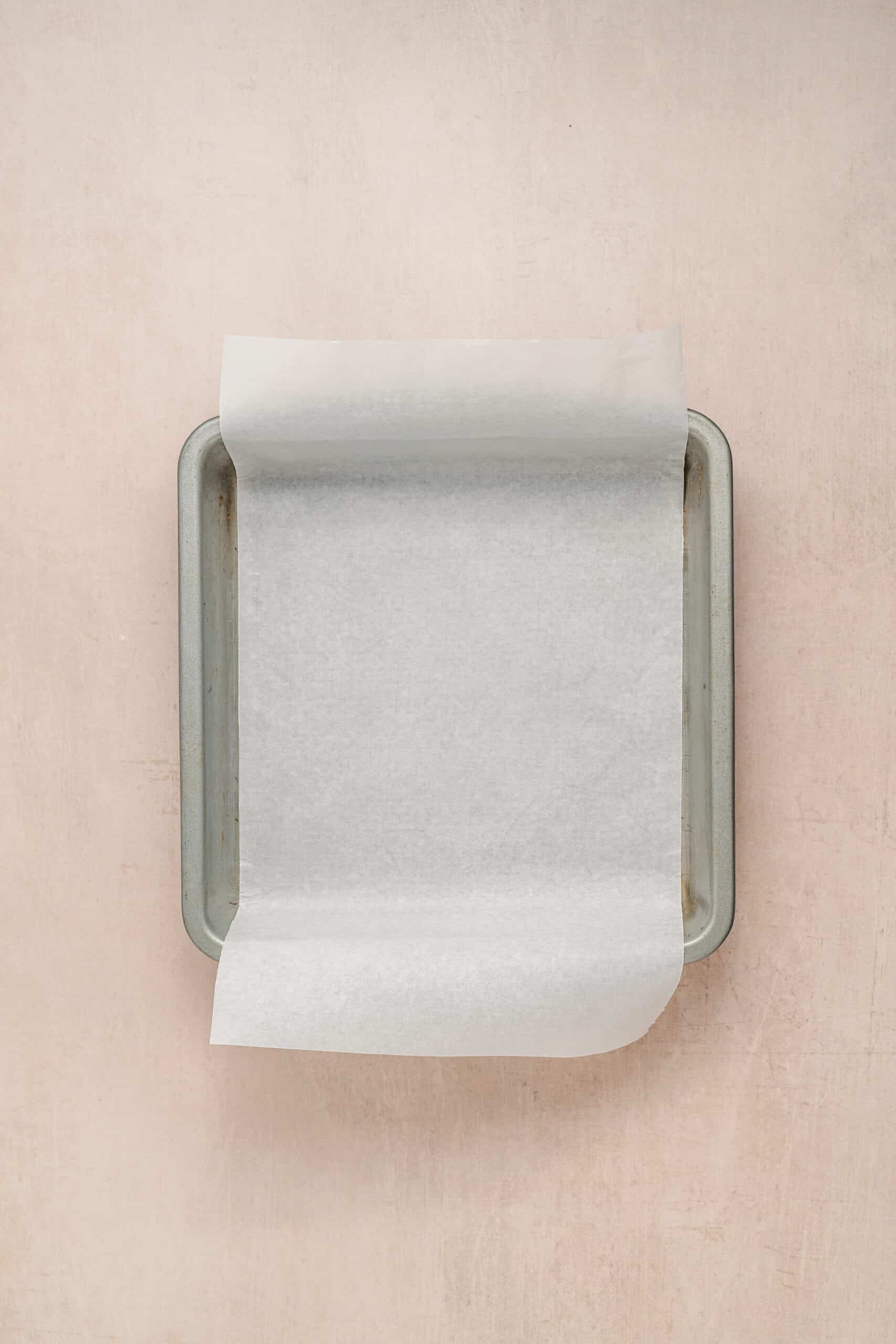
- Line an 8 inch square pan with parchment, leaving an overhang on two sides so you can lift the finished slab out cleanly later.
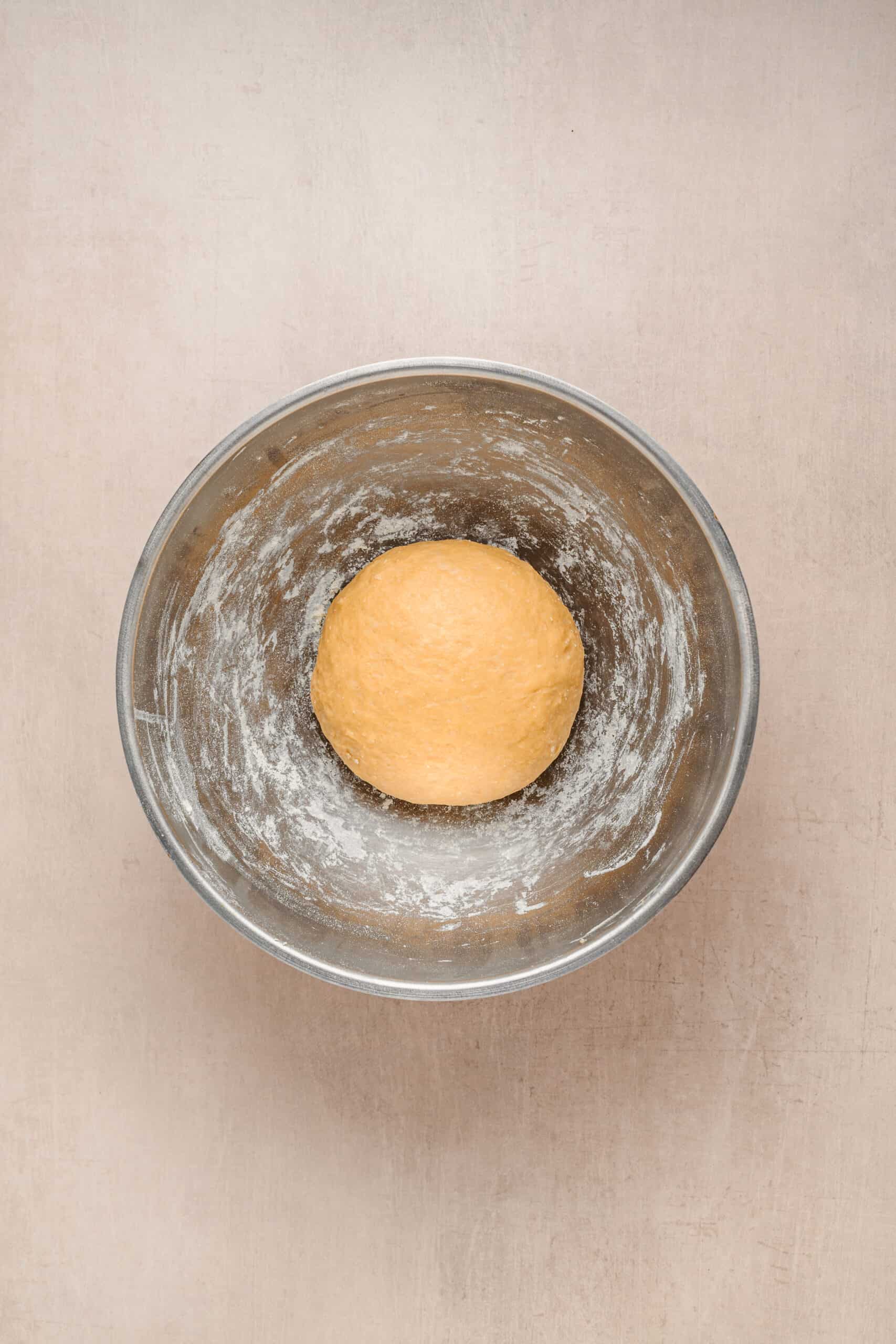
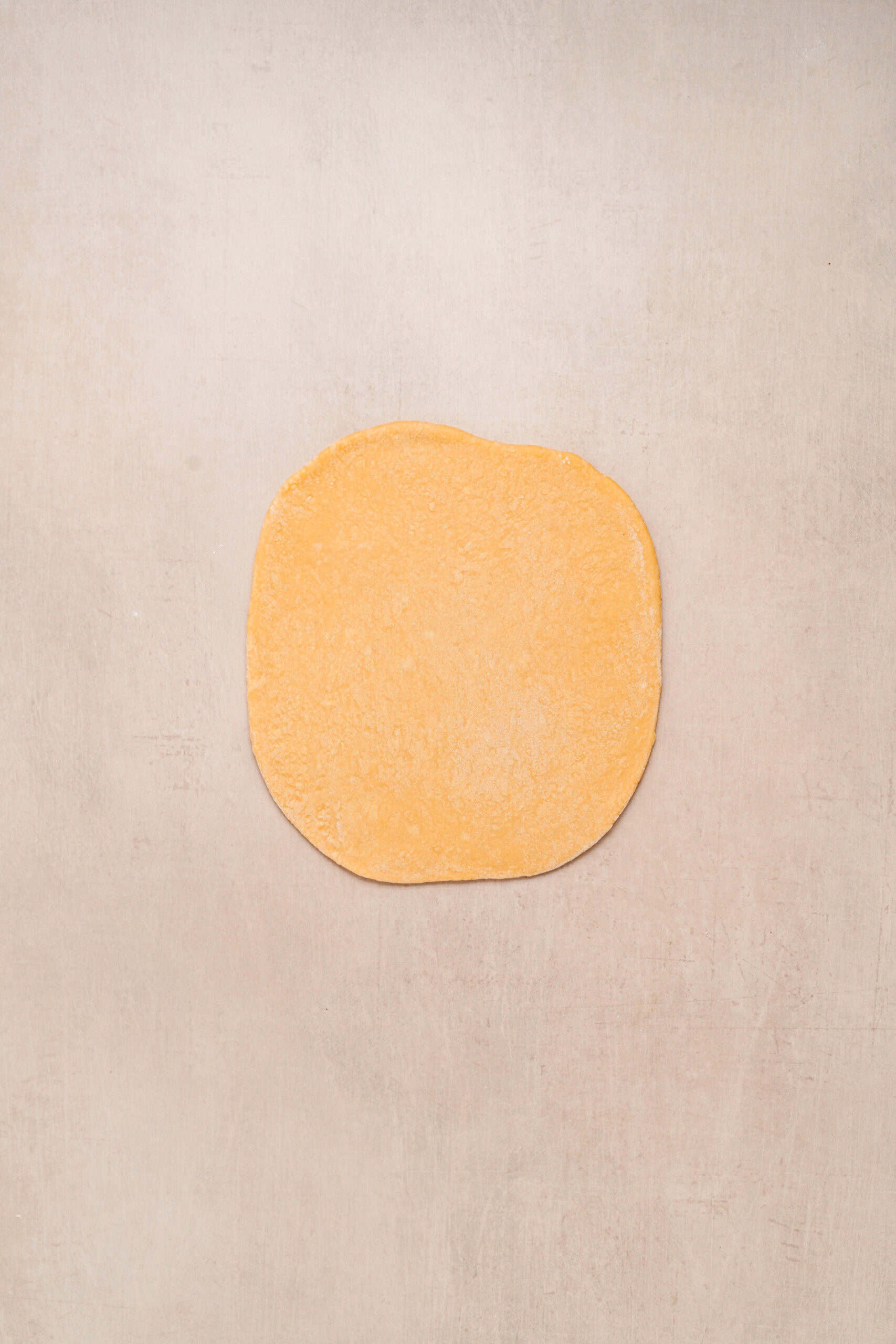
- Divide the dough into four pieces and roll each one paper thin, about 2 mm, dusting generously with cake flour so nothing sticks.
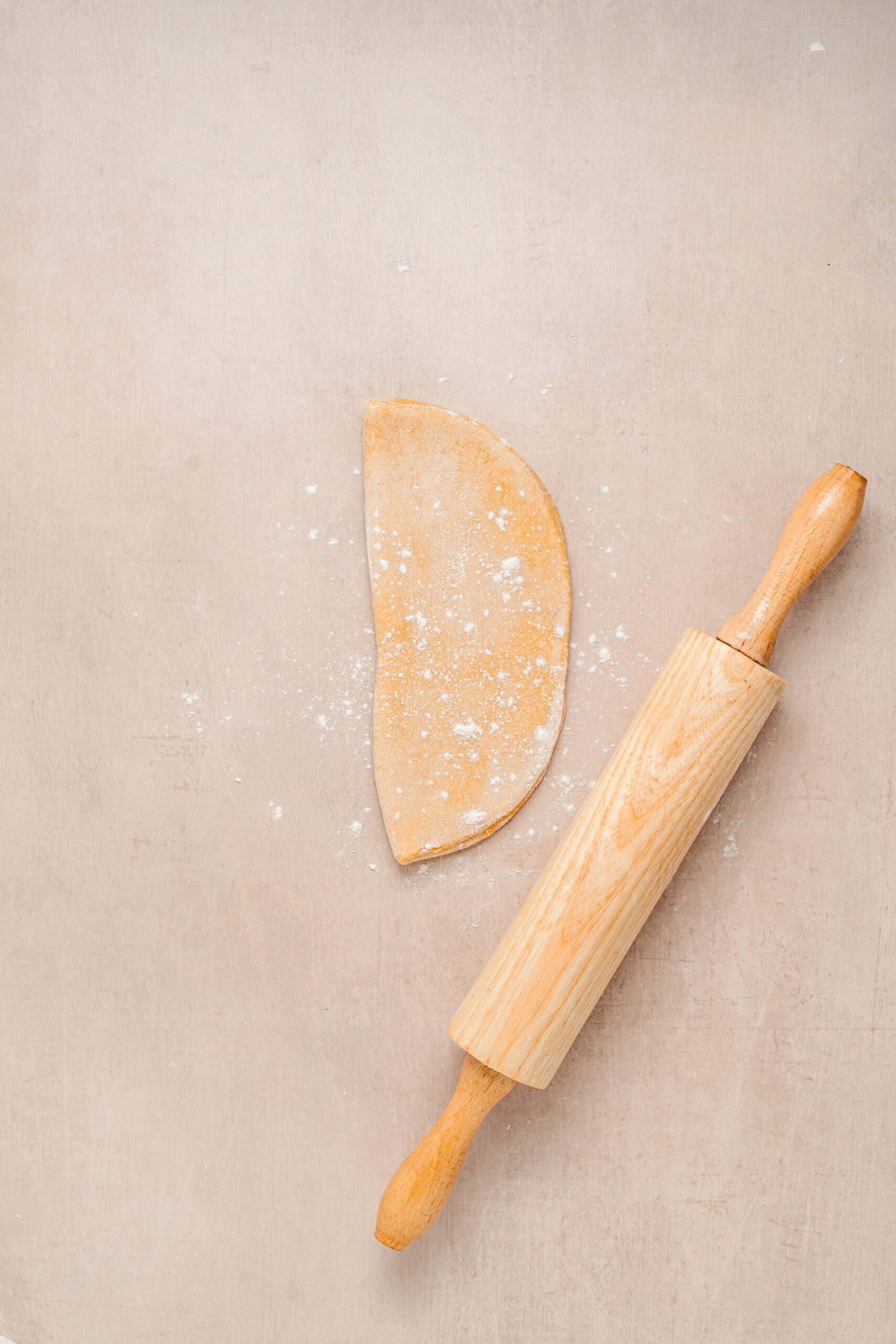
- Fold each sheet, slice it into thin strands 2 to 3 mm wide, then separate them and toss in more flour. Shake off the excess through a sieve so the strands stay dry and loose, not clumped.
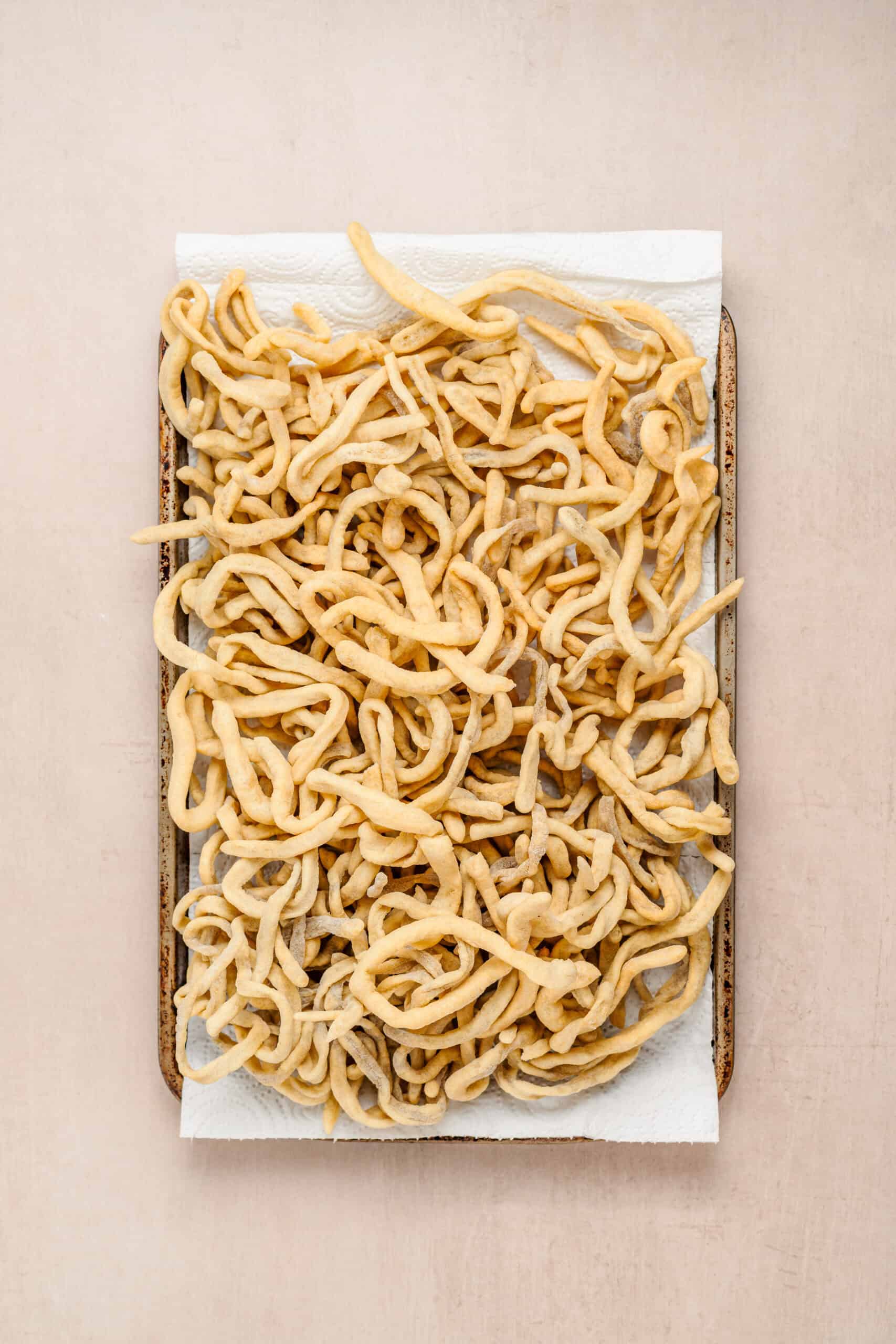
- Heat the oil to 175 degrees Celsius and fry the noodles in small batches for 20 to 30 seconds each, just until pale gold and puffed. Drain them well and reserve everything in a large heatproof bowl.
- Combine the sugar, maltose, corn syrup, water, and salt in a saucepan, bring to a boil, then stop stirring and cook to 118 degrees Celsius, the soft ball stage.
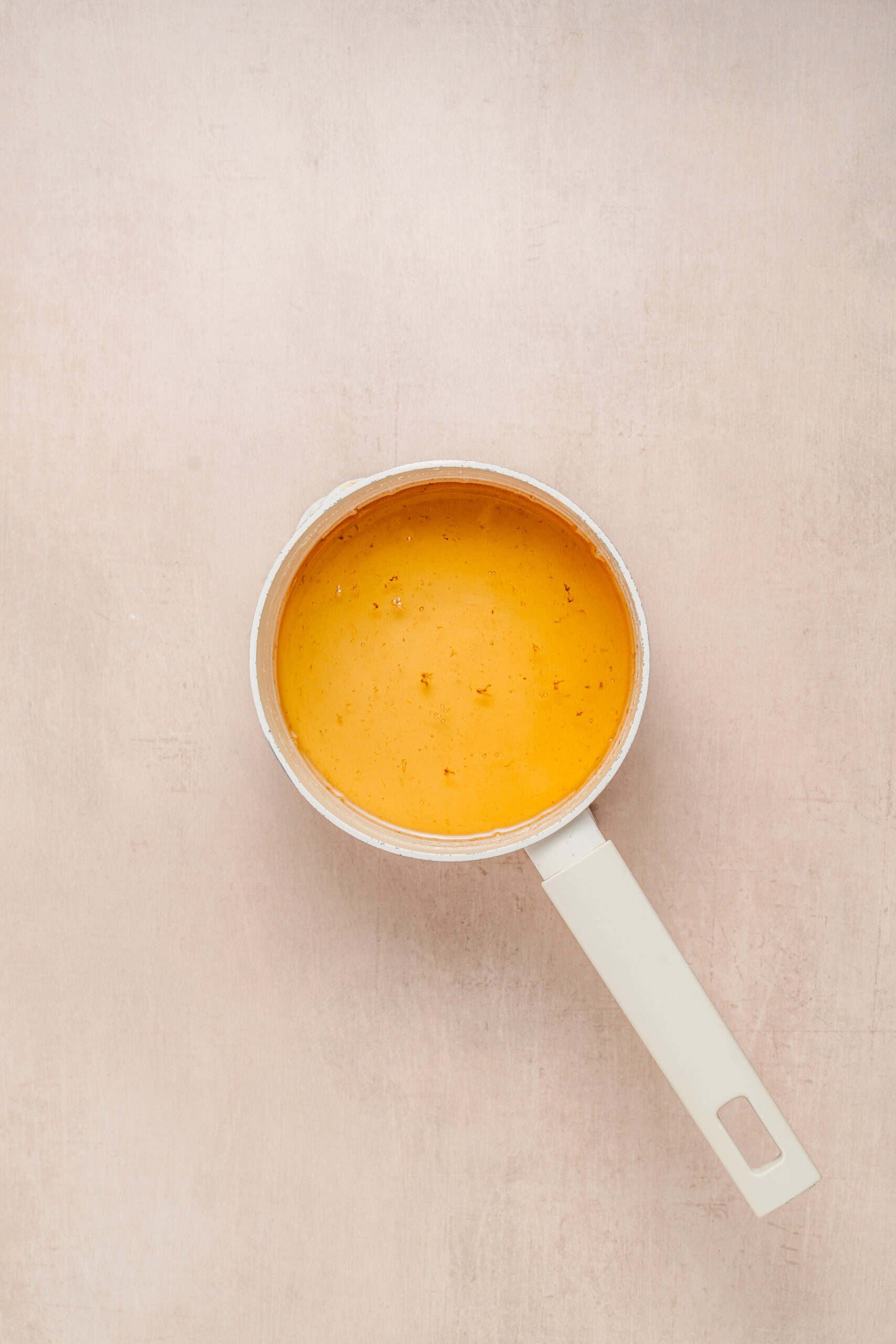
- Take the syrup off the heat and stir in the raisins, sesame seeds, and any nuts right away while it is still fluid.
- Pour the hot syrup over the fried noodles and toss fast with a heat safe spatula until every strand is coated. You have about a minute before it starts to set, so keep moving.
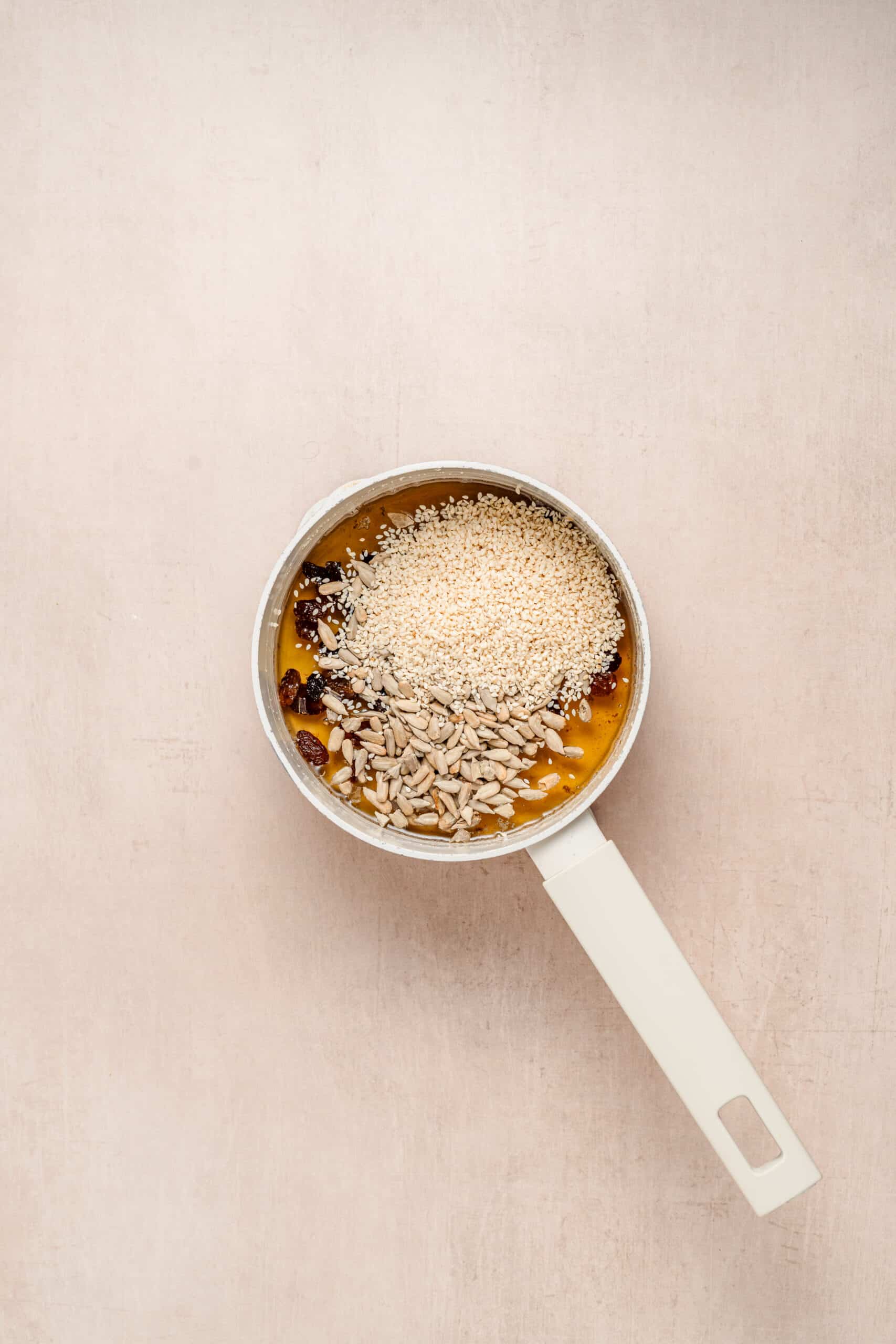
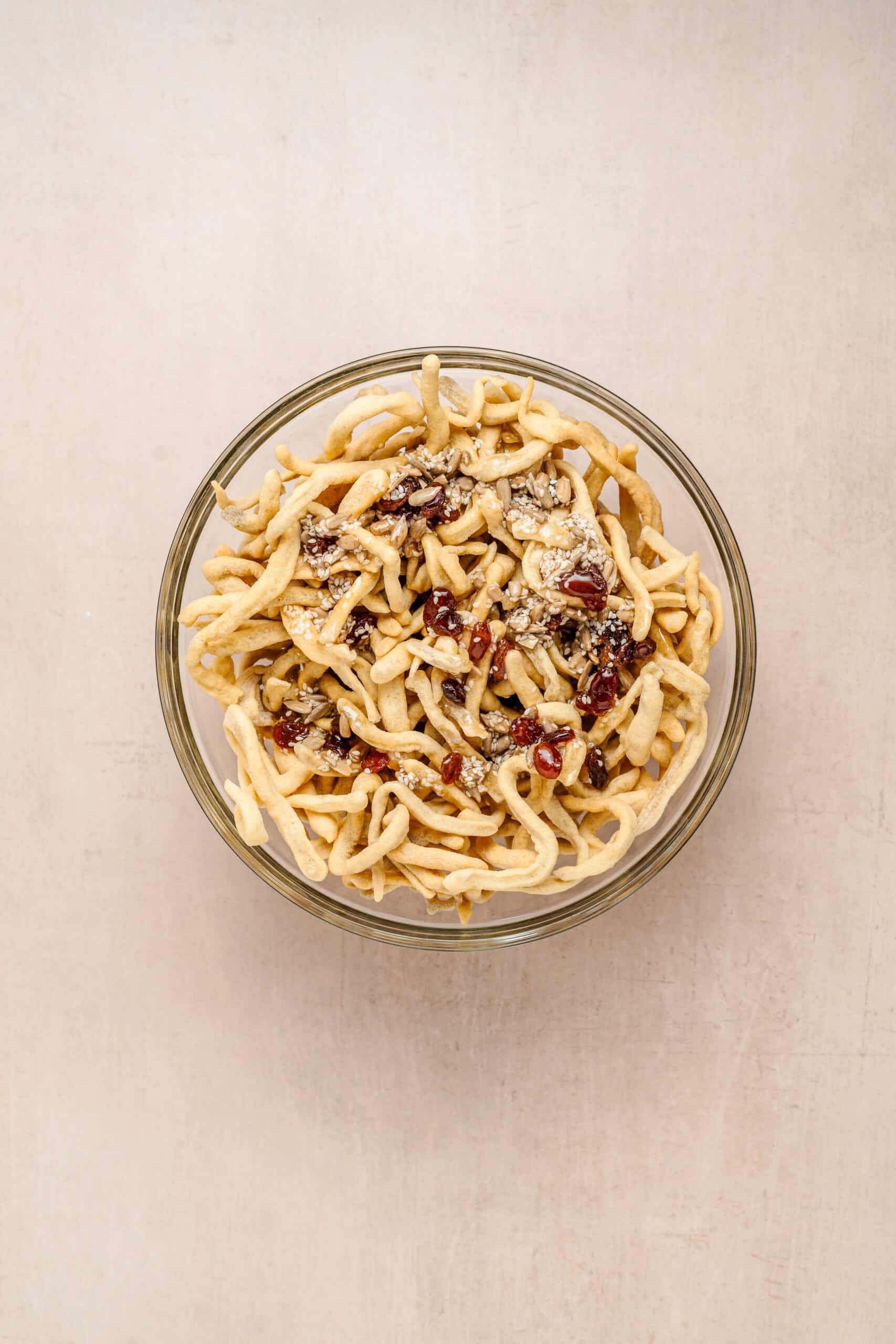
- Scrape the coated noodles into the lined pan and press them into a tight, even slab with a lightly oiled flat bottomed glass. Press harder than feels polite, because that is what makes the bars hold together.
- Cool for 30 minutes, then lift the slab out on the parchment ready for slicing.
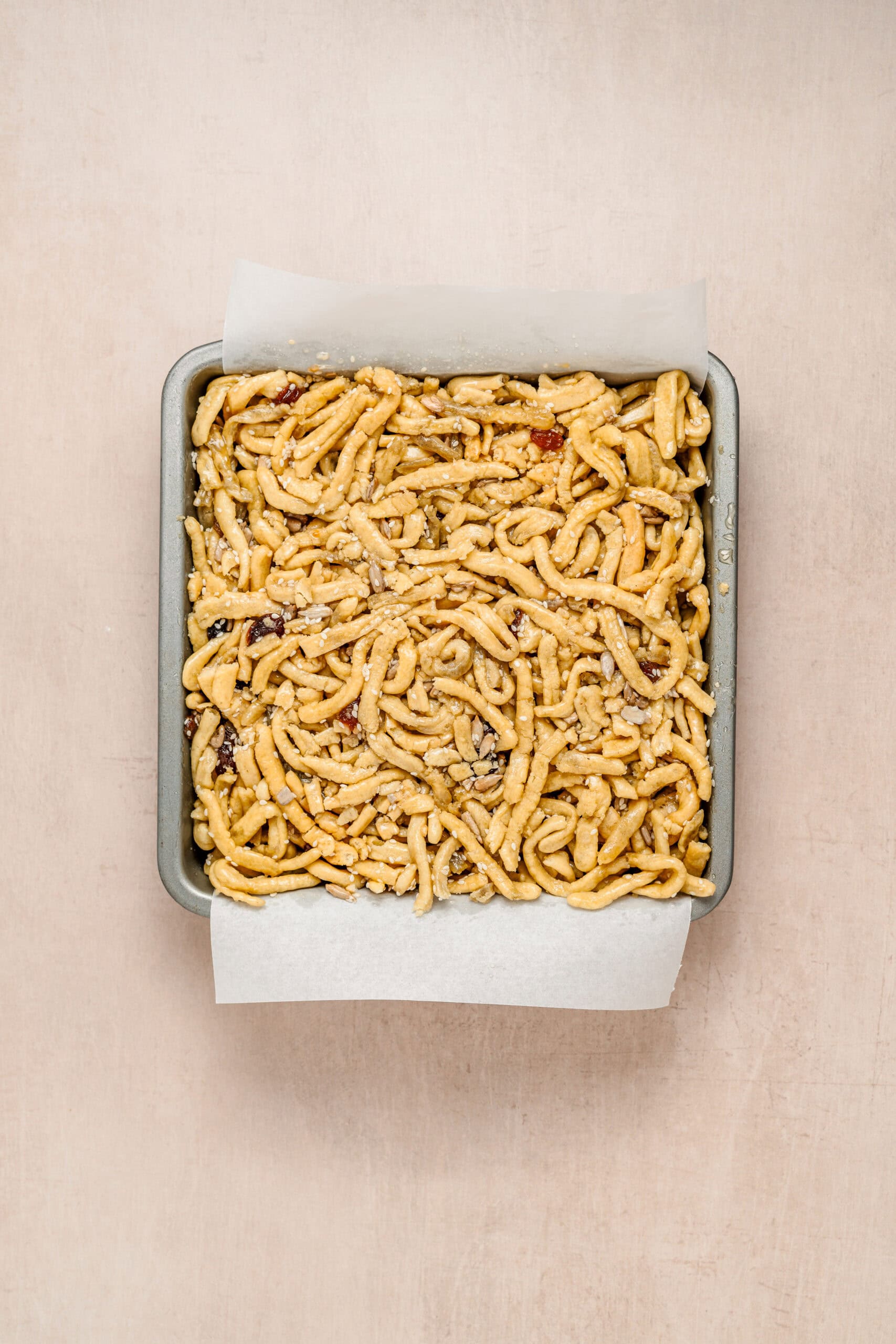
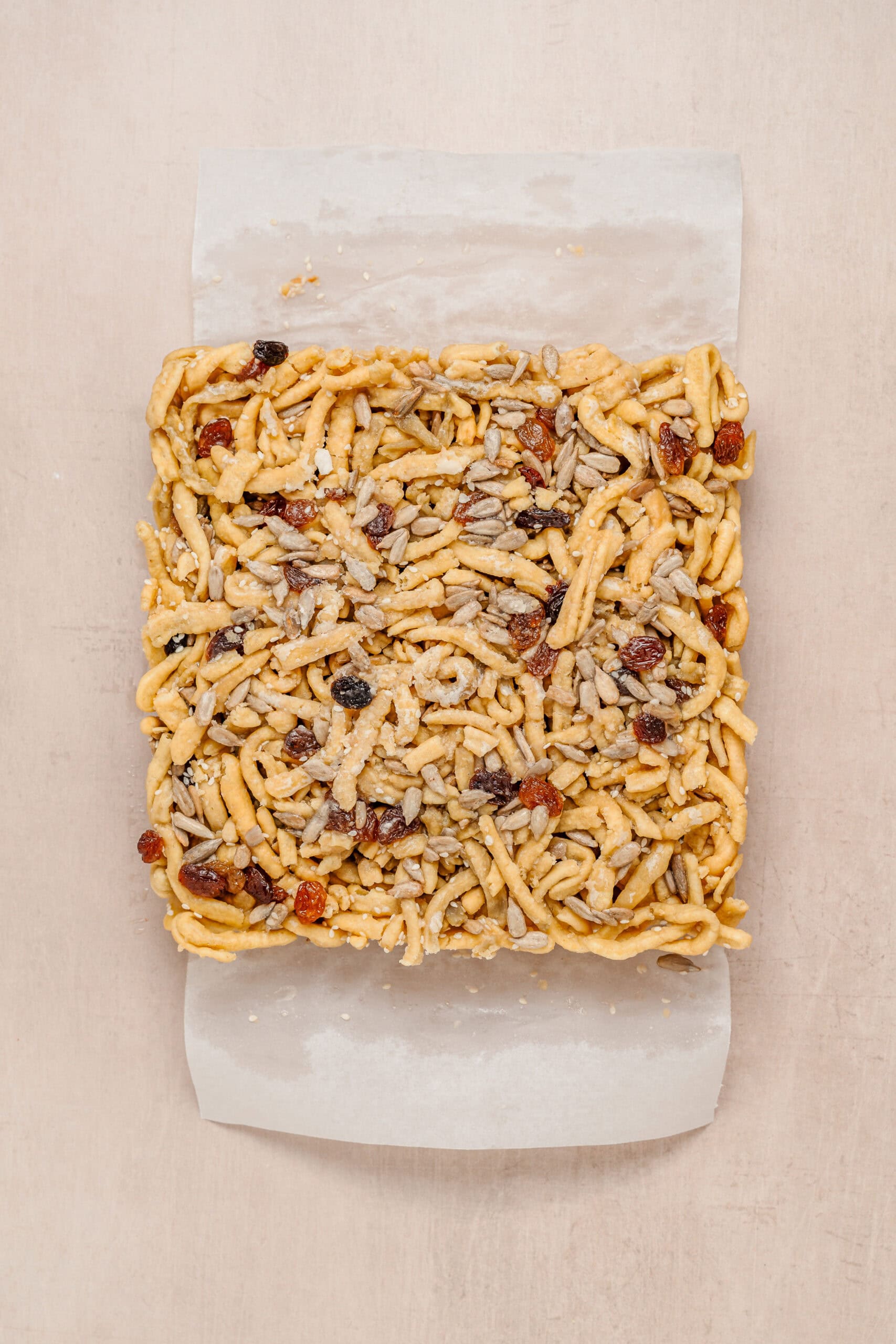
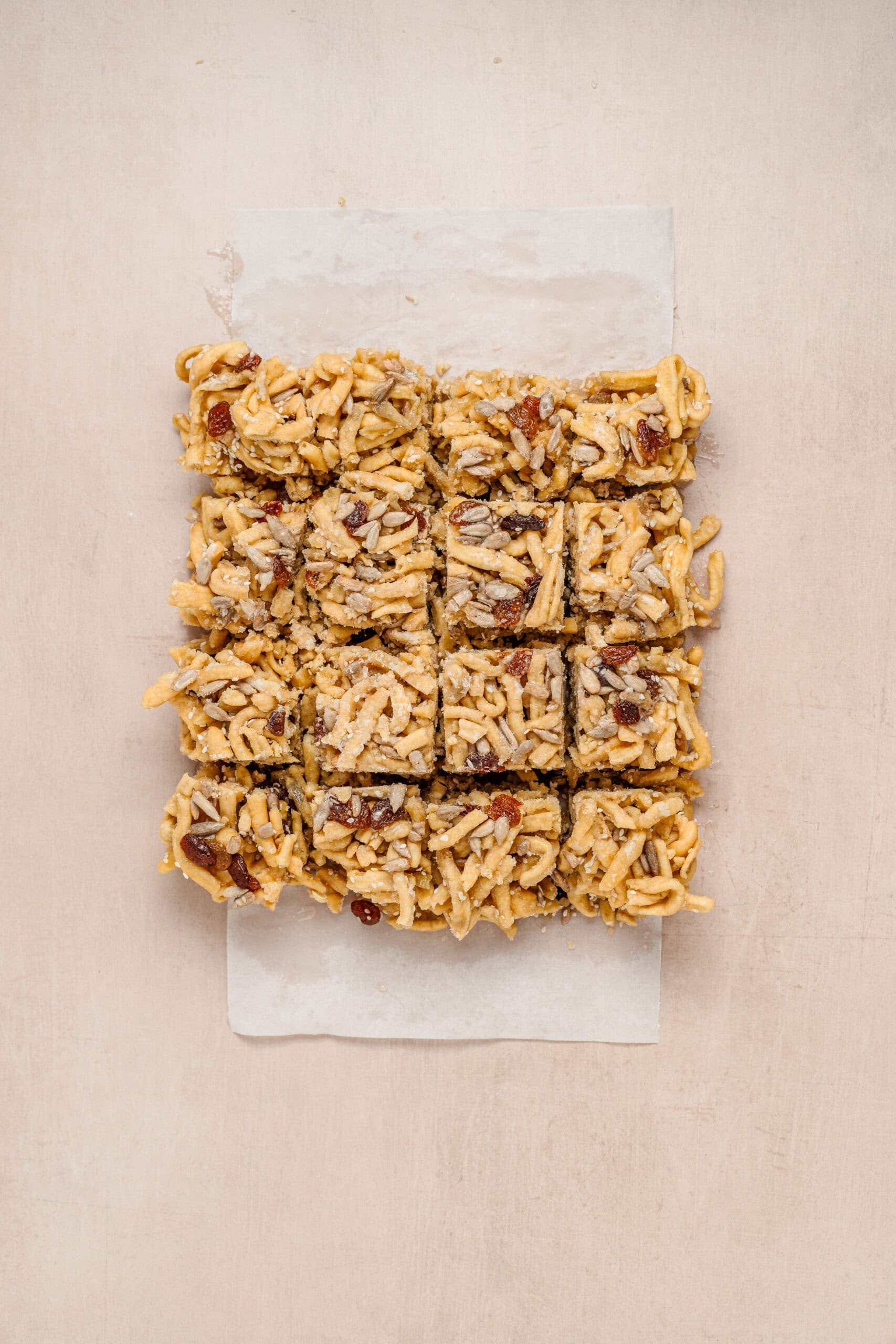
- With a sharp serrated knife dipped in hot water and wiped between cuts, slice the slab into 16 neat bars in a 4 by 4 grid. Wipe the blade each time and the strands stay crisp instead of dragging.
Troubleshooting
Most sachima problems trace back to the syrup temperature or the frying. This quick table covers the ones I hit most, and the fix is usually simpler than you expect.
| Problem | Likely Cause | Fix |
|---|---|---|
| Bars fall apart | Syrup cooked below 115 degrees | Cook to a full 118 degrees next time and press the slab harder |
| Bars shatter or stick to teeth | Syrup went over 122 degrees | Pull the pan off heat the moment it hits 118 degrees |
| Noodles taste burnt | Fried too dark | Keep them pale gold and lower the oil temperature slightly |
| Syrup turned grainy | Stirred while boiling | Do not stir once it boils, just watch the thermometer |
Tips for the Best Sachima
Have Everything Ready Before the Syrup
This is the tip that changed everything for me. Once the syrup hits temperature you have about 60 to 90 seconds to coat the noodles before it starts to set, so there is no time to go hunting for a spatula. Line the pan, measure the mix ins, and pile the fried noodles in your biggest bowl before you even turn on the syrup pan. Calm preparation beats fast hands every time.
Fry Pale, Not Brown
The fried noodles keep cooking in your memory as they sit, so pull them while they are barely gold. Anything past that goes bitter under the sweet syrup and there is no rescuing it. Test one strand first, watch how fast it colors, and adjust the heat so a batch takes a leisurely 20 to 30 seconds rather than flashing dark in five.
Press Harder Than You Think
Loosely packed sachima crumbles the second you lift the knife. Use a flat bottomed glass or a second pan to compress the slab firmly and evenly across the whole surface, especially into the corners. The bars should feel solid, almost dense, before you set them aside to cool.
The difference between good sachima and great sachima is one candy thermometer and 30 seconds of patience with the syrup.
Variations
Cranberry and Almond
Swap the raisins for dried cranberries and add a handful of sliced toasted almonds for a brighter, more festive bar. The tart cranberry cuts the sweetness beautifully and the almonds add a delicate snap. This version disappears fastest whenever I put out a plate.
Coconut Sachima
Fold two tablespoons of toasted desiccated coconut into the mix ins for a Southeast Asian leaning twist. The coconut toasts further against the warm syrup and adds a soft chew of its own. It pairs especially well if you also brush the top with a little coconut oil for shine.
Plain Classic
If you want the pure bakery version, skip everything except the sesame seeds. Plain sachima lets the fried noodle and maltose flavor stand on its own, which is how a lot of people remember it best. It is also the most forgiving version for your first attempt.
Serving Suggestions
With Hot Tea
Sachima and a pot of strong tea is the classic pairing, and there is a reason it endures. A slightly bitter oolong or pu erh balances the sweetness and the warmth softens the chew just enough. It is my go to afternoon break when I want something sweet but not heavy.
On a Lunar New Year Table
These bars belong on a festive spread next to other chewy sweets. I like to serve them alongside tang yuan and a plate of oranges for a table that feels generous and traditional. They also travel well, so they make a lovely edible gift wrapped in a simple box.
As a Lunchbox Treat
Because they keep for weeks and do not need refrigeration, sachima bars are perfect for tucking into a lunchbox or a hiking bag. Wrap each one individually and you have a sturdy, satisfying snack that will not melt or crumble in transit. My family raids the tin faster than I can restock it.
How to Store Sachima
Keep sachima in an airtight container at room temperature and it will stay good for up to two weeks, which is part of why it became such a popular gift and pantry snack. Layer the bars between sheets of parchment so they do not stick to each other, and press the lid on firmly to keep humidity out.
Do not refrigerate sachima. The fridge is humid, and that moisture is the enemy here, softening the crisp fried noodles into something limp within a day. If you live somewhere very humid, tuck a small food safe silica packet into the container to keep the bars snappy. For longer storage you can freeze them in a well sealed bag for up to two months, then bring them back to room temperature before eating.
Common Mistakes to Avoid
Skipping the Thermometer
Eyeballing the syrup is the number one reason sachima fails. A few degrees is the difference between bars that fall apart and bars that shatter, and your eyes simply cannot read that gap. Clip on a candy thermometer and cook to 118 degrees Celsius every single time.
Stirring the Boiling Syrup
Once the syrup comes to a boil, put the spoon down. Stirring drags sugar crystals back into the mix and turns your smooth syrup grainy, which ruins the texture of the whole batch. Just let it bubble and watch the temperature climb.
Working Too Slowly at the Toss
The syrup waits for no one. If you dawdle while coating the noodles, it sets before you can press the slab and you end up with dry clumps that will not fuse. Have everything within arm reach and commit to a fast, confident toss.
Cutting Too Soon
Slicing a warm slab tears the strands and gives you ragged, crumbling bars. Give it the full 30 minutes to firm up, then use a serrated knife dipped in hot water for clean edges. Patience at the end is what makes them look like the ones from the good bakery.
Frequently Asked Questions
What is sachima made of?
Sachima is made from thin egg noodle strands that are deep fried until puffed, then bound together with a hot syrup of sugar and maltose. It is traditionally studded with raisins and toasted sesame seeds. The result is a chewy, gently sweet candy bar with crisp edges.
Where can I buy maltose for sachima?
Look for maltose in Chinese grocery stores, usually sold in glass jars labeled 麦芽糖. It is a thick, sticky syrup that gives sachima its signature chewy pull. If you cannot find it, substitute 30 g honey plus 30 g extra corn syrup for a slightly softer chew.
Why did my sachima fall apart?
The most common reason is syrup that did not reach a high enough temperature, so it never set firmly enough to glue the noodles. Cook the syrup to a full 118 degrees Celsius on a candy thermometer. Pressing the slab firmly into the pan also helps the bars hold together when you slice them.
Do I really need a candy thermometer?
It is the single most useful tool for this recipe. Just a few degrees separates bars that crumble from bars that shatter, and that gap is impossible to judge by eye. A clip on thermometer takes all the guesswork out and gives you consistent results every time.
How long does sachima last and how should I store it?
Stored in an airtight container at room temperature, sachima stays good for up to two weeks. Layer the bars between parchment so they do not stick together. Do not refrigerate them, because the humidity in the fridge softens the crisp fried noodles.
Can I make sachima without deep frying?
Deep frying is what gives sachima its airy, crisp noodle texture, so it is hard to replicate without it. You can shallow fry in a smaller amount of oil if you work in tiny batches, though it takes longer. Baking the noodles will not puff them the same way and changes the classic texture.
Let’s Get Cooking
If you liked this recipe make sure to leave me a comment and rating down below. I’d love to know how it went! Also, don’t forget to tag me on Instagram @catherine.desserts.
Follow me on Facebook, Pinterest, YouTube, and TikTok for more of my baking creations and updates!
Sachima
Sachima is a chewy Chinese fried egg noodle candy bound with maltose syrup and studded with raisins and sesame seeds. Crisp at the edges, chewy in the middle, and so much better fresh.
- Prep Time: 25 mins
- Cooling Time: 30 mins
- Cook Time: 35 mins
- Total Time: 1 hour 30 mins
- Yield: 16 bars 1x
- Category: Asian Desserts
- Method: Frying
- Cuisine: Chinese
Ingredients
Fried Noodles
- 300 g cake flour, plus extra for dusting
- 4 large eggs
- ½ tsp baking soda
- ¼ tsp fine sea salt
- Neutral oil for deep frying (about 1.5 L)
Syrup Binder
- 200 g granulated sugar
- 60 g maltose
- 30 ml corn syrup or golden syrup
- 80 ml water
- ¼ tsp fine sea salt
Mix Ins
- 40 g raisins
- 30 g roasted white sesame seeds
- 30 g toasted sunflower seeds or chopped nuts (optional)
Instructions
- Sift the cake flour, baking soda, and salt into a large bowl. Add the eggs and knead by hand until a stiff, smooth dough forms, about 3 minutes. If it is too dry to come together, add 1 to 2 teaspoons of water. Wrap and rest at room temperature for 20 minutes.
- Line an 8 inch (20 cm) square pan with parchment, leaving a 5 cm overhang on two opposite sides so you can lift the slab out later.
- Divide the rested dough into 4 pieces. On a floured surface, roll each piece into a very thin sheet about 2 mm thick, dusting generously with cake flour on both sides.
- Fold each sheet loosely in half twice, then slice crosswise into thin strips 2 to 3 mm wide. Unfold and separate the strands, toss in more cake flour, then shake off the excess through a sieve. The strands must be dry and separate, not clumped.
- Heat the oil in a wok or deep pot to 175°C (350°F). Test with a single strand: it should puff and float within 5 seconds without browning too fast.
- Fry the noodles in small batches for 20 to 30 seconds each, until pale gold and puffed. Do not let them brown or the finished bars will taste burnt. Lift out with a spider skimmer and drain on paper towels. Reserve all the fried noodles in a large heatproof bowl.
- Set the mix in bowl and the lined pan right next to the stove. The next steps move fast.
- Combine the sugar, maltose, corn syrup, water, and salt in a medium heavy saucepan. Bring to a boil over medium heat, then stop stirring. Cook until the syrup reaches 118°C (245°F) on a candy thermometer, the soft ball stage, about 6 to 8 minutes.
- Take the syrup off the heat and immediately stir in the raisins, sesame seeds, and sunflower seeds if using.
- Pour the hot syrup over the fried noodles. Working fast with a heat safe spatula, toss until every strand is coated. You have about 60 to 90 seconds before the syrup starts to set.
- Scrape the mixture into the prepared pan. Using the parchment and a lightly oiled flat bottomed glass, press it into a tight, even slab about 3 cm thick. Press hard so the noodles fuse and the bars hold together when sliced.
- Cool at room temperature for 30 minutes, until firm to the touch.
- Lift out using the parchment. With a sharp serrated knife dipped in hot water and wiped between cuts, slice into 16 rectangles in a 4 by 4 grid.
Notes
- The syrup temperature is the most important variable. Below 115°C the bars fall apart, above 122°C they shatter like brittle. A candy thermometer is worth it here.
- Maltose gives sachima its signature chewy pull. Look for it in Chinese grocery stores in glass jars labeled 麦芽糖. If you cannot find it, use 30 g honey plus 30 g extra corn syrup for a slightly less chewy result.
- Keep the fried noodles pale gold, never deep brown. Over browning leaves a burnt taste that no amount of syrup can cover.
- Do not stir the syrup once it boils. Stirring encourages crystals and turns it grainy. Just watch the thermometer.
- Store in an airtight container at room temperature for up to 2 weeks. Do not refrigerate, since humidity softens the fried noodles. Layer between parchment so the bars do not stick.
Nutrition
- Serving Size: 1 bar