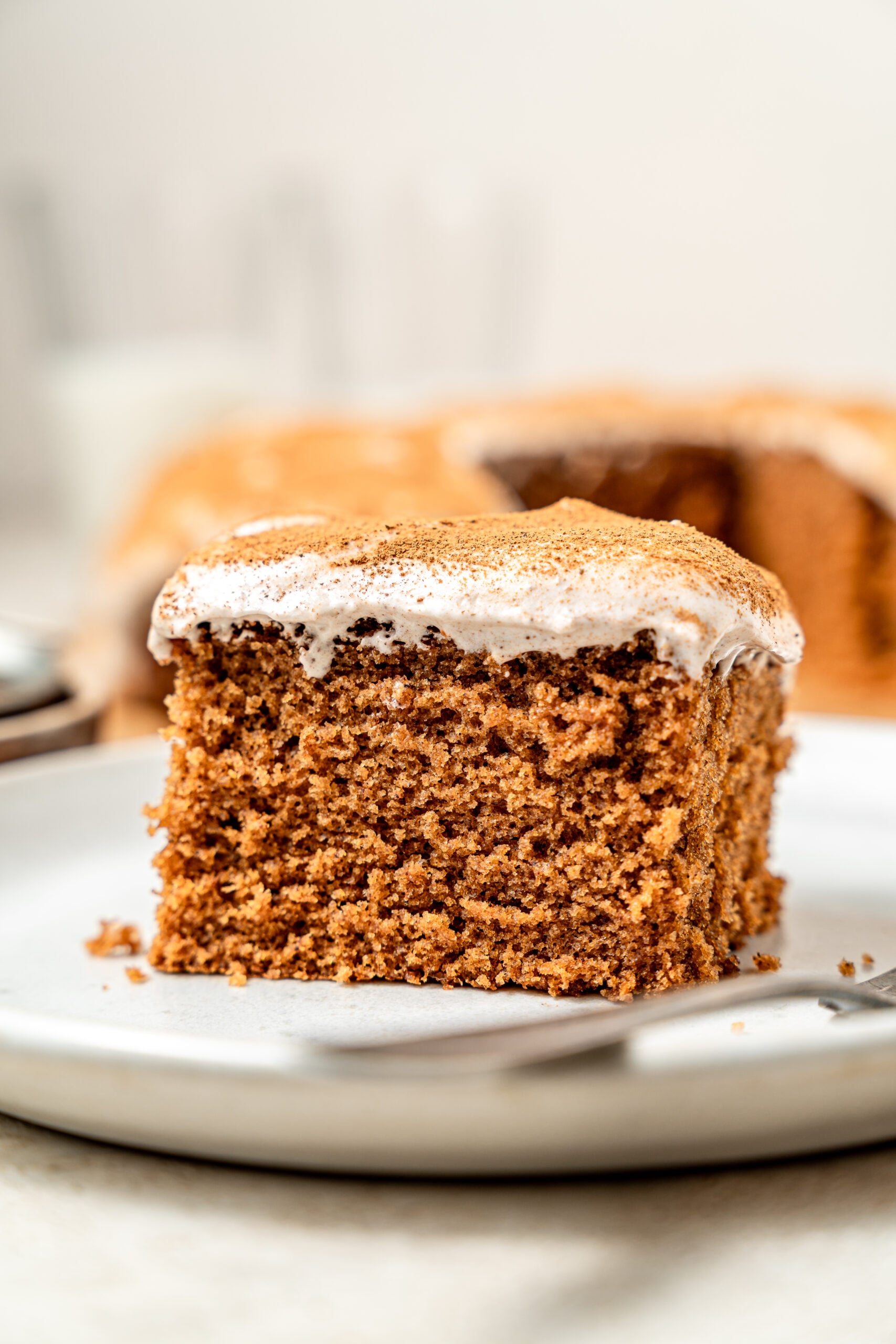
This gingerbread cake is the old fashioned kind: dark with molasses, warm with four spices, and so moist the crumb still glistens the next day.
Gingerbread cake sits somewhere between a spice cake and a sticky pudding. It is one bowl of dry ingredients, one bowl of wet, and a cup of boiling water that goes in at the very end and does most of the work. That last step is the one people skip or cut short, and it is the reason so much homemade gingerbread comes out tight and dry instead of open and tender.
What follows makes a 23 cm (9 inch) square cake, twelve generous squares, finished with a cinnamon cream cheese frosting that stays soft rather than setting stiff. There is no tricky technique anywhere in it: no creaming to ribbon stage, no folding, no water bath. If you can whisk and hold a hand mixer, this works. It is also one of the easiest things to put on a Christmas dessert guide table, because it is better made a day ahead than made fresh.
What gingerbread cake is, and how it differs from ginger cake
Gingerbread cake is a soft, dark, molasses sweetened spice cake baked in a tin and cut into squares. Its colour and nearly all of its depth come from unsulphured molasses, with ground ginger, cinnamon, cloves and nutmeg sitting behind it. In the United States this is what gingerbread cake almost always means, and gingerbread cookies is the separate thing: a stiff rolled dough you cut into shapes.
Ginger cake is the British name for very nearly the same bake, usually made with golden syrup or treacle instead of molasses and often leaning on fresh grated ginger as well as ground. It comes out lighter in colour and a shade less bitter at the edges. Parkin, the Yorkshire version, adds oats and is deliberately left to go sticky for a few days before anyone touches it. All three are the same family, so if you can make one you can make the others.
Why the boiling water goes in last
A cup of boiling water looks like it will ruin the batter, and it does make it alarmingly thin. That is exactly the point. Hot water dissolves the molasses and the brown sugar completely instead of leaving them as heavy pockets, and it blooms the ground spices the way hot liquid blooms tea. The thin batter then bakes into the open, slightly damp crumb gingerbread is supposed to have. It is the same trick behind the Matilda chocolate cake, which uses hot liquid for the same reason.
The baking soda goes into the water rather than into the flour, so it meets the acid in the molasses all at once. You will see it fizz up in the jug. Pour it in while it is still properly hot and stop mixing the second the flour disappears. Beating a thin batter in the hope it thickens only builds gluten, and gluten is what turns this cake rubbery.
Ingredients for gingerbread cake
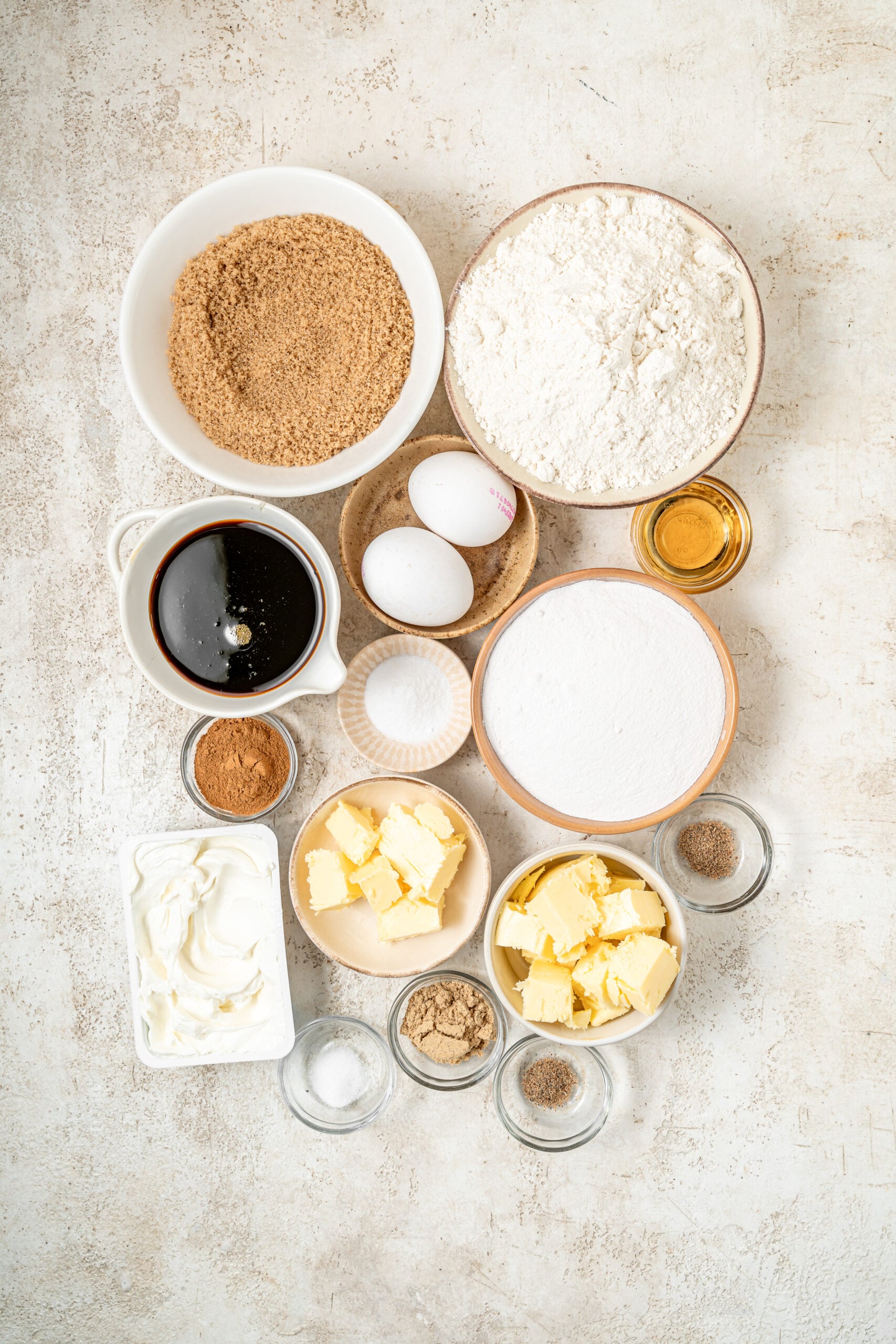
Quantities are all in the recipe card at the bottom. This is what each thing is actually doing, which is the part worth knowing before you shop.
For the cake
- Unsulphured molasses: the backbone of the whole cake. It brings the colour, the faint bitterness that stops the spices tasting like potpourri, and a lot of the moisture, because it holds on to water long after the cake has cooled.
- Dark brown sugar: adds its own small amount of molasses plus the acidity the baking soda reacts with. Light brown sugar works but gives a paler, flatter cake.
- All purpose flour: enough structure to hold a thin batter without making it tough. Measure it by weight if you can, because a heavy cup is the quickest route to a dry gingerbread.
- Ground ginger, cinnamon, cloves and nutmeg: ginger leads, cinnamon fills in behind it, and the cloves and nutmeg sit underneath doing the warm, slightly medicinal work that makes it taste like Christmas rather than like a plain spice cake.
- Baking soda: the only riser here. It needs the acid from the molasses and the brown sugar to work, which is why there is no baking powder in the list.
- Unsalted butter: creamed with the sugar for a little aeration and for the richness that keeps the crumb tender.
- Eggs: set the crumb and stop a very wet batter collapsing. Room temperature ones blend in without seizing the butter.
- Boiling water: not an afterthought. It dissolves the sugars, blooms the spices, and thins the batter to the consistency that produces an open crumb.
- Fine sea salt and vanilla: both are there to sharpen the spices rather than to be tasted on their own.
For the cinnamon cream cheese frosting
- Full fat block cream cheese: block, not the spreadable tub kind. Tub cream cheese carries extra water and will slump off the cake within the hour.
- Unsalted butter: gives the frosting enough body to hold a swoop without needing a mountain of sugar.
- Powdered sugar: sift it. Cream cheese frosting is beaten for well under a minute, which is not long enough to break down lumps.
- Ground cinnamon and a pinch of salt: the cinnamon ties the frosting to the cake instead of leaving it tasting like a separate dessert, and the salt keeps the whole thing from reading as pure sugar.
Optional: my favourite extras that add a little magic
- Freshly grated ginger: a tablespoon stirred in with the molasses gives a bright, almost hot note that ground ginger on its own cannot reach.
- Crystallised ginger: chopped small and scattered over the frosting, it adds chew and a second hit of heat, and it looks like you meant it.
- Black pepper: a quarter teaspoon sounds odd and is excellent. It lifts the cloves and makes the cake taste older and more serious.
- Orange zest: grated into the frosting, it cuts the richness and pushes the whole thing towards the flavours in my gingerbread latte cookies.
Substitutions: smart ingredient swaps that still taste amazing
- Golden syrup or treacle for molasses: both work and both give a lighter, gentler cake. Treacle is closest. Dark corn syrup is not a substitute, it has none of the acidity the baking soda needs.
- Buttermilk for some of the water: swap in half a cup and the crumb goes finer and slightly tangy. Keep the rest of the liquid boiling hot so the spices still bloom.
- Whipped cream instead of frosting: lightly sweetened cream alongside a warm square is the traditional way to serve it, and it is what I would do if the cake is going out the same afternoon.
- Dairy free: a good block style vegan butter and a firm vegan cream cheese both behave well here. Beat the frosting even less than usual, because vegan cream cheese loosens faster.
How to make gingerbread cake, step by step
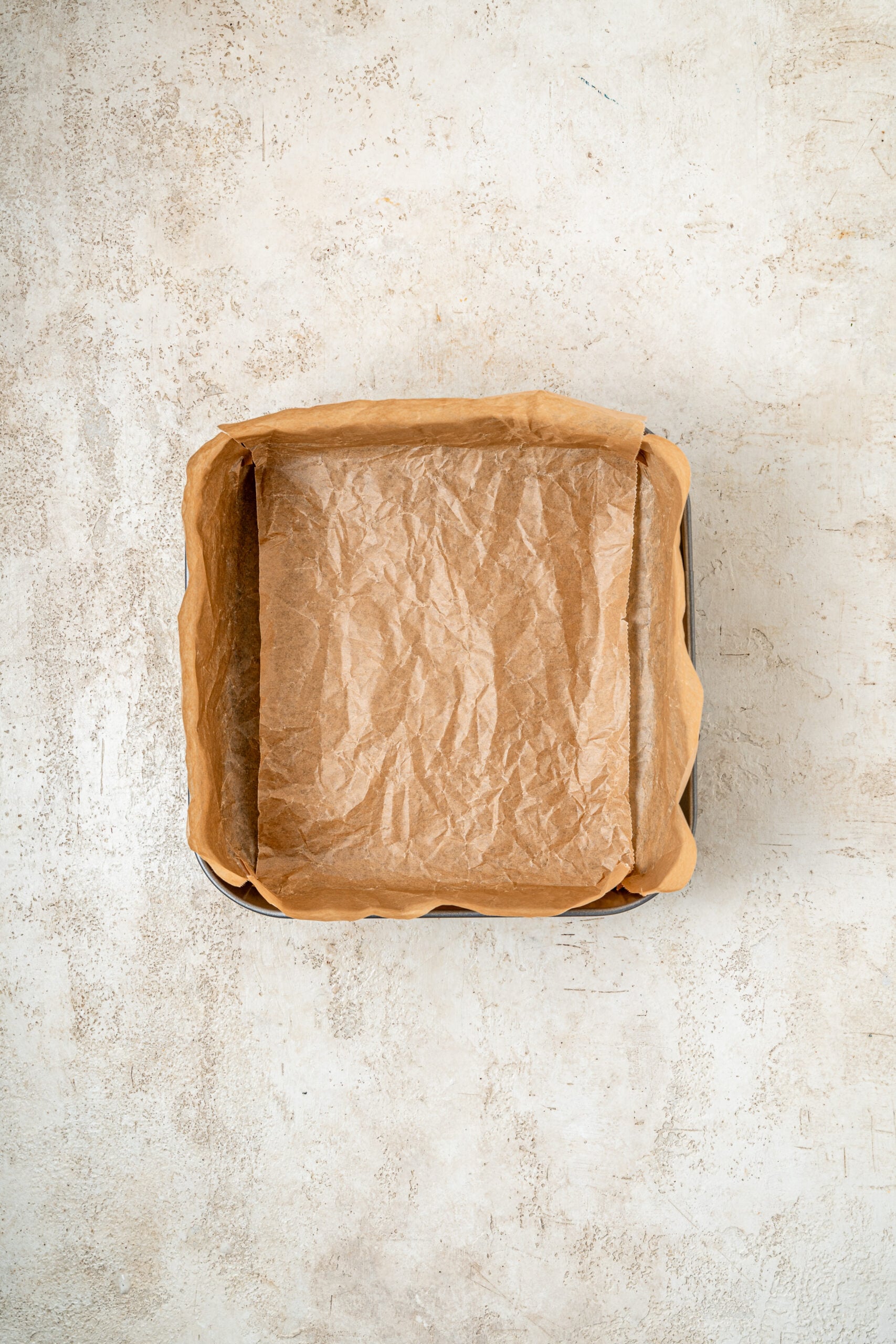
- Heat the oven to 175°C (350°F). Grease a 23 cm (9 inch) square pan and line the base and two sides with a strip of baking paper that hangs over the edges, so you can lift the cake straight out later.
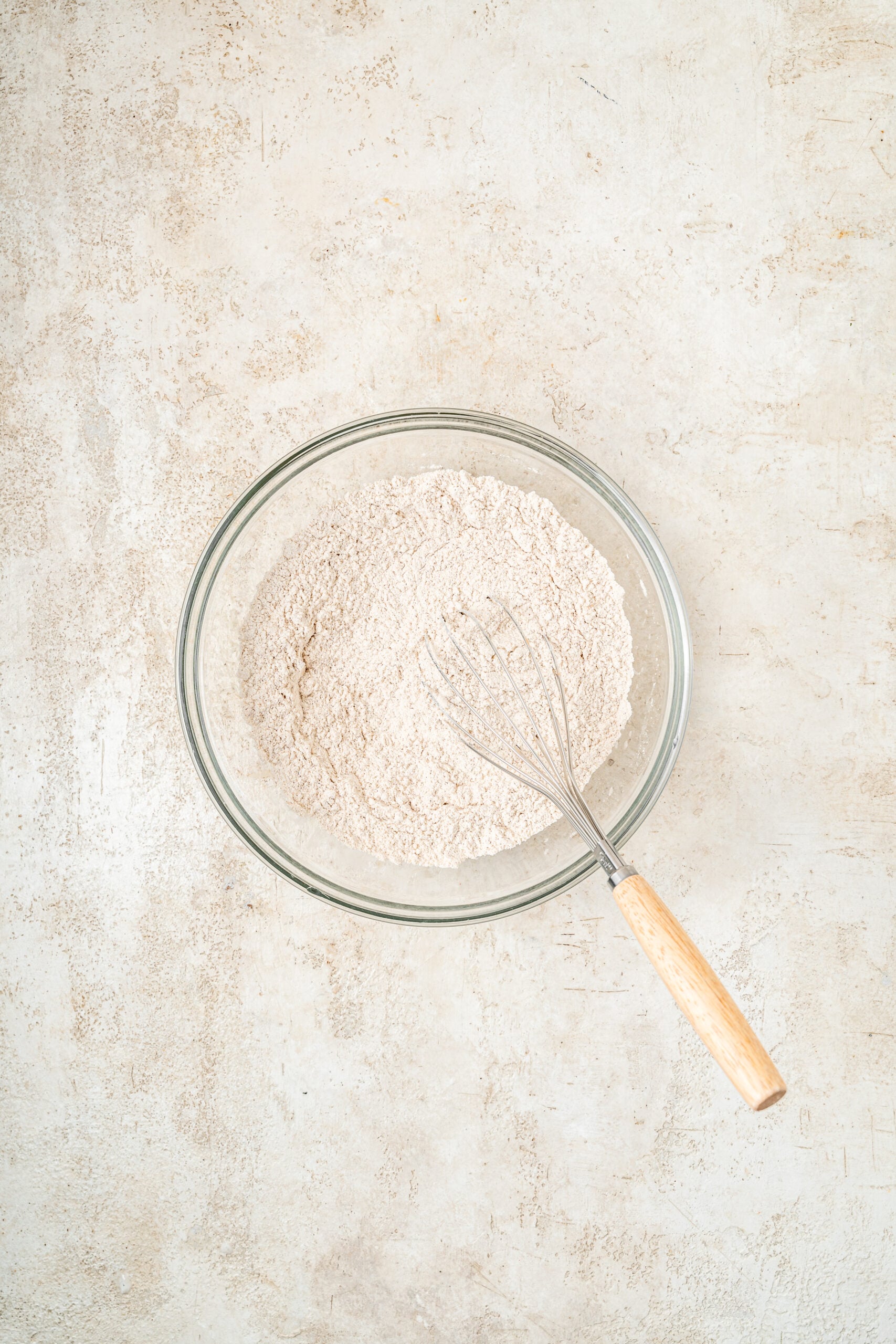
- Whisk the flour, ground ginger, cinnamon, cloves, nutmeg and salt together in a medium bowl.
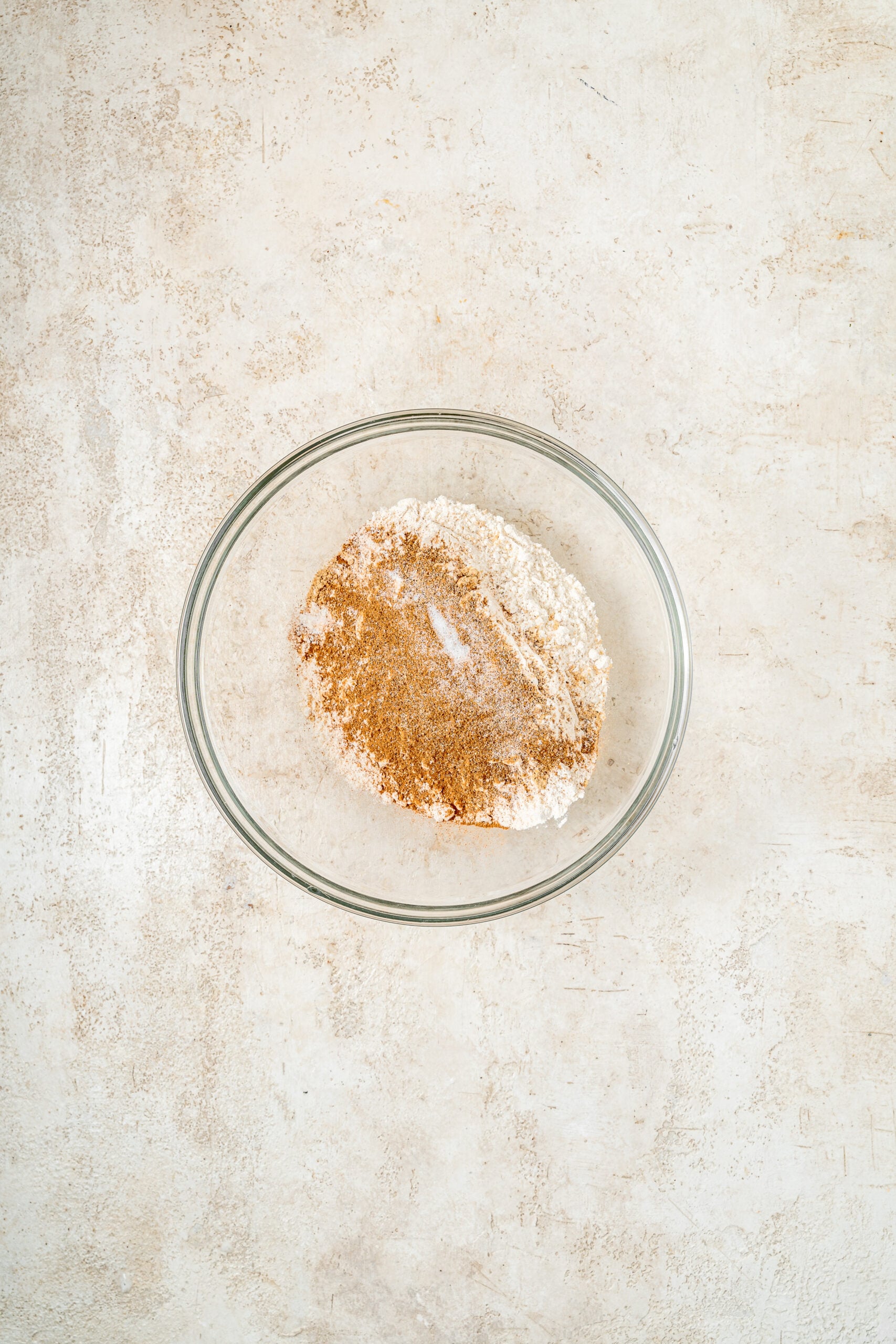
- Keep whisking until there are no pale streaks left and the spices are evenly through the flour. Thirty seconds is plenty.
- In a large bowl, beat the butter and dark brown sugar with a hand mixer on medium for about 2 minutes, until the mixture lightens and looks creamy rather than sandy.
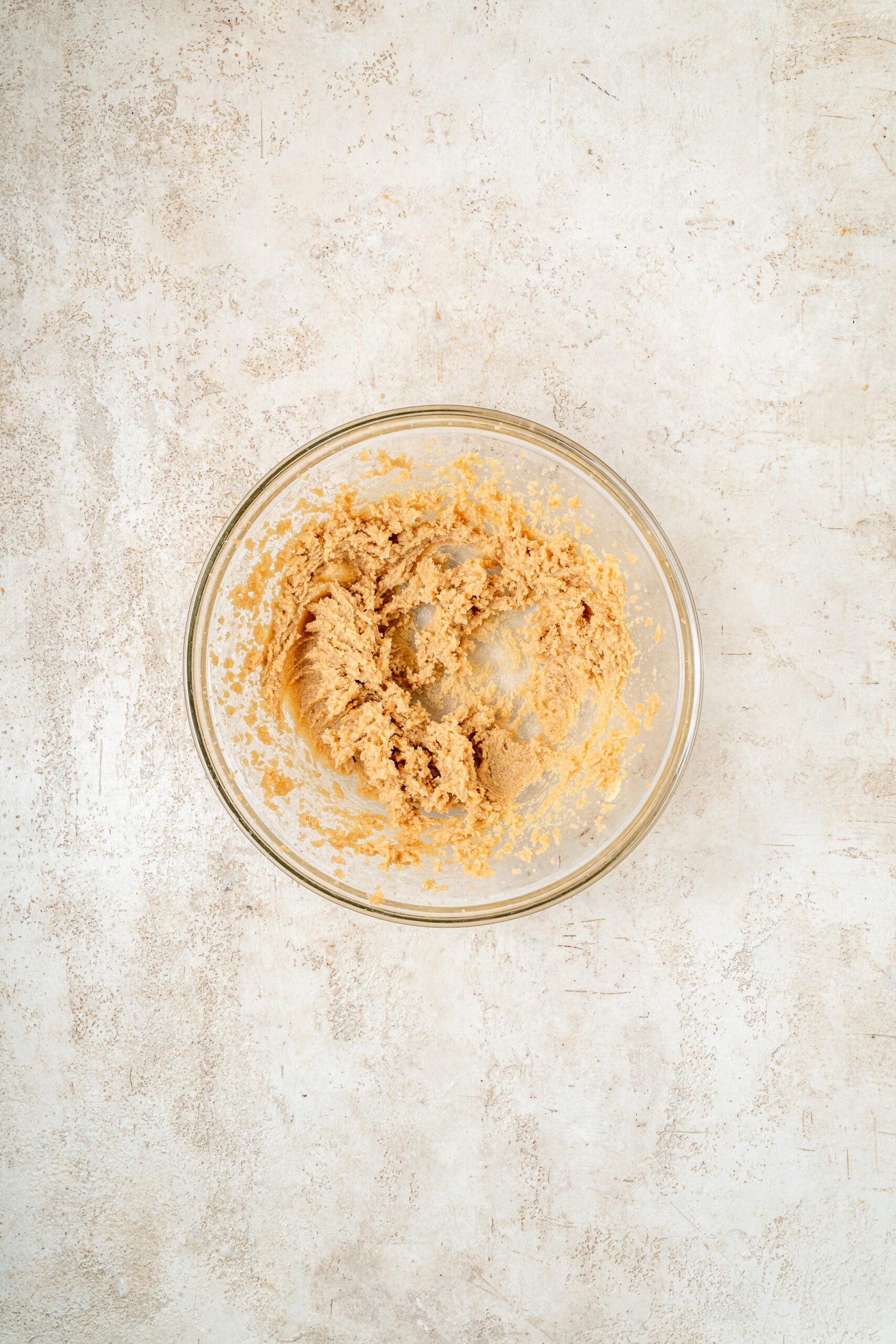
- Beat in the eggs one at a time, giving each one about 20 seconds, until the mixture is smooth and pale.
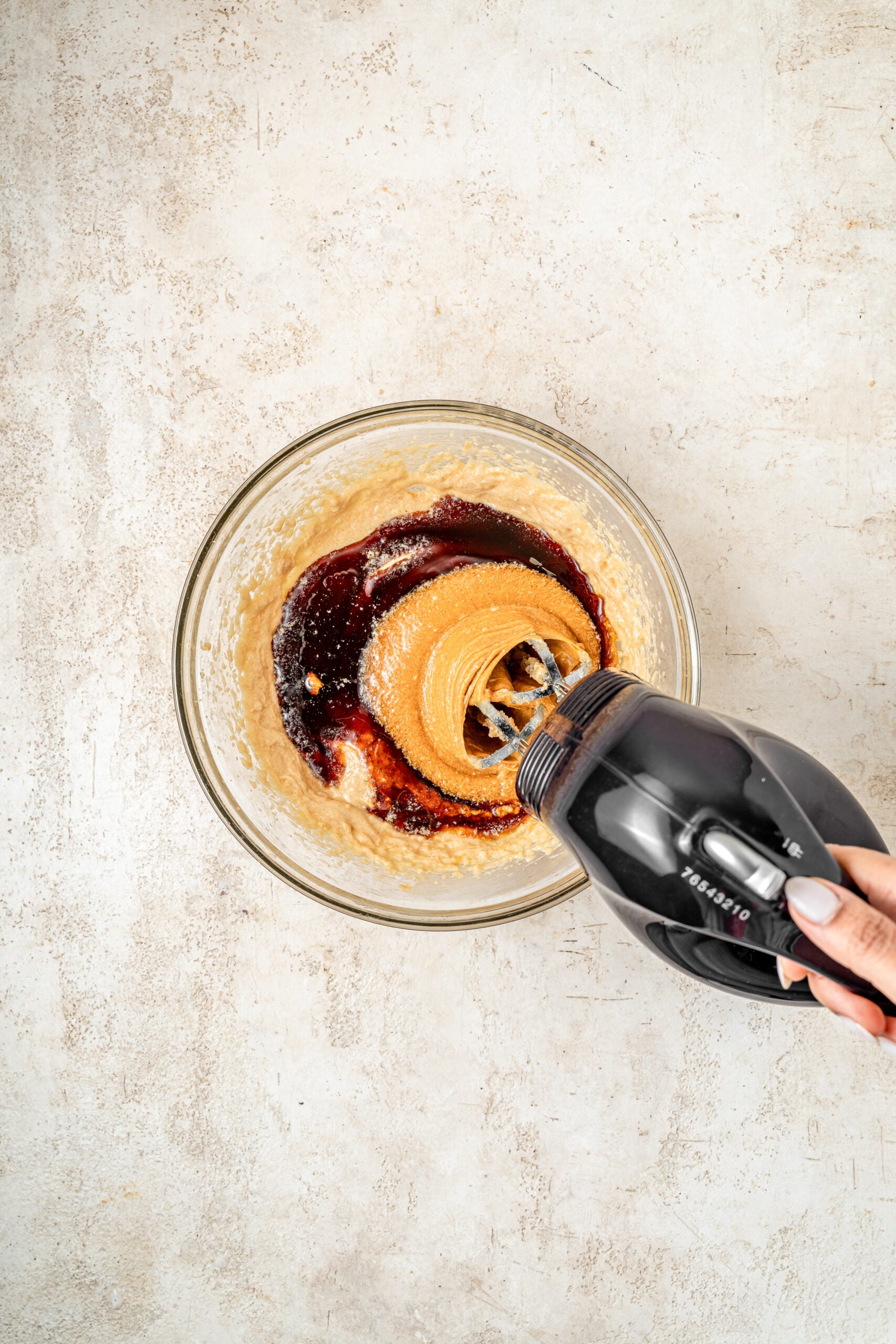
- Pour in the molasses and the vanilla.
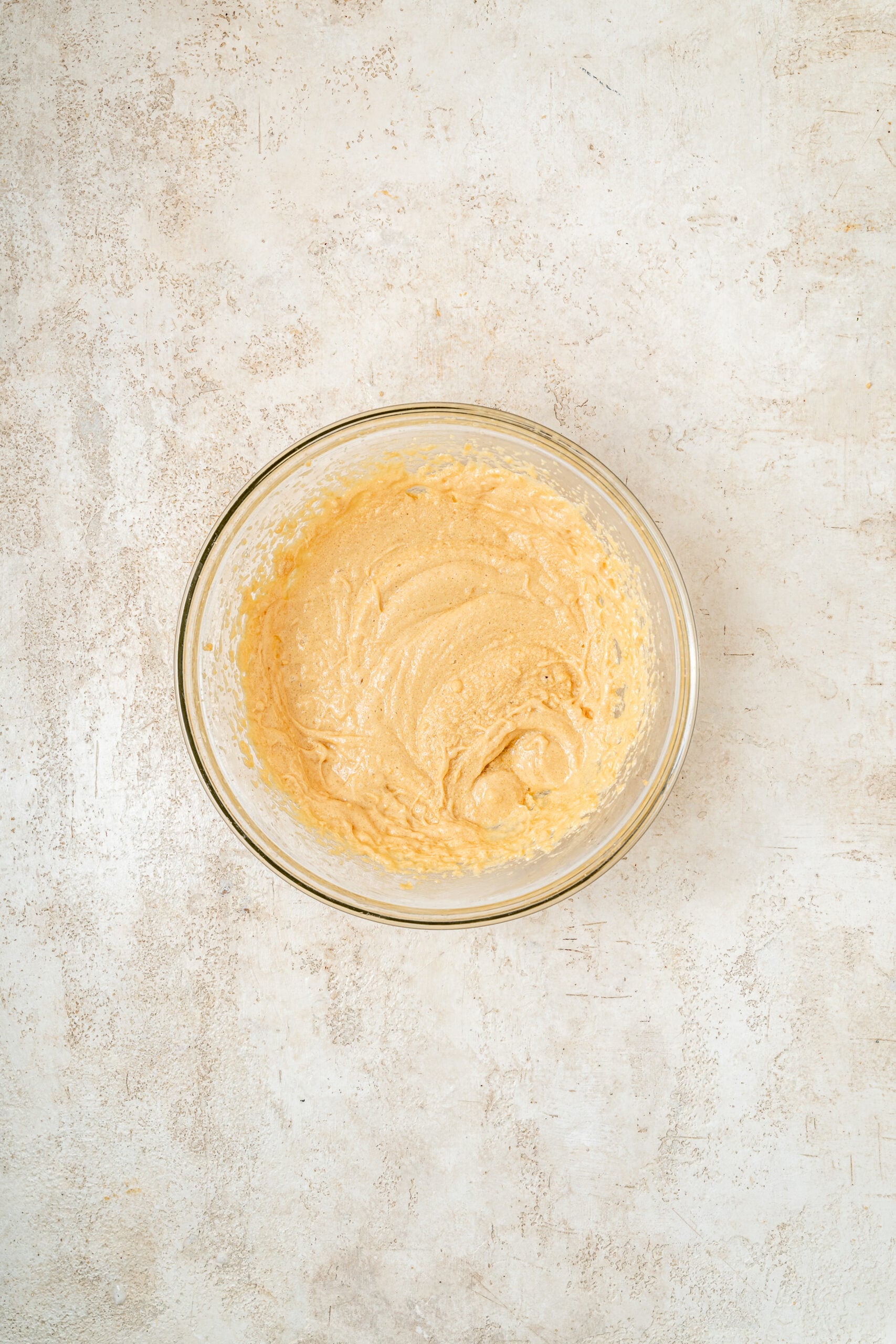
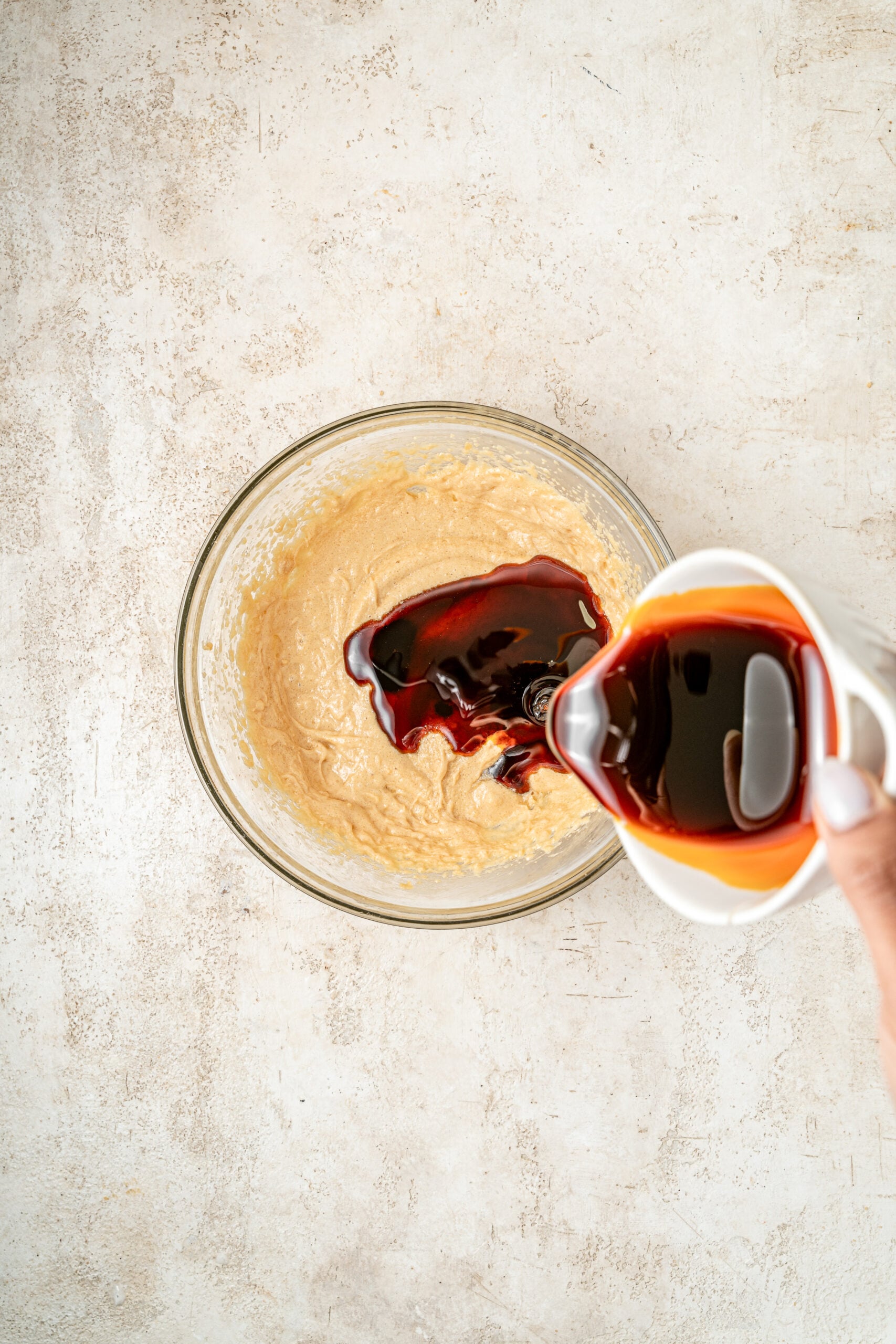
- Beat until combined. It will look loose and slightly curdled, and that is correct. Do not try to beat it smooth.
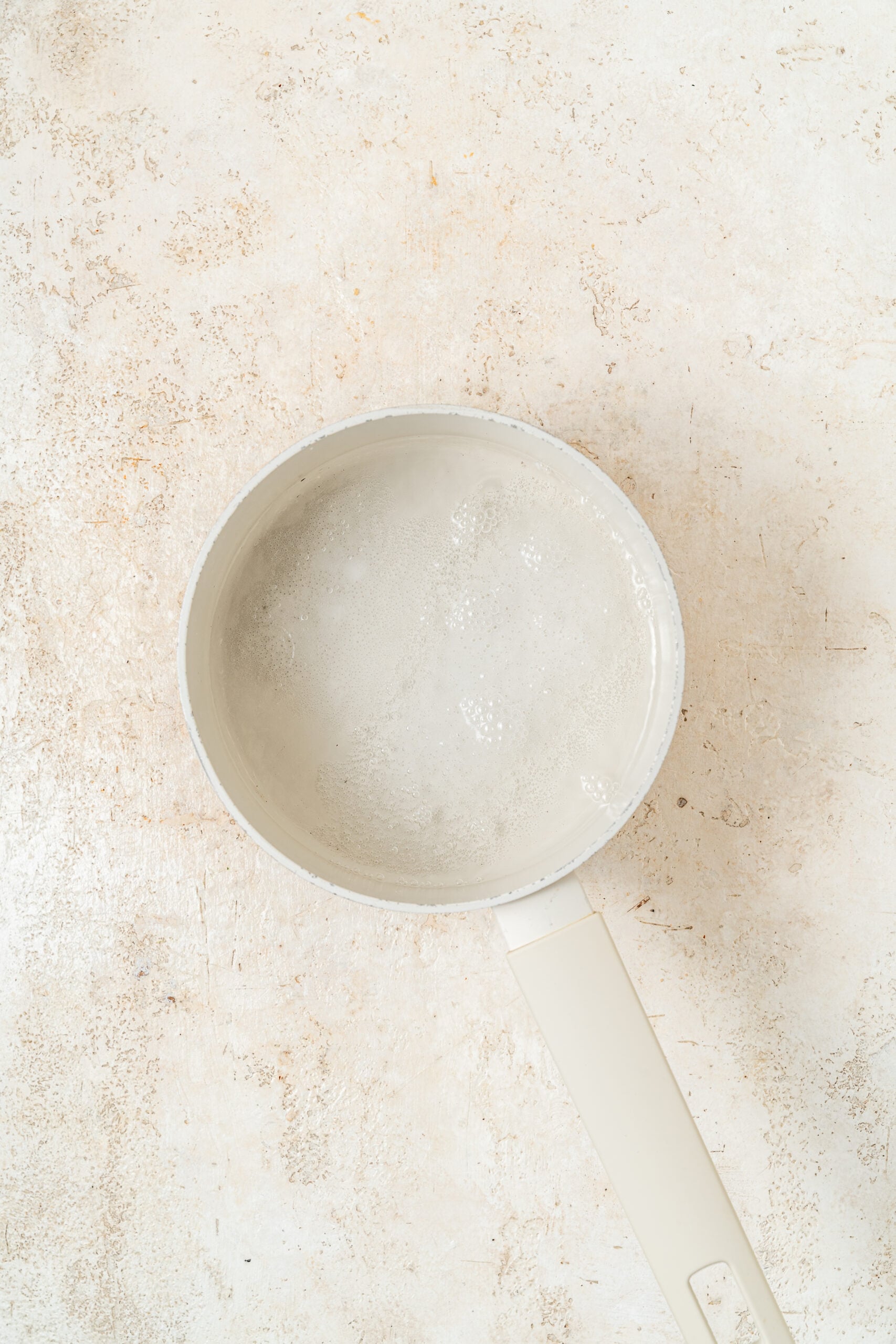
- Stir the baking soda into the jug of boiling water.
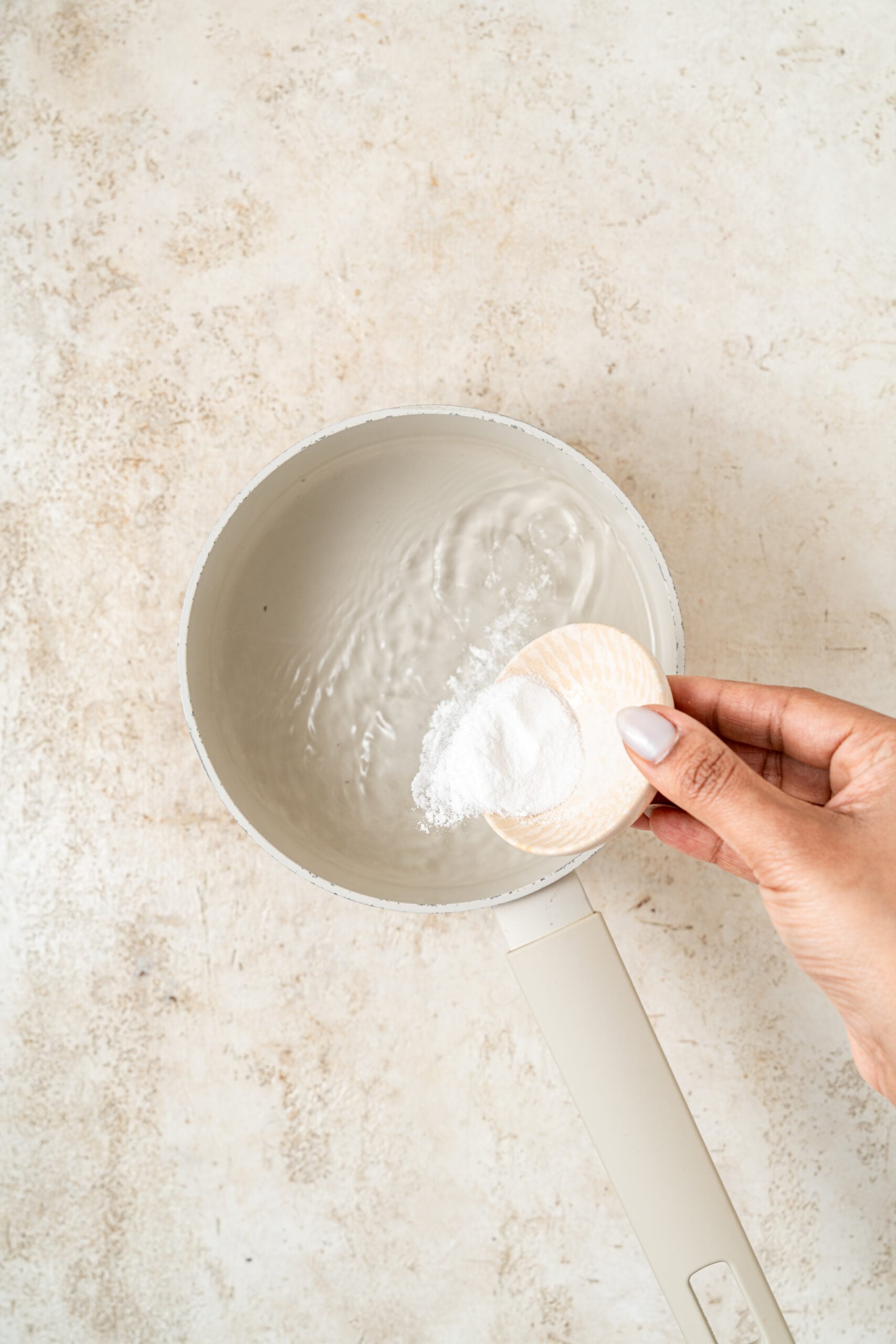
- It will fizz up as the soda hits the water. Use it straight away while it is still hot.
- Add a third of the flour mixture to the batter and mix on low until it has only just disappeared.
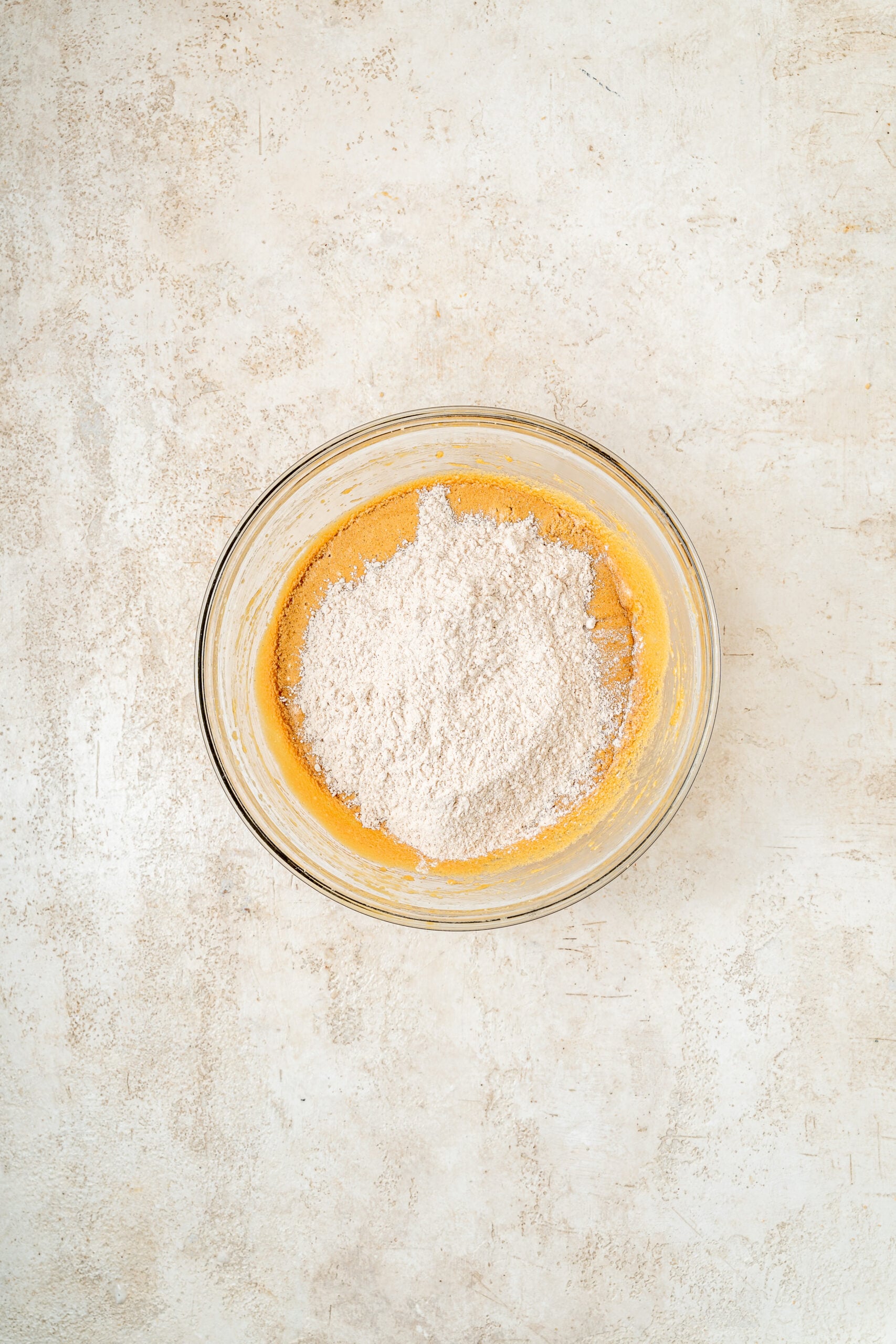
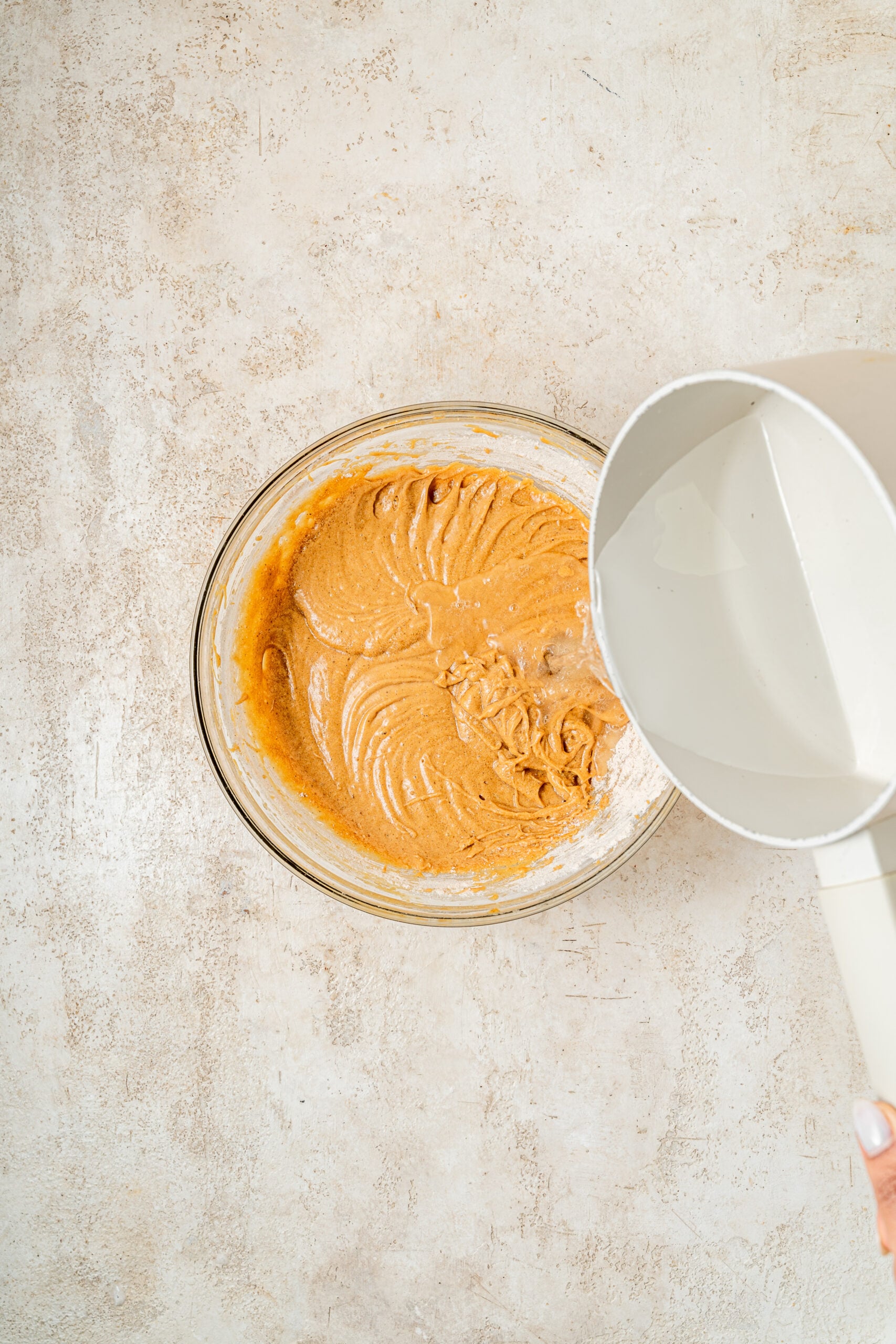
- Add half the hot water and mix briefly, then another third of the flour, then the rest of the water, then the last of the flour.
- Stop the moment there are no dry streaks. The batter will be thin, closer to a thick pancake batter than to a cake batter. Leave it that way.
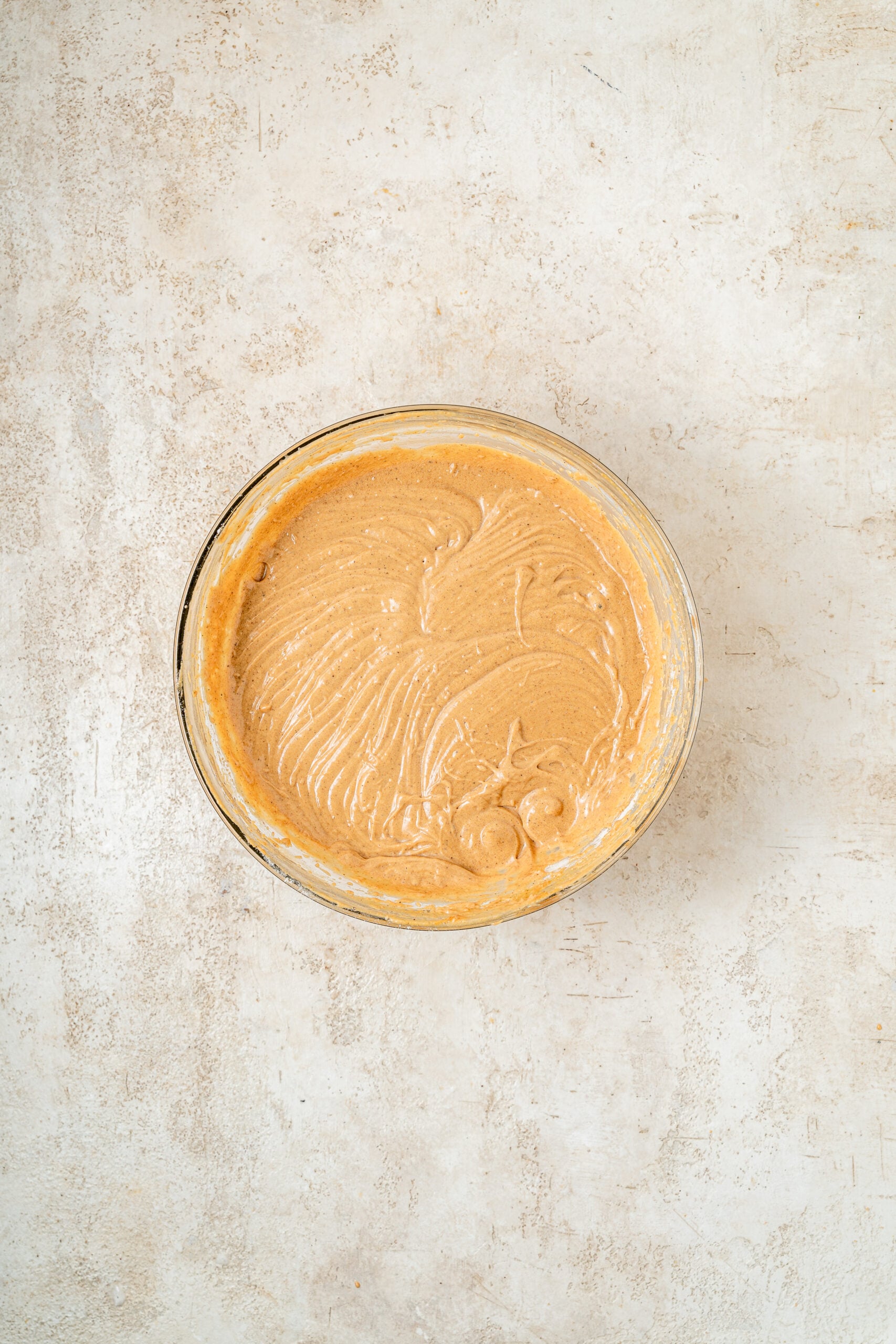
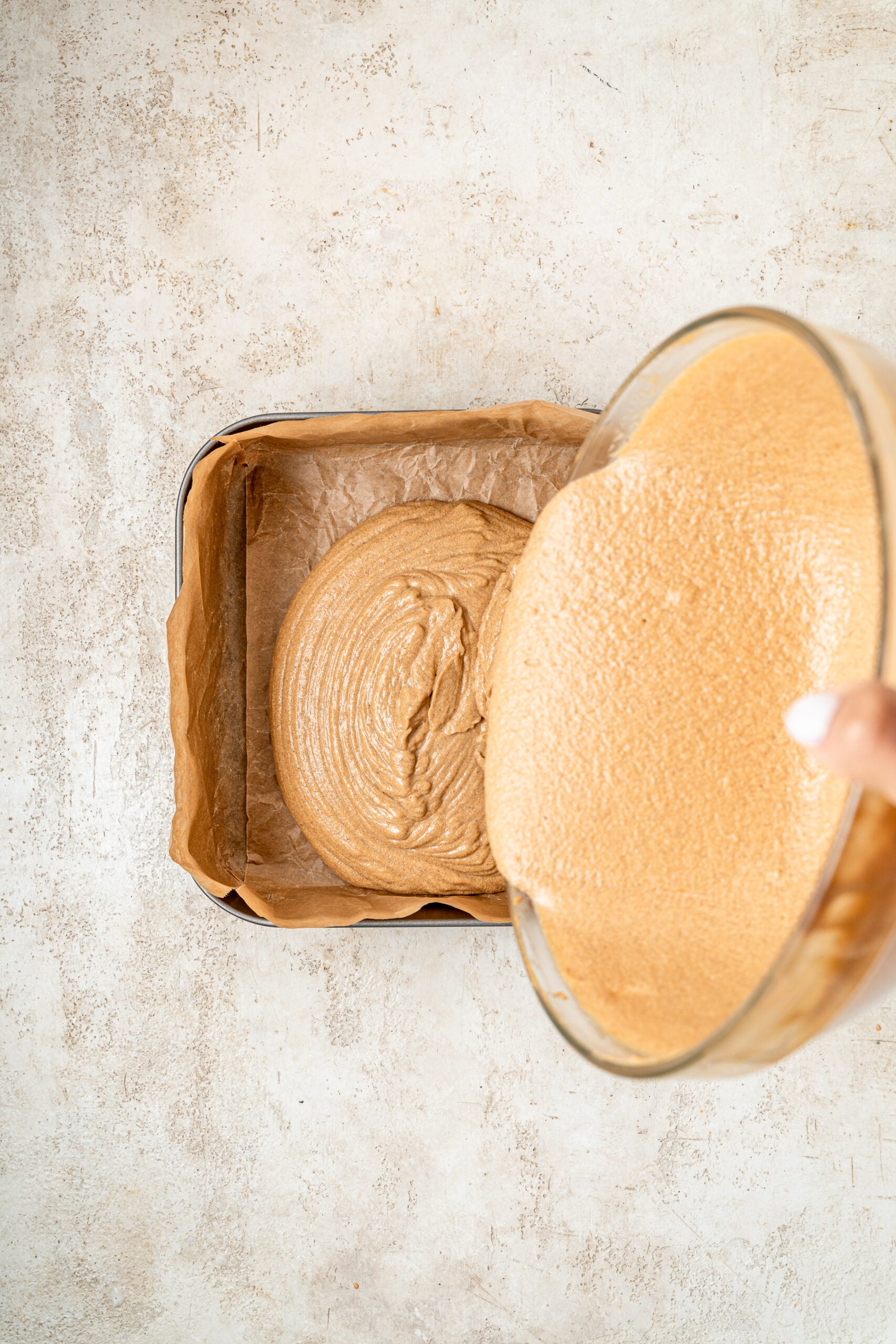
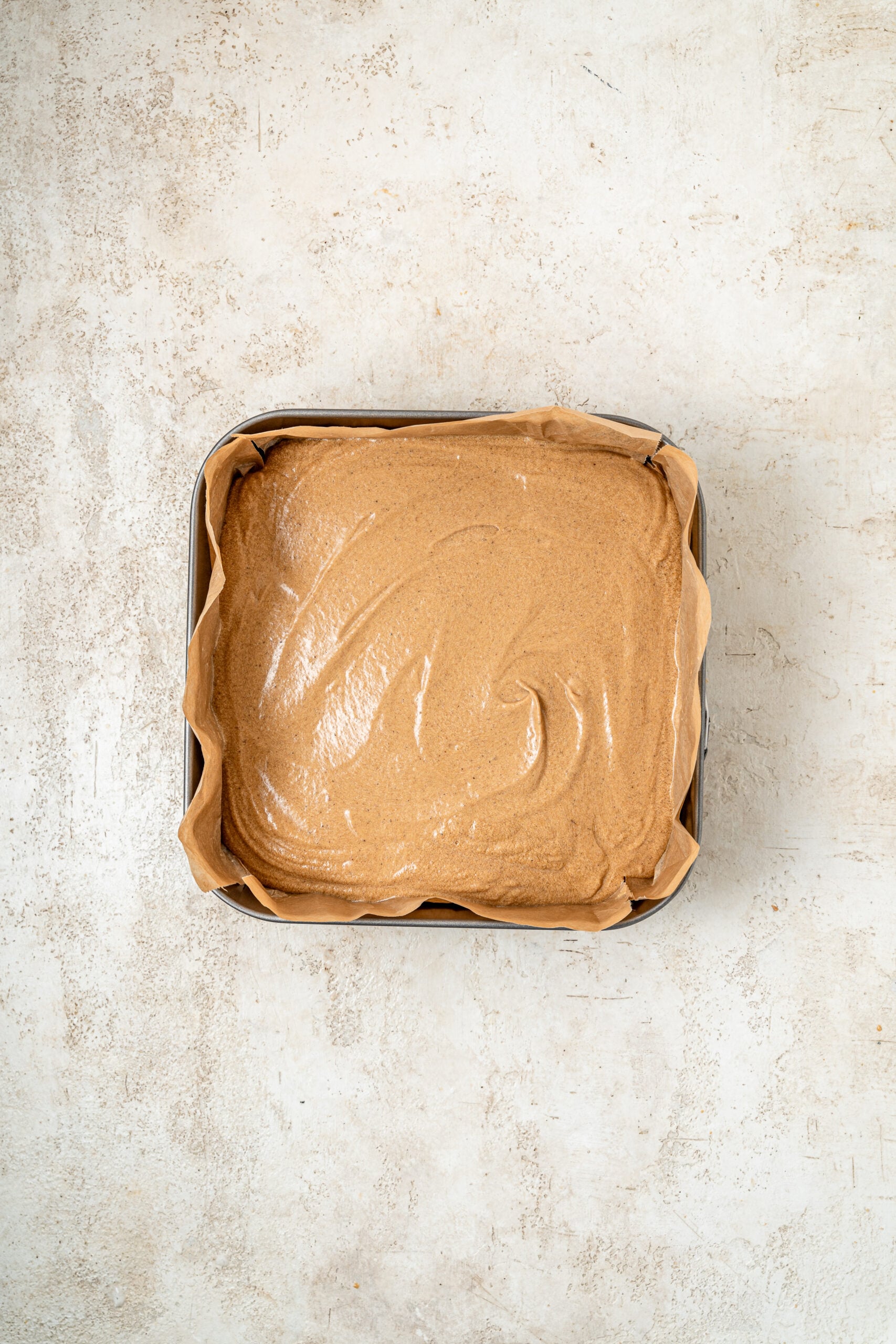
- Pour the batter into the prepared pan.
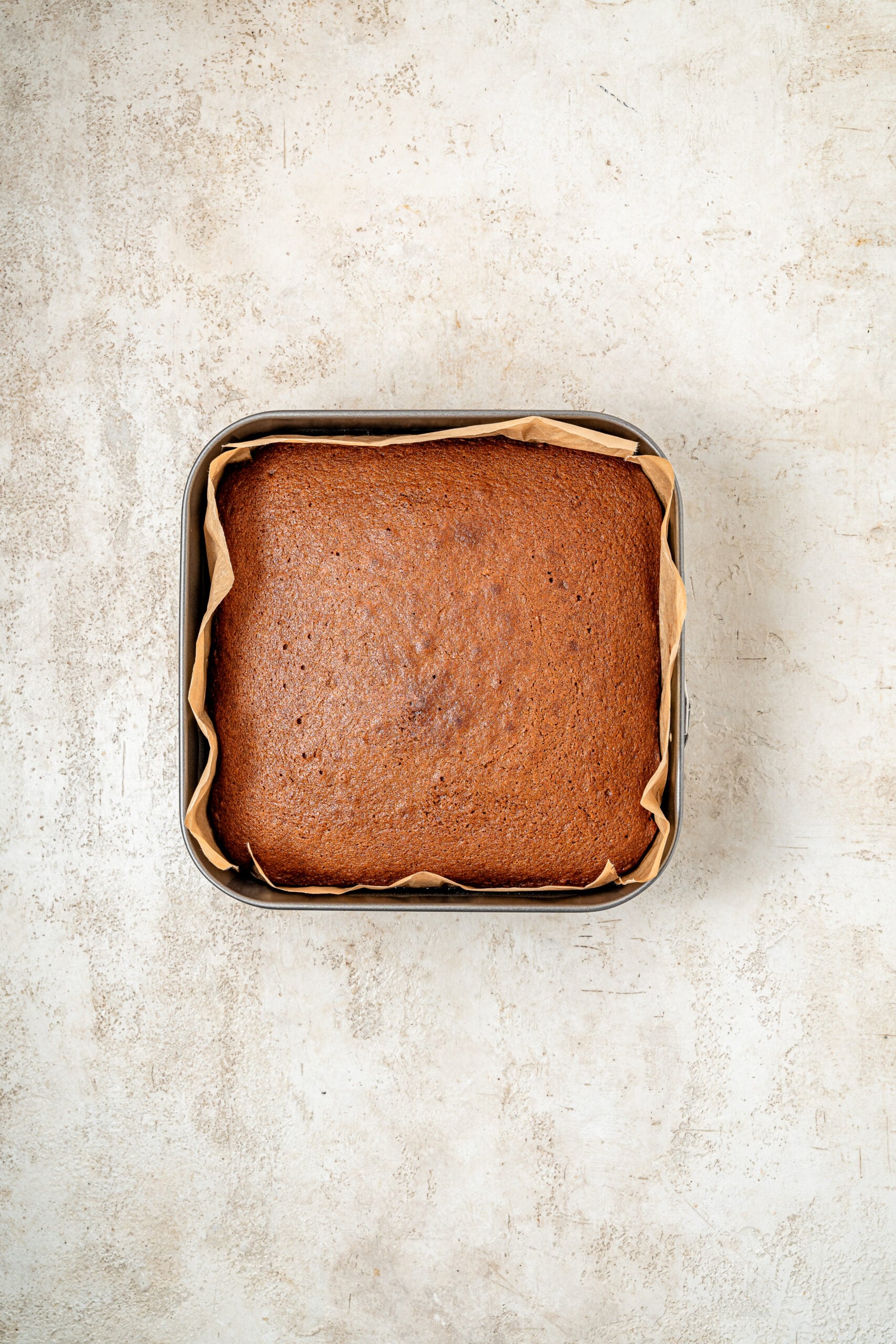
- Level the top and bake for 35 to 40 minutes, until the centre springs back when pressed lightly and a skewer comes out with a few moist crumbs but no wet batter.
- The cake will dome a little in the centre and settle back as it cools. Cool it in the pan for 15 minutes, then lift it out by the paper onto a wire rack and leave it to cool completely, about 1 hour 15 minutes.
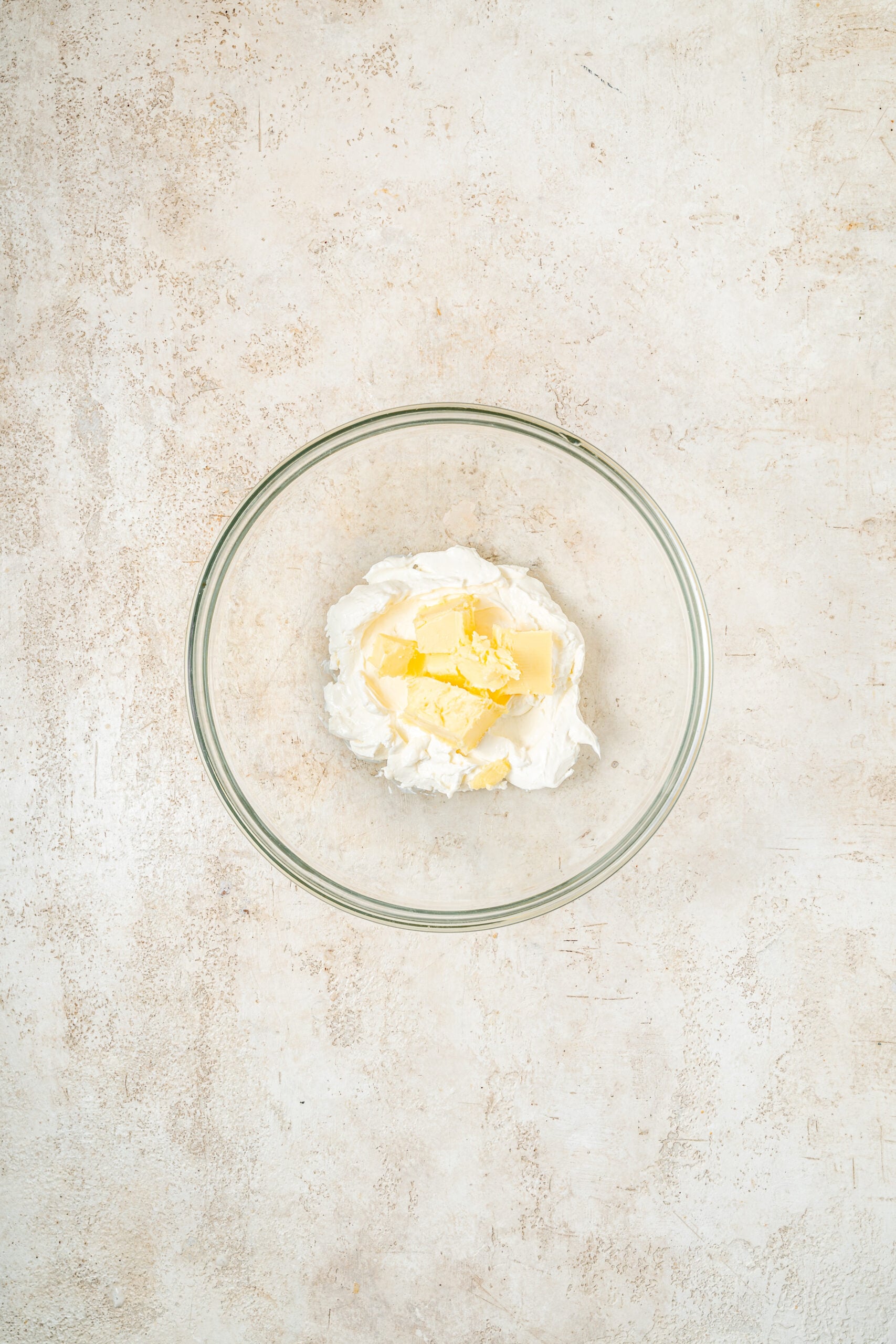
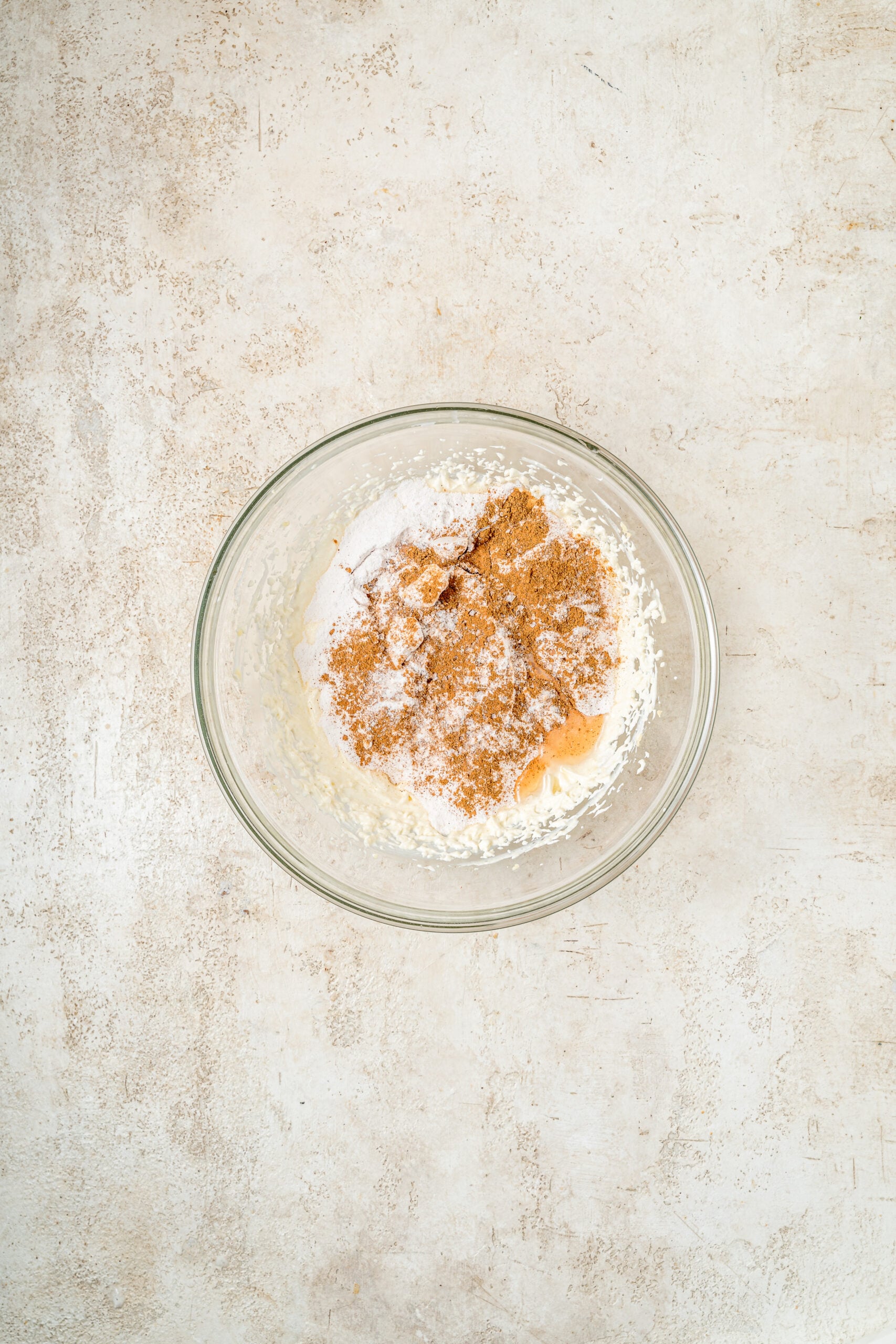
- While it cools, beat the cream cheese and butter together on medium for about a minute, until completely smooth with no lumps.
- Add the sifted powdered sugar, vanilla, cinnamon and salt, and mix on low until combined so the sugar stays in the bowl.
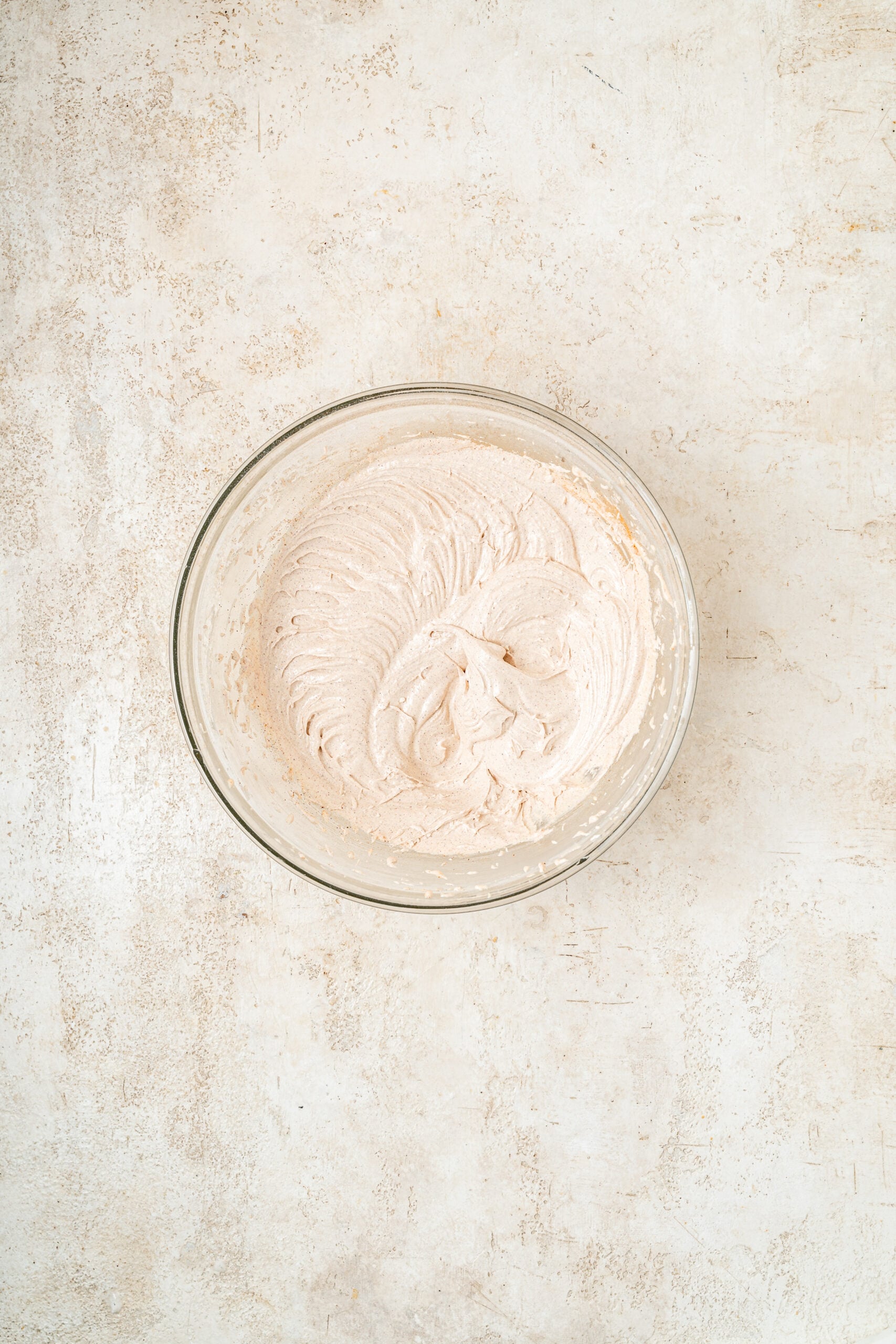
- Beat on medium for 30 seconds, no longer, until it is just fluffy. Cream cheese frosting gets looser the more you whip it.
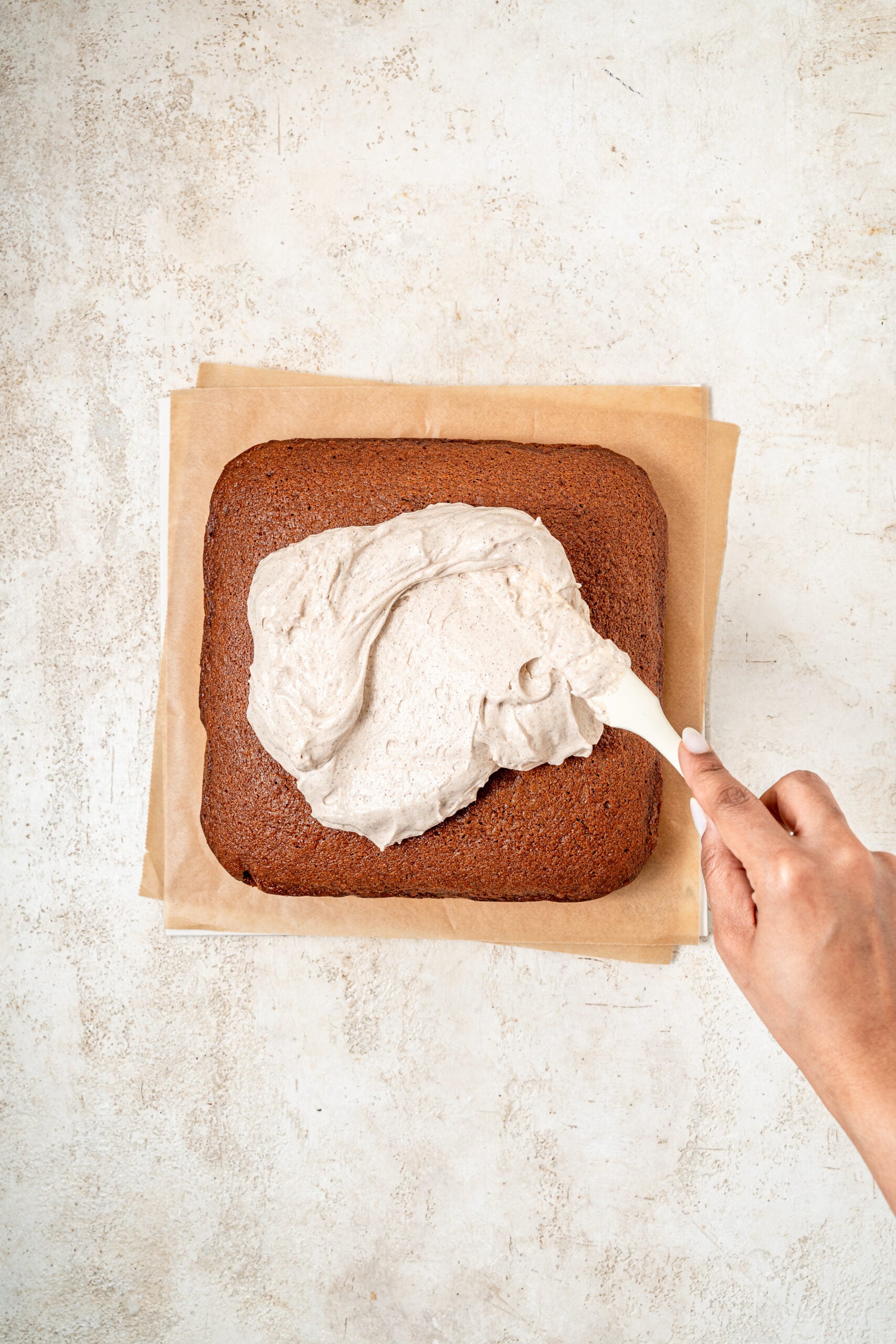
- Spread the frosting over the cold cake in loose swoops with the back of a spoon.
- Take it right out to the edges so every square gets some.
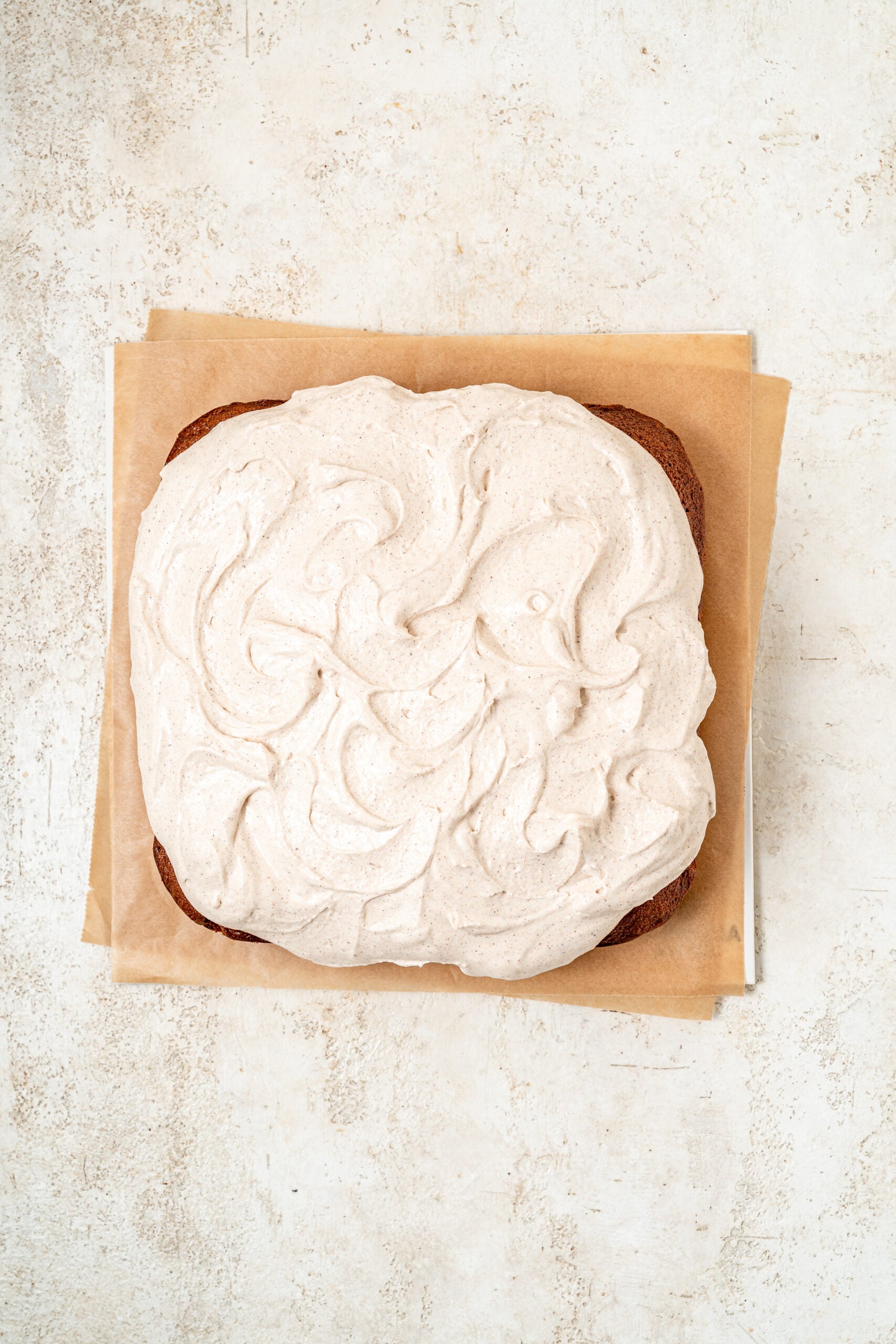
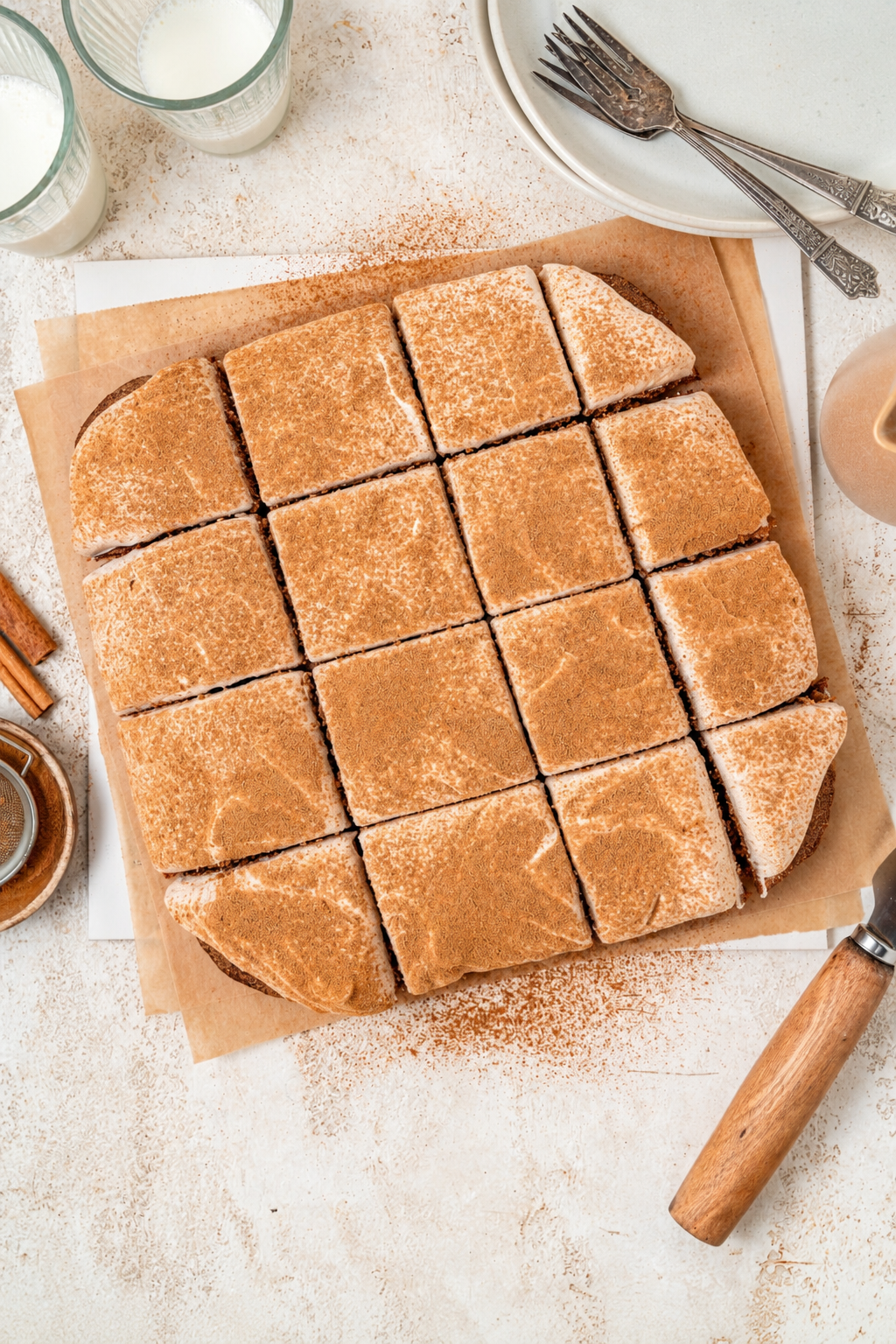
- Dust with a little extra cinnamon, or scatter over chopped crystallised ginger, then cut into 12 squares with a long knife wiped clean between cuts.
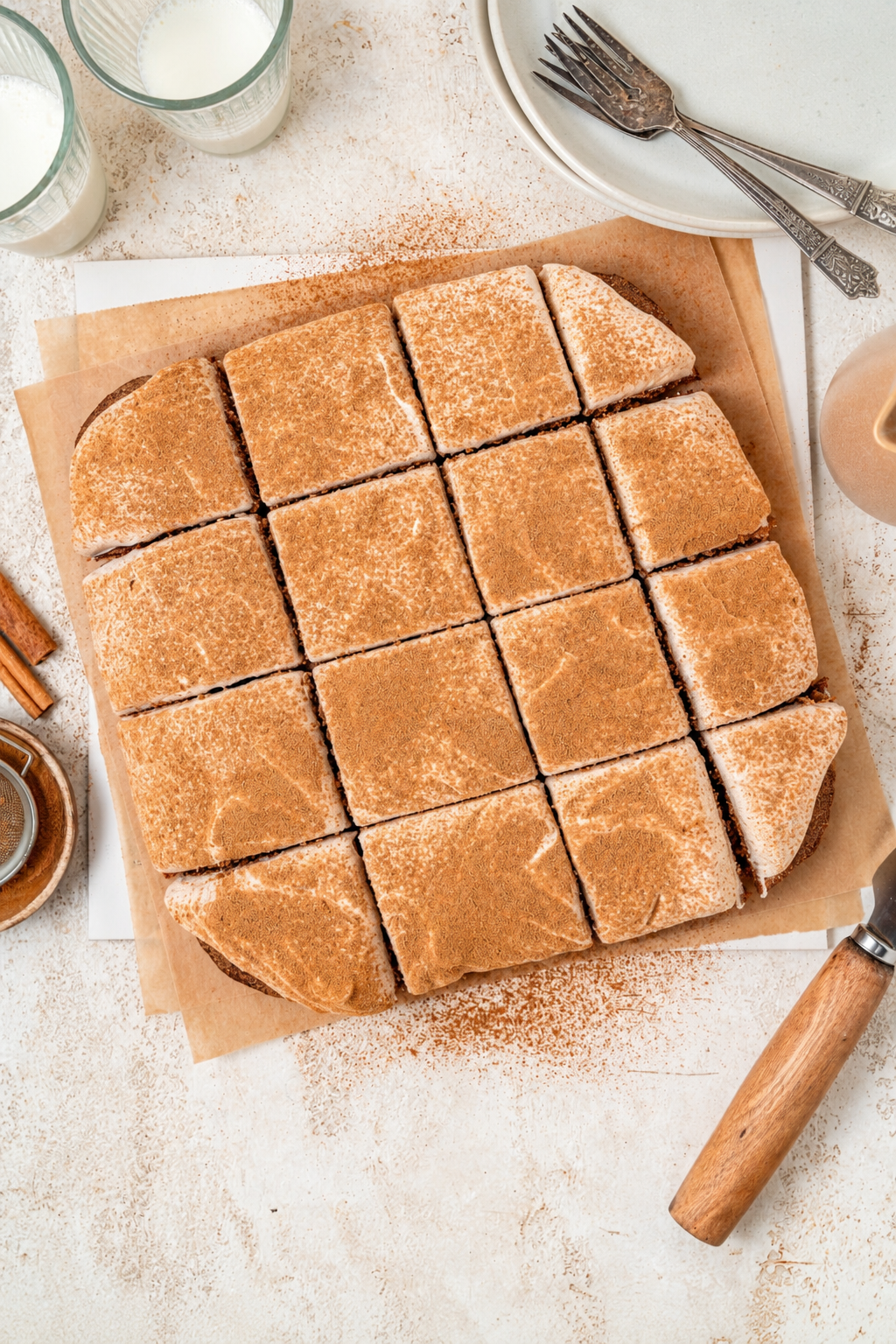
Getting a moist open crumb instead of a dense one
Pull it at moist crumbs, not at a clean skewer
A clean skewer means this cake is already slightly overdone. Start checking at 35 minutes and look for a few damp crumbs clinging to the stick, with no raw batter. The residual heat in the pan carries it the rest of the way during the first 15 minutes of cooling, and that is where the moisture you want actually comes from.
Do not beat the batter once the flour is in
Everything before the flour can take as much mixing as you like. Everything after it cannot. Once the flour is in, low speed only, and stop at the first moment the dry streaks vanish. A gingerbread that comes out gummy and tight has almost always been mixed for another twenty seconds after it was ready.
Check the baking soda is still alive
Baking soda sitting open in a cupboard loses its lift within a few months, and this cake has no other riser to fall back on. Drop a quarter teaspoon into a spoonful of vinegar: if it does not foam hard and immediately, buy a new box. A flat, heavy gingerbread is more often old soda than anything you did wrong on the day.
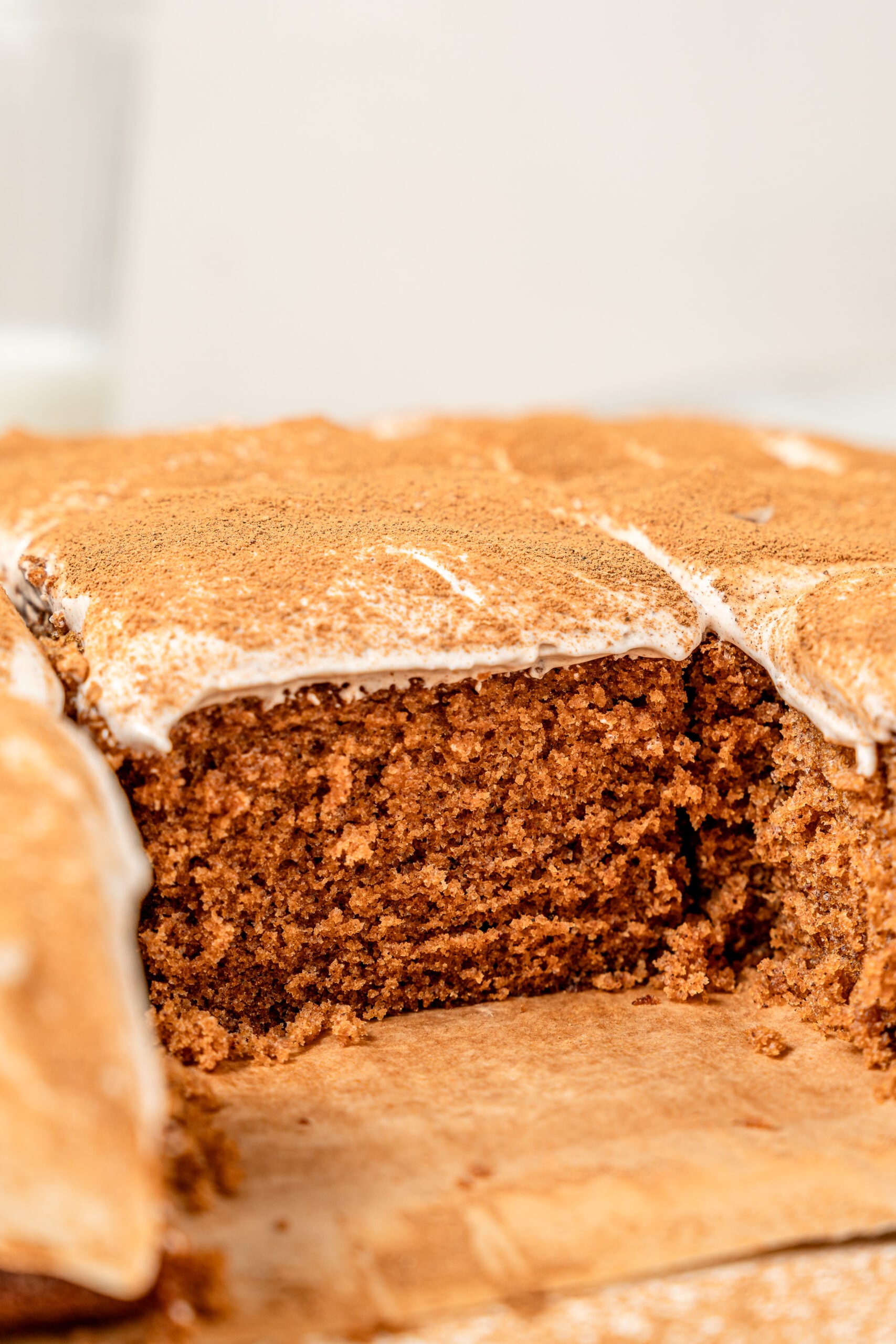
The cream cheese frosting, and when to put it on
Block cream cheese, and let it come to room temperature
Spreadable cream cheese from a tub carries extra water and stabilisers, and a frosting made with it will slide off the cake in a warm kitchen. Use the foil wrapped block, and leave it on the counter for an hour first. Cold cream cheese beaten against softened butter is what makes those stubborn little lumps that no amount of extra mixing will remove.
Stop beating sooner than feels right
Buttercream gets stiffer the longer you whip it and cream cheese frosting does the opposite: the structure breaks down and it turns soupy. Thirty seconds on medium after the sugar goes in is genuinely enough. If it has already gone loose, chill the bowl for 20 minutes and stir it by hand rather than beating it again.
The cake has to be properly cold
Frosting a warm cake melts the layer straight into the crumb and you lose both the look and the contrast. The cake needs a full 15 minutes in the pan and then at least an hour out of it. If you are short on time, put the cooled cake in the fridge for 20 minutes before you frost it rather than rushing the cooling.
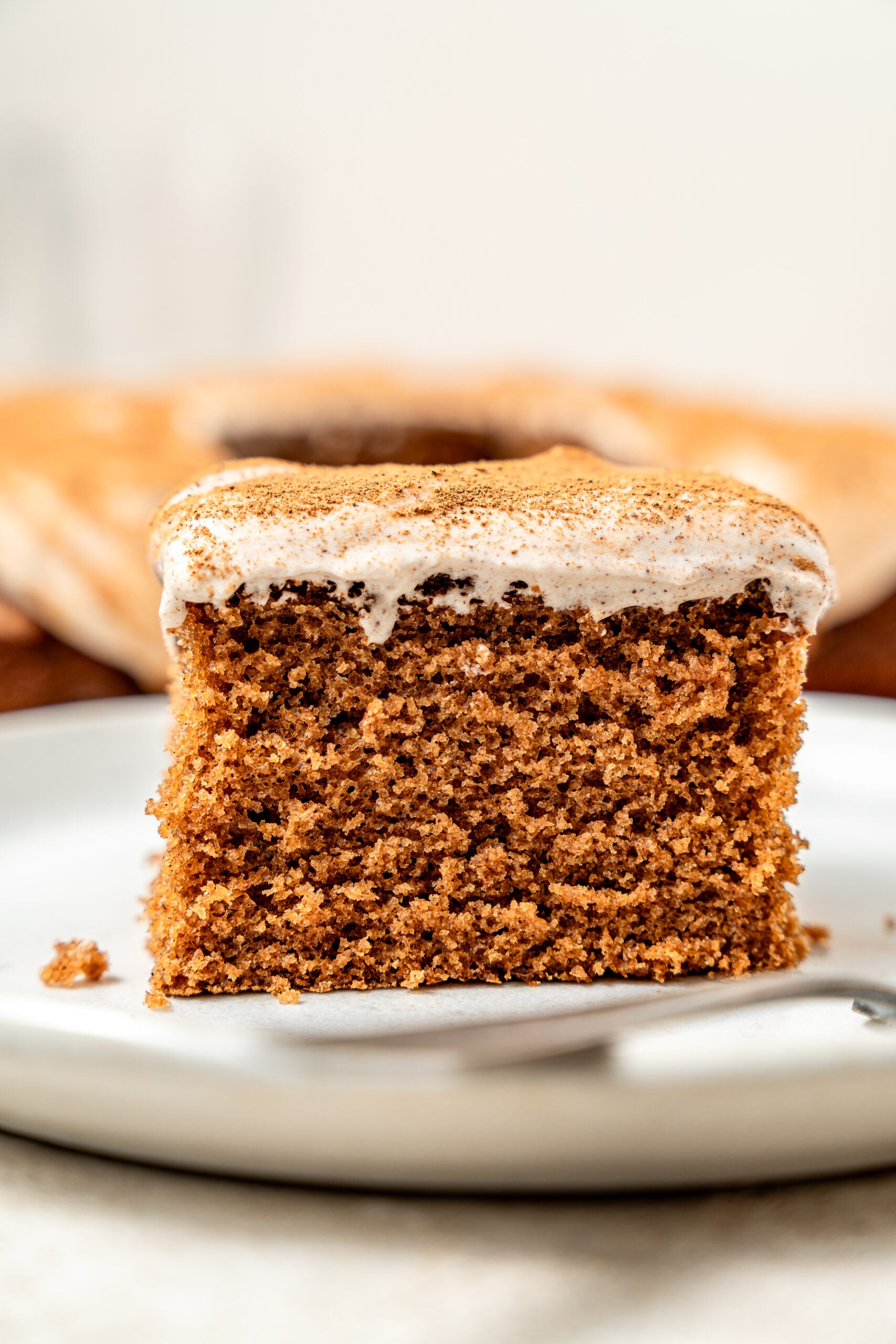
Serving it, storing it, and making it ahead
Warm and plain, or cold and frosted
The traditional way is a warm square with nothing on it but lightly sweetened whipped cream, which is closer to how sticky date pudding is served and is very good indeed. Frosted, it wants to be cool so the cream cheese stays firm against the soft crumb. Both are right, and the plain version is the one that freezes best.
It is genuinely better on day two
The spices keep developing overnight and the molasses pulls moisture back through the crumb, so a cake baked on Monday tastes deeper and sits wetter on Tuesday. Keep the unfrosted cake wrapped at room temperature for up to 3 days. Once it is frosted it goes in the fridge, covered, for up to 4 days, and it should come back to room temperature before anyone eats it.
Freezing and making it ahead
The unfrosted cake freezes for 3 months. Cool it completely, wrap it twice, and thaw it overnight on the counter still wrapped so the condensation lands on the plastic rather than the crumb. Make the frosting fresh on the day; it takes five minutes and it never freezes as well as the cake does.
Bake it the day before you need it, keep it unfrosted and wrapped on the counter, and frost it an hour before it goes on the table. That is the version of this cake that tastes the best and causes the least trouble.
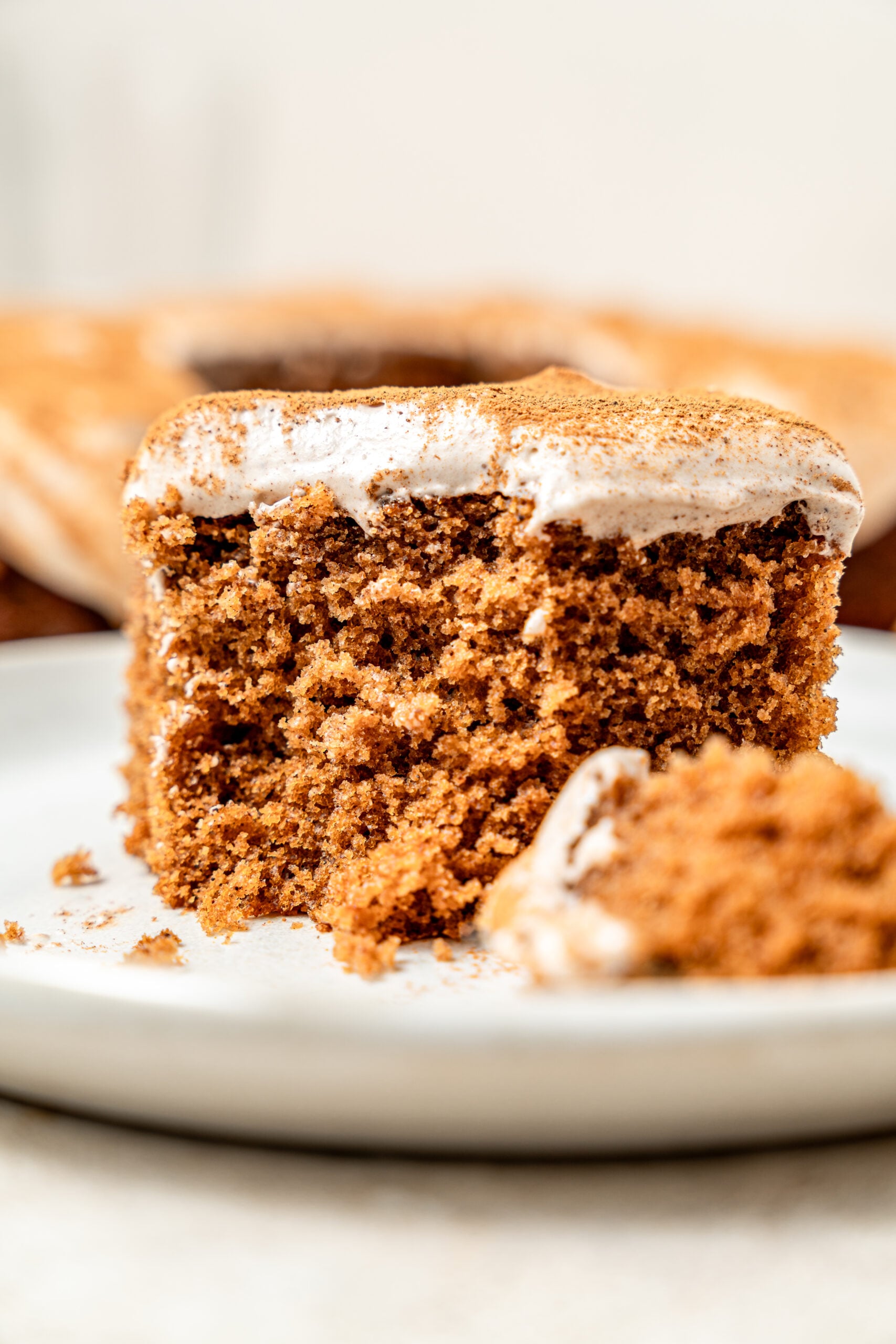
What to serve alongside it
A pot of strong tea or black coffee is the obvious match, because both cut straight through the molasses. If you are building a spread, it sits well next to gingerbread donuts and the rest of the Christmas dessert guide lineup, where it is usually the only thing on the table that improves while it waits.
Frequently Asked Questions
What is the difference between gingerbread cake and ginger cake?
They are close cousins rather than different desserts. Gingerbread cake is the American name and leans on unsulphured molasses for its dark colour and slight bitterness. Ginger cake is the British name for the same style of bake, usually made with golden syrup or treacle and often with fresh grated ginger as well as ground, which makes it lighter in colour and a little gentler.
Can I use blackstrap molasses?
I would not. Blackstrap is what is left after most of the sugar has been extracted, so it is far more bitter and mineral tasting, and in a cake this size it takes over completely. Look for molasses labelled original, mild or robust. If blackstrap is genuinely all you have, use half blackstrap and half golden syrup.
Why did my gingerbread cake come out dry?
Almost always overbaking. Start checking at 35 minutes and pull it when a skewer comes out with a few moist crumbs clinging to it, not clean. The other common cause is too much flour from scooping the cup straight out of the bag, which can add 30 g or more; weighing the flour fixes it permanently.
Can I make it without the cream cheese frosting?
Yes, and the plain version is the traditional one. Serve warm squares with lightly sweetened whipped cream or just a dusting of powdered sugar. The unfrosted cake also keeps better at room temperature and freezes far more reliably, so it is the better choice if you are making it well ahead.
Can I bake this in a different tin?
A 23 cm (9 inch) round pan takes the same 35 to 40 minutes. A 33 x 23 cm (13 x 9 inch) pan gives a thinner cake that bakes in 25 to 30 minutes. A 23 x 13 cm (9 x 5 inch) loaf tin needs 50 to 60 minutes, and you should tent it with foil after 40 minutes if the top is darkening faster than the centre is setting.
How far ahead can I make gingerbread cake?
Bake it a day ahead and it will taste better than it does fresh, because the spices settle and the molasses pulls moisture back through the crumb. Keep it unfrosted and wrapped at room temperature for up to 3 days, or freeze it for 3 months. Frost it on the day it is served and keep it in the fridge once frosted.
Let’s Get Cooking
If you liked this recipe make sure to leave me a comment and rating down below. I’d love to know how it went! Also, don’t forget to tag me on Instagram @catherine.desserts.
Follow me on Facebook, Pinterest, YouTube, and TikTok for more of my baking creations and updates!
Gingerbread Cake
An old fashioned gingerbread cake, dark with molasses and warm with ginger, cinnamon, cloves and nutmeg. A cup of boiling water goes in at the end to keep the crumb open and moist, and a soft cinnamon cream cheese frosting finishes it. Makes 12 squares and tastes even better on day two.
- Prep Time: 20 minutes
- Cool Time: 1 hour 30 minutes
- Cook Time: 40 minutes
- Total Time: 2 hours 30 minutes
- Yield: 12 squares 1x
- Category: Cake
- Method: Baking
- Cuisine: American
Ingredients
Units
Scale
Cake
- 280 g (2 1/4 cups) all purpose flour
- 2 teaspoons ground ginger
- 1 1/2 teaspoons ground cinnamon
- 1/2 teaspoon ground cloves
- 1/4 teaspoon ground nutmeg
- 1/2 teaspoon fine sea salt
- 115 g (1/2 cup, 1 stick) unsalted butter, softened
- 150 g (3/4 cup, packed) dark brown sugar
- 2 large eggs, at room temperature
- 250 g (3/4 cup) unsulphured molasses (not blackstrap)
- 1 teaspoon vanilla extract
- 1 1/2 teaspoons baking soda
- 240 ml (1 cup) boiling water
Cream cheese frosting
- 170 g (6 oz) full fat block cream cheese, at room temperature
- 60 g (1/4 cup) unsalted butter, softened
- 180 g (1 1/2 cups) powdered sugar, sifted
- 1 teaspoon vanilla extract
- 1/4 teaspoon ground cinnamon
- Pinch of fine sea salt
- Extra ground cinnamon for dusting, or chopped crystallised ginger
Instructions
- Preheat the oven to 175°C (350°F). Grease a 23 cm (9 inch) square pan and line the base and two sides with a strip of baking paper that overhangs, so the cake can be lifted out.
- Whisk the flour, ginger, cinnamon, cloves, nutmeg and salt together in a medium bowl.
- In a large bowl, beat the butter and brown sugar with a hand mixer on medium for about 2 minutes, until lighter in colour and creamy. Beat in the eggs one at a time, then the molasses and vanilla. The mixture will look loose and slightly curdled, which is normal.
- Stir the baking soda into the boiling water in a heatproof jug. It will fizz.
- Add a third of the flour mixture to the batter and mix on low until just combined. Add half the hot water and mix. Repeat with another third of the flour, the rest of the water, then the last of the flour, mixing only until no dry streaks remain. The batter is thin, more like a thick pancake batter than a cake batter. Do not keep mixing to thicken it.
- Pour into the prepared pan and bake for 35 to 40 minutes, until the top springs back when pressed lightly and a skewer in the centre comes out with a few moist crumbs but no wet batter. The centre will dome slightly and settle as it cools.
- Cool in the pan for 15 minutes, then lift out onto a wire rack and cool completely, about 1 hour 15 minutes. Frosting a warm cake will melt it.
- For the frosting, beat the cream cheese and butter together on medium until smooth with no lumps, about 1 minute. Add the powdered sugar, vanilla, cinnamon and salt and beat on low until combined, then on medium for 30 seconds until fluffy. Do not over beat, cream cheese frosting gets runnier the longer it is whipped.
- Spread the frosting over the cooled cake in loose swoops with the back of a spoon. Dust with a little cinnamon or scatter with crystallised ginger. Cut into 12 squares.
Notes
- Molasses: use unsulphured molasses, sometimes labelled original or robust. Blackstrap is bitter and will take over the cake. Golden syrup or treacle work in a pinch but give a lighter, less gingery result. Dark corn syrup does not work.
- Why boiling water: hot water dissolves the molasses and sugar fully and loosens the batter, which gives the open, tender crumb old fashioned gingerbread is known for. It also blooms the spices. The batter is meant to be thin.
- Spice level: this is a medium ginger. For a stronger kick, add 1 tablespoon of finely grated fresh ginger with the molasses, or 1 teaspoon more ground ginger. For a milder cake, drop the cloves to 1/4 teaspoon.
- Without frosting: the cake is traditionally served plain and warm with lightly sweetened whipped cream, or just a dusting of powdered sugar. Both are fine, and the plain cake freezes better.
- Pan swaps: a 23 cm (9 inch) round pan works with the same bake time. A 33 x 23 cm (13 x 9 inch) pan gives a thinner cake, bake 25 to 30 minutes. For a loaf, use a 23 x 13 cm (9 x 5 inch) tin and bake 50 to 60 minutes, tenting with foil after 40 if the top darkens.
- Make ahead and storage: the unfrosted cake keeps wrapped at room temperature for 3 days and is better on day two as the spices settle. It freezes for 3 months. Once frosted, keep covered in the fridge for up to 4 days and bring to room temperature before serving.
Nutrition
- Serving Size: 1 square