Some days I want a dessert that feels a little fancy, but still fits a lazy afternoon. Butter tteok is exactly that for me, with crisp golden edges, a soft chewy centre, and the sort of warm buttery smell that makes the kitchen feel calm.
The first time I tested this style of baked rice cake at home, I got greedy with the batter and filled the moulds too high. They puffed up like little moons, then sulked back down. After a few gentler batches, I found the sweet spot: well-buttered moulds, smooth rice flour batter, and a bake long enough to build those crisp bottoms. It’s simple, cosy, and just special enough to serve with tea when friends drop by.
What is Butter tteok
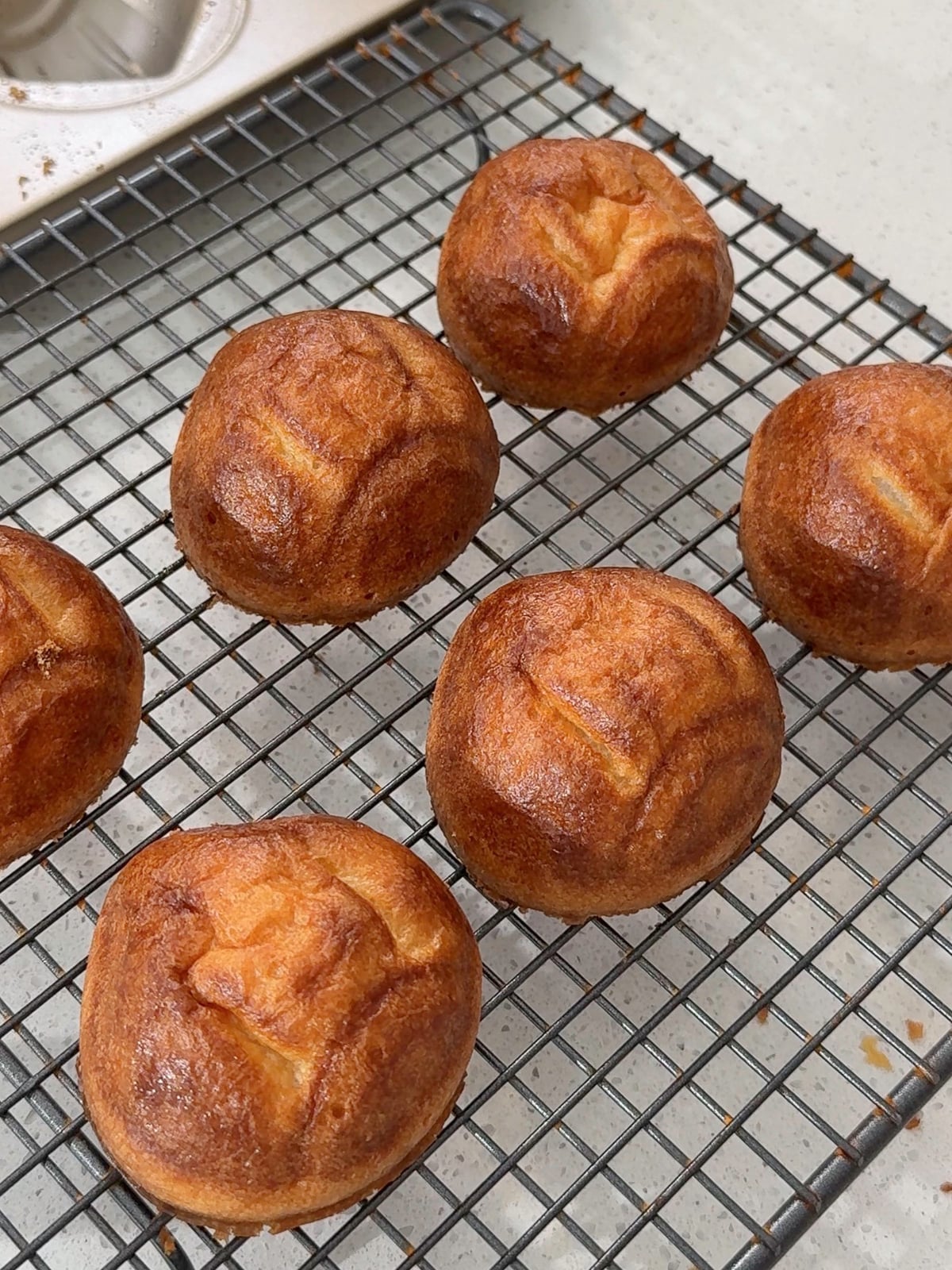
Butter tteok is a small baked rice cake dessert made with glutinous rice flour, milk, butter, egg, sugar, and vanilla. It sits somewhere between butter mochi, Korean mochi, and a tiny cake. The outside bakes up golden and crisp, while the middle stays soft, bouncy, and chewy.
Think of it as crispy butter mochi in snack form. It has the tender pull of chewy mochi, the buttery flavour of a cake, and the caramelised edge you get from a well-greased metal mould.
Where is Butter tteok from
Butter tteok is often linked to Shanghai-style butter rice cakes, then made viral through Korean dessert cafés and social media. In 2026, it also became a big Thai viral dessert trend, with shops in Thailand selling crisp, buttery, chewy rice cakes inspired by the Korean version.
So the story is a little layered. Its roots point to Shanghai, China, but the current viral butter tteok moment is strongly tied to South Korea, Thailand, and Asian café culture.
How to make it
To make Butter tteok, whisk the egg and sugar, add warm milk, melted butter, vanilla, salt, and glutinous rice flour, then pour the smooth mochi batter into heavily buttered moulds. Bake until the tops are golden brown, the bottoms are crisp, and the centre is still soft and chewy.
At-a-Glance, What You’ll Need Before We Start Rolling
Yield
Prep Time
Cook Time
Difficulty
Storage
12 small pieces
15 minutes
30 to 35 minutes
Easy
Best warm. Keep airtight 1 day at room temperature or 3 days chilled. Reheat to crisp.
Ingredients
Full-fat milk: Adds moisture, richness, and a smooth custard-like bite to the rice flour batter.
Unsalted butter: Gives the batter its deep buttery flavour and helps create crispy bottoms in the mould.
Egg: Adds structure, colour, and a little lift so the centres are chewy, not heavy.
Caster sugar: Sweetens the dessert and helps the edges turn golden and crisp.
Vanilla extract: Rounds out the milk and butter with a soft bakery-style aroma.
Fine salt: Balances the sweetness and makes the butter taste fuller.
Glutinous rice flour: The key ingredient for that chewy mochi rice cake texture and bouncy centre.
Optional, My Favourite Extras That Add a Little Magic
Tapioca starch: Makes the chew a little lighter and more elastic, especially if you like Korean crispy tteok with a springy bite.
Miso paste: A tiny spoon adds salty depth and makes this not-too-sweet dessert taste more rounded.
Coconut milk: Swaps in for part of the milk if you want a richer coconut milk batter.
Black sesame paste: Adds a nutty flavour that works beautifully with melted butter.
Pandan flavour: Gives a soft green colour and a floral aroma, lovely for café-style batches.
Ube flavour: Adds a purple colour and a mellow vanilla-like sweetness.
Japanese whisky flavour: A tiny splash gives warmth, but keep it subtle so it does not overpower the butter.
Coarse sugar for the moulds: Helps the edges caramelise and gives a light cookie-like crunch.
Substitutions, Smart Ingredient Swaps That Still Taste Amazing
Sweet rice flour or mochiko flour can replace glutinous rice flour. Avoid plain rice flour, as it will turn dry and crumbly.
Granulated sugar can replace caster sugar. It may take a little longer to dissolve, so whisk well.
Salted butter can replace unsalted butter. Skip or reduce the fine salt if you use it.
Oat milk or soy milk can replace full-fat milk. The result will be a little lighter and less creamy.
Silicone molds can work, but metal molds give stronger crispy edges and golden brown tops.
Madeleine mold, muffin tin, or mini bundt pan all work. The bake time changes with the mould depth.
Steps
Preheat the oven to 180°C (365°F). Grease 10 chestnut-shaped moulds or cupcake moulds generously with softened butter. Place on a baking tray.
Melt the butter in a small saucepan over low heat or in the microwave. Set aside to cool slightly.
In a large bowl, whisk together the milk, egg, sugar, vanilla (if using), and salt (if using) until the sugar has dissolved.
Add the melted butter and whisk to combine.
Sift in the glutinous rice flour and whisk until completely smooth with no lumps. The batter will be thin and pourable.
Pour the batter into the prepared moulds, filling each to about 80% full, this gives room for the tteok to puff up and form its signature crispy dome.
Bake for 18 to 22 minutes until the tops are deep golden brown and a skewer inserted into the centre comes out clean.
Allow to cool in the moulds for 10 minutes before carefully unmoulding. Best served warm.
Troubleshooting, Quick Fixes I’ve Learned from My Bakery Kitchen
Issue
Why it happens
Quick fix
Edges are pale, not crisp
The moulds were not buttered enough or the oven was too cool
Use more softened butter, preheat the tray, and bake until deeper golden
Centre is too dense
Batter was too thick or flour was not hydrated
Rest the batter for 10 minutes and keep it pourable
Rice cakes stick to the mould
Butter layer was too thin or the pan was scratched
Use a thicker butter coating and unmould while warm
Tops puff then collapse
This is normal for baked rice cakes
Fill moulds only three-quarters full and let them settle on a rack
Texture turns hard after storage
Mochi firms as it cools and chills
Reheat in an oven or air fryer until warm and crisp again
Comparison, How This Recipe Stacks Up Against Other Desserts
Dessert
Texture
Best for
Butter tteok
Crispy outside, chewy inside, buttery and light
A quick Asian baking dessert with café-style edges
Hawaiian butter mochi
Soft, dense, evenly chewy, often coconut-rich
Slicing into squares for a crowd
Canelé
Dark crisp shell with a custardy centre
A more technical French-style bake
Tips, My Personal Tricks for a Professional-Looking Result
Use softened butter for the moulds
Softened butter clings to the metal better than melted butter. It creates a thicker layer that almost fries the outside as the baked rice cakes rise.
This is the little move that gives you crispy bottoms instead of pale, soft sides.
Love chewy desserts with crisp edges? My Honey Rice Cake has that same golden, bouncy texture with a sweet honey finish.
Choose metal moulds when you can
Metal molds conduct heat fast, so they give the best crispy edges. Silicone molds are handy, but they bake more gently and can leave the outside softer.
For a crisp bakery look, I like a madeleine mold, mini muffin tray, or small fluted tin.
Keep the batter smooth and pourable
The batter should look like thin pancake batter. If it feels thick and heavy, add a small splash of milk.
A smooth milk batter gives the soft interior that makes this rice cake dessert so comforting.
Rest the batter before baking
Ten minutes may not sound like much, but it helps the glutinous rice flour drink in the liquid. The result is a smoother chewy center and less grainy bite.
I use this trick often with mochi batter because it makes the texture more even.
If you enjoy soft, chewy rice desserts, my Butter Mochi is rich, buttery, and incredibly satisfying fresh from the oven.
Bake until properly golden
Do not pull them out when they are just beige. Golden brown tops and darker edges mean the butter and sugar have had time to caramelise.
That colour is where the crispy outside chewy inside magic happens.
Unmould while warm
If the rice cakes sit too long in the pan, steam softens the crust. Give them a few minutes to settle, then turn them onto a wire rack cooling tray.
This keeps the base crisp and stops the bottoms from going soggy.
Variations, Fun Twists and Flavours Inspired by Dessert Experiments
Black Sesame Butter Tteok
Whisk one tablespoon of black sesame paste into the milk mixture. It gives a nutty, roasted flavour and makes the buttery notes feel deeper.
This is lovely with tea because it is rich without being too sweet.
Pandan Coconut Butter tteok
Replace 100 ml of the milk with coconut milk and add a few drops of pandan flavour. The result smells soft, grassy, and warm.
It is one of my favourite twists when I want something that feels like a Southeast Asian café treat.
Ube Vanilla
Add ube flavour or a small spoon of ube halaya to the batter. Keep the batter loose, as thick ube paste can make the centre more dense.
This version looks gorgeous in a madeleine mold with crisp purple edges.
Miso Butter
Add ½ teaspoon white miso paste to the batter and reduce the salt slightly. It will not taste savoury, but it will make the butter taste rounder.
This is a smart twist for anyone who likes desserts with a tiny salty edge.
Chocolate Chip Mochi
Fold in a small handful of mini chocolate chips after the batter rests. Do not add too many, as heavy mix-ins can sink.
The warm chocolate pockets make it feel like a chewy mochi cookie.
Matcha Crisp
Whisk 1 to 2 teaspoons matcha into the glutinous rice flour before adding it to the wet mix. Add one extra teaspoon of milk if the batter thickens.
The slight bitterness keeps the dessert balanced and elegant.
For another classic chewy treat, my Injeolmi is soft, nutty, and coated in fragrant roasted soybean powder.
Serving Suggestions, How I Like to Present These for Maximum ‘Wow’
Serve Warm with Tea
These are at their best warm, when the shell is crisp and the centre is still bouncy. I like them with jasmine tea, hojicha, or Hong Kong milk tea.
The tea cuts through the butter and keeps each bite light.
Add Condensed Milk Drizzle
A thin drizzle of condensed milk makes the top glossy and sweet. Keep it light so the crispy mochi does not turn sticky.
This is a lovely option for a quick dessert plate.
Pair with Vanilla Ice Cream
Serve two warm pieces with a small scoop of vanilla ice cream. The cold cream melts into the crisp edges and makes the chewy centre taste even richer.
It is simple, but it looks like a plated café dessert.
Dust with Kinako or Icing Sugar
A light dusting gives the tops a soft finish. Kinako adds a toasted soybean flavour, while icing sugar keeps it more classic.
Dust just before serving so the tops stay dry.
Add Fresh Berries
Strawberries, raspberries, or sliced mango add colour and freshness. The fruit gives a juicy contrast to the buttery rice cakes.
This is perfect when you want the plate to feel bright, not heavy.
Build a Mini Butter tteok Dessert Board
Place warm rice cakes on a small board with tea, fruit, whipped cream, and a tiny bowl of black sesame sauce. It feels generous without much extra work.
It also photographs beautifully because every piece has a different shape and texture.
Common Mistakes to Avoid, Lessons I’ve Learned After Dozens of Batches
Using plain rice flour
Plain rice flour will not give the same chewy mochi texture. You need glutinous rice flour, sweet rice flour, or mochiko flour.
The name sounds confusing, but glutinous rice flour does not mean it contains gluten.
A tiny swipe of butter is not enough here. The butter needs to coat the mould well so the edges crisp and release cleanly.
Think of it as part of the recipe, not just pan prep.
Overfilling the moulds
The batter puffs as it bakes. If the moulds are too full, the tops can dome, spill, or collapse in a messy way.
Three-quarters full is the safest spot for neat baked mochi snack pieces.
Underbaking for fear of browning
The crisp texture comes from real colour. If the tops and edges are too pale, the outside will taste soft and a bit flat.
Let them bake until the edges are golden and firm.
Leaving them in the pan too long
Steam is the enemy of crisp bottoms. If they cool fully in the mould, the crust softens.
Turn them out while warm and let air move around them.
Expecting them to stay crisp forever
Like most chewy rice cakes, they soften after storage. That does not mean the batch failed.
A few minutes in the oven or air fryer brings the crispy rice cakes back to life.
Frequently Asked Questions
Is Butter tteok the same as butter mochi?
They are close cousins, but not exactly the same. Butter mochi is often baked in a larger tray and cut into squares, while this version is baked in small buttered moulds for crisp edges.
That individual shape gives the dessert its cookie-like tteok texture.
Is this recipe gluten-free?
Yes, this is a gluten-free mochi dessert as long as all your ingredients are certified gluten-free. Glutinous rice flour is made from sticky rice, not wheat.
Always check labels if you are baking for someone with coeliac disease.
Can I make Butter tteok without tapioca starch?
Yes. This recipe works without tapioca starch, which keeps the ingredient list simple.
If you add a little tapioca starch, the texture becomes slightly more elastic and springy, but it is optional.
Why is my Korean butter tteok not crispy?
The most common reason is not enough butter in the moulds. A cool oven or silicone pan can also make the outside softer.
Use a metal tray, a thick butter layer, and bake until the edges are deeply golden.
Can I make Butter tteok ahead of time?
You can, but it is best fresh. Store it in an airtight container, then reheat in an oven or air fryer before serving.
The texture will not be quite as crisp as the first bake, but it will still be chewy and buttery.
Can I use coconut milk instead of full-fat milk?
Yes, coconut milk gives a richer coconut flavour and a softer bite. I like replacing half the milk first, rather than all of it.
Using all coconut milk can make the dessert feel heavier, but it is delicious if you love coconut.
What mould is best for homemade tteok?
A metal madeleine mold, mini muffin tin, or small fluted pan works best. The more edges the mould has, the more crisp bits you get.
For Korean rice cakes with a crisp base and soft middle, metal beats silicone most of the time.
If you liked this recipe make sure to leave me a comment and rating down below. I’d love to know how it went! Also, don’t forget to tag me on Instagram @catherine.desserts.
Savor Butter Tteok, chewy rice cakes coated in rich, buttery sweetness for the ultimate comfort bite!
Author:Catherine Zhang
Prep Time:10 minutes
Cook Time:20 minutes
Total Time:30 minutes
Yield:10 Pieces 1x
Category:Mochi
Method:Easy
Cuisine:Korean
Ingredients
Scale
3/4 cup + 2 tbsp (200 g) full-fat milk
2 tablespoons (30 g) unsalted butter
1 large egg
1/4 cup (50 g) caster sugar
1/2 teaspoon vanilla extract (optional)
1/4 teaspoon fine salt (optional)
1 1/4 cups (160 g) glutinous rice flour
Instructions
Preheat the oven to 180°C (365°F). Grease 10 chestnut-shaped moulds or cupcake moulds generously with softened butter. Place on a baking tray.
Melt the butter in a small saucepan over low heat or in the microwave. Set aside to cool slightly.
In a large bowl, whisk together the milk, egg, sugar, vanilla (if using), and salt (if using) until the sugar has dissolved.
Add the melted butter and whisk to combine.
Sift in the glutinous rice flour and whisk until completely smooth with no lumps. The batter will be thin and pourable.
Pour the batter into the prepared moulds, filling each to about 80% full — this gives room for the tteok to puff up and form its signature crispy dome.
Bake for 18–22 minutes until the tops are deep golden brown and a skewer inserted into the centre comes out clean.
Allow to cool in the moulds for 10 minutes before carefully unmoulding. Best served warm.
Notes
Best eaten warm straight from the mould, when the outside is lightly crisp and the inside is chewy and bouncy. The crispy exterior softens as it cools.
Chestnut-shaped silicone or metal moulds are the most popular choice and give the classic Korean tteok look. Standard cupcake or muffin tins work equally well.
For a crispier exterior, bake for an extra 3–5 minutes, or pop them back into the oven at 180°C for 3–4 minutes the next day.
Store covered at room temperature for up to 2 days. Reheat in a toaster oven for best results.
To add extra richness, replace 50 g of the milk with sweetened condensed milk and reduce the sugar to 2 tablespoons.
My name is Catherine, a food blogger and dessert lover. If I look familiar you may have seen me on NETFLIX's Zumbo’s Just Desserts S2!
As an Australian-Chinese pastry chef and recipe developer I share recipes and tips on desserts inspired by amazing flavours, fresh produce and of course my Asian background.






i think Its Good and tasty
Best Regards,
Bahaa Addin Chkirid