Summer baking has a rhythm. Ovens hum early in the morning, citrus gets zested with sleepy hands, and cakes cool by open windows. When the weather warms, I always reach for chiffon cakes. They’re light, airy, and never weigh you down after a sunny lunch.
But here’s where many home bakers pause. Lemon chiffon cake vs orange chiffon cake sounds like a small choice. In reality, the difference is beautifully distinct. One is sharp, clean, and refreshing. The other is soft, floral, and gently sweet. Today, we’re tasting both side by side, crumbs on our fingers, and figuring out which citrus sings best for your summer table.
At a Glance: Lemon Chiffon Cake vs Orange Chiffon Cake
| Lemon Chiffon Cake | Orange Chiffon Cake |
|---|---|
| Origin: American chiffon tradition | Origin: American chiffon tradition |
| Key Ingredients: Lemon zest, lemon juice | Key Ingredients: Orange zest, orange juice |
| Texture & Crumb: Feather-light, springy | Texture & Crumb: Soft, plush, airy |
| Sweetness Level: Bright and tangy | Sweetness Level: Mild and rounded |
| Moisture Content: High, refreshing | Moisture Content: High, slightly richer |
| Best Occasion: Hot days, tea time | Best Occasion: Brunch, celebrations |
If you love the airy structure of chiffon, start with the basics. My classic guide to chiffon cake walks you through the foam-based method step by step.
What Is Lemon Chiffon Cake?

Lemon chiffon cake is sunshine baked into a pan. It was born in mid-century America, when oil-based cakes met whipped egg whites. The result was something revolutionary at the time. A cake that was tall, cloud-like, and impossibly light.
The flavor leans bright. Fresh lemon zest perfumes the batter, while lemon juice cuts through the sweetness. When baked, the crumb is pale yellow, delicate, and elastic. Press it gently and it springs right back.
I love how lemon chiffon tastes clean. The aroma is sharp and fresh, almost like lemon peel rubbed between your fingers. Each bite feels cooling, even on a warm day. That’s why lemon chiffon cake often feels less like dessert and more like a gentle pause.
The method matters here. Egg whites are whipped separately to soft peaks, then folded in with care. Overmix, and you lose the lift. Treat it kindly, and the cake rewards you with height and grace.
If you’d like a dedicated recipe, you can find my full version here: Lemon Chiffon Cake
What Is Orange Chiffon Cake?
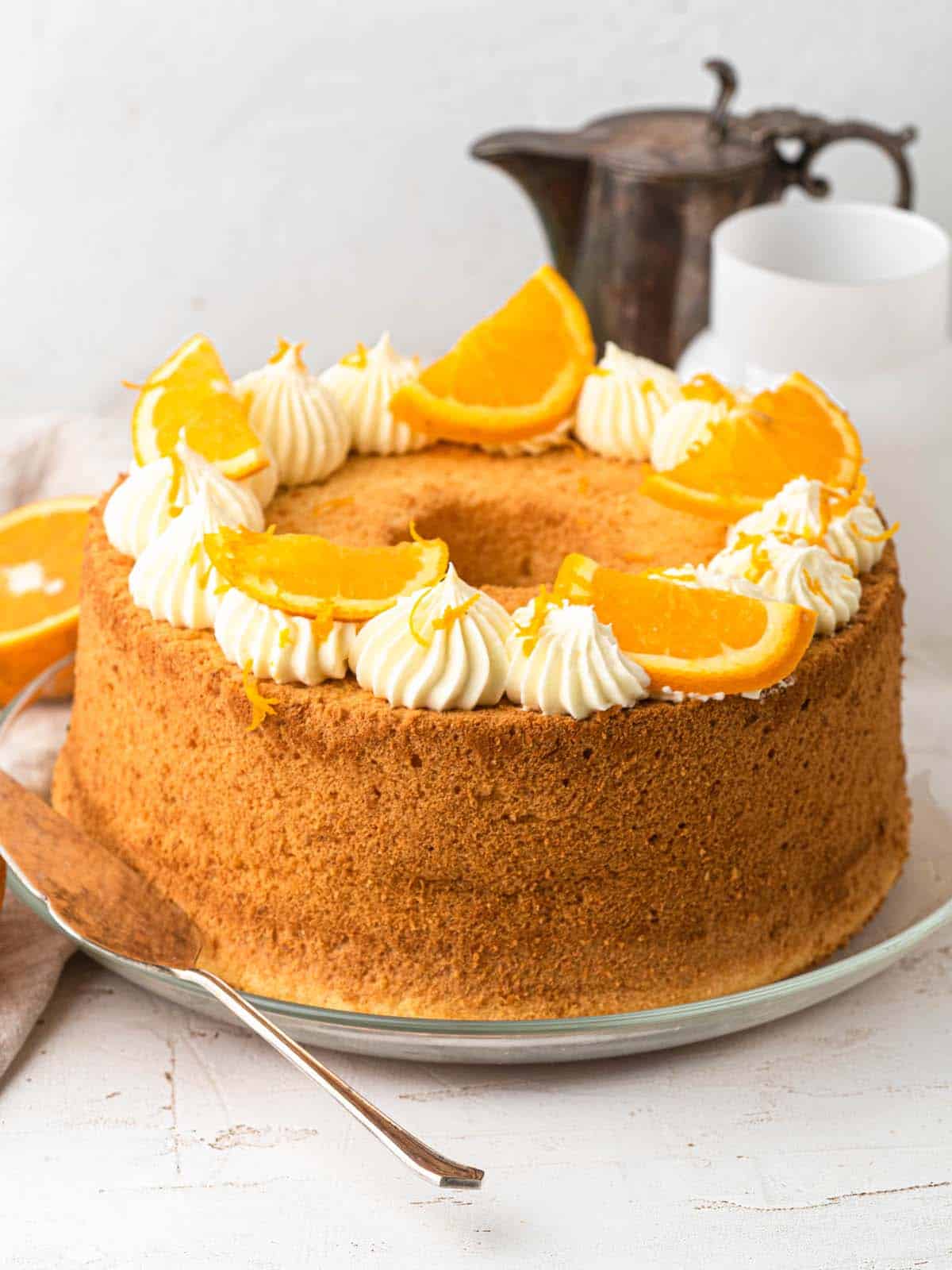
Orange chiffon cake shares the same structure, but the mood is different. Where lemon is crisp, orange is warm. Think afternoon light instead of morning sun.
Orange zest releases fragrant oils that smell almost floral. The juice adds sweetness without sharp acidity. The crumb feels slightly more plush, though still light as air. It melts slowly, coating your palate with gentle citrus notes.
I often describe orange chiffon as comforting. It’s familiar and soft-spoken. Perfect with coffee, or served as part of a relaxed brunch spread. The flavor lingers without demanding attention.
Because orange is naturally sweeter, the sugar balance shifts subtly. You don’t need as much acidity to wake it up. That’s why orange chiffon cake pairs beautifully with whipped cream or fresh berries.
You can explore my orange version here: Orange Chiffon Cake
If you enjoy soft sponge textures, you might also love my matcha sponge cake. It uses a similar foam technique with a deeper, tea-like aroma.
Main Differences Between Lemon Chiffon Cake and Orange Chiffon Cake
- Flavor profile
Lemon is sharp, zesty, and refreshing.
Orange is mellow, fragrant, and sweet. - Acidity
Lemon juice brings noticeable tang.
Orange juice offers gentle brightness. - Aroma
Lemon smells clean and crisp.
Orange smells warm and floral. - Perceived sweetness
Lemon tastes less sweet overall.
Orange feels naturally sweeter. - Serving style
Lemon shines on hot afternoons.
Orange suits brunch and gatherings.
Both cakes share the same airy crumb, thanks to whipped egg whites and oil-based batter. Yet the eating experience is different. Lemon wakes you up. Orange wraps you in softness. That’s the magic of citrus.
Which One Should You Make?
Choose lemon chiffon cake when you want something refreshing. It’s perfect after a barbecue, a beach picnic, or a heavy meal. I often bake it for summer afternoons, served plain with iced tea and quiet conversation.
Choose orange chiffon cake when you want comfort without heaviness. It’s lovely for brunch tables, birthdays, or when baking for people who prefer gentle flavors. I’ve served it with barely sweetened cream, and it disappears quickly.
If you’re undecided, bake both. Slice them thin. Let everyone taste the contrast. Cakes like these are meant to be shared.
Final Thoughts: Citrus Lightness, Slice by Slice
The joy of lemon chiffon cake vs orange chiffon cake isn’t about choosing a winner. It’s about mood, weather, and the people around your table. One offers sparkle. The other offers warmth. Both remind us that light cakes can still feel deeply satisfying.
If you’re in a citrus mood, keep exploring. I think you’ll also enjoy my lemon drizzle cake for a denser, syrup-soaked option.
And if chiffon has captured your heart, my chocolate chiffon cake shows how cocoa transforms this airy classic.
Bake slowly. Zest generously. And let summer do the rest.
Frequently Asked Questions
Can I use regular flour instead of cake flour?
Yes, but cake flour gives a finer, softer crumb.
Is chiffon cake dairy-free?
Most chiffon cakes use oil, so they’re naturally dairy-free.
Can I make it gluten-free?
You’ll need a tested gluten-free blend. Texture will change slightly.
Can I add poppy seeds or berries?
Yes. Fold them in gently at the end.
How do I store chiffon cake?
Wrap well and keep at room temperature for up to two days.
Can I freeze chiffon cake?
Yes. Freeze slices tightly wrapped, then thaw gently.