Indulge in Luk Chup (Thai Viral Dessert), glossy mung bean fruits bursting with sweet, silky delight!
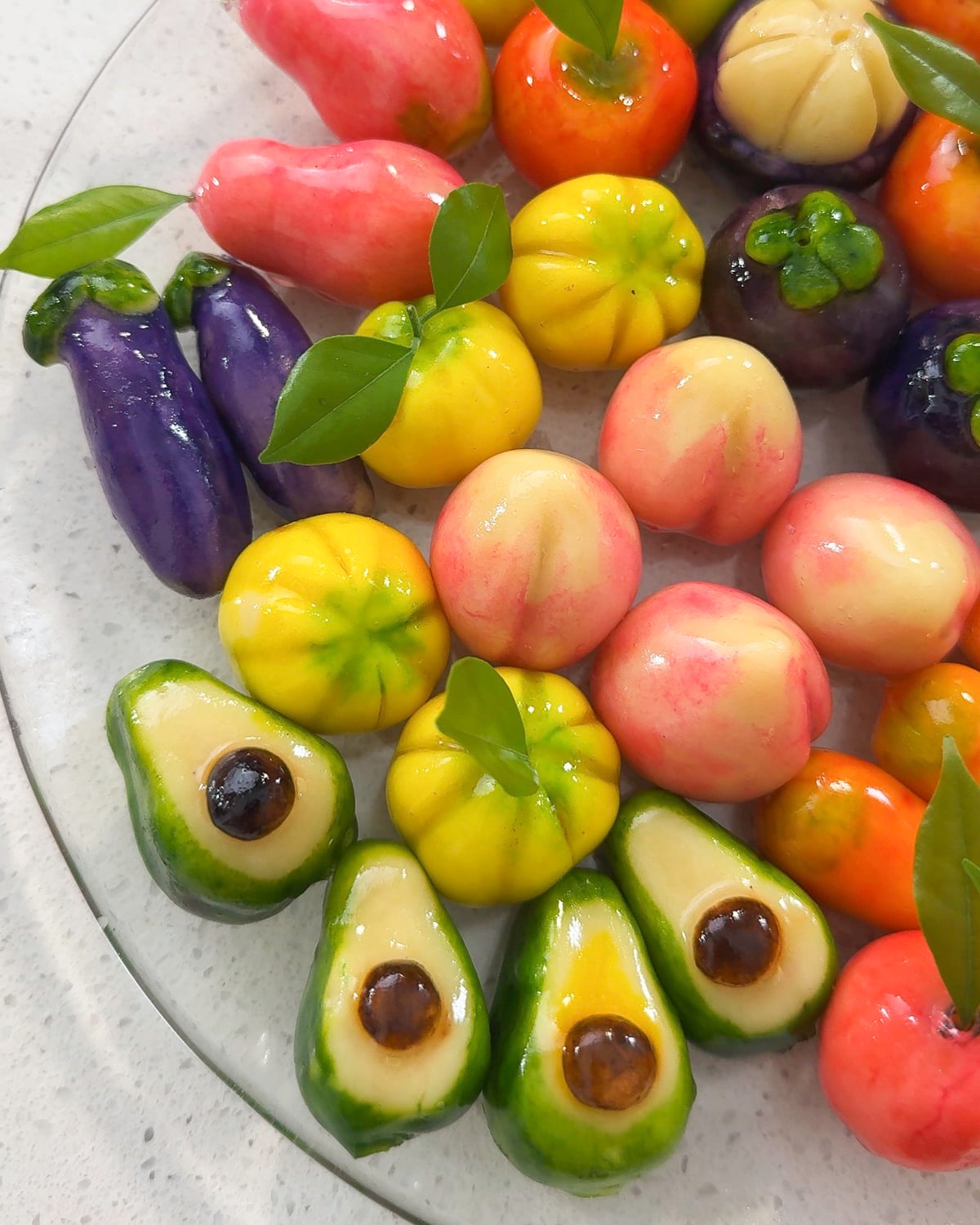
Okay, I need you to stop what you are doing and look at these. LOOK. AT. THEM. Luk chup are the most impossibly cute, jaw-droppingly detailed little Thai desserts, teeny-tiny replicas of fruits and veggies, all made from the most pillowy mung bean paste you have ever tasted and glazed in a clear, jewel-bright agar coating that makes them look like they belong in a miniature jewellery store.
What is Luk Chup
Luk Chup is a traditional Thai dessert made from sweet mung bean paste. The paste is shaped into tiny fruits or vegetables, then hand-painted and coated in a glossy agar jelly. It’s often compared to marzipan, but it’s lighter, softer, and has a gentle coconut flavour instead of almond.
Where is Luk Chup From:
Luk Chup comes from Thailand, where it was first made in royal kitchens. It was inspired by Portuguese sweets but adapted using local ingredients like mung beans and coconut milk.
How to make it
To make Luk Chup, you cook mung beans until soft, then blend them into a smooth paste with coconut milk and sugar. The paste is shaped into small fruit designs, painted with food colouring, and finished with a clear agar coating for shine and texture.
At-a-Glance, What You’ll Need Before We Start Rolling
| Yield | Prep Time | Cook Time | Difficulty | Storage |
|---|---|---|---|---|
| 40 to 50 small pieces | 45 minutes | 30 Minutes hours | Intermediate | Fridge for up to 3 days in airtight container |
Ingredients
Mung Bean Paste
- Dried split mung beans (yellow, hulled), Forms the base of the filling, giving structure and a naturally smooth texture.
- Full-fat coconut milk, Adds richness, creaminess, and a subtle tropical flavor to the paste.
- Caster sugar, Sweetens the filling while helping create a soft, melt-in-the-mouth consistency.
- Pandan paste / fresh pandan leaves, Provides the signature aroma, flavor, and light green tint.
- Fine salt, Balances sweetness and enhances overall flavor.
- Tapioca starch, Improves binding and elasticity so the paste holds its shape when molded.
Agar Glaze
- Agar-agar powder, Creates a glossy, firm coating that mimics the natural shine of fruits.
- Water, Acts as the base for dissolving and activating the agar glaze.
- Caster sugar (for glaze), Adds a slight sweetness and enhances the shine of the coating.
- Pinch of salt (for glaze), Subtly balances the glaze’s sweetness.
For Decorating:
- Gel food colouring, Gives vibrant, realistic fruit-like colors to the sweets.
- Fine-tip food-safe paintbrushes, Allows precise detailing and shading for lifelike decoration.
- Toothpicks or skewers, Helps dip and handle pieces neatly during glazing.
- Artificial leaf picks / pandan stems, Adds decorative finishing touches for a realistic presentation.
- Foam block or colander, Supports pieces upright while the glaze sets and dries.
Steps
Soak and steam the mung beans
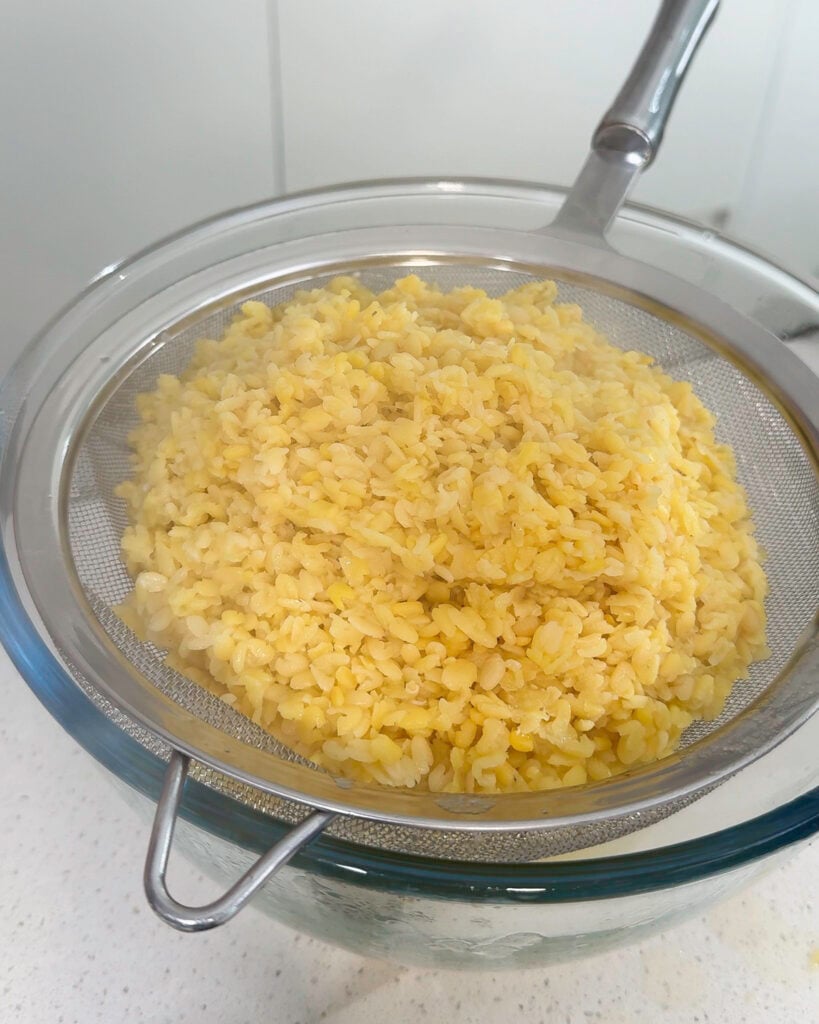
Drain your soaked mung beans and rinse them under cold water. Spread them in a single layer in a heatproof bowl or steamer basket and steam over medium-high heat for 20 to 25 minutes, until completely tender and soft when pressed. They should squish between your fingers with zero resistance, no chalky bits!
Blend into a smooth paste
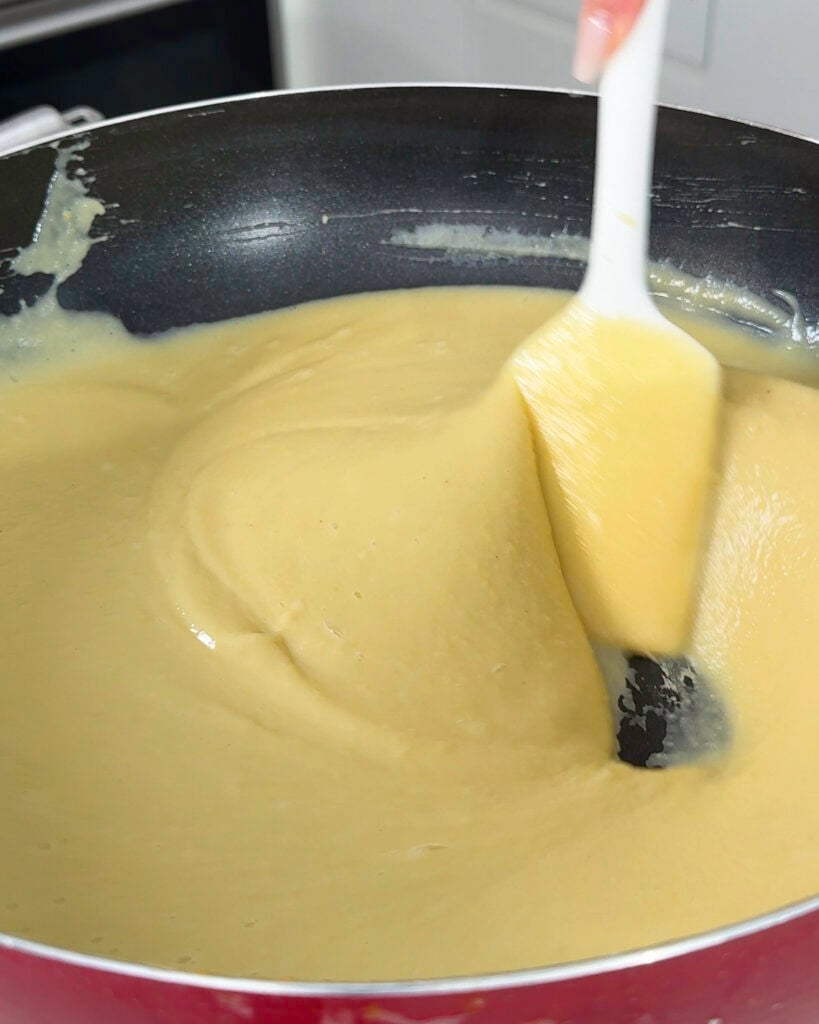
While the beans are still warm, add them to a food processor or blender along with the coconut milk, pandan paste, sugar, and salt. Blitz until you have an ultra-smooth, silky paste, almost like thick hummus. Scrape down the sides and keep blending until there are absolutely no lumps. (A high-powered blender gives the SMOOTHEST result here.)
Cook the paste
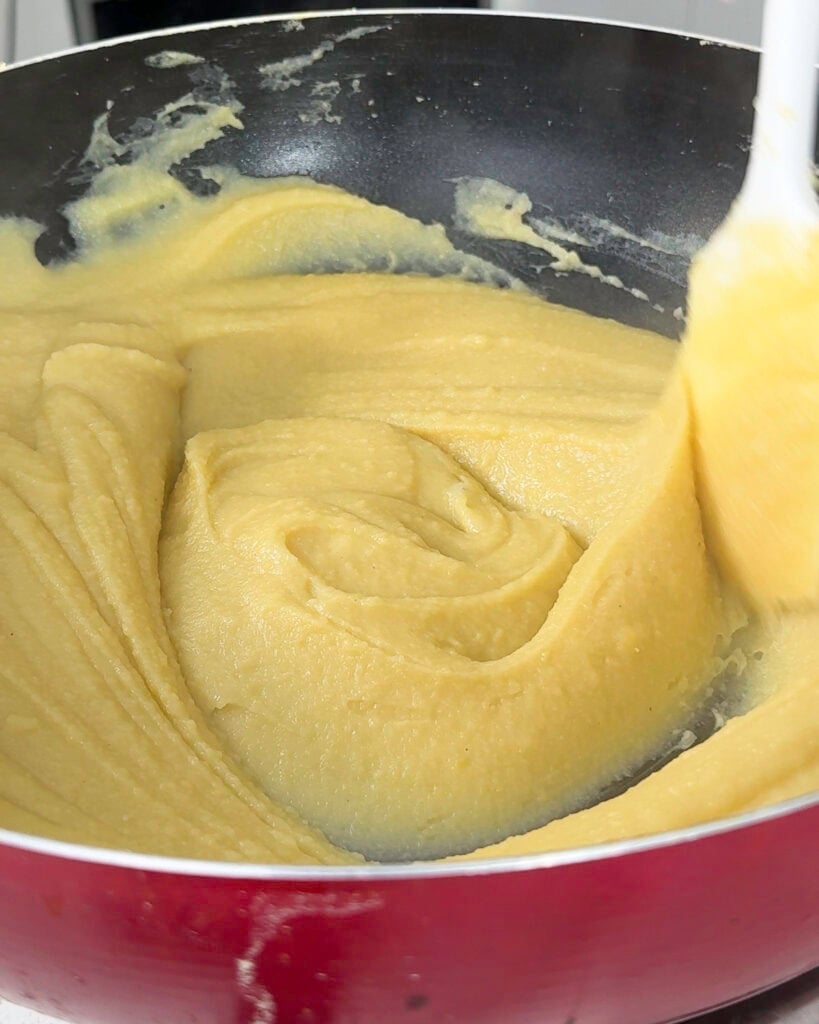
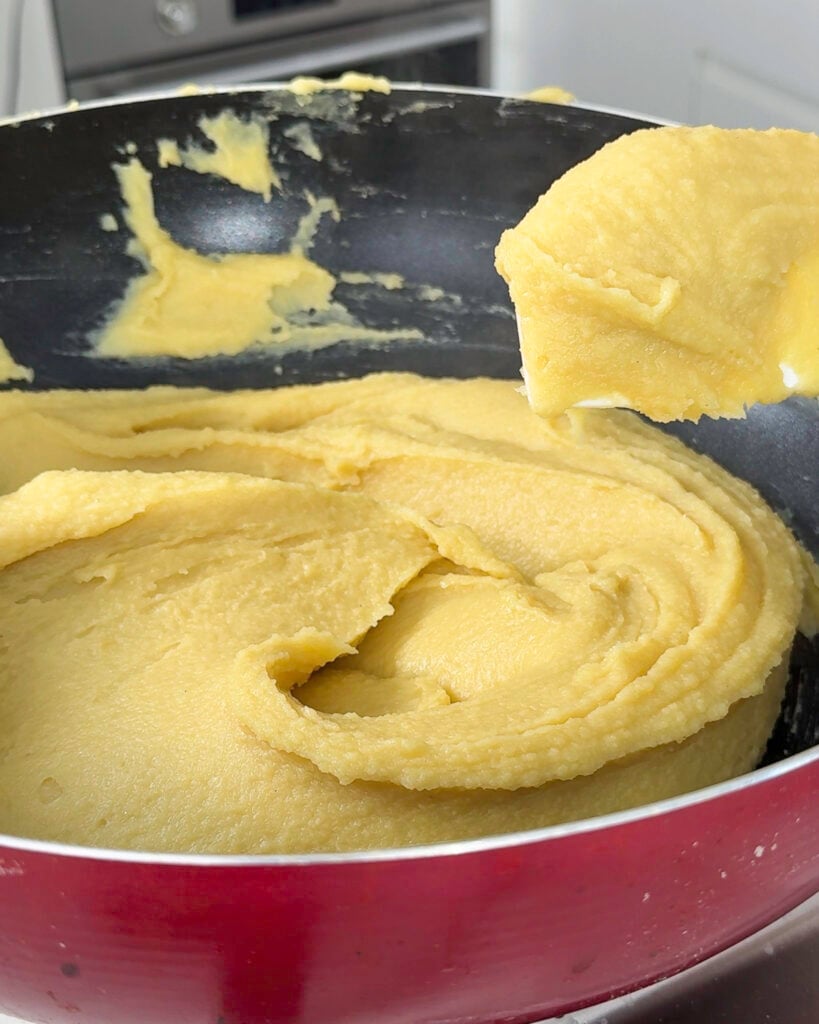
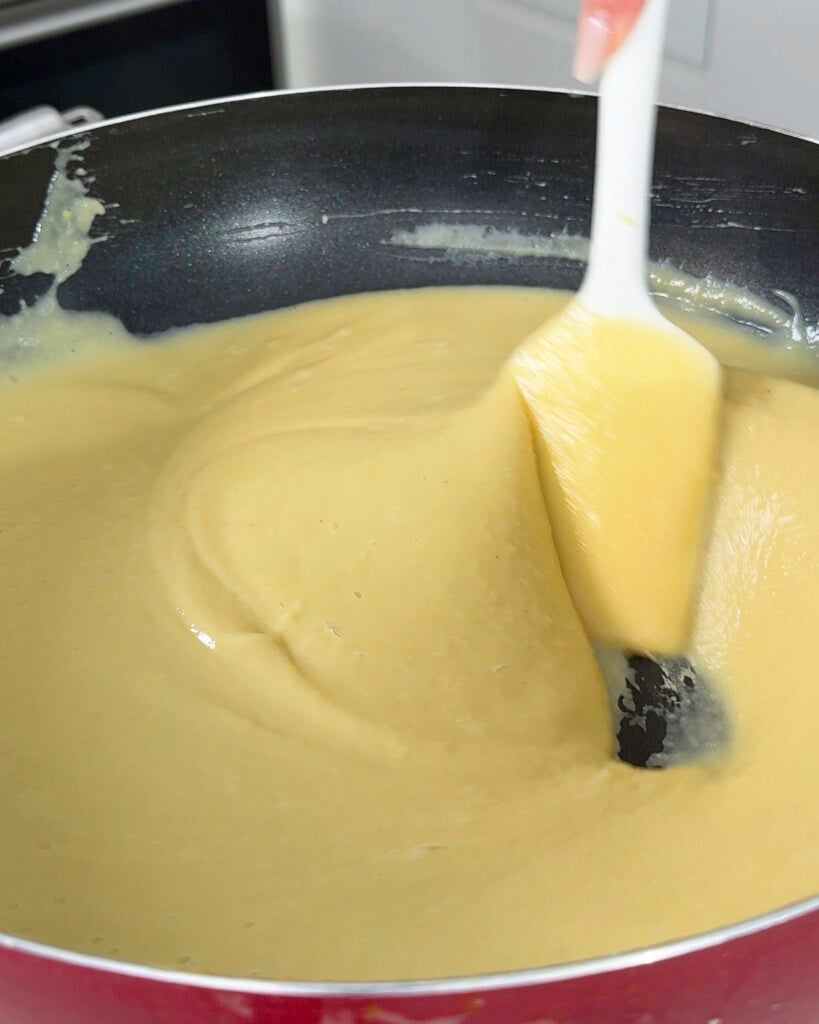
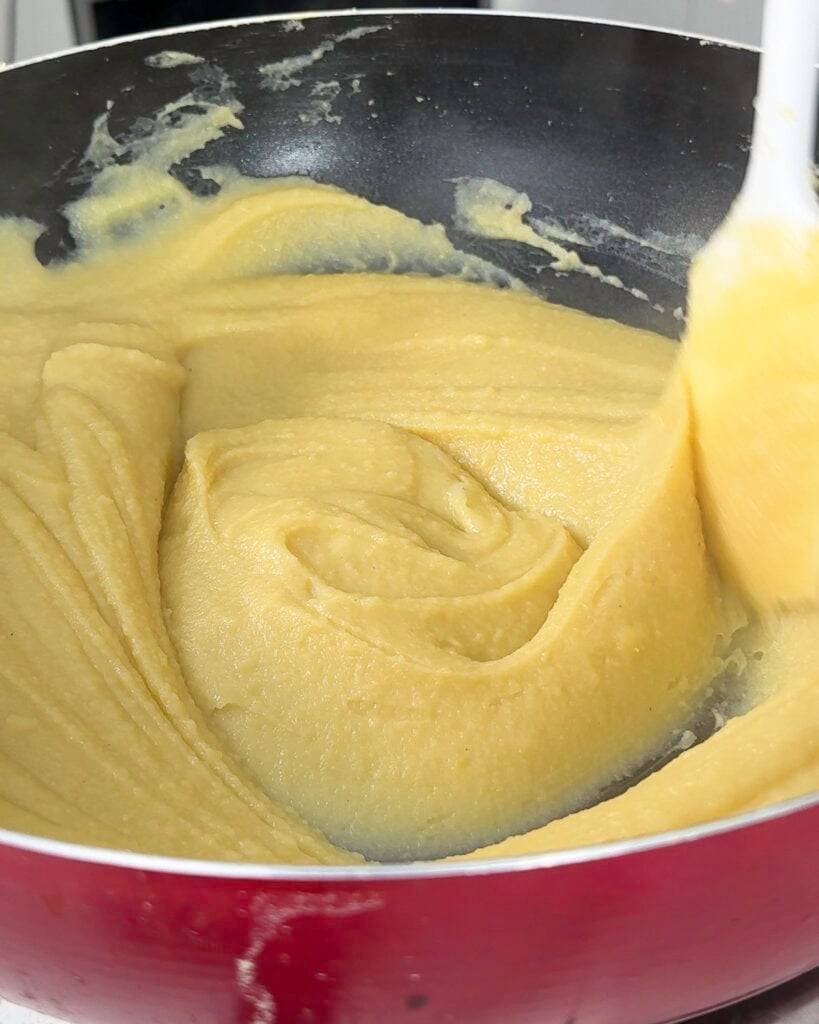
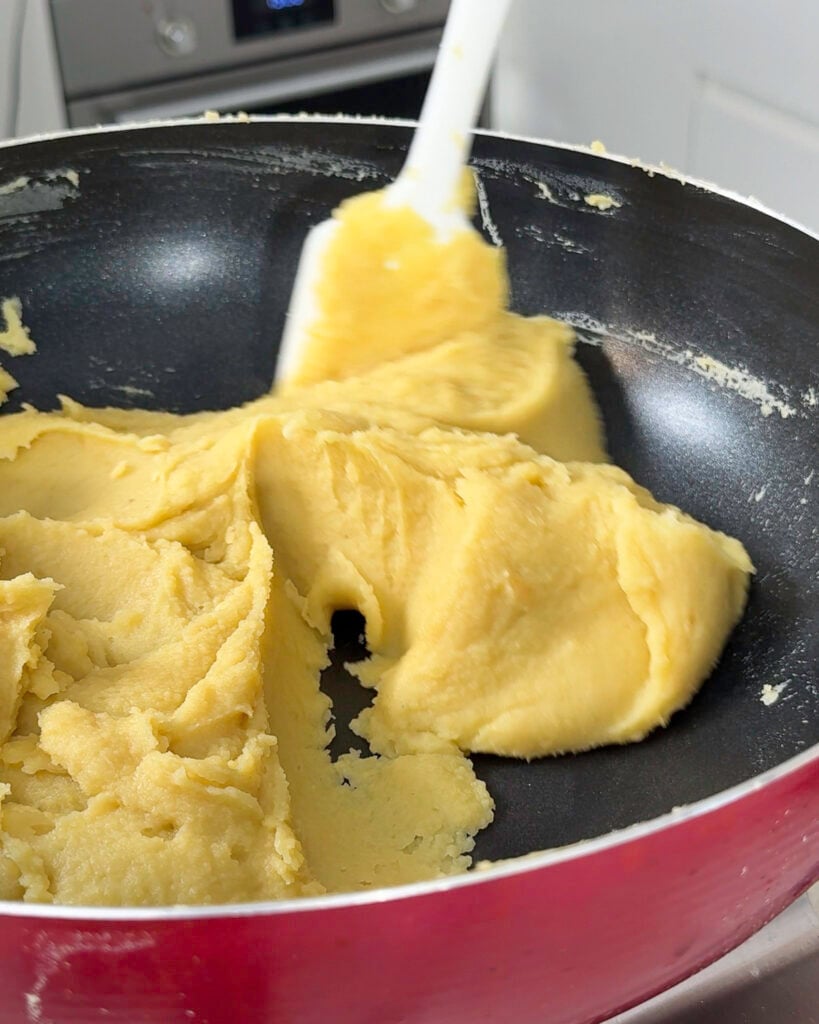
Transfer the blended paste to a non-stick pan or wok over low-medium heat. Add the tapioca starch and stir continuously with a spatula for 10 to 15 minutes. This step is crucial, the paste will start out quite wet and loose, and as you cook it, it will thicken, pull away from the sides of the pan, and start looking more like a soft dough. You’ll know it’s ready when it holds its shape when you drag the spatula through it and the paste doesn’t immediately flood back in.
Transfer to a plate, cover with cling film pressed directly onto the surface, and leave to cool completely to room temperature. The paste will firm up further as it cools.
Shape your fruits
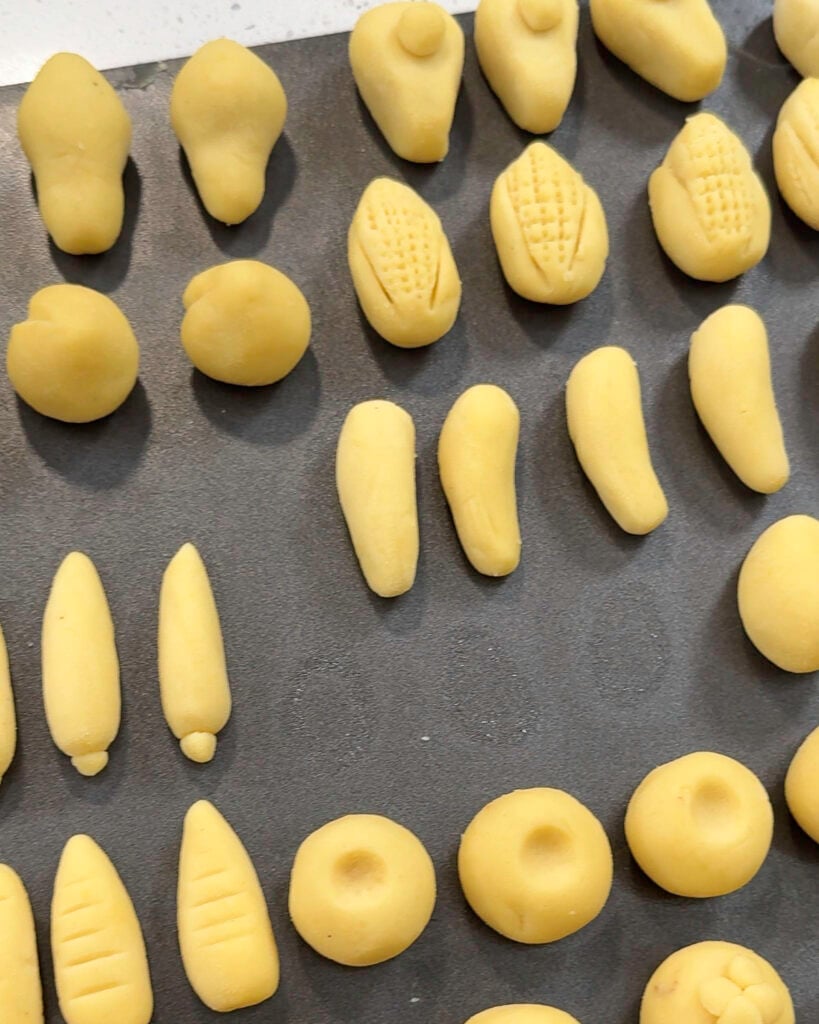
Once cooled, the paste should feel soft, pliable, and slightly tacky, almost like the world’s most delicious playdough. Lightly grease your palms with a tiny drop of neutral oil. Pinch off roughly 1 teaspoon of paste at a time (about the size of a large blueberry, remember, these are MINI!) and shape it into your chosen fruit.
Classic shapes to try:
- Orange / tangerine: Roll into a smooth ball, press lightly to flatten the base, poke a small indent in the top with a toothpick
- Banana: Shape into a gentle crescent with tapered ends
- Strawberry: Form a rounded teardrop, drag a toothpick lightly across the surface to create seed texture
- Corn: Roll into a stubby cylinder, use a toothpick to press rows of tiny kernel indentations all over
- Chilli: Roll into a thin tapered tube, curve one end slightly
- Eggplant / aubergine: Rounded teardrop, slightly flattened base
Place shaped pieces on a lined tray and refrigerate for 15 to 20 minutes to firm up before painting.
Step 5, Paint with food colouring
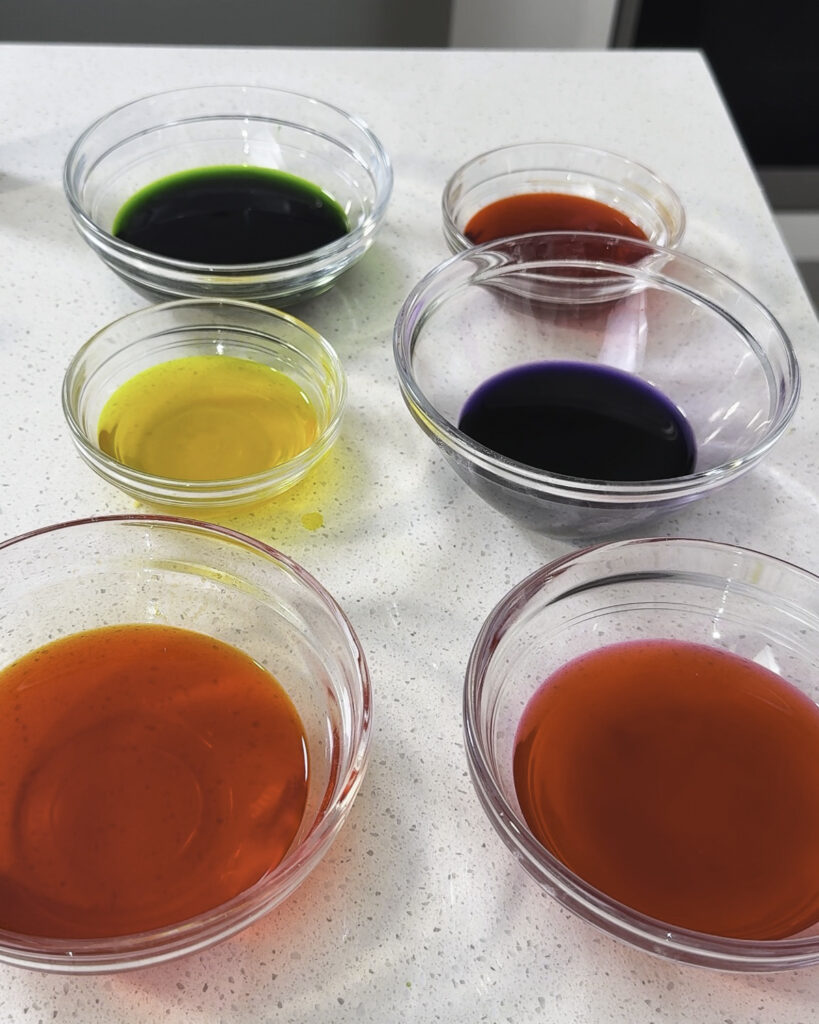
This is the fun part! Mix your gel food colours with tiny drops of water on a palette or plate to create the shades you need. Use your finest brush and build up the colour in thin layers, it’s much easier to add colour than to remove it. For realistic-looking pieces:
- Add deeper shading on one side to create dimension
- Use a clean damp brush to soften and blend edges
- Layer yellow under orange for a more natural tangerine look
- Stipple green dots over red for strawberry seeds
Let each piece dry for a few minutes before moving on to the glaze.
Step 6, Make the agar glaze
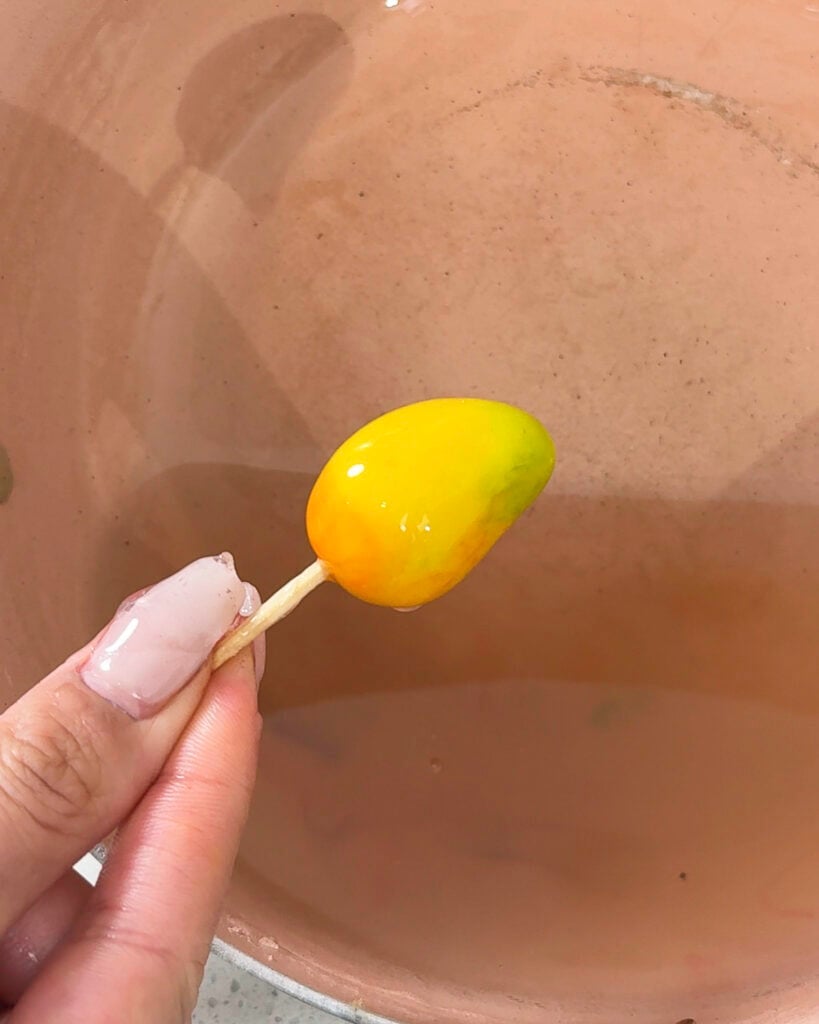
In a small saucepan, whisk together the agar powder, water, sugar, and salt. Bring to a gentle boil over medium heat, whisking continuously, and simmer for 1 to 2 minutes until the agar is fully dissolved. Reduce heat to the very lowest setting to keep the glaze warm and liquid, agar sets FAST at room temperature, so you need to work quickly.
(Pro tip: if the agar starts to set in the pot before you’re finished, simply reheat it gently over low heat and it will liquefy again, agar is very forgiving!)
Step 7, Dip and glaze
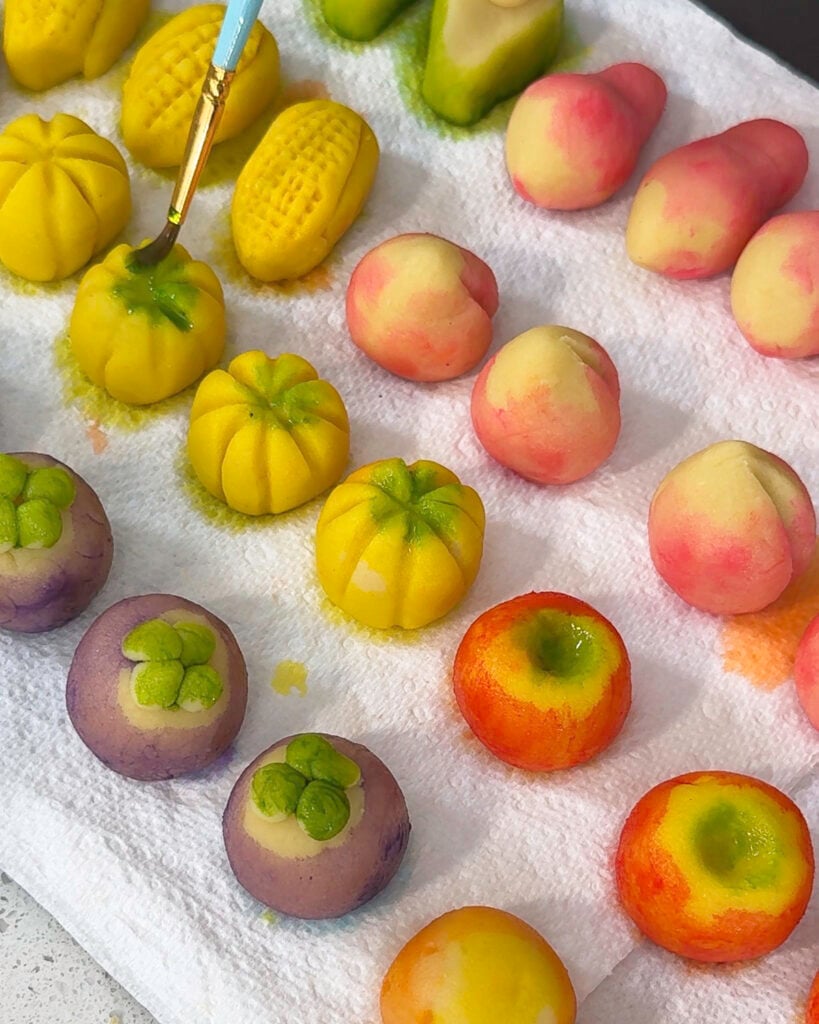
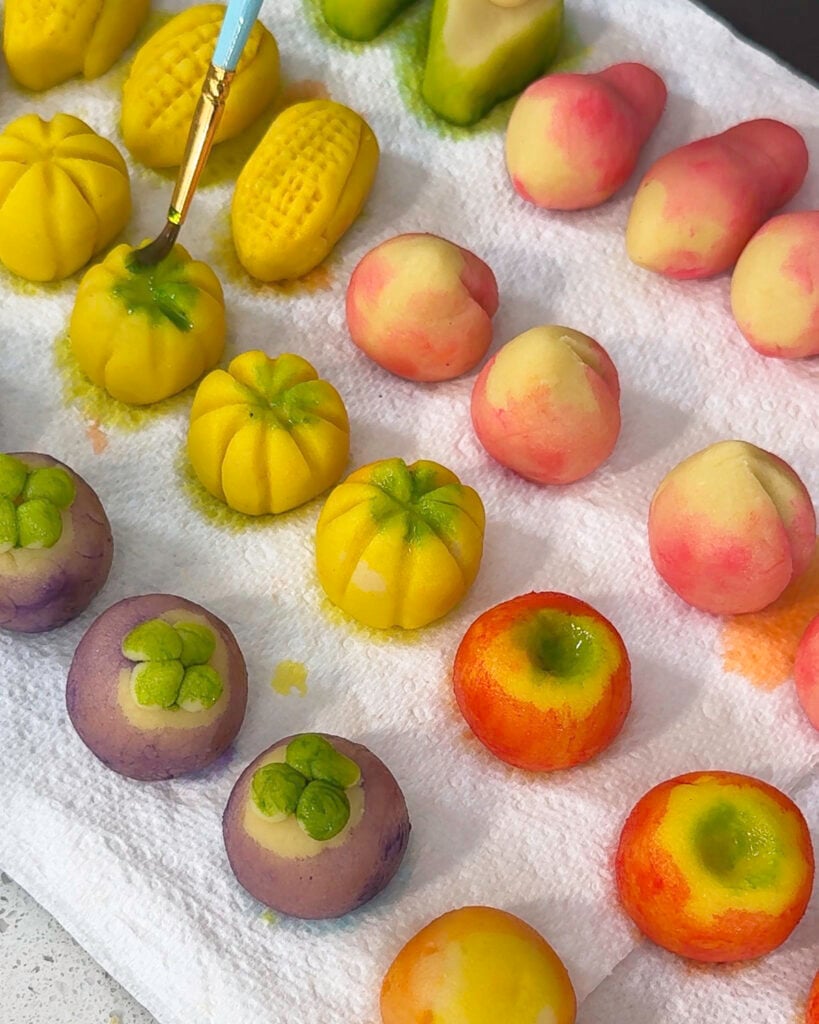
Spear each painted fruit shape onto a toothpick through the base. Dip it smoothly into the warm agar glaze, letting the excess drip off for a second or two, then stand it upright in your foam block or colander to set. The coating will turn glossy and set in under a minute. Dip each piece twice for a thicker, more polished finish.
Add any stems or leaf picks while the second coat of agar is still slightly tacky so they stick in place.
Step 8, Arrange and serve
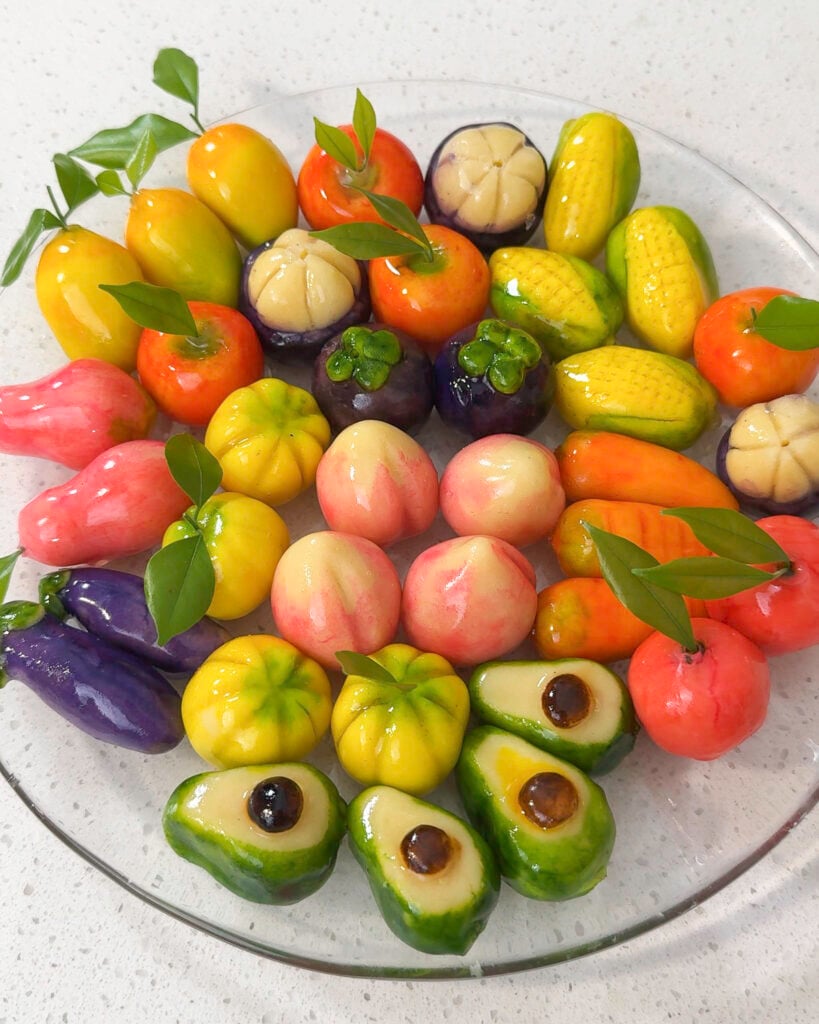
Once all pieces are fully set, carefully remove the toothpicks and arrange your luk chup on a serving plate or in little paper candy cups. Try to present them on a dark or contrasting surface, the colours pop BEAUTIFULLY against black slate or dark wood.
Serve at room temperature or lightly chilled. Stand back and accept every compliment.
Troubleshooting, Quick Fixes I’ve Learned from My Bakery Kitchen
| Issue | What’s Happening | Quick Fix |
|---|---|---|
| Paste too soft to shape | Too much moisture or undercooked paste | Cook longer on low heat until thick and holds shape |
| Cracks while shaping | Paste too dry | Add a small splash of coconut milk and knead gently |
| Colours look dull | Not enough pigment or uneven layering | Use gel food colouring and build colour slowly |
| Agar coating melts shapes | Agar too hot when dipping | Let agar cool slightly before coating |
| Sticky surface after coating | Agar layer too thin or uneven | Dip twice for a smoother, glossy finish |
Comparison, How This Recipe Stacks Up Against Other Desserts
| Dessert | Texture & Taste | Effort Level |
|---|---|---|
| Luk Chup | Smooth, lightly sweet, creamy inside with soft jelly shell | Medium (more shaping and detail work) |
| Marzipan Fruits | Dense, nutty, sweeter almond flavour | Easy to medium |
| Mochi Sweets | Chewy outside, soft filling inside | Medium (requires handling sticky dough) |
Tips, My Personal Tricks for a Professional-Looking Result
Use a super smooth mung bean paste
When I first tested this Thai Luk Chup recipe at TuCha, I rushed the blending step and ended up with grainy Luk Chup dessert pieces. Blend until completely silky. A smooth mung bean paste dessert is what gives that clean, polished finish.
Cook the paste until it holds its shape
This is the step most people underestimate. Your sweet mung bean paste should feel like soft dough, not mash. If it sticks to your hands, keep cooking gently until it firms up.
Work with slightly warm paste
Cold paste cracks, and I’ve learned that the hard way during a busy prep day. Slightly warm paste is easier to shape into Thai fruit shaped sweets. It gives you better control for those tiny details.
Use gel colours, not liquid
For proper Thai confectionery art, gel colours give stronger, cleaner shades. Liquid colours can water down your mock fruit dessert and ruin the texture. Less is more, and layering colour makes it look more real.
If you enjoy intricate dessert craftsmanship, the delicate pulling technique in Dragon’s Beard Candy is another beautiful example of edible artistry.
Let the agar cool before dipping
The agar coating process is delicate. If the agar is too hot, your miniature fruit sweets can melt or lose shape. Let it cool slightly so you get that perfect agar jelly coating.
Double glaze for that glossy finish
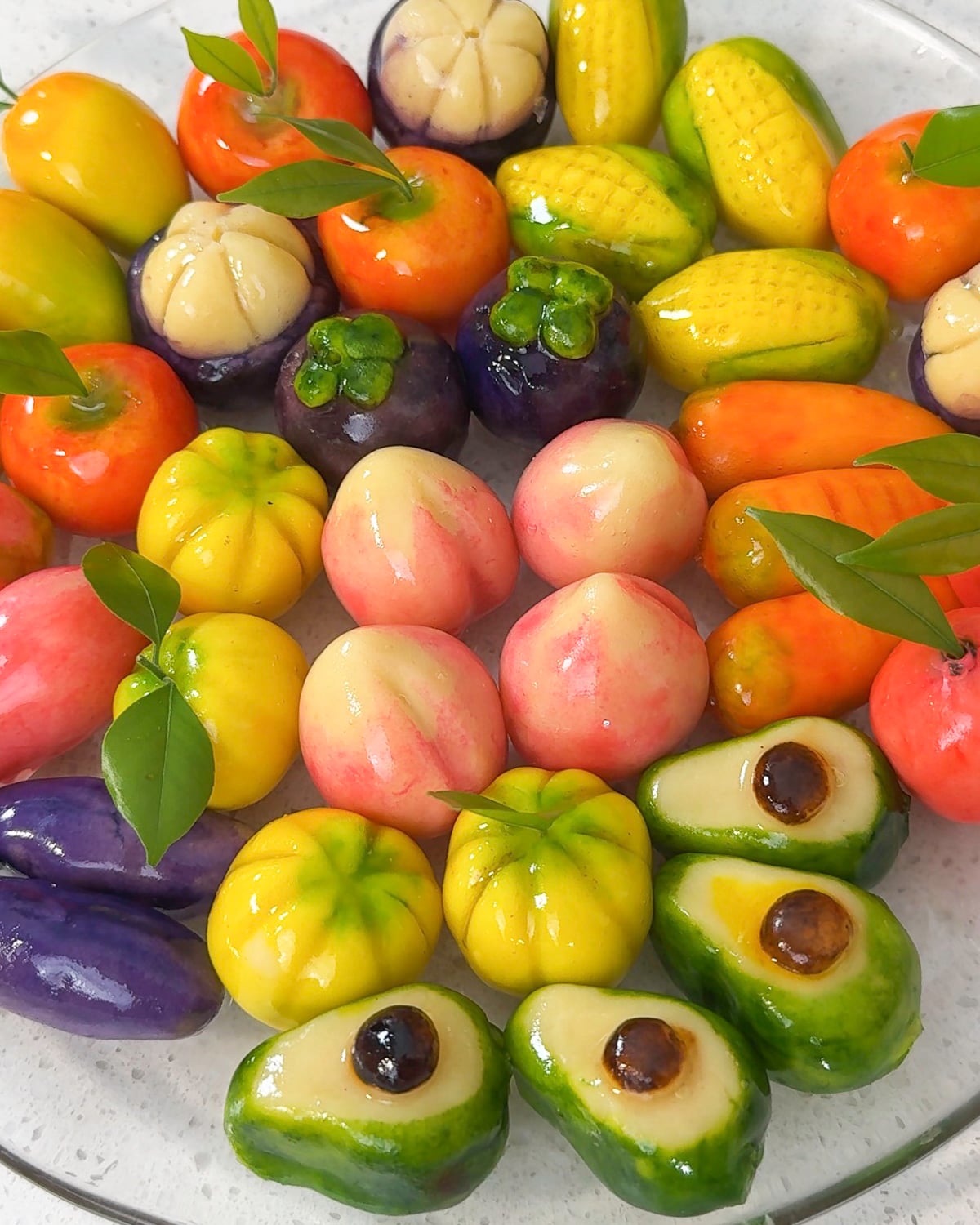
In the shop, we always dip twice for a proper glazed fruit dessert look. The first layer seals, the second creates that signature shine. It’s what makes Luk Chup feel like edible fruit sculptures.
For another stunning glossy dessert, these crystal-clear Kohakutou candies shimmer like edible gems and use a similar jelly technique.
Variations, Fun Twists and Flavours Inspired by Dessert Experiments
Pandan coconut Luk Chup dessert
I love adding pandan to the mung bean coconut dessert for a soft, fragrant twist. It gives a gentle green hue and a sweet coconut flavour dessert vibe that feels very Southeast Asian sweets inspired.
Chocolate filled mini fruit dessert Thai
One time at TuCha, we tested a chocolate centre inside the mung bean filling dessert. It’s unexpected, but the creamy coconut dessert pairs surprisingly well with a rich chocolate core.
Matcha Thai marzipan dessert
For a more modern take, mix matcha into your mung bean marzipan. It adds a slight bitterness that balances the sweetness, making it a great option for a refined Thai vegan dessert.
Coffee infused Kanom Luk Chup
This was inspired by late nights during filming. A light coffee flavour in the sweet bean paste Thai base gives depth and makes it feel more grown-up, almost like a café-style Thai dessert recipe.
Tropical fruit flavours
Add mango or passionfruit essence to create a brighter Thai festive dessert. It enhances the fruity illusion and makes your fruit shaped confectionery even more convincing.
If you love tropical desserts, this silky Mango Pudding delivers that same fresh, fruity finish in a creamy spoonable form.
Vegan and low sugar version
This Thai mung bean dessert is naturally a gluten free Thai dessert. You can reduce sugar slightly or swap for alternatives without losing the smooth Thai dessert texture.
Serving Suggestions, How I Like to Present These for Maximum ‘Wow’
Arrange like a fruit basket
At events, I plate these miniature fruit sweets in a small basket. It looks like real fruit at first glance, which makes the reveal even more fun.
Serve on a white ceramic plate
A clean plate really highlights the colourful Thai dessert. The contrast makes the dessert glazing technique and hand painted dessert details stand out.
Pair with tea or bubble tea
At TuCha, we serve Luk Chup dessert with light teas or bubble tea. The soft, creamy texture balances beautifully with refreshing drinks.
Gift box presentation
These are perfect Thai dessert for gifting. Arrange them neatly in boxes with paper dividers so each piece looks like a handcrafted dessert sweet.
Add edible leaves for realism
Sometimes I add mint leaves around the plate. It enhances the Thai dessert presentation and makes the edible fruit sculptures look even more lifelike.
Party dessert Thai style
For parties, I serve them as bite-sized decorative dessert items. They’re small, neat, and perfect as Thai snack sweets guests can pick up easily.
Common Mistakes to Avoid, Lessons I’ve Learned After Dozens of Batches
Skipping the soaking step
If you don’t soak the beans properly, your steamed mung bean paste won’t soften evenly. This affects the final Thai dessert texture smoothness.
Undercooking the paste
A soft paste won’t hold shape. I’ve had batches collapse during shaping, especially when making detailed Thai dessert decoration pieces.
Overloading with food colouring
Too much colour can make your food coloring dessert art look artificial. Build colour slowly for a more natural fruit look.
Dipping in hot agar
This is a big one. Hot agar can melt your shaped dessert sweets and ruin hours of work. Always let it cool slightly.
Rushing the shaping process
Mini fruit modeling takes patience. If you rush, your Thai dessert craftsmanship won’t look clean or realistic.
Not storing properly
These jelly coated sweets can dry out or sweat. Keep them in an airtight container in the fridge and bring to room temp before serving.
Frequently Asked Questions
Is Luk Chup dessert vegan?
Yes, most versions of this Thai vegan dessert are naturally plant-based. It uses mung bean puree dessert, coconut milk, and agar agar dessert coating instead of gelatin.
How long does Luk Chup last?
In my experience, homemade Thai sweets stay fresh for about 2–3 days in the fridge. Keep them sealed to maintain that glossy agar coating.
Can I freeze Luk Chup?
I wouldn’t recommend it. The agar jelly coating doesn’t hold well after freezing, and the texture of the mung bean paste dessert can change.
Why is my mung bean paste grainy?
This usually means it wasn’t blended enough. For a proper Thai marzipan dessert texture, it needs to be completely smooth before cooking.
Is this an authentic Thai dessert?
Yes, this is an authentic Thai dessert known as Kanom Luk Chup. It’s part of traditional Thai sweets and has roots in Thai royal dessert culture.
Is Luk Chup good for special occasions?
Absolutely. It’s often made as a Thai New Year dessert or Songkran dessert. It also works beautifully as a party dessert Thai style or for gifting.
Let’s Get Cooking
If you liked this recipe make sure to leave me a comment and rating down below. I’d love to know how it went! Also, don’t forget to tag me on Instagram @catherine.desserts.
Follow me on Facebook, Pinterest, YouTube, and TikTok for more of my baking creations and updates!
Luk Chup (Viral Thai Dessert)
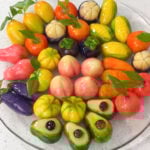
Indulge in Luk Chup (Thai Viral Dessert), glossy mung bean fruits bursting with sweet, silky delight!
- Prep Time: 45 minutes
- Cook Time: 30 minutes
- Total Time: 2 hours
- Yield: 40–50 pieces 1x
- Method: Intermediate
- Cuisine: Thai
Ingredients
Mung Bean Paste:
- 200g dried split mung beans (yellow, hulled) — soaked in cold water for at least 2 hours
- 180ml full-fat coconut milk
- 130g caster sugar
- 1/2 tsp pandan paste (or 3 fresh pandan leaves, blended and strained)
- 1/4 tsp fine salt
- 1 tbsp tapioca starch — helps the paste hold its shape
Agar Glaze:
- 1 tsp agar-agar powder (NOT gelatine — agar sets at room temperature!)
- 250ml water
- 1 tbsp caster sugar
- Tiny pinch of salt
For Decorating:
- Gel food colouring in: red, yellow, green, orange, purple (gel colours give the most vivid, true-to-life results)
- Fine-tip food-safe paintbrushes (the smaller the better!)
- Toothpicks or short wooden skewers — for dipping pieces into the agar glaze
- Artificial leaf picks or small dried pandan leaf stems — for finishing touches (optional but so adorable)
- A block of foam or an upturned colander — for standing dipped pieces upright while they dry
Instructions
Step 1 — Soak and steam the mung beans
Drain your soaked mung beans and rinse them under cold water. Spread them in a single layer in a heatproof bowl or steamer basket and steam over medium-high heat for 20–25 minutes, until completely tender and soft when pressed. They should squish between your fingers with zero resistance — no chalky bits!
Step 2 — Blend into a smooth paste
While the beans are still warm, add them to a food processor or blender along with the coconut milk, pandan paste, sugar, and salt. Blitz until you have an ultra-smooth, silky paste — almost like thick hummus. Scrape down the sides and keep blending until there are absolutely no lumps. (A high-powered blender gives the SMOOTHEST result here.)
Step 3 — Cook the paste
Transfer the blended paste to a non-stick pan or wok over low-medium heat. Add the tapioca starch and stir continuously with a spatula for 10–15 minutes. This step is crucial — the paste will start out quite wet and loose, and as you cook it, it will thicken, pull away from the sides of the pan, and start looking more like a soft dough. You’ll know it’s ready when it holds its shape when you drag the spatula through it and the paste doesn’t immediately flood back in.
Transfer to a plate, cover with cling film pressed directly onto the surface, and leave to cool completely to room temperature. The paste will firm up further as it cools.
Step 4 — Shape your fruits
Once cooled, the paste should feel soft, pliable, and slightly tacky — almost like the world’s most delicious playdough. Lightly grease your palms with a tiny drop of neutral oil. Pinch off roughly 1 teaspoon of paste at a time (about the size of a large blueberry — remember, these are MINI!) and shape it into your chosen fruit.
Classic shapes to try:
- Orange / tangerine: Roll into a smooth ball, press lightly to flatten the base, poke a small indent in the top with a toothpick
- Banana: Shape into a gentle crescent with tapered ends
- Strawberry: Form a rounded teardrop, drag a toothpick lightly across the surface to create seed texture
- Corn: Roll into a stubby cylinder, use a toothpick to press rows of tiny kernel indentations all over
- Chilli: Roll into a thin tapered tube, curve one end slightly
- Eggplant / aubergine: Rounded teardrop, slightly flattened base
Place shaped pieces on a lined tray and refrigerate for 15–20 minutes to firm up before painting.
Step 5 — Paint with food colouring
This is the fun part! Mix your gel food colours with tiny drops of water on a palette or plate to create the shades you need. Use your finest brush and build up the colour in thin layers — it’s much easier to add colour than to remove it. For realistic-looking pieces:
- Add deeper shading on one side to create dimension
- Use a clean damp brush to soften and blend edges
- Layer yellow under orange for a more natural tangerine look
- Stipple green dots over red for strawberry seeds
Let each piece dry for a few minutes before moving on to the glaze.
Step 6 — Make the agar glaze
In a small saucepan, whisk together the agar powder, water, sugar, and salt. Bring to a gentle boil over medium heat, whisking continuously, and simmer for 1–2 minutes until the agar is fully dissolved. Reduce heat to the very lowest setting to keep the glaze warm and liquid — agar sets FAST at room temperature, so you need to work quickly.
(Pro tip: if the agar starts to set in the pot before you’re finished, simply reheat it gently over low heat and it will liquefy again — agar is very forgiving!)
Step 7 — Dip and glaze
Spear each painted fruit shape onto a toothpick through the base. Dip it smoothly into the warm agar glaze, letting the excess drip off for a second or two, then stand it upright in your foam block or colander to set. The coating will turn glossy and set in under a minute. Dip each piece twice for a thicker, more polished finish.
Add any stems or leaf picks while the second coat of agar is still slightly tacky so they stick in place.
Step 8 — Arrange and serve
Once all pieces are fully set, carefully remove the toothpicks and arrange your luk chup on a serving plate or in little paper candy cups. Try to present them on a dark or contrasting surface — the colours pop BEAUTIFULLY against black slate or dark wood.
Serve at room temperature or lightly chilled. Stand back and accept every compliment.