A restaurant style mango lassi recipe that comes out thick and creamy instead of thin and frothy, and the difference is one small change to how you use the blender.
Most mango lassi recipes tell you to put everything in the blender and press go. That is why most homemade lassi is disappointing. It comes out pale, airy and a bit watery, nothing like the heavy, spoon coating glass you get at a good Indian restaurant, and people tend to blame the mango when the blender was the problem.
Yogurt does not like being blended at speed. The blades shear it, the structure breaks down, and what was thick becomes thin while air gets whipped into it at the same time. The fix is to puree the mango completely on its own first, then add the yogurt and pulse only a few times to bring it together. Same ingredients, same equipment, completely different drink.
What makes a mango lassi thick instead of frothy
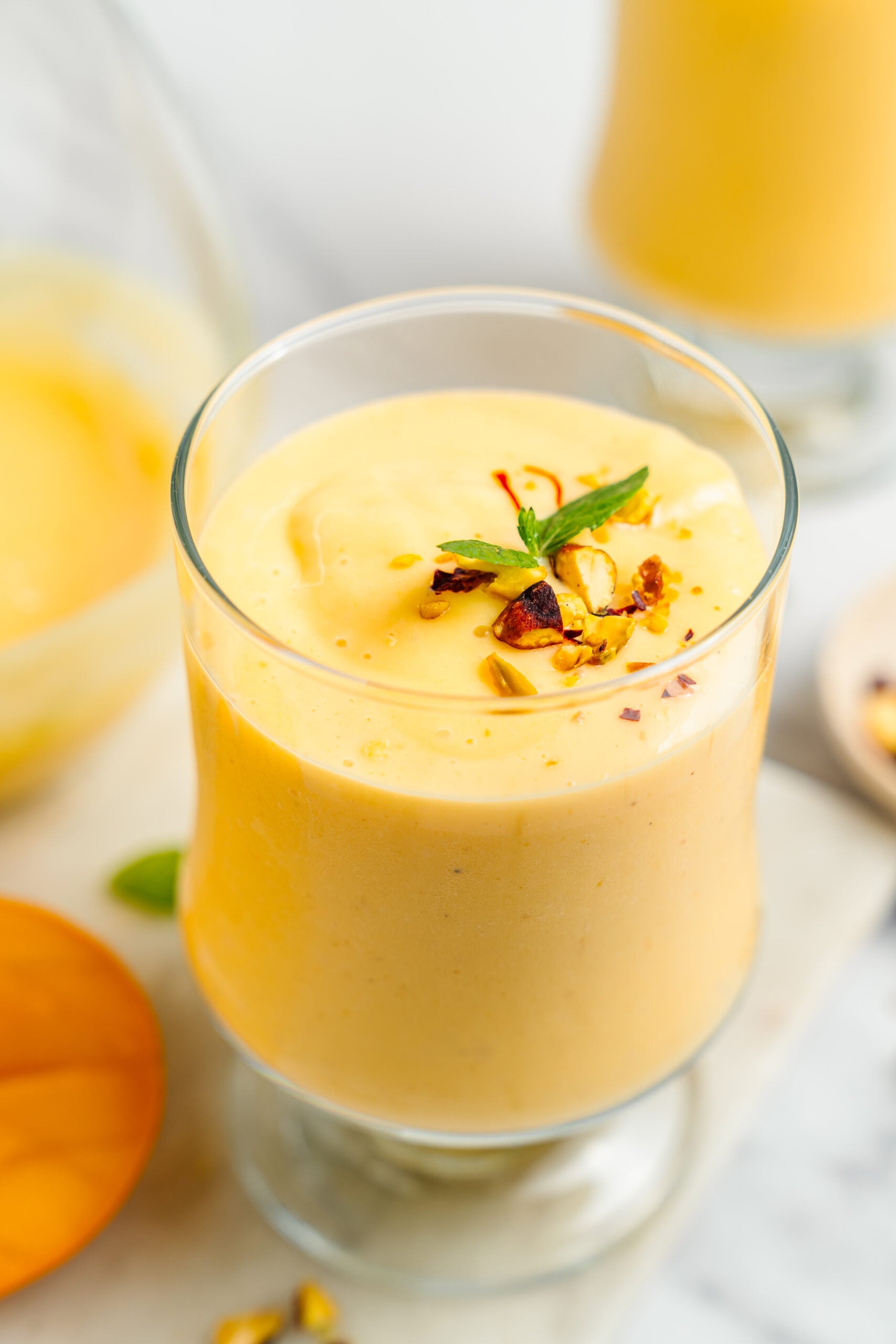
Thickness in a lassi comes from three places: the fruit, the fat and the air. The fruit should be ripe, low fibre mango with a deep orange flesh, blended until there is not a thread left in it. The fat should be plain full fat yogurt, which carries flavour and gives body that low fat yogurt simply cannot. And the air should not be there at all.
That last one is where the technique earns its keep. Thirty seconds on high for the mango alone, then three or four short pulses once the yogurt and milk go in, and you stop the moment the colour is even. If you can see foam forming on the surface in the jug, you have already gone too far. Whisking it by hand afterwards will not put the thickness back.
Cardamom and a pinch of salt do the rest. The cardamom is what makes it taste like a lassi rather than a mango smoothie, and the salt is the thing almost everyone leaves out. A lassi that tastes bland usually needs salt far more than it needs sugar.
Ingredients and what each one is doing
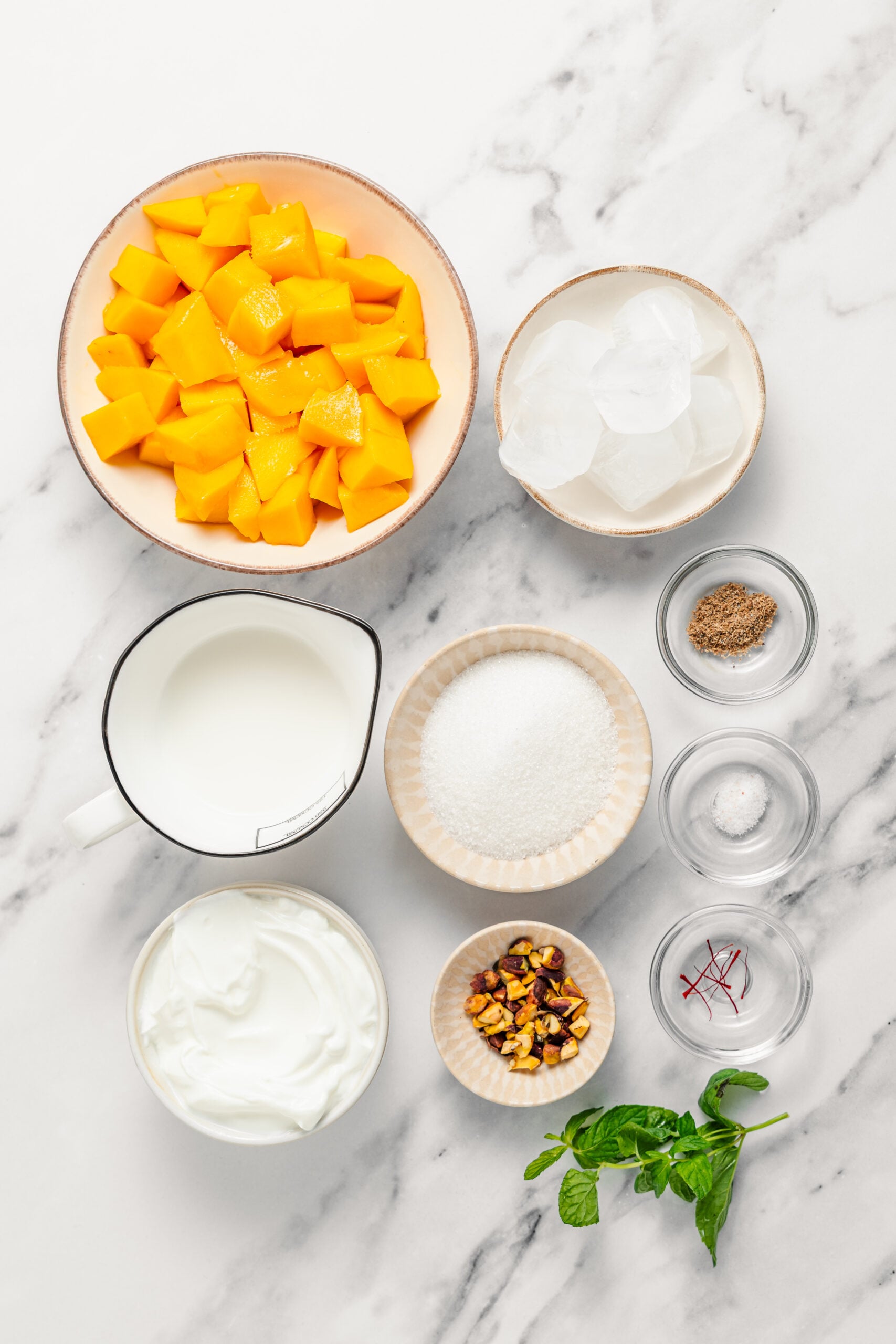
Quantities are in the recipe card. Here is why each one is in the glass.
- Ripe mango: the whole drink. Ataulfo, also sold as Honey or Champagne mango, and Alphonso are the right varieties: sweet, low fibre and deep orange. Frozen mango chunks are an excellent substitute and in most of the year a more reliable one.
- Plain full fat yogurt, well chilled: body, tang and the creaminess that separates a lassi from a smoothie. Chilled matters, because a warm base means you need more ice and more ice means a thinner drink.
- Whole milk: loosens the yogurt just enough to pour. Add it at the end and hold a little back, because how much you need depends entirely on how juicy your mango was.
- Caster sugar or honey: adjust to the fruit, not to the recipe. Mango sweetness swings enormously, and the time to fix it is while the puree is still on its own.
- Ground cardamom: the defining flavour. A quarter teaspoon sounds like nothing and is exactly right. Grind it fresh from pods if you can be bothered, because preground cardamom fades fast.
- A pinch of fine salt: not optional. It sharpens the mango and stops the whole thing tasting flat.
- Pistachios, saffron and mint to finish: all optional, all worth it. Soak the saffron in a teaspoon of warm milk for 5 minutes first or it will just sit there as dry threads.
How to make mango lassi
- Put the glasses in the freezer while you work. A lassi this thick warms up fast in a room temperature glass and loses its edge within a few minutes.
- Blend the mango, sugar, cardamom and salt on high for about 30 seconds, until it is completely smooth with no fibrous threads left in it.
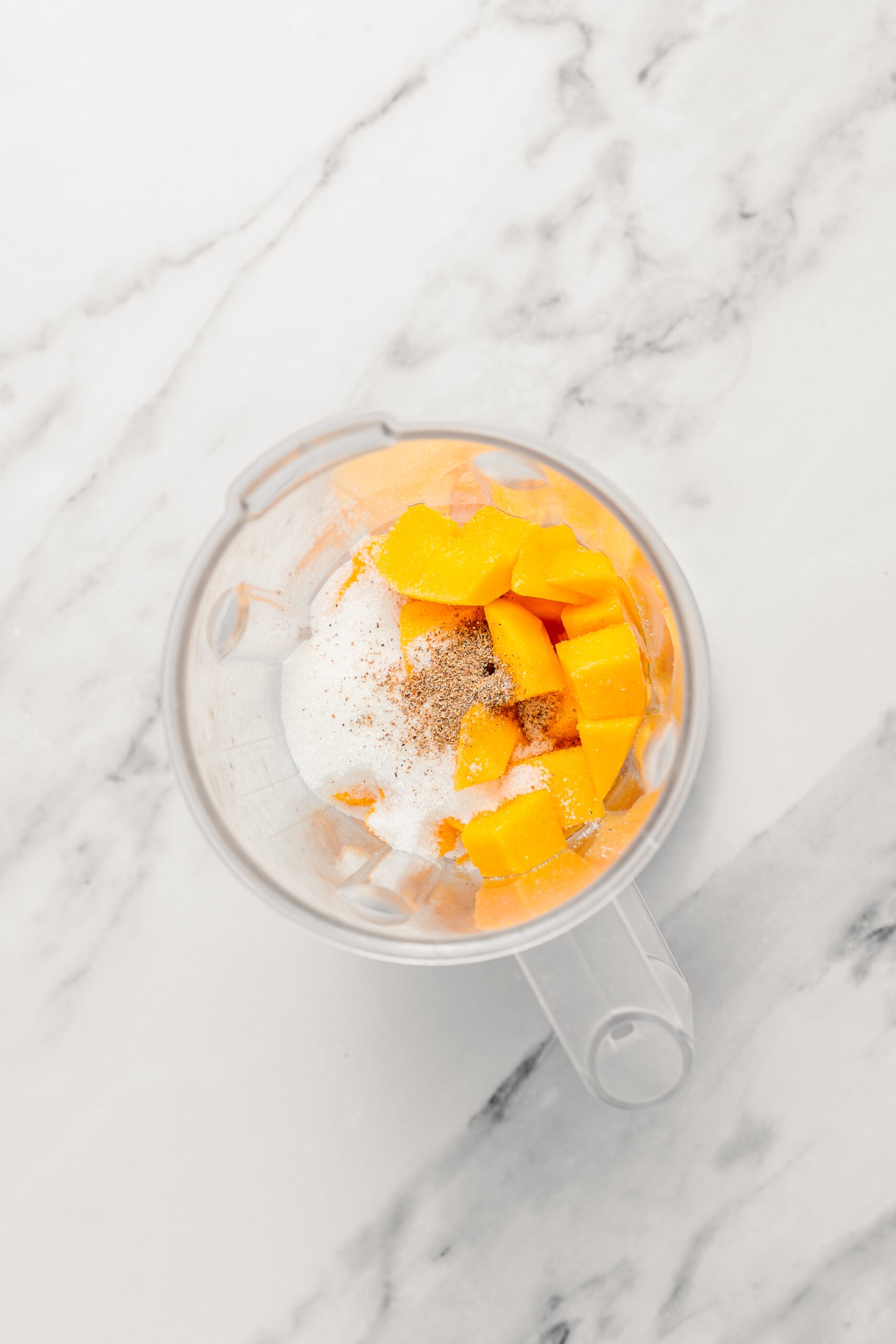
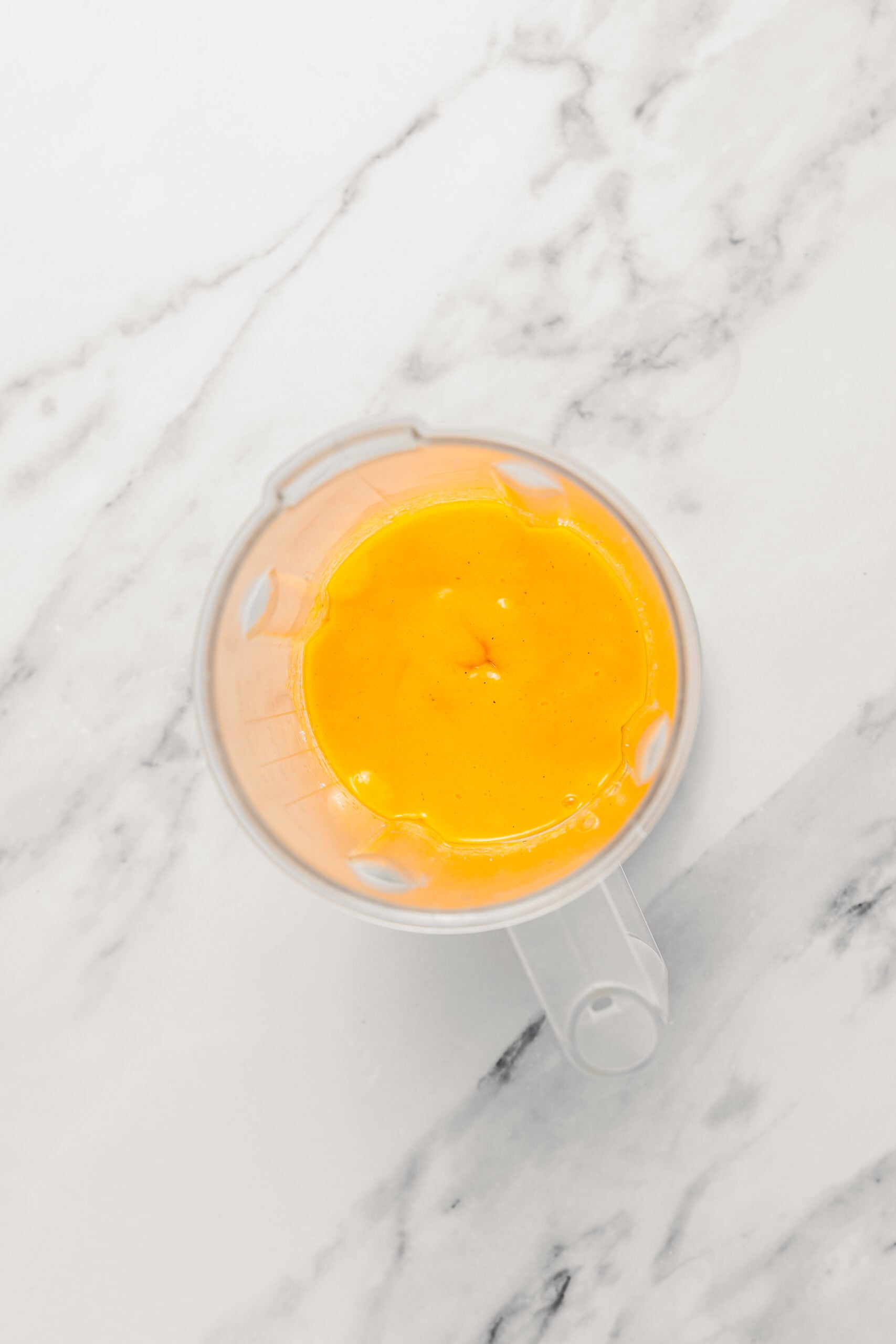
- Taste it now and adjust the sugar. This is the only easy moment to fix the sweetness, because once the yogurt is in you cannot blend it again without wrecking the texture.
- Add the ice, if you are working with fresh mango, and blend again until no shards remain. Skip the ice entirely if you used frozen mango.
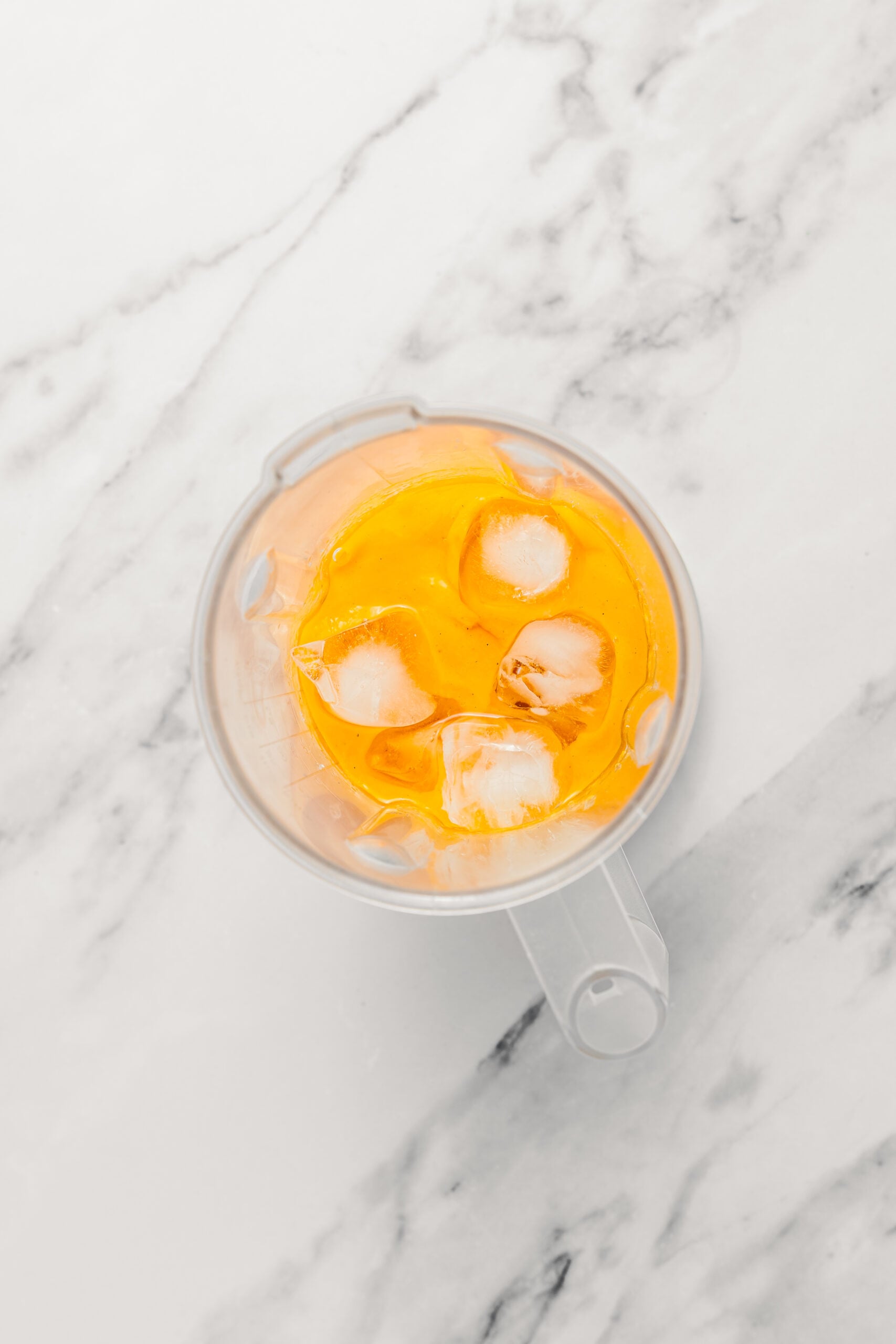
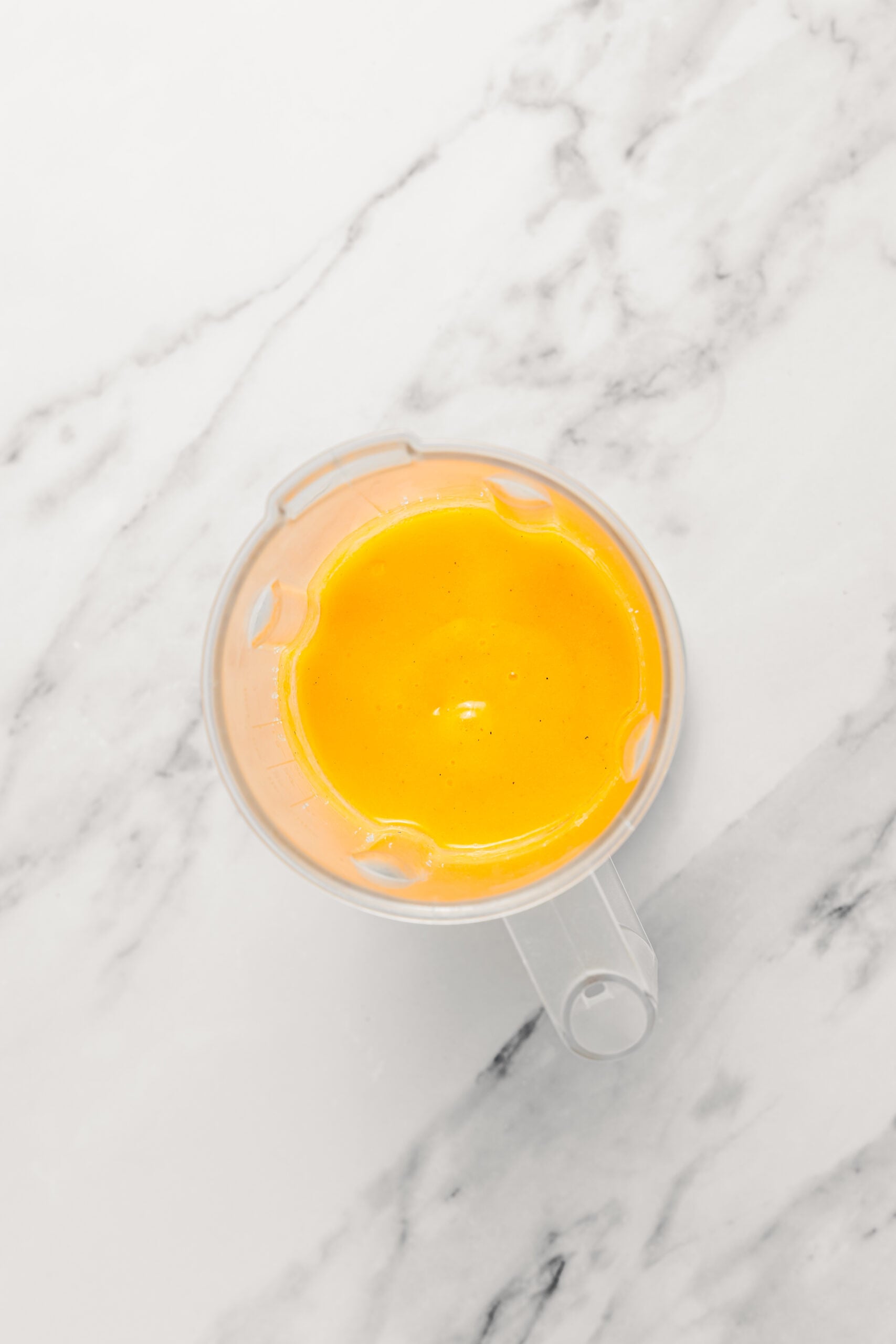
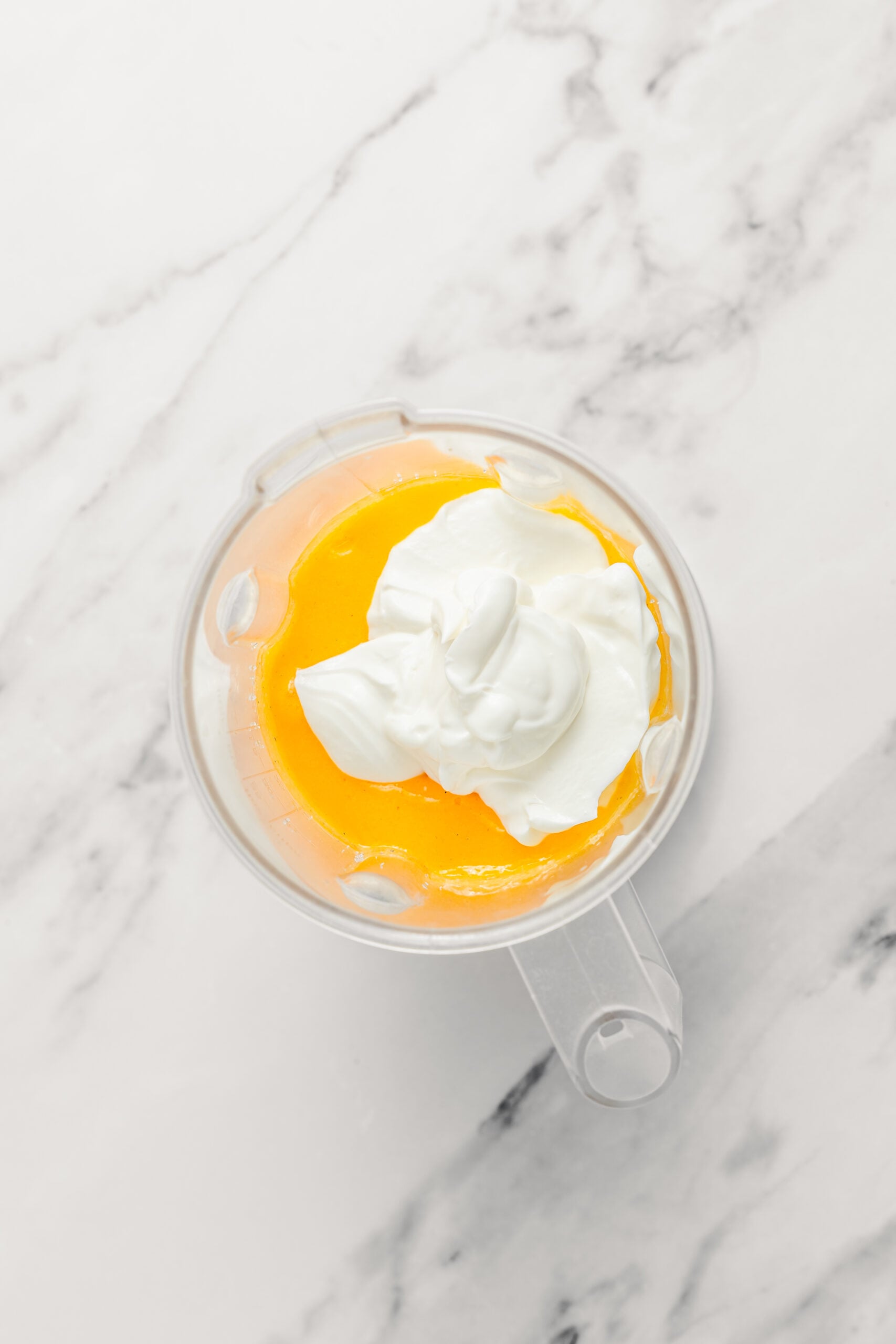
- Add the yogurt and the milk on top of the puree.
- Pulse three or four times, just until it comes together into one even colour. Do not run the blender on high again. This is the step that decides whether you get thick or frothy.
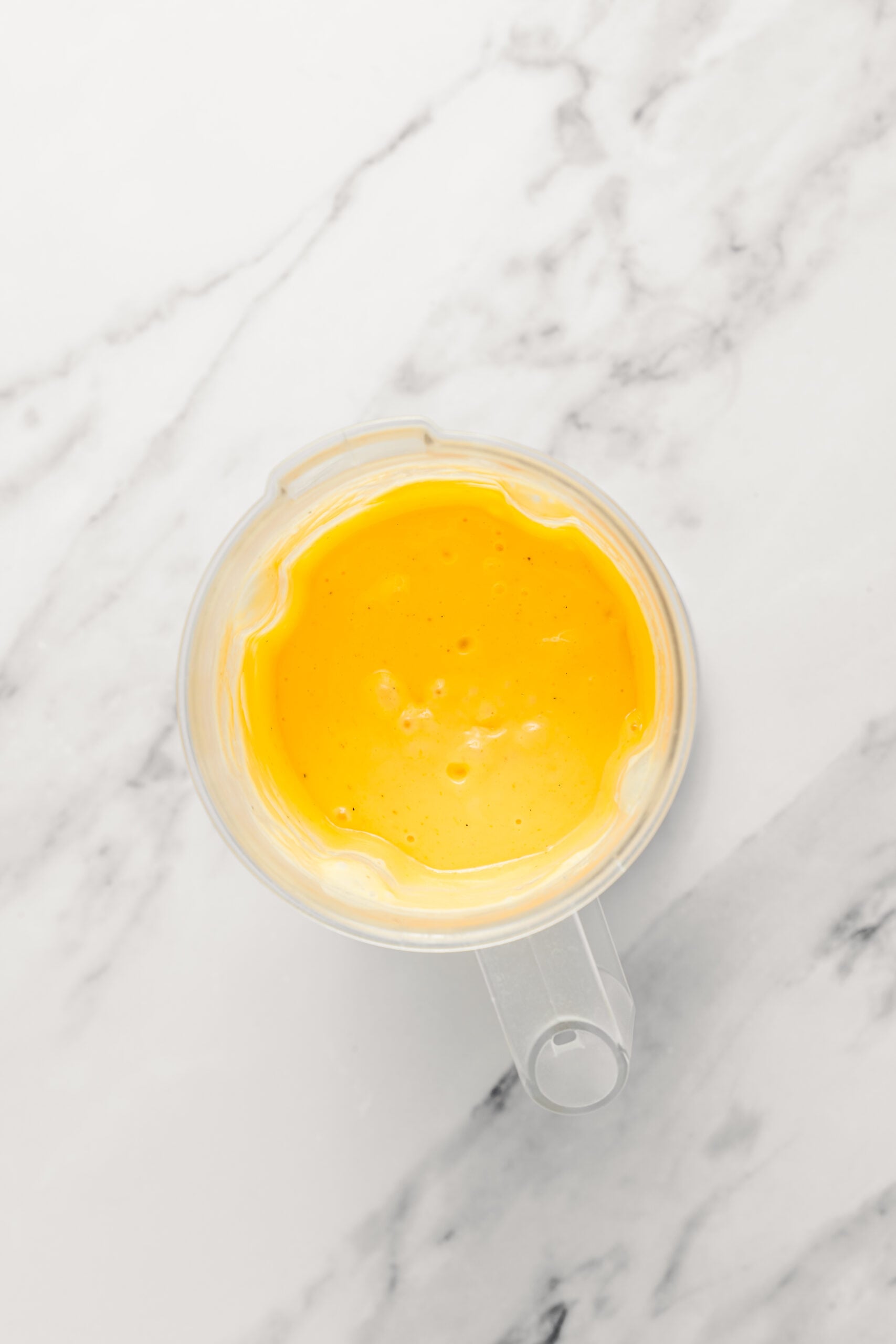
- Check the consistency. It should pour thickly and coat the back of a spoon. Loosen it with a tablespoon of milk at a time if it is too thick to drink, or pulse in a few more mango pieces if it is too thin.
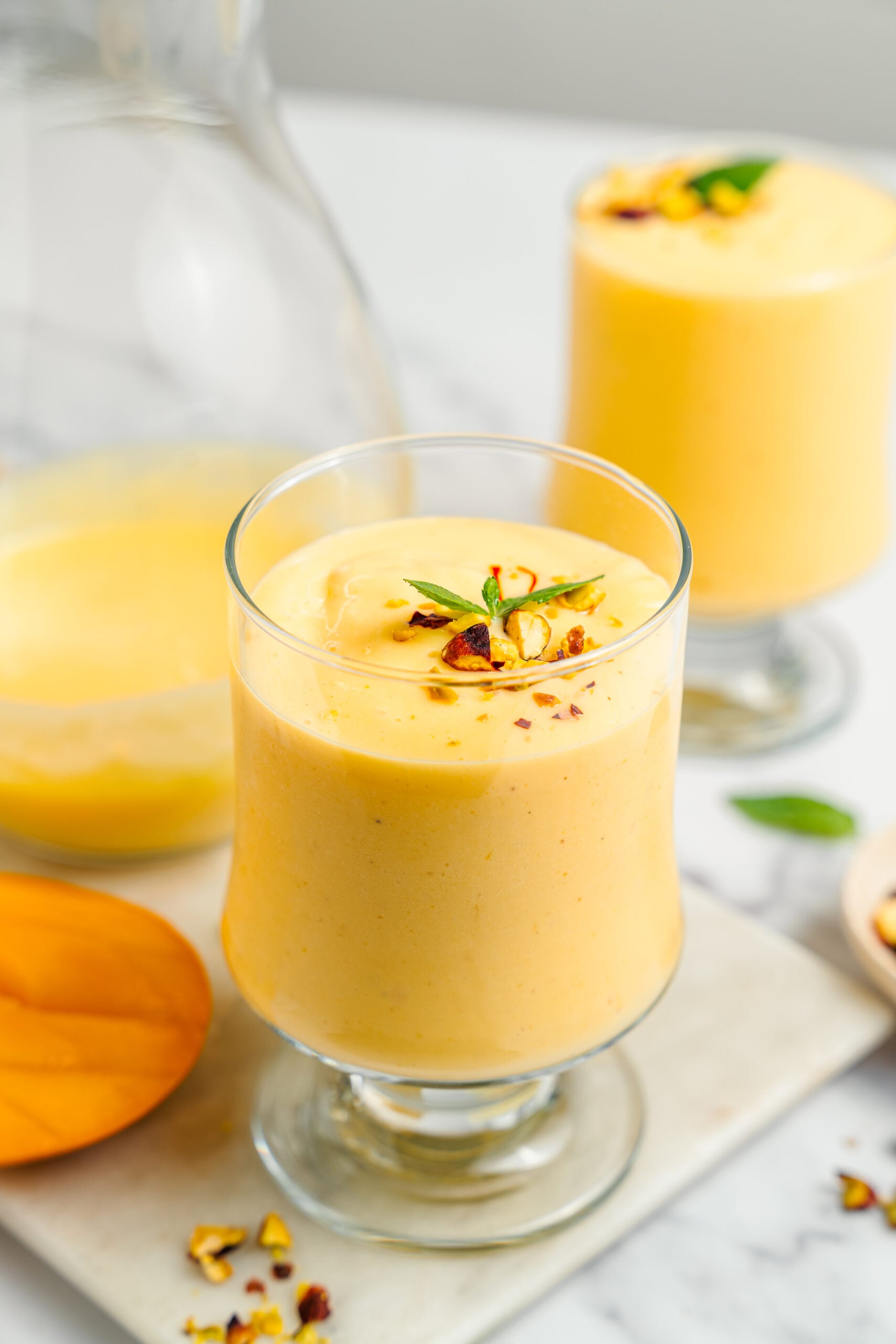
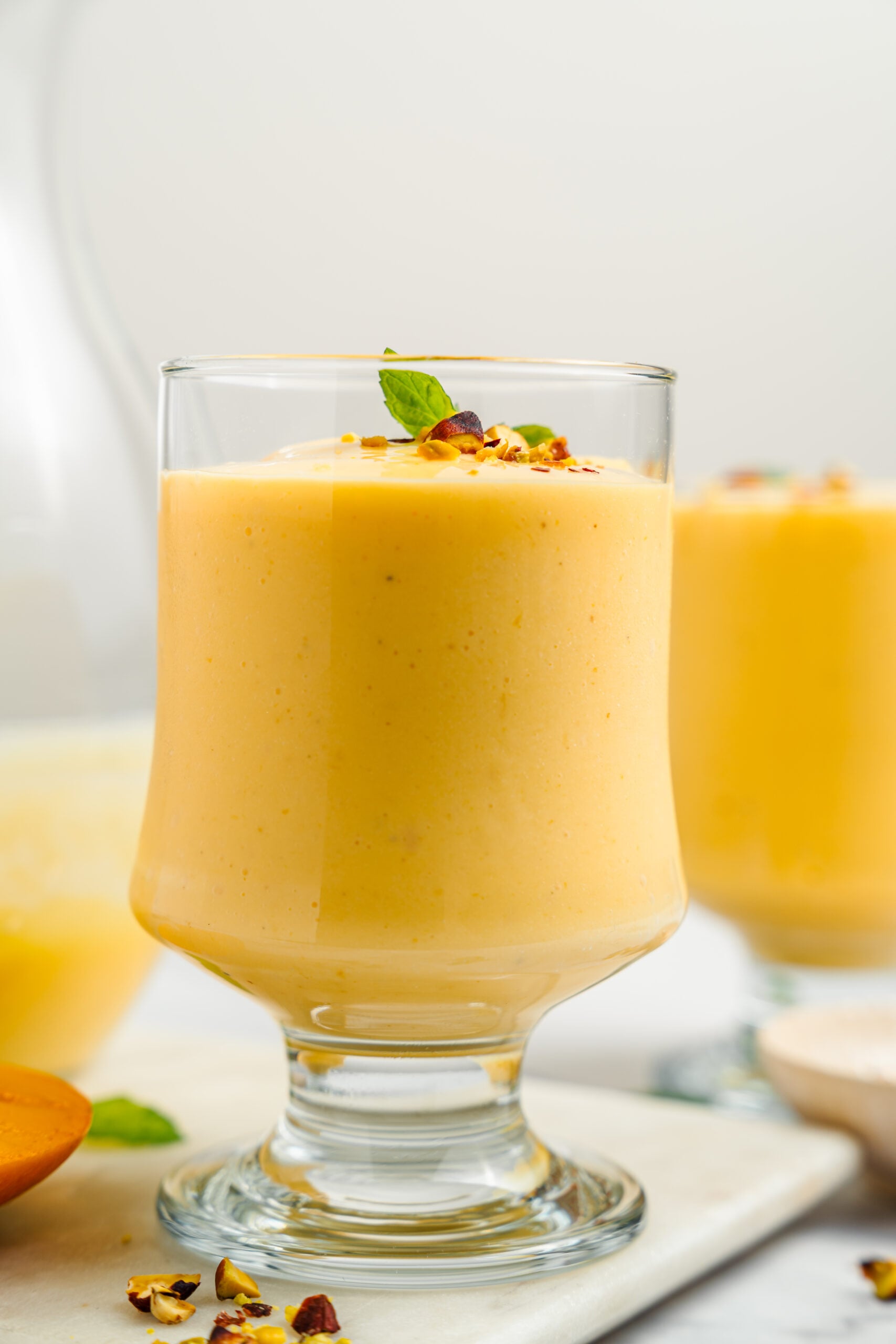
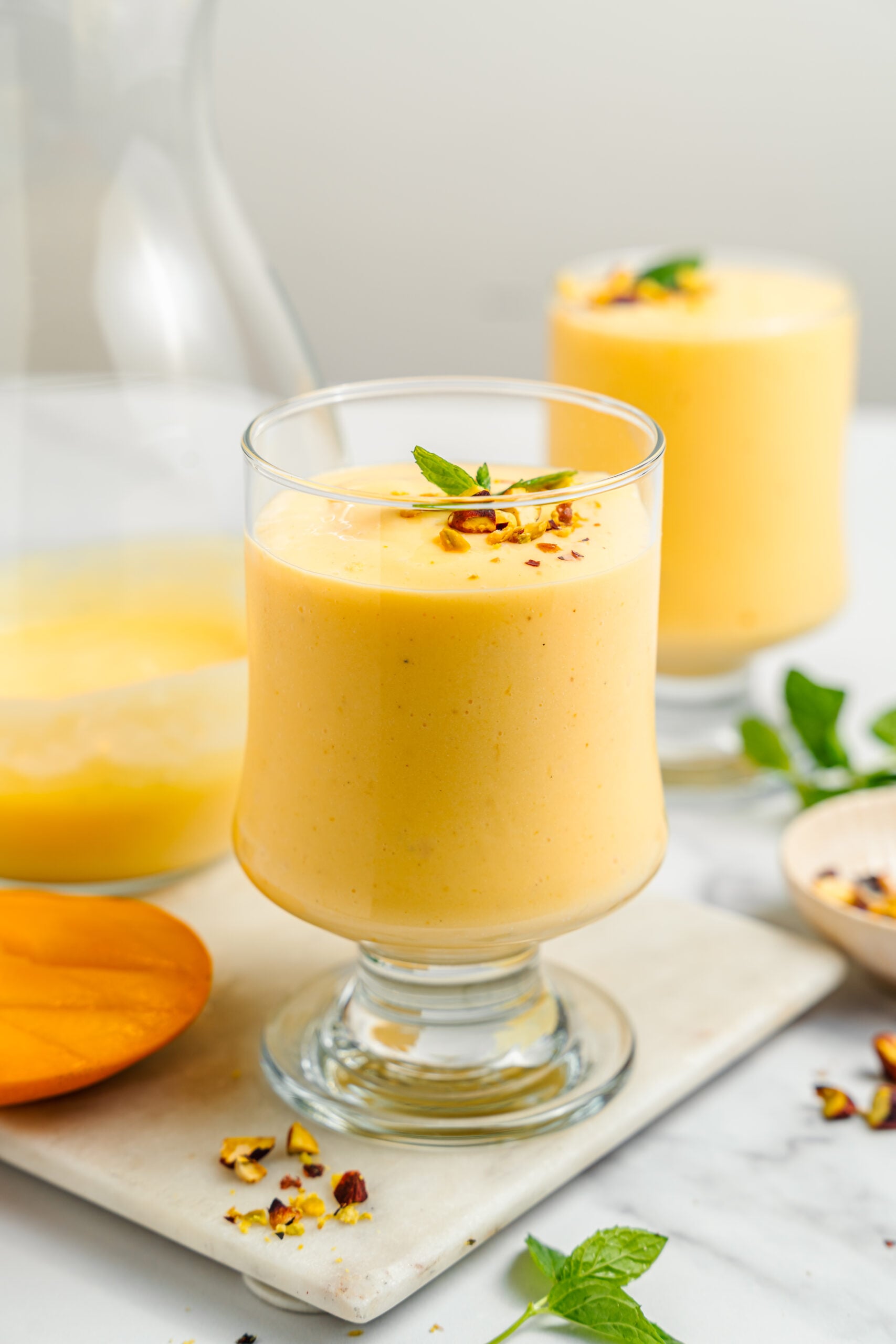
- Pour into the chilled glasses and finish with the chopped pistachios, a thread of saffron milk drawn across the surface and a mint sprig. Serve straight away.
Fresh mango or frozen, and which varieties actually work
The variety matters more than whether the fruit is fresh. Ataulfo and Alphonso are small, yellow skinned and almost fibre free, and they are what this drink is built around. The large red and green Tommy Atkins mango that fills most Western supermarkets is stringy and sour, and it is the real reason so much homemade lassi disappoints. No amount of sugar fixes fibre.
If Ataulfo or Alphonso are not in front of you, reach for frozen mango chunks rather than settling for a bad fresh one. Frozen mango is picked ripe, it is consistent all year, and it gives a noticeably thicker result because it replaces the ice. Use it straight from the freezer, leave the ice cubes out entirely, and let it sit on the bench for 5 minutes first so the blade is not fighting solid blocks.
Canned Alphonso pulp is the third route and it is completely legitimate. The only catch is that most brands are already sweetened, so leave the sugar out until you have tasted. If you have a glut of good mango and want somewhere else to put it, the mango cake and the mango sago both reward proper fruit in the same way.
Fixing a lassi that has gone wrong
Thin and frothy means it was overblended. There is no rescue for the batch in front of you, because the air is already in there and the yogurt structure is already broken, but a short rest in the fridge and a hand whisk will settle some of the foam. Next time, pulse.
Stringy means fibrous mango. Push it through a sieve with the back of a ladle and it will be drinkable, then change variety for the next one. Sour means the yogurt is doing too much of the work, so add sugar and a splash more milk rather than more fruit. Bland almost always means salt, not sugar.
Too thick is the easiest problem to have. Add milk a tablespoon at a time and stir it in by hand rather than reaching for the blender again. Greek yogurt is the usual culprit here: it is thicker and more sour than plain yogurt, so if that is what you have, use a little less of it and a little more milk.
Making it ahead, and the dairy free version
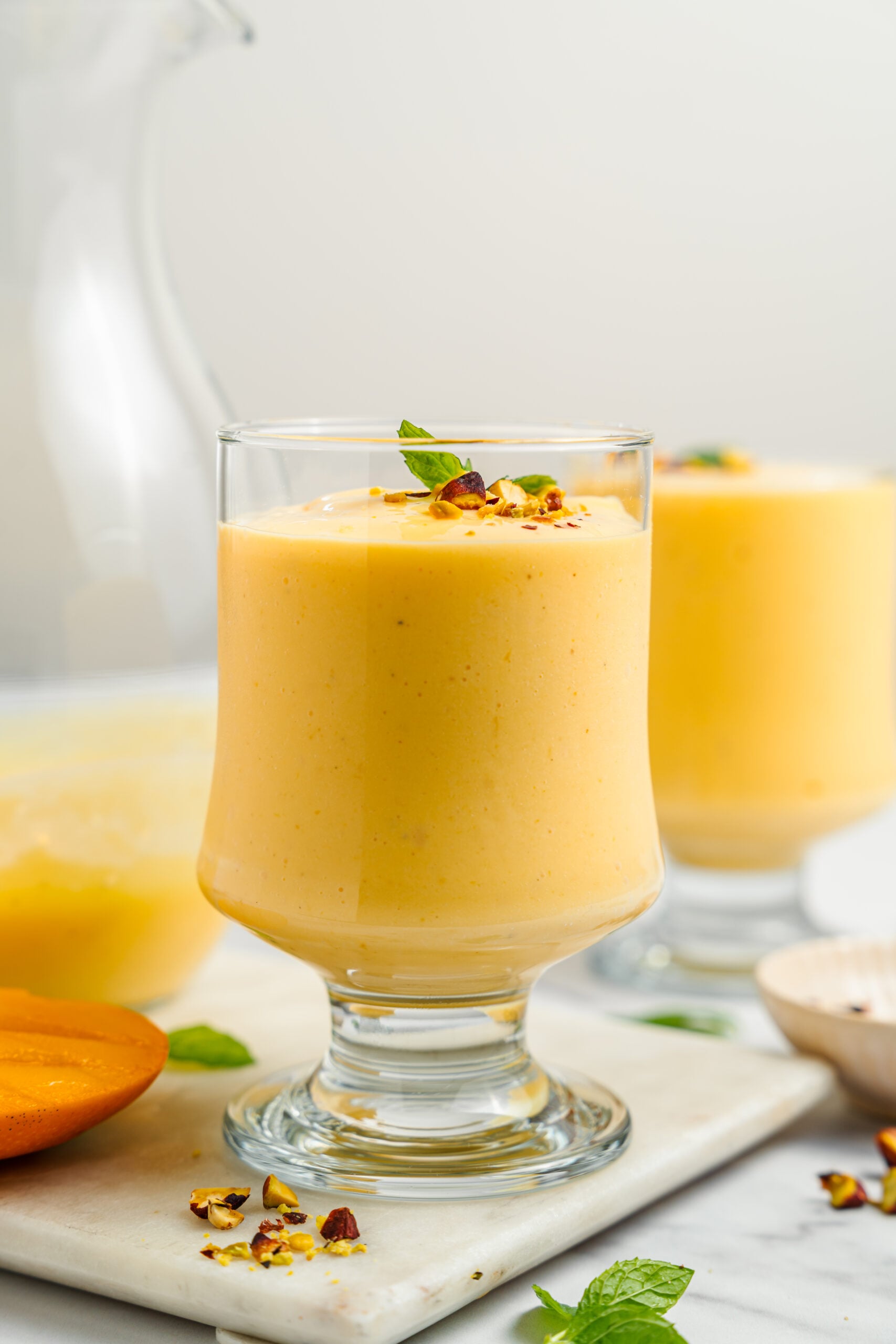
A lassi is at its best within an hour of being made. It keeps in a sealed jar in the fridge for 2 days, but it will separate, which is normal and not a fault. Whisk it back together by hand. Do not put it back in the blender, because that brings the frothiness straight back and you lose everything the pulsing bought you.
For a dairy free version, thick coconut yogurt and oat milk work genuinely well, and the coconut sits naturally with the mango rather than fighting it. Almond yogurt is too thin and gives you a drink that tastes watered down. The same coconut and mango pairing is what makes the mango float and the mango pudding work, so if you like it here you will like it there.
If you want the mango without the dairy question at all, the two ingredient mango sorbet is two ingredients and a freezer. And if you are serving a few of these for a crowd, a tray of pistachio baklava cut small alongside them is a good match, because the pistachio garnish on the glass picks up the nut in the pastry.
Mango lassi recipe FAQ
Frequently Asked Questions
Why is my mango lassi thin and frothy instead of thick?
It was overblended. Running a blender on high once the yogurt is in shears the yogurt and whips air through the drink at the same time, so it goes thin and foamy in seconds. Puree the mango completely on its own first, then add the yogurt and milk and pulse only three or four times, stopping the moment the colour is even.
Can I use frozen mango in a mango lassi?
Yes, and outside mango season it is usually the better choice. Frozen mango is picked ripe and is consistent all year, and because it replaces the ice it gives a thicker result. Use it straight from the freezer, leave the ice cubes out entirely, and let it sit on the bench for 5 minutes so the blade is not fighting solid blocks.
What kind of yogurt is best for mango lassi?
Plain full fat yogurt. The fat carries the flavour and gives the body that separates a lassi from a smoothie, and low fat yogurt will always taste thin no matter what else you do. Avoid vanilla and fruit yogurts entirely. If Greek yogurt is all you have, use a little less of it and add more milk, because on its own it is both thicker and more sour than you want.
Can I make mango lassi ahead of time?
It is at its best within an hour, but it keeps in a sealed jar in the fridge for 2 days. It will separate, which is normal and not a fault. Whisk it back together by hand rather than putting it back in the blender, because reblending brings the frothiness straight back.
Do I really need the cardamom and the salt?
The cardamom is what makes it taste like a lassi rather than a mango smoothie, so yes. A quarter teaspoon sounds like nothing and is exactly right, and freshly ground from pods is noticeably better than preground, which fades fast. The pinch of salt is the thing most people skip, and a lassi that tastes flat almost always needs salt more than it needs sugar.
How do I make a dairy free mango lassi?
Use thick coconut yogurt in place of the yogurt and oat milk in place of the whole milk. The coconut sits naturally with the mango rather than fighting it, and the texture comes out close to the original. Almond yogurt is too thin and gives you something that tastes watered down.
Let’s Get Cooking
If you liked this recipe make sure to leave me a comment and rating down below. I’d love to know how it went! Also, don’t forget to tag me on Instagram @catherine.desserts.
Follow me on Facebook, Pinterest, YouTube, and TikTok for more of my baking creations and updates!
Restaurant Style Mango Lassi

A thick, creamy mango lassi with cardamom and a pinch of salt. Blending the mango on its own and then pulsing the yogurt in is what keeps it from turning thin and frothy.
- Prep Time: 10 minutes
- Cook Time: 0 minutes
- Total Time: 10 minutes
- Yield: 2 large glasses, about 600 ml 1x
- Category: Drinks
- Method: Blender
- Cuisine: Indian
Ingredients
Units
Scale
- 330 g (2 cups) ripe mango flesh, diced, from about 2 Ataulfo or Honey mangoes, or frozen mango chunks
- 240 g (1 cup) plain full fat yogurt, well chilled
- 80 ml (1/3 cup) whole milk, plus a little more to loosen
- 25 to 40 g (2 to 3 tablespoons) caster sugar or honey, to taste
- 1/4 teaspoon ground cardamom
- Pinch of fine salt
- About 6 ice cubes, only if using fresh mango
To finish, optional
- 1 tablespoon chopped pistachios
- A small pinch of saffron threads, soaked in 1 teaspoon warm milk for 5 minutes
- A mint sprig
Instructions
- Put the glasses in the freezer while you work. A lassi this thick warms up fast in a room temperature glass.
- Blend the mango, sugar, cardamom and salt on high for about 30 seconds, until completely smooth with no fibrous threads left.
- Taste it now and adjust the sugar. Mango sweetness swings enormously between fruit and this is the only easy moment to fix it.
- Add the ice, if you are using fresh mango, and blend again until no shards remain.
- Add the yogurt and milk, then pulse three or four times, just until it comes together into one colour. Do not run the blender on high again.
- Check the consistency. It should pour thickly and coat the back of a spoon. Loosen with a tablespoon of milk at a time if it is too thick, or pulse in a few more mango pieces if it is too thin.
- Pour into the chilled glasses.
- Finish with the chopped pistachios, a thread of the saffron milk drawn across the surface, and a mint sprig. Serve straight away.
Notes
- Mango choice. Ataulfo, also sold as Honey or Champagne mango, and Alphonso are the right ones: sweet, low fibre, deep orange. The large red and green Tommy Atkins mango that dominates supermarkets is stringy and sour, so use frozen mango chunks instead if that is all you can get.
- Canned pulp. Canned Alphonso pulp is excellent. Most brands are already sweetened, so leave the sugar out until you have tasted.
- Yogurt. Plain full fat yogurt is what you want. Greek yogurt is too thick and too sour on its own, so use 180 g of it and increase the milk to 150 ml.
- Frozen mango. Use it straight from the freezer, leave the ice out entirely, and let it sit for 5 minutes before blending so the blade is not fighting solid blocks.
- Make ahead. Best within an hour. It keeps in a sealed jar in the fridge for 2 days but it will separate, which is normal. Whisk it by hand rather than reblending.
- Dairy free. Thick coconut yogurt plus oat milk works well. Almond yogurt is too thin.
Nutrition
- Serving Size: 1 glass