
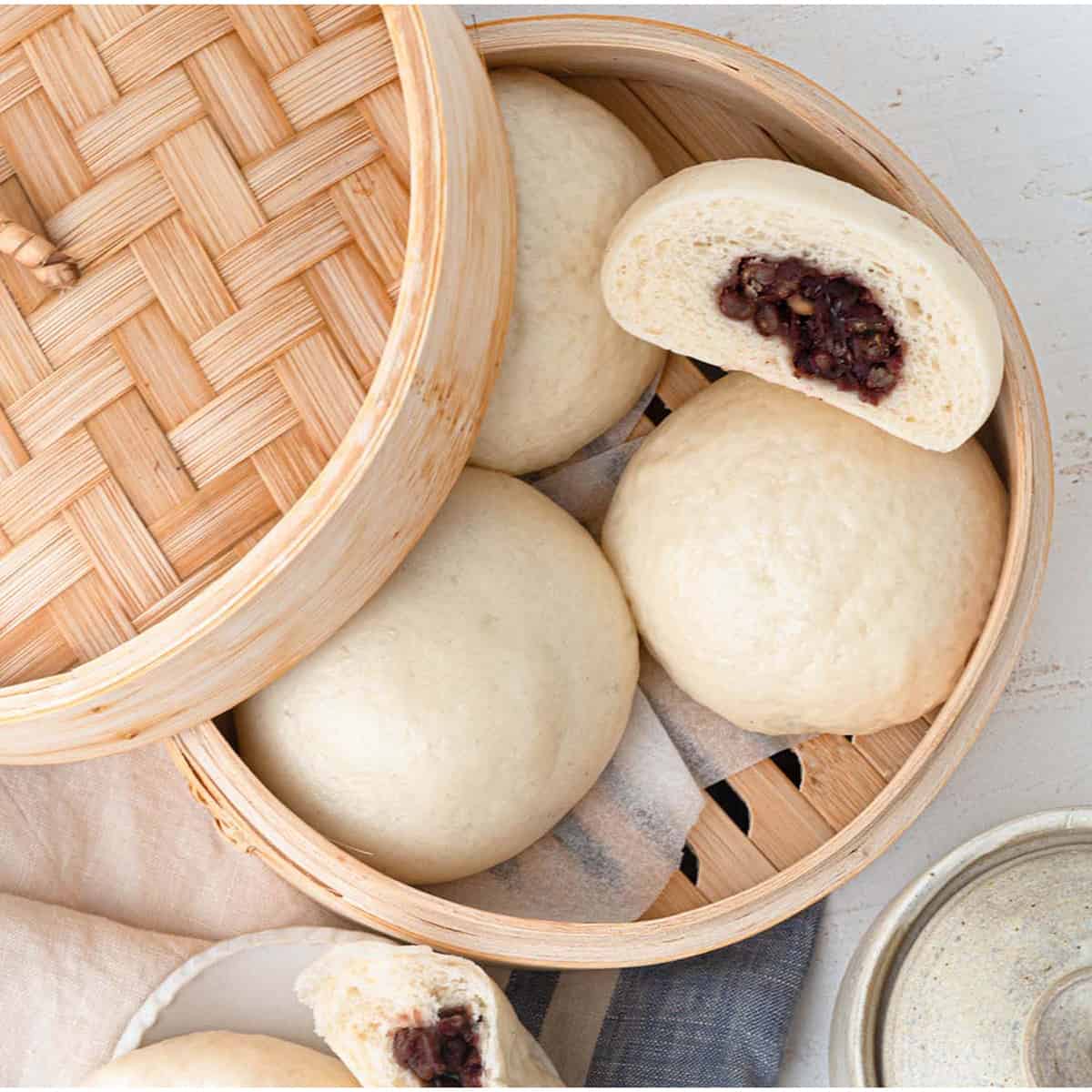
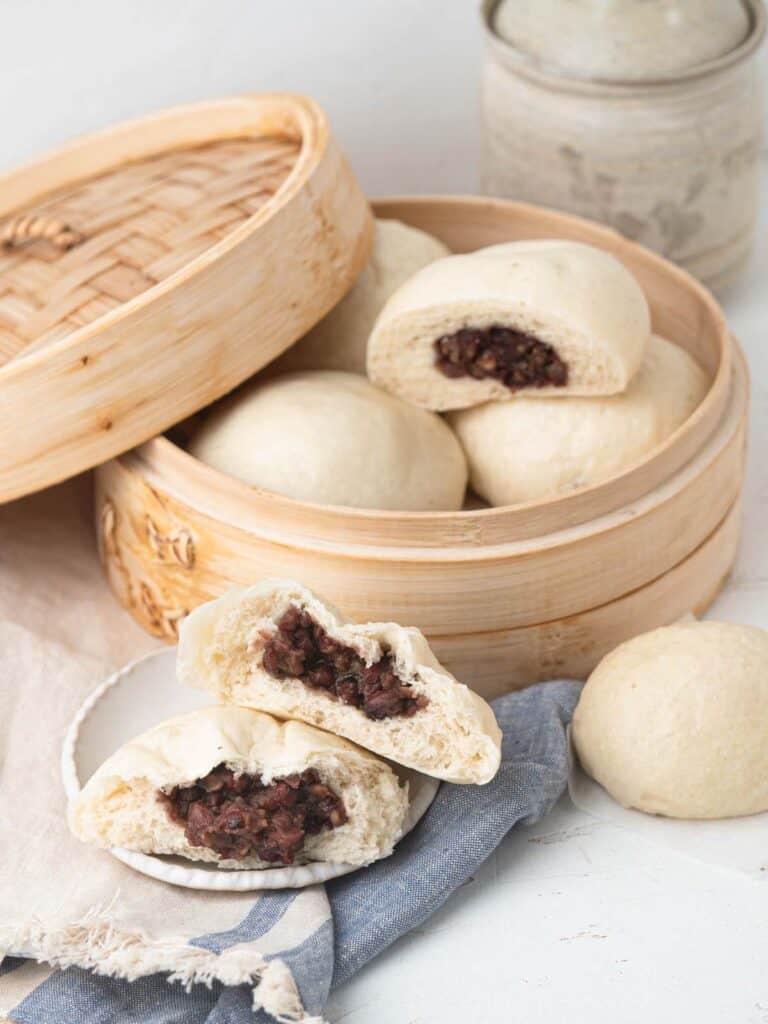
Soft and fluffy steamed buns filled with sweet red bean paste, a classic Chinese treat!
Some mornings call for something soft, warm, and quietly comforting, and red bean buns always take me straight back to childhood. The dough is light and fluffy, with a smooth sweet red bean centre that feels rich without being too heavy.
I grew up eating these for breakfast, usually warm and fresh, and they still feel like one of those simple treats that can make the whole day feel softer. When I started testing my own version, I wanted the buns to have that pillowy steamed texture and a filling that tasted creamy, not too sweet, and full of red bean flavour.
After a few batches with lumpy dough and filling that tried to escape, I found the balance that felt just right. These buns are humble, cosy, and a little nostalgic in the loveliest way.
Red bean buns remind me of my childhood! I grew up eating these soft and fluffy sweet buns for breakfast. While they may not seem like much, the sweetened red beans pair perfectly with the warm bun to create a comforting dessert that’ll warm your soul.
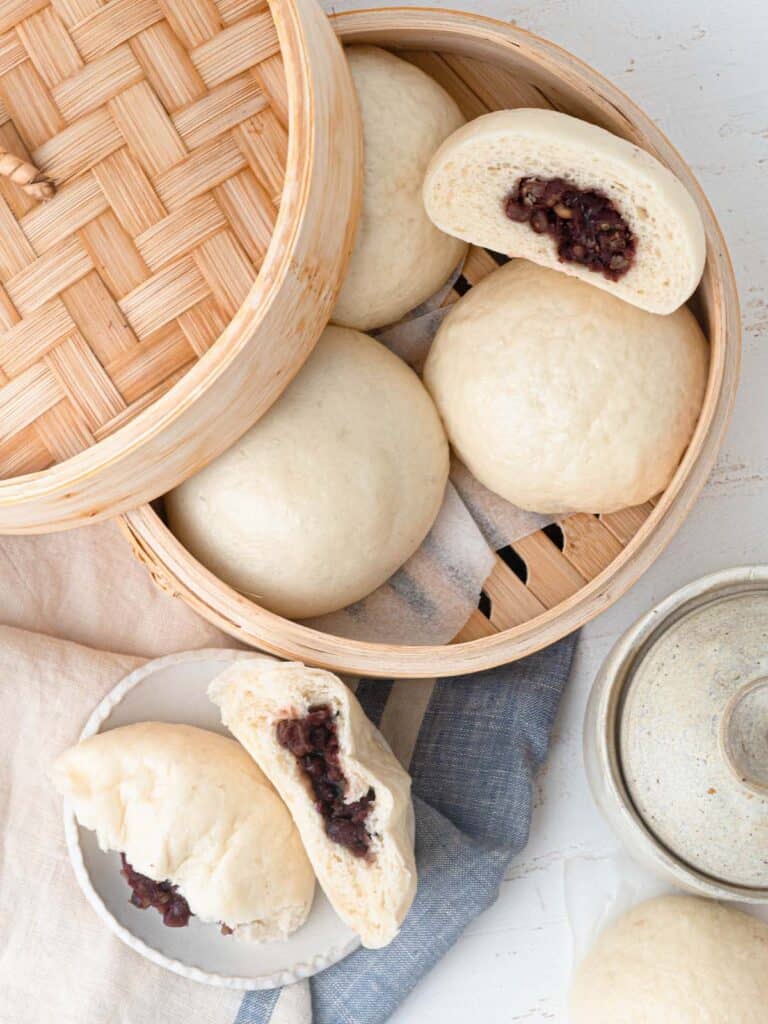
What are red bean buns?
Steamed red bean buns or dòushā bāo (豆沙包) are a classic Chinese treat typically eaten for breakfast or a snack, and one of the most popular steamed buns. It is essentially made up of a sweetened adzuki bean filling and soft leavened dough.
While these are the Chinese version that I grew up eating there are versions of these steamed red bean buns in many East Asian cultures such as Jjinppang 찐빵 in South Korea or Mushi manju 蒸し饅頭 in Japan. All filled with red bean paste, and all equally delicious.
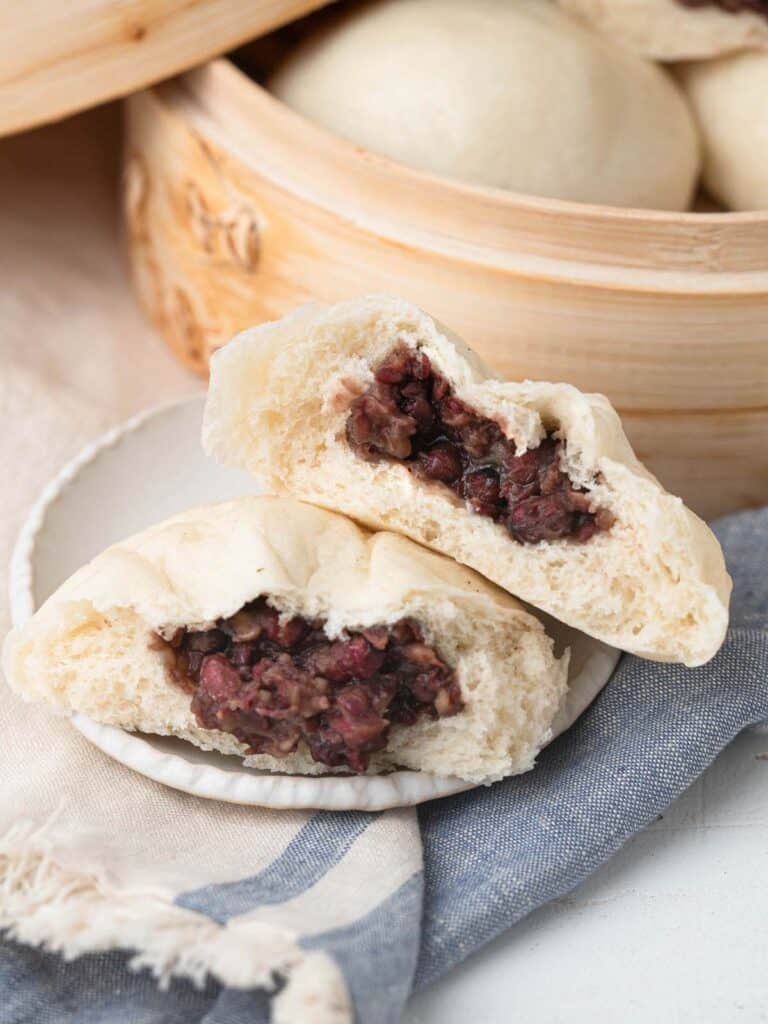
At-a-Glance Specs, What You’ll Need Before We Start Rolling
| Yield | Prep Time | Cook Time | Difficulty | Storage |
| 10 buns | 30 minutes | 60 minutes | Intermediate | Store cooled buns in the fridge for up to 3 days or freeze after steaming |
How to make red bean paste
If you don’t have time to make your own red bean paste, pre-made red bean paste is readily available in most Asian grocery stores, however if you have the time I defintely recommend making your own.
Not only can you control the level of sweetness, the beans turn out creamier and more flavourful. All you need is red beans, brown sugar and a little bit of patience!
Stove-top method
The easiest way to make red bean paste is to boil the beans until they are eaily mashable. If you squeeze a bean between your fingers it should turn into a smooth paste.
Red beans don’t soften properly when cooked in sugar, so make sure the beans are completely cooked before adding any sweeteners.
To help the beans cook faster and to a smoother consistency soak your red beans in cold water overnight before boiling them. This will soften them up and afterwards should only take about 30 minutes to boil.
Otherwise, boil the beans for up to 90 minutes, or until soft. Make sure you top up the water as they boil. They should always be submerged by water to cook up to an even consistency.
Once softened drain the beans and place them in a small saucepan with the brown sugar. Cook on medium high, stirring constatnly until the sugar has dissolved and the paste has thickened. You should be able to draw a line across the bottom of the pot.
Pressure cooker
I personally love using a pressure cooker to cook my red beans as it is so much quicker. The beans only need 15 minutes once it comes to a boil. Then release the steam, drain and cook with the sugar until thickened.
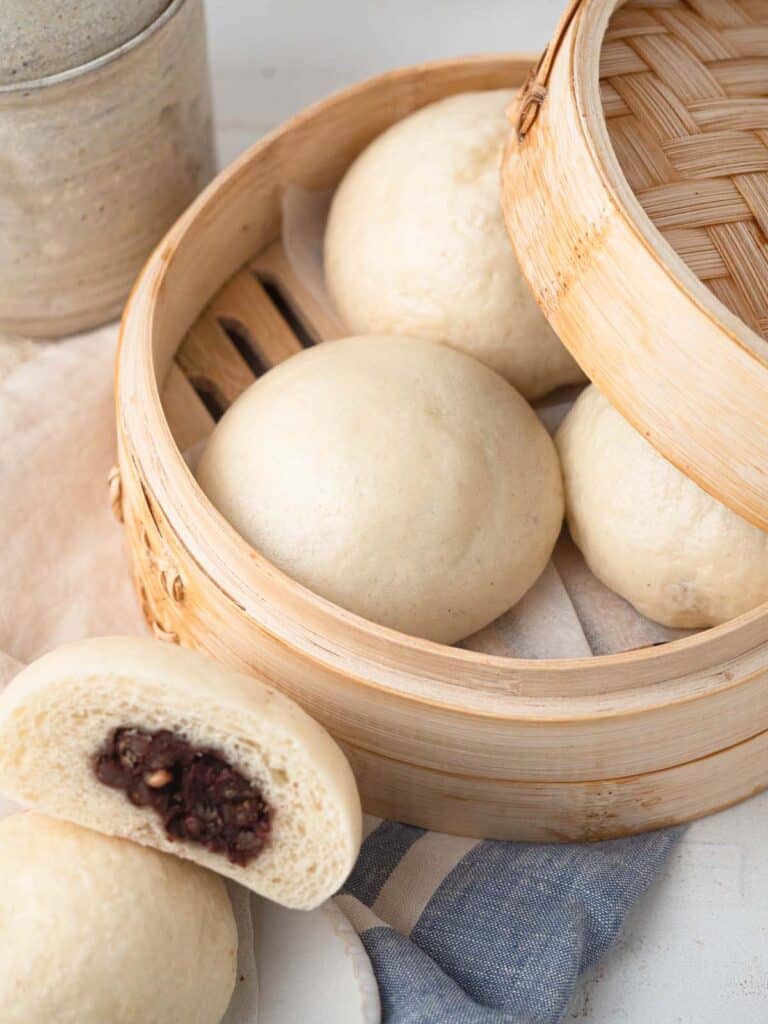
Ingredients
Red Bean Paste
- 150g Red beans, aka adzuki beans (3/4 cup)
- 135g Brown sugar (3/4 cup)
- Water, enough to cover the beans
Bao Dough
- 270g All-purpose flour (2 1/4 cups)
- 30g Cornstarch (1/4 cup)
- 180g Whole milk (3/4 cup), lukewarm
- 1 tbsp White sugar
- 1 tsp Instant yeast
- 1 tsp Vegetable oil
- Sesame seeds, optional
Optional, My Favourite Extras That Add a Little Magic
- Sesame seeds
Sprinkle a few on top before steaming. They add a small nutty note and make the buns look more finished. - Black sesame paste
Add a small spoonful with the red bean filling. It gives a deeper, toastier flavour. - Matcha powder
Add a little to the dough for a green tea version. Matcha and red bean are such a classic pair. - Toasted coconut
Mix a small amount into the filling. It gives a soft chew and a warm, sweet finish. - Crushed peanuts
Add finely crushed roasted peanuts to the filling. Keep them small so the buns still seal neatly. - Soy milk
Serve warm buns with soy milk for a soft breakfast-style pairing. It feels simple, cosy, and very comforting.
Substitutions, Smart Ingredient Swaps That Still Taste Amazing
- Homemade red bean paste
Swap with store-bought red bean paste for a faster version. Chill it first if it feels too soft to shape. - Brown sugar
Swap with white sugar if needed. Brown sugar gives a deeper flavour, while white sugar keeps the paste cleaner and lighter. - Whole milk
Swap with unsweetened soy milk, oat milk, or another plant-based milk. The flavour may change slightly, but the dough can still turn soft. - All-purpose flour
Swap with bao flour if you can find it. Bao flour can give a whiter, softer bun. - Smooth red bean paste
Swap with chunky red bean paste if you like more texture. Just make sure the filling is thick enough to roll into balls. - Bamboo steamer
Swap with a metal steamer basket or a heatproof plate on a rack inside a pot. As long as the buns sit above the water, you can make it work.
Steps
Red Bean Paste
- Wash the red beans and place them in a large saucepan filled with water, cover
- Bring the water to a boil, reduce to a simmer and cook for 1 to 2 hours, or until tender (you should be able to mash the beans between your fingers)
- Top up the water as necessary as the beans cook
- Drain and place in a saucepan with the sugar and bring to a simmer
- Cook, stirring constantly until the mixture is just thick enough to draw a line down the centre of the pot
- Remove from the heat and chill until firm
- Portion into 10 balls
Bao dough
- Cut 10 pieces of baking paper at 5 x 5cm / 2 x 2 inches
- Combine the flour, lukewarm milk, sugar and yeast, in a large bowl and mix until just combined
- Knead for 5 minutes until a rough ball forms
- Divide the dough into 10 portions, and cover with cling wrap or a tea towel
- Allow the portioned balls to rest for 15 minutes
- Uncover and knead each ball until smooth, then flatten and fill with a ball of red bean paste
- Seal and place on a square of baking paper
- Place on a baking tray or in a steamer and cover
- Proof for 45 mins or until the buns have plumpened, but not doubled in size
- Bring a large pot of water to a boil and reduce the heat to medium-high
- Place the steamer over the pot of water and steam the buns for 10 to 12 mins
- Allow the buns to rest in the steamer after cooking for 5 mins then enjoy
Troubleshooting, Quick Fixes I’ve Learned from My Bakery Kitchen
| Issue | Why It Happens | Quick Fix |
| Red bean paste is too runny | It was not cooked down long enough | Cook longer, stirring often, until thick |
| Red bean paste is too dry | It cooked too long or lost too much moisture | Add a small splash of water and stir until soft |
| Filling leaks out | Bun was overfilled or not sealed well | Use less filling and pinch the seal firmly |
| Buns are dry after storing | They were left uncovered | Store airtight and re-steam before serving |
| Buns cook unevenly | Steamer was crowded or steam could not move well | Leave space between buns and steam in batches |
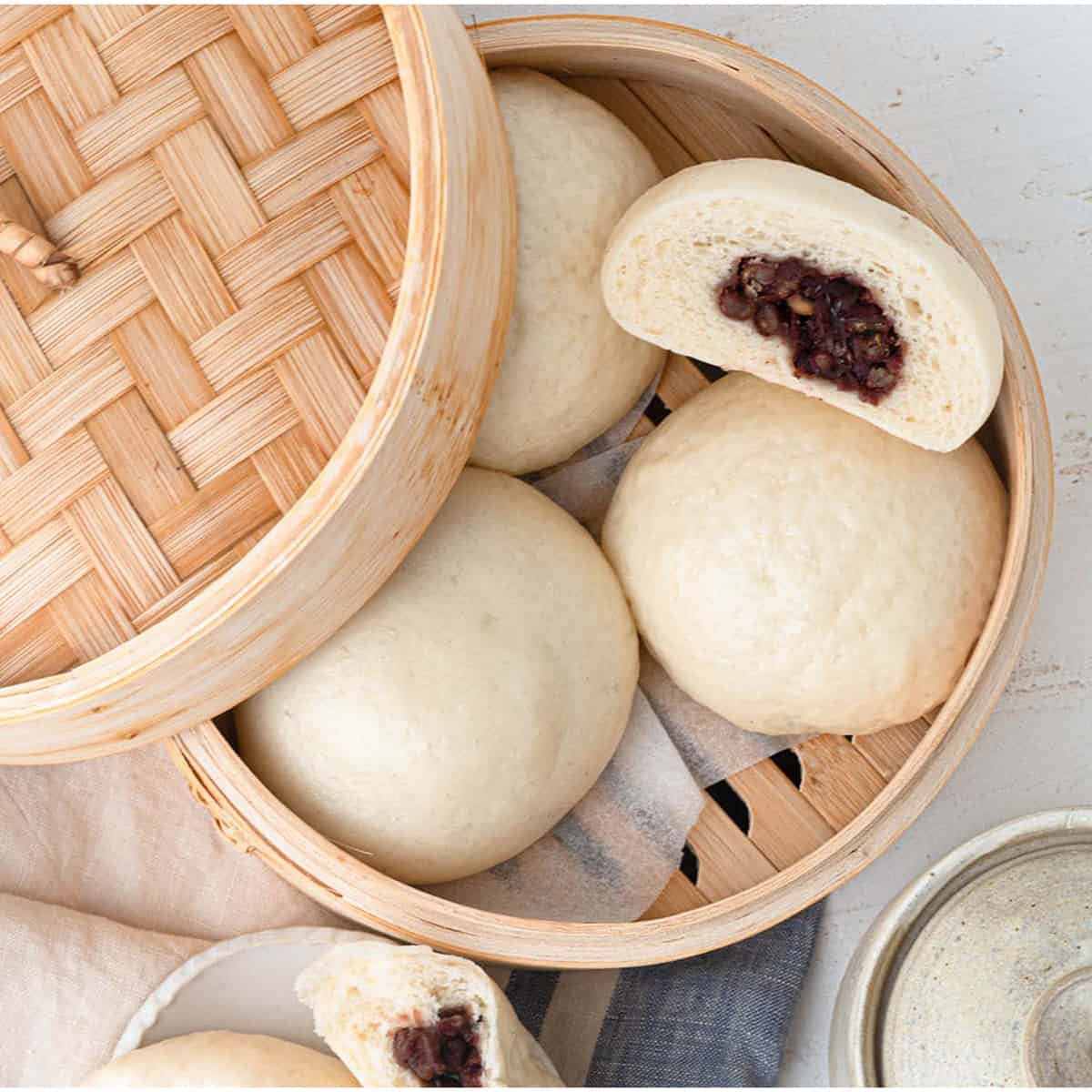
Comparison, How This Recipe Stacks Up Against Other Desserts
| Dessert | Texture and Flavour | When I’d Make It |
| Red bean buns | Soft, fluffy, steamed, sweet red bean centre | When I want a warm Chinese breakfast treat |
| Anpan | Baked, golden, bread-like, red bean filling | When I want a Japanese bakery-style bun |
| Jjinppang | Steamed, fluffy, often chunky red bean filling | When I want a Korean-style steamed bun |
| Red bean sesame balls | Crisp outside, chewy inside, sweet bean centre | When I want a fried dessert with crunch |
Tips, My Personal Tricks for a Professional-Looking Result
Chill the Red Bean Paste Before Shaping
The filling should be firm enough to roll into balls.
If it feels soft, chill it before filling the buns. Cold paste is much easier to handle and is far less likely to make a dramatic escape.
Check the Paste Texture Before Filling
Red bean paste should hold its shape when scooped.
If it spreads like jam, cook it down longer. If it cracks or crumbles, stir in a small splash of water. The filling should feel soft but steady, like it knows its job.
Use Store-Bought Paste the Smart Way
Store-bought red bean paste is great when you want a quicker bao day.
Taste it first because some brands are very sweet. If it is soft, chill it before shaping. If it is too sweet, keep the dough simple and let the filling carry the sugar.
Weigh the Dough Pieces
For even buns, weigh each dough portion before filling.
It sounds a bit pastry-chef fussy, but it helps every bun steam at the same pace. I use this habit in recipe testing all the time because even sizing saves so many little problems later.
Keep the Filling in the Centre
Place the red bean paste right in the middle of the flattened dough.
This gives you enough dough around the edges to seal properly. If the filling slides to one side, the bun can steam up a little wonky.
Leave Space in the Steamer
Red bean buns need space to puff.
If the steamer is too crowded, the buns can stick together or cook unevenly. Give them room, even if it means steaming in batches.
Use Gentle, Steady Steam
Keep the steam steady rather than wild and aggressive.
A strong boil can make the buns puff too fast and set unevenly. Gentle steam gives them a softer, calmer finish.
Cool Before Storing
Let the buns cool fully before packing them away.
If you trap steam in the container, the buns can turn wet and sticky. Let them breathe first, then store them properly.
Re-Steam for the Softest Leftovers
The best way to bring red bean buns back to life is steaming.
A few minutes of steam makes the dough soft again and warms the red bean centre gently. Microwave works in a rush, but steam gives the prettier texture.
Freeze After Steaming, Not Before
For the easiest make-ahead version, steam the buns first, cool them, then freeze.
This gives you ready-to-reheat buns for later. Future you will feel very clever.

Variations, Fun Twists and Flavours Inspired by My TuCha Dessert Experiments
Black Sesame Red Bean Buns
Add a small spoonful of black sesame paste with the red bean filling.
The nutty sesame balances the sweet beans beautifully. It gives the bun a deeper, toastier flavour that feels cosy and a little more grown-up.
Matcha Red Bean Buns
Add a little matcha powder to the dough for a green tea version.
Matcha and red bean are a classic pairing for a reason. The slight bitterness keeps the bun from tasting too sweet and gives the dough a soft green colour.
Peanut Red Bean Buns
Add finely crushed roasted peanuts to the red bean filling.
They bring a little crunch and make the filling taste warmer and nuttier. Keep the pieces small so the buns still seal neatly.
Coconut Red Bean Buns
Mix a little toasted coconut into the filling.
It adds a gentle chew and a warm sweet note. This one feels snack-table friendly and very easy to love.
Custard and Red Bean Buns
Add a small spoonful of thick custard with the red bean paste.
The custard makes the filling creamier and more dessert-like. Keep both fillings chilled so the bun is easier to seal.
Less-Sweet Red Bean Buns
Reduce the sugar slightly when cooking the red bean paste.
Just remember to add sugar only after the beans are fully soft. If you add it too early, the beans can stay stubborn and firm.
Chunky Red Bean Buns
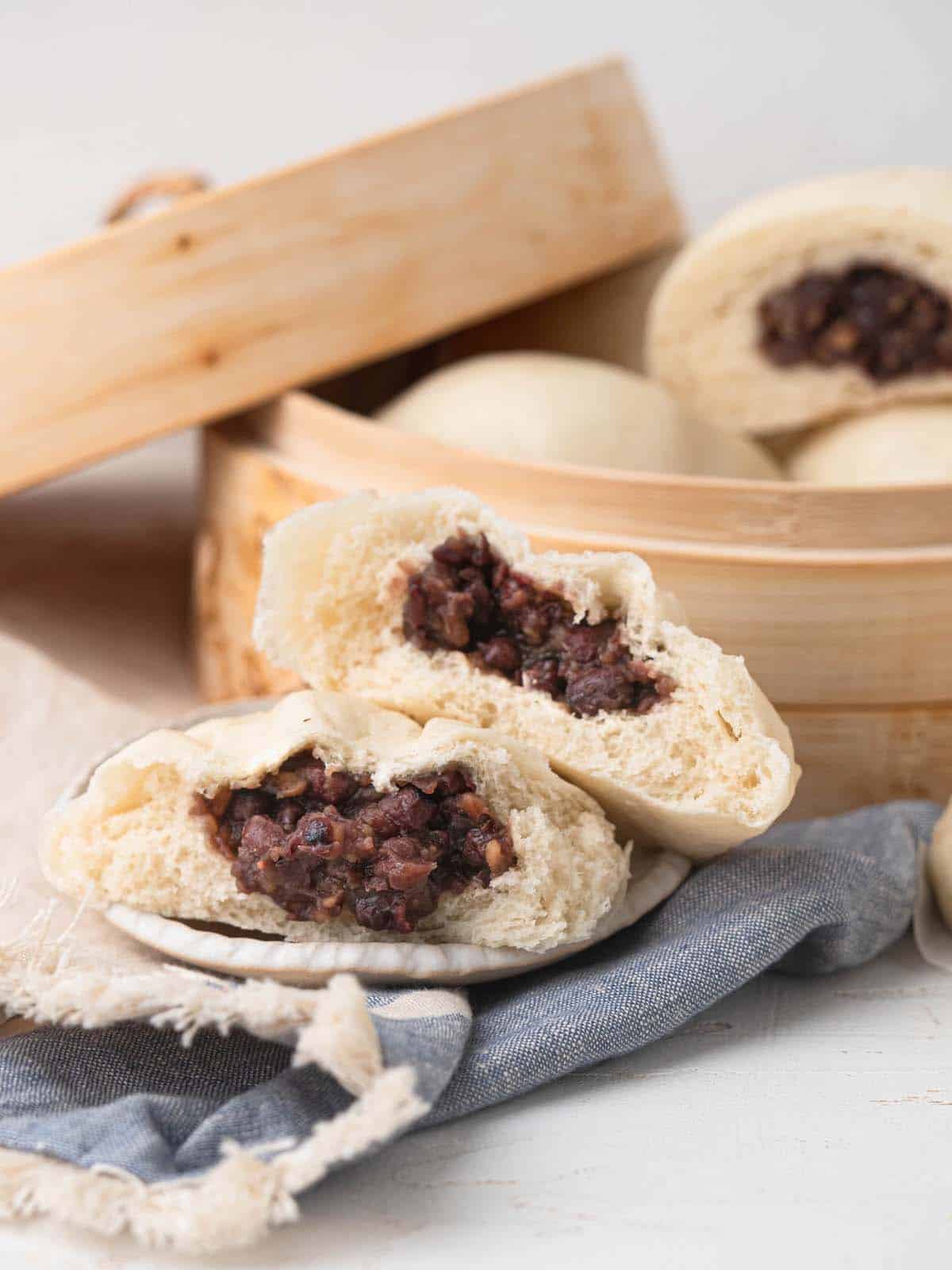
Leave some of the beans lightly mashed instead of blending everything smooth.
This gives a more homemade texture. It feels rustic in the best way, like something warm from a family kitchen.
Mini Red Bean Buns
Divide the dough into smaller pieces and use less filling.
They steam faster and look adorable on a dessert platter. Very cute, very dangerous, because you’ll probably eat three without noticing.
Vegan Red Bean Buns
Use unsweetened soy milk or oat milk in the dough.
The buns may taste slightly different, but they can still be soft and fluffy. Soy milk works especially well because it keeps the flavour gentle.
Red Bean and Chocolate Buns
Add a small piece of dark chocolate with the red bean paste.
The chocolate melts into the warm filling and gives a rich little surprise. It is not traditional, but it is very dessert-counter friendly.
Serving Suggestions, How I Like to Present These for Maximum Wow
Serve Warm from the Steamer
Red bean buns are at their softest when warm.
The dough feels fluffy, and the filling turns smooth and sweet. This is the moment when they taste most like comfort.
Pair with Hot Tea
Serve them with jasmine tea, green tea, or oolong.
The tea balances the sweetness and keeps the buns feeling light. It is simple, but very graceful.
Serve with Warm Soy Milk
Warm red bean buns and soy milk are such a comforting pair.
It feels like a classic Asian breakfast moment. Soft bun, sweet filling, warm drink, done.
Make a Mini Dessert Platter
Serve smaller buns with sesame balls, mochi, fresh fruit, or little cookies.
It gives a fun mix of chewy, soft, crisp, and sweet textures. This is the kind of tray I’d happily put out at TuCha for a cosy afternoon treat.
Add Toasted Sesame on Top
Sprinkle a few sesame seeds on top before steaming.
It adds a small nutty note and helps the buns look finished. Tiny detail, big bakery energy.
Serve with Fresh Berries
A few strawberries or raspberries on the side add brightness.
The fruit cuts through the sweetness of the red bean paste. It also makes the plate look fresh without much effort.
Pack Them for a Sweet Snack
Once cooled, these buns are easy to pack.
They make a lovely snack for school, work, or an afternoon pick-me-up. Re-steam them later if you want that soft, fluffy texture back.
Serve with Black Sesame Latte
For a café-style pairing, serve warm buns with a black sesame latte.
The nutty drink and sweet red bean filling work beautifully together. It feels very cosy, very TuCha, and very worth sitting down for.
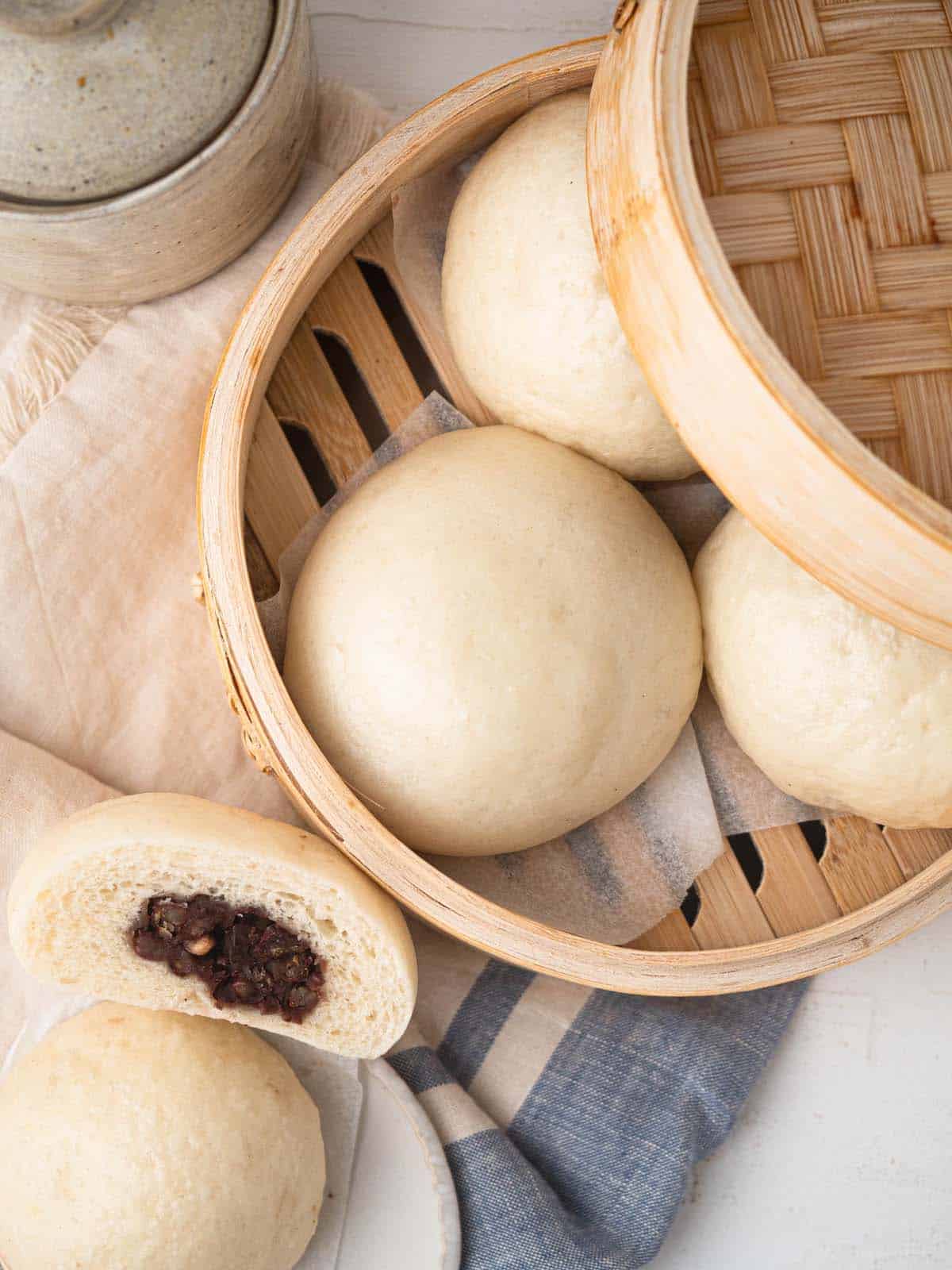
Slice One Open for Serving
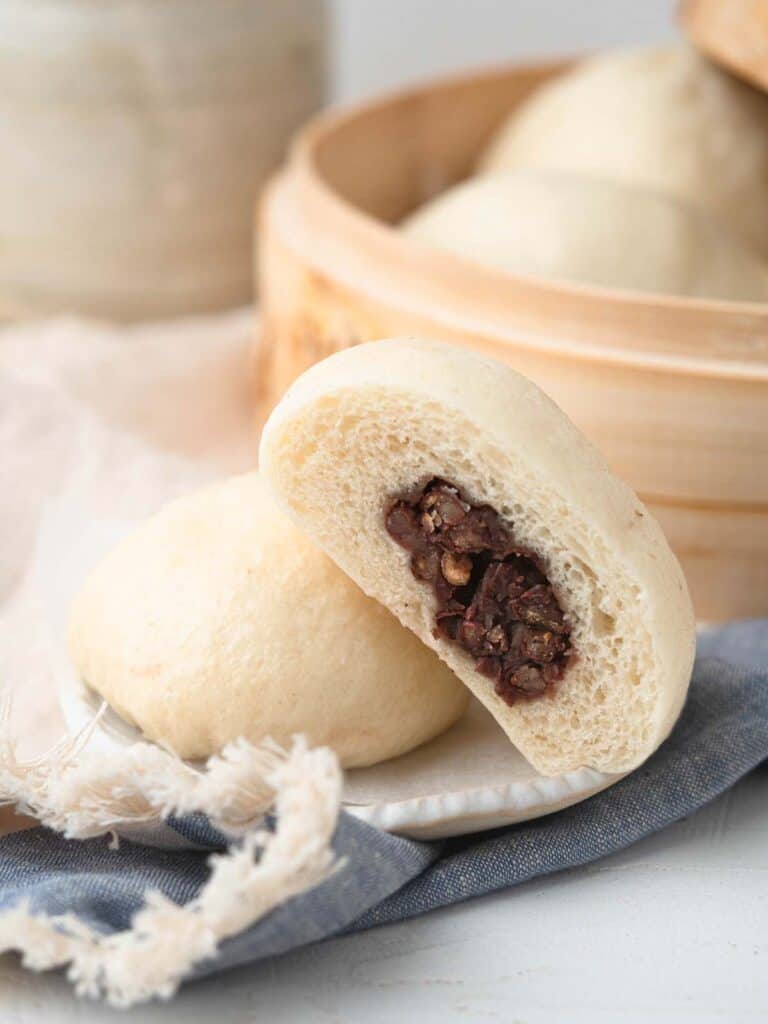
If you are serving these on a platter, slice one bun open to show the filling.
The soft white bun and deep red bean centre look lovely together. It gives people that little “oh, I want that” moment before they even take a bite.
Make a Breakfast Bao Plate
Serve one or two buns with fruit, tea, and a small bowl of yoghurt or soy pudding.
It feels gentle and balanced, not too heavy. A soft breakfast with a sweet centre is sometimes exactly what the morning needs.
Common Mistakes to Avoid, Lessons I’ve Learned After Dozens of Batches
Adding Sugar Before the Beans Are Soft
Red beans do not soften well once sugar is added.
Cook the beans until they mash easily between your fingers first. Then add the sugar and cook the paste down.
Using Runny Red Bean Paste
Soft paste makes the buns harder to seal.
Cook the paste until it thickens, then chill it before shaping. The filling should hold its shape like a soft ball.
Filling the Buns Too Much
I know more filling sounds like more joy, but too much can cause sealing problems.
Use enough to taste generous, but not so much that the dough has to fight for its life.
Not Sealing the Dough Properly
If the bottom is not pinched well, the filling can leak during steaming.
Pinch firmly, then place the bun seam-side down. That little hidden seal does a lot of work.
Crowding the Steamer
Buns need space to puff.
If they are too close together, they may stick or steam unevenly. Give them a little breathing room.
Storing While Still Warm
Warm buns release steam inside a container.
If you pack them too soon, the outside can become wet and sticky. Let them cool first, then store them airtight.
Reheating Without Moisture
Dry heat can make steamed buns tough.
Re-steam them for the softest texture. If using a microwave, cover with a damp paper towel so the dough does not dry out.
Freezing Without Wrapping Well
Freezer air can dry out the buns.
Wrap them well or store them in a sealed freezer bag. A little care now means softer buns later.
Using Filling Straight from a New Store-Bought Tub
Some store-bought red bean paste is quite soft.
Chill it before shaping so it is easier to portion and seal. This is one of those tiny steps that saves a lot of bao drama.
Treating All Steamers the Same
A bamboo steamer, metal steamer, and pot setup all behave a little differently.
Watch the steam and spacing more than the tool itself. The buns need steady heat and room to puff.
Spray or brush the buns with water
If you want to get a super smooth surface you can brush or spray your buns with milk or water before steaming them for an extra glossy and smooth surface.
Wrap your steamer lid with a tea towel
If you are using a metal steamer with a glass lid, there is often condensation on the lid that may fall onto your buns as they are steaming. This can cause bubbles and deformaties on the surface of your buns.
An easy solution for this is to wrap your lid in a tea towel. The tea towel will absorb any condensation and water droplets that form as the buns steam.
Allow your buns to rest
This is one of the most important steps when making steamed buns. If you open your steamer right after they finish steaming the buns are likely to collapse. This is because the sudden change in temperature causes the buns to shrink back.
After the buns have finished steaming, let them sit in the steamer for 5 minutes so the structure can set and the temperature can even out.
Let’s Get Cooking
If you liked this recipe make sure to leave me a comment and rating down below. I’d love to know how it went! Also, don’t forget to tag me on Instagram @catherine.desserts.
Follow me on Facebook, Pinterest, YouTube, and TikTok for more of my baking creations and updates!
Red Bean Buns (Dou Sha Bao)
Soft and fluffy steamed buns filled with sweet red bean paste, a classic Chinese treat!
- Prep Time: 30 minutes
- Cook Time: 60 minutes
- Total Time: 1 hour 30 minutes
- Yield: 10 Buns 1x
- Category: Bread
- Method: Intermediate
- Cuisine: Chinese
Ingredients
Red Bean Paste
- 150g Red beans, aka adzuki beans (3/4 cup)
- 135g Brown sugar (3/4 cup)
- Water, enough to cover the beans
Bao Dough
- 270g All-purpose flour (2 1/4 cups)
- 30g Cornstarch (1/4 cup)
- 180g Whole milk (3/4 cup), lukewarm
- 1 tbsp White sugar
- 1 tsp Instant yeast
- 1 tsp Vegetable oil
- Sesame seeds, optional
Instructions
Red Bean Paste
- Wash the red beans and place them in a large saucepan filled with water, cover
- Bring the water to a boil, reduce to a simmer and cook for 1-2 hours, or until tender (you should be able to mash the beans between your fingers)
- Top up the water as necessary as the beans cook
- Drain and place in a saucepan with the sugar and bring to a simmer
- Cook, stirring constantly until the mixture is just thick enough to draw a line down the centre of the pot
- Remove from the heat and chill until firm
- Portion into 10 balls
Bao dough
- Cut 10 pieces of baking paper at 5 x 5cm / 2 x 2 inches
- Combine the flour, lukewarm milk, sugar and yeast, in a large bowl and mix until just combined
- Knead for 5 minutes until a rough ball forms
- Divide the dough into 10 portions, and cover with cling wrap or a tea towel
- Allow the portioned balls to rest for 15 minutes
- Uncover and knead each ball until smooth, then flatten and fill with a ball of red bean paste
- Seal and place on a square of baking paper
- Place on a baking tray or in a steamer and cover
- Proof for 45 mins or until the buns have plumpened, but not doubled in size
- Bring a large pot of water to a boil and reduce the heat to medium-high
- Place the steamer over the pot of water and steam the buns for 10-12 mins
- Allow the buns to rest in the steamer after cooking for 5 mins then enjoy
Craving more? Browse every bread recipe in one place.




Can you substitute mung beans for adzuki beans?
I LOVE this recipe! They’re just like the red bean buns my old boss makes! I’ve followed this recipe several times and it always works perfectly!
So grateful for this recipe! I’ve made it so many times since I found it and it always turns out perfect!