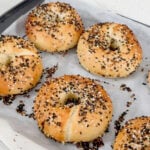
Savor Easy No Knead Bakery Style Bagels, crispy outside, chewy inside, homemade perfection without the work!
Some weekends I want something that feels a bit special, but I really don’t want to wrestle with dough. That’s where these no knead bakery style bagels come in. They’re relaxed, comforting, and still feel like a proper treat.
They bake up with a crisp, shiny crust and a soft, chewy centre that pulls just enough when you tear one open. Warm, slightly sweet, and perfect with cream cheese or butter, they taste like something you’d grab from a good neighbourhood bakery.
What is No Knead Bakery Style Bagels
No Knead Bakery Style Bagels are bagels made with a relaxed dough method that relies on time, hydration, and fermentation instead of heavy kneading. The dough comes together with simple mixing, then slowly builds structure as it rests, giving you that classic bagel chew with far less effort.
Where is No Knead Bakery Style Bagels from
This style is inspired by New York, style bagels, but adapted for modern home kitchens. The technique borrows from artisan no knead bread dough methods popular in American and European bakeries, where long fermentation replaces hard work.
How to make it
You mix a high hydration dough until shaggy, let it rest, then shape and boil the bagels before baking. Time does the gluten development, not your arms.
At-a-Glance, What You’ll Need Before We Start Rolling
| Yield | Prep Time | Cook Time | Difficulty | Storage |
|---|---|---|---|---|
| 6 to 8 bagels | 20 minutes | 25 minutes | Easy | 2 days room temp, 2 months frozen |

Ingredients
Bagel Dough
- Water, Hydrates the flour and activates yeast for proper gluten development.
- Neutral oil, Softens the crumb and keeps the bagels from drying out.
- Sugar, Feeds the yeast and adds gentle sweetness to balance the chew.
- Salt, Strengthens gluten and gives the dough structure and flavour.
- Instant dry yeast, Drives fermentation and helps the dough rise evenly.
- Bread flour, High protein flour creates the dense chewy texture bagels need.
For Boiling
- Water, Sets the crust before baking and locks in shape.
- Barley malt syrup, treacle, or honey, Adds colour, shine, and that classic bagel-style chew.
Optional, My Favourite Extras That Add a Little Magic
- Non-diastatic malt powder, Deepens flavour and boosts bakery-style colour.
- Everything seasoning mix, Adds crunch and savoury contrast on top.
- Sesame seeds or poppy seeds, Classic toppings that toast beautifully.
- Dried onion flakes and garlic flakes, Give subtle savoury warmth without overpowering.
Substitutions, Smart Ingredient Swaps That Still Taste Amazing
- All-purpose flour can replace bread flour, but the crumb will be slightly softer.
- Honey works well if you don’t have barley malt syrup.
- Kosher salt can replace fine salt, just measure carefully.
- Fast action dried yeast can be used instead of instant yeast.
Steps
- Warm the water for about 40 seconds until just warm to the touch, not hot.
- Add the oil, sugar, and salt into the water and mix until dissolved.
- Check the temperature of the mixture. When it feels warm but comfortable, add the instant dry yeast and mix well.


- Add all the bread flour and mix until no dry flour remains. The dough should look sticky and rough.


- Cover the bowl and let the dough rest at room temperature for 20 minutes.


- Lightly oil or wet your hands and knead the dough in the bowl for about 1 minute until slightly smoother.


- Cover and let the dough proof at room temperature for 30 minutes.


- Fold the dough by stretching and folding it over itself about 10 times to build structure.
- Cover and proof again for another 30 minutes.


- Perform the finger-poke test. The dough should spring back slowly and leave a slight indentation.


- Gently degas the dough and divide into 6 equal pieces, about 84g each.


- Take each piece, flatten slightly, flip it over, pinch the edges toward the centre, then turn seam-side down and round into a smooth ball.


- Cover and let the dough balls rest on the bench for 15 minutes.


- Shape each ball into a bagel by poking a hole through the centre and gently stretching until the hole is about 3 to 4 cm wide.

- Lightly dust with flour, cover loosely, and proof for 20 minutes.
- Preheat the oven to 220°C fan 200°C.
- Bring a large pot of water to a gentle boil. Add 1 tablespoon of barley malt syrup, treacle, or honey and stir to dissolve.
- Boil each bagel for 30 seconds per side, working in batches and removing them quickly.
- Transfer to a lined baking tray and add toppings if using.
- Bake for 18 to 22 minutes until deeply golden with a shiny, chewy crust.
- Cool on a rack before slicing, or serve warm.


Troubleshooting, Quick Fixes I’ve Learned from My Bakery Kitchen
| Problem | Likely Cause | Simple Fix |
|---|---|---|
| Flat bagels | Dough over-proofed | Shorten proofing time |
| Dense centre | Under-fermented dough | Extend cold fermentation |
| Pale crust | No sweetener in boil | Add honey or malt |
| Wrinkled surface | Dough dried out | Cover during proofing |
| Spreading bagels | Weak shaping tension | Tighten final shaping |
Comparison, How This Recipe Stacks Up Against Other Desserts
| Recipe | Texture | Effort |
|---|---|---|
| No knead bagels | Dense, chewy, crisp crust | Low |
| Classic kneaded bagels | Very chewy | High |
| No knead bread loaf | Open crumb | Low |
Tips, My Personal Tricks for a Professional-Looking Result
Treat the first mix like a “shaggy dough” stage
When you first stir it together, it should look rough and a bit messy. That shaggy dough is normal for no knead bread dough, and it’s why you must hunt down any dry bits. I always scrape the bowl and squeeze the mix with wet hand mixing until there are no dry flour pockets, because those bake up like little raw patches.
If you enjoy hands-off doughs like this, you’ll also love how soft and forgiving my milk bread dough is, it’s perfect for relaxed baking days.
Let hydration do the hard work
A high hydration dough (around 64% hydration) feels stickier than a low hydration dough at the start. Give it a dough hydration rest, and it will tighten up on its own as the flour drinks the water. This is the same calm trick I use when testing new doughs for TuCha, because it saves your arms and improves texture.
Use the stretch and fold technique for dough strength building
Instead of kneading, do a few gentle folds with a short rest in between. That stretch and fold technique builds gluten development without tearing the dough, and you’ll feel it go from loose to smooth pliable dough. Folding is genuinely easier than kneading with wet dough, and it’s one of the quickest ways to build structure in high hydration doughs.
Cold time equals better flavour and better chew
If you can, go for overnight cold fermentation with proper refrigerator proofing. A long fermentation 24 to 48 hours deepens the flavour and helps you land that bagel-style chew and tight crumb texture, rather than something bready and bland. In my kitchen tests, the cold proof is the difference between “nice” and “bakery level”.
Shape with tension, then rest seam side down
Do a quick pre-shaping dough ball, then a short bench rest, then final shaping with tension. That tension helps the bagels hold their height, and it stops the dough from spreading. I rest them seam side down so the surface stays smooth and the boil gives a cleaner shine.
Boil like you mean it, and sweeten the water
Boiling is what sets the skin and locks in that dense chewy texture. I add barley malt syrup, treacle, or honey because it helps colour and flavour, and you get a shinier crust. If you like a more classic bagel taste, barley malt syrup is the most “true” option, but honey still works beautifully.
These bagels are especially good split and filled, if garlic is your thing, my garlic cream cheese bagels are a must-try next.

Variations, Fun Twists and Flavours Inspired by Dessert Experiments
Everything topping, café-style
Use everything seasoning mix on top right after boiling so it sticks well. I like to boost it with dried onion flakes and garlic flakes for a deeper savoury hit. It’s the easiest way to get that no knead bagel bread vibe, but in a proper bagel shape.
Sesame and poppy “two tone” batch
Do half sesame seeds and half poppy seeds so your tray looks like a bakery display. The seeds toast while baking and give a nutty, slightly bitter edge that balances the sweet boil. It’s subtle, but it reads very professional.
Malt-forward bagels
Add a small amount of non-diastatic malt powder to the dough for extra depth. It leans into that classic bagel shop flavour and helps browning. I reach for this when I want a more “New York” vibe without changing the method.
Easy salt bread energy
Keep the dough plain, then finish with kosher salt or a flaky sea salt topping right after baking. It’s simple, bold, and feels like easy salt bread in bagel form. Best with butter so the salt hits first and the crumb follows.
Cinnamon-sugar breakfast bagels
Mix a little sugar into the dough, then brush the tops after baking and dip in cinnamon sugar. The crust stays crisp, but the finish feels soft and cosy. This is the sort of flavour play I test when I want something brunch-friendly at TuCha.
No knead bagel bread loaf
If you want the flavour without shaping, bake it as a loaf with everything seasoning mix. Use lined bowl proof or a proofing basket, dust with rice flour dusting, then bake as a steam baked loaf in a covered pot bake or cast iron dutch oven baking setup. You’ll get an artisan style loaf with an open crumb loaf feel, rather than a tight crumb texture.
If you’re after a softer, more sandwich-style option, my fluffy hot dog buns use a similar shaping mindset with a lighter crumb.

Serving Suggestions, How I Like to Present These for Maximum ‘Wow’
Warm with a thick smear, simple and glossy
Slice while they’re still a touch warm so the centre feels soft and steamy. Cream cheese melts slightly into the bagel-style chew and it tastes rich without being heavy. I keep the plating clean and let the crust shine.
Smoked salmon board, café at home
Lay out bagels with salmon, cucumber ribbons, capers, and lemon. The crisp crust and dense chewy texture stand up to all the toppings without going soggy. It’s a low-effort spread that still feels polished.
Avocado with crunch
Go for smashed avo, flaky sea salt topping, and sesame seeds. Add a drizzle of neutral oil if it needs a silky finish. The contrast between creamy topping and chewy crumb is the whole point.
Sweet brunch moment
Toast, then add butter and honey or jam. The slight sweetness from the boil plays nicely with fruit, and you still get that proper bakery bite. This is my “quiet morning” pick with coffee.
Bagel sandwiches that don’t collapse
Use egg, cheese, and something crisp like lettuce or pickled onion. The tight crumb texture holds fillings well, and the crust keeps the sandwich from feeling limp. Wrap it in parchment for that takeaway feel.
Dessert-leaning plate, TuCha style
Toast, then spread lightly sweetened cream cheese and top with sliced strawberries. A tiny pinch of sugar and salt makes it taste more rounded. It feels like a bakery dessert, but it’s still breakfast.
Common Mistakes to Avoid, Lessons I’ve Learned After Dozens of Batches
Treating the dough like a low hydration dough
This dough behaves very differently from a stiff, traditional bagel dough. If you panic and keep adding flour, you’ll end up with a dry, tight result instead of a dense chewy texture. Trust the high hydration dough, give it time, and let gluten development happen through rest rather than force.
Leaving dry flour pockets in the bowl
This is one of the most common issues I see when people rush the mix. Dry flour pockets never disappear in baking and turn into chalky bites. Use hand mixing in bowl with wet hands, scrape the sides, and squeeze the dough gently until everything is evenly hydrated.
Skipping the hydration rest or autolyse
If you don’t allow a dough hydration rest, the dough will feel harder to manage and weaker during shaping. That short autolyse method rest helps plain flour or strong white bread flour fully absorb water. It’s a quiet step, but it makes shaping smoother and more controlled.
Overworking during stretch and folds
The stretch and fold technique is meant to be gentle. Pulling too hard can tear gluten strands and undo your dough strength building. I stop folding as soon as the dough feels smoother and starts holding its shape, even if it looks imperfect.
Proofing too warm for too long
A warm proofing spot or oven light proofing can push the dough too far, especially with instant yeast. If the dough goes past dough doubling in size, it can lose structure and collapse during boiling. When in doubt, cooler and slower is safer.
Weak final shaping with no tension
Bagels need surface tension to hold their shape. If you skip proper pre-shaping dough ball and final shaping with tension, the rings spread and bake flat. Take a few extra seconds here and always rest them seam side down so the surface stays smooth.
Under-boiling or over-boiling
Boiling is not optional, but timing matters. Too short and the crust won’t set properly. Too long and the crust turns thick and tough. Aim for a confident, brief boil so you get that classic bagel-style chew without heaviness.
Forgetting sweetness in the boiling water
Plain water works, but you’ll miss out on colour and flavour. Barley malt syrup, treacle, or honey helps create shine and depth. This is one of those small bakery details that makes the bagels look and taste more professional.
Baking without enough heat or steam
Bagels need a hot oven to set quickly. If the oven is too cool, they dry out before they rise properly. A well-preheated oven and, if needed, a steam baked loaf setup or covered pot bake nearby in the oven helps with crust quality.
Not adjusting for your flour
Different flours absorb water differently. Bread flour 12 to 14% protein, all-purpose flour, or high gluten flour will each behave slightly differently. Pay attention to feel rather than numbers, and aim for a smooth pliable dough, not a stiff one.
Frequently Asked Questions
Let’s Get Cooking
If you liked this recipe make sure to leave me a comment and rating down below. I’d love to know how it went! Also, don’t forget to tag me on Instagram @catherine.desserts.
Follow me on Facebook, Pinterest, YouTube, and TikTok for more of my baking creations and updates!
Easy No Knead Bakery Style Bagels
Savor Easy No Knead Bakery Style Bagels — crispy outside, chewy inside, homemade perfection without the work!
- Prep Time: 120 minutes
- Cook Time: 30 minutes
- Total Time: 2 hours 30 minutes
- Yield: 6 Bagels 1x
- Category: Bread
- Method: Easy
- Cuisine: American
Ingredients
Bagel Dough
- 1 cup (170g) water
- 1 1/2 tbsp (20g) neutral oil
- 2 tbsp (20g) sugar
- 1 heaping tsp (5g) salt
- 1 tsp (3g) instant dry yeast
- 3 cups (300g) bread flour
For boiling
- Enough water to fill a large pot
- 1 tbsp barley malt syrup, treacle, or honey
Instructions
- Warm the water for about 40 seconds until just warm to the touch, not hot.
- Add the oil, sugar, and salt into the water and mix until dissolved.
- Check the temperature of the mixture. When it feels warm but comfortable, add the instant dry yeast and mix well.
- Add all the bread flour and mix until no dry flour remains. The dough should look sticky and rough.
- Cover the bowl and let the dough rest at room temperature for 20 minutes.
- Lightly oil or wet your hands and knead the dough in the bowl for about 1 minute until slightly smoother.
- Cover and let the dough proof at room temperature for 30 minutes.
- Fold the dough by stretching and folding it over itself about 10 times to build structure.
- Cover and proof again for another 30 minutes.
- Perform the finger-poke test. The dough should spring back slowly and leave a slight indentation.
- Gently degas the dough and divide into 6 equal pieces, about 84g each.
- Take each piece, flatten slightly, flip it over, pinch the edges toward the centre, then turn seam-side down and round into a smooth ball.
- Cover and let the dough balls rest on the bench for 15 minutes.
- Shape each ball into a bagel by poking a hole through the centre and gently stretching until the hole is about 3 to 4 cm wide.
- Lightly dust with flour, cover loosely, and proof for 20 minutes.
- Preheat the oven to 220°C fan 200°C.
- Bring a large pot of water to a gentle boil. Add 1 tablespoon of barley malt syrup, treacle, or honey and stir to dissolve.
- Boil each bagel for 30 seconds per side, working in batches and removing them quickly.
- Transfer to a lined baking tray and add toppings if using.
- Bake for 18 to 22 minutes until deeply golden with a shiny, chewy crust.
- Cool on a rack before slicing, or serve warm.
Craving more? Browse every bread recipe in one place.