
Light and fluffy sponge cake with a silky smooth cream filling. This is the guide to creating the perfect Swiss roll cake with a milk tea cream!
Creating the perfect Swiss roll cake has always been a struggle for me. There were problems rolling it into the perfect shape, problems with cracks, problems with cream oozing… and the list goes on. Well lucky for you I am here to solve all your problems!
This Swiss roll is incredibly light with a melt-in-your mouth quality, similar to a Japanese Swiss roll or one you would find in an Asian bakery. And you can change up the filling as you like, whether that be a simple jam, whipped cream, buttercream or fresh fruit. The world is your oyster!
What is a Swiss Roll?
Every country seems to have their own version of a Swiss roll. Whether it is called a Swiss roll, jelly roll, cream roll, roll cake, roulade, or Swiss log they are all the same thing. A rolled sponge cake filled with some type of icing, cream or jam. These’s even one for Christmas, the yule log!
However when it comes to the texture of the sponge cake it differs slightly between countries. I find that the Swiss rolls from European countries are significantly drier, most likely due to the use of jams and icings, as well as the nature of the sponge cake being predominantly genoise.
On the other hand Japan and other Asian countries have a characteristic Swiss roll which is lighter in texture and taste. Being made from a chiffon base the sponge cake has a softer texture and they are usually filled with a light whipped cream.
Preference comes to personal taste, but who can say no to a fluffy cloud of a cake?!
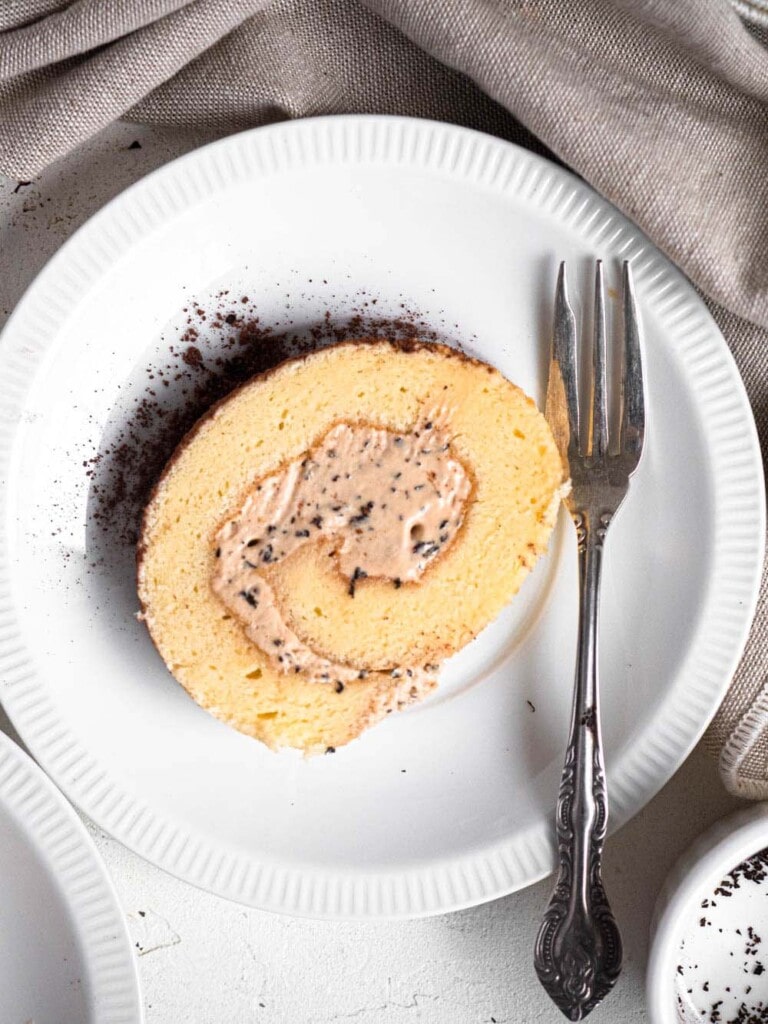
Ingredients You Need For Perfect Swiss Roll Cake
For the Cake
- 25 g White sugar (I) (2 tbsp): Just a little sweetness to start off! This sugar will bring out the soft, light texture in the cake, balancing out the richness of the other ingredients. It’s the base that gives your cake a delicate sweetness without being overwhelming.
- 85 g Cake flour (3/4 cup): The key to making the cake fluffy and light. Cake flour is finer than all-purpose flour, and that means it helps create a soft texture that’s just perfect for sponge-style cakes. You’ll notice the difference when you cut into it, that delicate crumb!
- 50 g Milk (3 tbsp 1 tsp): The milk adds moisture and a smooth richness that makes the cake melt in your mouth. It’s subtle but makes all the difference in achieving that light yet soft texture. You want the perfect balance, and this is it!
- 50 g Vegetable oil (1/4 cup): I love using vegetable oil because it keeps the cake moist and tender without affecting the flavor. It’s not about making the cake greasy; it’s about adding a subtle richness that supports all the other flavors.
- 4 Egg yolks: These yolks are what give the cake its richness and golden color. They help bind everything together, making the cake soft and velvety. The richness in the yolks also brings that luxurious texture, so every bite feels just a little indulgent.
- 4 Egg whites: Now, these are where the magic happens! Whisked to perfection, egg whites will help give the cake that light, airy structure. It’s all about getting them to the right consistency so your cake has that delicate fluffiness.
- 60 g White sugar (II) (1/4 cup 2 tsp): This sugar will help stabilize the egg whites when you’re whipping them up. It also contributes to the cake’s sweetness, so it’s just enough to make everything come together perfectly. It’s like the final touch to balance the flavors.
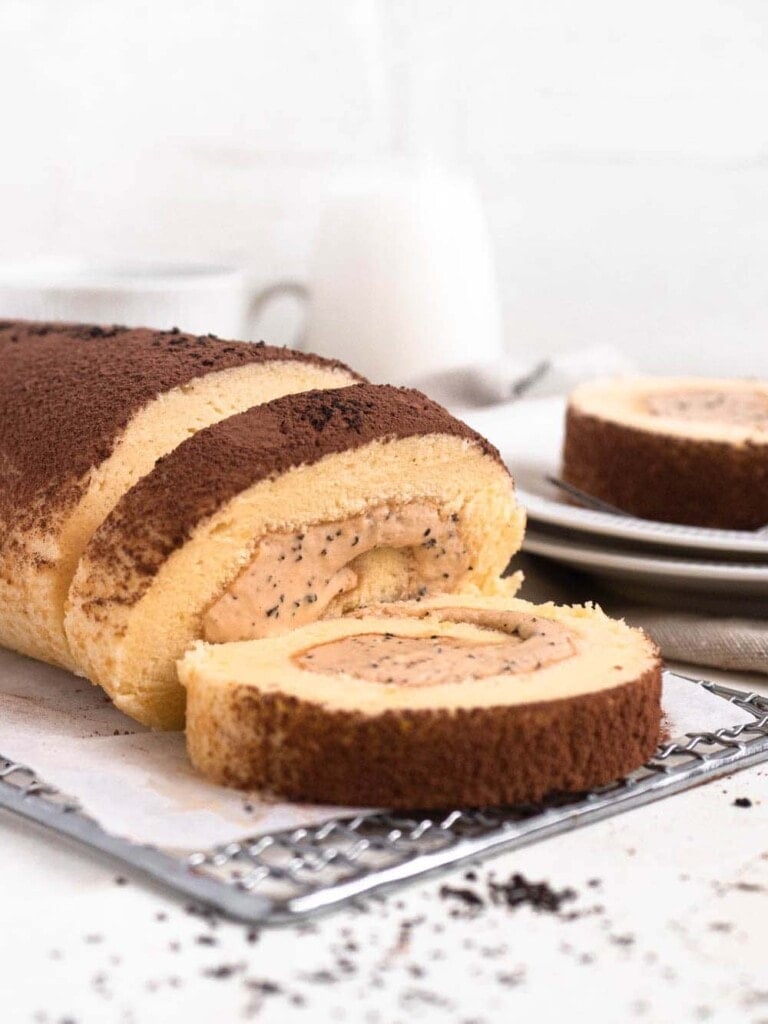
Step-By-Step Instructions
Preheat the Oven & Prepare the Pan
- Alright, let’s get started! First, preheat your oven to 160C/320F. This temperature will give us that soft, fluffy texture we’re aiming for. Grab a 25 x 30 cm pan (or 10 x 12 inches) and line it with baking paper. Trust me, lining the pan makes life so much easier when you’re removing the cake later on!
Heat the Milk
- Now, take a small saucepan and heat the milk on medium heat until it’s steaming. You want it nice and hot, but not boiling, so keep an eye on it. It’s all about getting it just the right temperature for the next steps!
Whisk the Egg Yolks & Sugar
- While the milk is heating up, grab a medium-sized bowl and whisk the egg yolks, oil, and sugar (I) together. This part is where the magic happens. You’ll want it nice and smooth, so don’t rush it. The smoother the mixture, the fluffier the cake will be later.
Add the Hot Milk to the Egg Mixture
- Once your milk is all steamy, it’s time to slowly pour it into the egg yolk mixture. This step needs a little patience, don’t pour too fast. Keep whisking as you go to make sure everything combines smoothly.
Sift in the Cake Flour
- Now, sift the cake flour into your milk and egg mixture. This is a small step that goes a long way in helping your cake turn out light and airy. Once sifted, whisk it all together until you’ve got a smooth batter. You’ve got this!
Whisk the Egg Whites & Sugar
- In another large bowl, it’s time to whisk the egg whites and sugar (II) until stiff peaks form. You want the peaks to stand up tall without folding over. This part is important because it adds volume and lightness to the cake.
Fold the Meringue into the Yolk Mixture
- Next, carefully fold the meringue mixture into the egg yolk mixture. Do this in three parts, folding gently after each addition. You don’t want to deflate all that air you just whipped into the egg whites. It’s a delicate balance, but you’re doing great!
Pour & Bake
- Now it’s time to pour the batter into your lined cake tin. Spread it out evenly, and pop it into the oven for about 25 minutes. Keep an eye on it, you’ll know it’s ready when it’s golden on top and a toothpick comes out clean. The smell will be amazing!
Invert the Cake & Cool
- Once the cake is out of the oven, immediately invert it onto a sheet of baking paper. Be careful here, and remember, patience is key! After that, remove the baking paper and swap it for a clean kitchen towel. The towel helps absorb any moisture, keeping your cake soft and tender.
Flip the Cake & Roll
- Here’s the fun part: gently flip the cake so the towel is on the bottom and the baking paper is on top. Now, start rolling the cake from one short end to the other. Go slow and steady, this will prevent cracks. Once it’s rolled, place it seam side down and leave it to cool completely.
For the Milk Tea Cream
Combine Tea & Sugar
- For the cream, in a heatproof bowl, mix together the milk tea powder, black tea, sugar, and water. Heat this in the microwave for 10-second bursts, stirring in between, until the sugar and tea powder dissolve completely. Once it’s done, set it aside to cool, we want this to be room temperature before adding it to the cream.
Whip the Cream
- While the tea mixture cools, take a medium-sized bowl and whip the heavy cream to soft peaks. Start off slow and build up speed until it holds soft peaks. You’re looking for a nice, fluffy texture. You can do it, just take your time!
Add the Tea Mixture
- Once your tea mixture has cooled down, add it to the whipped cream. Continue whipping until you get medium-stiff peaks. You’ll see the cream start to hold its shape, and that’s when you know it’s ready. The tea flavor will be perfectly balanced in the cream, adding a delicious depth to the cake.
For Assembly
Unroll the Cake
- Carefully unroll your cooled cake. Be gentle here, you’ve worked so hard to get it just right! Peel away the baking paper and kitchen towel. Now, the cake is ready for that dreamy milk tea cream.
Spread the Cream & Roll Again
- Spread the milk tea cream evenly over the cake. You want it to be generous but not too thick. Once the cream is evenly spread, gently roll the cake back up, following the original curl. Don’t rush this step, slow and steady wins the race!
Wrap & Chill
- Wrap your rolled cake tightly in cling wrap and place it in the fridge for at least 2 hours. This helps everything set perfectly, and the flavors meld together beautifully. I know the wait is hard, but trust me, it’s worth it!
Dust & Serve
- When you’re ready to serve, take the cake out of the fridge and dust it with cocoa powder for that extra touch of elegance. Slice it up, serve it with a smile, and enjoy all the hard work you put into making this cake a reality!
How to roll the perfect Swiss roll
A Swiss roll is all about the roll. In order to create the perfect roll cake keep the following tips in mind.
Roll the cake in a tea towel as soon as it comes out of the oven
- This is the most important step when creating a Swiss roll.
- The biggest problem people have with Swiss rolls is the shape.
- When the cake is warm it has the most elasticity and flexibility, and therefore rolling at it’s peak plasticity will allow you to mould it into your desired shape.
- Many recipes will tell you to roll it in baking paper. However, tea towels are much softer and will not causes unsightly lines and wrinkles to form on the surface of your cake.
- Fill the centre of the roll with more cream and the edge with a thinner layer
- This is important when rolling the cake.
- The centre of the cake where the innermost roll is will have the most cream.
- If you apply a thick layer to the outer part of the roll it will almost definitely be squeezed out of the cake when rolled up.
Wrap the roll cake in cling wrap
- Once you have successfully filled and rolled the cake wrap it tightly with cling wrap. This helps to set the shape of the cake while it sets up in the fridge.
- Slice the cake with a warm sharp knife.
- Trying to cut this cake with a blunt knife may result in the cream to ooze out of the sides. Make sure your knife is warm and sharpened so it can slice through the layers of cake easily.
Milk Tea Roll Cake Filling
This version is filled with light and fluffy milk tea cream. My dream Swiss roll! When it comes to roll cakes the Hong Kong Swiss Roll was always my go to. This is the kind you’ll find in most Asian bakeries. The sponge is incredibly soft and the light cream complements the sponge.
To pair with the sponge I thought a Hong Kong Milk Tea filling would be appropriate.
Where can I buy instant milk tea powder?
Instant milk tea powder is one of my go-to’s when creating milk tea flavoured desserts. Because it is in a powdered form you can create a concentrated milk tea flavour without unnecessary liquids.
Instant milk tea powder is widely available and in most Asian grocery stores. If you can’t find it in a store near you there are a lot of sellers online on Amazon like here ???? Instant milk tea powder.
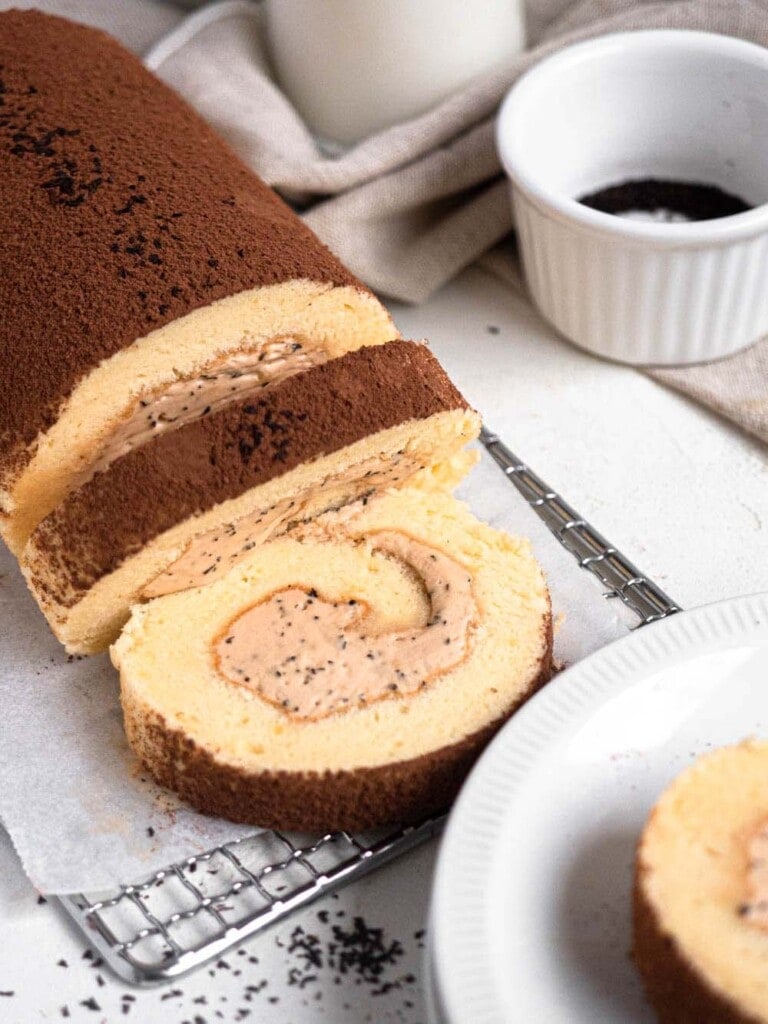
Customise the Swiss Roll to Your Taste!
If you can’t find milk tea powder, or feel like something different this recipe is extremely versatile. You can customise the cake however you want whether that be jam, fruits, fresh cream or buttercream!
Jam Roll Filling
The easiest of the fillings is jam. Simply spread a couple of tablespoons of your favourite jam on the inside of the cake and roll it up!
Fresh Cream Filling
The perfect amount of cream to fill this cake is about 200g or 3/4 cup of thickened/heavy cream whipped up to medium-stiff peaks. To make any flavour simply add the following to 200g or 3/4 cup cream:
- Matcha roll cake: 1 tbsp matcha, 3 tbsp white sugar
- Chocolate roll cake: 1 tbsp cocoa powder, 3 tbsp white sugar
- Vanilla roll cake: 1 tsp vanilla extract, 3 tbsp white sugar
Fresh Fruits and Cream
If you want to add fresh fruits like strawberries, mango, oranges, etc. Whip up 150g or 2/3 cup thickened/heavy cream with 2 tbsp sugar. Then layer the roll cake with cream and chopped fresh fruits.
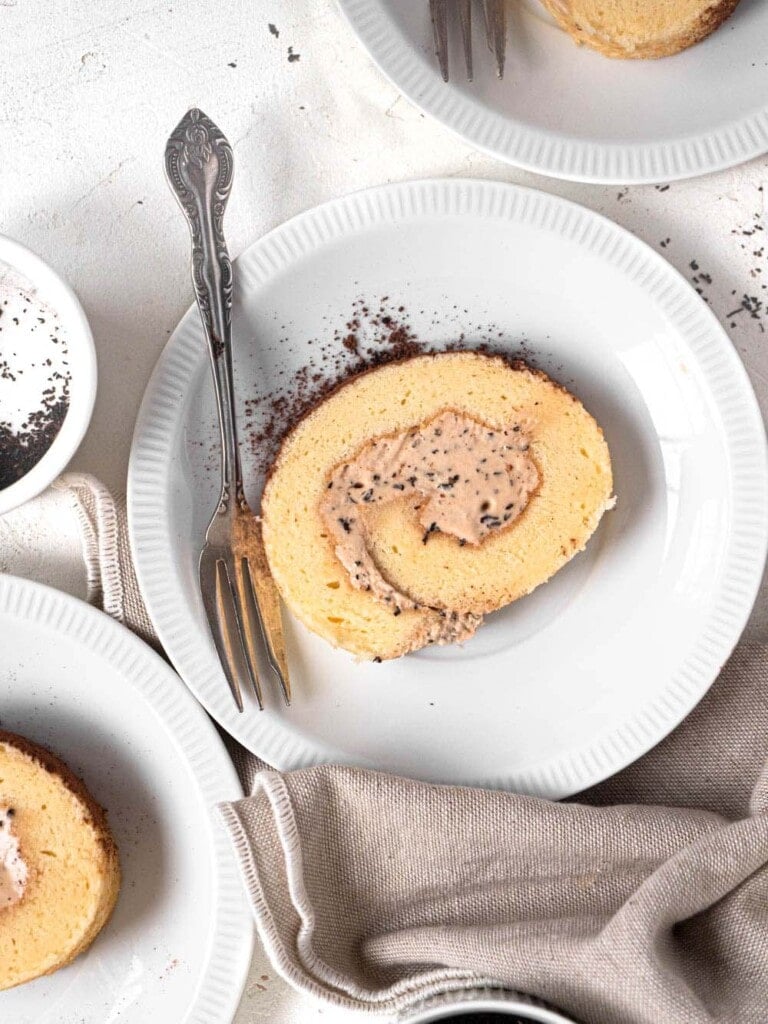
Additional Tips for a Perfect Swiss Roll Cake
Sift Flour for a Lighter Sponge
Sifting the dry ingredients ensures the sponge has a light, airy texture. Don’t skip this step!
Room Temperature Ingredients Are Key
Make sure all your ingredients, especially eggs, are at room temperature. This helps the batter come together smoothly and gives better volume.
Use Cake Flour for Extra Softness
Cake flour has less protein than regular flour, resulting in a tender and soft cake.
Score the Cake Before Rolling
Lightly score one edge of the sponge before rolling to guide the shape and prevent cracks.
Chill Before Slicing
Once filled, chill the roll for at least 30 minutes. This helps the filling set and makes slicing a breeze.

Creative Recipe Variations
Coffee Swiss Roll
Add a teaspoon of instant espresso powder to the batter, and pair it with a coffee-flavored whipped cream filling.
Matcha Swiss Roll
Use matcha powder in the sponge batter and fill it with sweetened cream for a Japanese-inspired treat.
Tiramisu-Inspired Roll
Brush the sponge with coffee syrup, fill with mascarpone cream, and dust the outside with cocoa powder.
Nutella and Banana Roll
Spread Nutella on the sponge and add thinly sliced bananas before rolling for a rich, fruity twist.
Coconut Cream Roll
Fill the cake with whipped coconut cream and sprinkle shredded coconut on top for a tropical vibe.
Serving Suggestions
With Flavored Syrups
Drizzle the slices with fruit syrups, like raspberry or passionfruit, to add a pop of flavor and a touch of elegance.
Mini Swiss Rolls for Parties
Slice the roll into smaller portions to serve as bite-sized desserts that are perfect for gatherings.
As a Trifle Layer
Use Swiss roll slices in a trifle with layers of custard, jelly, and fresh fruit for a show-stopping dessert.
With Spiced Cream
Serve slices with a dollop of whipped cream flavored with cinnamon or cardamom for a cozy, warm touch.

Frequently Asked Questions
Why is my Swiss roll rubbery?
The cake can become rubbery if the batter has been over-mixed. Over-mixing the batter increases the development of gluten which in turn increases the cakes gumminess. Over-mixing can also deflate the air bubbles that were created when whipping the meringue, causing the cake to deflate.
How do you roll a Swiss roll cake without cracking it?
To ensure the Swiss roll is assembled without a crack make sure to roll the cake sheet when warm. The cake has greater flexibility when warm, so it can easily be moulded to your preferred shape. That way later, when it is layered with cream, it is significantly easier to shape.
Why did my Swiss roll fall apart?
There are a couple of reasons why your roll may have fallen apart.
- The cake was under-baked: The cake will be very moist and difficult to handle. With the whipped cream it may have too much moisture and will fall apart easily.
- The cake was over-baked: If over-baked the cake will be a lot drier and more prone to cracks. A crack in your roll can cause the Swiss roll to fall apart.
Let’s Get Cooking
If you liked this recipe make sure to leave me a comment and rating down below. I’d love to know how it went! Also, don’t forget to tag me on Instagram @catherine.desserts.
Follow me on Facebook, Pinterest, YouTube, and TikTok for more of my baking creations and updates!
The PERFECT Swiss Roll Cake

Light and fluffy sponge cake with a silky smooth cream filling. This is the guide to creating the perfect swiss roll cake with a milk tea cream!
- Prep Time: 20 minutes
- Cook Time: 25 minutes
- Total Time: 45 minutes
- Yield: 8 1x
- Category: cake
- Method: easy
- Cuisine: European
Ingredients
Cake
- 25 g White sugar (I) (2tbsp)
- 85 g Cake flour (3/4 cup)
- 50 g Milk (3tbsp 1tsp)
- 50 g Vegetable oil (1/4 cup)
- 4 Egg yolks
- 4 Egg whites
- 60 g White sugar (II) (1/4 cup 2 tsp)
Milk Tea Cream
- 30 g Instant milk tea powder (2 tbsp)
- 20 g Sugar
- 2 g Black tea (1 tbsp)
- 1 tbsp Water
- 200 g Thickened/heavy cream (3/4 cup 2 tbsp)
Instructions
Cake
- Preheat the oven to 160C/320F and line a 25 x 30 cm pan (10 x 12 inches) with baking paper
- Heat the milk in a small saucepan until steaming
- Meanwhile, in a medium sized bowl whisk the egg yolks, oil and sugar (I) together
- Slowly add the hot milk to the egg yolk mixture and whisk
- Sift the cake flour into the milk/yolk mix and whisk until combined
- In a large mixing bowl whisk the eggs and sugar (II) until stiff peaks
- Fold the meringue mixture into the yolk mixture 1/3rd at a time until just combined
- Pour into the lined cake tin and bake for 25 minutes
- Remove from the oven and invert onto a sheet of baking paper
- Remove the baking paper and replace with a clean kitchen towel
- Flip the cake so the towel is on the bottom and the baking paper is ontop
- Roll the cake from one short end to the other, place seam side down and allow to cool completely
Milk Tea Cream
- In a heatproof bowl combine the milk tea powder, black tea, sugar and water
- Heat in the microwave with 10 second bursts until sugar and tea powder have dissolved, cool completely
- In a medium sized bowl whip the thickened/heavy cream to soft peaks
- Add the cooled tea mixture and continue whipping until medium-stiff peaks
Assembly
- Unroll the cake, then remove the baking paper and kitchen towel
- Spread the cream evenly over the cake, then roll following the curl of the cake
- Wrap the rolled cake in cling wrap and let rest in the fridge for minimum 2 hours
- Remove, dust with cocoa powder and serve



Hey Catherine!!!
Hope our favorite baker is doing well! Can’t wait to give this recipe a go! This looks so perfect and delicious thank you for sharing with us! Hope your new adventure brings you much happiness you deserve it!!! ????????
As always,
Kindest regards,
KStep
Hi KStep,
Nice to hear from you again! I’m doing great and hope you are too. Thank you for your comments as usual ????
Hope you like this recipe, it’s one of my favourites!
Catherine
You’re very welcome!! This is definitely top 3 (brownies, ice cream and this one)! However mine didn’t turn out looking anywhere near as good as yours ???? but it is soooo good!!!! Thank you!!!
Until next time
Kindest regards,
KStep
Thank you for the recipe! Currently baking it right now, but I noticed that you may have forgotten to include the step to add the oil in the instructions.
Sorry about that, thank you for letting me know. All fixed up now, hope you added it!
This roll cake was so soft and fluffy. Thanks for the recipe!! 🙂
this looks so good! Is it possible to make a smaller swiss roll cake? i.e. by halving the recipe and baking in a smaller rectangular pan?
Hi Willow, Yes you can halve the recipe and bake it in a pan half the size. Reduce the bake time to 15 minutes and keep an eye on it!
Hi
Can I replace the cake flour with all purpose flour?
So good! Instructions were easy to follow and came out perfectly, though 2 tbsp of my milk tea powder was 20g rather than 30g, so I just stuck with 20g.
Great recipe, I added 6g vanilla and 4g salt. Chef, what’s the science behind scalding the milk beforehand? Does hit help thicken/ pre-cook the yolk mixture?