Soft, stretchy red bean mochi with a cold sweet adzuki centre, rolled in coconut and finished in a microwave in under an hour.
I have made mochi more times than I can count, but red bean mochi is the one my mum actually asks for. She calls it lo mai chi, my Japanese friends call it daifuku, and in my kitchen it is just the thing I make when I want something soft and sweet without turning the oven on. There is no special equipment, no pounding, no mochi machine. A bowl, a microwave and a bench dusted with starch will get you there.
My first few batches, years ago, were genuinely bad. I cooked the dough too long so the edges went tough and rubbery, and the paste squeezed straight out the bottom the moment I tried to pinch it shut. Two boring fixes solved both problems. Chill the paste balls until they are firm and cold, and stop microwaving the second the dough turns fully translucent with no white patches left. Once I understood those two cues the whole thing became a forty minute job, and I have not had a burst mochi since.
What is Red Bean Mochi?
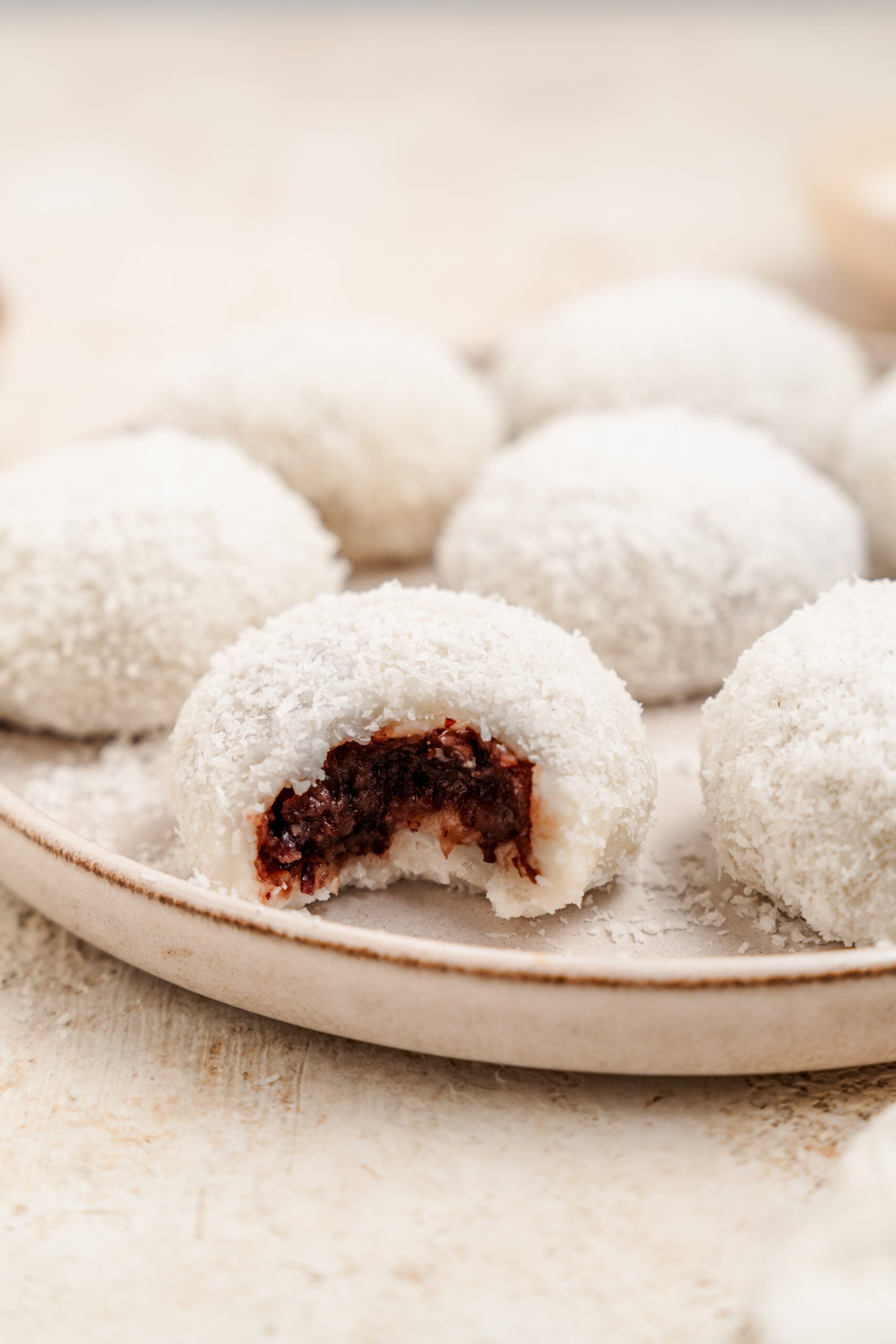
Red bean mochi is a soft glutinous rice dough wrapped around a ball of sweetened adzuki bean paste. The dough itself is barely sweet and almost neutral, which is the point: it is there for texture, that particular springy chew that pulls slightly when you bite. The filling carries the flavour, and good anko tastes deep and faintly earthy, more like a toasted bean than a jam.
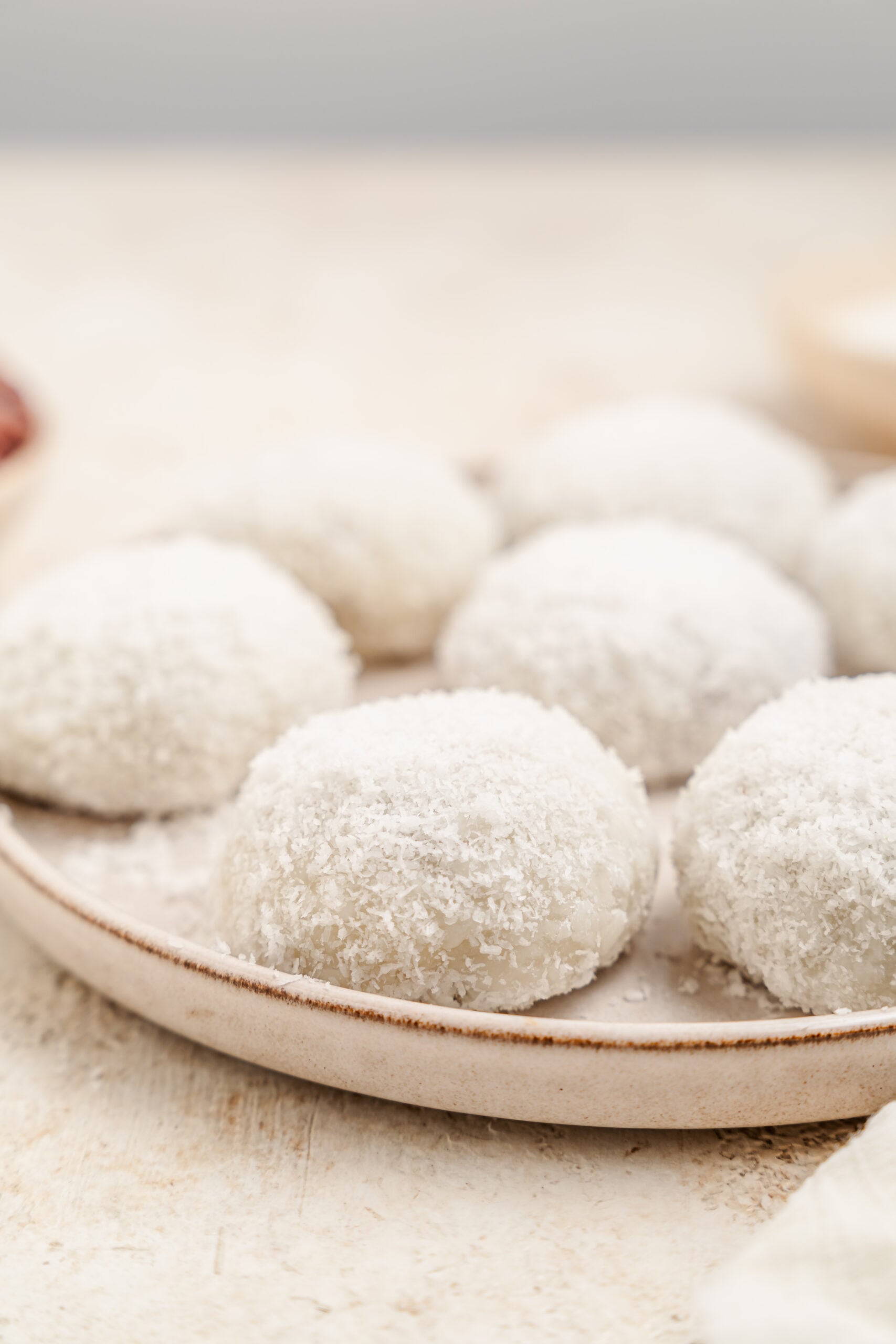
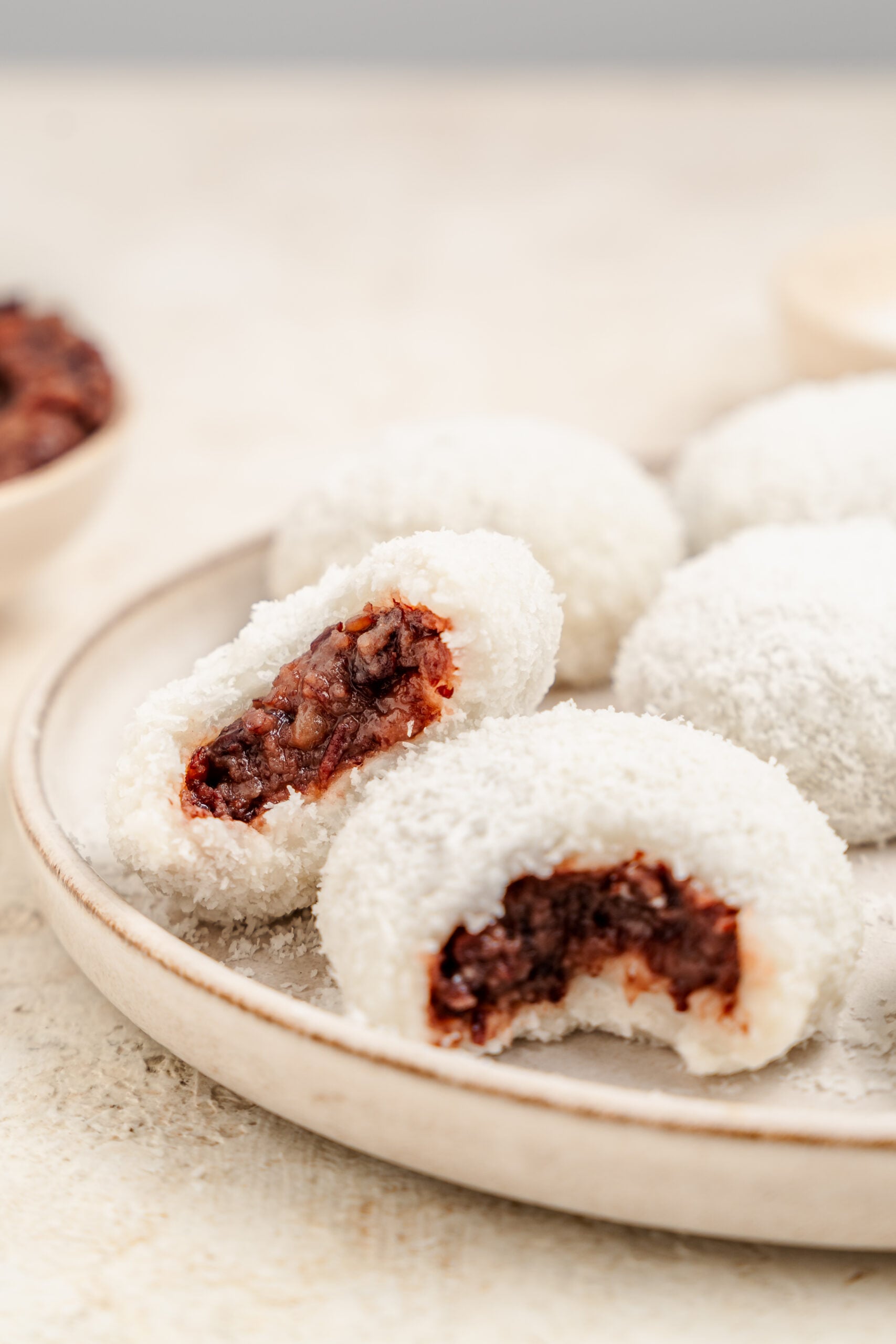
You will see it under several names depending on whose kitchen you are standing in. In Japan it is daifuku, literally great luck, usually finished with a dusting of potato starch. In Cantonese bakeries it is lo mai chi, and it is almost always rolled in desiccated coconut, which is the version I grew up eating and the one I shot for this post. Korean chapssaltteok is a close cousin again.
The thing that surprises most people is how little is involved. Four ingredients for the dough, one filling, and about ten minutes of actual hands on work once the paste is chilled. It is one of the few desserts where the technique matters far more than the shopping list.
Where Red Bean Mochi Comes From
Glutinous rice cakes turn up all across East and Southeast Asia, and pinning red bean mochi to a single origin is a bit of a fool’s errand. What is clear is that the Japanese daifuku form, a filled round mochi eaten fresh, was well established by the Edo period, when it was sold as cheap, filling street food. Sweetened adzuki paste came along with the wider spread of sugar and became the default filling.
The Cantonese lo mai chi that I make most often is a dim sum trolley item, smaller, softer, and rolled in coconut rather than starch. That coconut coating is not just decoration. It stops the pieces sticking to each other, and it gives a dry, slightly fibrous contrast against dough that would otherwise be quite one note.
Red bean itself is worth understanding if you are new to it. Adzuki beans are small, dark red, and naturally sweet in a mineral sort of way. Cooked down with sugar they become anko, which shows up in everything from taiyaki to shaved ice. If you want to see how the same filling behaves in a completely different format, my steamed red bean buns use the same paste inside a yeasted bread, and the flavour reads totally differently.
How to Make Red Bean Mochi
The method has two halves that barely overlap. First you make or buy the paste, roll it into balls and chill them hard. Then you make the dough, which cooks in the microwave in about three minutes of stop and stir bursts, and you wrap while it is still warm and pliable.
I roll my dough out flat on a heavily starched sheet of parchment and cut rounds with a cutter rather than dividing the lump by hand. It is faster, the pieces come out the same size, and it means less handling of dough that gets stickier the longer you touch it. Gather the scraps, press them together, roll again.
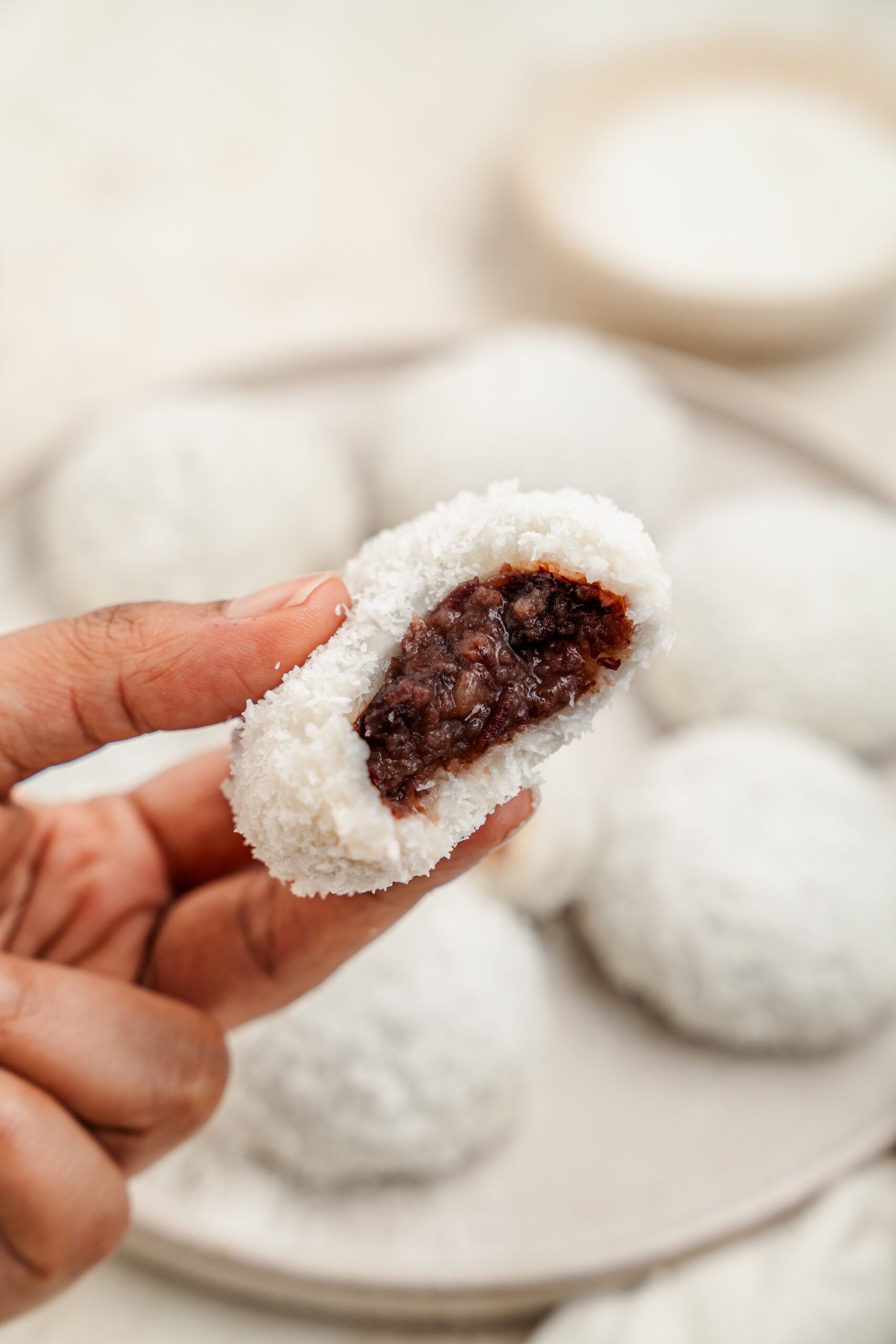
The wrap itself is the only part that takes a bit of practice. Keep the edges of each round thinner than the centre, sit the cold paste ball in the middle, then bring the edges up like a little purse and pinch firmly. Roll it seam side down between your palms and the seal disappears completely.
At a Glance: Red Bean Mochi Times and Yield
| SERVES | PREP | COOK | CHILL | TOTAL |
|---|---|---|---|---|
| 12 pieces | 25 minutes | 15 minutes | 30 minutes | 1 hour 10 minutes |
Ingredients
For the Sweet Red Bean Paste (Anko)
- Dried adzuki beans: The whole backbone of the filling. They cook down soft enough to mash while keeping a faint skin texture that stops the paste feeling like jam.
- Caster sugar: Sweetens the beans and, just as importantly, draws out water so the paste thickens and holds its shape when rolled.
- Fine salt: A small amount makes the beans taste more like themselves. Leave it out and the paste tastes flat and oddly sweet.
- Neutral oil or unsalted butter: Optional, stirred in at the end. It makes the paste glossier and a little richer, and it helps it stay smooth once chilled.
For the Mochi Dough
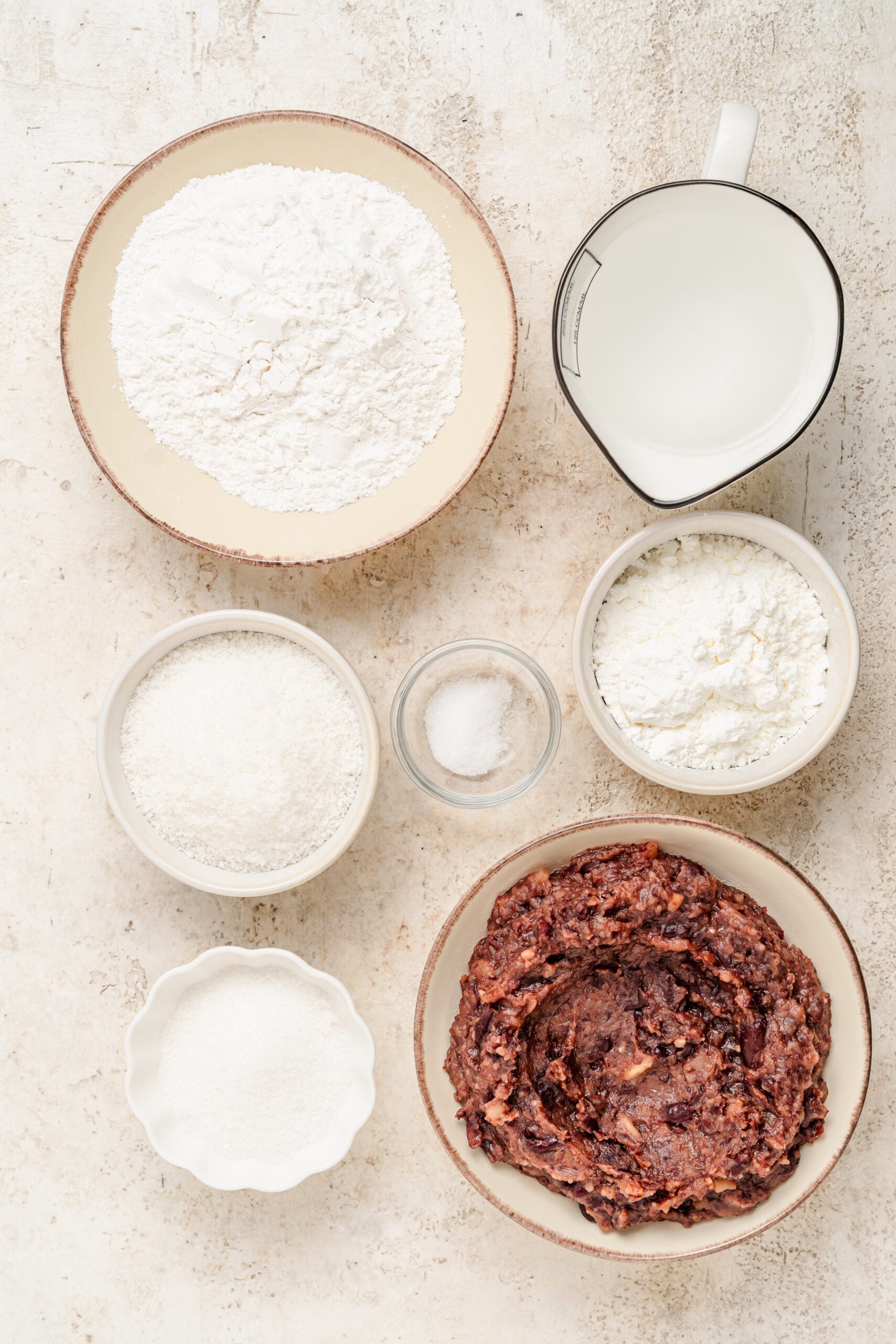
- Glutinous rice flour: Not the same thing as rice flour. Only glutinous rice flour, sold as mochiko or shiratamako, gives you that stretch, and ordinary rice flour will not work at all.
- Caster sugar: Sweetens the dough lightly and keeps it soft for longer by holding on to moisture.
- Fine salt: Just a pinch, purely to stop the dough tasting bland against the filling.
- Water: Hydrates the flour into a thin batter. Too little and the cooked dough is stiff and tears, so measure it properly.
For Coating
- Potato starch or cornflour: For the bench, your hands and the rolling pin. This is what makes the dough handleable, and you will use more than you expect.
- Desiccated coconut: The Cantonese lo mai chi finish and the one I shot here. It keeps the pieces from sticking together and adds a dry contrast against the soft dough.
Optional: My Favourite Extras That Add a Little Magic
- Kinako: Roasted soybean flour, nutty and warm, used instead of coconut. It turns the pieces a soft beige and tastes a bit like toasted peanut.
- A whole strawberry: Tucked inside the paste it becomes ichigo daifuku. The acidity cuts the sweetness and the cross section is genuinely beautiful.
- Toasted black sesame: A spoonful crushed into the paste gives it a smoky depth and speckles the filling.
- Matcha: Whisked into the dry flour it turns the dough green and slightly bitter, which balances the sweet paste nicely.
Substitutions: Smart Ingredient Swaps That Still Taste Amazing
- Shop bought red bean paste: Tinned or tubbed anko from an Asian grocer is excellent and cuts the recipe to about forty minutes. Koshian is smooth, tsubuan is chunky.
- Cornflour for potato starch: Works fine for dusting, though potato starch brushes off more cleanly and photographs whiter.
- Steaming instead of microwaving: Cover the bowl and steam over simmering water for about twenty minutes, then beat the dough hard for a minute. Same result, slower.
- Coconut milk for part of the water: Richer, slightly softer dough with a faint coconut note that suits the coconut coating.
STEPS
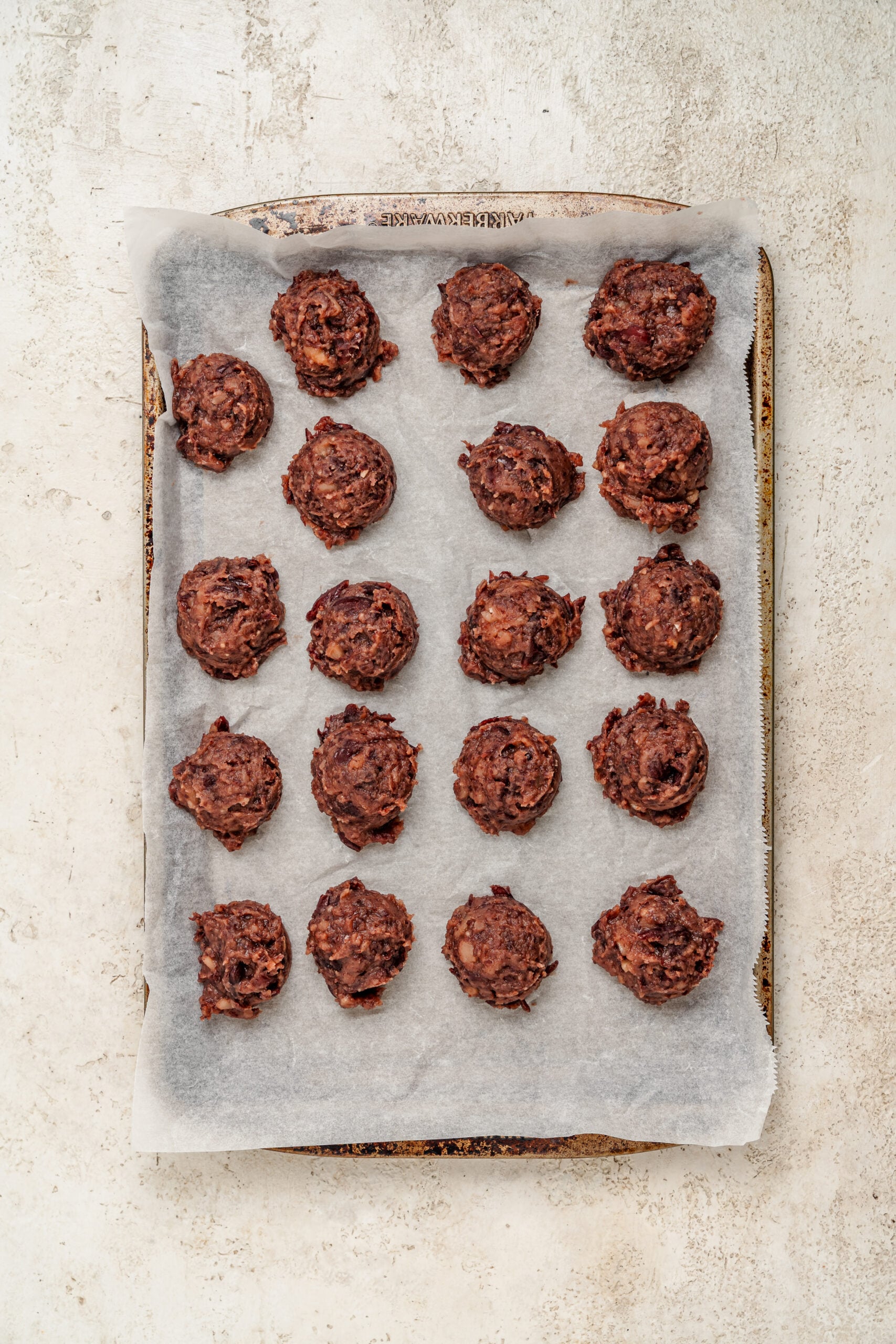
- Make the paste, or open your tin of it. Roll it into twelve balls of about 25 g each, sit them on a lined plate and chill for at least 30 minutes. Cold firm paste is the single biggest reason a mochi seals neatly instead of bursting, so genuinely do not skip this.
- Whisk the glutinous rice flour, sugar and salt together in a large microwave safe bowl. Break up any lumps in the flour now, because they are much harder to chase out once the water goes in.
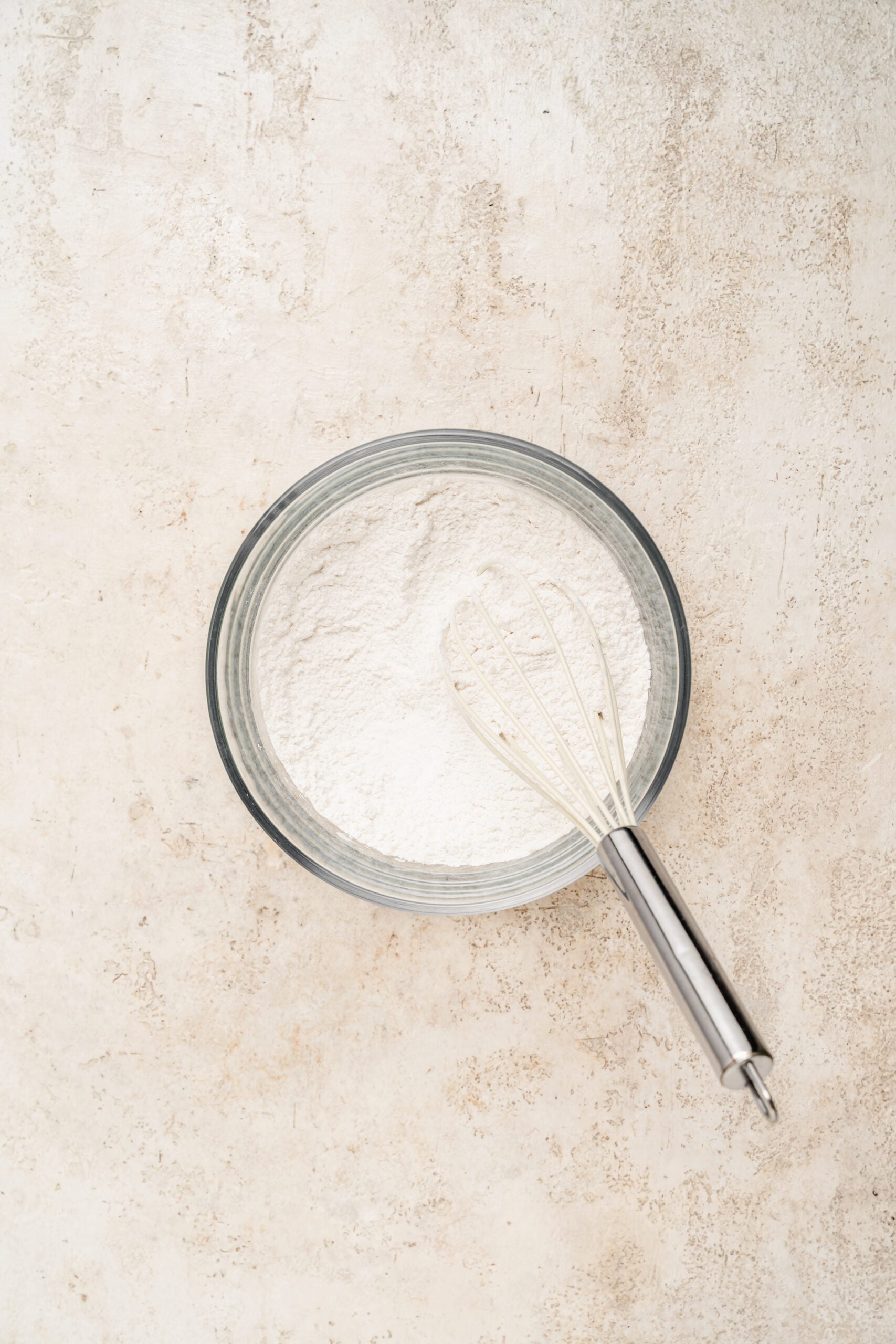
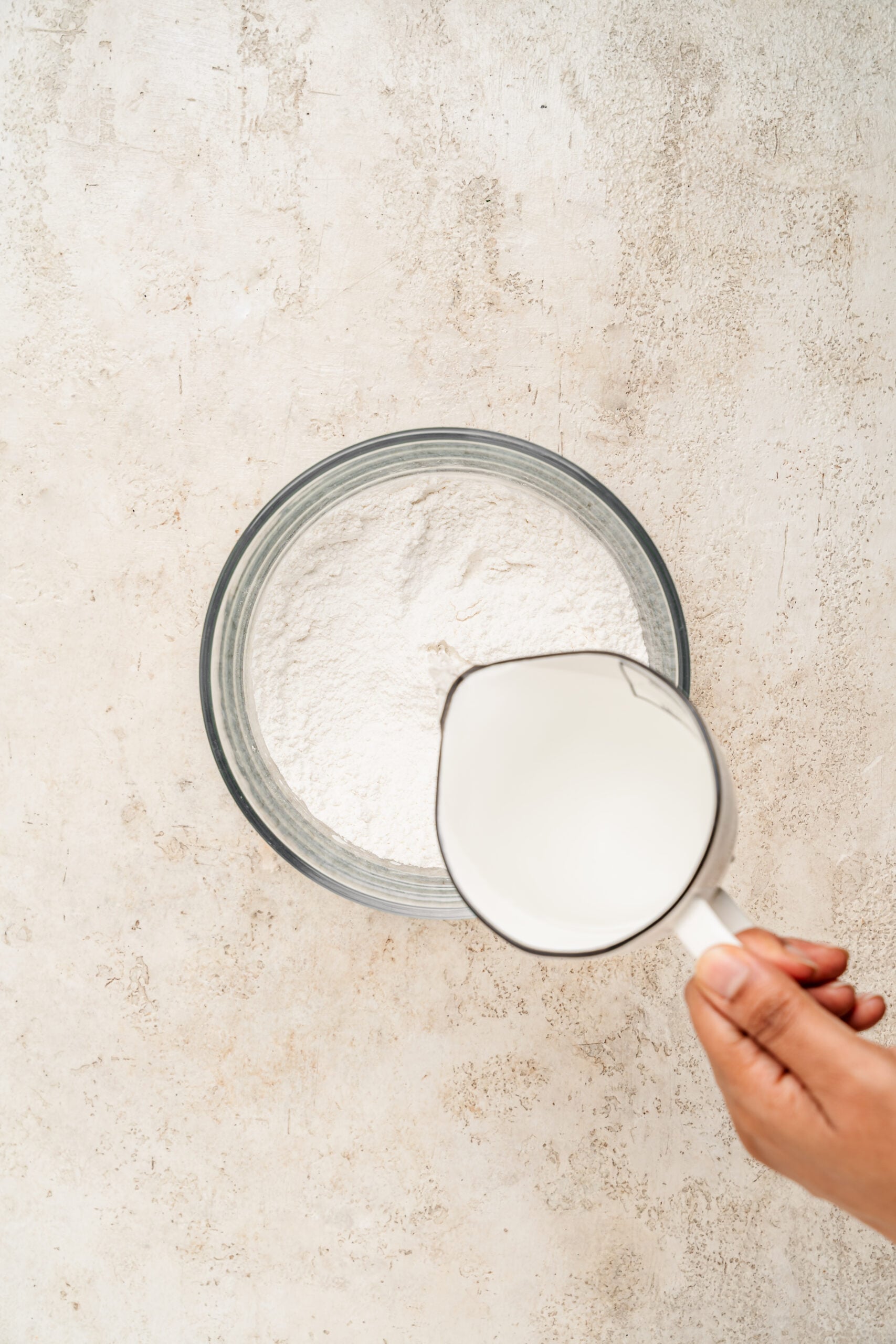
- Pour in the water. Add it all at once rather than in stages, it is easier to whisk smooth that way.
- Whisk hard until the batter is completely smooth and about the consistency of thin pancake batter. Run the whisk around the bottom edge of the bowl where dry flour likes to hide.
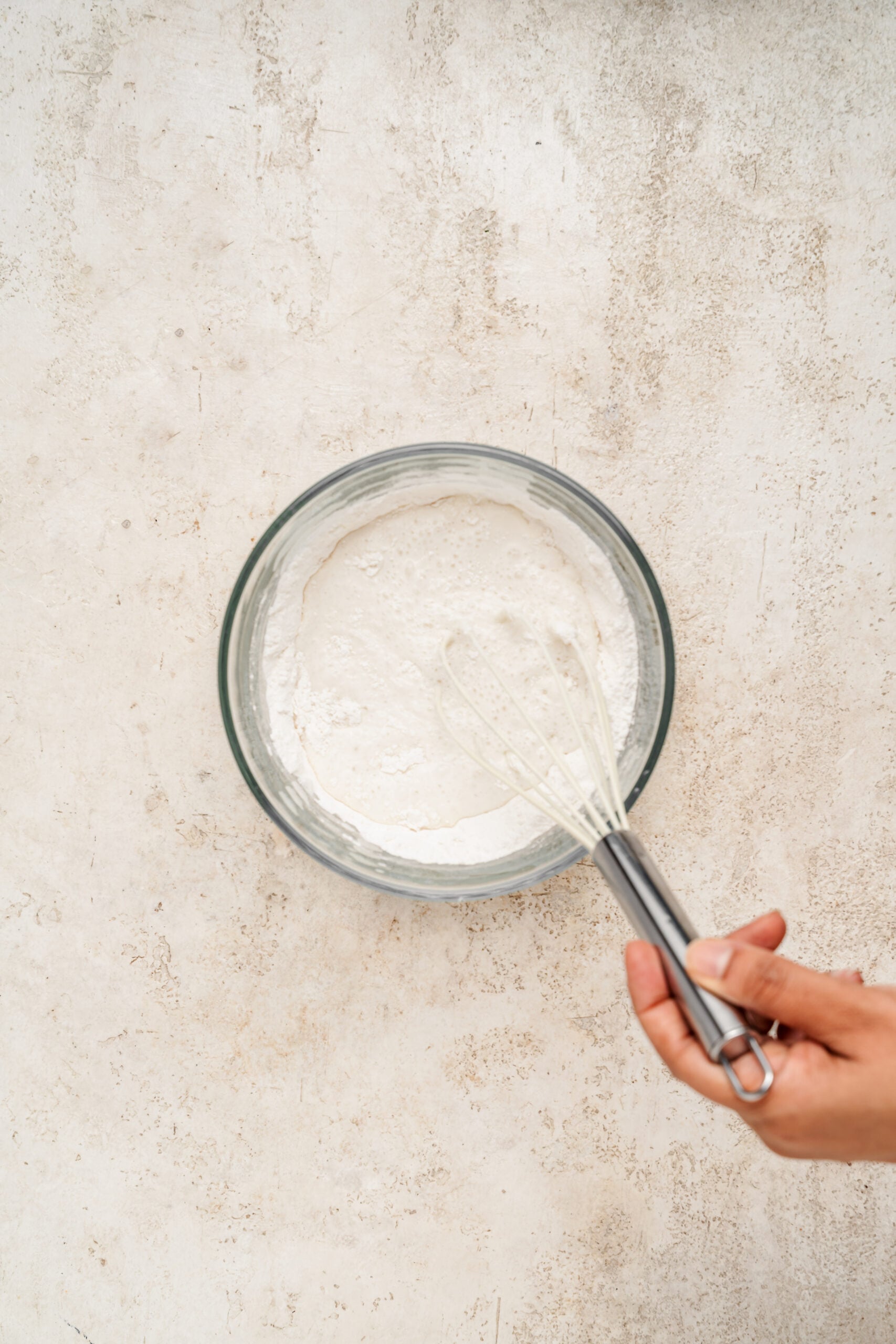
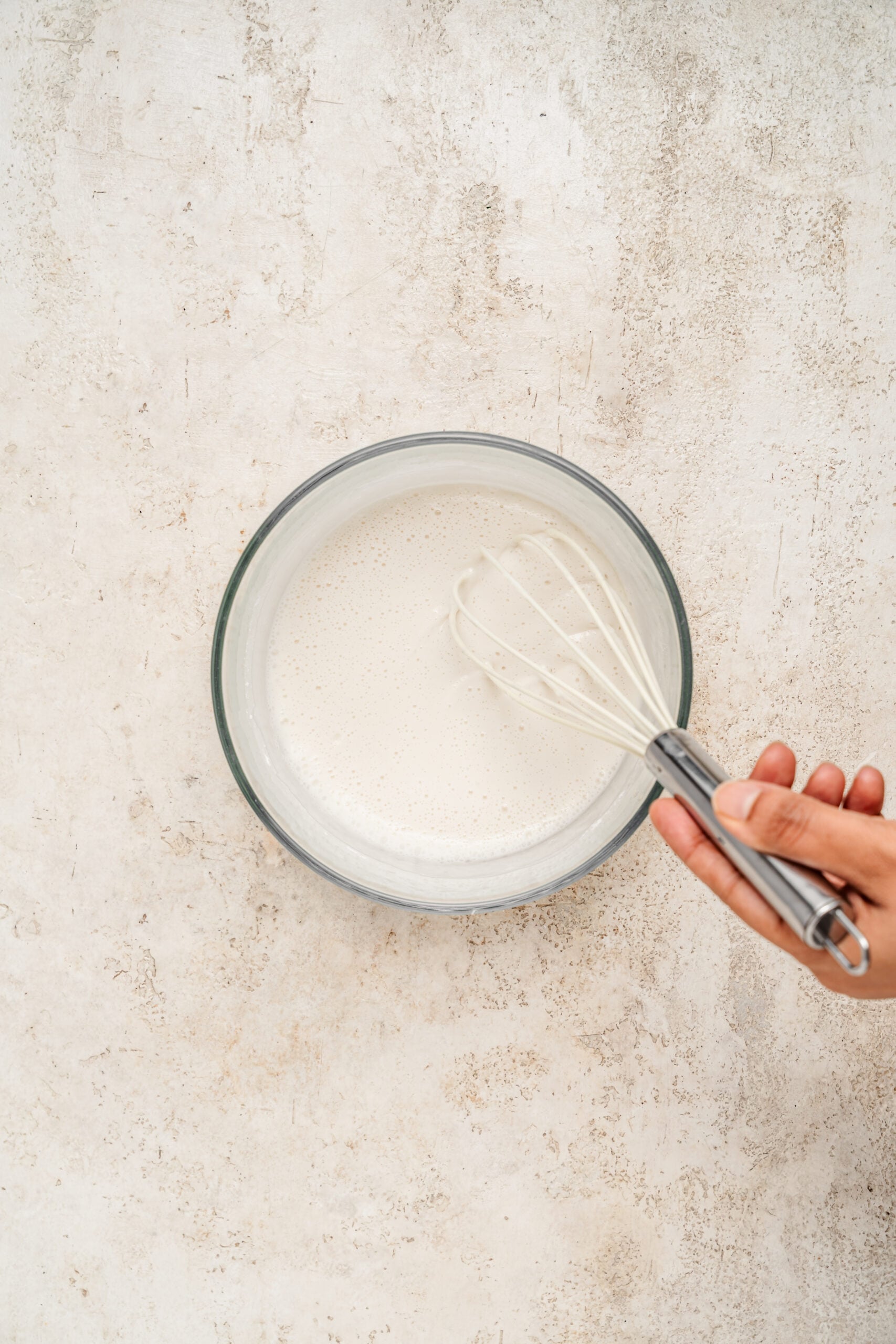
- Check the batter. It should pour off the whisk in a thin unbroken stream with no lumps at all. If you can see specks of dry flour, keep whisking.
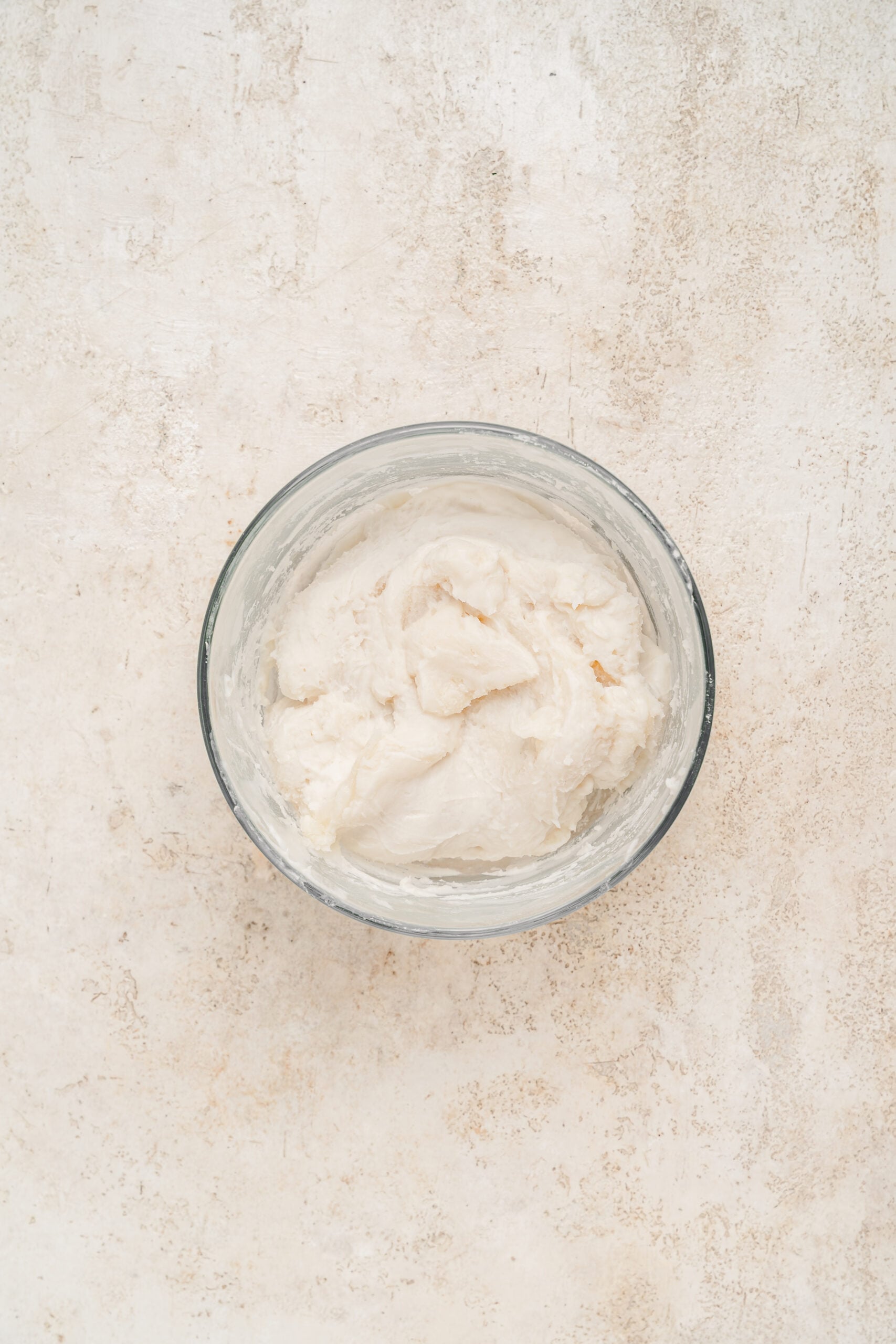
- Cover the bowl and microwave on high for 1 minute, then stir firmly with a wet silicone spatula. Microwave another minute, stir again, then continue in 30 second bursts until the dough is thick, glossy, stretchy and uniformly translucent with no white patches, usually 2 minutes 30 seconds to 3 minutes 30 seconds in total. Beat it hard against the side of the bowl for 30 seconds once it is done.
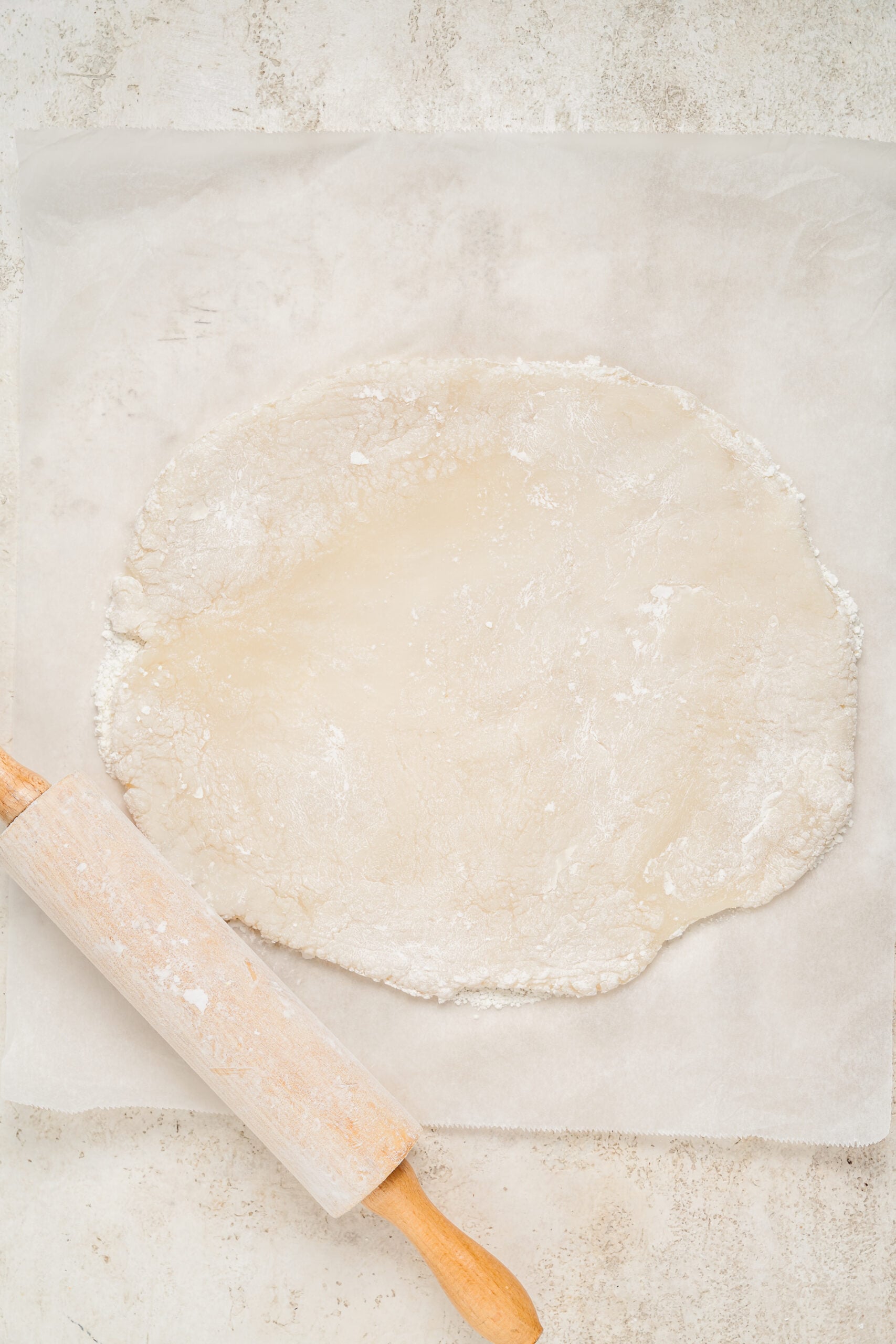
- Dust a sheet of parchment generously with potato starch, scrape the hot dough out onto it, dust the top, and roll or pat it out to about 5 mm thick. Let it sit for 5 minutes, just until you can handle it. Work while it is warm, it stops stretching once it goes cold.
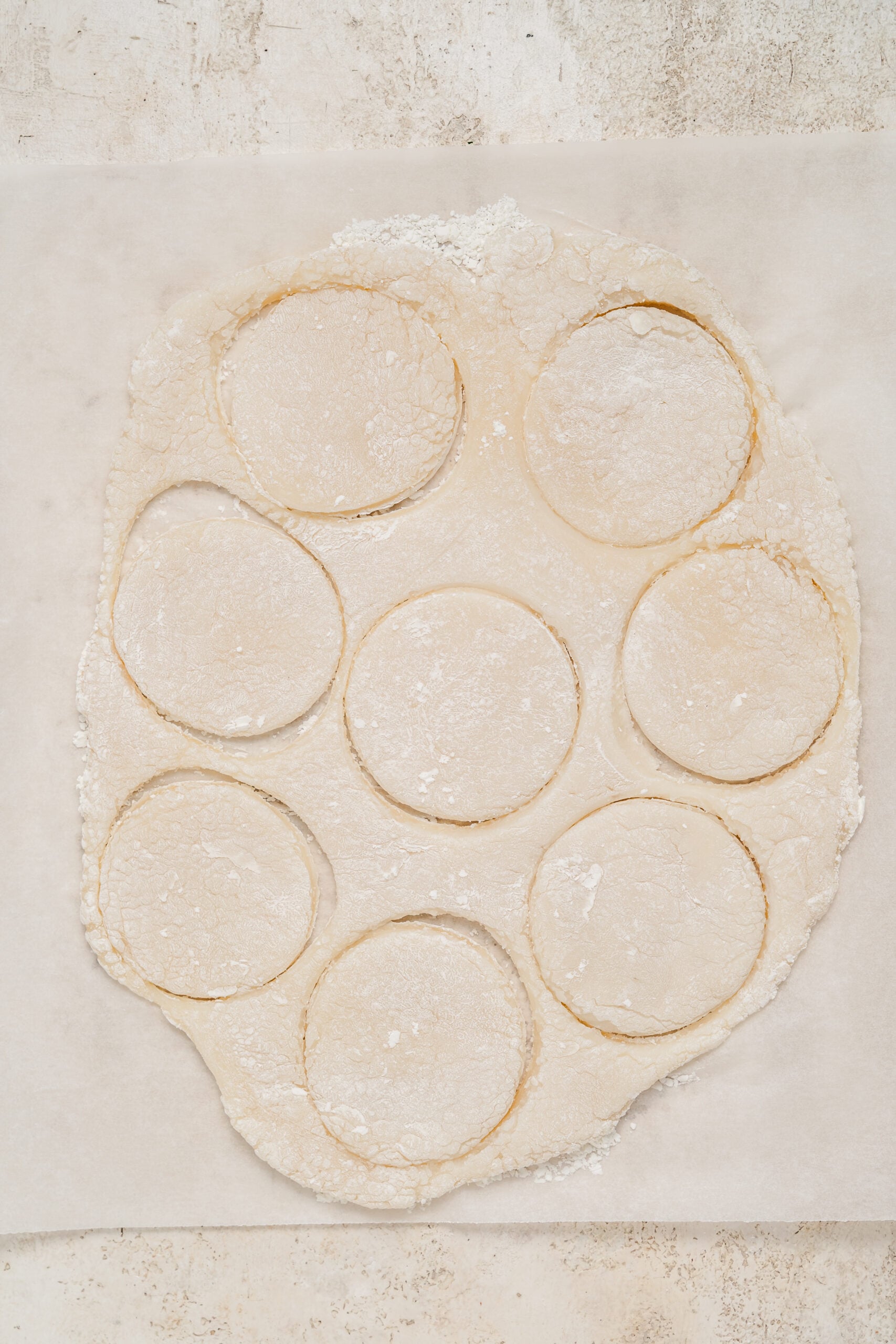
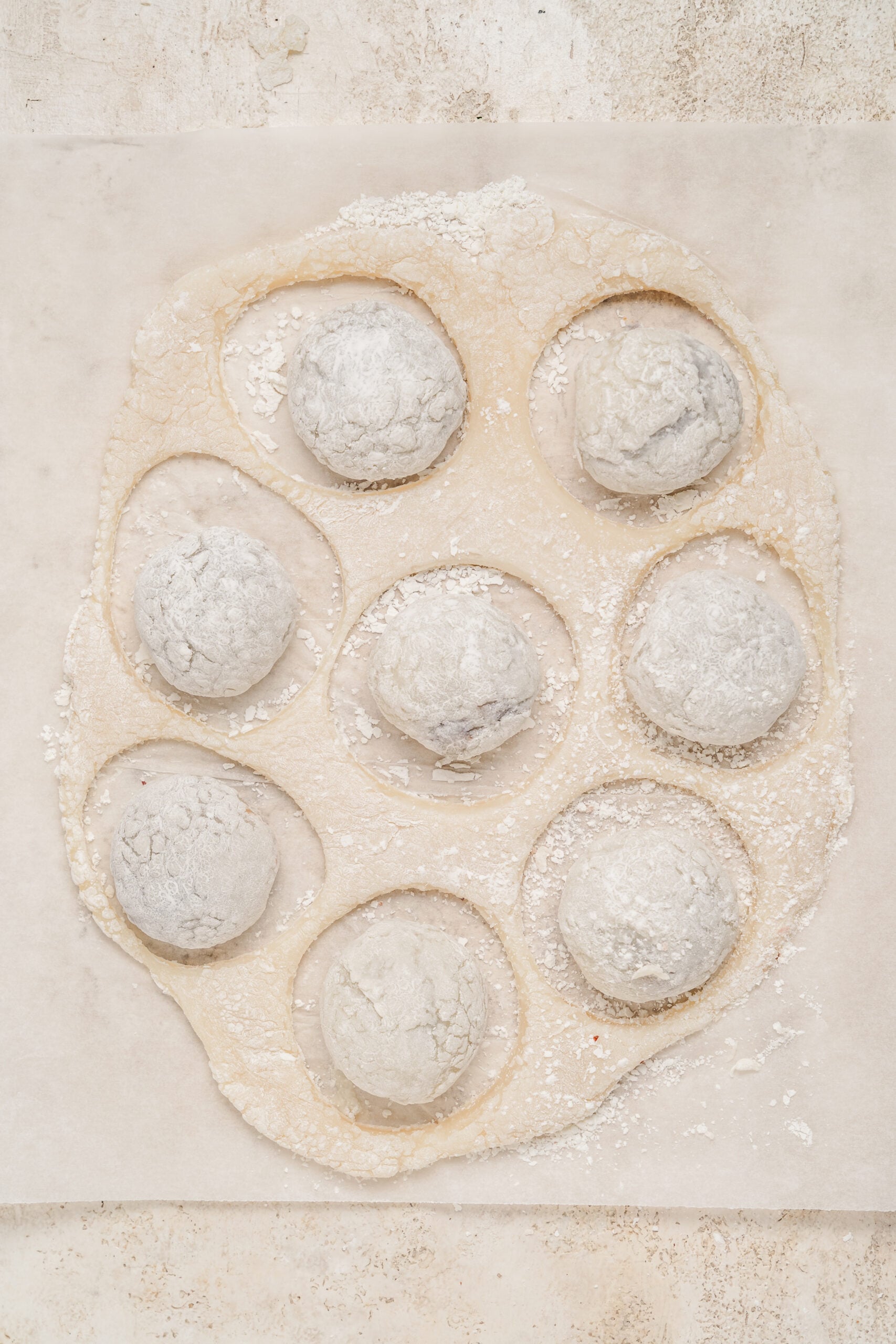
- Cut rounds about 8 cm across with a starch dusted cutter. Gather the scraps, press them together and roll again to get your twelve.
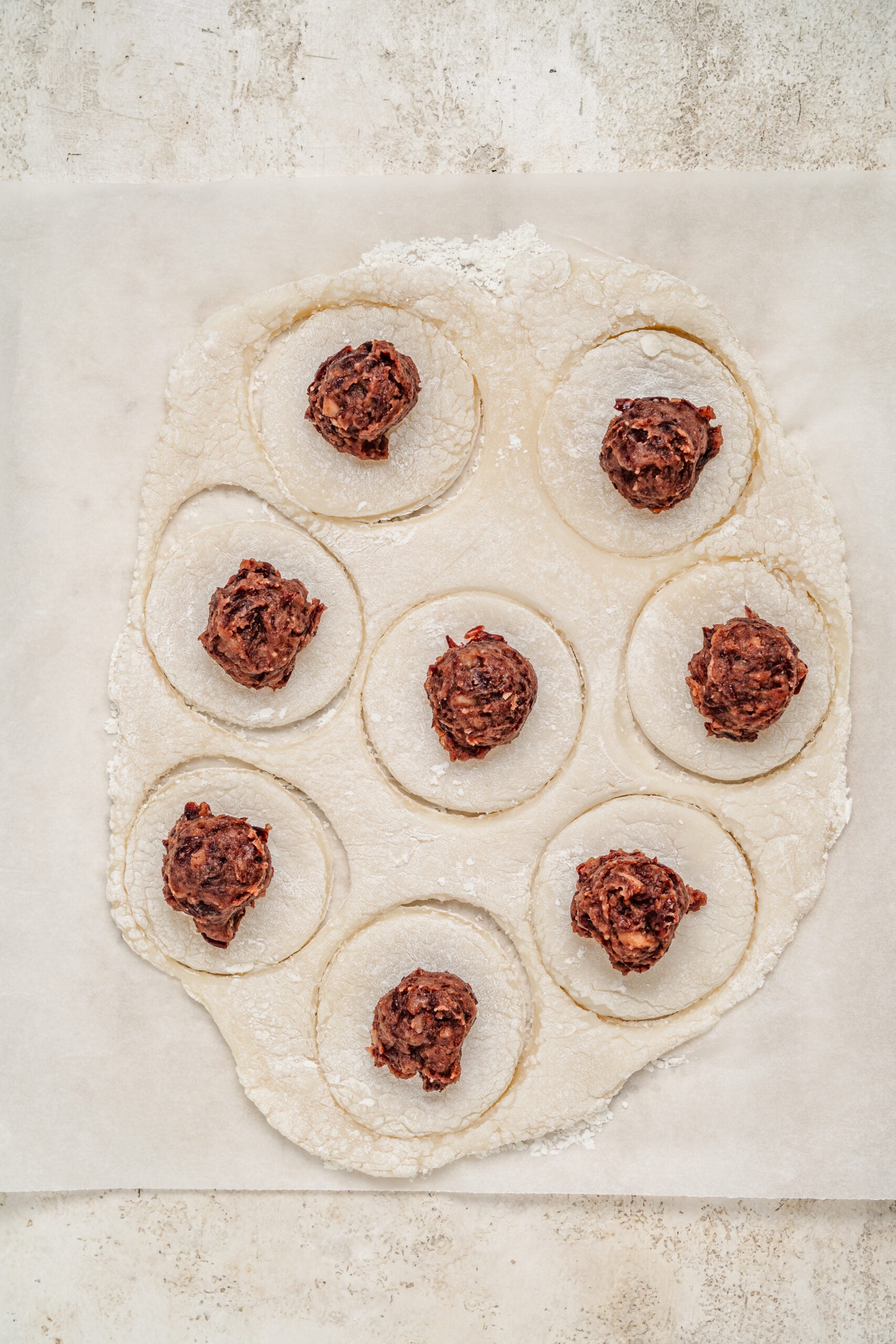
- Brush the excess starch off the upward face of each round, then sit a chilled paste ball in the middle. Starch on the inside face is what stops a seal from holding.
- Bring the edges of the dough up and over the filling, pinch them together firmly, then roll the parcel seam side down between your palms into a smooth ball. Set it seam down on a starch dusted tray and repeat.
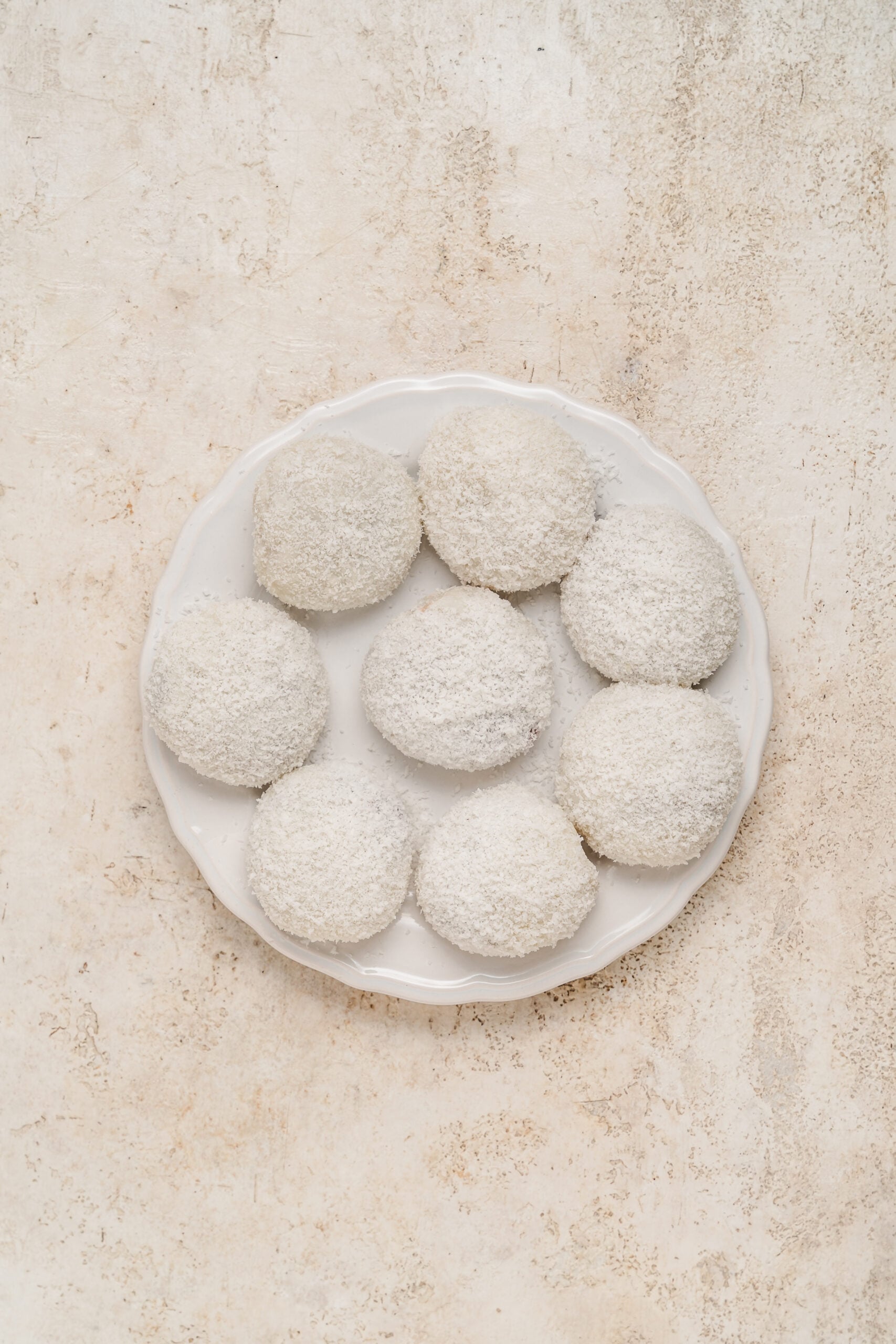
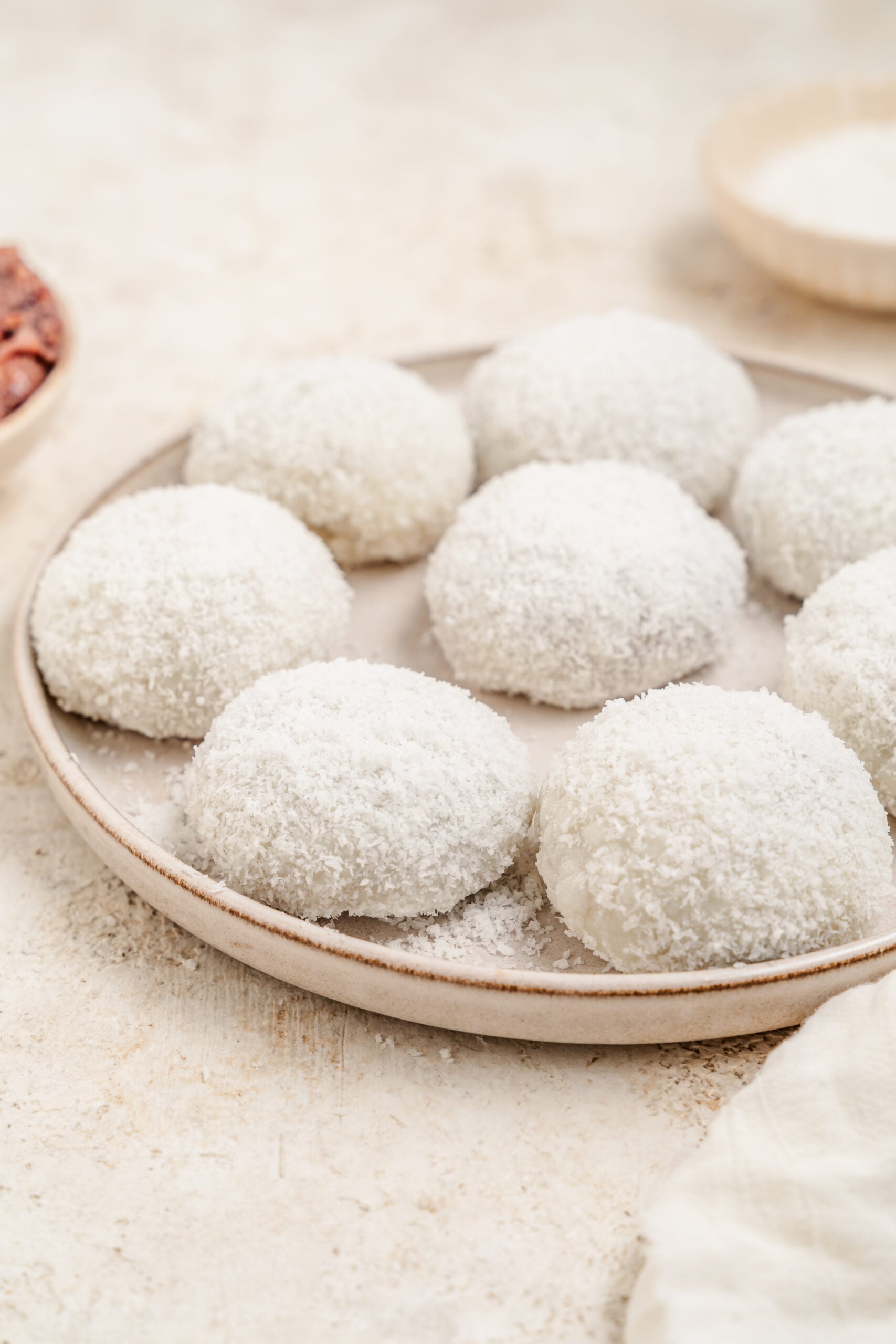
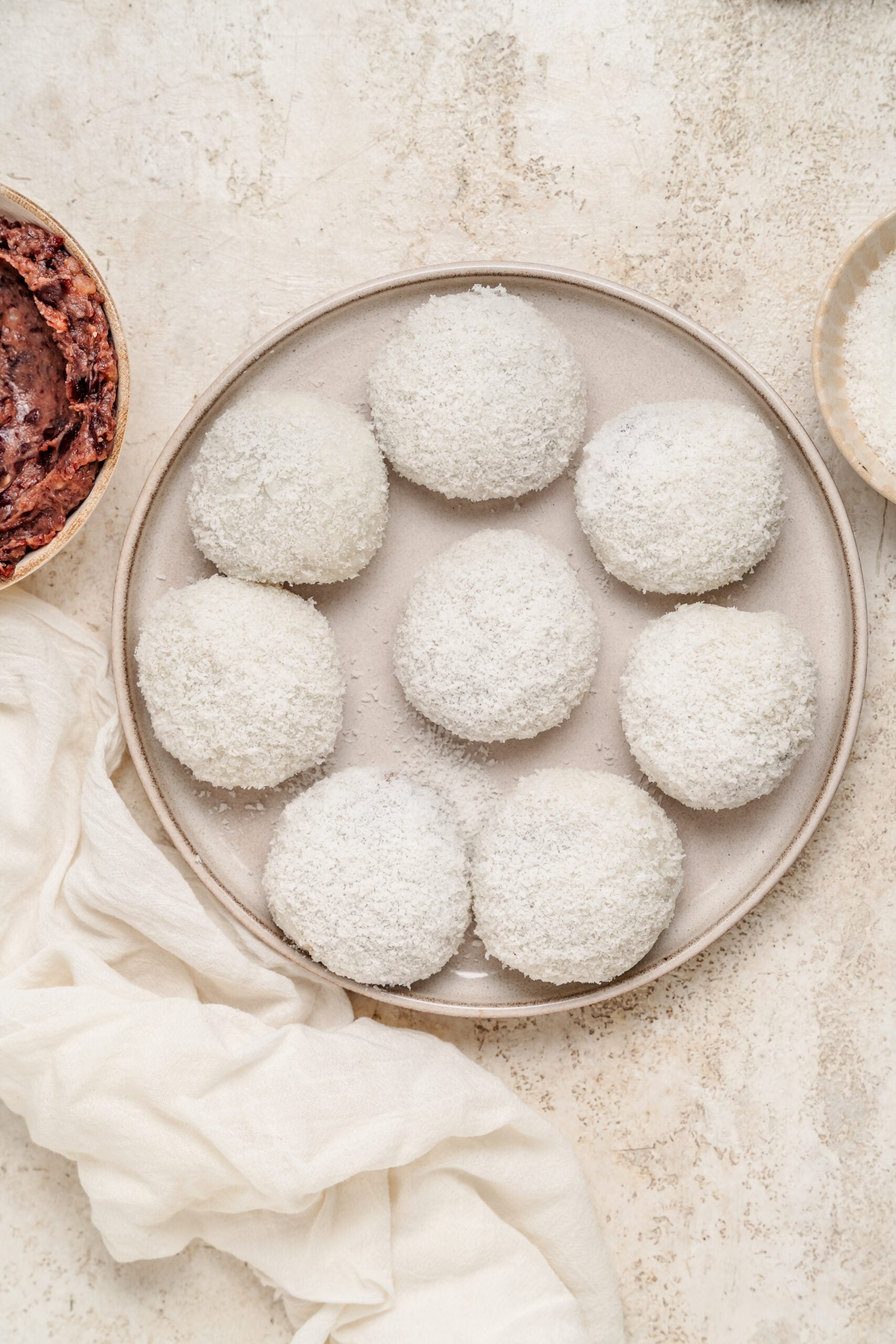
- Roll each ball in desiccated coconut, pressing gently so it sticks all over. Brush off any loose starch first or the coconut will not grip.
- Sit them on a plate and leave for 10 minutes so the dough settles. Serve the same day, at room temperature, and never straight from the fridge.
Troubleshooting Red Bean Mochi
| Problem | Why it happened | How to fix it |
|---|---|---|
| The dough tears while I wrap it | It was overcooked, or it cooled too far before wrapping. | Keep the unused dough covered and warm while you work, and roll the edges of each round thinner than the centre so there is less to stretch. |
| Everything sticks to my hands | Not enough starch, or the dough is undercooked and still has white patches. | Dust much more heavily than feels reasonable, and give an underdone dough another 30 second burst until it is fully translucent. |
| The filling bursts out the bottom | The paste balls were too warm, too big, or the seam had starch on it. | Chill the paste properly, keep the balls to about 25 g, and brush the inside face of each round clean before filling. |
| It went hard overnight | This is normal, not a fault. Glutinous rice starch firms up as it cools and ages. | Make it the day you want to eat it. If you must keep some, wrap each piece in cling film at room temperature rather than refrigerating. |
| The coconut will not stick | Too much loose potato starch on the outside. | Brush each ball with a dry pastry brush before rolling, or press the coconut on firmly with a cupped palm. |
| The paste is runny and will not roll | It was not cooked down far enough, or the tinned paste is a soft brand. | Return it to a low heat and stir until it holds a line when you drag a spoon through, then cool completely before rolling. |
Tips for the Best Red Bean Mochi
Chill the filling harder than you think
Thirty minutes in the fridge is the minimum and an hour is better. A cold firm ball sits still while you gather the dough around it, and a soft one smears sideways and pushes through the seam. If your kitchen is warm, keep the tray of paste balls in the fridge and pull them out two at a time.
Watch for translucency, not the clock
Microwave wattage varies enormously, so the timing in any mochi recipe is a guide rather than a rule. What you are looking for is a dough that has gone from opaque white to evenly translucent and glossy, with real resistance when you drag the spatula through it. White patches mean raw flour and a dough that will tear.
Beat the dough while it is hot
Thirty to sixty seconds of hard beating against the side of the bowl develops the stretch. Skip it and the dough is more crumbly than elastic, and it will crack at the seam. It is hot, so use a sturdy silicone spatula rather than your hands.
Use more starch than feels sensible
A properly dusted bench looks almost snowy. You brush the excess off at the end anyway, and the alternative is a dough welded to your parchment. Keep a small bowl of starch beside you and re dust between every couple of pieces.
The dough is done when it stops looking like batter and starts looking like glass. That is the only cue that has ever mattered.
Variations
Kinako Instead of Coconut
Swap the desiccated coconut for kinako, the roasted soybean flour used on warabimochi and injeolmi. It is nutty and slightly savoury, and it turns the pieces a warm beige that looks lovely next to the white coconut ones. A drizzle of kuromitsu over the top pushes it further in that direction.
Strawberry Daifuku
Sit a small hulled strawberry on the paste before you wrap, or wrap the paste around the berry first. The acidity cuts straight through the sweetness and the cut face is the best looking thing you will make all month. Use firm berries, soft ones weep and wet the dough.
Matcha Mochi Dough
Whisk a couple of teaspoons of matcha into the dry flour before adding water. The dough turns a soft green and picks up a pleasant bitterness that offsets the anko. If you like that pairing, my mochi ice cream explainer covers how the same flavour combination behaves frozen.
Black Sesame Filling
Crush toasted black sesame into the red bean paste, roughly one part sesame to four parts paste. It goes darker, smokier and slightly grainy, and it is my favourite version to make in winter.
Serving Suggestions
Straight From the Bench
Honestly the best way. An hour after making, at room temperature, the dough is at its softest and the paste is still cool from the fridge. That temperature contrast is most of the pleasure and it is gone by the next day.
With Tea
Something roasted and unsweetened works best, hojicha or a plain barley tea. The bitterness resets your palate between pieces, which matters because these are sweeter than they look.
On a Dim Sum Style Plate
Serve them alongside other small glutinous rice things and let people graze. My red bean sesame balls use the same red bean paste in a fried format, and the two together cover both textures.
Cut in Half
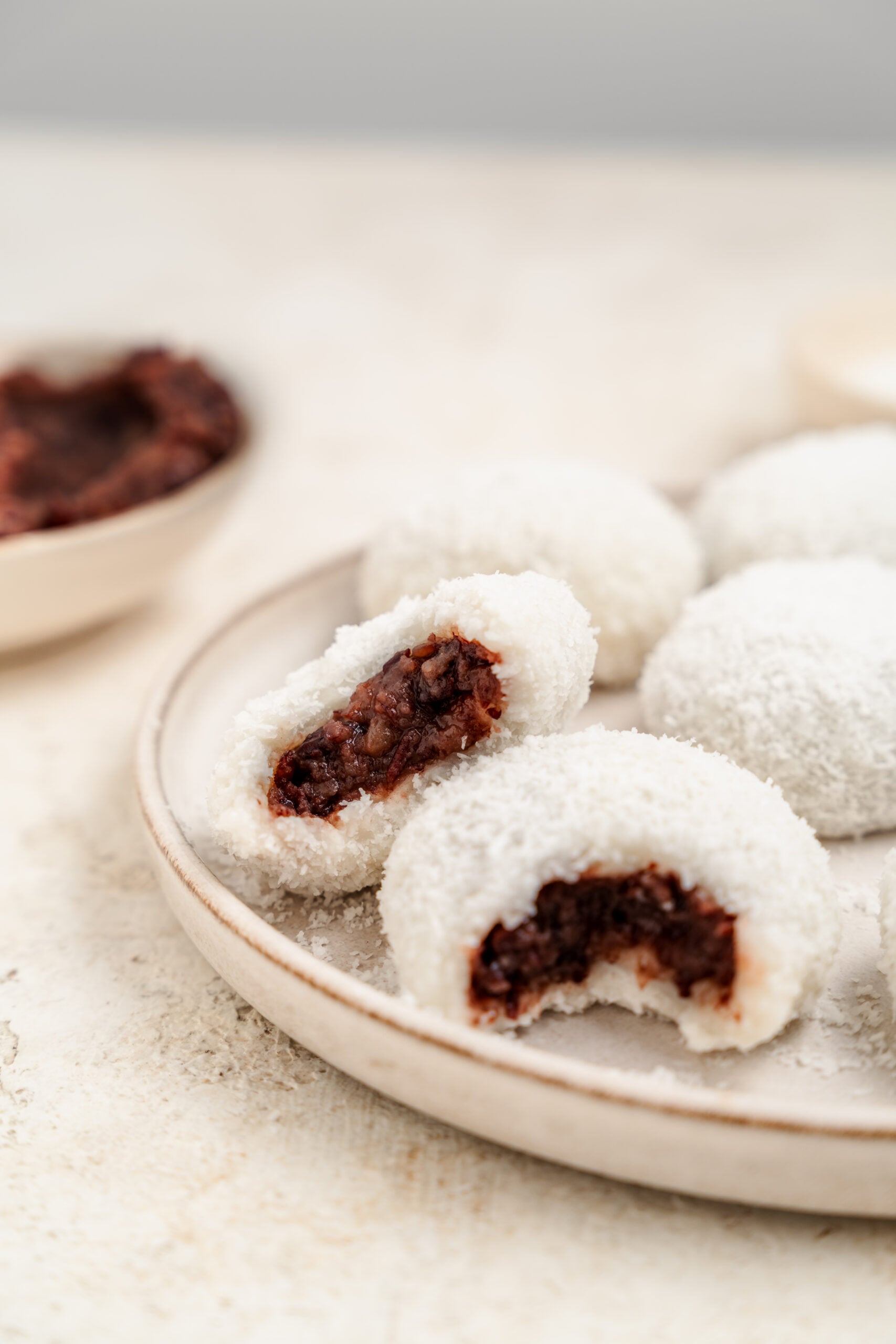
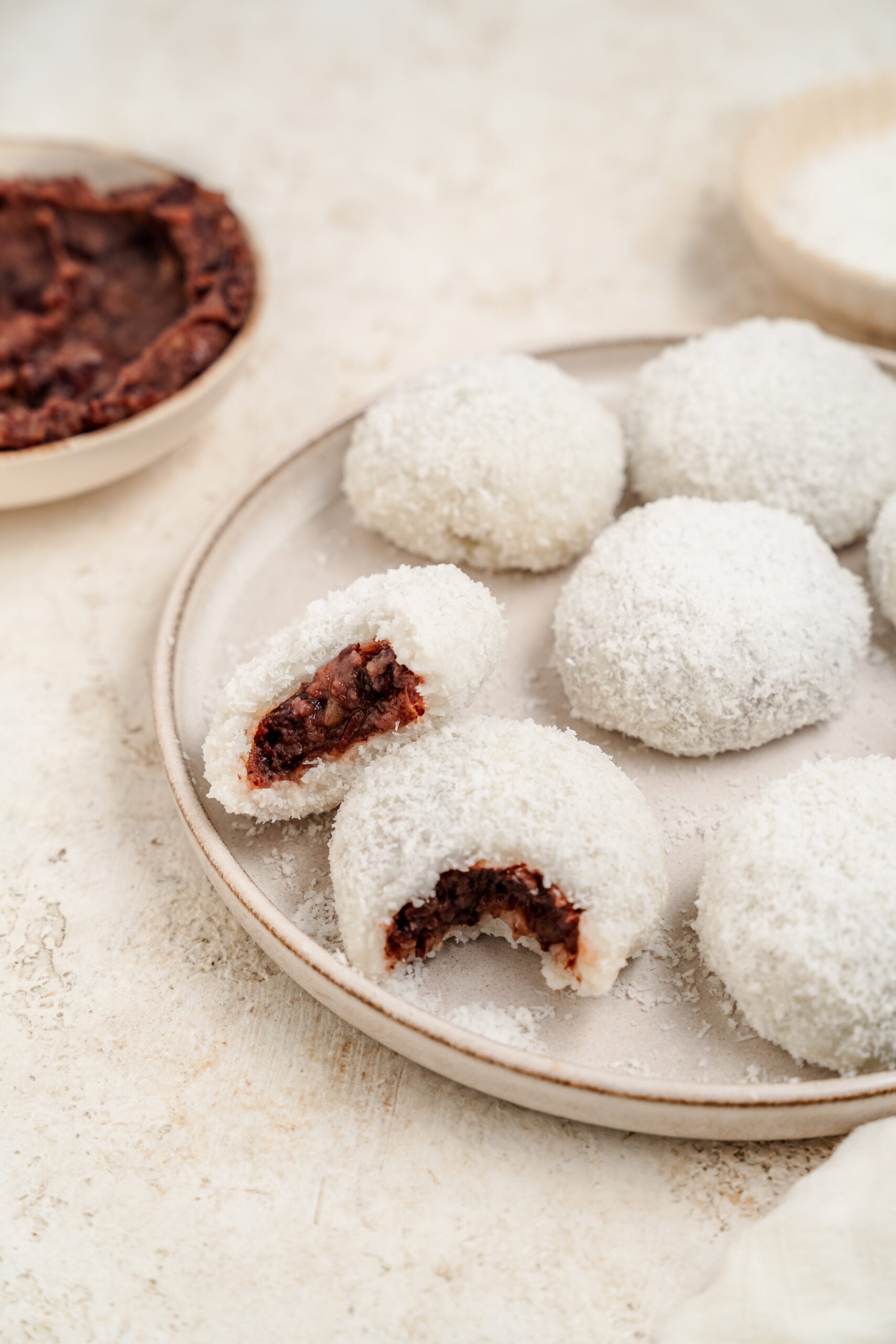
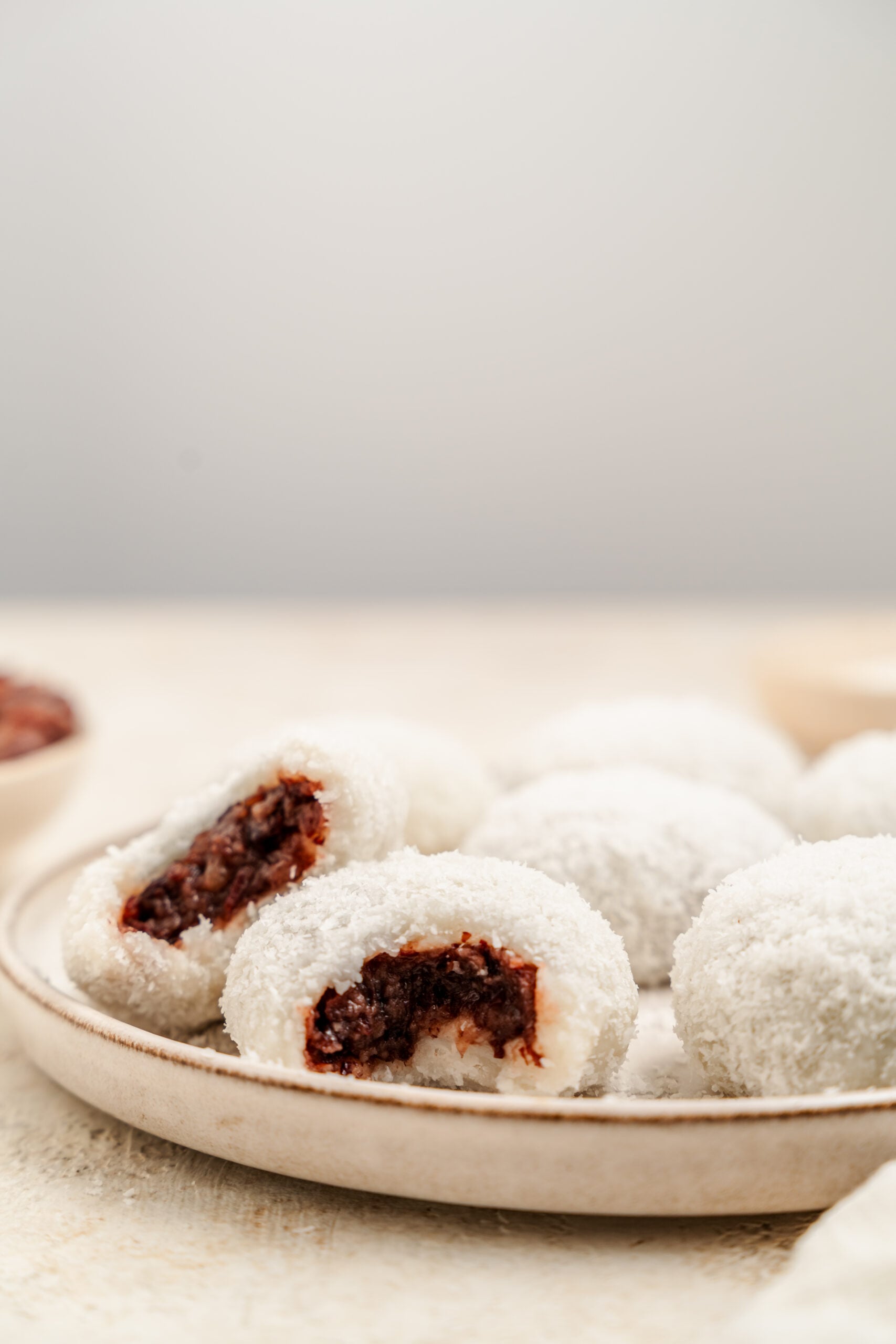
If you are serving these to people who have never had mochi, cut a few in half first. Seeing the dark paste against the white dough tells them what they are about to eat, and it makes the plate look far better.
How to Store Red Bean Mochi
Red bean mochi is genuinely a same day food, and I would rather tell you that plainly than pretend otherwise. Within a few hours the dough is at its peak, and by the next morning it has firmed noticeably.
If you do need to hold some, wrap each piece individually in cling film and leave it at room temperature for up to 2 days. Do not refrigerate uncovered, the fridge is the fastest way to turn soft mochi into something chalky.
For longer storage, wrap individually and freeze for up to a month. Thaw at room temperature for about 2 hours and they come back surprisingly well, softer than refrigerated ones ever do. Never microwave a frozen one to speed it up, the outside goes molten while the middle stays solid.
Common Mistakes to Avoid
Using the Wrong Flour
Rice flour and glutinous rice flour are different products that sit next to each other on the same shelf. Glutinous rice flour is made from short grain sweet rice and is the only one that produces stretch. If your dough came out sandy and would not hold together, this is almost certainly why.
Overcooking the Dough
Every extra 30 second burst past full translucency costs you elasticity. Overcooked mochi feels tight and tears at the seam instead of stretching around the filling. Stop at the first moment there are no white patches left.
Wrapping With Warm Paste
This is the burst mochi mistake and it accounts for most failures. Warm paste is soft, it spreads under the pressure of your fingers, and it forces its way through the seam. Chill it.
Filling Too Generously
Twenty five grams of paste per piece sounds mean until you try thirty five and cannot close it. A larger ball leaves less dough to gather, and the seam ends up thin and stressed.
Letting the Dough Go Cold
Cold mochi dough does not stretch, it splits. Work quickly, keep the unused portion covered, and if it does stiffen up, 10 seconds in the microwave will bring it back.
Frequently Asked Questions
Can I use shop bought red bean paste?
Yes, and I do it often. Tinned or tubbed anko from an Asian grocer is very good and it cuts the recipe down to about forty minutes. Look for koshian if you want a smooth filling or tsubuan if you like some whole bean texture. If it feels soft straight from the tin, chill it for an hour before rolling so it holds its shape.
What is the difference between daifuku and mochi?
Mochi is the dough itself, a glutinous rice cake that can be plain, grilled, or put in soup. Daifuku is one specific thing made from it: a round mochi wrapped around a filling, most traditionally sweet red bean paste. So all daifuku is mochi, but plenty of mochi is not daifuku.
Why did my mochi go hard the next day?
That is normal and it is not a fault in your technique. The starch in glutinous rice retrogrades as it cools, which firms the dough, and refrigeration speeds it up dramatically. Make red bean mochi on the day you want to eat it, and if you have leftovers, wrap them individually and keep them at room temperature rather than in the fridge.
Can I make red bean mochi without a microwave?
Yes. Cover the bowl and steam it over simmering water for about 20 minutes, then beat the dough hard for a minute to develop the stretch. The result is very slightly smoother than the microwave version. It takes longer and needs a steamer setup, which is the only reason the microwave is my default.
How do I stop the mochi sticking to everything?
Starch, and then more starch. Dust the bench, the parchment, the cutter, the rolling pin and your hands, and re dust as you go. The one place you want no starch at all is the inside face of each round where the seal has to happen, so brush that clean before you add the filling.
Is red bean mochi vegan?
The version here is, as long as you leave out the optional butter in the paste and use oil instead. The dough is only glutinous rice flour, sugar, salt and water, and both the coconut and kinako coatings are plant based. Check the label on shop bought paste, since a few brands add butter for gloss.
Let’s Get Cooking
If you liked this recipe make sure to leave me a comment and rating down below. I’d love to know how it went! Also, don’t forget to tag me on Instagram @catherine.desserts.
Follow me on Facebook, Pinterest, YouTube, and TikTok for more of my baking creations and updates!
Red Bean Mochi (Daifuku)

Soft, stretchy red bean mochi wrapped around sweet adzuki paste and rolled in coconut. Made in the microwave, no special equipment.
- Prep Time: 25 minutes
- Chill Time: 30 minutes
- Cook Time: 15 minutes
- Total Time: 1 hour 10 minutes
- Yield: 12 pieces 1x
- Category: Dessert
- Method: Microwave
- Cuisine: Japanese
Ingredients
Sweet red bean paste (anko), or use 1 1/2 cups shop bought
- 1 cup (200 g) dried adzuki beans, rinsed
- 3/4 cup (150 g) caster sugar
- 1/4 teaspoon fine salt
- 1 tablespoon neutral oil or unsalted butter, optional
Mochi dough
- 1 cup (150 g) glutinous rice flour (mochiko or shiratamako)
- 1/4 cup (50 g) caster sugar
- 1 pinch fine salt
- 3/4 cup (180 ml) water
Coating
- 1/2 cup (65 g) potato starch or cornflour, for dusting
- 1 cup desiccated coconut, or kinako, for rolling
Instructions
- Make the paste, or open your tin of it. Roll it into twelve balls of about 25 g each, sit them on a lined plate and chill for at least 30 minutes. Cold firm paste is the single biggest reason a mochi seals neatly instead of bursting, so genuinely do not skip this.
- Whisk the glutinous rice flour, sugar and salt together in a large microwave safe bowl. Break up any lumps in the flour now, because they are much harder to chase out once the water goes in.
- Pour in the water. Add it all at once rather than in stages, it is easier to whisk smooth that way.
- Whisk hard until the batter is completely smooth and about the consistency of thin pancake batter. Run the whisk around the bottom edge of the bowl where dry flour likes to hide.
- Check the batter. It should pour off the whisk in a thin unbroken stream with no lumps at all. If you can see specks of dry flour, keep whisking.
- Cover the bowl and microwave on high for 1 minute, then stir firmly with a wet silicone spatula. Microwave another minute, stir again, then continue in 30 second bursts until the dough is thick, glossy, stretchy and uniformly translucent with no white patches, usually 2 minutes 30 seconds to 3 minutes 30 seconds in total. Beat it hard against the side of the bowl for 30 seconds once it is done.
- Dust a sheet of parchment generously with potato starch, scrape the hot dough out onto it, dust the top, and roll or pat it out to about 5 mm thick. Let it sit for 5 minutes, just until you can handle it. Work while it is warm, it stops stretching once it goes cold.
- Cut rounds about 8 cm across with a starch dusted cutter. Gather the scraps, press them together and roll again to get your twelve.
- Brush the excess starch off the upward face of each round, then sit a chilled paste ball in the middle. Starch on the inside face is what stops a seal from holding.
- Bring the edges of the dough up and over the filling, pinch them together firmly, then roll the parcel seam side down between your palms into a smooth ball. Set it seam down on a starch dusted tray and repeat.
- Roll each ball in desiccated coconut, pressing gently so it sticks all over. Brush off any loose starch first or the coconut will not grip.
- Sit them on a plate and leave for 10 minutes so the dough settles. Serve the same day, at room temperature, and never straight from the fridge.
Notes
- Shop bought paste works beautifully and cuts the recipe to about 40 minutes. Koshian is smooth, tsubuan is chunky.
- Glutinous rice flour only. Regular rice flour is a different product and will not work.
- Chill the paste balls for at least 30 minutes. This is the difference between a neat seal and a burst mochi.
- Stop microwaving the moment the dough is evenly translucent with no white patches.
- Best the day it is made. Wrap individually at room temperature for up to 2 days, or freeze for up to 1 month and thaw for 2 hours.
Nutrition
- Serving Size: 1 piece