On a hot afternoon, there’s a very specific craving I get. Not a towering cake. Not a warm pastry. Something cool, gentle, and playful. That’s when mochi ice cream feels exactly right.
It’s one of those desserts that makes people pause mid-bite. Soft. Bouncy. Cold at the centre. Familiar and surprising all at once. If you’ve ever wondered what is mochi ice cream, or why it’s such a summer favourite for entertaining, this little guide is for you.
Let’s unwrap it together, one chewy bite at a time.
At a Glance: Mochi Ice Cream Explained
| Feature | Details |
|---|---|
| Origin | Japan, inspired by traditional mochi |
| Key Ingredients | Glutinous rice flour, sugar, ice cream |
| Texture & Mouthfeel | Chewy exterior, creamy frozen centre |
| Typical Sweetness | Mild to medium, very balanced |
| Method Highlights | Steamed mochi wrapped around ice cream |
| Best Occasion | Summer desserts, parties, light endings |
If you love the chewy rice texture but prefer fruit-forward flavours, my Watermelon Mochi is a beautiful warm-weather cousin worth trying.
What Is Mochi Ice Cream?

So, what is mochi ice cream really?
At its heart, it’s a modern twist on traditional Japanese mochi. Mochi itself is made from glutinous rice flour, steamed and kneaded until it becomes elastic, smooth, and delightfully chewy. For centuries, it’s been filled with red bean paste, sesame, or enjoyed plain during celebrations.
Mochi ice cream takes that soft rice dough and wraps it around a small scoop of ice cream. The result is a handheld dessert that balances temperature, texture, and sweetness in a single bite.
The outer layer stays tender and stretchy, even when cold. The inside melts slowly, turning creamy against the chew. It’s playful, slightly nostalgic, and incredibly satisfying without being heavy.
Growing up around Asian bakeries, this contrast of textures always felt comforting. It’s gentle on the palate. Nothing shouts. Everything harmonises.
Why This Food Matters (Texture, Trend & Summer Appeal)
Mochi ice cream matters because it solves a summer dessert problem.
When it’s hot, people want something cold, but not icy. Sweet, but not cloying. Fun, but not messy. That’s exactly where mochi ice cream shines.
The chewy rice dough acts as insulation. It slows melting. It keeps fingers clean. It also adds interest, turning plain ice cream into something more thoughtful.
It’s also had a cultural moment. From Japanese convenience stores to Western supermarkets, mochi ice cream crossed borders because it feels approachable. No fork needed. No slicing. Just pick up and enjoy.
For entertainers, it’s a dream dessert. Portion-controlled. Naturally gluten-free. Easy to serve after spicy or rich meals. That’s why what is mochi ice cream has become such a common question lately.
How To Make It: Basics of Method & Technique
Making mochi ice cream at home is simpler than it looks, but it does require timing and patience.
The basic components are:
- Glutinous rice flour
- Sugar
- Water or milk
- Cornstarch or potato starch for dusting
- Ice cream of choice
The mochi dough is mixed, then steamed or microwaved until glossy and stretchy. Once cooled slightly, it’s rolled thin and cut into circles.
Meanwhile, ice cream is pre-scooped and frozen solid. This step matters. Soft ice cream will melt before you can wrap it.
The wrapping is quick and decisive. Place the ice cream in the centre, stretch the mochi around it, pinch to seal, then freeze again.
Here’s the secret. Keep everything cold. Warm hands, slow movements, or humid kitchens make it harder. But once you get the rhythm, it’s very rewarding.
Flavour variations are endless. Matcha, mango, strawberry, coconut, black sesame. For lighter summer entertaining, fruit sorbets work beautifully too.
Popular Mochi Ice Cream Desserts
One reason mochi ice cream stays exciting is how easily it adapts to flavours we already love.
Mango Mochi Ice Cream
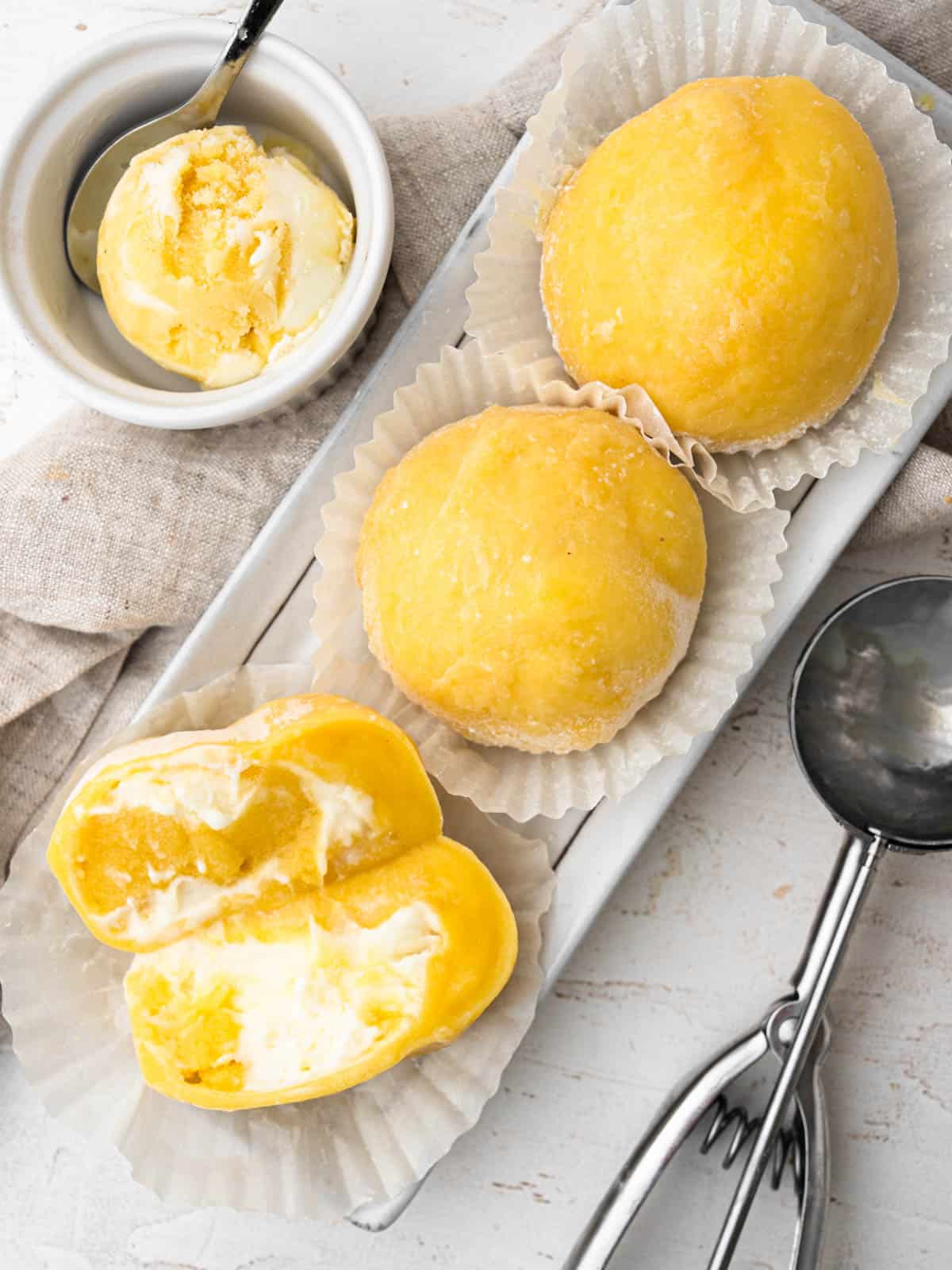
Bright, sunny, and tropical, mango mochi ice cream is always a crowd-pleaser. The natural sweetness of ripe mango pairs perfectly with the mild rice dough. It feels refreshing, especially after spicy food.
Pistachio Mochi Ice Cream

This one is more grown-up. Nutty, creamy, and slightly savoury. Pistachio ice cream wrapped in mochi feels elegant on a dessert platter. It’s wonderful with coffee or green tea.
Chocolate Mochi Ice Cream

For those who want comfort, chocolate mochi ice cream delivers. The chew softens the richness of chocolate, making it less intense and more playful. Perfect for guests who “don’t usually like desserts.
Final Thoughts: A Cool Bite Worth Sharing
Mochi ice cream is gentle joy. It doesn’t demand attention. It invites curiosity.
Once you understand what is mochi ice cream, you see why it works so well for summer. Cool but not cold. Sweet but balanced. Familiar yet playful.
Serve it at dinner parties. Keep a box for late nights.
If you’re feeling adventurous, explore fruity variations like Strawberry Mochi Ice Cream for peak summer vibes.
Sometimes, the best desserts are the quiet ones. The ones you finish and immediately want another.
Frequently Asked Questions
Is mochi ice cream gluten-free?
Yes. Glutinous rice flour contains no gluten despite the name.
Does mochi ice cream need to stay frozen?
Absolutely. It should be stored frozen and served straight from the freezer.
Why is my mochi too hard?
Usually from freezing too long or using too thick a dough layer.
Can I use store-bought ice cream?
Yes. Choose dense, creamy styles rather than airy ones.
Is mochi ice cream very sweet?
No. It’s usually milder than cakes or pastries.
How long does homemade mochi ice cream last?
Best within one week for ideal texture.
Love mochi? Find every type in one place in our complete guide to mochi recipes.
Want more frozen treats? Browse every ice cream recipe in one place.