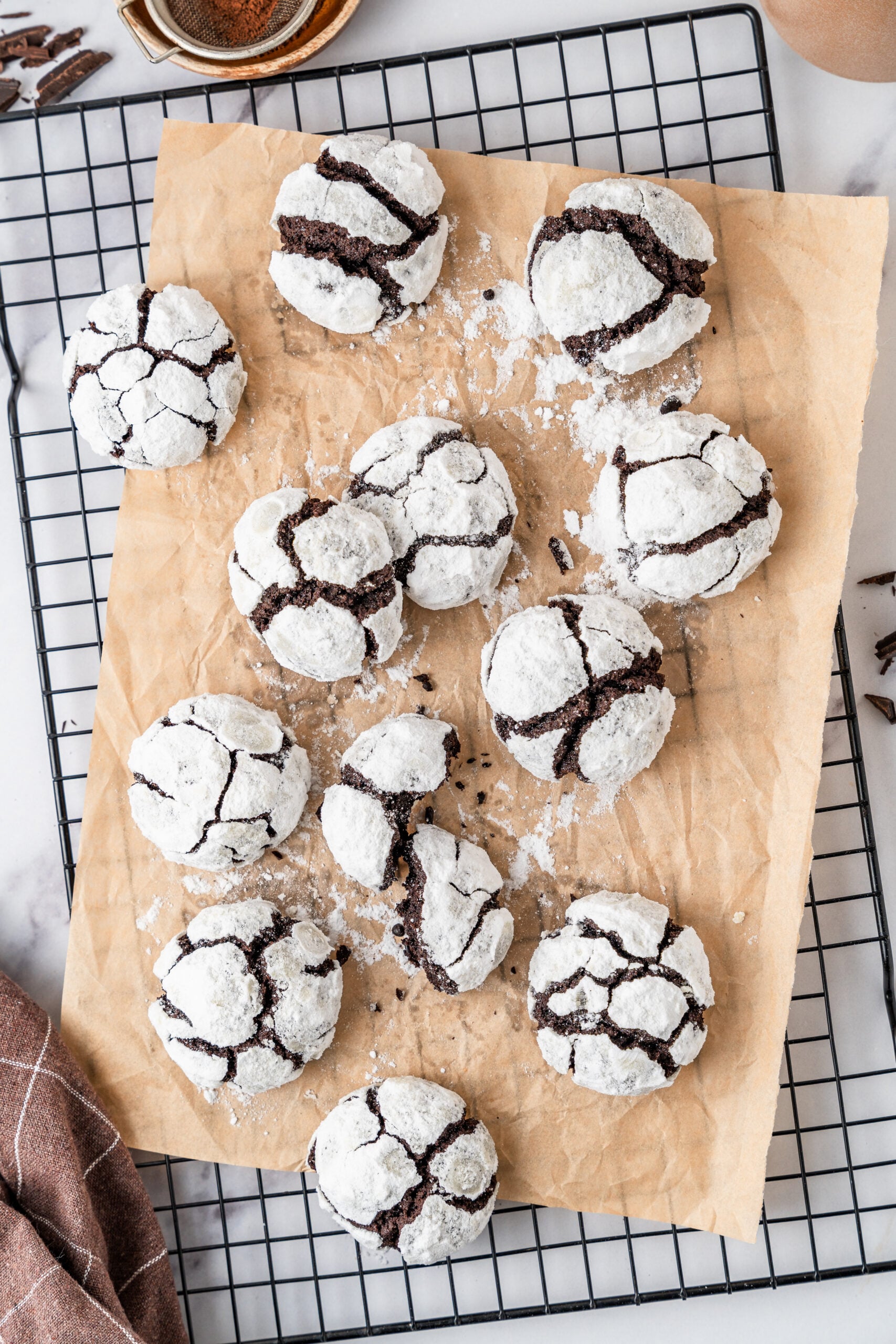
Chocolate crinkle cookies have to look right as well as taste right, and the wide white crackle everyone wants comes down to two things: a genuinely cold dough and a double sugar coating.
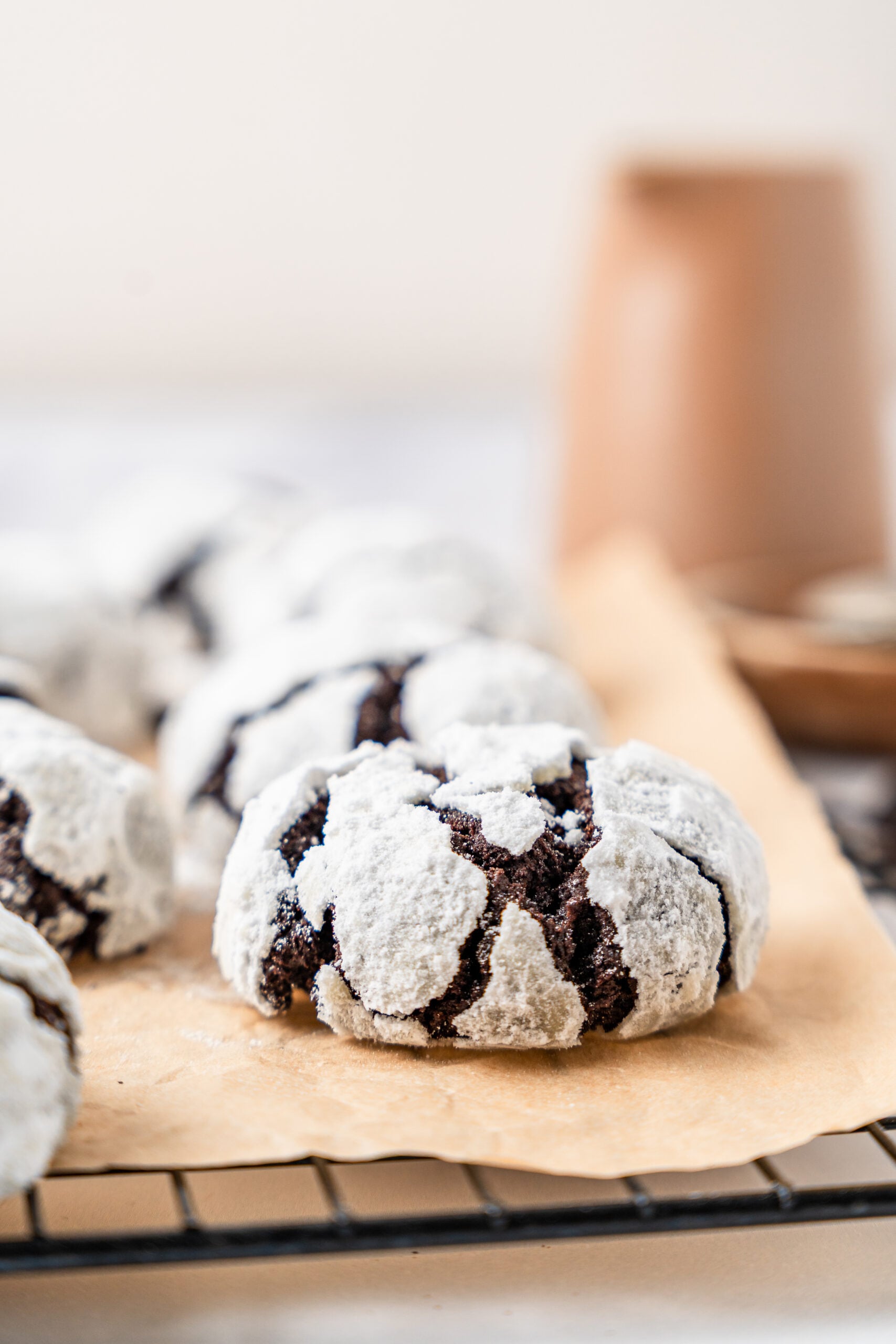
A chocolate crinkle cookie is a soft, fudgy cocoa cookie rolled thickly in icing sugar before it bakes. As it spreads in the oven the surface tears apart and the dark dough shows through the white coating in deep fissures. That pattern is the whole point of the cookie, and it is also the part most recipes get thin and patchy.
This version is built around the crackle. There is no butter in the dough, which keeps the cookies fudgy rather than cakey for days afterwards, and the coating goes on in two stages instead of one. It is the classic of the family, and the one the flavoured versions on this site all come from, so if you have already made the matcha crinkle cookies or the red velvet crinkle cookies, the method here will feel familiar.
What makes a chocolate crinkle cookie crack
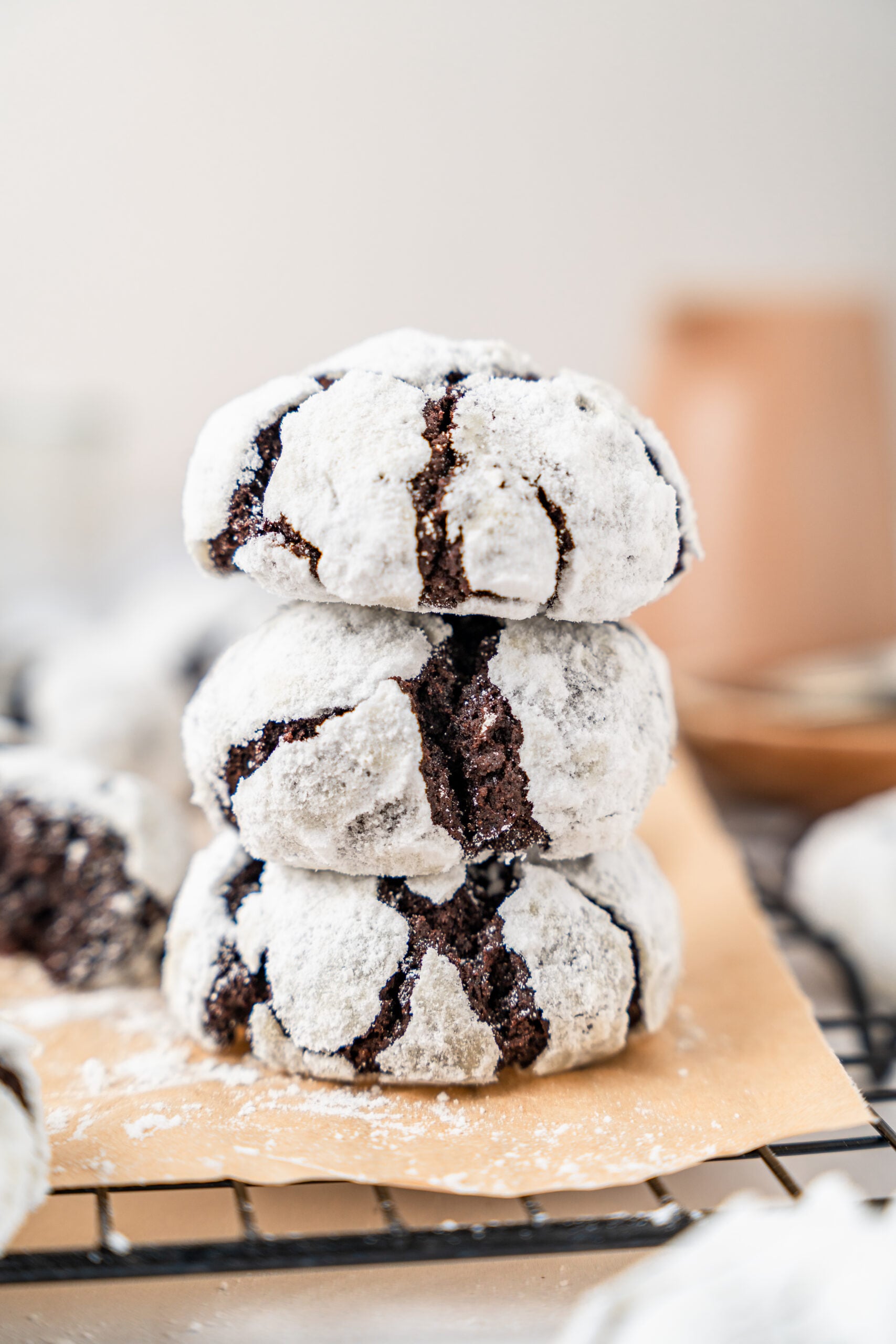
The crackle is a timing problem, not a decorating one. A sugar coated ball goes into the oven with a dry, rigid shell of icing sugar around a dough that is about to expand. The dough rises and spreads, the shell cannot stretch with it, and it splits. Everything that makes the pattern deeper is really about controlling how fast that expansion happens.
Why the dough has to be properly cold
Four hours in the fridge is the minimum here and overnight is better. Cold dough spreads slowly, so the shell has time to tear into a few wide fissures rather than a web of fine lines. Dough chilled for an hour spreads fast, the cookie goes flat, and the pattern comes out faint and washed out. If your kitchen is warm, give the scooped balls another 15 minutes on the tray before they go in.
Why oil instead of butter
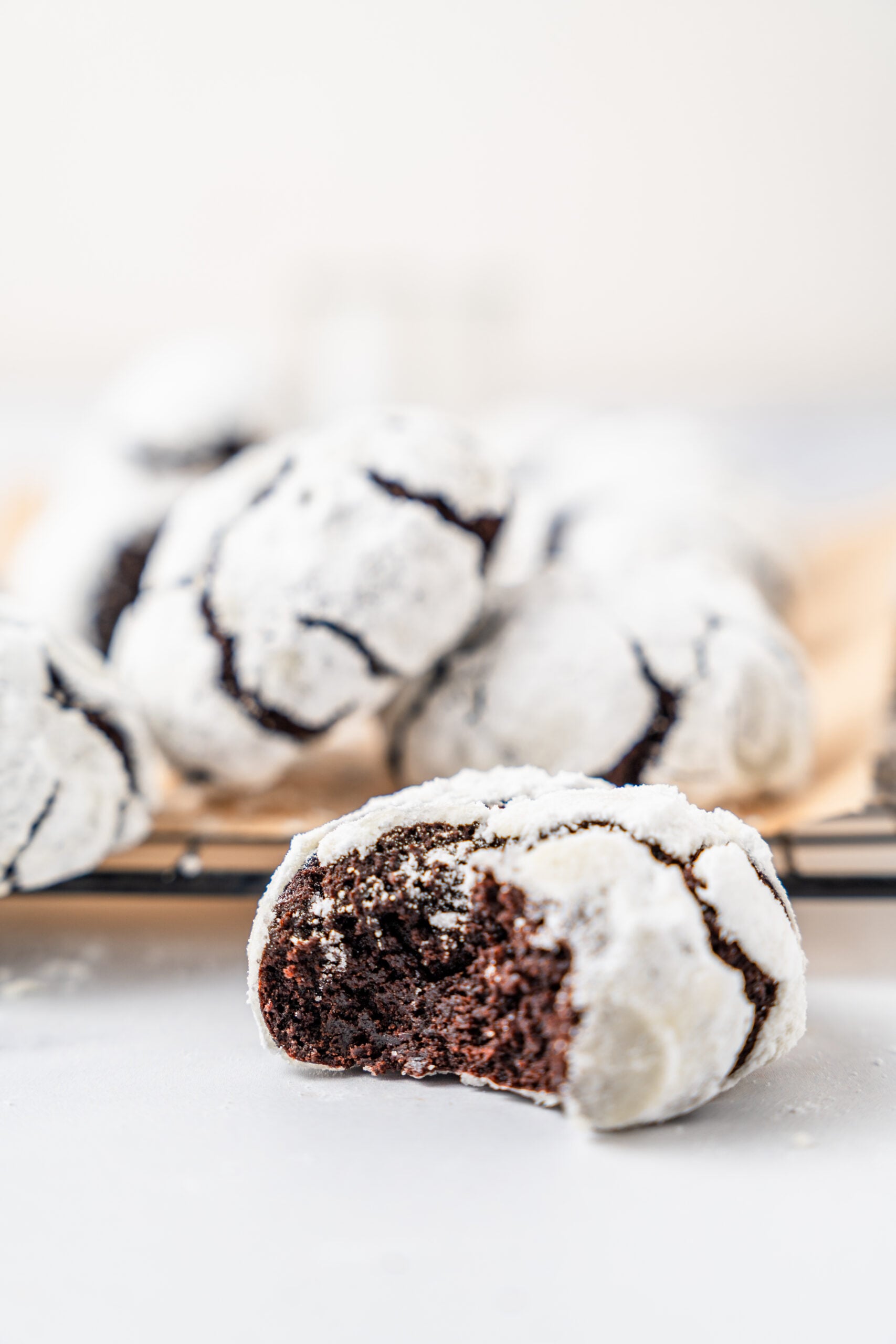
Butter sets firm as it cools, which is what makes a butter cookie snap. Oil stays liquid at room temperature, so these stay soft and fudgy in the middle on day three in a way a butter version does not. It also makes the dough quicker: there is nothing to cream, you whisk the sugar and oil together for about 30 seconds and move on. You can swap in melted butter if that is what you have, but expect a firmer, shorter cookie.
The double sugar coating, and why it keeps the white bright
This is the step almost nobody on the first page of Google explains, and it is the difference between a bright opaque white and a grey, wet looking smear. Icing sugar is fine enough to dissolve on contact with damp dough. Put it straight onto a cold, slightly tacky ball and the inner layer turns to syrup, soaks in and goes translucent in the oven.
Rolling in granulated sugar first fixes it. The coarse crystals sit on the surface of the dough and take the moisture instead, which leaves a dry bed for the icing sugar to cling to. The icing sugar then stays powder rather than becoming glaze, and it comes out of the oven still white. Be heavy handed with it: a thin coat will vanish, and you want the ball completely white before it goes on the tray. The same two stage coating is what the ube crinkles on this site use over a purple yam dough, and it behaves exactly the same way.
Ingredients
Cookie dough
- Granulated sugar: dissolves into the oil and eggs to give the cookie its structure, and keeps the crumb tender rather than dry.
- Neutral oil: canola, vegetable or sunflower. This is what keeps the centres fudgy once the cookies are cold, because unlike butter it never sets firm.
- Eggs: two large, at room temperature. They carry the lift and bind a dough that has no creamed butter holding it together.
- Vanilla extract: rounds off the cocoa, which can taste flat and slightly bitter on its own.
- Dark chocolate: 55 to 70 per cent, melted and cooled to barely warm. This is what makes the cookie read as chocolate rather than as cocoa, and it adds the fat that gives the fudgy texture.
- Plain flour: all purpose flour, measured carefully. Too much is the single most common reason crinkles come out dry and cakey.
- Dutch process cocoa: darker, smoother and less acidic than natural cocoa, which is what gives the deep near black colour against the white.
- Baking powder: the lift that pushes the cookie up and out and tears the sugar shell open.
- Fine salt: sharpens the chocolate. Without it the cookie tastes muted and oversweet.
Double sugar coating
- Granulated sugar: the barrier layer. It takes the surface moisture off the dough so the icing sugar cannot dissolve into it.
- Icing sugar: powdered sugar, and the layer you actually see. Roll until the ball is completely and thickly white.
Substitutions that still work
- Natural cocoa for Dutch process: it works, but gives a redder, sharper, less fudgy cookie. Use Dutch process if you can get it.
- No dark chocolate: leave it out for a lighter, more old fashioned crinkle and add 15 g more cocoa plus 20 g more oil to make up the difference.
- Melted butter for oil: fine on the day, but the cookie sets firmer and is noticeably less fudgy the next day.
Steps
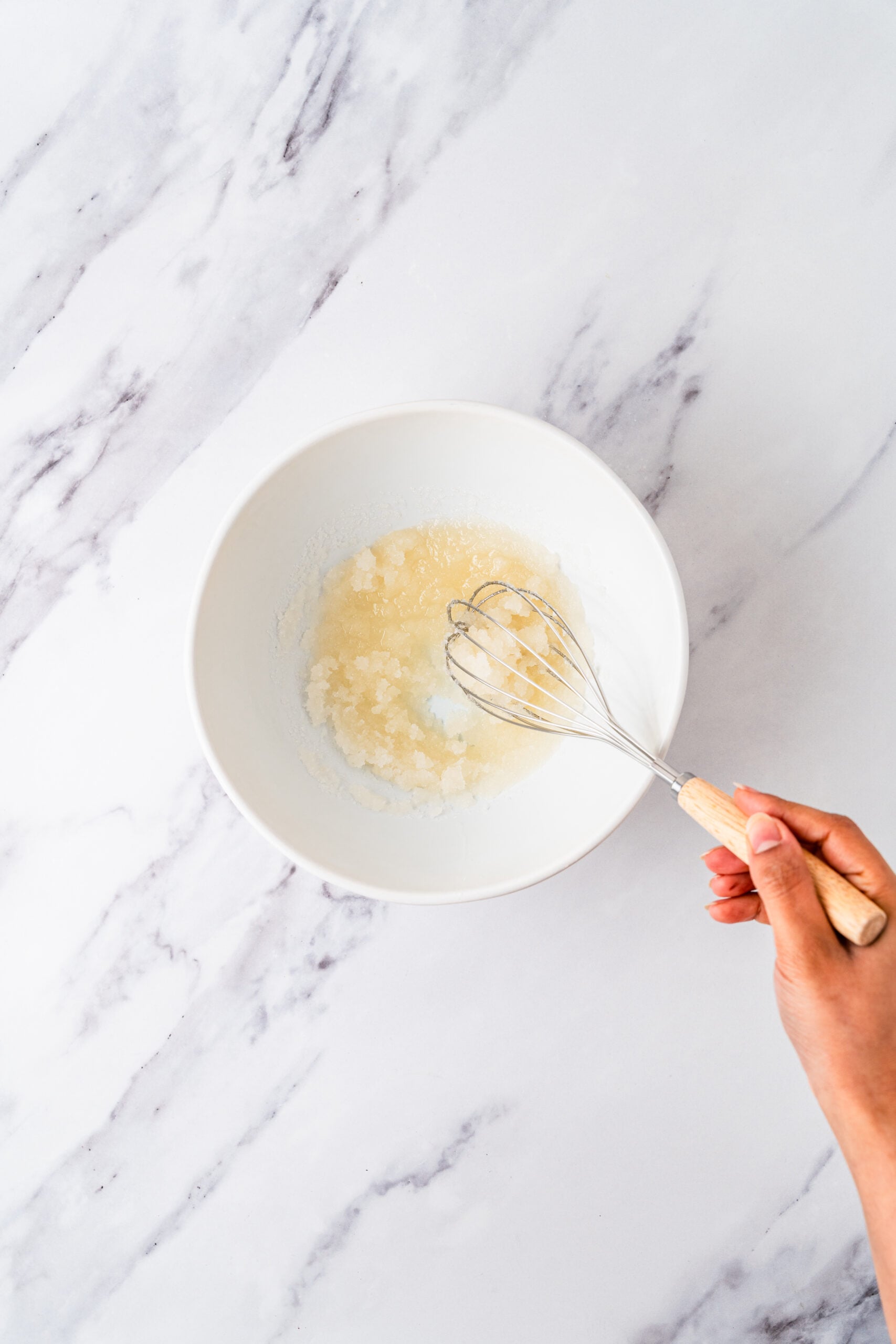
- Whisk the granulated sugar and oil together in a large bowl until the mixture looks like wet sand, about 30 seconds. There is no butter to cream, so this takes no effort at all.
- Whisk in the eggs one at a time, beating well after each, then the vanilla. The mixture should loosen and turn glossy.
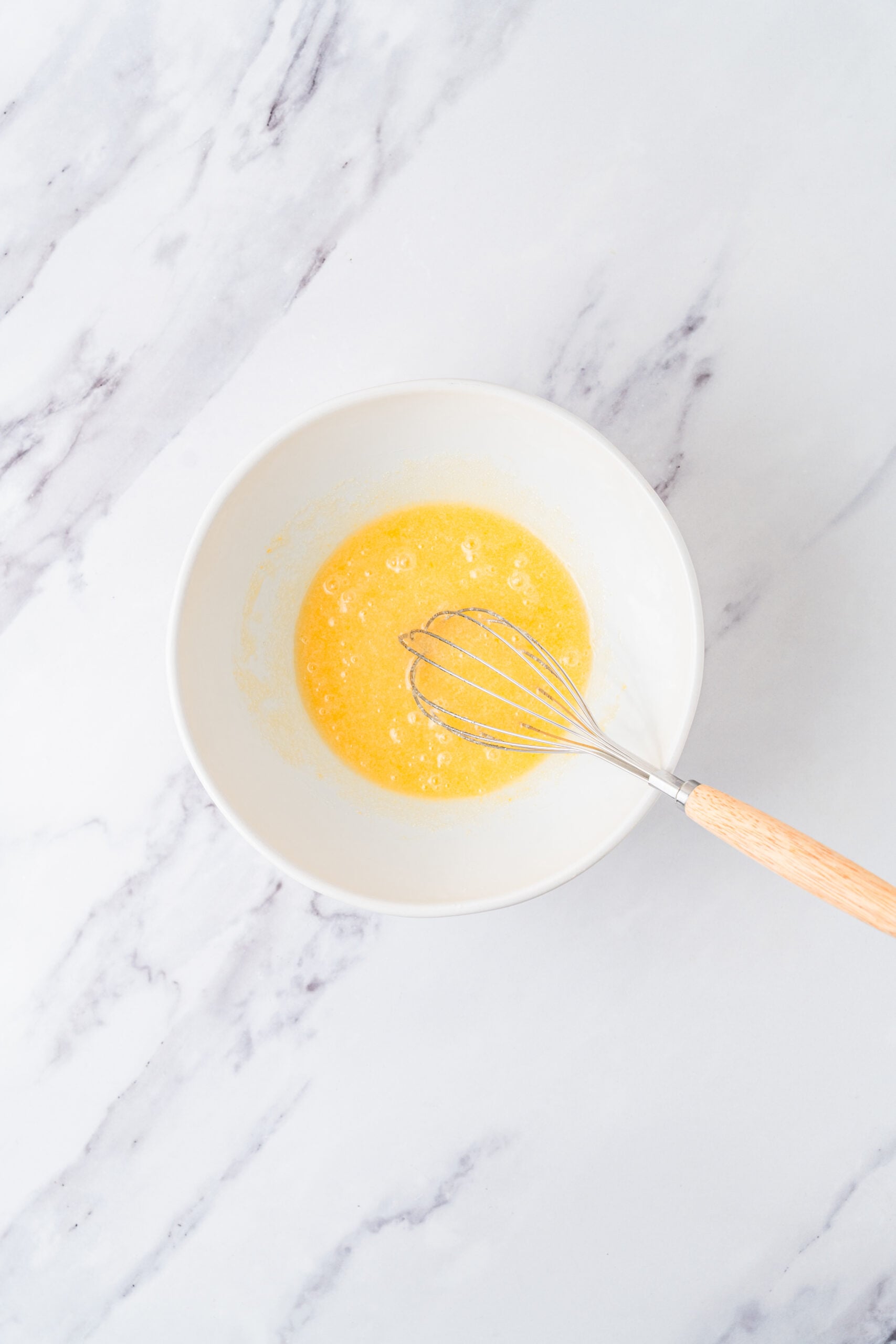
- Pour in the melted, cooled chocolate in a steady stream while whisking. If the chocolate is still hot it will scramble the egg, so let it come down to barely warm first.
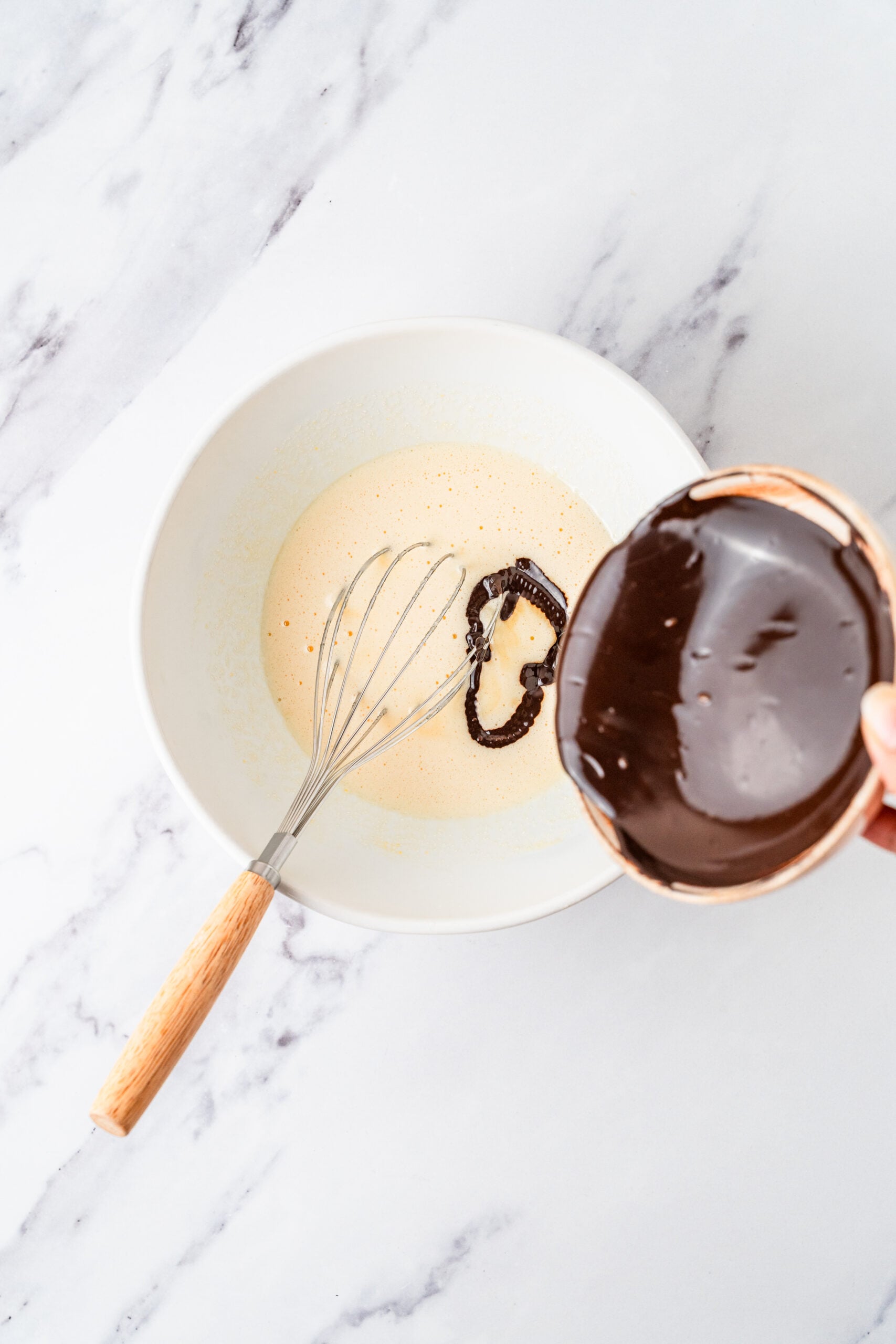
- Sift the flour, cocoa, baking powder and salt straight over the bowl. Fold with a spatula only until no dry streaks remain. The dough will be very soft and sticky, which is correct. Do not add more flour.
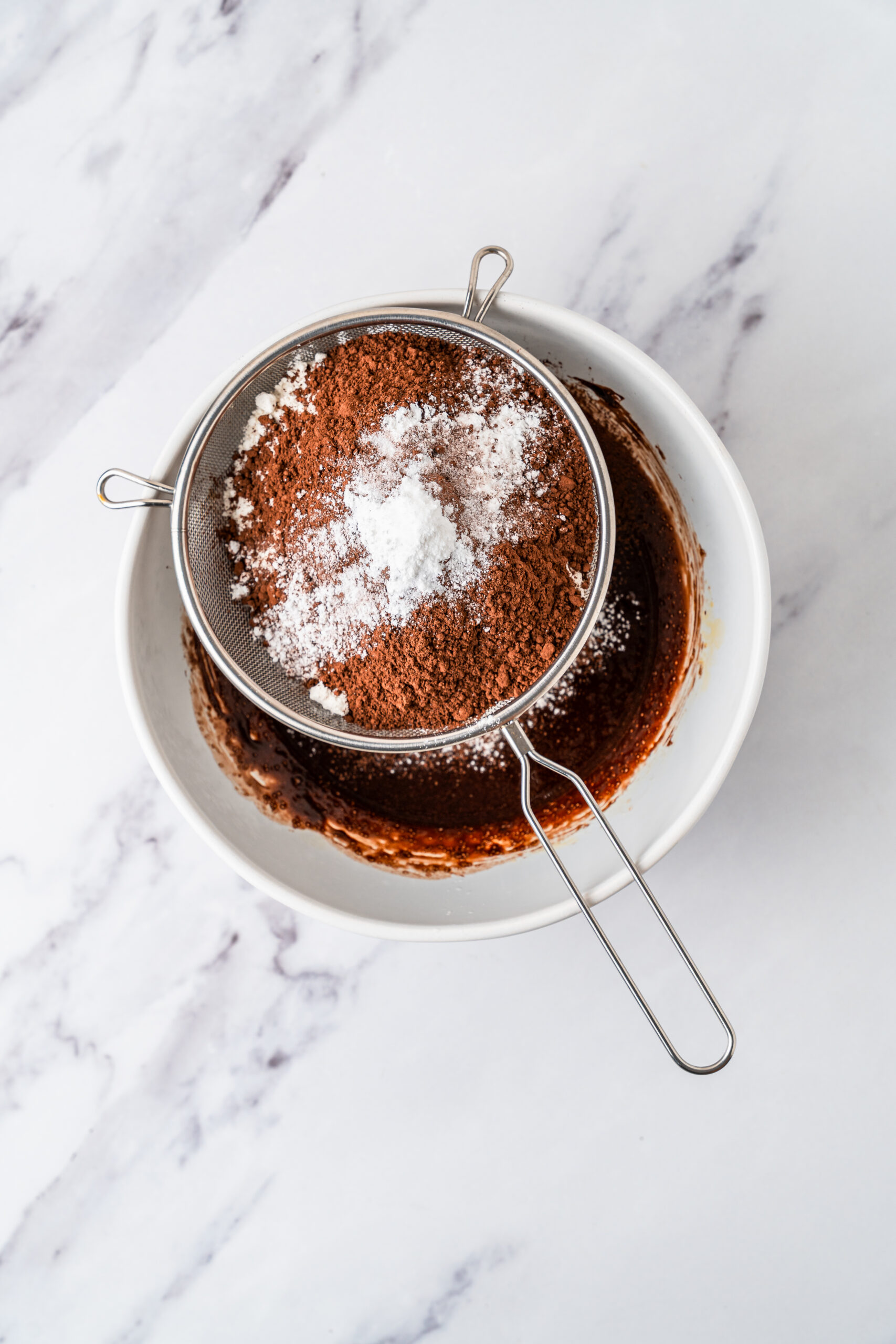
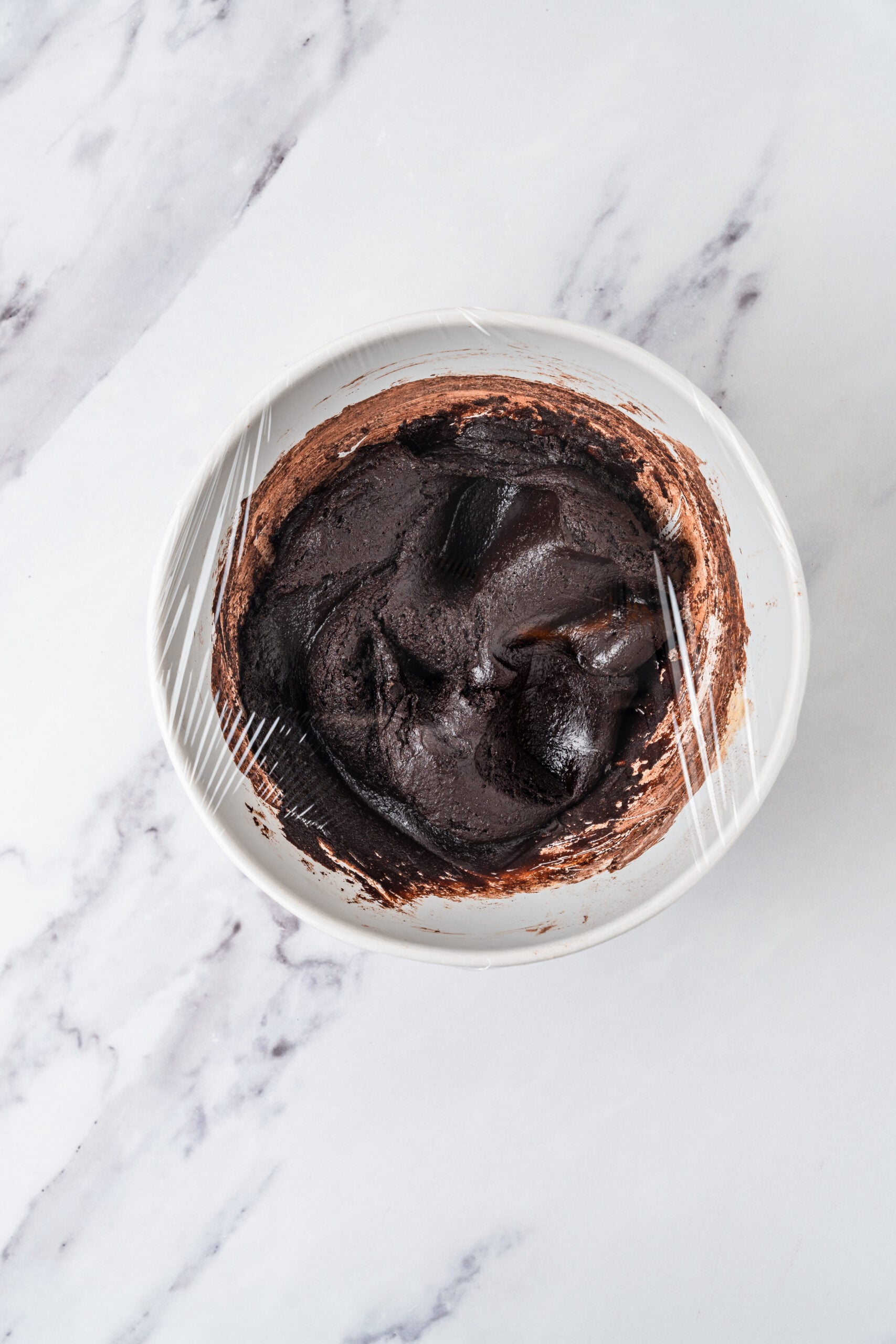
- Cover the bowl and chill for at least 4 hours, preferably overnight. This is not optional. Cold dough spreads slowly, and slow spread is what tears the sugar crust into deep crackles.
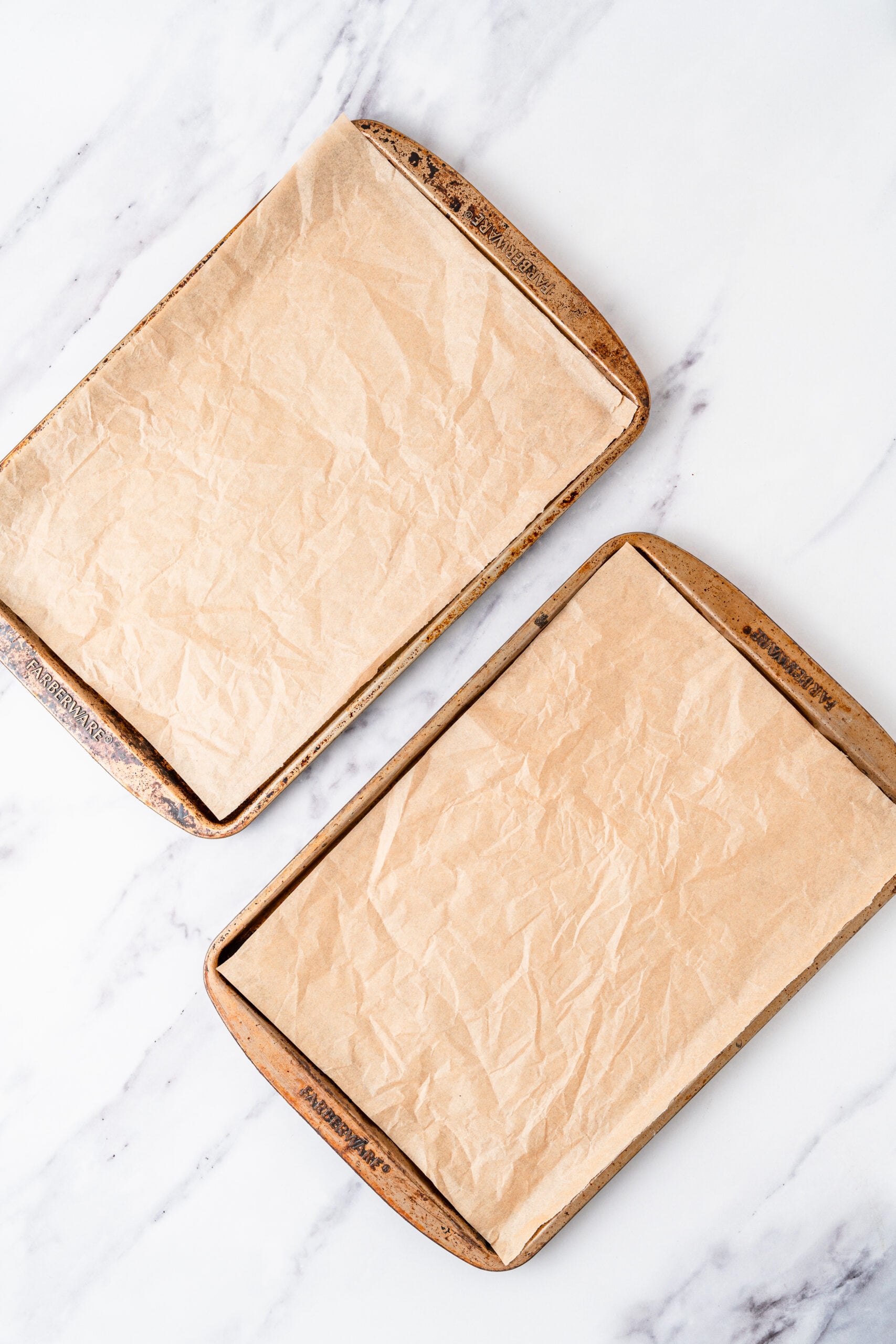
- Heat the oven to 175 C (350 F) and line two baking trays with parchment. Set out two shallow bowls, one with the granulated sugar and one with the icing sugar.
- Scoop the cold dough into 30 g balls, about a level tablespoon and a half, and roll each one smooth between your palms. Work quickly so the dough stays cold.
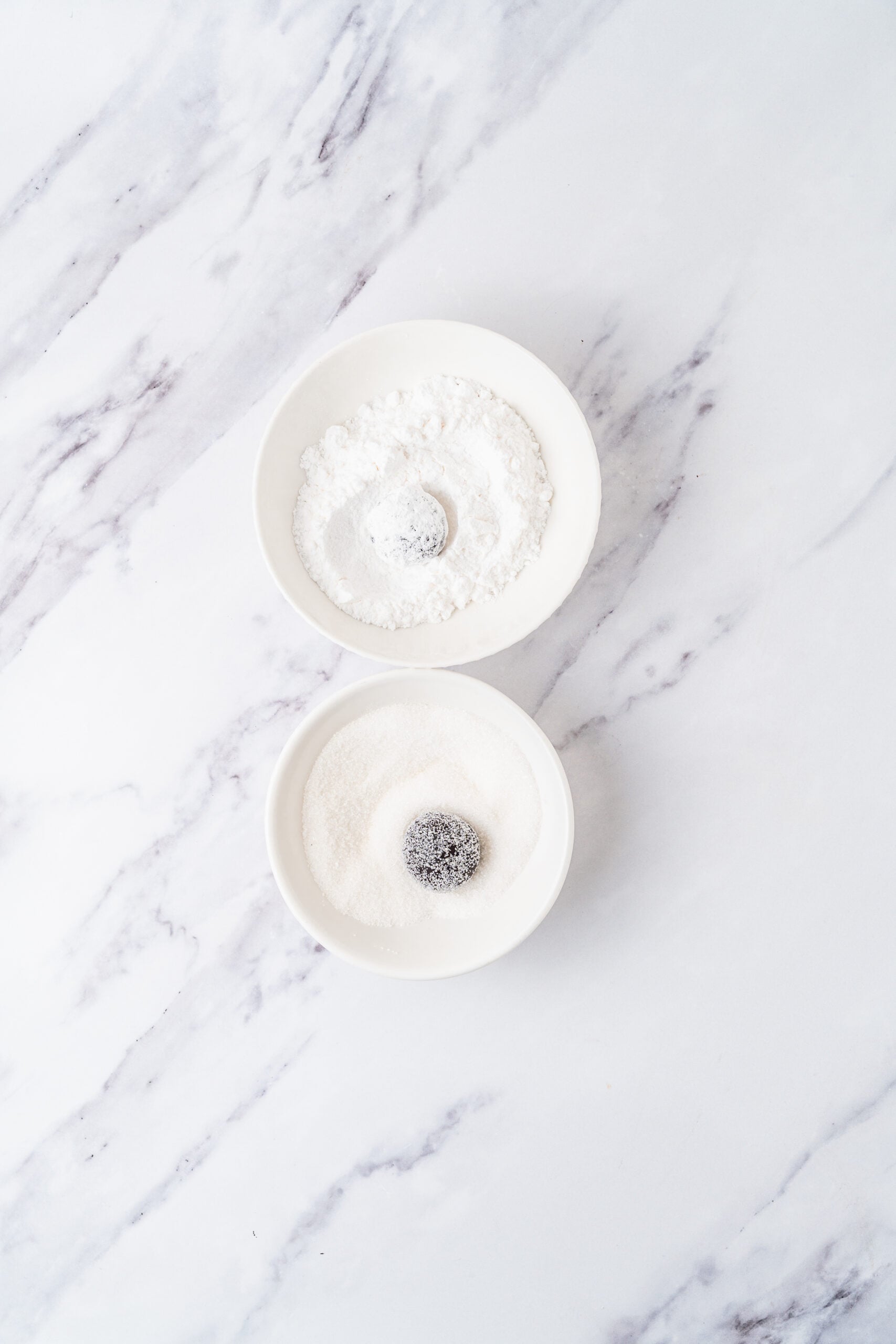
- Roll each ball first in the granulated sugar, then drop it into the icing sugar and turn it until it is thickly and completely white. Be generous. A thin coat will disappear in the oven.
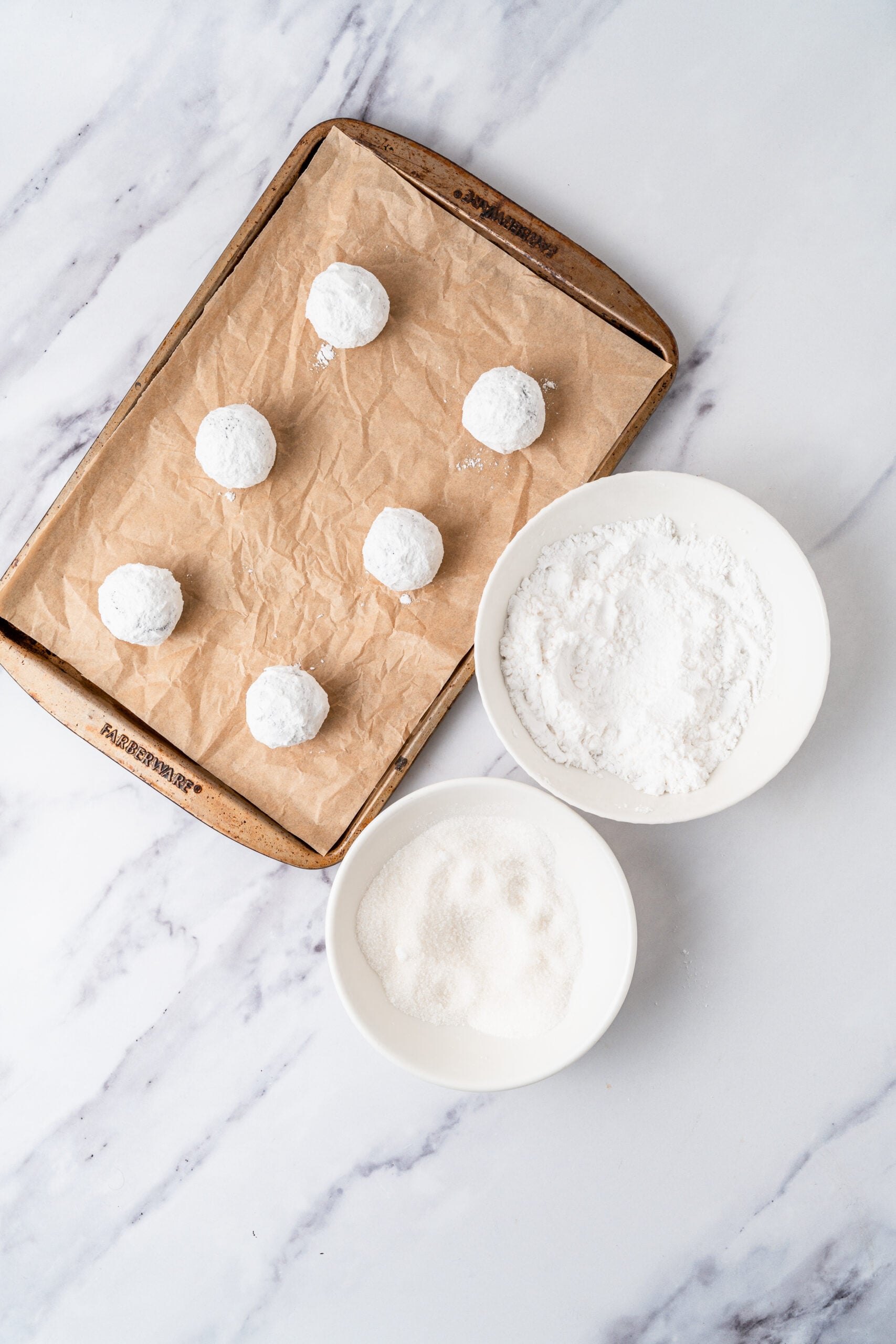
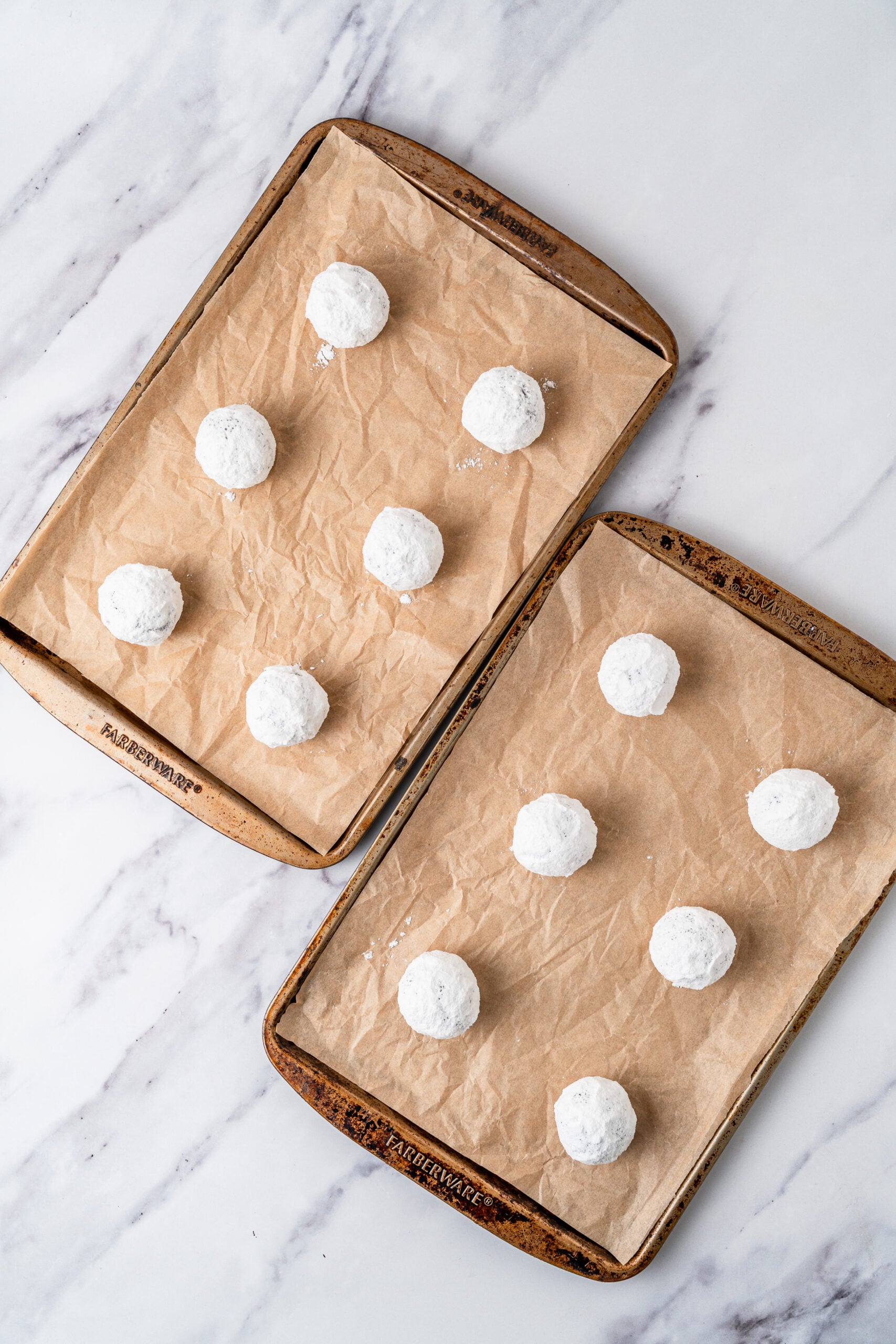
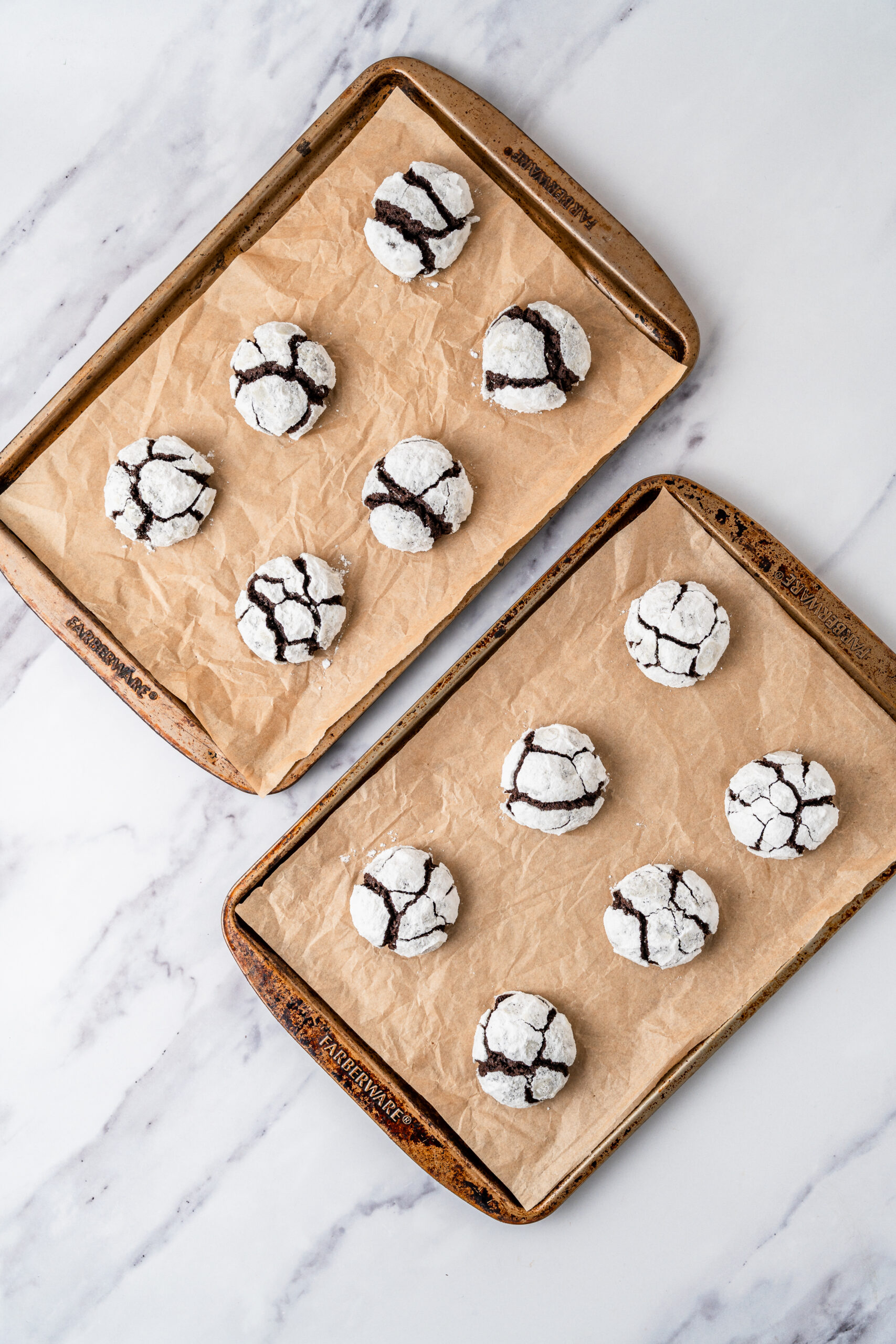
- Place 12 per tray, about 5 cm (2 in) apart. They spread more than they look like they will.
- Bake one tray at a time for 11 to 13 minutes, until the cookies have puffed, cracked open across the top and the edges are set but the centres still look slightly underdone when you press them.
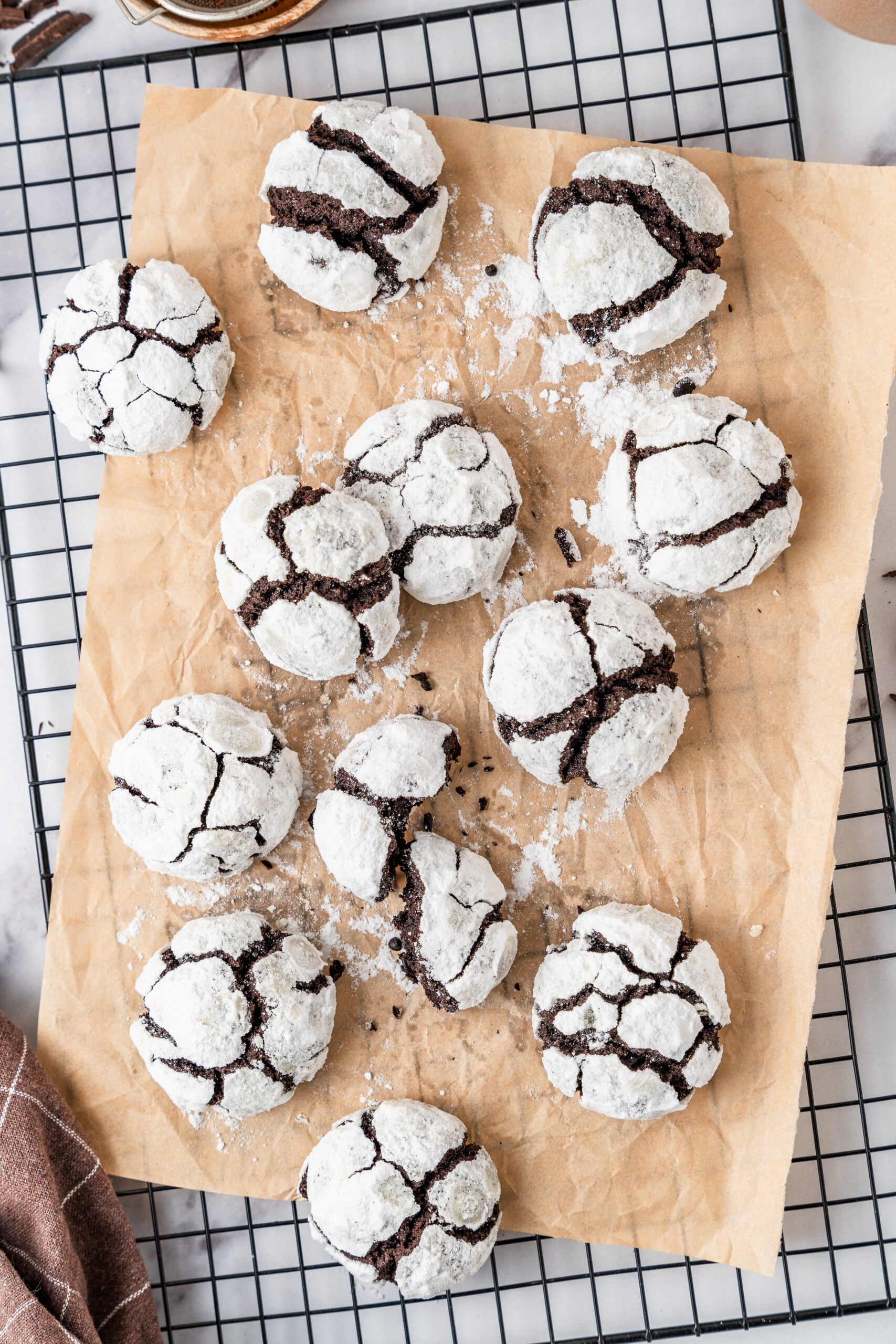
- Cool on the tray for 10 minutes before moving them to a rack. They finish setting as they cool, and lifting them early will break them.
Fixing a faint crackle, a grey coating or a flat cookie
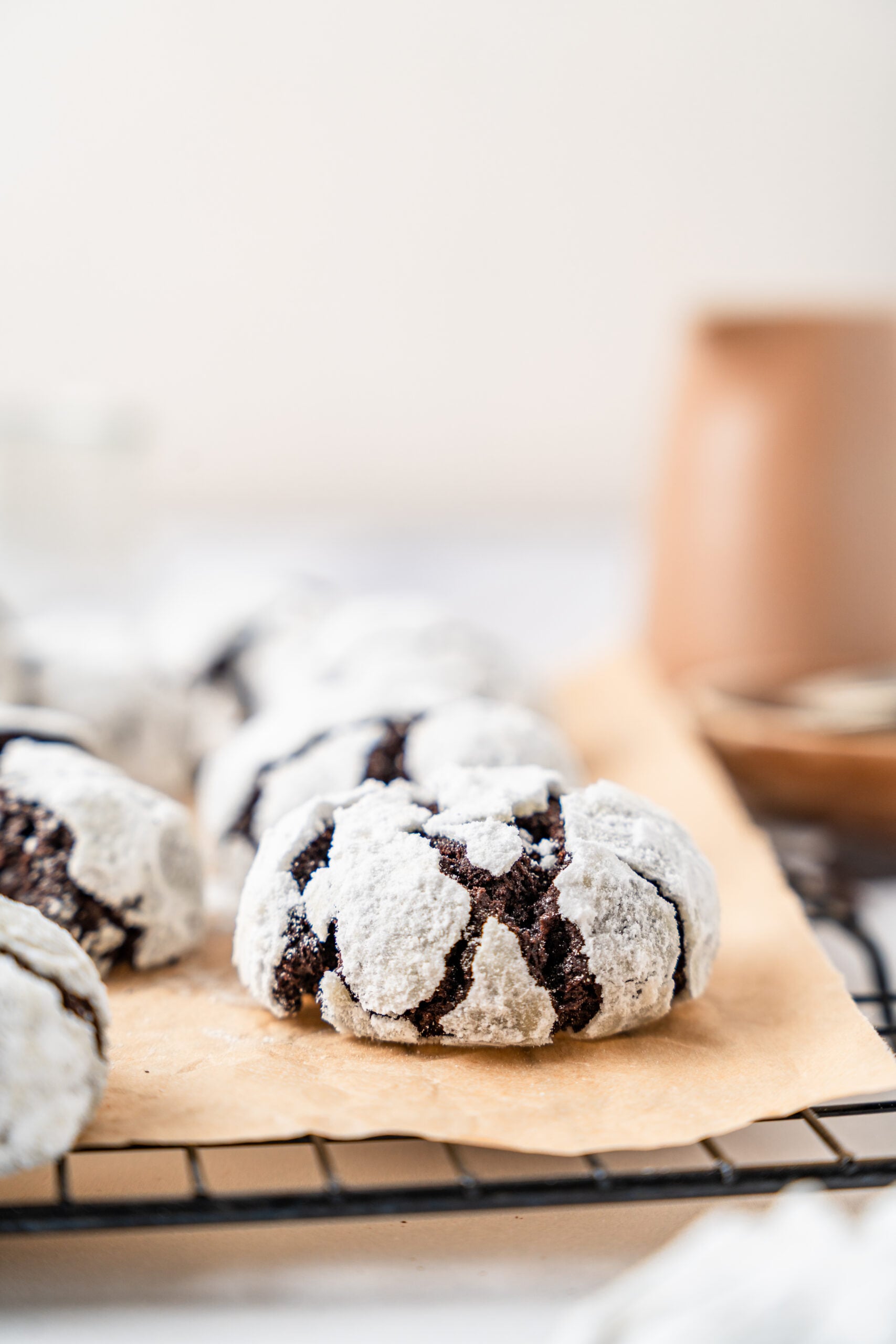
No crackle, or only a faint one
Either the dough was not cold enough or the coating was too thin, and both are easy to correct. Put the bowl back in the fridge until the dough is firm enough to scoop cleanly, and then roll the balls in noticeably more icing sugar than feels sensible. If you are baking the second tray while the first is in the oven, keep that tray in the fridge rather than on the bench.
A grey, patchy or wet looking white
This is the granulated sugar step being skipped or rushed. The icing sugar has dissolved into the surface of the dough and turned to glaze. Roll in granulated sugar first every time, and make sure the ball is evenly coated in it before it goes anywhere near the icing sugar.
Cookies spread flat and thin
Usually too little flour or a kitchen that is simply too warm. Weigh the flour if you can, and chill the scooped and coated balls on the tray for 15 minutes before they bake. That short second chill firms the fat back up and holds the dome.
Dry and cakey rather than fudgy
Overbaked. Crinkles carry on cooking on the hot tray for several minutes after they come out, so pull them while the centres still look soft and a little underdone. If they feel firm in the middle when you take them out of the oven, they will be dry once cold. This is the opposite instinct to a cut out cookie such as gingerbread cookies, where you are waiting for the edges to look dry and set before the tray comes out.
Making the dough ahead, freezing and storing
The dough keeps covered in the fridge for 3 days and genuinely improves after the first night, as the cocoa hydrates and the flavour deepens. That makes this a good one to start the day before you need it rather than a recipe to rush.
Rolled, uncoated balls freeze for 3 months. Coat them in the two sugars straight from frozen and add 2 minutes to the bake. Baked cookies keep in an airtight tin for 4 days and stay soft, which is longer than most Christmas cookies manage. If you are building a tin to give away, they sit well next to classic shortbread cookies and snowball cookies, which give you a sandy, buttery contrast against all this cocoa.
Frequently Asked Questions
Why did my chocolate crinkle cookies not crack?
Nine times out of ten the dough was not cold enough. Cold dough spreads slowly in the oven, and that slow spread is what tears the dry sugar shell into wide fissures, so an hour in the fridge gives you a flat cookie with a faint pattern. The other cause is a coating that was too thin to tear in the first place. Chill for the full 4 hours and roll the balls in more icing sugar than feels sensible.
Can I shorten or skip the chill?
No, and it is the one step in this recipe that is genuinely not negotiable. There is no butter in the dough to firm up at room temperature, so an unchilled dough is simply too soft to scoop, let alone to hold a dome in the oven. If you are short on time, chill the mixing bowl for 2 hours, scoop and coat the balls, then give them another 30 minutes on the tray in the fridge before baking.
Why did the white coating turn grey and patchy?
The icing sugar dissolved into the surface of the dough and turned to glaze before it hit the oven. That happens when the balls go straight into icing sugar without the granulated sugar step first. The coarse granulated crystals take up the surface moisture and leave a dry bed for the icing sugar to sit on, so roll in granulated first every single time, and make sure the ball is evenly coated before it goes anywhere near the powder.
Dutch process or natural cocoa?
Dutch process if you can get it. It is less acidic and much darker, which gives you the near black dough that makes the white crackle read so strongly in a photograph and on the plate. Natural cocoa works and nothing will go wrong, but the cookie comes out redder, sharper in flavour and a little less fudgy.
How do I know when they are baked?
Look for a puffed cookie that has cracked open across the top, with edges that are set and centres that still look slightly underdone when you press them. They carry on cooking on the hot tray for about 10 minutes after they come out, which is where the fudgy middle comes from. If the centre already feels firm in the oven, the cookie will be dry and cakey once it is cold.
Can I make the dough ahead or freeze it?
Both, and the dough is actually better for it. It keeps covered in the fridge for 3 days and improves after the first night as the cocoa hydrates and the flavour deepens. Rolled but uncoated balls freeze for 3 months: roll them in the two sugars straight from frozen and add 2 minutes to the bake time.
Let’s Get Cooking
If you liked this recipe make sure to leave me a comment and rating down below. I’d love to know how it went! Also, don’t forget to tag me on Instagram @catherine.desserts.
Follow me on Facebook, Pinterest, YouTube, and TikTok for more of my baking creations and updates!
Chocolate Crinkle Cookies
Soft, fudgy chocolate crinkle cookies with a bright white crackle. A double sugar coating keeps the white opaque instead of grey, and a long cold chill is what tears the crust into wide, deep fissures.
- Prep Time: 20 minutes
- Chill Time: 4 hours
- Cook Time: 25 minutes
- Total Time: 4 hours 45 minutes
- Yield: 24 cookies 1x
- Category: Dessert
- Method: Baking
- Cuisine: American
Ingredients
Cookie dough
- 200 g (1 cup) granulated sugar
- 80 ml (1/3 cup) neutral oil, such as canola, vegetable or sunflower
- 2 large eggs, at room temperature
- 2 tsp vanilla extract
- 100 g (3.5 oz) dark chocolate, 55 to 70 per cent, melted and cooled to just warm
- 190 g (1 1/2 cups) plain (all purpose) flour
- 65 g (3/4 cup) Dutch process cocoa powder
- 1 1/2 tsp baking powder
- 1/2 tsp fine salt
Double sugar coating
- 100 g (1/2 cup) granulated sugar
- 120 g (1 cup) icing (powdered) sugar
Instructions
- Whisk the granulated sugar and oil together in a large bowl until the mixture looks like wet sand, about 30 seconds. There is no butter to cream here, so this takes no effort.
- Whisk in the eggs one at a time, beating well after each, then the vanilla. The mixture should loosen and turn glossy.
- Pour in the melted, cooled chocolate in a steady stream while whisking. If the chocolate is too hot it will scramble the egg, so let it come down to barely warm first.
- Sift the flour, cocoa, baking powder and salt directly over the bowl. Fold with a spatula just until no dry streaks remain. The dough will be very soft and sticky at this stage, which is correct. Do not add more flour.
- Cover the bowl and chill for at least 4 hours, preferably overnight. This step is not optional: cold dough spreads slowly in the oven, and slow spread is what tears the sugar crust into deep crackles.
- Heat the oven to 175 C (350 F) and line two baking trays with parchment. Set out two shallow bowls, one with the granulated sugar and one with the icing sugar.
- Scoop the cold dough into 30 g balls (a level tablespoon and a half) and roll each one smooth between your palms. Work quickly so the dough stays cold.
- Roll each ball first in the granulated sugar, then drop it into the icing sugar and turn it until it is thickly and completely white. The granulated layer is the trick: it sits between the wet dough and the icing sugar and stops the icing sugar dissolving, so the coating stays bright and opaque instead of going grey and patchy. Be generous, a thin coat will disappear in the oven.
- Place 12 per tray, about 5 cm (2 in) apart. They spread more than they look like they will.
- Bake one tray at a time for 11 to 13 minutes, until the cookies have puffed, cracked open across the top and the edges are set but the centres still look slightly underdone and soft when you press them.
- Cool on the tray for 10 minutes before moving to a rack. They finish setting as they cool, and lifting them early will break them.
Notes
- Cocoa: natural cocoa works in place of Dutch process but gives a redder, sharper, less fudgy cookie. Use Dutch process if you can get it.
- Without the dark chocolate: leave it out for a lighter, more old fashioned crinkle and add 15 g more cocoa and 20 g more oil.
- Butter instead of oil: melted butter can replace the oil, but the cookie sets firmer and is less fudgy the next day, which is why oil is the better choice here.
- Make ahead: the dough keeps covered in the fridge for 3 days and improves after the first night. Rolled, uncoated balls freeze for 3 months. Coat them in the two sugars straight from frozen and add 2 minutes to the bake.
- Storage: baked cookies keep in an airtight tin for 4 days and stay soft.
- No crackle: the dough was not cold enough, or the coating was too thin. Chill longer and coat more heavily.
- Spread flat: too little flour or an over warm kitchen. Chill the scooped balls for 15 minutes on the tray before baking.
Nutrition
- Serving Size: 1 cookie