Dalgona candy made from two ingredients in about four minutes, puffed with baking soda and stamped with the shapes you already know from Squid Game.
Dalgona candy is the most ingredient light thing on this entire blog. Sugar and baking soda. That is the whole list, and if you count the oil you brush on the tray you are still only at three. The first time I made it I stood in the kitchen slightly offended that something this simple could taste this good, all burnt caramel and honeycomb crunch, gone in about six bites.
It is also the recipe I have burnt most often. Sugar goes from perfect amber to acrid brown in the time it takes to answer a text, and the baking soda step lasts about eight seconds before the foam starts to set. So this post is really about timing rather than technique. Once I stopped trying to rush the melt and started pulling the pan off the heat earlier than felt right, my failure rate dropped to basically zero.
What is Dalgona Candy?
Dalgona candy, also called ppopgi, is a Korean street sweet made by melting sugar and stirring in a pinch of baking soda. The soda releases carbon dioxide into the hot syrup, which foams it up into a pale aerated mass, and that foam sets into something crisp and porous that shatters when you bite it. Honeycomb toffee and cinder toffee work on exactly the same principle.
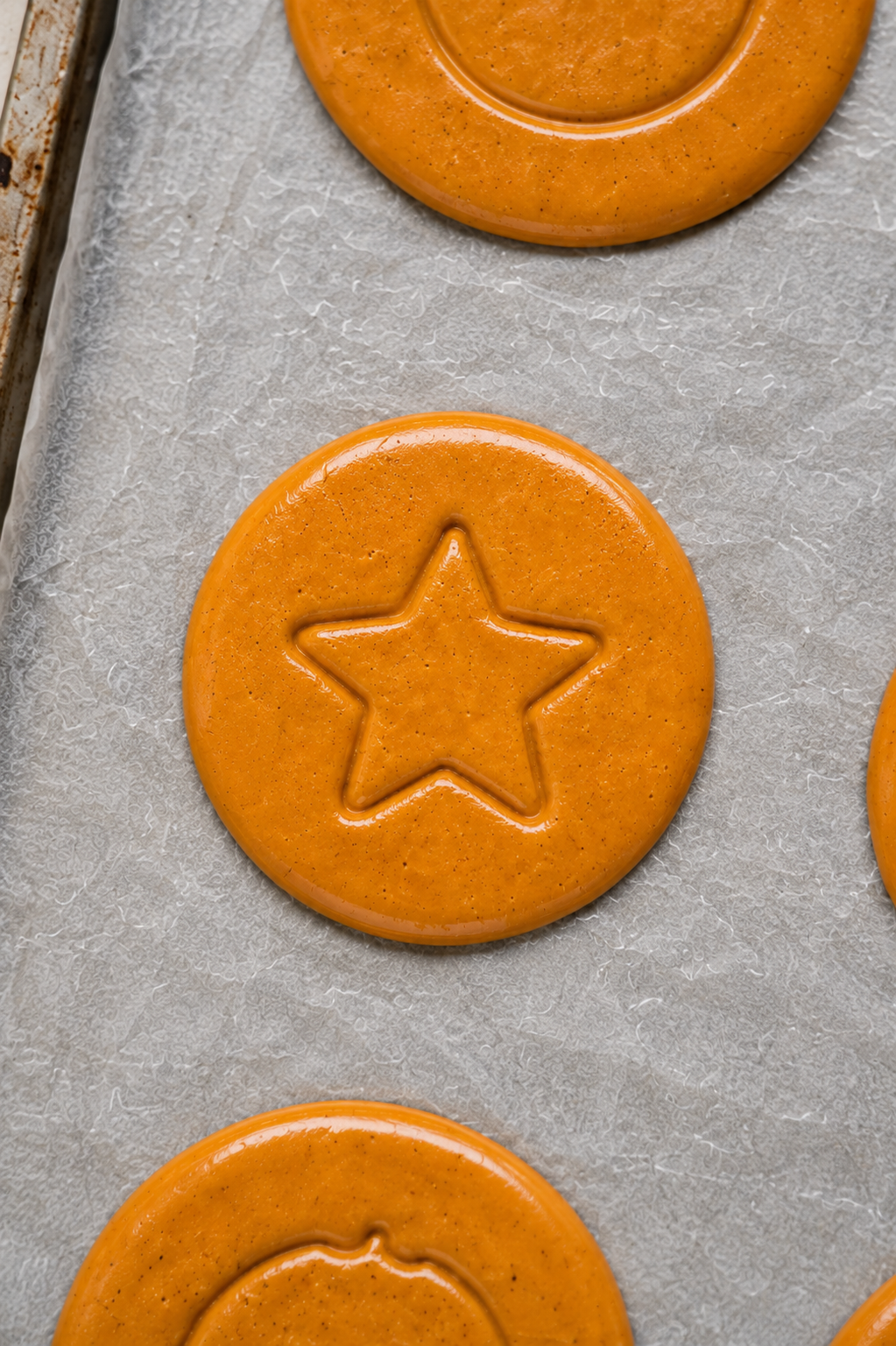
Traditionally it is made one serve at a time in a long handled metal ladle held straight over a flame, then poured onto a flat surface, pressed thin with an oiled disc, and stamped with a shape. Vendors outside Korean schools have sold it this way for decades, and the game attached to it is older than any television show: peel the stamped shape out cleanly without cracking it and you win another one free.
That game is why most people have heard of it now. It is worth saying that the flavour is not one note sweet. Because you are properly caramelising the sugar before the soda goes in, there is a real bitterness underneath, closer to burnt caramel than to a boiled lolly. That edge is the whole point, and it is why undercooked dalgona tastes disappointingly plain.
Where Dalgona Candy Comes From
Dalgona spread through Korea in the years after the Korean War, when sugar was one of the few cheap treats available and street vendors could set up with a burner, a ladle and a bag of it. The name is generally traced to a Korean word for sweetness, and ppopgi refers to the picking or pulling out of the stamped shape.
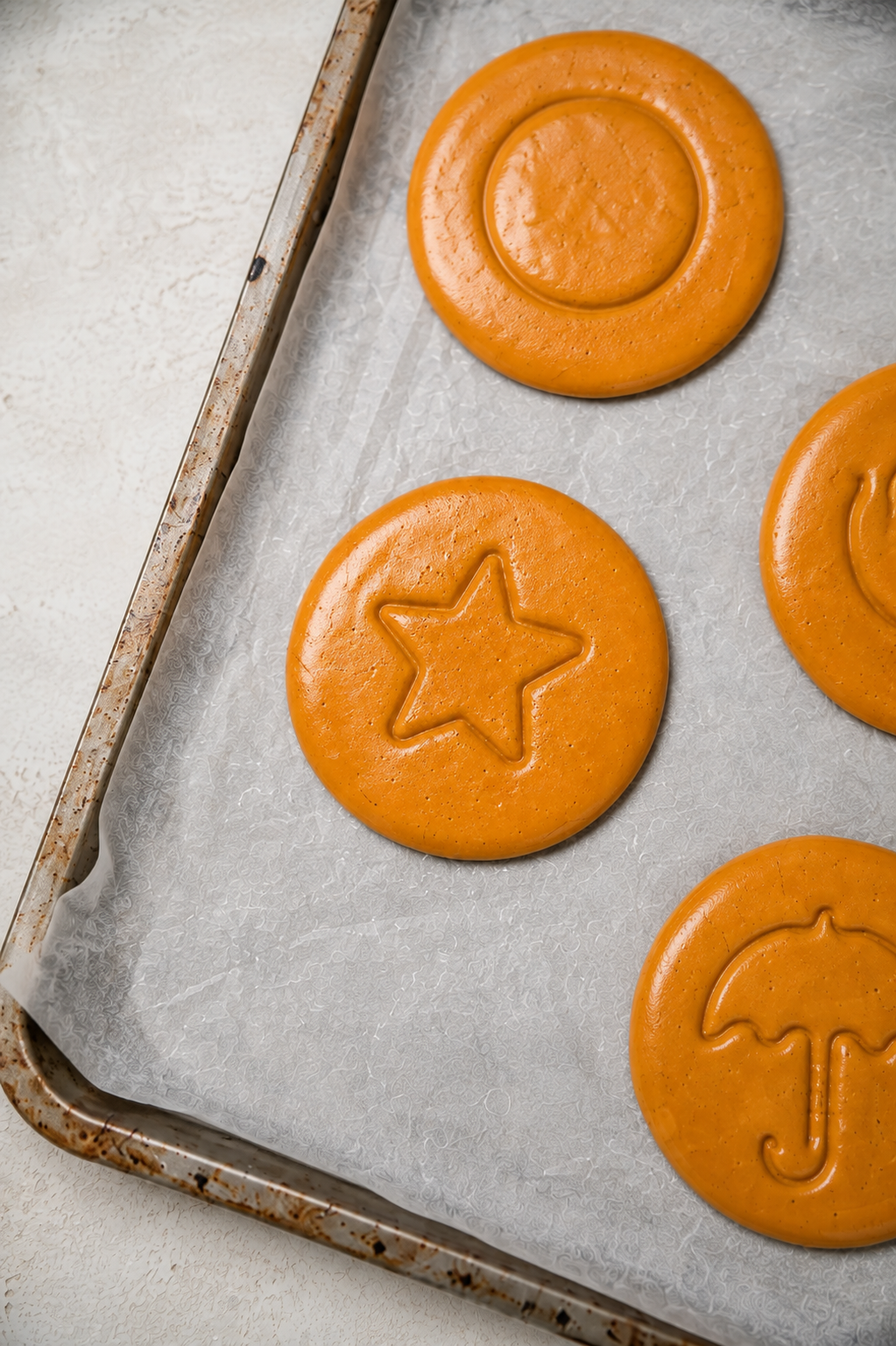
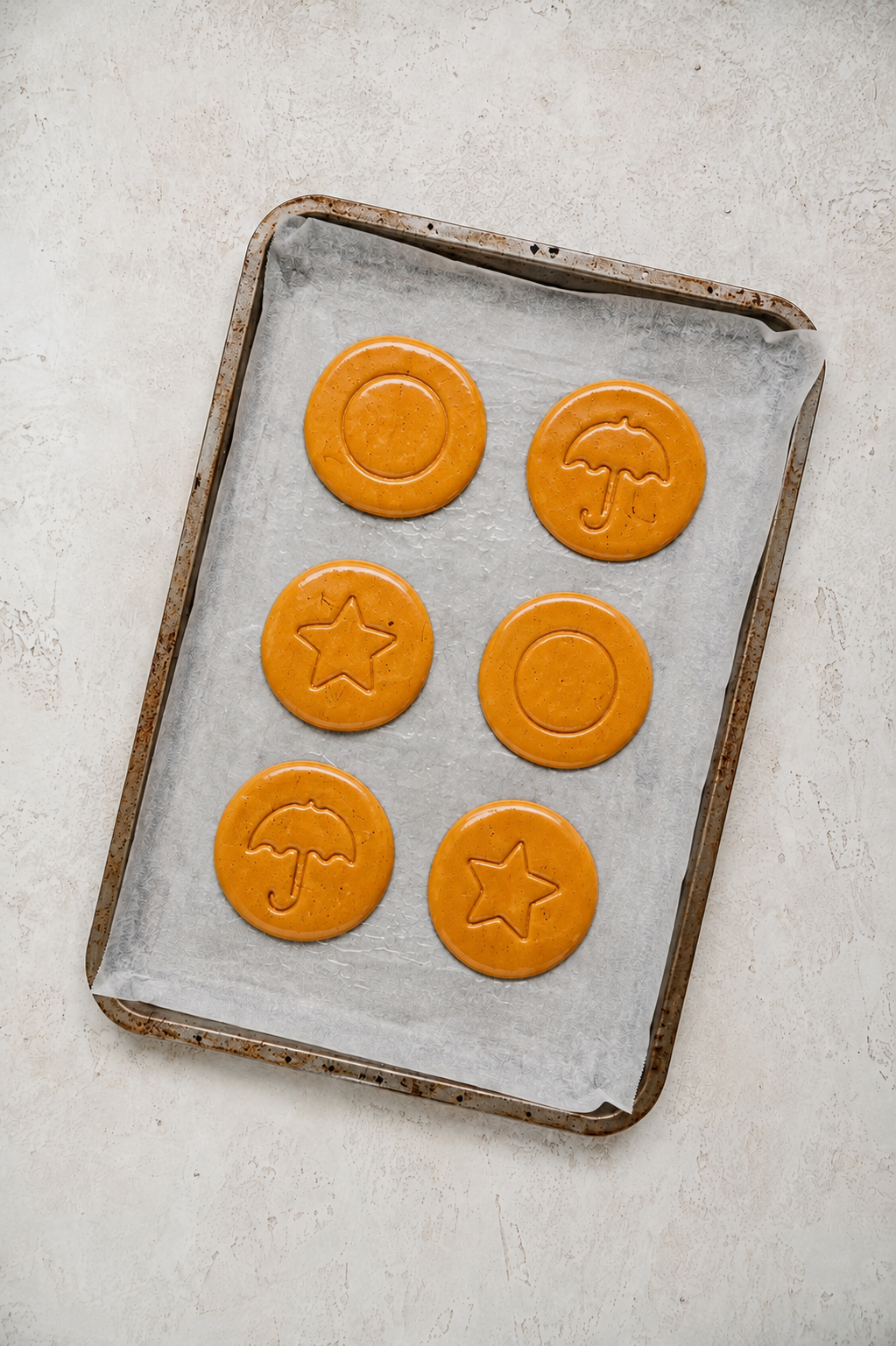
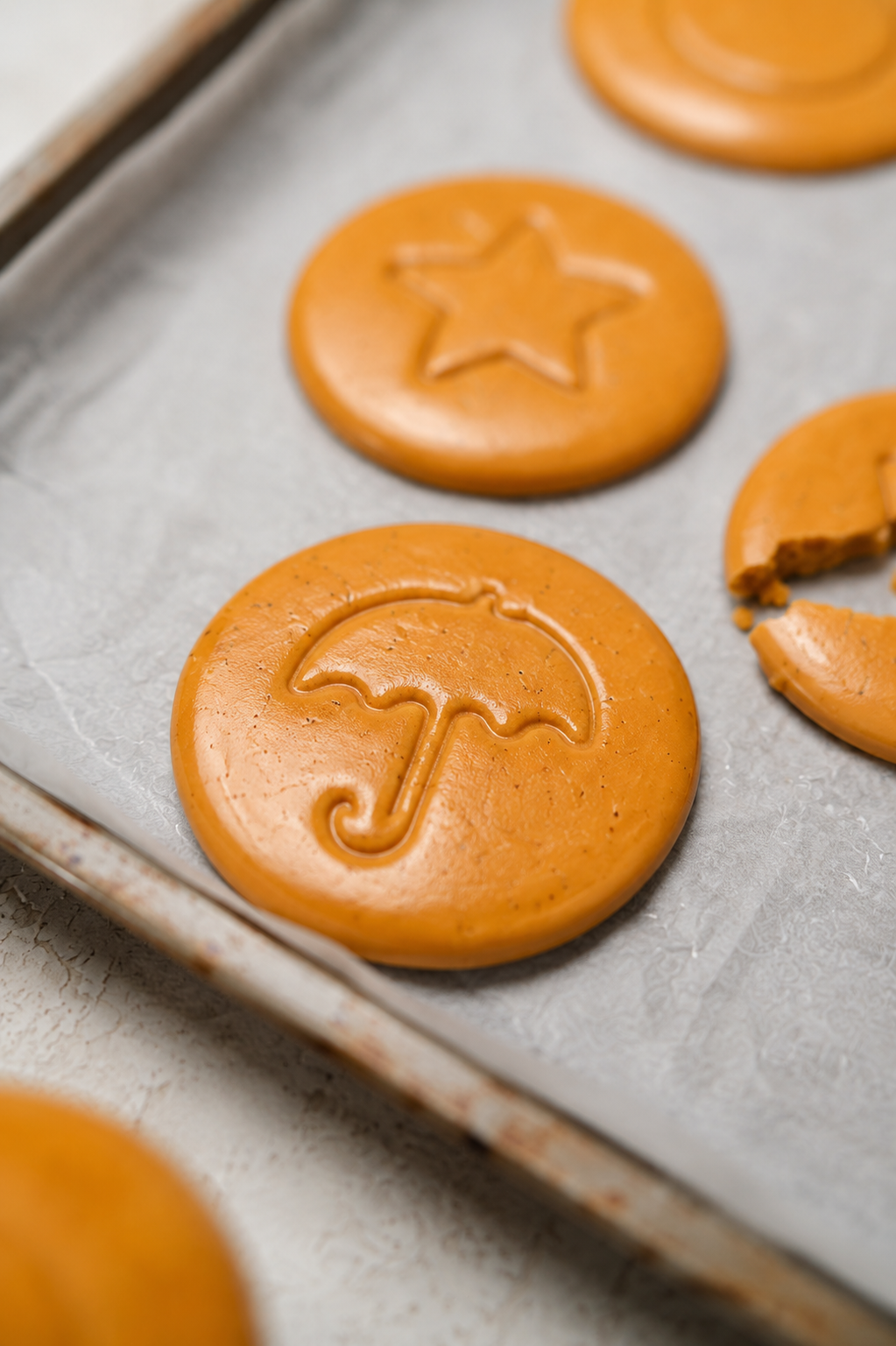
The Squid Game episode in 2021 turned a local nostalgia sweet into a global search term overnight, and the shapes people now expect, the circle, triangle, star and umbrella, are the ones the show used. The umbrella is the hard one. That is not television invention, it genuinely is the shape vendors used to hand out when they did not want to give away a free round.
If you like Korean sweets that lean on sugar rather than dairy, my Korean honey rice cake sits in the same family of simple, old fashioned treats. And if you want the opposite end of the sugar work spectrum, dragon’s beard candy is about as technical as pulled sugar gets.
How to Make Dalgona Candy
You melt sugar in a small pan over medium low heat, stirring gently and constantly so it does not scorch on the base. It will clump into a sandy mess first, which is normal and alarming the first time. Keep it moving and the clumps dissolve into a clear amber liquid.
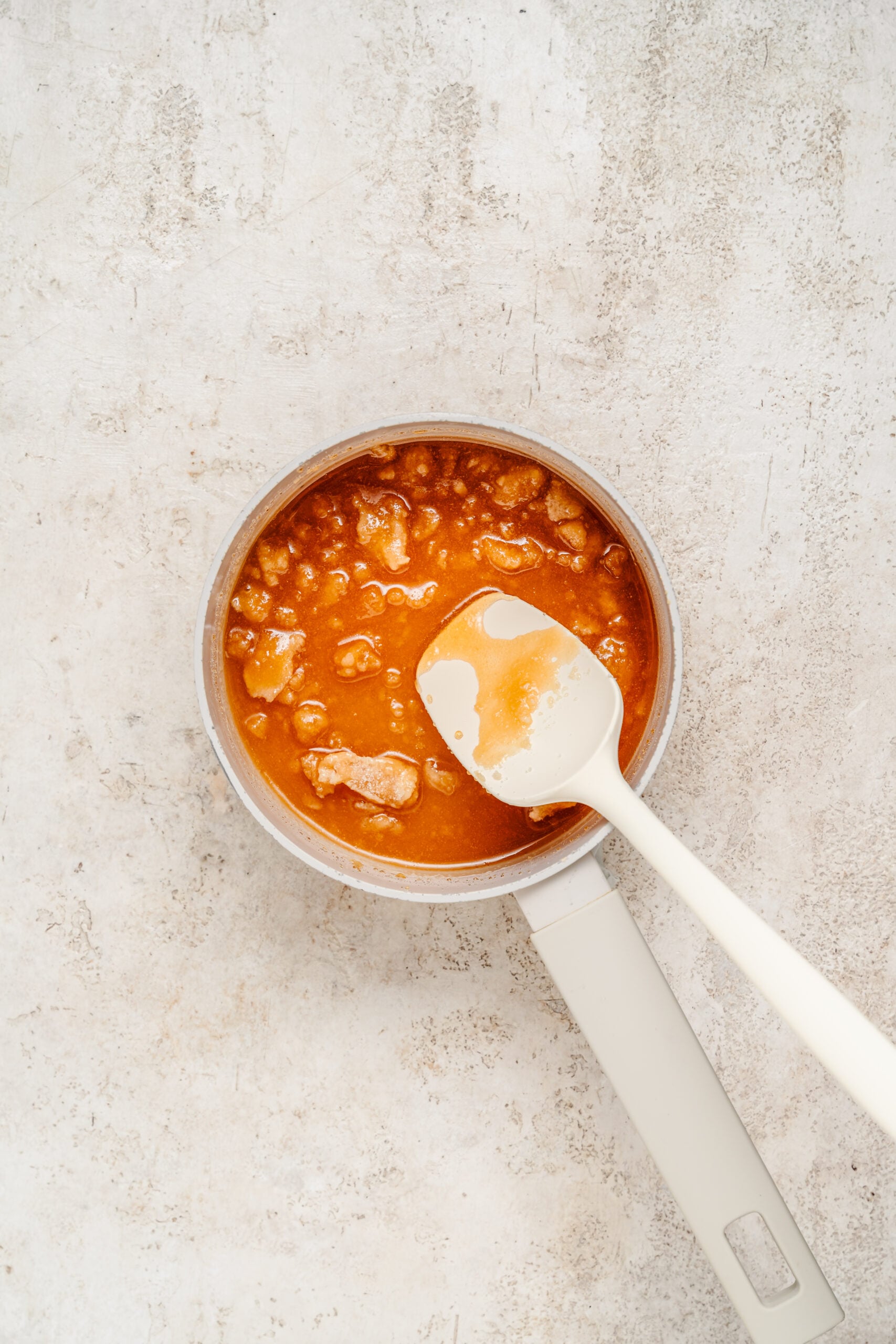
The moment it is uniformly melted and the colour of honey, off the heat. Add the baking soda and stir hard for about five to ten seconds. It will foam, pale, and roughly triple in volume. Do not keep stirring past that point or you knock the air straight back out.
Pour it onto oiled parchment, press it flat with an oiled flat bottomed cup to about 5 mm, and stamp your shape halfway through with an oiled cutter. All three of those happen inside about twenty seconds, which is why everything must be laid out before you start. Then leave it alone for five minutes to set hard.
At a Glance: Dalgona Candy Times and Yield
| MAKES | PREP | COOK | SET | TOTAL |
|---|---|---|---|---|
| 6 to 8 discs | 5 minutes | 4 minutes each | 5 minutes | 30 to 40 minutes |
Ingredients
For the Candy
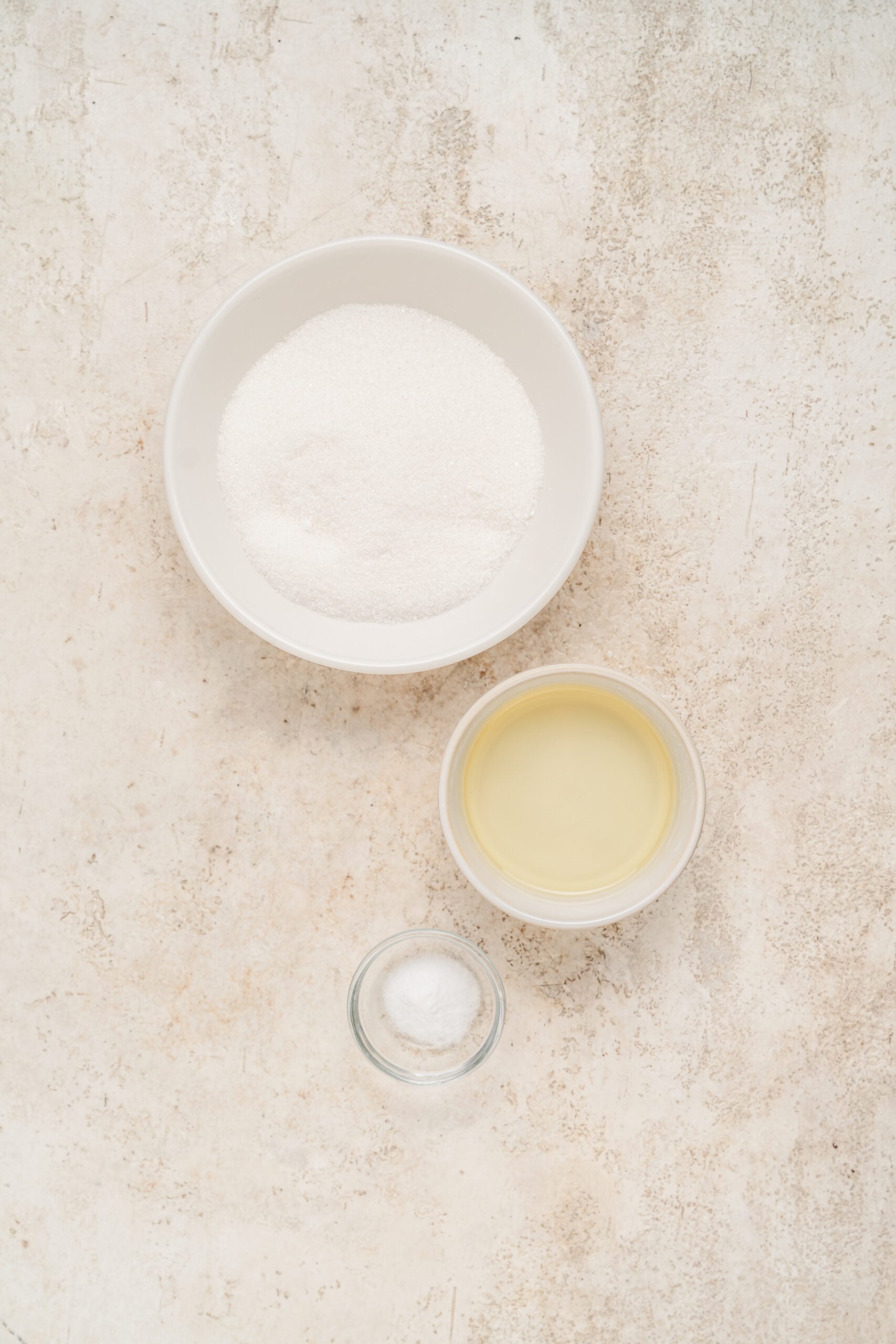
- Granulated sugar: The entire structure. Plain white granulated sugar caramelises predictably and sets hard, which is exactly what you want here.
- Baking soda: The aerating agent. It reacts with the hot sugar and releases gas, turning a clear syrup into pale porous foam. Measure it properly, this is the one amount that really matters.
- Neutral oil: For the parchment, the pressing cup and the stamp. Dalgona sticks to absolutely everything, and a thin film of oil is what lets you lift the disc off in one piece.
Optional: My Favourite Extras That Add a Little Magic
- Flaky salt: A tiny pinch stirred in with the soda, or scattered on top before it sets. It sharpens the caramel and takes the edge off the sweetness.
- Vanilla: A couple of drops added off the heat rounds the flavour out and makes it smell like proper toffee.
- Instant coffee: A quarter teaspoon gives a mocha note that works beautifully against the bitterness already in the caramel.
- Toasted sesame seeds: Pressed into the surface before it sets. Nutty, slightly savoury, and it makes the discs look handmade.
Substitutions: Smart Ingredient Swaps That Still Taste Amazing
- Caster sugar for granulated: Melts a little faster and more evenly, which is helpful if you have scorched a batch before. Watch it more closely.
- Butter for the oil: Works fine for greasing and adds a faint dairy note where the candy touches the paper. It browns, so use it thinly.
- A metal ladle for the saucepan: The traditional single serve method. Hold it over a low flame and it heats faster, which suits making one disc at a time.
- A silicone mat for parchment: Reusable and genuinely non stick. Still oil it lightly, the candy will grip even silicone.
STEPS
- Lay everything out before you turn the heat on. Oil a sheet of parchment, the base of a flat bottomed cup and a cookie cutter, and have the baking soda measured and within reach. Dalgona gives you no time to go looking for things.
- Tip the sugar into a small saucepan and set it over medium low heat. Stir gently and constantly with a silicone spatula, keeping it moving across the base of the pan.
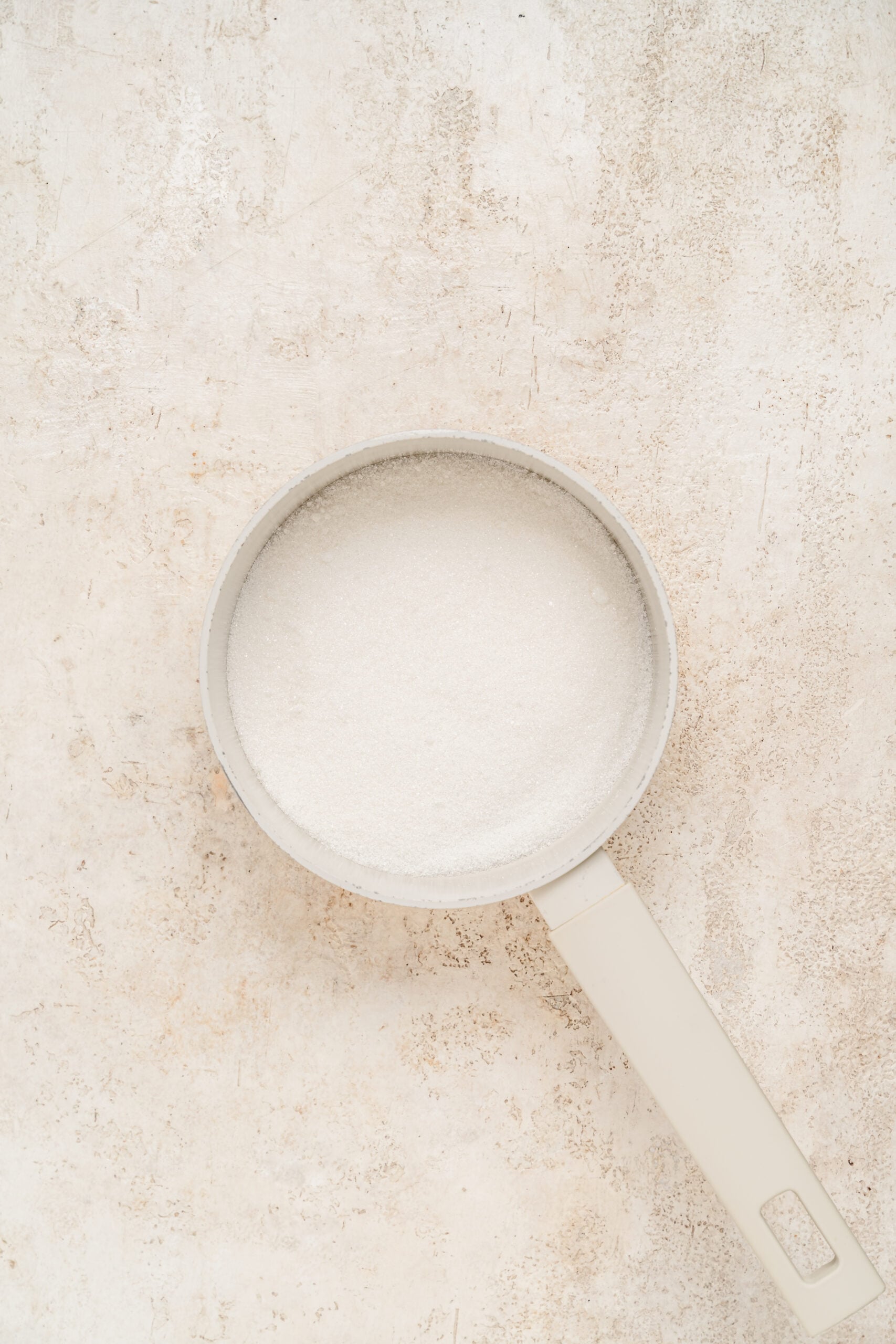
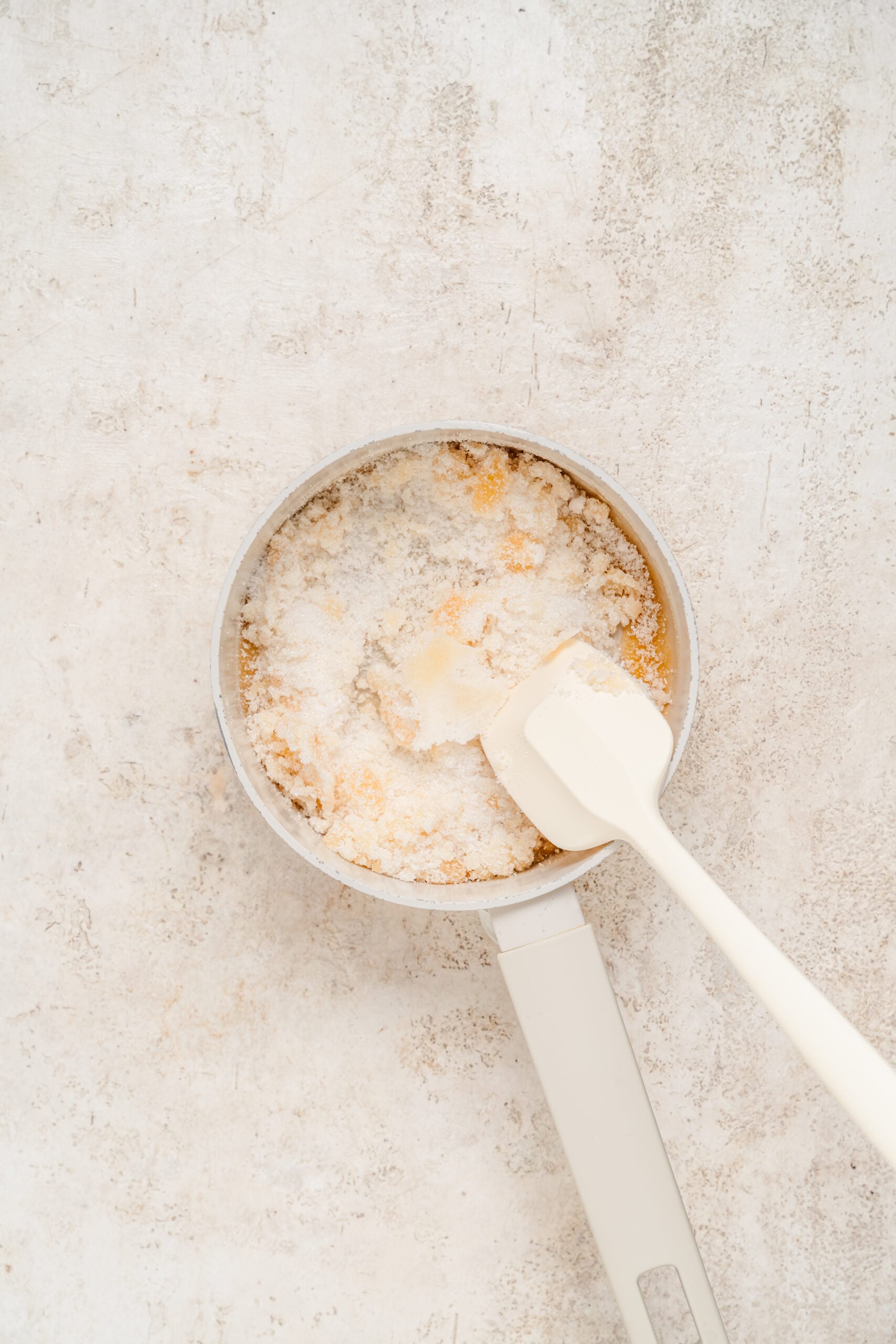
- The sugar will clump into what looks like wet sand, then start melting at the edges. Keep stirring. This stage takes about 2 to 3 minutes and it always looks wrong before it looks right.
- Carry on until the sugar is a smooth, uniformly melted liquid the colour of honey. Do not push it past light amber. Too dark and the finished candy tastes acrid rather than pleasantly bitter.
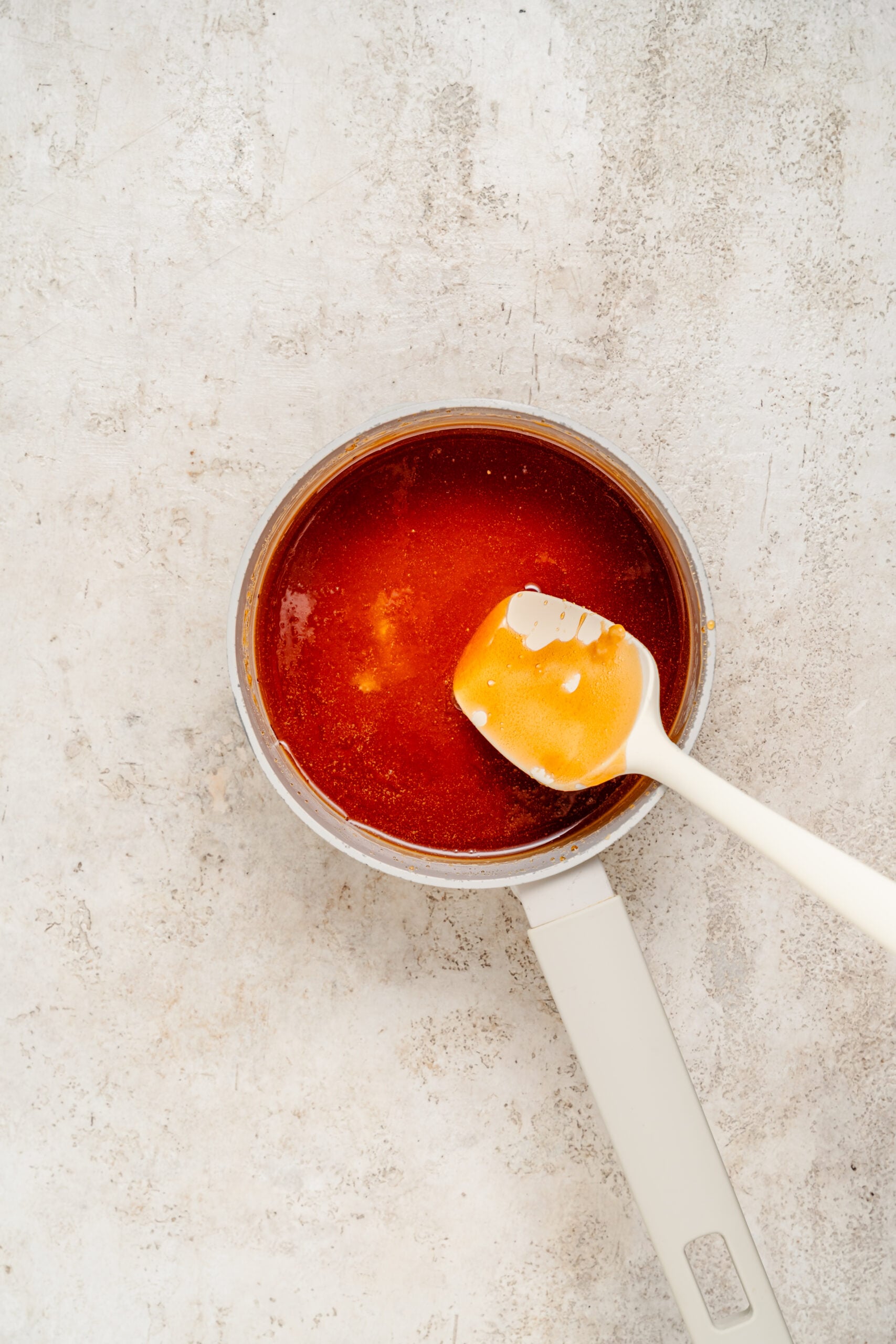
- Take the pan off the heat. Add the baking soda and stir hard for 5 to 10 seconds, no longer.
- Watch it foam, pale and swell to about three times its volume. The instant it is uniformly pale and puffed, stop stirring. Every extra second knocks air back out.
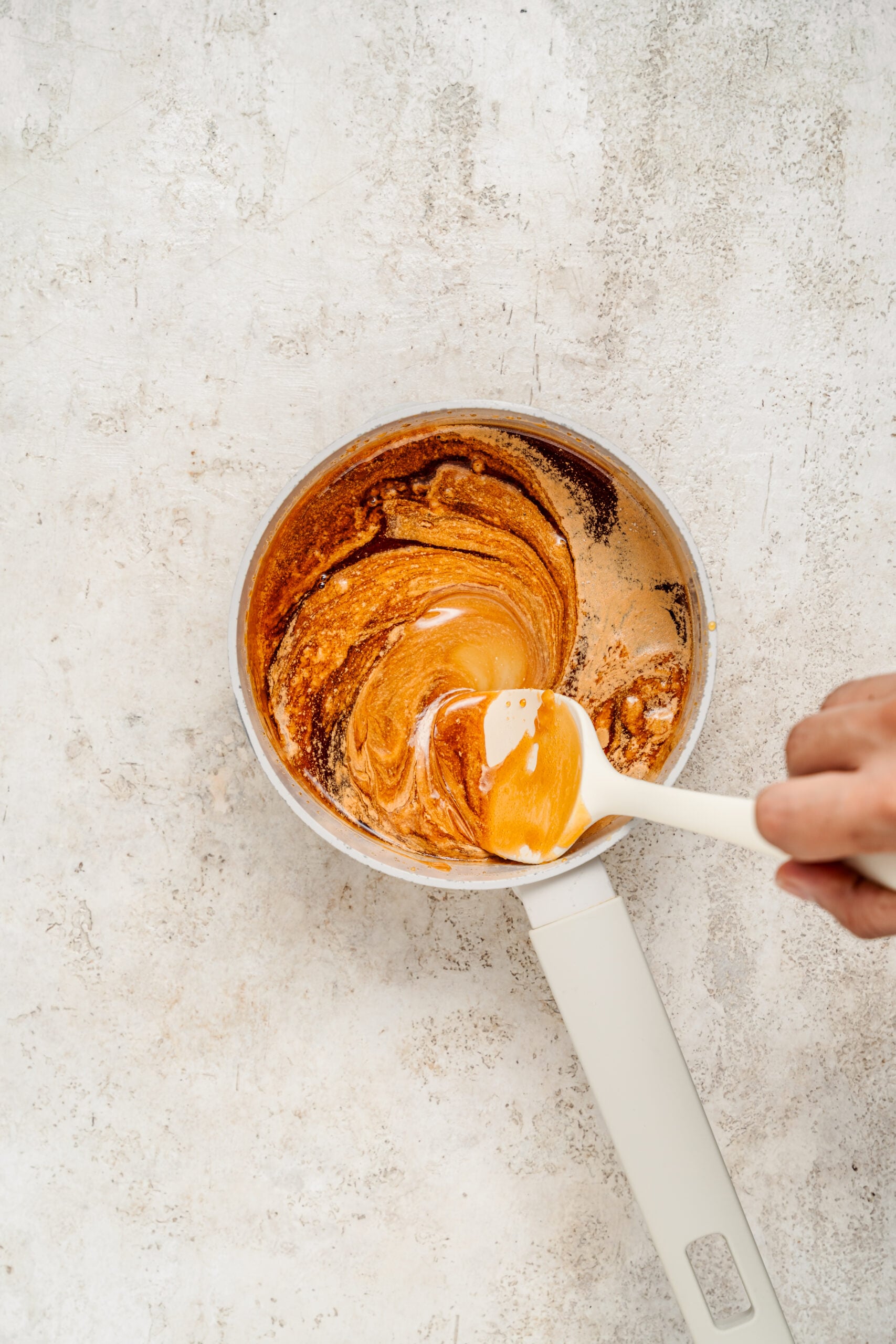
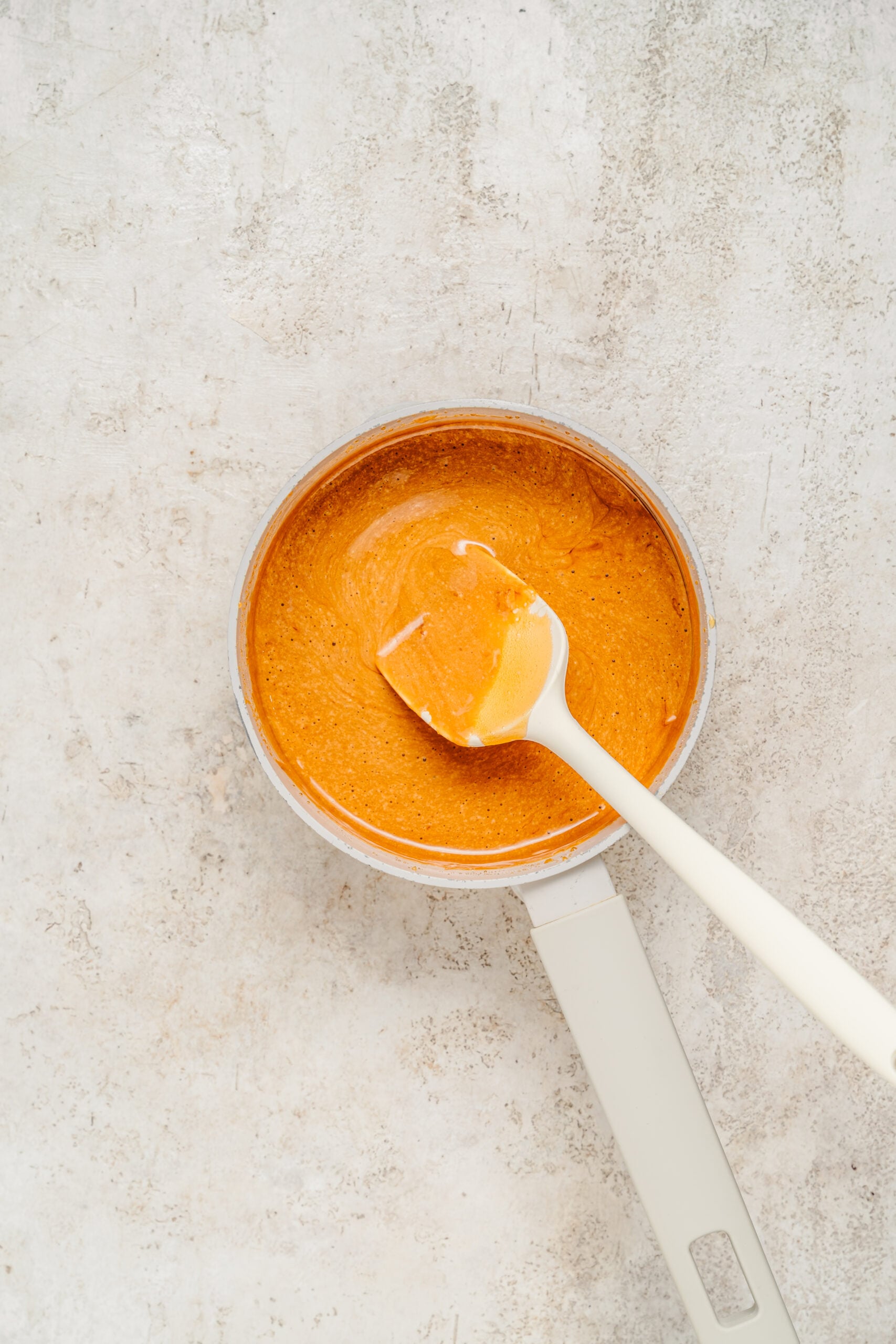
- Pour the foam onto the oiled parchment in one round puddle, then press it flat with the oiled cup to about 5 mm thick. Work fast, it begins setting within seconds.
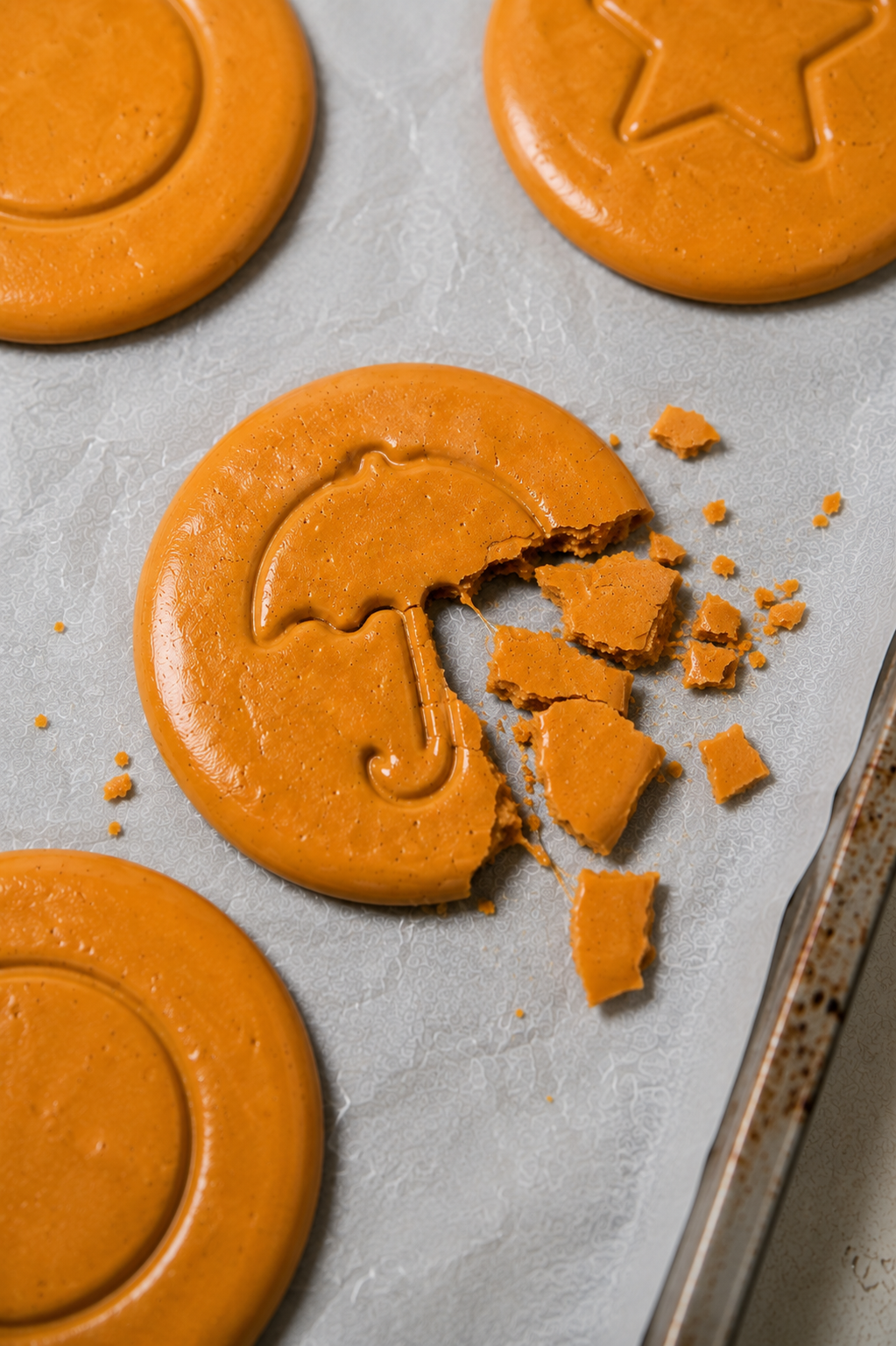
- Press the oiled cutter about halfway into the disc to score your shape, and do not cut all the way through. Leave it to set for 5 minutes, then peel it off the parchment. Repeat for each disc.
Troubleshooting Dalgona Candy
| Problem | Why it happened | How to fix it |
|---|---|---|
| It tastes bitter and burnt | The sugar went past amber before the soda went in. | Pull the pan off the heat the moment the last grain melts. Residual heat carries it further than you expect, so err early. |
| It did not puff at all | Not enough baking soda, or it was stirred in off the boil when the syrup had already cooled. | Use 1/8 teaspoon per 2 tablespoons of sugar and add it immediately after taking the pan off the heat, while the syrup is still very hot. |
| It tastes soapy | Too much baking soda. | Measure with a proper spoon rather than eyeballing it. A heaped eighth is enough to ruin the flavour. |
| It welded itself to the parchment | Not enough oil, or it was left too long before lifting. | Oil the paper properly and peel the disc off once it is set but not stone cold, at around the 5 minute mark. |
| The shape cracked when I pressed it | The disc had cooled too much before stamping, or the cutter went too deep. | Stamp within a few seconds of pressing it flat, and go only halfway through the thickness. |
| It went sticky and soft after an hour | Humidity. Sugar candy pulls moisture straight out of the air. | Store the cooled discs in an airtight container the moment they are hard, and do not make it on a wet day if you can help it. |
Tips for the Best Dalgona Candy
Work one disc at a time
This is not a batch recipe, and trying to make it one is how people end up with a pan of set sugar. Two tablespoons of sugar per disc, poured and pressed before you start the next. Line up several sheets of oiled parchment first and you can still knock out eight in about fifteen minutes.
Medium low, always
High heat scorches the sugar on the base of the pan before the rest has melted, and you get bitter flecks through an otherwise pale foam. Medium low takes an extra minute and gives you an evenly melted syrup. If you see smoke, you have already gone too far.
Pull it off the heat earlier than feels right
The pan holds enough residual heat to keep darkening the sugar for another twenty seconds after it leaves the burner. Aim to stop at the colour of runny honey, not amber, and let carryover do the rest.
Stop stirring the instant it foams
The soda does its work in about five seconds. Stirring past that point deflates the foam you just created, and you end up with a dense flat disc that is hard rather than crisp. Five to ten seconds, then pour.
Dalgona is not a difficult recipe. It is a fast one, and those are different problems.
Variations
Salted Dalgona
Stir a pinch of flaky salt in with the baking soda, or scatter a little over the surface before it sets. Salt against burnt caramel is a reliably good combination and it stops the sweetness feeling flat halfway through a disc.
Coffee Dalgona
A quarter teaspoon of instant coffee granules added with the soda gives it a proper mocha bitterness. It dissolves instantly in the hot syrup and turns the finished candy a shade darker, which looks good against the pale plain ones.
Dalgona Topped Ice Cream
Shatter a set disc into shards and press them into softened vanilla ice cream. The candy stays crisp for a few hours in the freezer before it starts to dissolve, and the texture against cold ice cream is excellent.
Mini Dalgona
One tablespoon of sugar and a scant pinch of soda makes small discs that set faster and are much easier to stamp cleanly. Good for a party, and much more forgiving if you are making these with kids.
Serving Suggestions
Straight Off the Paper
Best eaten within an hour, while it is at its crispest and the caramel flavour is strongest. It softens noticeably once it has been sitting out, so serve it as soon as everyone is in the room.
As the Game
Hand everyone a stamped disc and a pin and let them try to free the shape without cracking it. Umbrella is genuinely hard, circle is nearly free. It is a good party trick and it makes people eat slowly.
Broken Over Dessert
Shards over ice cream, yoghurt, or a simple bowl of shaved ice. If you want to go properly Korean with it, my bingsu explainer covers the shaved ice side of that idea.
With Other Sugar Work
It sits nicely on a plate with other crunchy Asian sweets. Tanghulu gives you the glassy fruit version and kohakutou brings a chewy jewel like texture, so between the three you get quite a range.
How to Store Dalgona Candy
Once the discs are completely cool and hard, put them straight into an airtight container. They keep well for 2 to 3 days somewhere dry and cool, though they are unquestionably best on day one.
Humidity is the only real enemy. Sugar candy is hygroscopic, which is a technical way of saying it drinks moisture out of the air, and a dalgona left uncovered on a humid afternoon will be tacky within an hour and bendy by evening. A sealed container with a scrap of paper towel inside helps.
Do not refrigerate them. The fridge is damp, and condensation forming on the surface as they come back to room temperature will make them sticky. Freezing does not work either, for the same reason. If a disc has gone soft there is no rescue, so make small amounts often rather than a big batch to keep.
Common Mistakes to Avoid
Walking Away From the Pan
There is no safe moment to check your phone. Sugar goes from melted to burnt in under thirty seconds, and it does it faster near the end. Stay at the stove and keep stirring.
Using High Heat
It feels efficient and it is the single most common reason a batch tastes bitter. The base scorches while the top is still granular, and you cannot stir that flavour back out. Medium low, every time.
Guessing the Baking Soda
An eighth of a teaspoon is a small amount and it is tempting to approximate it. Too little and there is no lift, too much and the whole disc tastes of soap. Use a measuring spoon and level it off.
Stirring After It Foams
The foam is the product. Once it has puffed and gone pale, any further stirring is just collapsing the bubbles you made. Get it out of the pan and onto the paper.
Skipping the Oil
Every surface the candy touches needs a thin film of oil: the paper, the cup, the cutter. Miss one and the disc either tears when you lift it or comes off the cutter in pieces.
Frequently Asked Questions
Why does my dalgona candy taste bitter?
Bitterness means the sugar caramelised too far before the baking soda went in. A little bitterness is correct and it is what makes dalgona taste like more than plain sugar, but harsh acrid bitterness means it went past amber into brown. Take the pan off the heat the moment the last grains melt, because the residual heat in the pan keeps darkening the syrup for another twenty seconds or so.
How much baking soda do I need?
One eighth of a teaspoon per 2 tablespoons of sugar, which makes one disc. It is a small enough amount that guessing it goes wrong easily. Too little and the syrup stays clear and dense instead of foaming, and too much leaves a distinct soapy taste that you cannot cover up.
Can I make dalgona candy without a cookie cutter?
Yes. The stamp is decorative and it exists for the game rather than the flavour. You can score a shape with the tip of a knife, press in the rim of a small glass, or skip it entirely and break the disc into shards. If you do want the classic look, a circle, star, triangle or umbrella cutter all work.
Is dalgona candy the same as honeycomb toffee?
They are made the same way and the science is identical: hot sugar syrup aerated with baking soda. The differences are mostly in proportion and format. Honeycomb and cinder toffee usually include golden syrup or honey, are set thick in a tin and broken into chunks, while dalgona is pure sugar, pressed thin into a flat disc and stamped.
Why is my dalgona sticky instead of crisp?
Almost always humidity. Sugar candy pulls moisture from the air, so a disc left out on a damp day turns tacky within the hour. Get them into an airtight container as soon as they are hard and cool, and avoid making them on a rainy afternoon if you have the choice.
Can I double or triple the recipe in one pan?
I would not. A larger volume of sugar melts unevenly, and once you add the soda you have only a few seconds to pour and press before it sets, which is not enough time for several discs. Work one at a time with a few sheets of oiled parchment ready and it goes faster than you would think.
Let’s Get Cooking
If you liked this recipe make sure to leave me a comment and rating down below. I’d love to know how it went! Also, don’t forget to tag me on Instagram @catherine.desserts.
Follow me on Facebook, Pinterest, YouTube, and TikTok for more of my baking creations and updates!
Dalgona Candy (Korean Honeycomb Toffee)
Two ingredient Korean dalgona candy, melted sugar puffed with baking soda and stamped with the classic shapes. About four minutes per disc.
- Prep Time: 5 minutes
- Set Time: 5 minutes
- Cook Time: 4 minutes
- Total Time: 30 minutes
- Yield: 6 to 8 discs 1x
- Category: Dessert
- Method: Stovetop
- Cuisine: Korean
Ingredients
Per disc, scale up as needed
- 2 tablespoons (25 g) granulated sugar
- 1/8 teaspoon baking soda
- Neutral oil, for the parchment, the press and the stamp
- 1 pinch flaky salt, optional
Instructions
- Lay everything out before you turn the heat on. Oil a sheet of parchment, the base of a flat bottomed cup and a cookie cutter, and have the baking soda measured and within reach. Dalgona gives you no time to go looking for things.
- Tip the sugar into a small saucepan and set it over medium low heat. Stir gently and constantly with a silicone spatula, keeping it moving across the base of the pan.
- The sugar will clump into what looks like wet sand, then start melting at the edges. Keep stirring. This stage takes about 2 to 3 minutes and it always looks wrong before it looks right.
- Carry on until the sugar is a smooth, uniformly melted liquid the colour of honey. Do not push it past light amber. Too dark and the finished candy tastes acrid rather than pleasantly bitter.
- Take the pan off the heat. Add the baking soda and stir hard for 5 to 10 seconds, no longer.
- Watch it foam, pale and swell to about three times its volume. The instant it is uniformly pale and puffed, stop stirring. Every extra second knocks air back out.
- Pour the foam onto the oiled parchment in one round puddle, then press it flat with the oiled cup to about 5 mm thick. Work fast, it begins setting within seconds.
- Press the oiled cutter about halfway into the disc to score your shape, and do not cut all the way through. Leave it to set for 5 minutes, then peel it off the parchment. Repeat for each disc.
Notes
- Work one disc at a time. Dalgona sets within seconds, so a bigger batch in one pan does not work.
- Medium low heat only. High heat scorches the base of the pan and makes the candy taste acrid.
- Take the pan off the heat at the colour of runny honey. Carryover heat darkens it further.
- Stir the baking soda for 5 to 10 seconds only. Stirring past that deflates the foam.
- Oil the parchment, the pressing cup and the cutter. The candy sticks to everything.
- Store airtight for 2 to 3 days somewhere dry. Do not refrigerate or freeze.
Nutrition
- Serving Size: 1 disc