Matcha has gone from quiet tea house to full-blown dessert celebrity. And two of my favourite ways to show it off are matcha tres leches and matcha Basque cheesecake. Both are dreamy, both are green, and both look very at home on a café dessert menu.
But they don’t eat the same at all. One is a cloud-soft sponge soaked in sweet matcha milk. The other is deeply caramelised, almost burnt on top, with a gooey cheesecake center that melts on your tongue. No wonder people mix them up when they’re scrolling recipes.
In this guide, we’ll break down matcha tres leches vs matcha basque cheesecake in a way that’s easy, sensory, and practical. By the end, you’ll know exactly which one to bake for your next dinner party, tea date, or late-night baking session.
At a Glance: Matcha Tres Leches vs Matcha Basque Cheesecake
| Features | Matcha Tres Leches | Matcha Basque Cheesecake |
|---|---|---|
| Origin | Latin American tres leches cake with a Japanese-inspired matcha twist | Basque-style burnt cheesecake from Spain with earthy matcha added |
| Key Ingredients | Fluffy sponge cake, three-milk mixture, matcha, whipped cream | Cream cheese, eggs, sugar, cream, matcha, no crust |
| Texture & Crumb | Light, airy crumb that turns tender and custardy from soaking | Dense yet silky, creamy center with a slightly set edge |
| Sweetness Level | Moderately sweet, balanced by matcha’s earthy bitterness | Rich and sweet, with caramelised, bittersweet top |
| Moisture Content | Very moist, almost pudding-like and juicy with milk | Creamy and moist inside, drier, toasty edges |
| Best Occasion | Summer gatherings, potlucks, make-ahead fridge dessert | Dinner parties, date nights, “wow” centerpiece dessert |
Tip: Craving that chewy matcha texture instead? Try my Matcha Butter Mochi for a bouncy, fudgy rice cake version of matcha dessert heaven.
What Is Matcha Tres Leches?
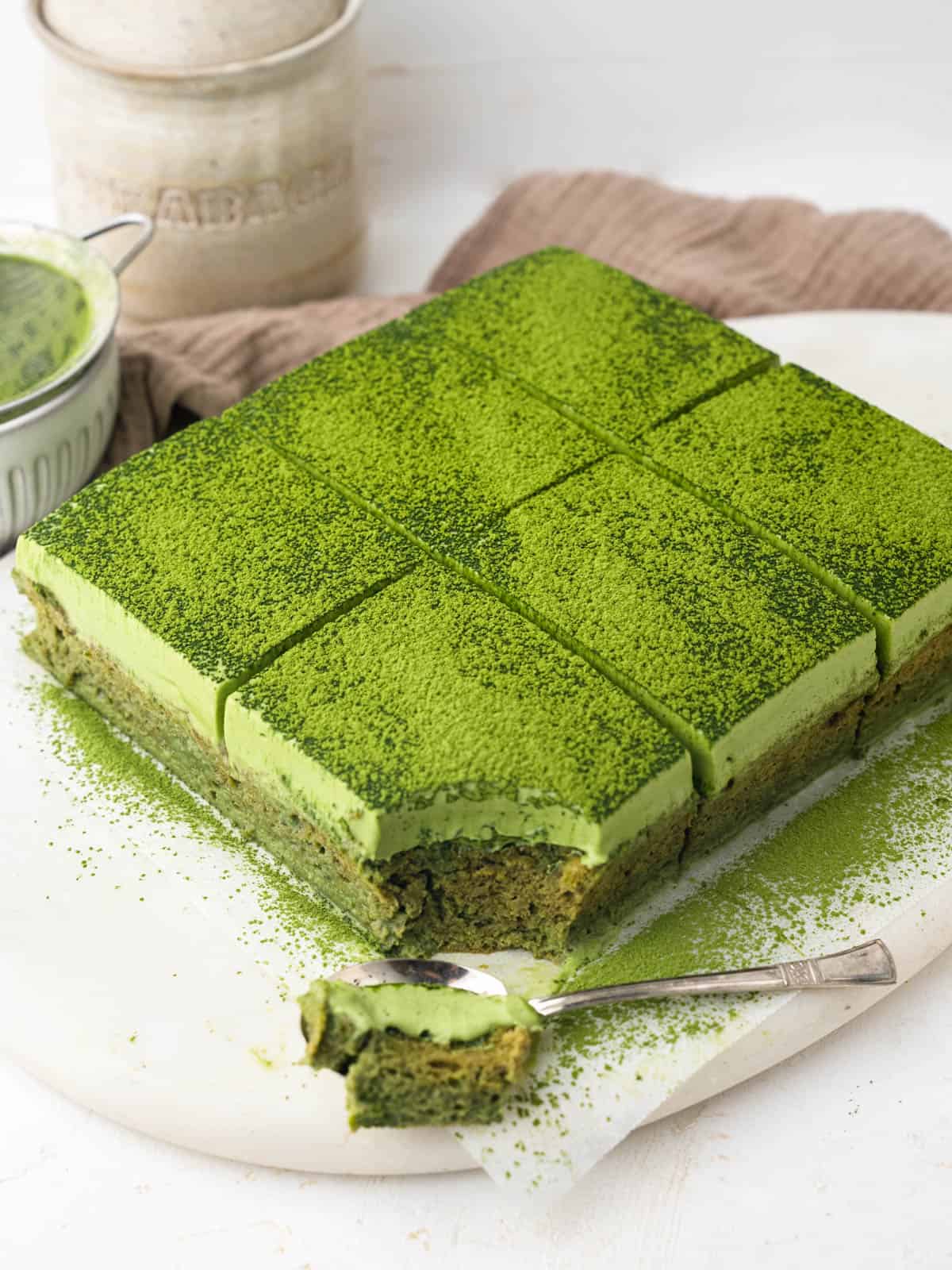
Matcha tres leches starts with a simple sponge cake. Think pale, fluffy, and full of tiny air bubbles that drink up liquid like a sponge. Traditionally, tres leches comes from Latin America and is soaked in three milks. Here, we infuse that mixture with matcha, so every bite tastes like iced matcha latte meets soft cake.
The base is usually made with eggs, sugar, flour, and a little oil or butter. Once baked, the sponge is pierced and soaked with a mixture of evaporated milk, condensed milk, and cream, all whisked with vibrant green tea powder. The matcha adds earthy, slightly bitter notes that cut through the sweetness.
After chilling, the texture turns dreamy. The crumb becomes moist and custardy, but still holds its shape when you slice it. On top, a layer of softly whipped cream adds cloud-like lightness. It’s cold, milky, and refreshing, with a subtle grassy aroma from the matcha and a melt-in-your-mouth finish.
Matcha tres leches is perfect when you want:
- A chilled dessert
- A lighter-feeling cake
- That milky, soaking-into-the-crumb experience
It’s also a great make-ahead dessert. The longer it sits in the fridge, the more the matcha milk seeps into every corner of the sponge.
Tip: Want to bake the exact version you’ve seen on my socials? Follow my full recipe for Matcha Tres Leches with step-by-step photos and tips for the perfect soak.
What Is Matcha Basque Cheesecake?

Matcha Basque cheesecake is the moodier sibling. Basque cheesecake comes from San Sebastián in Spain and is famous for its rustic, burnt top and crustless base. When matcha joins the party, you get a dessert that’s part creamy Japanese cheesecake, part caramelised European café classic.
The batter is rich. We’re talking lots of cream cheese, eggs, sugar, heavy cream, and a good amount of matcha. There’s no biscuit crust, no water bath, and no fuss. You pour the loose batter into a lined tin and bake it at a high temperature. The heat gives it a deep brown, almost charred top, while the center stays soft and jiggly.
Once cooled and sliced, each piece is a study in contrasts. The edges are slightly firmer, with a toasty, caramel flavour. The center is lush, smooth, and custard-like, with a silky texture that melts on your tongue. The matcha adds earthy, umami sweetness and a beautiful muted green hue under the dark top.
Matcha Basque cheesecake is ideal when you want:
- A rich, café-style dessert
- Bold, caramelised flavours
- A show-stopping centerpiece with minimal decorating
Tip: If you’re obsessed with burnt cheesecake like I am, you’ll also love my Matcha Basque Cheesecake and the flavour-packed Thai Tea Basque Cheesecake. They’re both simple to bake, but taste bakery-level.
Main Differences Between Matcha Tres Leches and Matcha Basque Cheesecake
When we line up matcha tres leches vs matcha basque cheesecake, several key contrasts pop out straight away.
1. Texture
Matcha tres leches is light, soft, and utterly soaked. The crumb turns almost pudding-like but still holds together. It feels juicy, tender, and cool.
Matcha Basque cheesecake is dense yet silky. The center is creamy and custardy, with a slight wobble, while the edges are more set and rich.
2. Fat Content
Tres leches uses milk, cream, and sometimes a little butter or oil in the sponge. It’s indulgent but still feels lighter because of the airy base and chilled serving style.
Basque cheesecake, on the other hand, leans into cream cheese and heavy cream. It’s a high-fat, high-flavour dessert that feels luxurious and decadent in small slices.
3. Ingredients
- Matcha tres leches: sponge cake ingredients, three kinds of milk, matcha, whipped cream topping.
- Matcha Basque cheesecake: cream cheese, eggs, sugar, cream, matcha, sometimes a touch of flour or cornstarch.
One is cake-first with a milk soak; the other is pure cheesecake with no crust.
4. Baking Method
Matcha tres leches is baked as a standard sponge at a moderate temperature. The real magic happens after baking, when you soak the cooled cake in the matcha milk mixture and leave it to chill.
Matcha Basque cheesecake is baked hot and fast. The high temperature burns the top, caramelising the sugar and locking in moisture, while the center stays soft and creamy. No water bath, no worry about cracks.
5. Flavour Profile
Tres leches is milky, light, and sweet with gentle matcha notes. It tastes like a matcha latte turned into cake, with a freshness that makes it great for warm days.
Basque cheesecake is deeper and more complex. You get nutty, caramelised edges, a rich cream cheese base, and earthy matcha running through every bite. It feels cosy, dessert-bar-worthy, and perfect with espresso or strong tea.
Matcha Tres Leches: Soaked, Soft, and Milky
If you love desserts that are cold, refreshing, and moist from edge to edge, matcha tres leches will be your favourite. It’s airy, soothing, and almost melts into the fork.
Matcha Basque Cheesecake: Burnt, Bold, and Creamy
If you’re drawn to desserts with contrast and drama, matcha Basque cheesecake is the one. That burnt top, creamy middle, and bittersweet matcha flavour make every slice feel like a little luxury.
Which One Should You Make?
So, matcha tres leches vs matcha basque cheesecake, how do you choose?
Pick matcha tres leches when:
- You’re baking for a crowd and want easy squares to serve
- It’s warm weather and you crave something chilled and refreshing
- You like lighter, airy desserts that aren’t too heavy
- You want a make-ahead dessert that gets better overnight
I often bring matcha tres leches to summer picnics or potluck-style dinners. It travels well in the tray, and everyone loves that first cool, milky bite.
Pick matcha Basque cheesecake when:
- You’re hosting a dinner party or date night
- You want a dessert that feels restaurant-level with minimal decorating
- You love creamy, rich textures and caramelised flavours
- You want something that slices cleanly and looks dramatic on a plate
For cosy evenings, I love pairing a slice of matcha Basque cheesecake with hot tea or coffee. The deep, toasted edges and creamy center are so comforting.
If you still can’t decide, bake both on different weekends. That’s the best kind of taste test.
Final Thoughts: Matcha Magic in Every Slice
When you put matcha tres leches vs matcha basque cheesecake side by side, you’re really choosing between two moods. One is light, milky, and refreshing, like sipping an iced matcha latte on a sunny afternoon. The other is bold, caramelised, and ultra-creamy, like a cosy café dessert shared late at night.
Both celebrate matcha’s earthy, elegant personality in very different ways. One soaks it into a cloud of sponge. The other bakes it into a silky, burnt-edged cheesecake. Whichever you choose, you’ll get that beautiful green hue, gentle tea aroma, and just-sweet-enough finish.
Bake the one that matches your moment right now. And when you’re ready for more matcha dessert adventures, I’ve got plenty waiting for you.
Love this texture talk? Don’t miss my Best Matcha Recipes, 10 Desserts and ultra-creamy Baked Matcha Cheesecake.
Frequently Asked Questions
Can I use regular flour instead of cake flour for matcha tres leches?
Yes, you can use regular all-purpose flour. Just be sure not to overmix, so the sponge stays light and airy enough to soak up the matcha milk mixture.
Is matcha tres leches gluten-free?
Not usually. The sponge cake contains wheat flour. If you need it gluten-free, you’d need to use a tested gluten-free sponge recipe that can still hold the milk soak.
Is matcha Basque cheesecake gluten-free?
Many Basque cheesecakes are naturally gluten-free or very low in gluten, especially if they use just a tiny amount of flour or cornstarch. Always check your recipe and ingredients if you’re baking for someone with coeliac disease.
Can I add extra matcha for a stronger flavour?
Absolutely. Both desserts can handle a little extra matcha for a deeper green colour and stronger tea flavour. Just don’t overdo it, or the bitterness may overpower the sweetness.
Can I add other flavours like ube or chocolate?
Yes. Matcha pairs beautifully with other flavours. For more inspiration, try my Matcha Crepe Cake for delicate matcha layers, or explore the Basque side with Ube Basque Cheesecake for a colourful twist.
How do I store matcha tres leches?
Keep it covered in the fridge. It tastes best within 2–3 days, and the texture actually improves after the first night as the milks fully soak into the crumb.
How do I store matcha Basque cheesecake?
Chill it in the fridge once cooled. It slices best after several hours of chilling. Serve cold or at room temperature, depending on how soft you like the center.
Love matcha? Find every matcha dessert in one place in our complete guide to matcha desserts.