
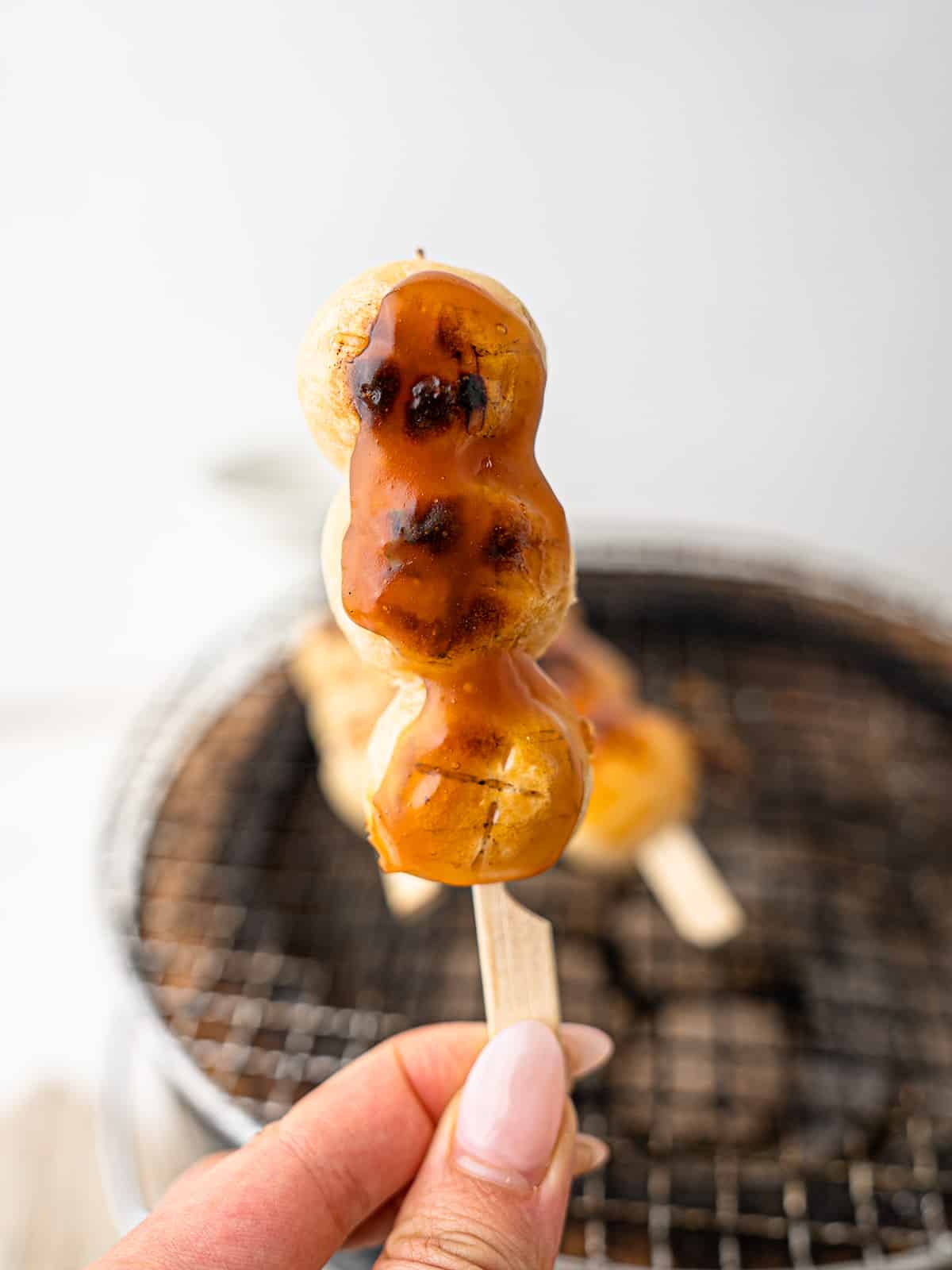
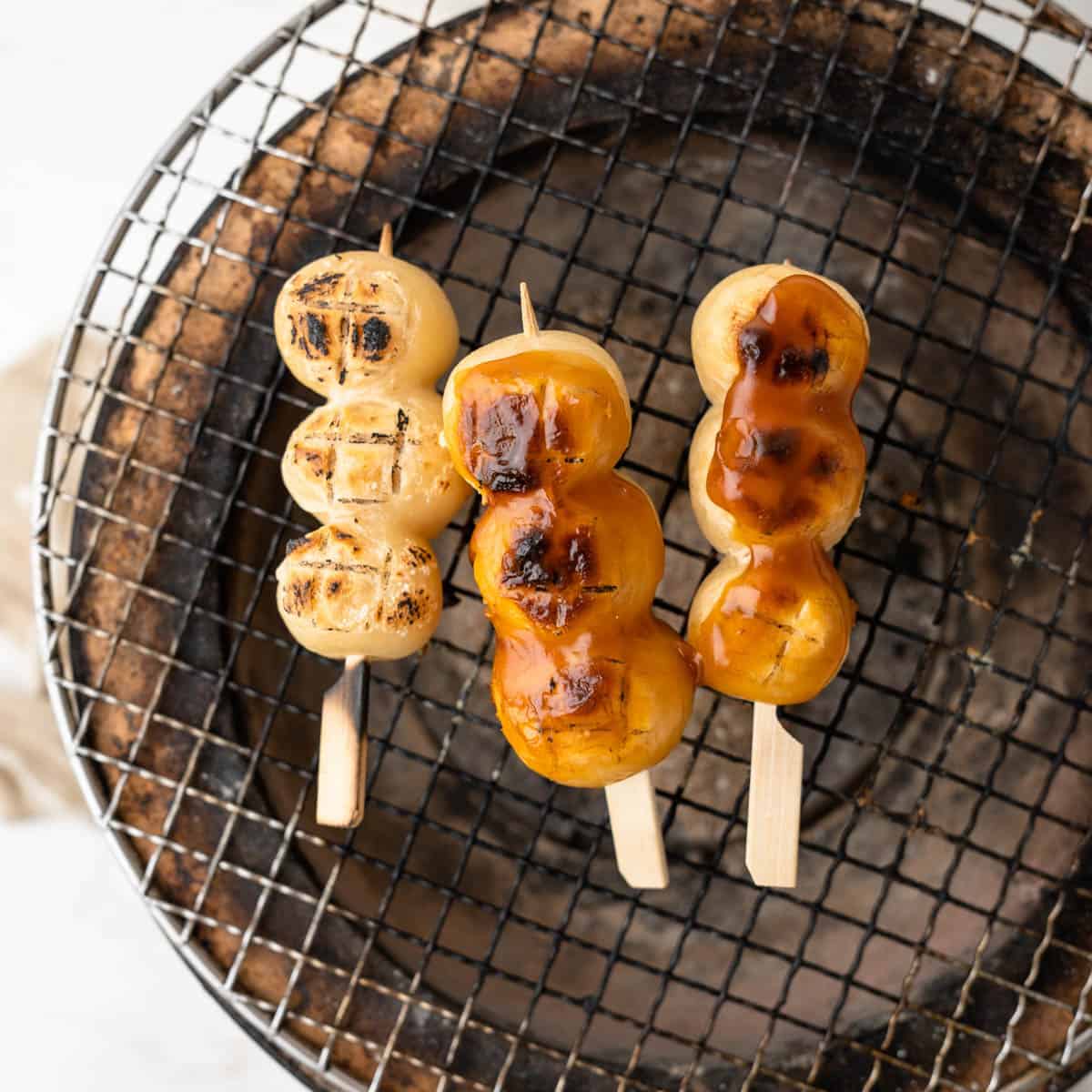
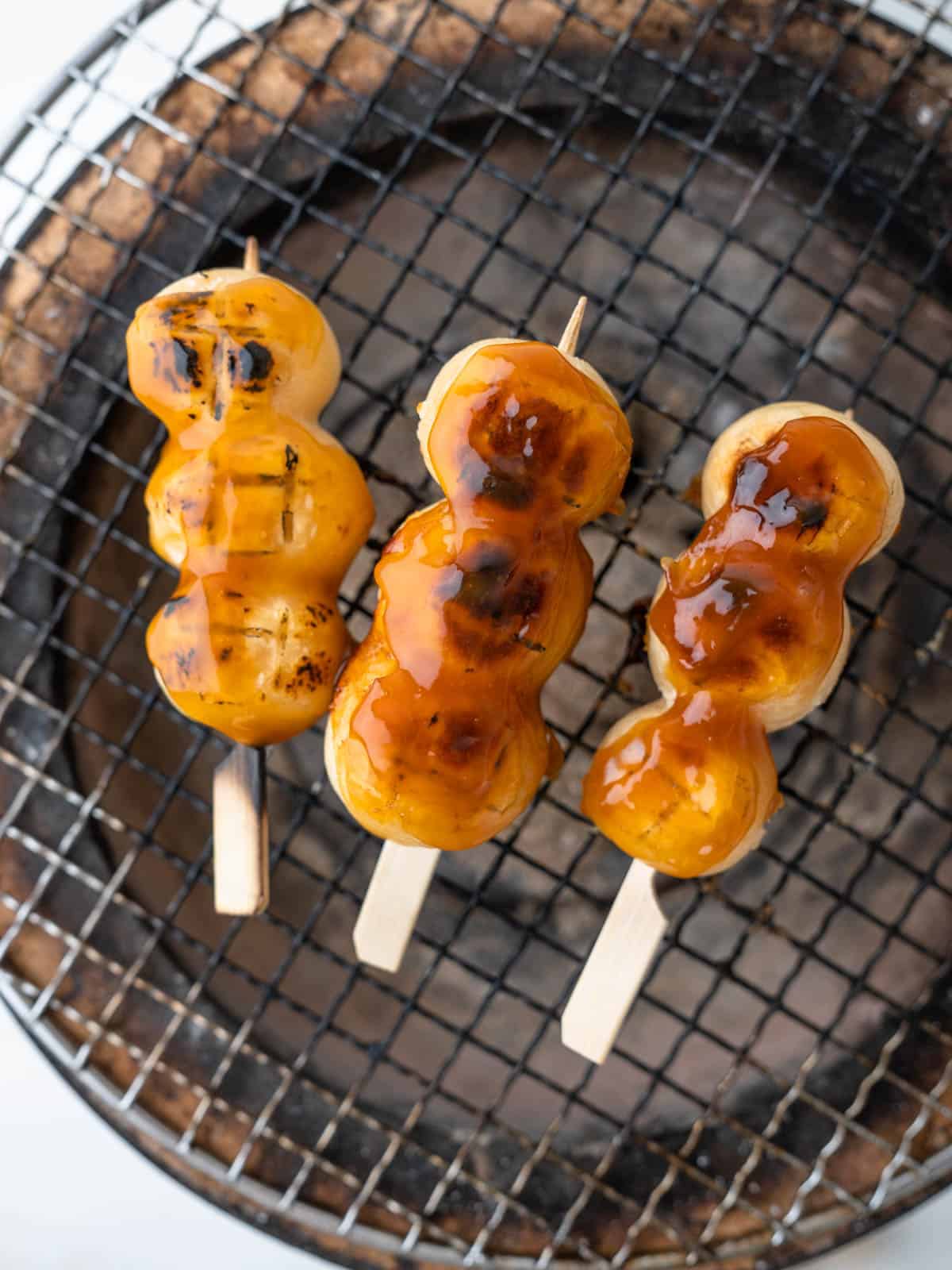
These mitarashi dango are made from soft and chewy mochi balls, grilled for a smokey flavor and brushed in a sweet and salty soy glaze
There are quiet afternoons when I crave something soft and comforting without turning my whole kitchen upside down, and mitarashi dango always does the trick. The warm, chewy dumplings and the light smoky flavour from the grill make it feel simple but a little special. The glossy sweet soy glaze adds that mix of savoury and caramel that I never get tired of.
What is mitarashi dango?
Mitarashi dango is a traditional Japanese sweet, aka wagashi, made with 3 to 5 rice dumplings skewered on a skewer covered with a sweet and salty soy glaze.
They are known for that sweet and savory flavor with a slight char from being grilled.
There are also heaps of other kinds of dango ranging from ones covered in anko aka red bean paste, to ones rolled in sesame seeds.
You can find these outside shrines being sold by street vendors, in tea houses, or even in convenience stores!
At-a-Glance Specs, What You’ll Need Before We Start Rolling
| Yield | Prep Time | Cook Time | Difficulty | Storage |
|---|---|---|---|---|
| 4 skewers | 30 minutes | 5 minutes | Easy | 1 day at room temp, 3 days in fridge |

What is the difference between mochi and dango?
Mochi and dango are very similar, however, there are a few differences.
Mochi is typically made from steamed and pounded glutinous short-grain rice. On the other hand, dango is made from shiratamako. The shiratamako is typically mixed with water, rolled into balls, and boiled to form these rice dumplings.
Both have a similar flavor and bouncy texture, but are served very differently! Dango is almost always served on a stick, while mochi is typically served as it is, or with different kinds of fillings.
Ingredients
Dango
- Shiratamako: This kind of glutinous rice flour that can be found in Asian or Japanese groceries. The granules are much larger than regular glutinous rice flour. If you can’t find this you can also use regular glutinous rice flour, but the texture won’t be as soft.
- Silken tofu: Tofu acts as the water in this dough, as well as giving the resulting dango a softer texture.
Mitarashi sauce
- Soy sauce: Soy sauce gives the sauce that salty umami flavor. You can add more if you want a more savory dango.
- Mirin: Mirin is a sweet Japanese cooking wine, this is optional if you don’t have it available.
- Granulated sugar: This gives it a sweet flavor, you can add more or less sugar depending on how sweet you want it.
- Water: Water helps to thin out the sauce and make it nice and glossy
- Potato starch: Potato starch is needed to thicken the sauce. If you don’t have potato starch cornstarch works just as well.
Optional, My Favourite Extras That Add a Little Magic
These aren’t essential, but they add depth and flavour I’ve grown fond of while testing batches at TuCha.
- A pinch of salt for roundness
- Brown sugar in the glaze for a deeper caramel note
- A splash of honey for extra shine
- Vanilla sugar over warm dango for a soft aroma
Tip: Add these one at a time so you can taste how each changes the flavour gently.
Substitutions, Smart Ingredient Swaps That Still Taste Amazing
Good for days when you’re missing an ingredient or can’t reach a Japanese grocery.
- Mochiko instead of shiratamako for a slightly firmer chew
- Cornstarch instead of potato starch
- Light soy instead of regular soy
- Firm tofu if you can’t find silken, with a splash more water
Tip: When swapping flours, add water slowly until the dough feels smooth and easy to roll.

Troubleshooting, Quick Fixes I’ve Learned from My Bakery Kitchen
| Problem | What It Means | Quick Fix |
|---|---|---|
| Dough cracks when rolling | Too dry | Add a teaspoon of water and knead again |
| Dumplings fall apart when boiling | Dough too soft or underkneaded | Knead longer until elastic |
| Glaze turns cloudy or lumpy | Starch wasn’t dissolved fully | Dissolve starch in cold water first |
| Dango feels tough after cooling | Overcooked or not iced | Boil only until floating, then chill |
| Glaze too runny | Not cooked long enough | Return to heat and whisk until glossy |
Comparison, How This Recipe Stacks Up Against Other Desserts
| Dessert | Flavour & Texture | Best For |
|---|---|---|
| Mitarashi Dango | Soft chewy dumplings with a smoky sweet soy glaze | A cosy snack or tea moment |
| Anko Dango | Chewy dumplings topped with red bean paste | A gentle, comforting sweetness |
| Goma Dango | Sesame coated with a rich nutty aroma | A deeper, heartier flavour hit |
Tips, My Personal Tricks for a Professional-Looking Result
Chill the dough before shaping
Cold dough holds its shape better and gives you smoother dumplings. It also keeps your hands and bench cleaner, which makes the whole process feel easier.
If you enjoy soft, chewy desserts like this, you might love my warm and silky tang yuan
Boil in small batches for even cooking
Crowding drops the water temperature and can make the dango gummy. Smaller batches float at the right time and keep the texture soft and even.
Use iced water as a texture reset
Moving the dango straight into iced water stops the cooking instantly. It locks in that tender-but-chewy bite that feels so satisfying.
Dry the dango well before grilling
Wet dumplings steam instead of charring. A quick blot with a clean towel helps the surface caramelise faster and develop that light smoky note.
Brush the glaze in thin layers
Thick sauce can slide off. Light layers stick better and build up a glossy, even finish that looks like something from a dessert shop.
Adjust the glaze like a sauce in a restaurant kitchen
A tiny shift in sugar or soy changes the mood of the glaze. Taste as you go so the balance feels warm, round and not sharp.
Variations, Fun Twists and Flavours Inspired by My TuCha Dessert Experiments
Brown Sugar Mitarashi Dango
Replace some or all of the sugar with Japanese brown sugar. The glaze becomes darker with a deeper caramel warmth. It’s lovely on cooler nights.
Matcha Dango with Classic Glaze
Add a small amount of matcha powder to the dough. The soft earthy flavour works beautifully with the sweet savoury glaze and looks striking on a plate.
Sesame-Infused Soy Glaze
Whisk toasted sesame paste into the glaze once thickened. It gives a nutty aroma and a creamy finish that feels like winter in Tokyo.
Craving more nutty, chewy goodness? Try my cosy bowl of injeolmi next.
Honey Soy Glazed Dango
Mix sugar and honey in the glaze for a softer sweetness. The honey adds gentle floral notes and an extra glossy shine.
Vanilla Bean Dango
Add vanilla seeds to the dough before kneading. It adds a warm aroma that works surprisingly well with soy glaze.
Extra Smoky Charcoal-Style Dango
Grill the skewers over higher heat for a deeper char. The smoky edge adds contrast and feels more like proper street-style dango.
Serving Suggestions, How I Like to Present These for Maximum ‘Wow’
Ceramic plate with a little extra glaze
The warm dango against a simple ceramic plate looks clean and calm. A small pool of extra glaze lets you customise each bite.
With hot green tea or roasted tea
The slight bitterness of the tea balances the sweet savoury glaze. It turns the moment into a quiet tea-time ritual.
Two coats of glaze for a café-style shine
Brush once, let it sit, then brush again. The surface catches the light and looks polished without fuss.
If simple, stretchy treats are your thing, my super easy mochi recipe is a lovely next step.
Lined up on a small wooden board
It gives a neat street-stall feel while still looking modern. It also photographs beautifully.
Finished with toasted sesame seeds
A sprinkle adds gentle crunch and fragrance. It also breaks up the glossy surface with a touch of contrast.
A dusting of kinako on the plate
It adds a nutty aroma and makes the plating look soft and warm. Simple but memorable.

Common Mistakes to Avoid, Lessons I’ve Learned After Dozens of Batches
Adding too much liquid at once
It’s easy to add more water but impossible to remove it. Add small amounts and feel the dough as you go so it doesn’t turn sticky.
Skipping the kneading stage
Underkneaded dough won’t hold together in the pot. Take a moment to knead until smooth and elastic.
Overboiling the dumplings
Too long in the pot makes them dense. Once they float, give them a short moment and take them out.
Skipping the iced water bath
Without it, they keep cooking and lose their bounce. The iced bath is what gives them that soft, lively chew.
Grilling while the surface is wet
Wet dango won’t char properly. Pat them dry so the grill can caramelise the surface.
Pouring on too much glaze at once
It slides off and pools. Brushing in layers gives better flavour and a neater finish.
Frequently Asked Questions
How long do these last?
If you are grilling these, they are best eaten straight away as they will be warm and slightly crispy.
You can store any leftovers in an airtight container at room temperature for a day, or in the fridge for up to 3 days.
If you’re storing them in the fridge make sure you heat them up in the microwave or in the oven until warmed through before eating.
Can I make these ahead of time?
Yes, you can! You can make the balls, boil them and skewer them beforehand. You can also make the sauce beforehand too. When you are ready to serve just grill the dango and lightly heat up the sauce.
I can’t find shiratamako, can I use regular glutinous rice flour?
Yes, you can! Shiratamako can be slightly harder to find than glutinous rice flour.
I found mine in my local Japanese grocery, but you can also find them at Asian grocery stores. If you can’t find any you can also use mochiko or regular glutinous rice flour. It will work the same, but the texture will be slightly different. Regular glutinous rice flour is chewier and bouncier than shiratamako.
Traditionally dango uses a mix of shiratamako and joshinko, but I find joshinko even harder to find so I’ve left it out in this recipe.
Are these sweet or savoury?
These are middle ground between sweet and salty. If you prefer a sweeter dango you can add more sugar, and if you like a saltier dango you can add more soy sauce. Just adjust it to your taste.
Is mitarashi dango eaten hot or cold?
You can eat dango both cold and hot! When dango is hot the rice dumplings are softer, and when cold they are firmer and chewier.
Can I grill these in a frypan?
Yes, you can! I grilled these on a charcoal grill because I had one, but you can use a frypan greased with a little neutral oil too! Just pan-fry the dango, flipping occasionally, until lightly charred.
Or you can use a kitchen torch to give them a quick char!
Why is my dango dough cracking when I roll it?
It usually means the dough is a bit dry. Add a teaspoon of water and knead again until smooth. The surface should look soft, not crumbly.
Can I freeze mitarashi dango?
Yes, but the texture becomes firmer. Freeze them flat first, then move them to a container. Thaw gently and warm before glazing.
Do I have to grill the dango?
Grilling adds a smoky note and light bitterness that balances the glaze. If you don’t have a grill, use a pan or a kitchen torch.
Why isn’t my glaze glossy and thick?
It hasn’t cooked long enough or wasn’t stirred well. Keep whisking on low heat until it coats the back of a spoon evenly.
Can I adjust the sweetness or saltiness of the glaze?
Yes, very easily. Add sugar for sweeter, soy for saltier, but do it in small amounts so the balance stays gentle.
Does silken tofu change the texture compared to a water-only dough?
Yes, silken tofu makes the dango softer and slightly creamier. It keeps them tender even after cooling.
Let’s Get Cooking
If you liked this recipe make sure to leave me a comment and rating down below. I’d love to know how it went! Also, don’t forget to tag me on Instagram @catherine.desserts.
Follow me on Facebook, Pinterest, YouTube, and TikTok for more of my baking creations and updates!
Mitarashi Dango

These mitarashi dango are made from soft and chewy mochi balls, grilled for a smokey flavor and brushed in a sweet and salty soy glaze.
- Prep Time: 30 minutes
- Cook Time: 5 minutes
- Total Time: 35 minutes
- Yield: 4 Sticks 1x
- Category: Mochi
- Method: Easy
- Cuisine: Japanese
Ingredients
Dango
- 100g Shiratamako
- 150g Silken tofu
Sweet Soy Sauce Glaze
- 1 tbsp Soy sauce
- 1 tbsp Mirin
- 2 tbsp Granulated sugar
- 60ml Water (1/4 cup)
- 1 tbsp Potato starch or corn starch
Instructions
Dango
- Combine the tofu and shiratamako in a large bowl and knead with your hands until it forms a smooth dough
- Divide the dough in half and roll it into 2 logs
- Cut each log into 12 equal pieces
- Roll each piece into a ball
- Bring a large pot of water to the boil
- Prepare a large bowl of iced water
- Add the dango to the boiling water and cook for about 3 minutes, or until they float to the surface of the water
- Remove the dango from the pot with a slotted spoon, drain and place it directly in the bowl of iced water
Sweet Soy Glaze
- Combine the ingredients in a small saucepan and whisk until smooth
- Heat the saucepan over medium-low heat and cook, whisking constantly, until the mixture has thickened
- Remove from the heat and cool slightly
Assembly
- Prepare 8 wooden skewers
- Skewer three dango balls onto each skewer
- Optional: Grill the dango until lightly charred
- Brush the dango in the mitarashi sauce and enjoy!
Love mochi? Find every type in one place in our complete guide to mochi recipes.



Hi, can I make these without the tofu?