There’s something magical about biting into a mochi donut.
That thin, delicate crust gives way to a chewy, bouncy center that feels both nostalgic and new.
But once baked versions appeared, the debate quietly began: mochi donuts vs baked mochi donuts, which one wins?
Both share that signature mochi chew, but they live very different dessert lives.
One is fried, glossy, and indulgent with a buttery, crisp edge and rich flavor.
The other feels lighter, softer, and a little more weeknight-friendly, perfect for when you want a treat without committing to a pot of hot oil.
In this guide, we’ll walk through what sets them apart, when to choose each, and how they taste.
By the end, you’ll know exactly whether to heat up the oil or preheat the oven.
And honestly, I’m secretly hoping you try both.
At a Glance: Mochi Donuts vs Baked Mochi Donuts
Here’s a quick comparison of mochi donuts vs baked mochi donuts before we dive into the textures and techniques.
Both are made with glutinous rice flour, but their personalities couldn’t be more different.
| Feature | Mochi Donuts (Fried) | Baked Mochi Donuts |
|---|---|---|
| Origin | Inspired by Japanese “pon de ring” style donuts | Home-baking spin on mochi donuts |
| Key Ingredients | Glutinous rice flour, milk, eggs, sugar, oil for frying | Glutinous rice flour, milk, eggs, butter or oil |
| Texture & Crumb | Extra chewy, crisp edges, airy inside | Soft-chewy, tender crumb, cake-like around the edges |
| Sweetness Level | Medium, often balanced by glaze or icing | Medium, can feel lighter due to baking |
| Moisture Content | Moist and elastic crumb with slight richness from oil | Moist but slightly drier, more like a mochi cake |
| Best Occasion | Parties, weekends, celebrations, “treat days” | Weeknight baking, brunch, lighter dessert tables |
Love that chewy bite but want a fun twist for parties? Try my Mochi Donuts recipe for classic fried rings with playful glazes.
What Is Mochi Donuts?, Chewy Fried Indulgence
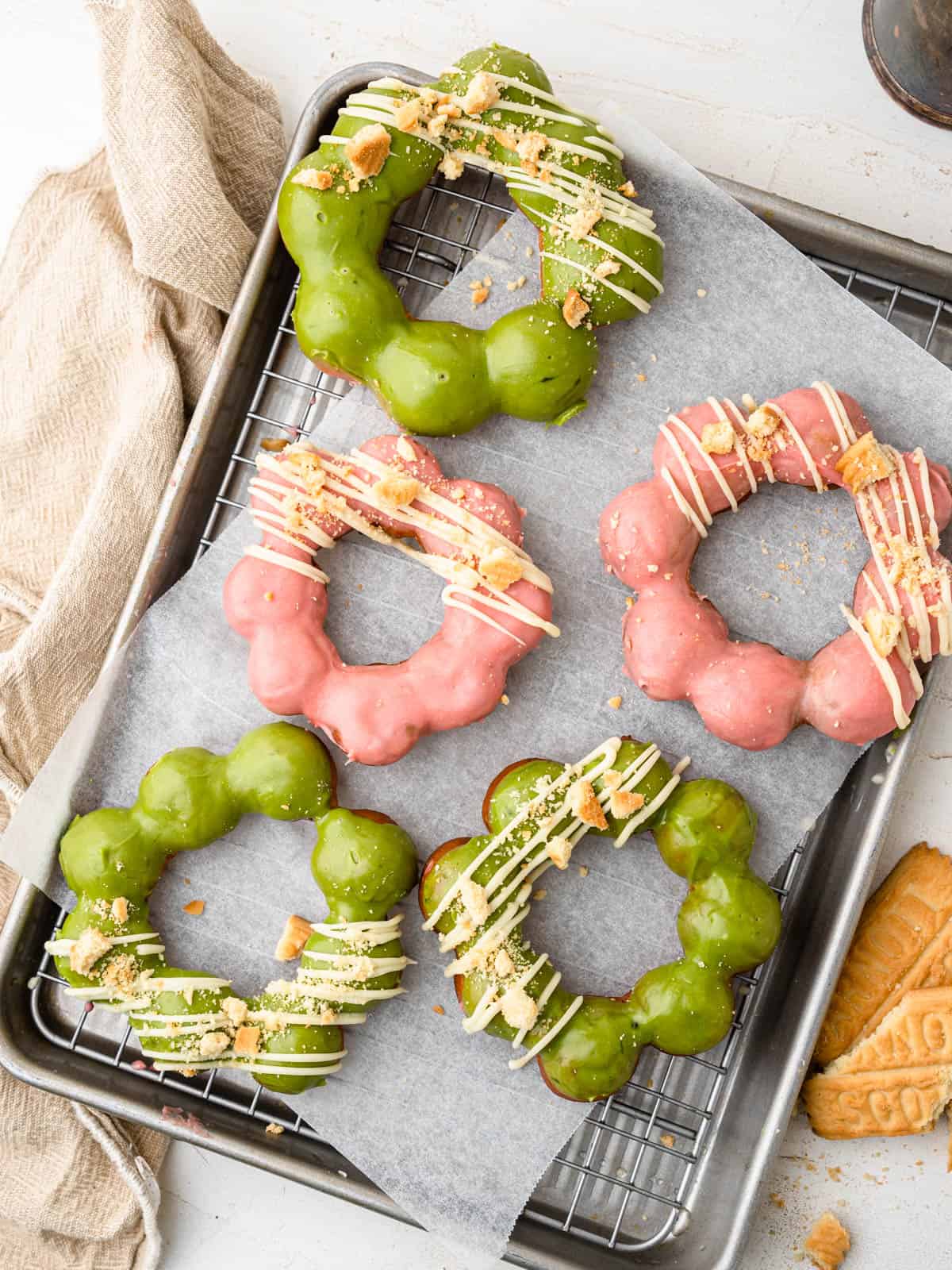
Traditional mochi donuts are usually fried rings made with glutinous rice flour.
The dough or batter is shaped into cute little “pon de ring” bubbles or classic rings, then slipped into hot oil.
They puff, sizzle, and turn a gentle golden color with a crisp, delicate shell.
Inside, the crumb is super chewy, stretchy, and elastic.
It feels lighter than a yeasted donut but bouncier than a cake donut, somewhere between mochi and brioche.
Each bite has that irresistible pull that mochi lovers chase.
Because they’re fried, mochi donuts carry a subtle richness from the oil.
You’ll notice a deeper flavor, almost like eating a mochi version of your favorite donut shop treat.
They pair beautifully with glazes like matcha, chocolate, black sesame, or fruity icing.
The aroma is cozy and nostalgic: warm vanilla, sugar, and fried dough drifting through the kitchen.
I love serving them warm so the glaze softens and clings to the crusty edges.
Bite in and you get crisp, chewy, and creamy from the topping all in one go.
If you love fried dough in all its forms, you’ll probably adore my Fluffy Yeast Donuts too, same weekend energy, different texture.
What Is Baked Mochi Donuts?, Lighter Chewy Treat

Baked mochi donuts start with a similar glutinous rice flour base.
But instead of dropping them into oil, you pipe or spoon the batter into a donut pan and let the oven do the work.
They rise gently, set into their donut shape, and develop a soft, lightly golden exterior.
The texture is still chewy, but softer and more tender than the fried version.
Think mochi meets a light pound cake, with a bouncy center and a slightly cakey outer edge.
You still get that mochi stretch, just with a more subtle bite.
Because they’re baked, they feel less heavy.
There’s no oil bath, so the flavor is a little cleaner and less rich, especially if you use a simple butter batter.
That makes them perfect for glazes that shine through, like matcha, vanilla bean, or fruity icing.
They’re also a bit more approachable for beginners.
No thermometer, no pot of oil, no splattering, just mix, bake, cool, glaze, and enjoy.
I love baking a tray for brunch or afternoon tea when I want something special but not too intense.
If you’re a baked-donut fan, you’ll also enjoy my Baked Mochi Donuts recipe and these cozy Baked Blueberry Donuts for a fruity breakfast-style treat.
Main Differences Between Mochi Donuts and Baked Mochi Donuts
When you compare mochi donuts vs baked mochi donuts, a few key things stand out.
Let’s break it down so you can choose your perfect texture and method.
1. Cooking Method
Fried mochi donuts are cooked in hot oil until crisp and golden.
Baked mochi donuts are baked in the oven in a donut pan or silicone mold.
The fry vs bake decision affects everything: flavor, mouthfeel, and even how the glaze behaves.
Fried donuts often have a delicate crust that stays slightly crisp under glaze.
Baked versions are softer all around, like a mochi cake in donut form.
2. Texture and Crumb
Fried mochi donuts are extra chewy with a slight bounce and crisp edges.
The exterior has a light crunch that contrasts beautifully with the stretchy center.
Baked mochi donuts have a softer, more cake-like outer layer.
The inside is still chewy but not quite as elastic as the fried version.
3. Fat Content and Richness
Fried donuts naturally absorb some oil as they cook.
This gives them a richer flavor and that classic donut-shop indulgence.
Baked mochi donuts rely on butter or oil in the batter instead.
They usually feel lighter, with a cleaner finish on the palate.
4. Flavor Profile
Fried mochi donuts have deep, nostalgic fried-dough notes.
The glaze tastes slightly different on a fried surface, often feeling more decadent.
Baked mochi donuts let delicate flavors shine through.
Matcha, hojicha, or fruit glazes really stand out against the lighter base.
5. Convenience and Ease
Frying requires more setup, active time, and cleanup.
You’ll also need to monitor oil temperature to keep the texture perfect.
Baking is simpler and more repeatable.
Mix, pour, bake, and you’re done, great for beginners or quick cravings.
In short, fried mochi donuts are the indulgent, party-ready cousin.
Baked mochi donuts are their calmer, everyday sibling, still chewy but slightly gentler on the stomach and schedule.
Which One Should You Make?, Choosing Your Chewy Favorite
If you’re in the mood for a real treat, go for fried mochi donuts.
They’re perfect for weekends, special occasions, or whenever you want something a little extra.
I love making them for gatherings, because a plate of glossy rings disappears in minutes.
Choose baked mochi donuts when you want something lighter and more routine-friendly.
They’re ideal for brunch, afternoon tea, or a dessert spread where people might be tasting many things.
They also pack well in lunchboxes or as a quick snack with coffee.
Think about your energy and your craving.
If you’re happy to stand by the stove and listen to donuts sizzle, fry them.
If you want to stir, pour, and forget them in the oven while you tidy up, bake them.
Personally, I’ll often fry mochi donuts for celebrations and bake them for casual days.
Some weekends, I make a batch of fried ones and follow it with lighter treats like Easy Mochi or Mango Mochi to keep the dessert table playful and balanced.
There’s room for both styles in any mochi lover’s kitchen.
Final Thoughts: Chewy Donut Joy, Fried or Baked
In the mochi donuts vs baked mochi donuts conversation, there’s no real loser.
Fried mochi donuts bring that festival-style joy: crisp edges, rich flavor, and a glossy glaze that feels like a celebration.
Baked mochi donuts bring comfort, ease, and a gentler chew that fits seamlessly into everyday life.
If you love playing with texture like I do, try both and see which one your friends reach for first.
Maybe you’ll save fried mochi donuts for birthdays and holidays, and keep baked ones for cozy Sundays at home.
Either way, you’ll have a chewy, gooey, mochi-filled dessert in every bite.
Love this texture talk?
Don’t miss my Baked Mochi Donuts alongside the classic Mochi Donuts, and if you’re craving even more mochi magic, try my Butter Mochi for a slice-style chewy treat.
Once you start baking with glutinous rice flour, it’s hard to stop.
Love mochi? Find every type in one place in our complete guide to mochi recipes.