
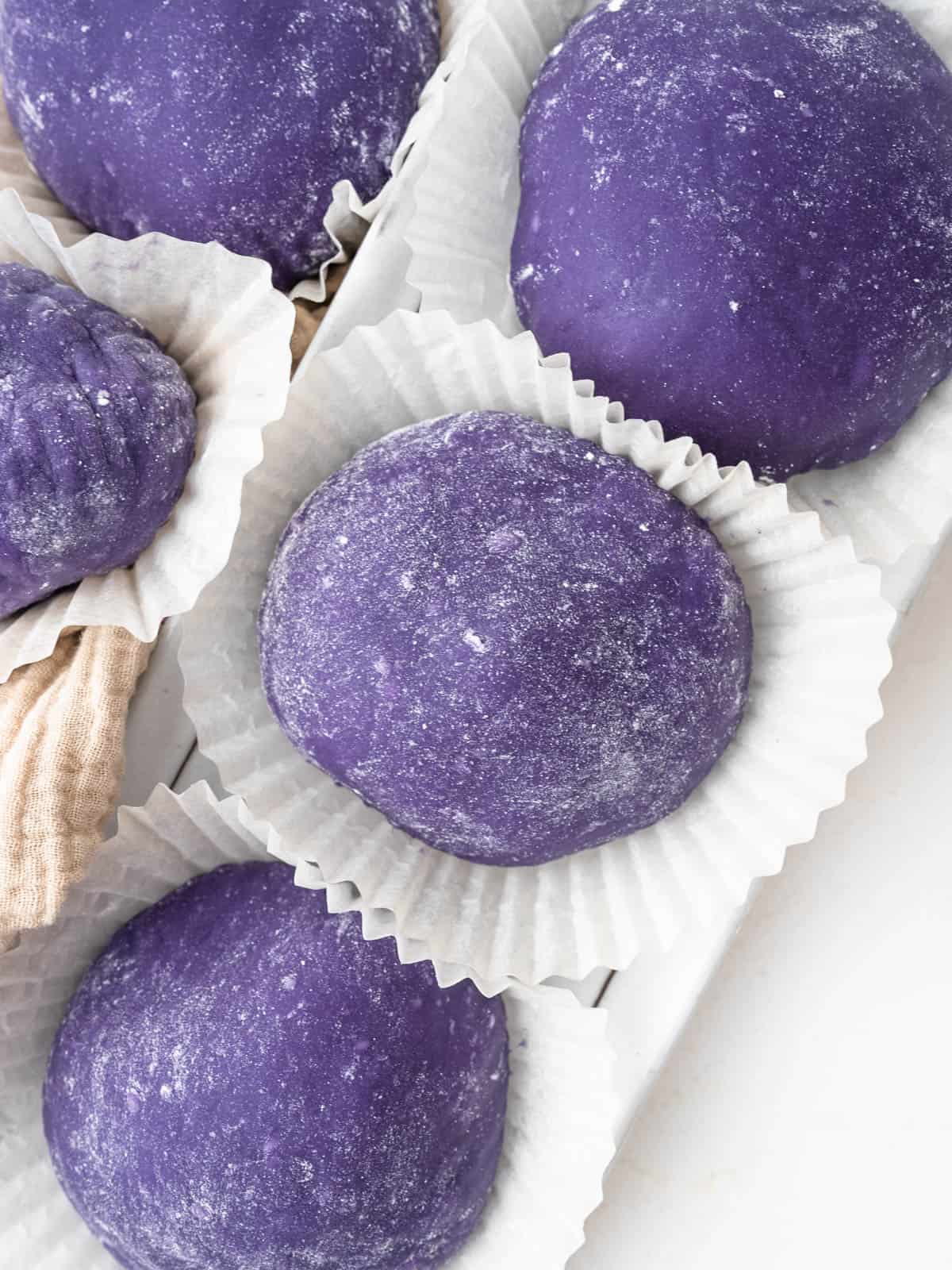
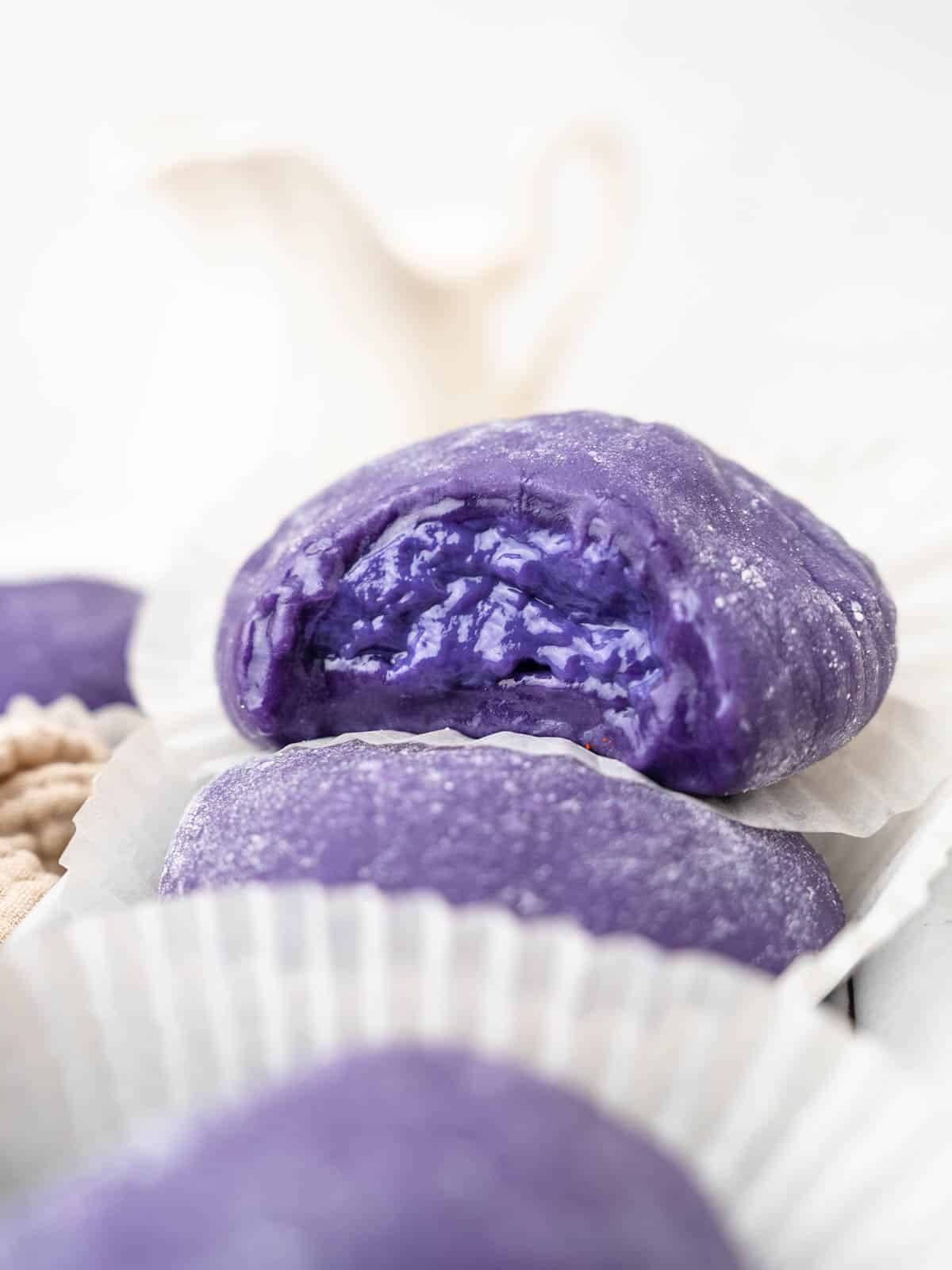
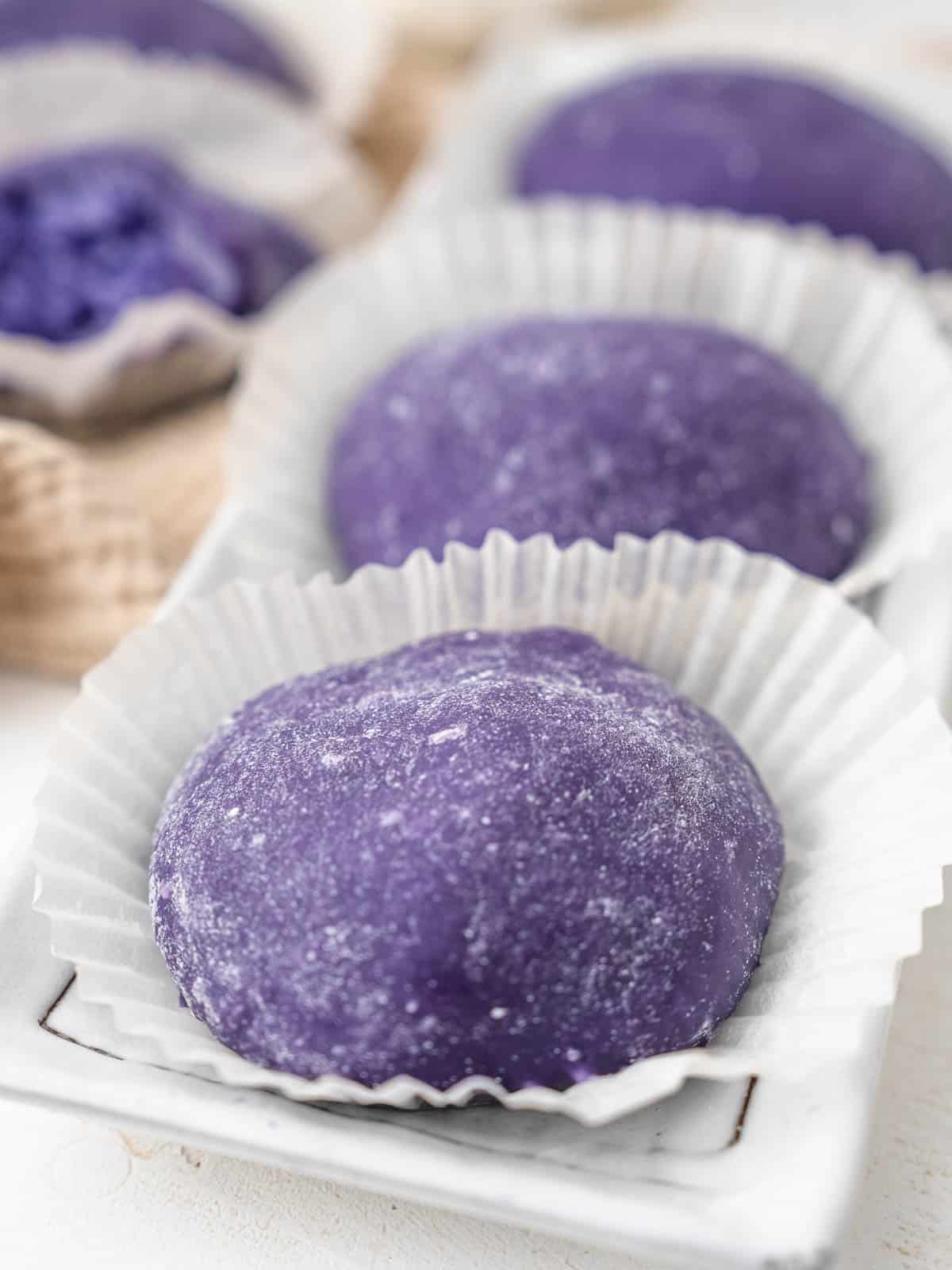
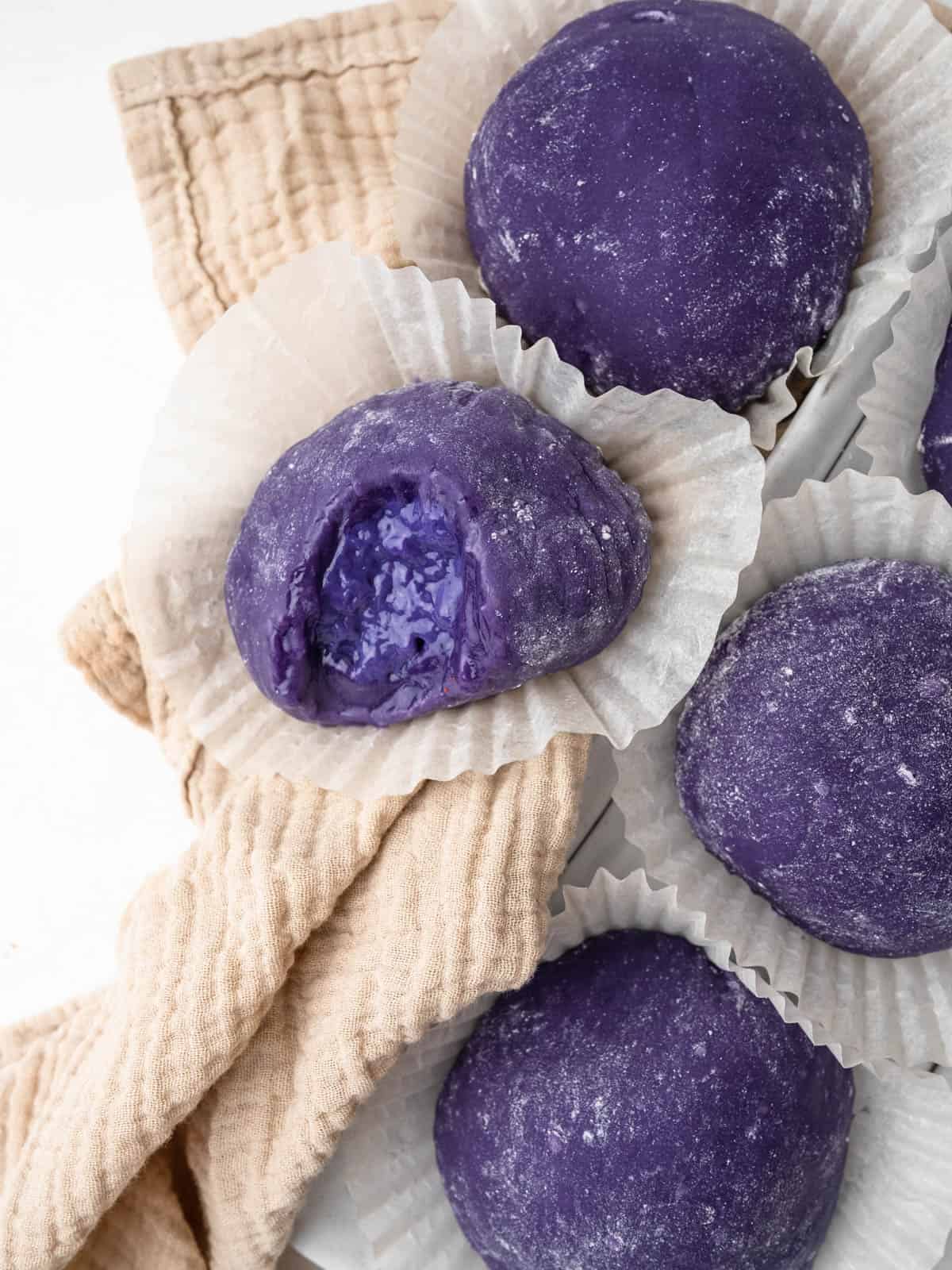
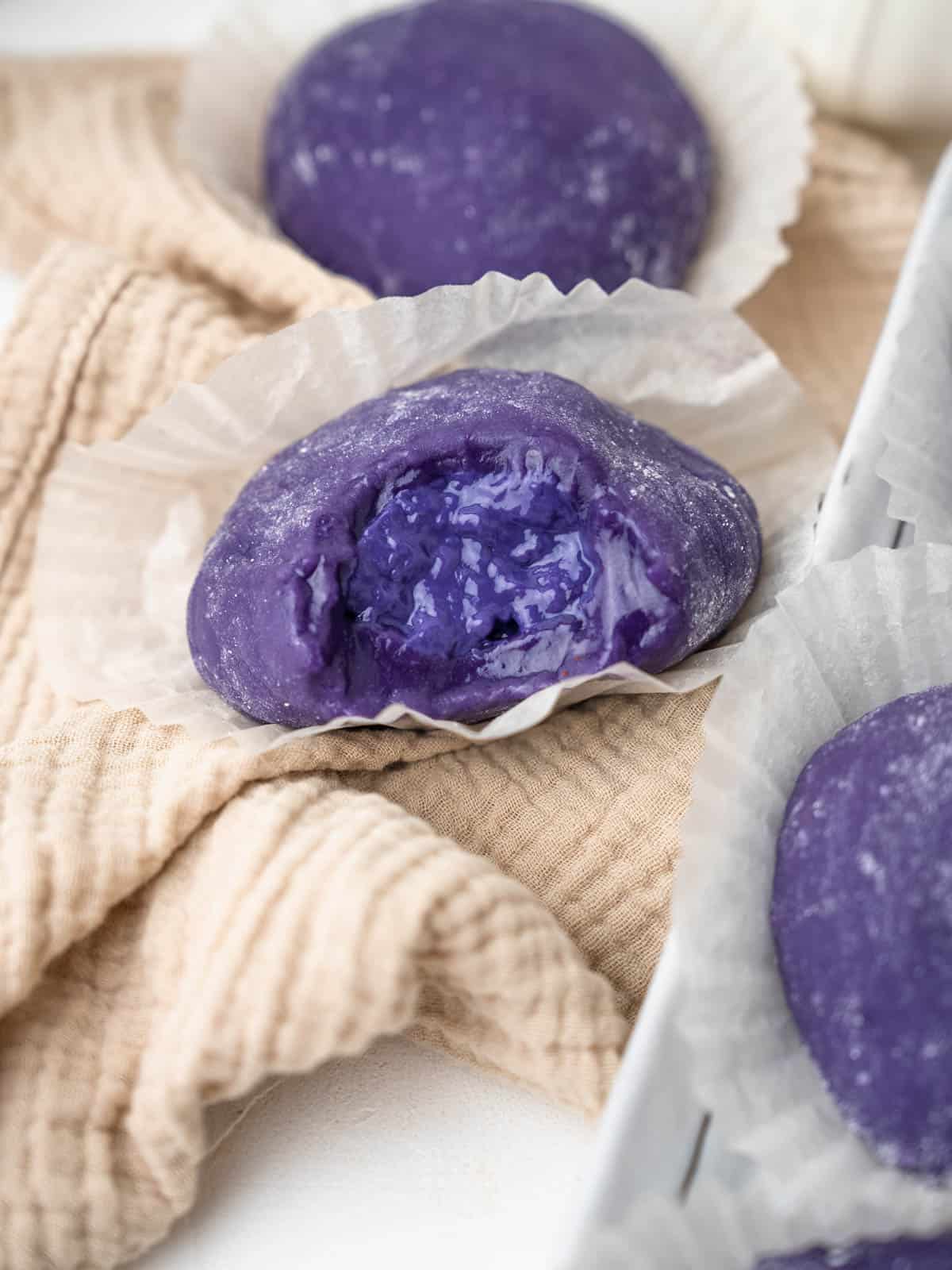
Soft and chewy purple ube mochi filled with a sweet and creamy ube custard
New to this purple yam? My explainer on what ube is covers its flavour, uses and where to buy it.
What is ube?
If you aren’t familiar with ube, it is a purple root vegetable originating in the Philippines. It has a sweet, slightly nutty, vanilla-y taste and is commonly used in desserts.
Ube is often confused with taro and purple sweet potato. Taro is not as vibrant in color and sweetness and is used more often in savory dishes. On the other hand purple sweet potato has a more intense purple colour and sweetness. If you can’t find ube, purple sweet potato is often a great alternative.
Ingredients
Ube Filling
- Whole milk: Milk makes up the body of the custard. I prefer to use whole milk as it has a creamier flavor and texture, but skim and non-fat milk work great too.
- Ube extract: Ube extract brings all the ube flavor to the custard! A little goes a long way so don’t add too much.
- Cornstarch: Cornstarch acts as the thickener in the custard. It may seem like a lot but we want the filling to be super thick so it can easily wrapped in the mochi skin.
- Granulated sugar: Sugar sweetens the filling! Feel free to increase or decrease this according to your personal preference.
Mochi
- Glutinous rice flour: You can use mochiko flour, which is made from Japanese short-grain rice, aka mochigome, or Thai-style glutinous rice flour which can be found in almost all Asian grocery stores.
- Granulated sugar: Aka white sugar, is used to sweeten the mochi dough as well as give it a softer texture.
- Cornstarch: Cornstarch helps to thicken the mochi dough as well as give it more structure.
- Whole milk: Milk is used to hydrate the dough as well as add extra fat and protein to the dough, this results in a softer mochi with a smoother mouthfeel. If you want to make this dairy-free you can replace this with water.
- Vegetable oil: Kneading vegetable oil into the dough not only makes it softer and chewier it also makes it easier to handle as it’ll be less sticky.
- Corn starch or potato starch, for dusting
Tips for Making Ube Mochi
Use Ube Halaya for Intensity
Incorporating 1 to 2 tablespoons of ube halaya (purple yam jam) into the batter can intensify the ube flavor and enrich the texture. It adds depth and creaminess that pure extract alone may not provide. Just be mindful of the added sweetness and adjust sugar slightly if needed.
Preheat Muffin Tin for Crispier Edges
To enhance the signature crispy exterior, preheat your muffin tin in the oven for 5 minutes before pouring in the batter. This method helps create a quick crust when the batter hits the hot surface, mimicking the caramelized texture of traditional mochi bakes.
Storage and Reheating for Best Texture
Store cooled mochi in an airtight container at room temperature for up to two days. When ready to enjoy again, microwave each piece for 10 to 15 seconds to restore its chewy texture. Avoid refrigerating, as it can harden the mochi and alter the mouthfeel.
Creative Ube Mochi Variations
Ube Cheese Mochi
For a sweet-savory twist, insert a small cube of cream cheese or a bit of grated cheddar into the center of each muffin cup before baking. The melted cheese adds a rich contrast to the subtly sweet ube flavor, similar to popular Filipino ube-cheese desserts.
Ube Matcha Mochi
Add 1 teaspoon of matcha powder to the batter to create a visually striking green and purple mochi. Matcha’s earthy bitterness balances the sweetness of the ube and adds a layer of flavor complexity, perfect for tea lovers.
Chocolate Ube Mochi
Stir mini chocolate chips into the batter or drizzle dark chocolate over the baked mochi for a dessert-forward variation. The chocolate complements the nuttiness of the ube and enhances the richness of the coconut milk base.
Unique Serving Suggestions
Serve with Ube or Coconut Ice Cream
Warm ube mochi served with a scoop of ube or coconut ice cream creates a delightful temperature contrast and makes for a visually cohesive dessert. The creamy cold ice cream balances the chewy warmth of the mochi perfectly.
Dusted in Toasted Coconut Flakes
After baking, roll or sprinkle the ube mochi with lightly toasted coconut flakes. This adds a crunchy texture and enhances the coconut flavor already present from the coconut milk. It also elevates the visual appeal of the dish.
Pair with Afternoon Tea
Serve ube mochi as a sweet treat during an afternoon tea service. Its mild sweetness and chewy bite complement floral teas like jasmine, green tea, or oolong, making it a sophisticated alternative to traditional pastries.
Frequently Asked Questions
How long does this last?
Mochi is always best eaten the day that it is made as the skin is the softest and stretchiest. However, they will last up to 2 days when stored in an airtight container in the fridge. Anything made with glutinous rice flour will start to harden up as it sits.
How do I store ube mochi?
The best way to store any leftover mochi is in an airtight container in the fridge. As the custard is made out of milk it’s important to keep it refrigerated otherwise it runs the risk of spoiling.
Can I freeze mochi?
You can freeze leftover mochi, and it will keep for up to a week in the freezer. When you are ready to eat just let it defrost on your countertop, or with quick 5-10 second bursts in the microwave.
Keep in mind that the texture won’t be exactly the same as it was before frozen. The mochi will be a little harder and less stretchy.
Can I use coconut milk instead of regular milk?
Yes, you can! Ube and coconut is a common flavor combination and coconut milk is a great alternative when making both the mochi and custard. You can even roll the finished mochi in desiccated coconut for an even coco-nuttier mochi!
Can I use ube powder or ube halaya to flavor the mochi?
If you have access to either of these they would be an even better option than ube extract!
You can replace the ube custard filling directly with ube halaya for an ube jam filling. As for the ube powder you can add it to the ube custard filling to give it more structure and a natural ube flavor.
Why is my mochi so stiff?
There are a couple of reasons for stiff mochi:
- The mochi dough was overcooked
- Not enough liquid was added to the mochi
- The mochi hasn’t been kneaded with vegetable oil for long enough
Ube isn’t the ube filling thickening?
Making sure the ube filling is thick is important if you want to be able to scoop it up and fill the mochi.
Here are a couple of reasons why it’s not thickening:
- Not enough cornstarch was used
- The heat is too low
- The filling hasn’t been cooked for long enough– keep stirring!
Can I Make Ube Mochi Without Coconut Milk?
Yes, you can substitute the coconut milk with whole milk, oat milk, or almond milk. However, these substitutes may result in a slightly less rich and aromatic flavor. If using a non-coconut milk, consider adding a drop or two of coconut extract to retain the original flavor profile.
Why Is My Mochi Not Chewy Enough?
If your mochi turns out too firm or lacks chewiness, it may be due to overbaking or using reduced-fat coconut milk. Make sure to use full-fat coconut milk and avoid extending the bake time, as the mochi continues to firm up as it cools.
Can I Freeze Ube Mochi?
Yes, baked ube mochi can be frozen. Let them cool completely, then wrap each piece individually in plastic wrap and store in an airtight container or freezer bag. To reheat, microwave for 20 to 30 seconds until soft and chewy again. Avoid refreezing once thawed.
Let’s Get Cooking
If you liked this recipe make sure to leave me a comment and rating down below. I’d love to know how it went! Also, don’t forget to tag me on Instagram @catherine.desserts.
Follow me on Facebook, Pinterest, YouTube, and TikTok for more of my baking creations and updates!
Ube Mochi
Soft and chewy purple ube mochi filled with a sweet and creamy ube custard
- Prep Time: 30 minutes
- Cook Time: 5 minutes
- Total Time: 35 minutes
- Yield: 8 Mochi 1x
- Category: Mochi
- Method: Easy
- Cuisine: Asian
Ingredients
Ube Filling
- 360ml Whole milk (1 1/2 cups)
- 1/4 tsp Ube extract
- 30g Cornstarch (1/4 cup)
- 65g Granulated sugar (1/3 cup)
Mochi
- 200g Glutinous rice flour (1 1/2 cup)
- 65g Granulated sugar (1/3 cup)
- 40g Corn starch (1/3 cup)
- 360ml Whole milk (1 1/2 cup)
- 1/4 tsp Ube extract
- 1 1/2 tbsp Vegetable oil
Assembly
- Corn starch or potato starch, for dusting
Instructions
Ube Filling
- Heat the milk in a medium-sized pan over medium heat until steaming
- Combine the cornstarch and granulated sugar together in a bowl and whisk to combine
- Add the dry ingredients to the milk and whisk until smooth
- Add the ube extract and mix until combined
- Continue to mix over medium heat for approx 5-10 minutes, or until the ube filling mixture has thickened to a thick custard-like consistency
- Remove from the heat, transfer to a bowl, cover with cling wrap and cool completely
Mochi
- Combine the glutinous rice flour, sugar, and cornstarch in a medium-sized microwave-safe bowl, and whisk to combine
- Add the milk and ube extract, and whisk until smooth
- Cover the mochi mixture with cling wrap and microwave for 2 minutes on high
- Uncover and stir
- Then re-cover and microwave for another 2 minutes, the mochi dough should be semi-translucent
- If the mochi is still slightly liquidy/milky re-cover it and microwave at 1-minute intervals until cooked through
- Allow the mochi to room temperature, or until it’s cool enough to handle
- Add the vegetable oil and using gloved or oiled hands knead until smooth
- Prepare a baking tray lined with parchment paper
- Divide the mochi into 8 equal portions and place on the baking sheet.
Assembly
- Prepare a shallow bowl with cornstarch
- Using oiled or gloved hands flatten a portion of mochi between your palms and scoop 1 tbsp of the ube filling into the centre
- Bring the edges of the mochi together to enclose the filling and roll it into a ball
- Dust the ball in cornstarch and repeat with the remaining filling and mochi
- Dust off any excess cornstarch from the mochi balls and enjoy!
Love mochi? Find every type in one place in our complete guide to mochi recipes.
Want more? Browse every ube recipe in one place.



Turned out horrible. Not sweet enough and the cornstarch in the mixture made it so dry…