If you’ve ever whisked a bright green latte and thought, wait… what is matcha actually? you’re not alone.
Matcha has gone from quiet Japanese tea ceremonies to centre stage in lattes, croissants, cookies, and dreamy green cakes. But not all matcha is created equal, and using the wrong grade can mean the difference between a vibrant, creamy dessert and something a bit… swampy.
Let’s break down what matcha is, how to choose the right grade for baking, and which matcha desserts are worth turning on the oven for.
At a Glance: Matcha Explained
| Feature | Explanation |
|---|---|
| Origin | Stone-milled green tea powder from Japan, traditionally used in tea ceremony |
| Key Ingredients | Young shade-grown green tea leaves, steamed, dried, then ground to powder |
| Texture & Mouthfeel | Fine, silky powder; whisked into liquid it tastes creamy and velvety |
| Typical Sweetness | Naturally unsweetened; flavour is grassy, nutty, slightly bitter |
| Method Highlights | Shade-grown, de-stemmed, de-veined, then stone-ground to preserve flavour |
| Best Occasion | Everyday lattes, baking, special-occasion cakes, cooling summer desserts |
If you’re baking something soft and fluffy like a sponge or roll cake, try using a high-quality powder in my matcha sponge cake for the brightest colour and cleanest flavour.
What Is Matcha? Japanese Green Tea Powder 101

Let’s answer the big question: what is matcha in the simplest way. Matcha is a finely ground powder made from shade-grown Japanese green tea leaves. Instead of steeping and discarding the leaves, you whisk the powder into water or milk and drink the entire leaf.
The flavour is:
- grassy and fresh
- a little nutty
- softly bitter with a deep umami
Good matcha feels creamy on the tongue, almost like steamed milk, even when it’s just water and tea.
How matcha is made
Matcha isn’t just “green tea blended into powder.” To be true matcha:
- Tea bushes are shaded for several weeks before harvest.
- The shading boosts chlorophyll and amino acids, especially L-theanine, giving that rich umami and vivid green.
- Only the youngest, most tender leaves are picked.
- Leaves are steamed, dried, and ground slowly between stone mills into a superfine powder.
Ceremonial-grade matcha uses the youngest leaves. Culinary or baking grades usually include slightly more mature leaves, with a stronger, more robust flavour.
That’s why when you ask what is matcha compared to regular green tea, the answer is simple: it’s a more carefully grown, processed, and consumed version of the same plant, with a very different sensory experience.
Why This Green Powder Matters: Texture, Trend, and Taste
Matcha isn’t just trendy because it looks pretty on Instagram. It behaves differently from other flavourings in desserts.
- Because it’s a powder, it blends into batters and creams without adding extra liquid.
- It brings both colour and flavour in one ingredient.
- A tiny spoonful can transform a simple cupcake or cheesecake into something complex and café-worthy.
Meanwhile, matcha’s flavour profile sits in that delicious space between sweet and bitter. It pairs beautifully with:
- white chocolate
- dairy (cream, milk, cream cheese)
- mochi and glutinous rice desserts
- fruity flavours like strawberry, yuzu, or mango
It’s also part of a bigger wave of Asian-inspired desserts: mochi donuts, Basque cheesecakes with tea flavours, and hybrid pastries that travel between Tokyo and Paris in a single bite.
So when people search what is matcha, they’re often really asking: How do I use this magical green powder to make bakery-style treats at home?
Matcha Grades and How to Choose for Baking
Here’s the secret: you don’t need ceremonial matcha for every dessert. Matching the grade to the recipe saves money and gives better flavour.
Main matcha grades
- Ceremonial grade
- Very vibrant green
- Smooth, delicate, less bitter
- Best for drinking straight: traditional usucha, lattes where matcha is the star
- Premium / latte grade
- Still bright green
- Slightly stronger flavour
- Perfect for matcha lattes, soft creams, and desserts where the tea is noticeable but balanced
- Culinary / baking grade
- Deeper or duller green
- Strong, more bitter taste
- Designed for brownies, cookies, and cakes where sugar and fat round out the bitterness
For something like my matcha brownies, I actually like using a good culinary or latte grade. The fudgy butter and white chocolate tame the bitterness, and the stronger flavour shines through the rich base.
If you’re making a light dessert like matcha crepe cake, a brighter premium grade keeps the cream pale, smooth, and beautifully green without any murky tones.
How To Make It: Basic Matcha Method & Baking Techniques
Once you know what is matcha and which grade to use, the fun part begins: baking and whisking.
Essential tools
- Fine mesh sieve (for lump-free powder)
- Small bowl and whisk (a bamboo chasen or a small regular whisk)
- Heatproof bowl if you’re blooming matcha with warm water or milk
Basic matcha paste method
For drinks, creams, and batters, I like to start with a smooth paste:
- Sift matcha into a small bowl.
- Add a splash of hot water (about 70 to 80°C, not boiling).
- Whisk in “M” motions until smooth and slightly frothy.
You can then:
- pour it into milk for a latte
- whisk it into whipped cream or mascarpone
- stir it into cake or brownie batter
Using matcha in baking
Some easy ways to infuse matcha into desserts:
- Cakes and sponges
- Sift matcha with flour to avoid streaks.
- Add a bit more sugar if using a stronger baking grade.
- Cookies and brownies
- Cream matcha with butter and sugar or whisk into melted chocolate.
- Pair with white chocolate or nuts for extra richness.
- Creams, custards and cheesecakes
- Bloom matcha in a little warm cream or milk first.
- Cool, then mix into your main custard or cheesecake base.
The key is always: sift, bloom if needed, and balance the bitterness with fat and sweetness.
Popular Matcha Desserts You’ll Love
Once you start playing with matcha, it’s hard to stop. Here are some of my favourite matcha desserts that show different sides of this powder.
Matcha Lava Cake
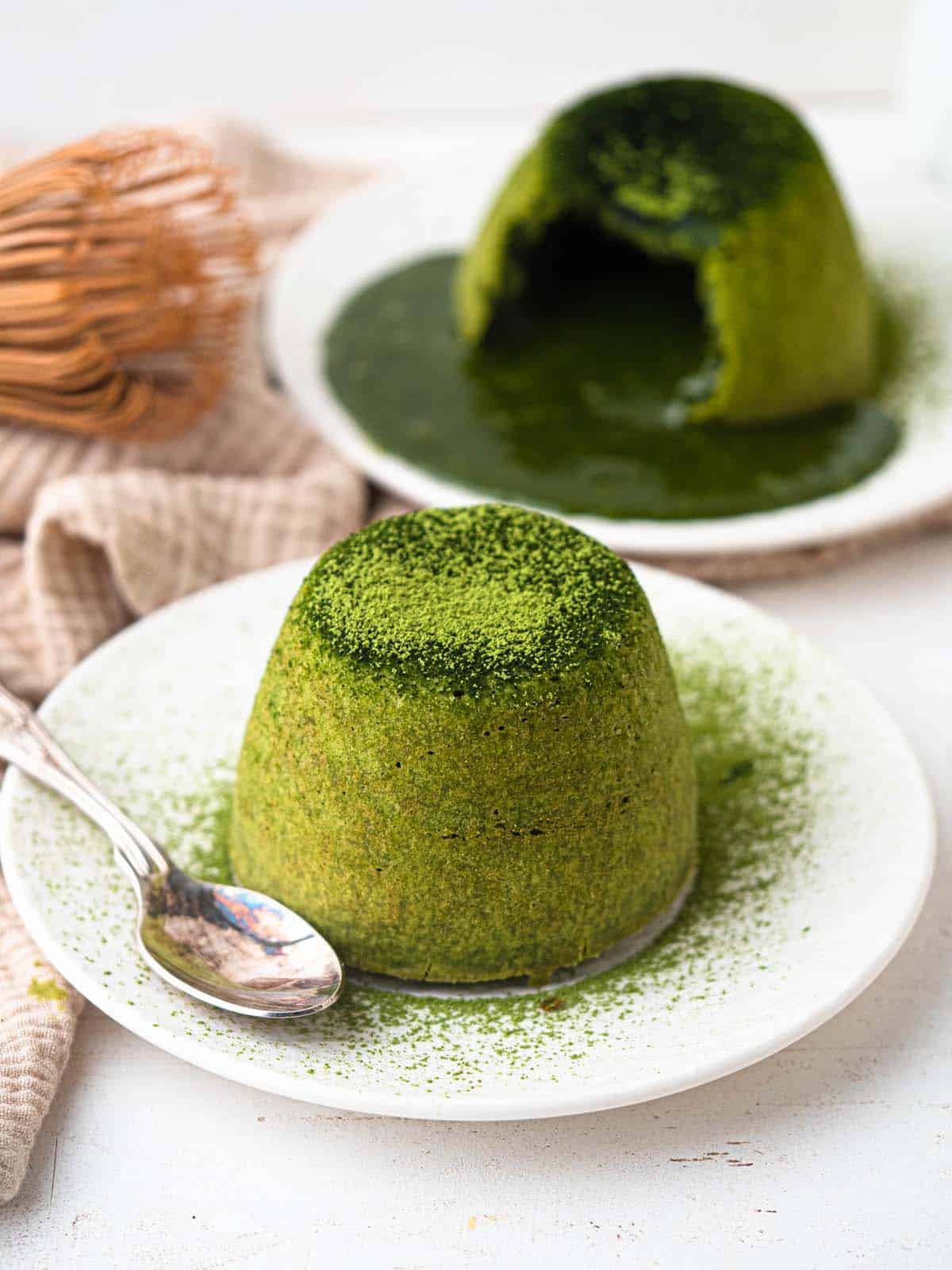
In my matcha lava cake, the centre stays molten and silky, like a warm matcha latte trapped inside a cake. The edges bake up soft and tender, while the middle flows out in a glossy green river when you cut into it. It’s the perfect dessert if you love drama at the table and deep matcha flavour in a small portion.
Matcha Basque Cheesecake

If you’re a fan of creamy, scorched cheesecakes, my matcha Basque cheesecake is a gorgeous mash-up. The top bakes dark and blistered, while the inside stays custardy and lush. Matcha cuts through the richness, giving a slightly earthy edge that keeps each bite from feeling too heavy.
Matcha Butter Mochi

For something chewy and nostalgic, matcha butter mochi is all soft edges and bouncy, gooey centre. Glutinous rice flour, coconut milk, butter, and matcha come together in a single bowl. After baking, you get golden, crisp edges and an elastic, mochi-like bite that’s impossible to eat just once.
If you want more ideas, my best matcha 10 recipes round-up gathers some of the most loved matcha desserts in one place.
Final Thoughts: Sipping and Baking with Matcha
Matcha is more than just a pretty green swirl. Once you understand what is matcha, how it’s grown, and which grade to choose, it becomes one of the most versatile ingredients in your dessert kitchen.
From molten centres in matcha lava cake to chewy squares of matcha butter mochi, it brings earthiness, colour, and a little calm ritual to baking days.
Next time you open a tin of that bright green powder, take a breath, whisk slowly, and let the aroma guide you. Then share your creations with someone you love, maybe alongside a slice of matcha Basque cheesecake and a warm cup of tea.
Love matcha? Find every matcha dessert in one place in our complete guide to matcha desserts.