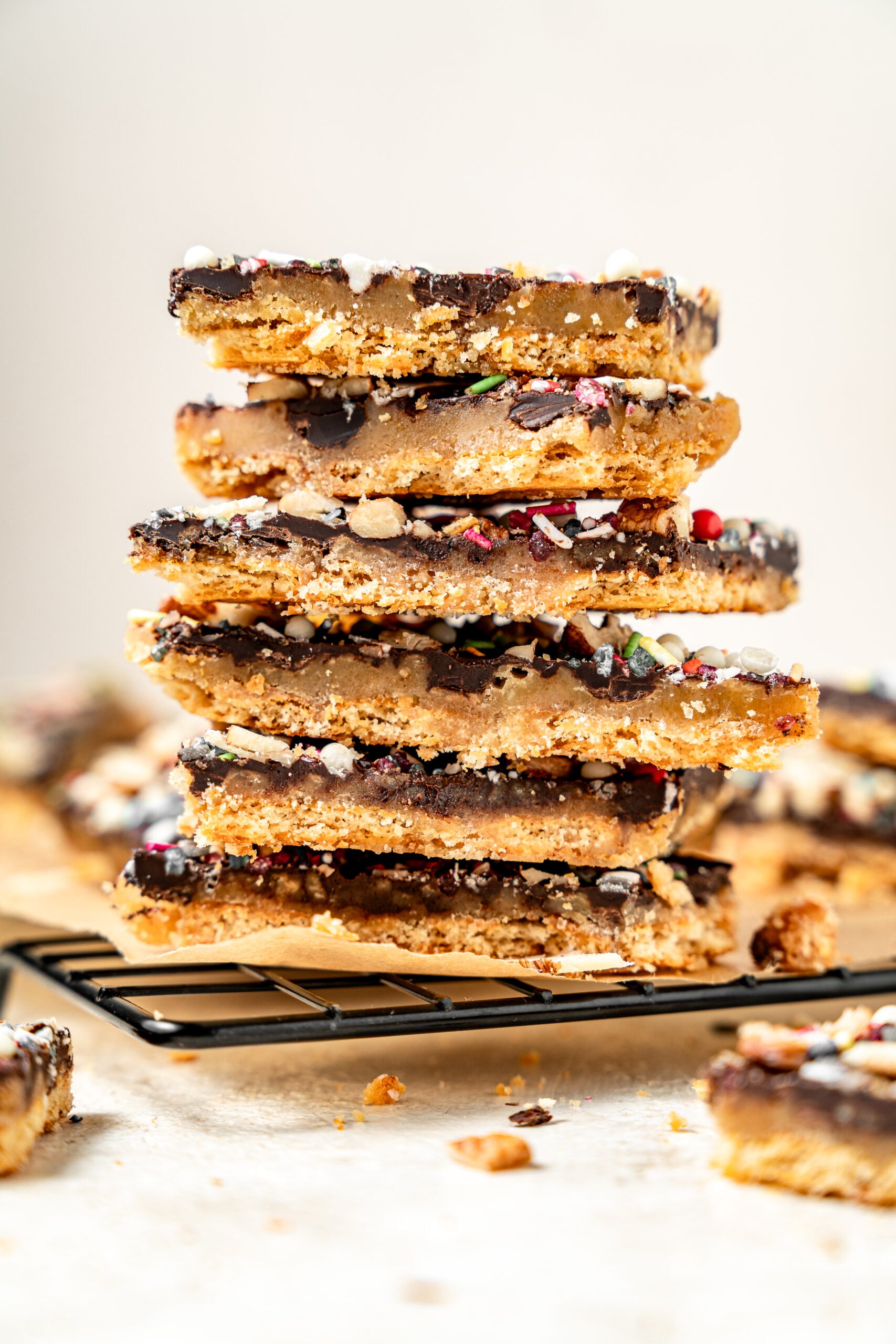
This Christmas crack recipe is a sleeve of saltines, a three minute toffee and a layer of melted chocolate, and it is the fastest genuinely good thing you can put in a gift tin.
Saltine cracker toffee goes by about six names. Christmas crack, cracker candy, saltine toffee, toffee bark, and when it is made with matzo at Passover, matzo crunch. They are all the same idea: a tight layer of salty crackers under a hot brown sugar toffee, baked for five minutes, covered in melted chocolate and broken into shards.
There are five ingredients and no equipment beyond a saucepan and a rimmed baking sheet, which is why it turns up on every Christmas dessert guide list. Only one thing can really go wrong, and it goes wrong in exactly one place: the boil. Everything below is built around getting that part right.
What Christmas crack actually is, and what else it gets called
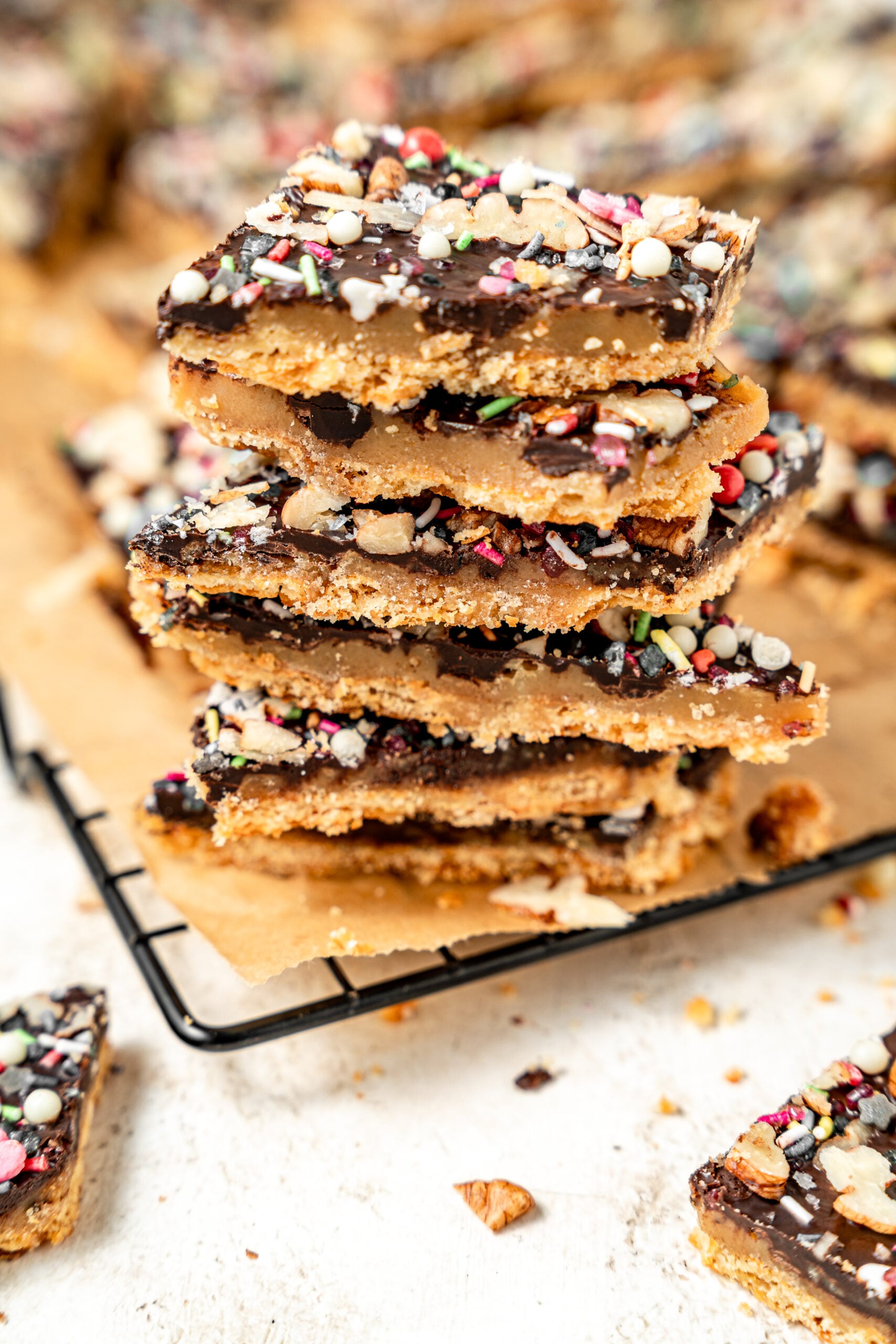
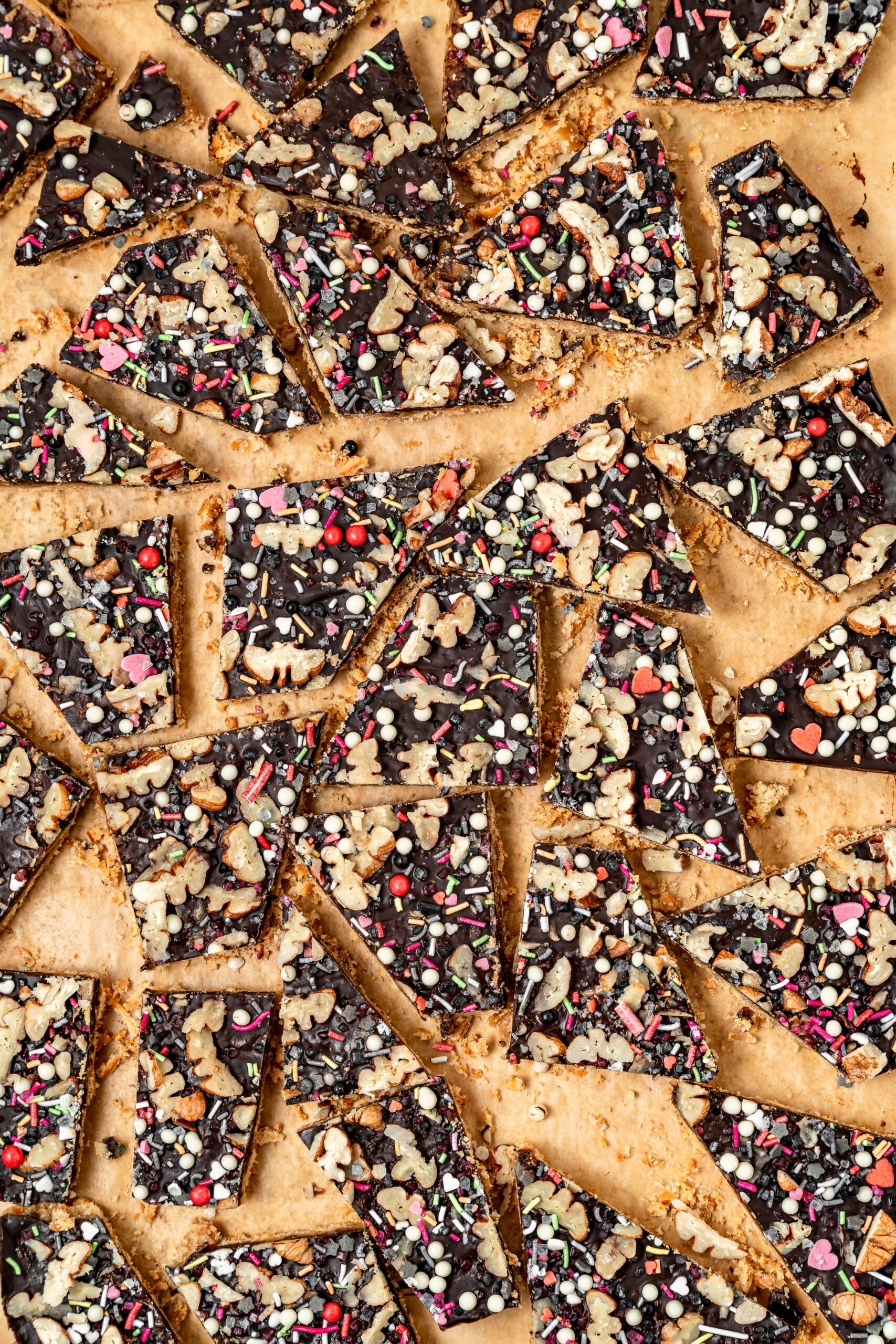
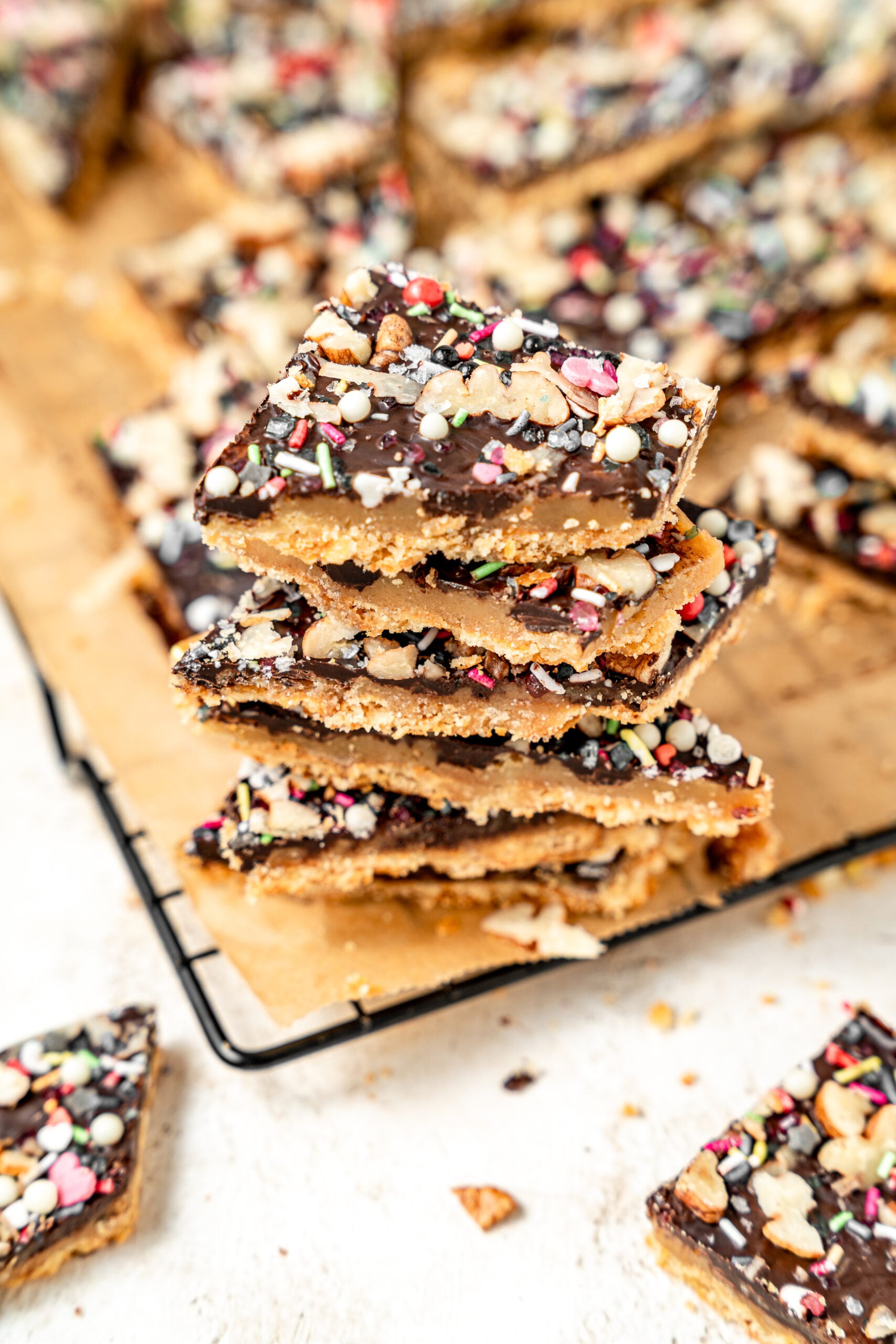
Christmas crack is a three layer candy. The base is a single tight layer of saltine crackers, salted side up. Over that goes a quick toffee made only from butter and dark brown sugar, boiled hard for three minutes so it sets firm instead of staying sticky. A short bake drives the toffee into the crackers, and melted chocolate spread over the top finishes it. Once it is cold you snap the whole slab into rough pieces.
The name comes from how addictive people find it rather than from anything in the method, though the sheet really does crack when you break it. If a recipe calls itself cracker candy, saltine toffee or Christmas crack bark, it is this. The matzo version swaps the saltines for matzo and is otherwise identical, which is a useful thing to know if you are ever short a sleeve of crackers.
The three minute boil, and why it decides everything
Time it from the full rolling boil, not from when the butter melts
This is the single most common mistake and it is the reason most failed batches fail. The butter and sugar spend a couple of minutes just melting and loosening, and none of that counts. Wait until the whole surface is bubbling and the mixture keeps boiling while you stir it, then start the timer and give it a full 3 minutes. If you own a thermometer you are aiming for about 120°C (250°F).
Stir the whole time, and scrape the base
Butter and sugar want to split, and the only thing holding them together is constant movement. Use a heatproof spatula rather than a spoon so you can scrape the base and the corners of the pan, where the sugar catches first. Stop stirring for even twenty seconds and you will see a thin layer of clear fat separate out on top. It is the same discipline a hard sugar candy like dalgona candy needs.
What under boiled and over boiled actually look like
Under boiled toffee stays pale, pours too easily, and soaks into the crackers instead of setting on top of them, which gives you a chewy, greasy slab that never snaps. Over boiled toffee turns properly dark and smells faintly burnt, and it tastes bitter under the chocolate. Correct toffee is a smooth, even caramel colour, noticeably thicker than when it started, and it begins to set within a minute of leaving the heat.
Ingredients for Christmas crack
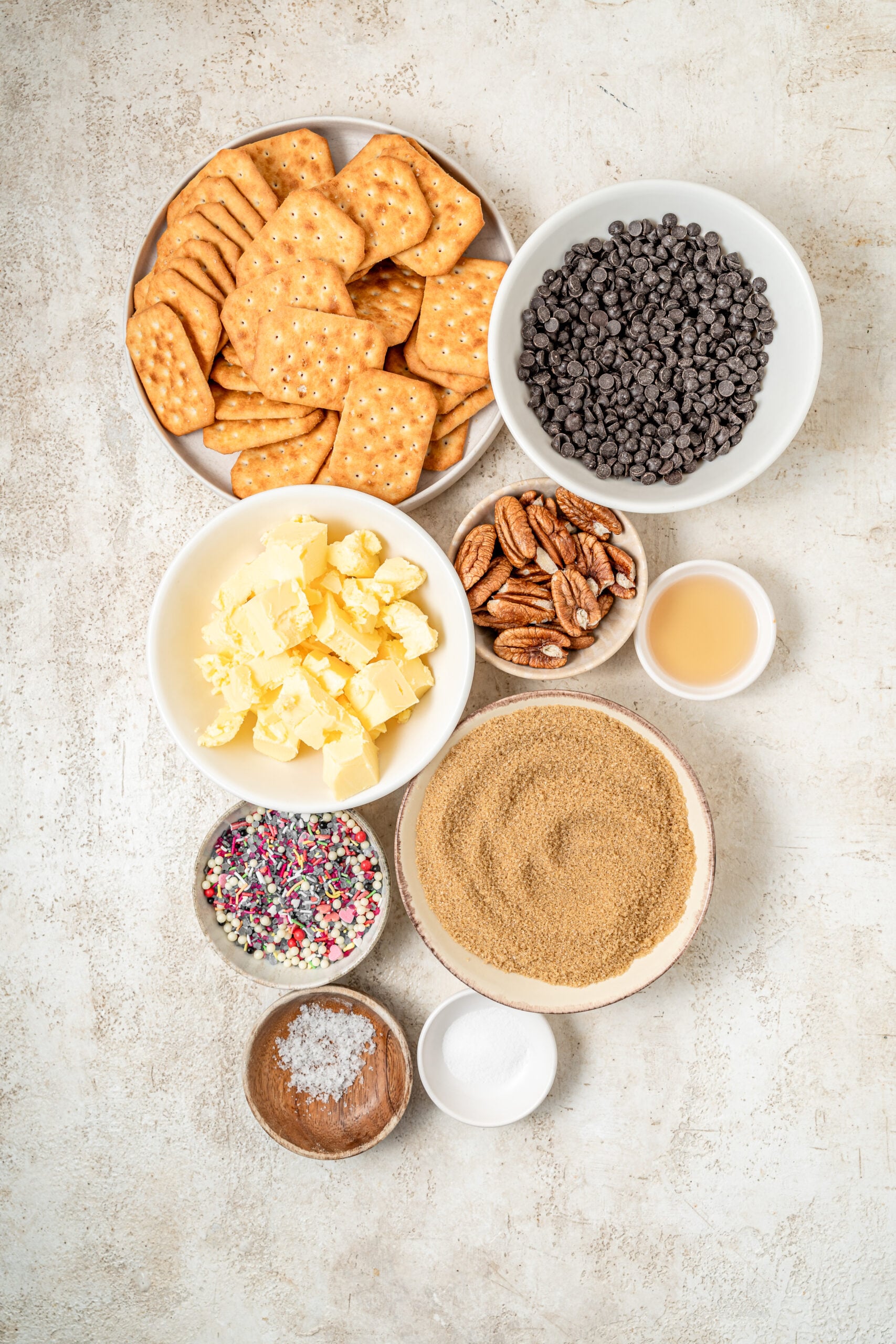
Quantities live in the recipe card at the bottom of the page. This is what each one is for, which matters more here than usual because there are so few of them.
Base and toffee
- Saltine crackers: the salt and the dry, open texture are both doing real work. The salt balances a very sweet toffee, and the dryness lets the crackers drink in just enough toffee to go crisp rather than soggy.
- Unsalted butter: half the toffee by weight. Use unsalted so you control the salt yourself, and cut it into pieces so it melts evenly instead of scorching on one side.
- Dark brown sugar: the other half. The molasses in it gives the toffee its colour and its slight bitterness, and light brown sugar will give you a paler, sweeter, less interesting result.
- Vanilla extract: goes in off the heat, where it bubbles up hard. Added any earlier the alcohol boils straight off and you taste nothing.
- Fine sea salt: a quarter teaspoon stirred into the toffee, separate from the flaky salt on top. This one seasons the caramel, the other one is texture.
Topping
- Semisweet chocolate chips: easiest option by a distance, because they melt in place on the hot toffee and need no separate pan. Chips hold their shape until the heat gets to them, which gives you time to spread evenly.
- Flaky sea salt: scattered while the chocolate is still wet. It is the thing that stops the whole slab reading as one note of sweet.
- Toasted pecans, crushed candy canes or sprinkles: all optional, all go on wet. Nuts need pressing in lightly or they fall off when you break the sheet.
Optional: my favourite extras that add a little magic
- Crushed pretzels: more salt and a different kind of crunch, and they survive two weeks in a tin better than nuts do.
- Toffee bits: scattered over the chocolate they double down on the caramel and give the top some sparkle.
- A second chocolate drizzle: a handful of white chocolate melted and drizzled over the set dark chocolate looks like far more effort than it is.
- Espresso powder: half a teaspoon stirred into the toffee off the heat deepens the caramel without making it taste of coffee.
Substitutions: smart ingredient swaps that still taste amazing
- Ritz, club or graham crackers for saltines: all work. Ritz and club crackers give a richer, more buttery base, graham crackers a softer and sweeter one. You lose some of the salt contrast, so be more generous with the flaky salt.
- Chopped dark chocolate for chips: 55 to 70 per cent chopped chocolate tastes better and melts just as readily on the hot toffee. Because the heat is doing the melting rather than you, it sets fine without any of the fuss in how to temper chocolate.
- White chocolate: it works but it scorches, so wait a full minute after the pan comes out of the oven before you scatter it on.
- Matzo for the crackers: use two or three sheets to cover the pan and bake it exactly the same way.
How to make Christmas crack, step by step
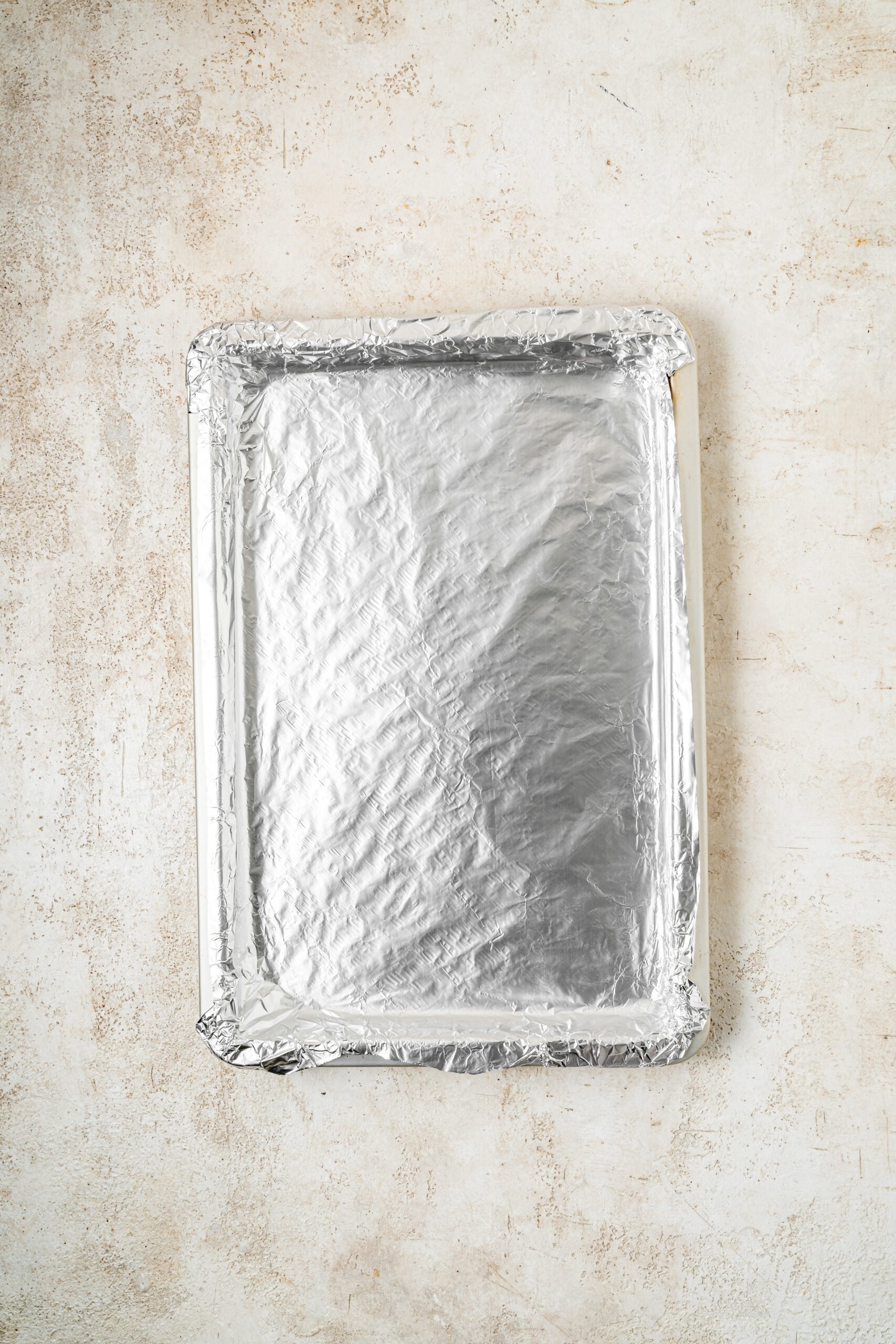
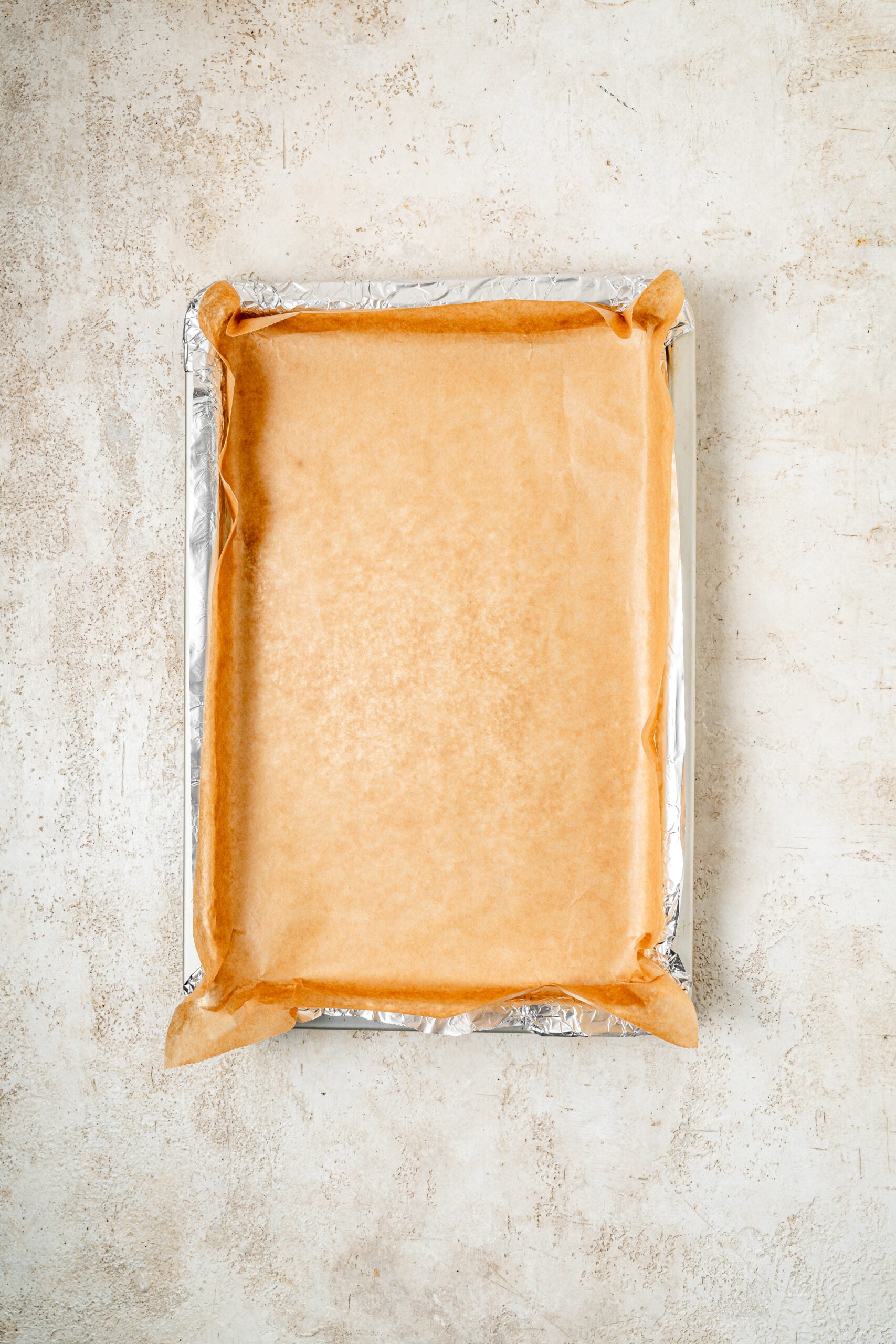
- Heat the oven to 200°C (400°F). Line a 25 x 38 cm (10 x 15 inch) rimmed baking sheet with foil, pressing it right into the corners and up the sides.
- Lay a sheet of baking paper on top of the foil. The foil holds the shape and lets you lift the slab out later; the paper is what stops the toffee welding itself to the pan.
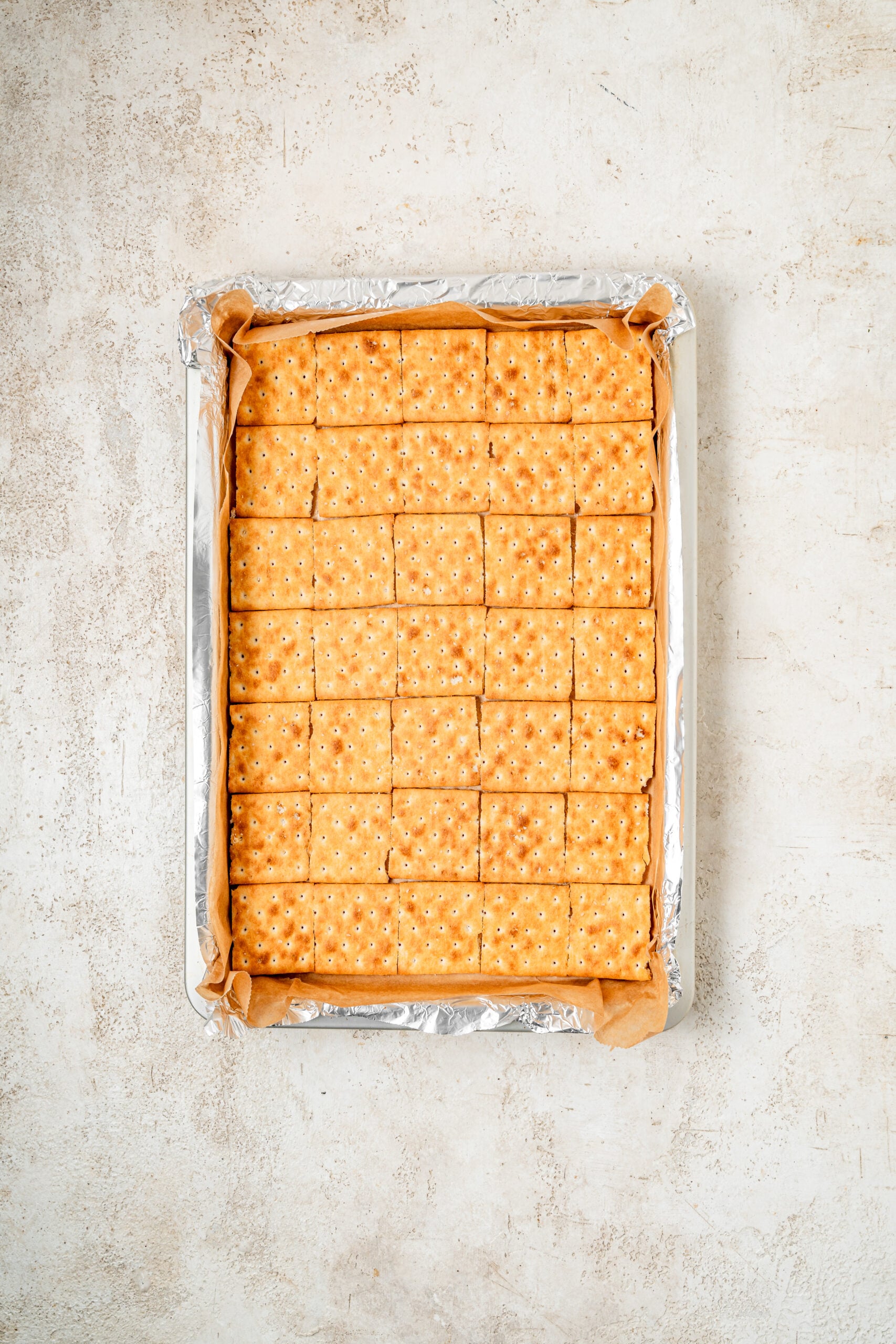
- Arrange the crackers in a single tight layer, salted side up, edges touching, trimming a few to fill the gaps at the ends. Cover the whole base or the toffee will run underneath and set there.
- Put the butter and brown sugar in a medium saucepan over medium heat.
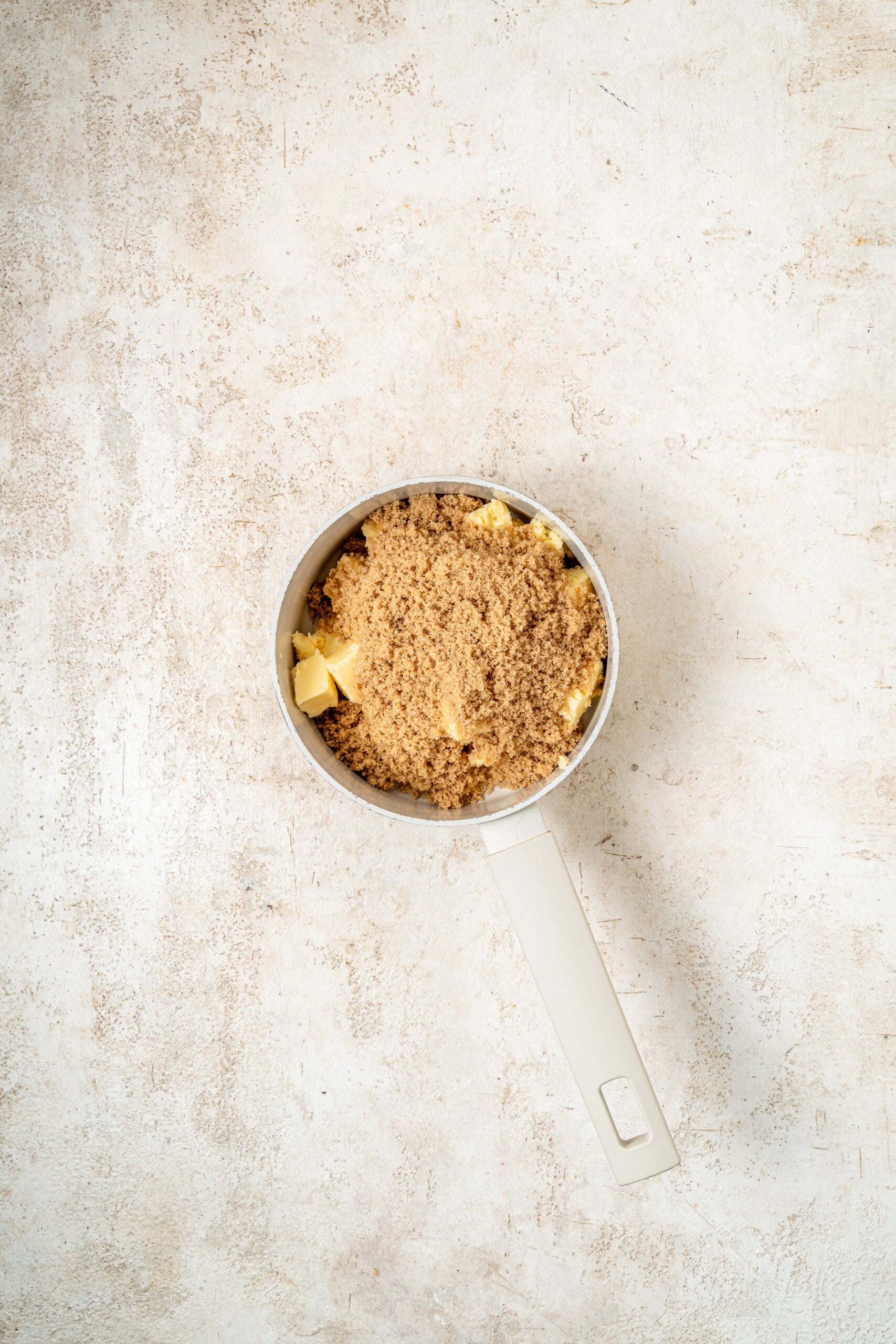
- Stir until the butter has melted and the sugar has dissolved completely. Rub a little between your fingers if you are unsure; any grittiness now will still be there at the end.
- Bring it up to a full rolling boil, stirring constantly with a heatproof spatula.
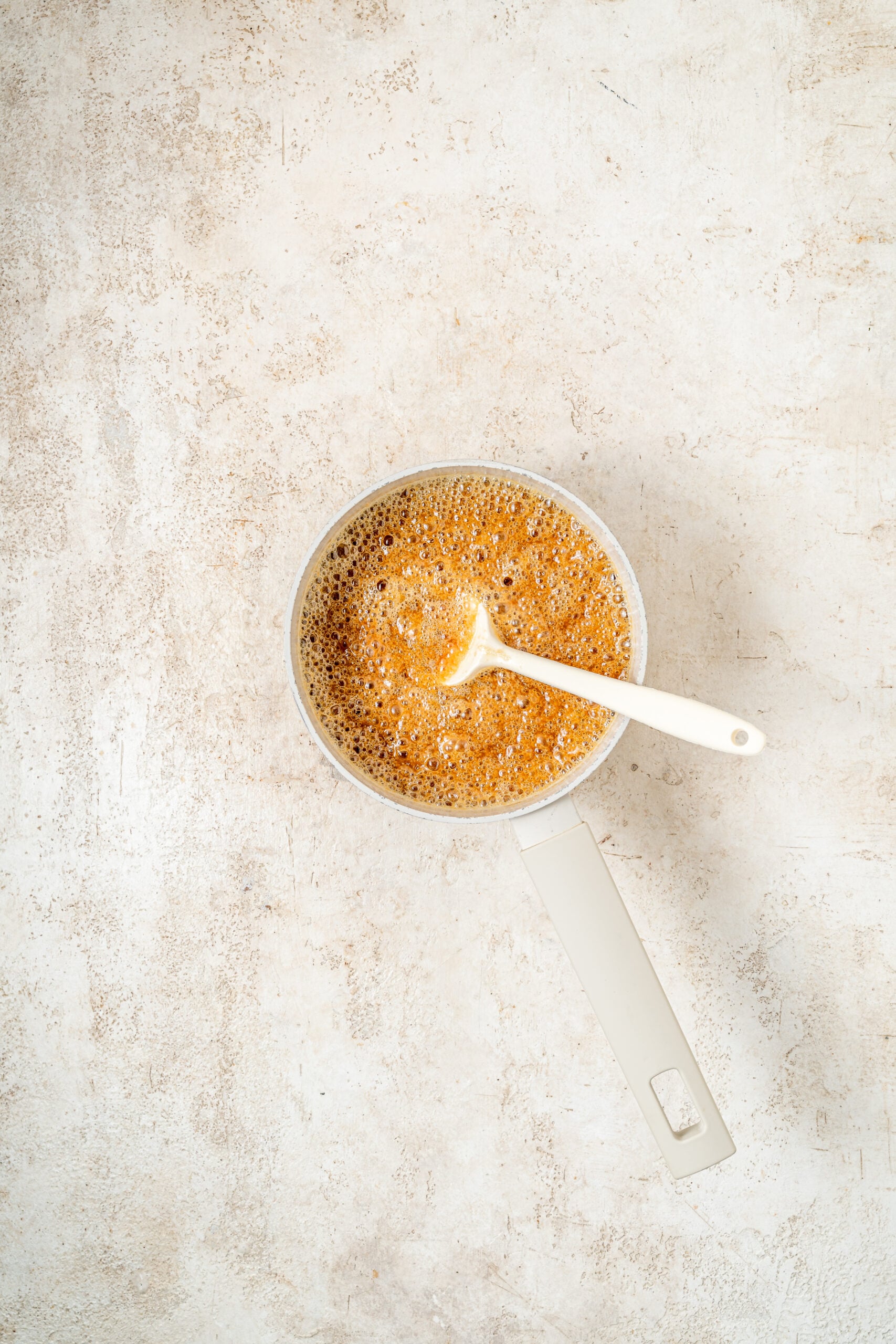
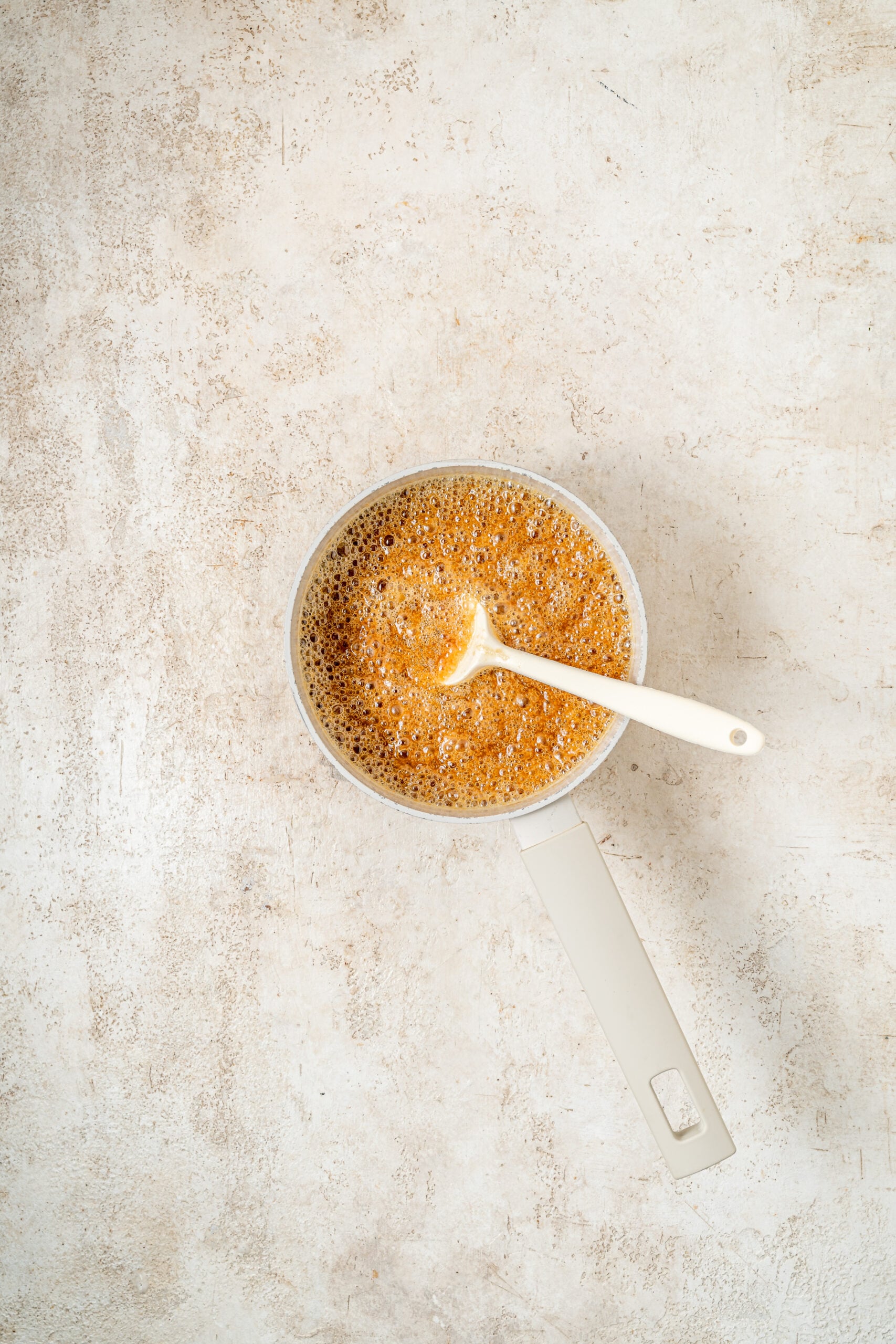
- Set a timer the moment it is properly boiling and keep it at that boil for exactly 3 minutes, stirring the whole time.
- It will thicken, darken by a shade and start to look like a smooth caramel. Keep scraping the base of the pan so nothing catches.
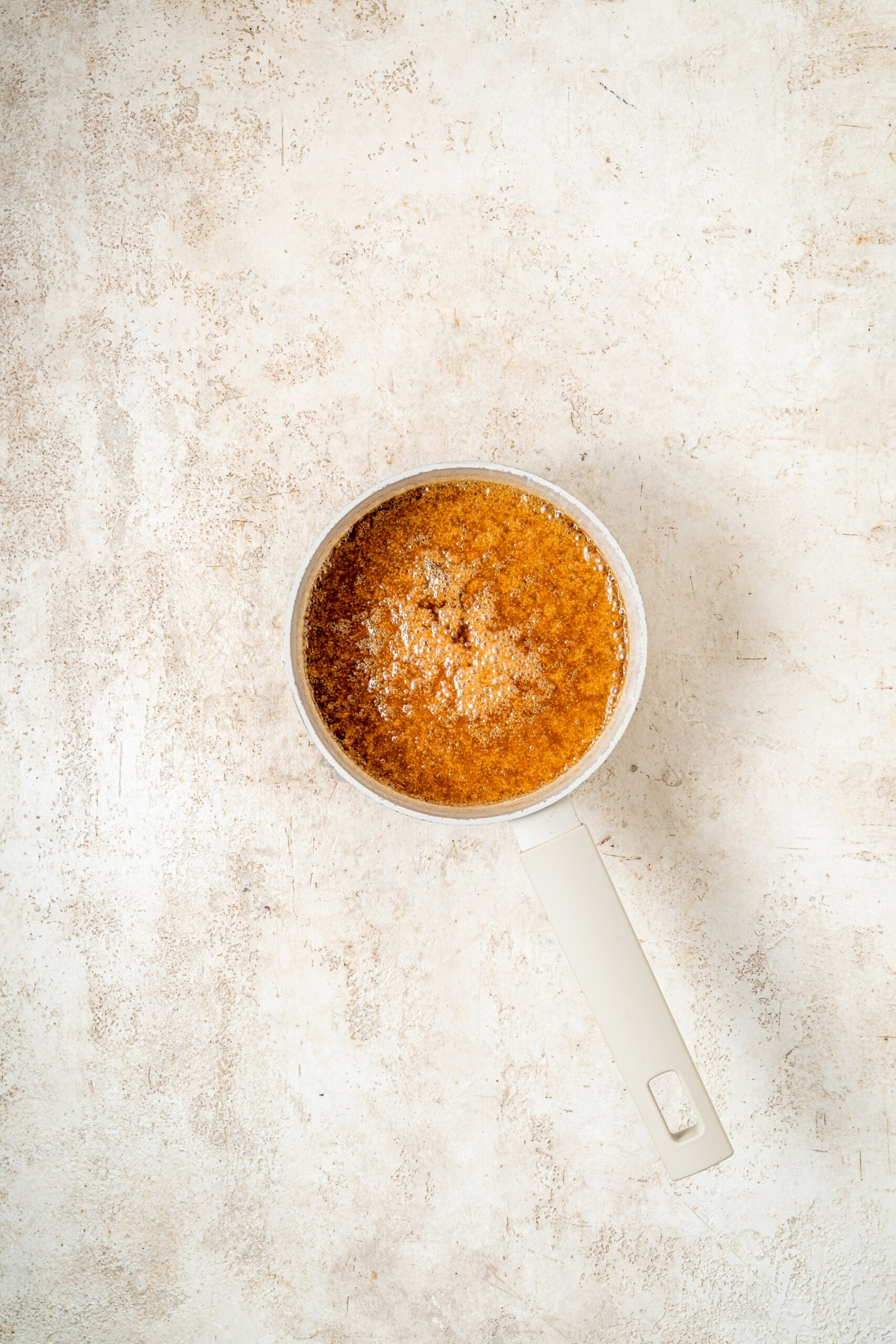
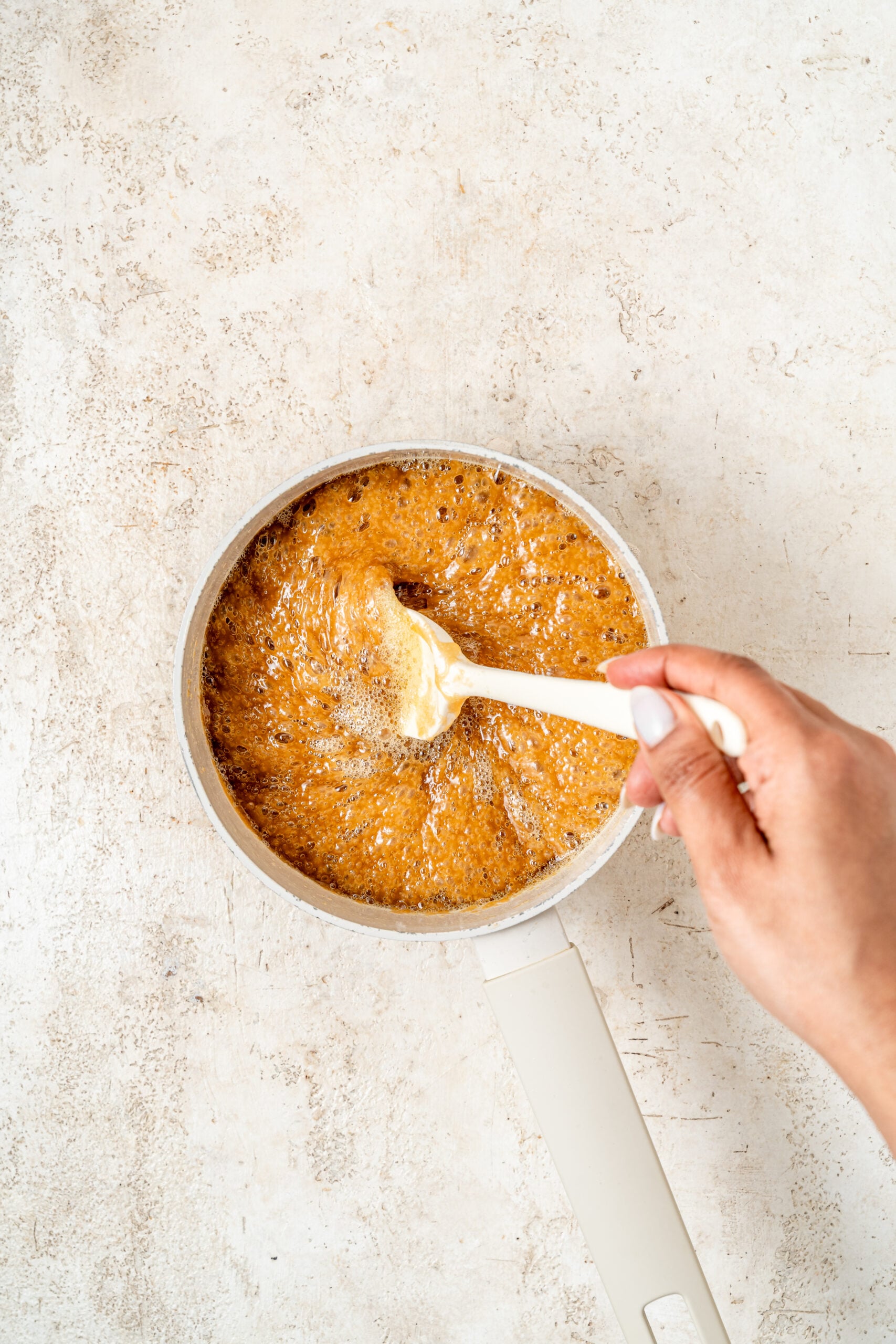
- Take the pan off the heat and stir in the vanilla and the fine salt. It will bubble up hard for a second.
- Pour the toffee straight over the crackers, starting at one end and working across in a steady line, pouring low so the crackers do not slide.
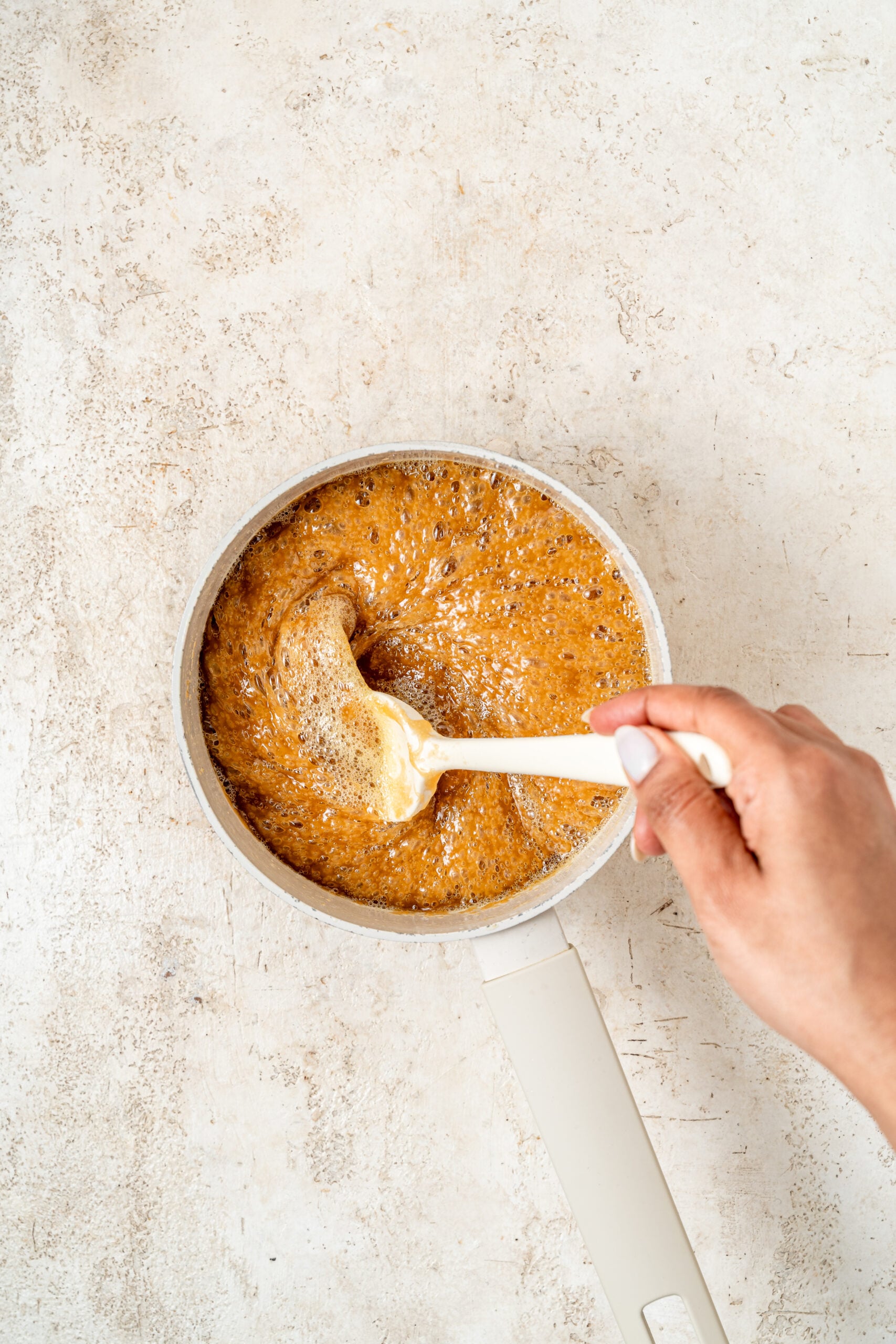
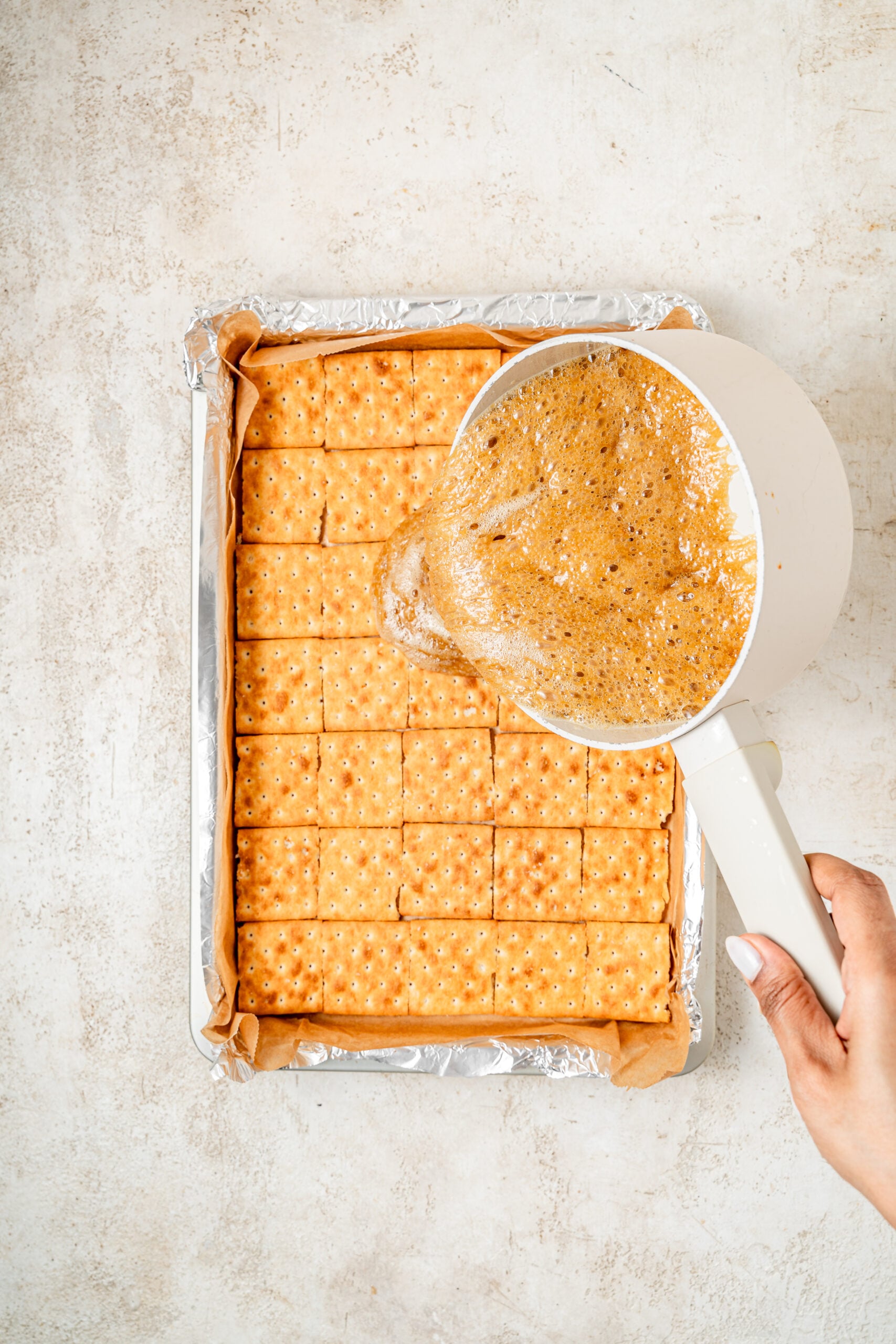
- Spread it quickly with an offset spatula so every cracker is covered. Work fast, because it starts to set within about a minute.
- Bake for 5 to 6 minutes, until the toffee is bubbling across the entire surface and looks loose and glossy. Nudge any crackers that have drifted back into line as soon as the pan comes out.
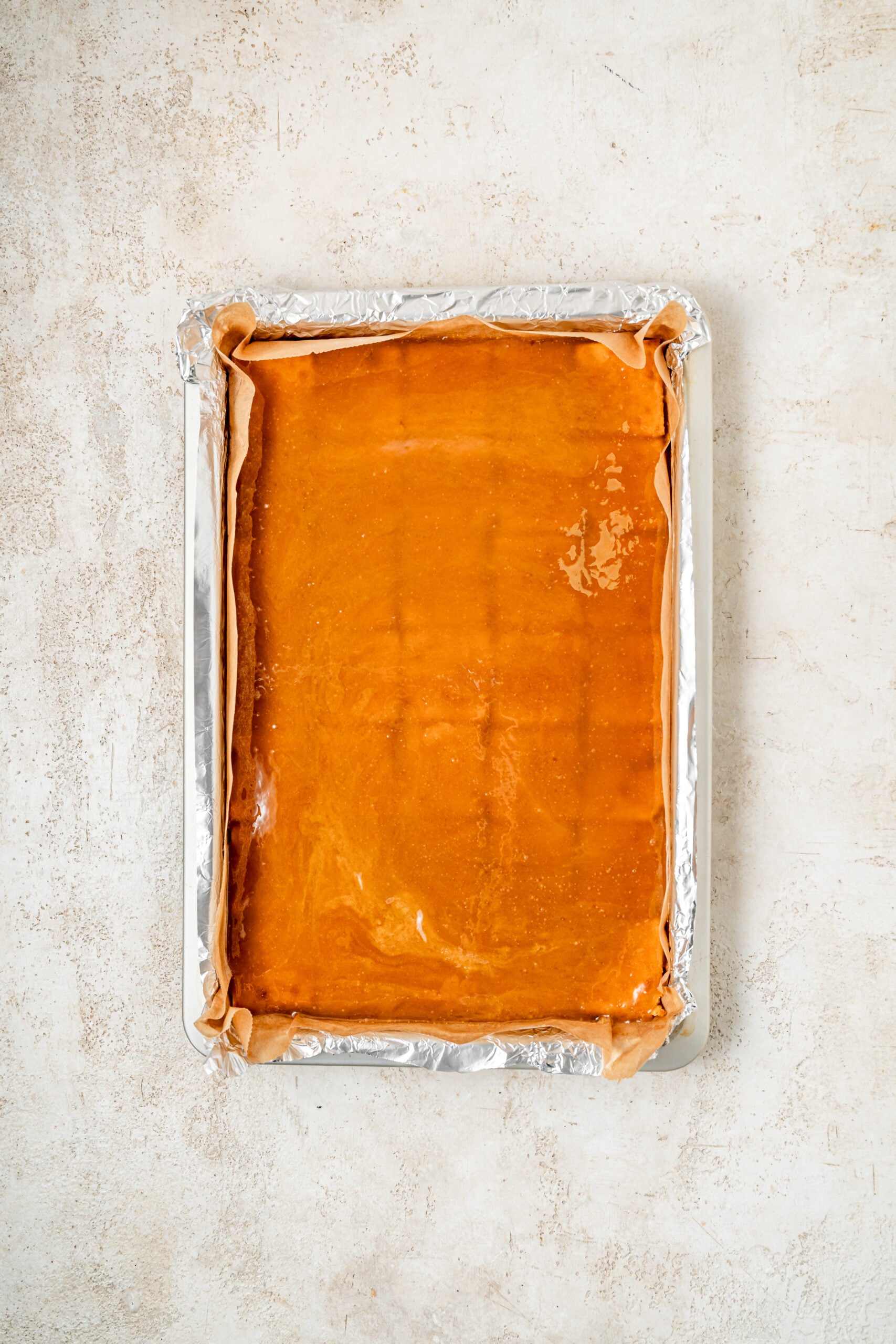
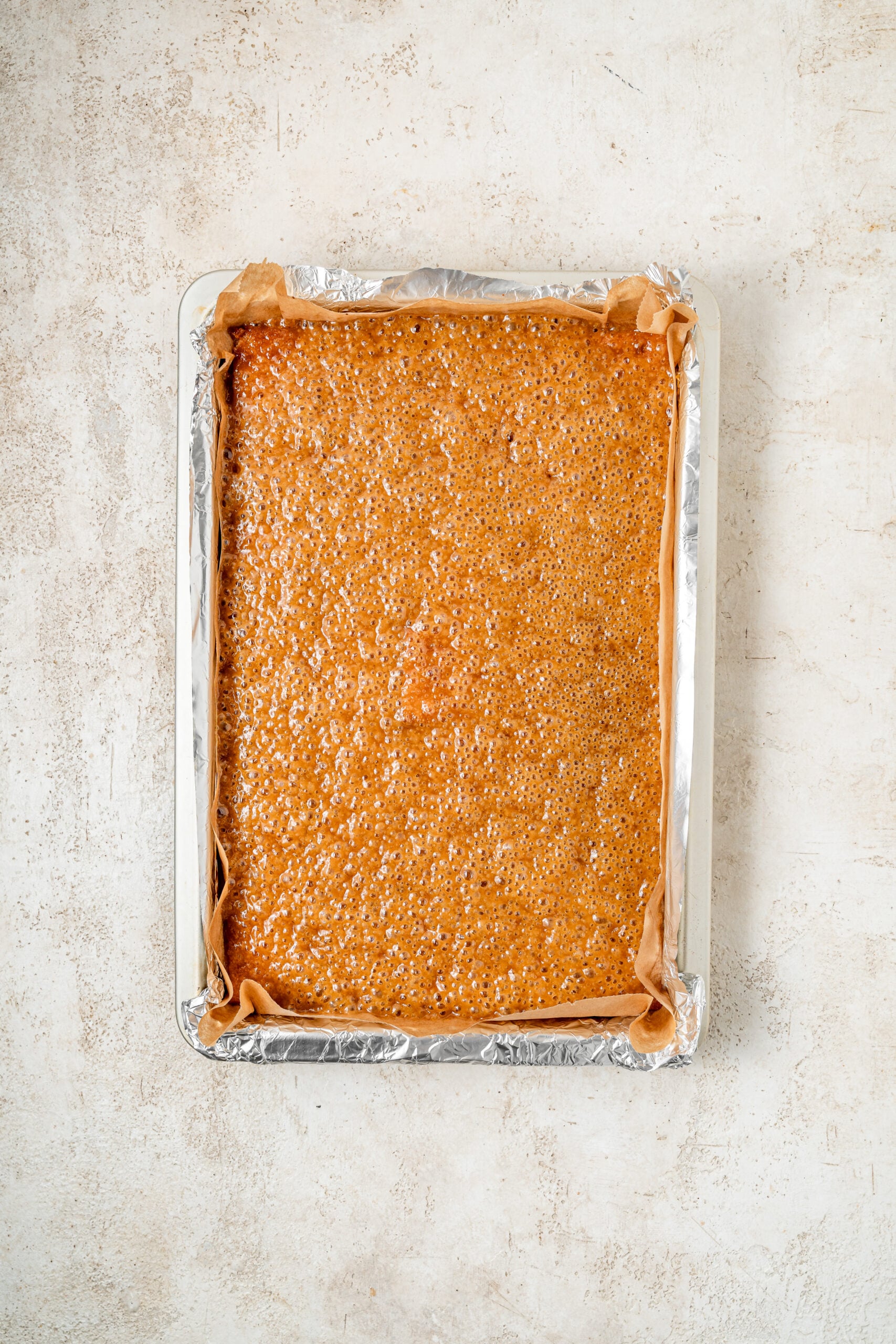
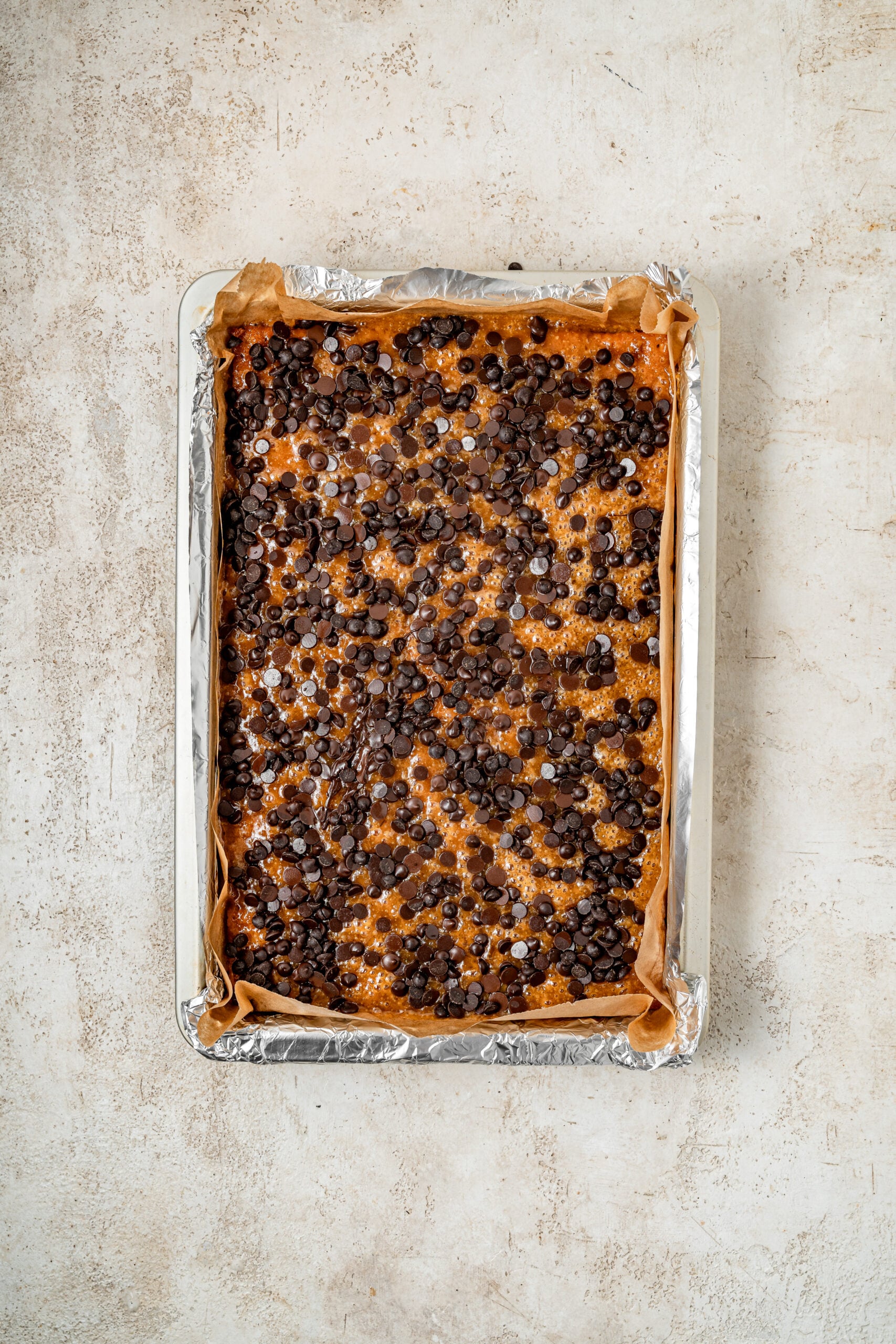
- Scatter the chocolate chips evenly over the hot toffee and leave them alone for 3 to 4 minutes, until they look soft and shiny.
- Spread the melted chocolate into an even layer with the offset spatula.
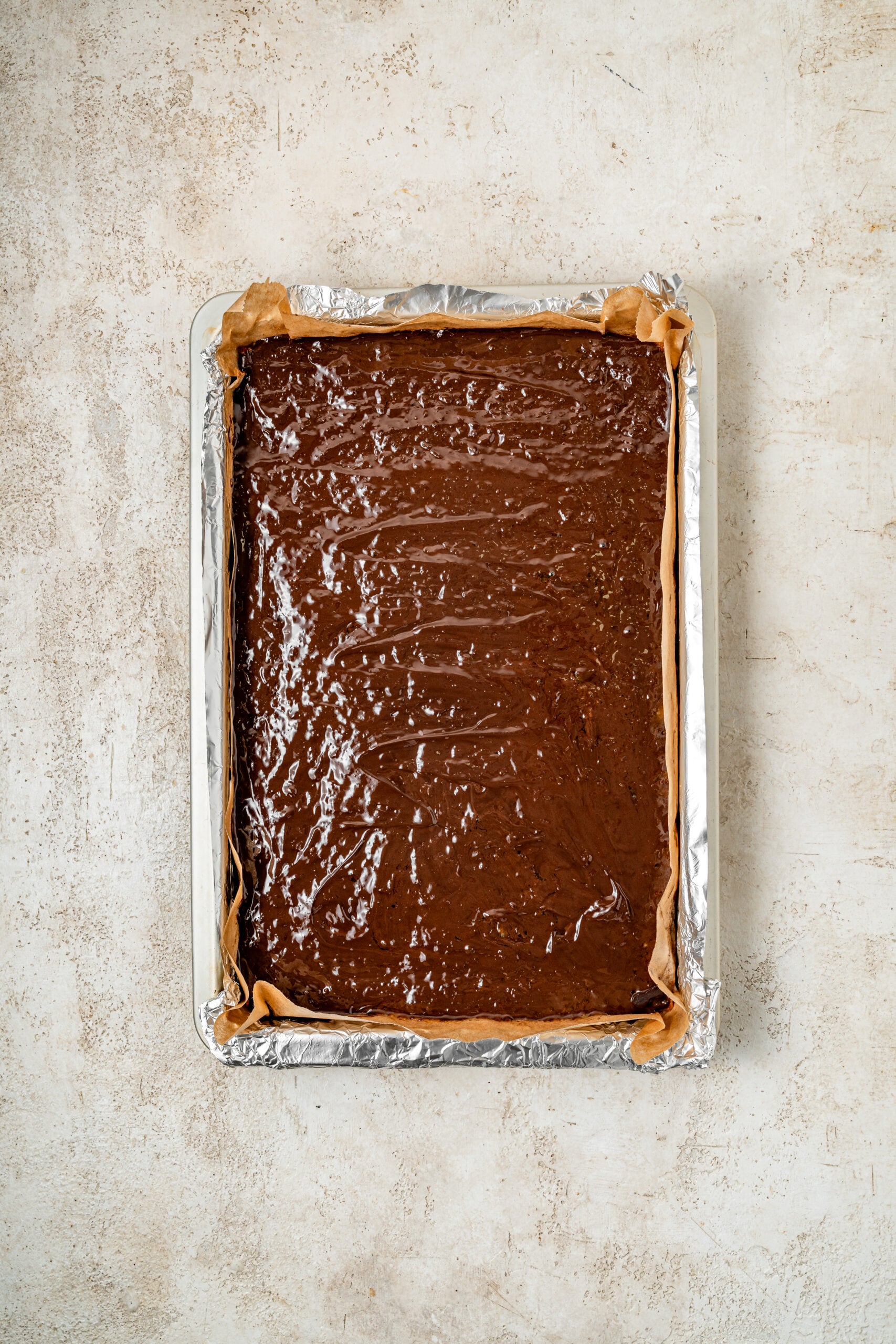
- Scatter over the chopped pecans while the chocolate is still wet, pressing them in lightly so they hold.
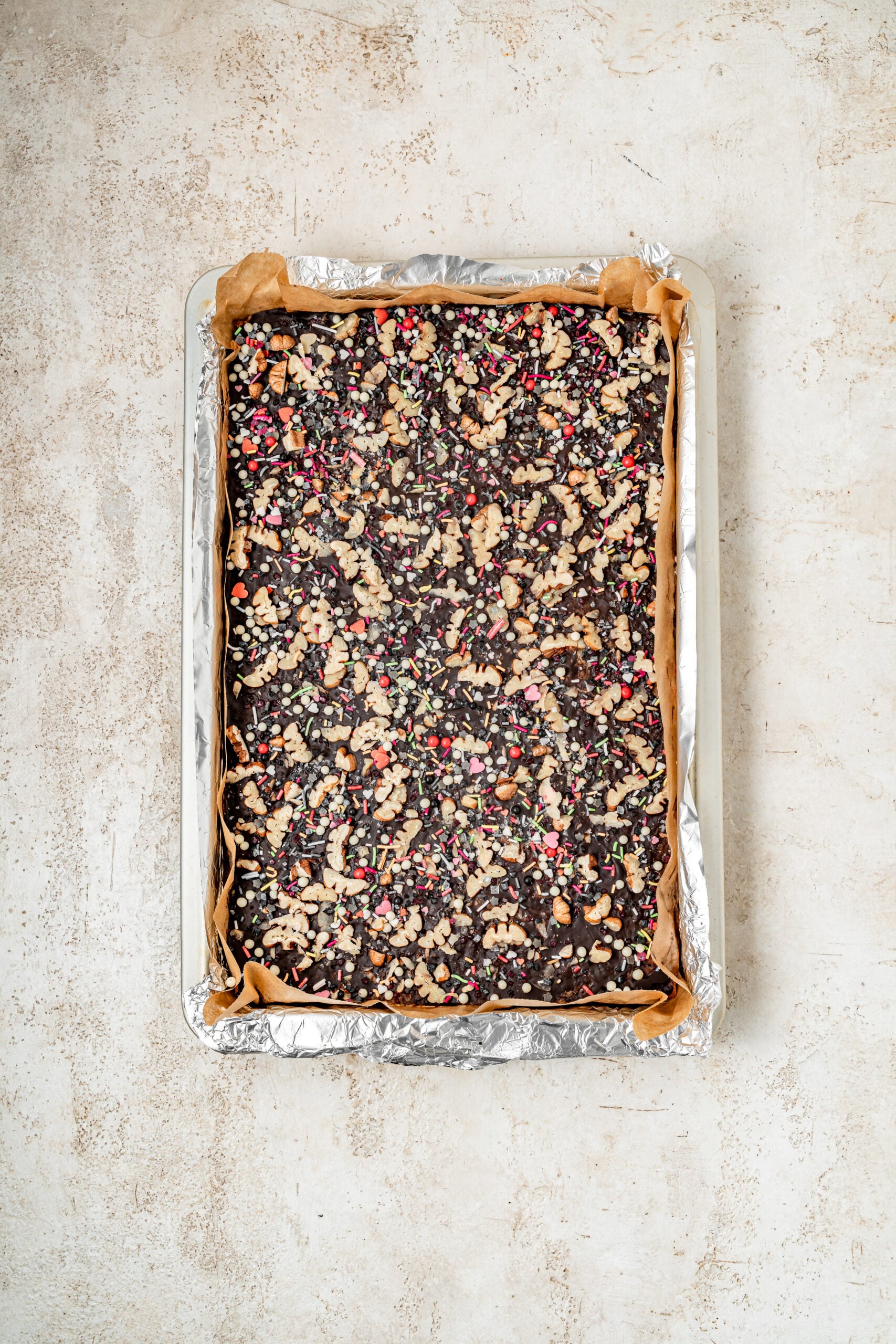
- Add the crushed candy canes, sprinkles and flaky salt. Everything has to go on before the chocolate sets or it will simply fall off later.
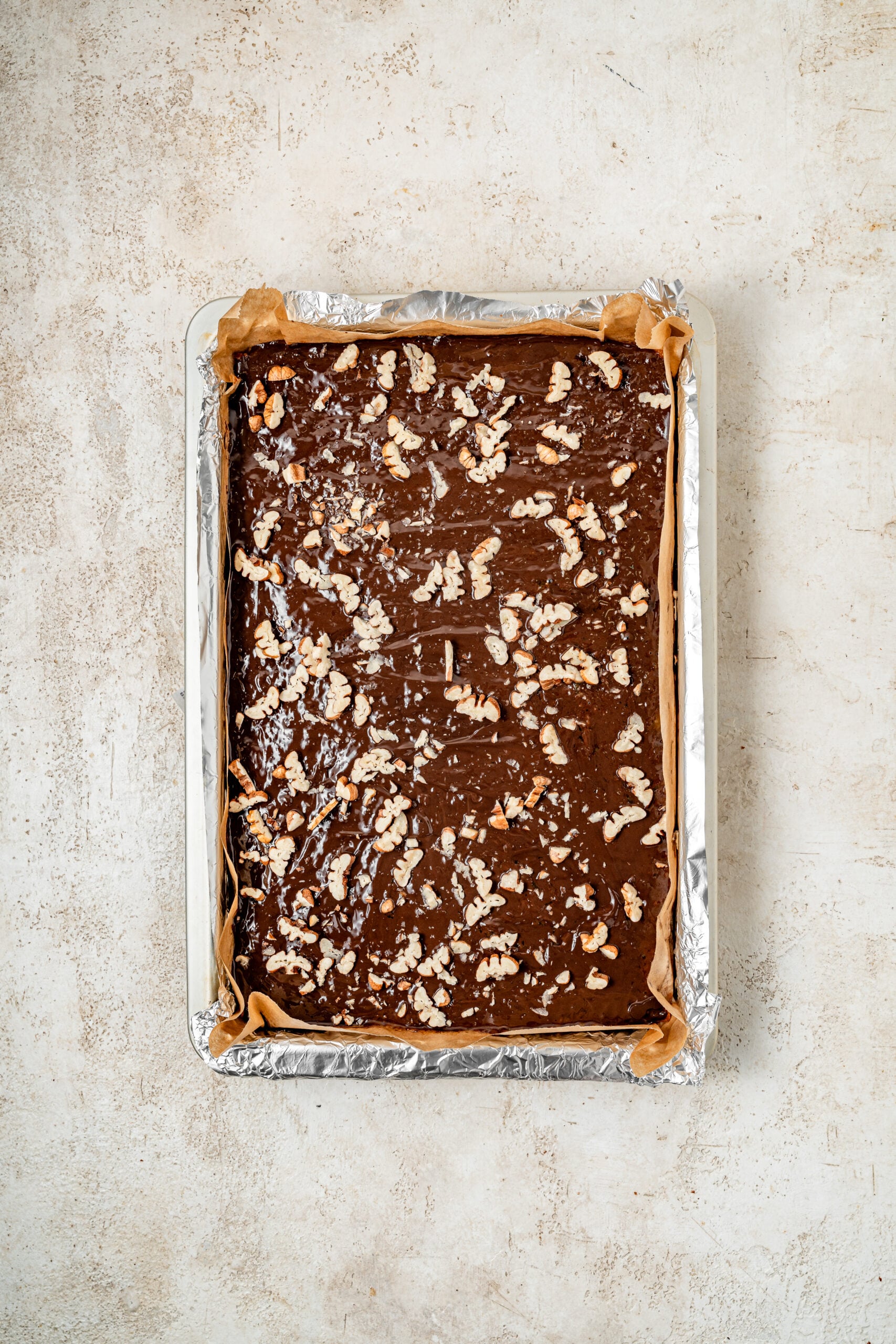
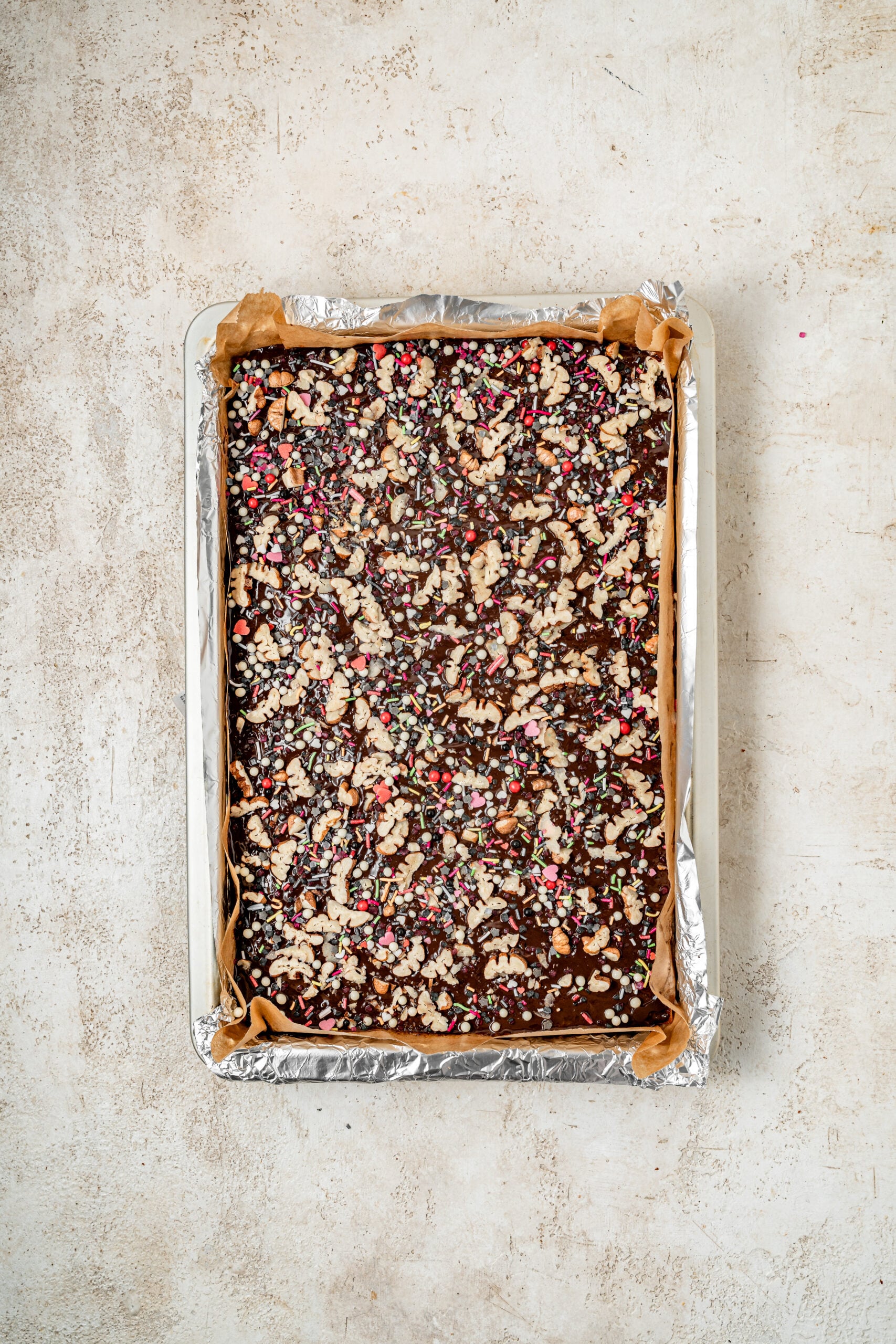
- Cool at room temperature for 30 minutes, then refrigerate for about 1 hour, until the chocolate is firm and the toffee is hard underneath.
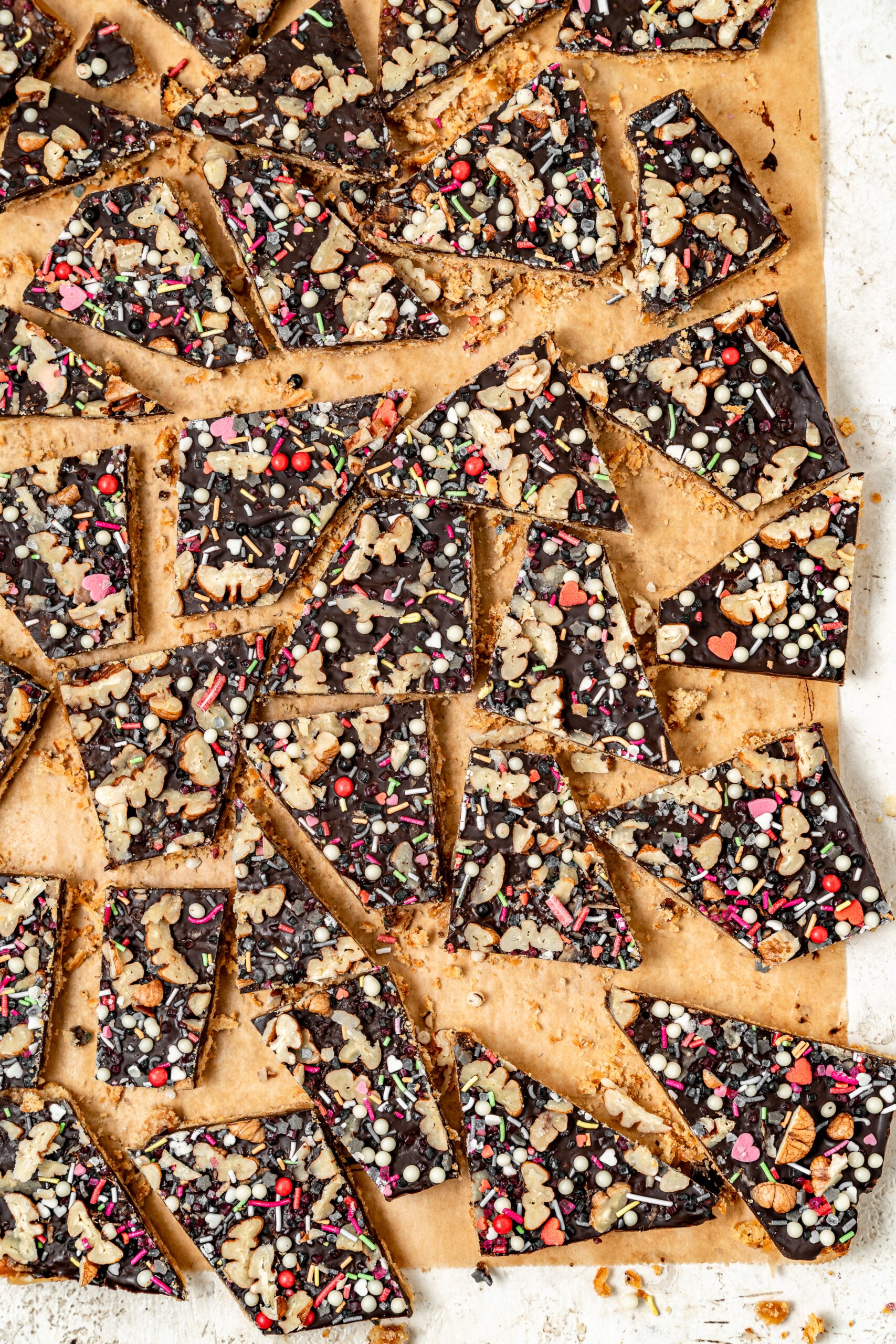
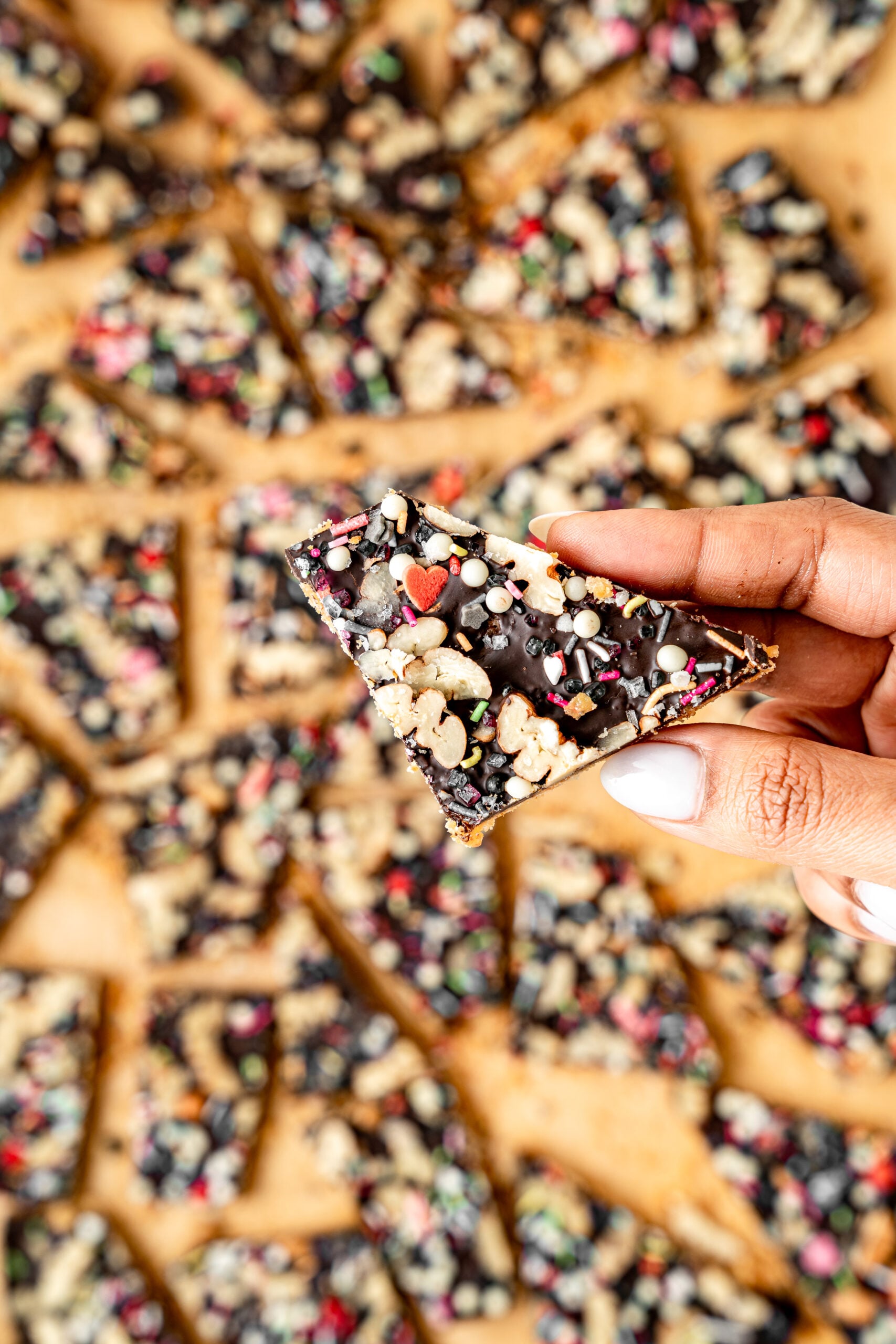
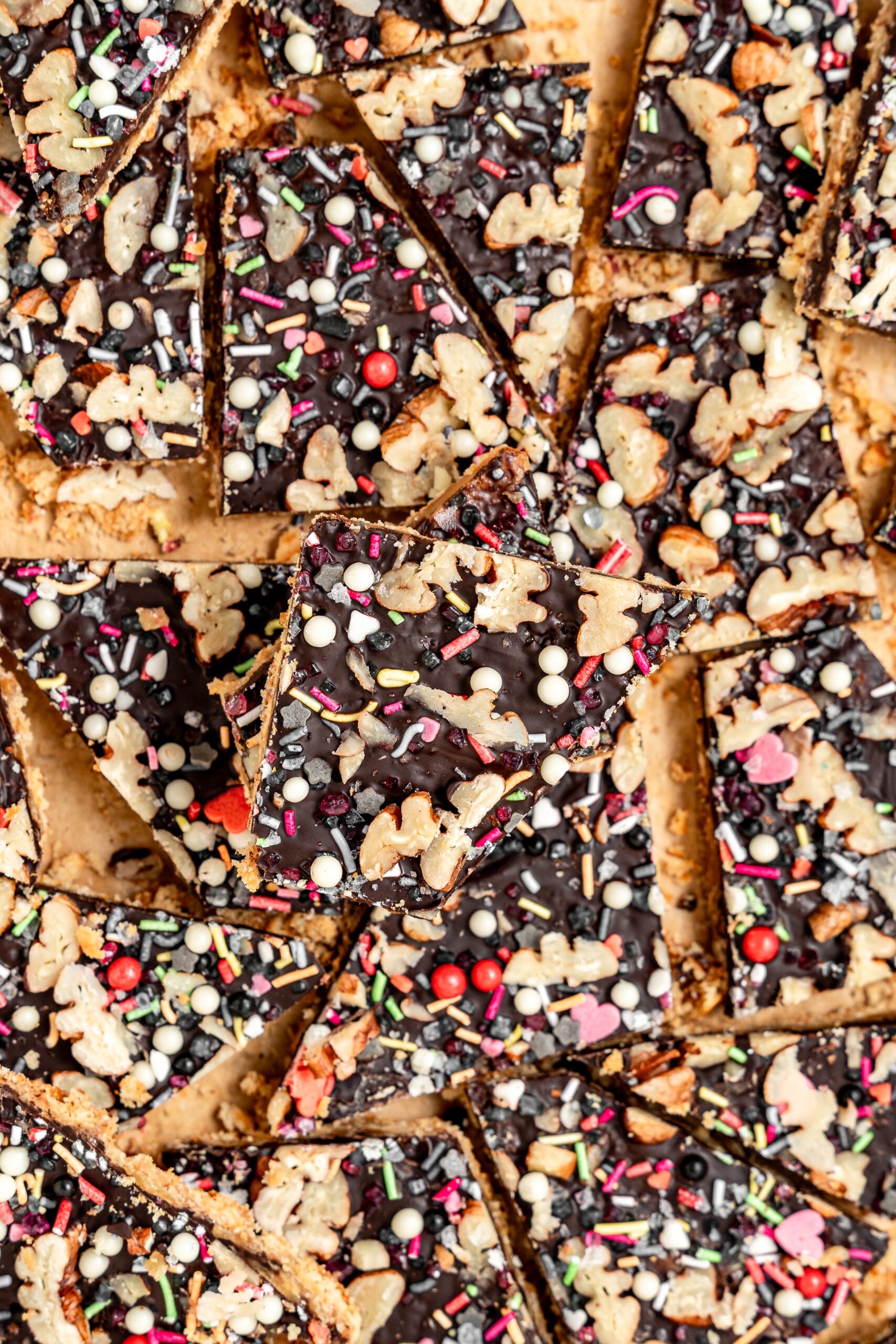
- Lift the whole slab out by the foil, peel the paper off the back and break it into rough pieces with your hands. Shards look better than squares and they pack better too.
Which cracker to use, and what changes if you swap
Saltines are the classic for a reason
Saltines are dry, thin and salty, which is exactly the set of properties this needs. The dryness lets them absorb a little toffee and go crisp rather than soft, the thinness keeps the three layers in proportion, and the salt is the only thing standing between you and a very sweet candy. If you have a choice, buy the plain salted ones rather than anything labelled cracked pepper or herb.
Buttery crackers make it richer and softer
Ritz and club crackers both work well and both change the result. They carry more fat and more sugar themselves, so the base comes out richer, softer and a shade less snappy. They also brown faster, so check the pan at 4 minutes rather than 5. Use flaky salt generously on top to make up for what you lose from the cracker.
Graham crackers and matzo
Graham crackers turn it into something close to a s’mores bark: sweeter, sandier, and very good with milk chocolate instead of semisweet. Matzo is the Passover version and behaves almost exactly like a saltine, just in bigger sheets that need breaking to fit. Either way the toffee and the timing stay the same, which is what makes this so easy to hand to someone alongside a tin of shortbread cookies.
Fixing toffee that separated, went grainy or stayed chewy
A greasy layer floating on top
The butter has split out of the emulsion, caused by heat that was too high or by stopping the stirring. Take the pan off the heat, add a tablespoon of hot water and beat it hard with the spatula for thirty seconds; it will usually come back together. Put it back on a steady medium heat and do not walk away from it again.
Grainy toffee
The sugar crystallised, which means some of it was still undissolved when the mixture reached the boil, or crystals from the side of the pan got stirred back in. Next time, hold it at a gentle heat and stir until it is completely smooth before you let it boil, and resist scraping the sides down once it is going. A grainy batch still tastes fine, it just will not snap cleanly.
It stayed chewy and will not snap
This is almost always an under boiled toffee, occasionally an under baked one. There is no way to fix a set slab, but it is still perfectly good eaten cold straight from the fridge, where the chocolate firms up and carries it. On the next batch, time the full 3 minutes from the rolling boil and give it the full 5 to 6 minutes in the oven.
Packing it for gifts, and how long it keeps
It keeps for two weeks, cold
Store it in an airtight container in the fridge with baking paper between the layers, and it will hold for about 2 weeks. It is best eaten cold or at cool room temperature, when the chocolate is firm and the toffee snaps. It also freezes for 3 months, wrapped the same way, and thaws in the fridge in a couple of hours.
Pack the tins at the last minute
This softens in a warm room and the chocolate will bloom or smudge if it sits out, so fill gift tins and cellophane bags on the day they are going out rather than days ahead. Baking paper between the layers stops the shards gluing to each other. It travels well next to sturdy things like snowball cookies, less well next to anything that needs to stay crisp on its own.
Make it ahead properly
The slab can be made up to two weeks early and left whole and unbroken in the fridge, which protects the edges, then snapped on the day. If you want a matching pair for a tin, make a batch of chocolate peppermint cookies at the same time and use the leftover crushed candy cane on both.
Make the slab early, leave it whole in the fridge, and break it into shards on the morning it goes out. Broken edges go dull and pick up fridge smells within a few days; a whole slab does not.
Frequently Asked Questions
What is Christmas crack actually called?
It has at least five names and they all describe the same thing: saltine cracker toffee, cracker candy, saltine toffee, toffee bark and Christmas crack. The Passover version made with matzo instead of saltines is usually called matzo crunch or matzo toffee. If a recipe has crackers, a boiled brown sugar toffee and a chocolate top, it is this.
Why did my toffee separate into a greasy layer?
The butter split out of the emulsion, which happens when the heat is too high or when you stop stirring. Take the pan off the heat, add a tablespoon of hot water and beat hard with a spatula for about 30 seconds, and it will usually come back together. Keep it at a steady medium heat afterwards and stir without stopping.
Which crackers are best for Christmas crack?
Plain salted saltines are the classic because they are dry, thin and salty, which balances a very sweet toffee. Ritz and club crackers make a richer, softer base and brown faster, so check the oven a minute early. Graham crackers turn it sweeter and sandier, closer to a s’mores bark.
Why did my Christmas crack stay chewy instead of snapping?
The toffee was under boiled, or occasionally under baked. The three minutes has to be timed from a full rolling boil rather than from when the butter melts, and the pan needs its full 5 to 6 minutes in the oven. A chewy batch cannot be rescued once it is set, but it is still very good eaten straight from the fridge.
How long does Christmas crack keep?
About 2 weeks in an airtight container in the fridge, with baking paper between the layers so the shards do not stick together. It freezes for 3 months and thaws in the fridge in a couple of hours. Leave the slab whole until the day you need it, because broken edges go dull and pick up fridge smells quickly.
Can I use white chocolate instead?
Yes, but give the pan a minute out of the oven before you scatter it on. White chocolate has a much lower scorch point and will turn grainy and yellow on toffee that is still at full heat. Spread it as soon as it looks soft, and a drizzle of dark chocolate over the top covers any patchiness.
Let’s Get Cooking
If you liked this recipe make sure to leave me a comment and rating down below. I’d love to know how it went! Also, don’t forget to tag me on Instagram @catherine.desserts.
Follow me on Facebook, Pinterest, YouTube, and TikTok for more of my baking creations and updates!
Christmas Crack (Saltine Cracker Toffee)
Christmas crack, also called saltine cracker toffee, is a sleeve of saltines under a three minute brown sugar toffee, baked briefly and covered in melted chocolate. Five ingredients, no special equipment, and it breaks into shards that pack beautifully into gift tins.
- Prep Time: 10 minutes
- Set Time: 1 hour 30 minutes
- Cook Time: 12 minutes
- Total Time: 1 hour 50 minutes
- Yield: About 40 pieces 1x
- Category: Candy
- Method: Baking
- Cuisine: American
Ingredients
Units
Scale
Base and toffee
- About 40 saltine crackers (one sleeve plus a few extra), enough to cover the pan in a single layer
- 225 g (1 cup, 2 sticks) unsalted butter, cut into pieces
- 200 g (1 cup, packed) dark brown sugar
- 1 teaspoon vanilla extract
- 1/4 teaspoon fine sea salt
Topping
- 300 g (2 cups) semisweet chocolate chips
- Flaky sea salt, for finishing
- Optional: 60 g (1/2 cup) chopped toasted pecans
- Optional: 2 tablespoons crushed candy canes
- Optional: Christmas sprinkles
Instructions
- Preheat the oven to 200°C (400°F). Line a 25 x 38 cm (10 x 15 inch) rimmed baking sheet with foil, pressing it into the corners and up the sides, then lay a sheet of baking paper on top of the foil. The foil holds the shape and the paper stops the toffee sticking.
- Arrange the crackers in a single tight layer, salted side up, edges touching, trimming a few to fill any gaps at the ends. They must cover the whole base or the toffee will run underneath.
- Put the butter and brown sugar in a medium saucepan over medium heat. Stir until the butter melts and the sugar dissolves, then bring to a full rolling boil, stirring constantly with a heatproof spatula and scraping the base of the pan.
- Once it reaches a full boil, set a timer and keep it boiling for exactly 3 minutes, stirring the whole time. The mixture will thicken, turn a shade darker and look like a smooth caramel. Do not stop stirring or it can separate.
- Take the pan off the heat and stir in the vanilla and salt. It will bubble up. Immediately pour the toffee over the crackers, starting at one end and working across, then spread quickly with an offset spatula to cover every cracker. Work fast, it begins to set within a minute.
- Bake for 5 to 6 minutes, until the toffee is bubbling across the whole surface. It will look loose and glossy. If a few crackers have floated out of line, nudge them back with a spatula as soon as the pan comes out.
- Scatter the chocolate chips evenly over the hot toffee and leave for 3 to 4 minutes until they look soft and shiny. Spread the melted chocolate into an even layer with the offset spatula.
- Sprinkle with flaky salt and any toppings while the chocolate is still wet, pressing nuts in lightly so they stick.
- Cool at room temperature for 30 minutes, then refrigerate for 1 hour, until the chocolate is firm and the toffee is hard.
- Lift the whole slab out by the foil, peel off the paper and break into rough pieces with your hands. Shards look better than squares.
Notes
- The three minute boil is the whole recipe. Under boil and the toffee stays chewy and soaks into the crackers instead of setting hard. Over boil and it turns dark and bitter. Time it from a full rolling boil, not from when the butter melts, and keep stirring. If you have a thermometer, you are aiming for about 120°C (250°F).
- Which cracker: saltines are the classic because the salt and the dry, open texture carry the toffee. Ritz, club crackers or graham crackers all work and give a richer, softer base. Matzo is the Passover version of the same idea.
- Chocolate: chips are easiest because they melt in place. Chopped dark chocolate at 55 to 70 per cent melts the same way and tastes better. White chocolate works but scorches if the toffee is very hot, so wait a minute before scattering it.
- Toppings that work: toasted pecans or almonds, crushed candy canes, crushed pretzels, toffee bits, flaky salt, sprinkles for a Christmas look. Add them while the chocolate is wet.
- Make ahead and storage: keeps in an airtight container in the fridge for 2 weeks, with baking paper between layers, and is best served cold or at cool room temperature. It freezes for 3 months. It softens in a warm room, so pack gift tins at the last minute.
- Troubleshooting: toffee separated into a greasy layer, it was not stirred constantly or the heat was too high. Toffee is grainy, the sugar crystallised, so stir until fully dissolved before it boils. Toffee stayed chewy, it was under boiled or under baked. Chocolate would not melt, put the pan back in the turned off oven for 1 minute.
Nutrition
- Serving Size: 1 piece