Soft and chewy mochi skin filled with a sweet banana custard, take your banana milk to the next level with these!
Some days I just want a soft little treat that feels playful, sweet, and a bit special without much fuss. This banana mochi has that soft, chewy mochi skin with a creamy banana milk custard tucked inside, so every bite feels bouncy, smooth, and comforting. I first made it after craving that sweet Korean banana milk flavour, but I wanted it in a dessert I could hold in my hand. At TuCha, I’m always testing chewy, creamy textures for drinks and desserts, and this one took a few tries to get right. A couple of batches were too sticky, and one custard was far too loose to behave. Once the filling was thick and the mochi stayed soft, it finally had that cosy banana milk feeling I was chasing. It’s simple, cute, and just a little fancy in the best way.
What is mochi?
If you aren’t familiar with mochi, mochi is a Japanese treat (wagashi) made from glutinous rice. Traditionally it is pound into a paste with water and enjoyed as it is, rolled in flavorings like roasted soybean powder or filled with fillings like red bean paste.
Mochi that has been stuffed with a filling is called daifuku. Daifuku is a name used to describe any Japanese confection made from mochi and a sweet filling.
Why make banana milk mochi?
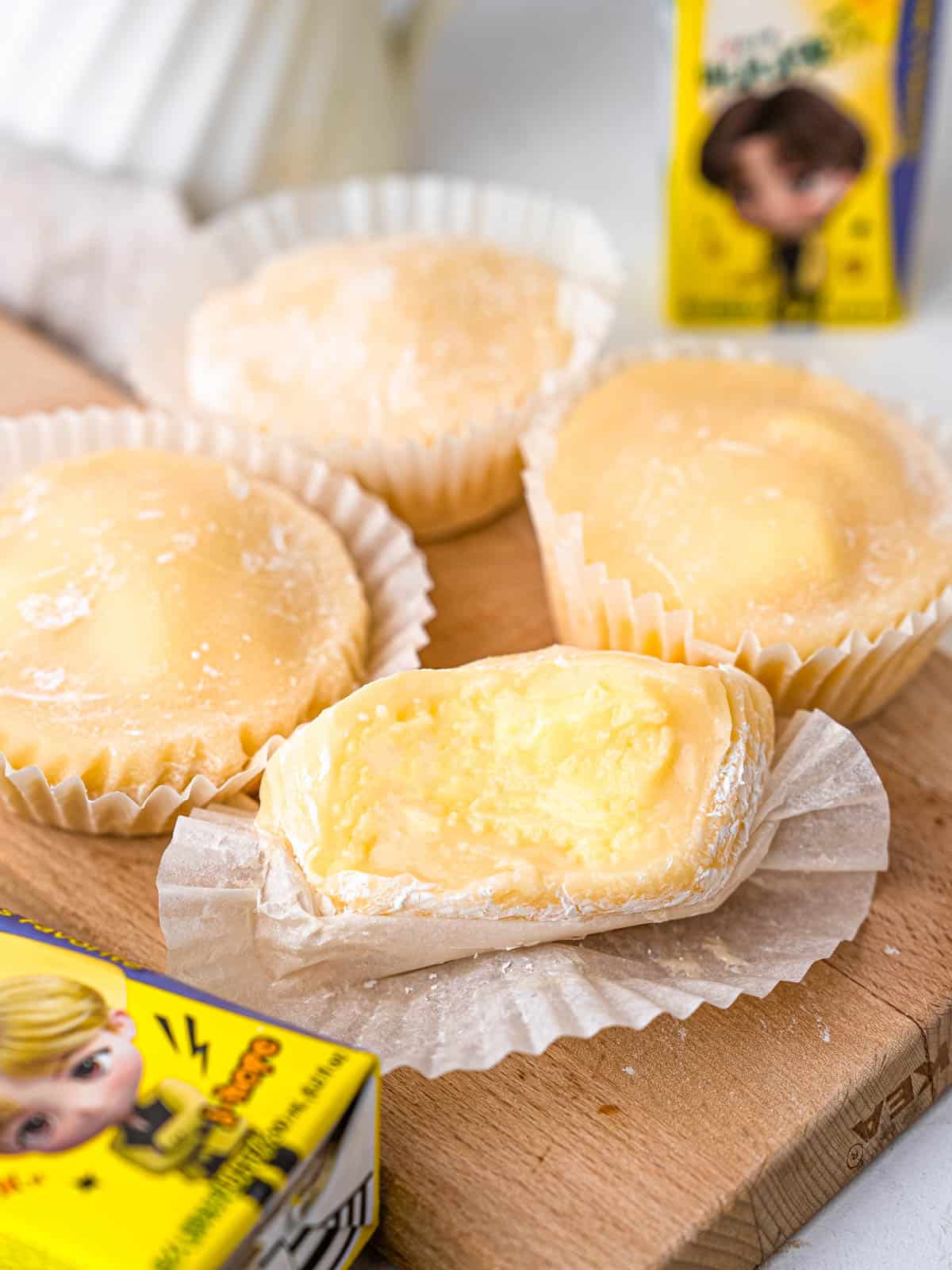
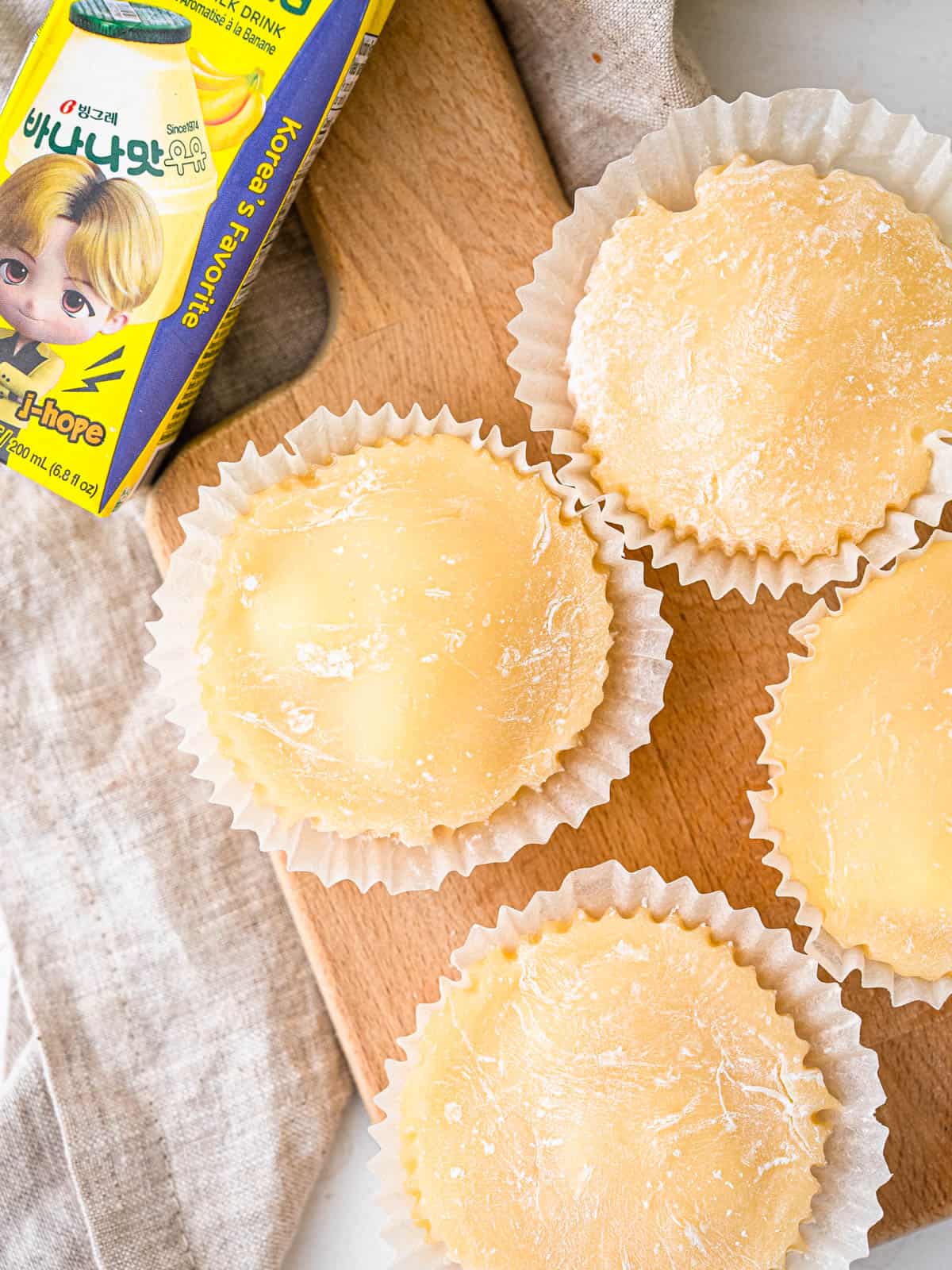
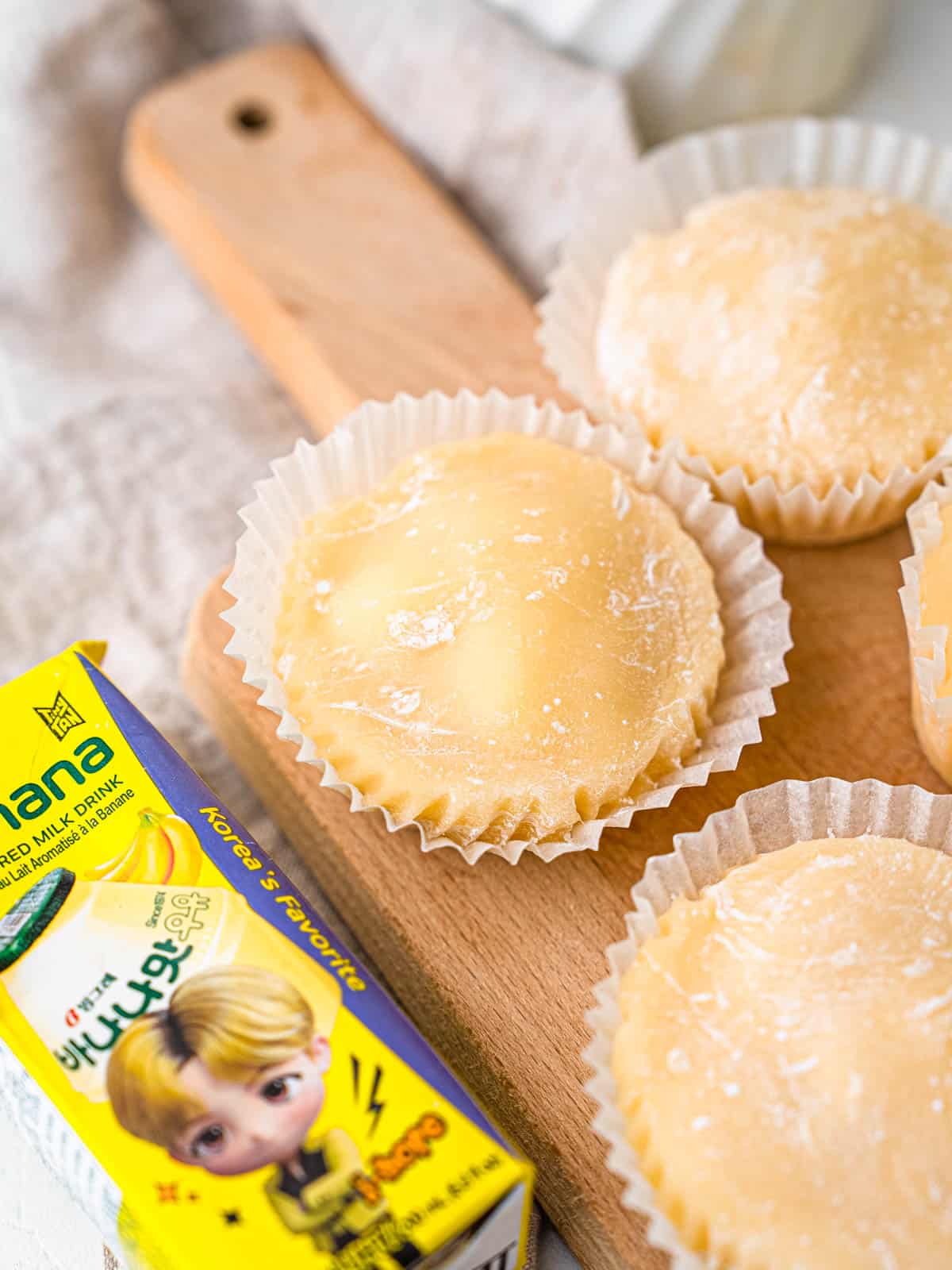
This mochi takes the classic banana milk that is known and loved in South Korea and transforms it into a stretchy treat. I used the binggare banana milk for Korea, but any banana milk will work great in this recipe.
At-a-Glance Specs – What You’ll Need Before We Start Rolling
| Yield | Prep Time | Cook Time | Difficulty | Storage |
| 8 mochi | 30 minutes | 5 minutes | Easy | Best eaten the day it is made. Store leftovers in an airtight container in the fridge for up to 2 days |
Ingredients
Banana milk mochi
- Banana milk: I used the korean binggare banana milk, but any kind of banana milk will work in this recipe.
- Cornstarch: Cornstarch acts as the thickener in the custard. It may seem like a lot but we want the filling to be super thick so it can easily wrapped in the mochi skin.
- Granulated sugar: Sugar sweetens the filling! Feel free to increase or decrease this according to your personal preference.
Mochi
- Glutinous rice flour: You can use mochiko flour, which is made from Japanese short-grain rice, aka mochigome, or Thai-style glutinous rice flour which can be found in almost all Asian grocery stores.
- Granulated sugar: Aka white sugar, is used to sweeten the mochi dough as well as give it a softer texture.
- Cornstarch: Cornstarch helps to thicken the mochi dough as well as give it more structure.
- Banana milk: The banana milk gives the dough flavor as well as moisture and a little bit of sweetness.
- Vegetable oil: Kneading vegetable oil into the dough not only makes it softer and chewier it also makes it easier to handle as it’ll be less sticky.
- Corn starch or potato starch, for dusting
Frequently Asked Questions
What Is Banana Mochi
Banana mochi is a soft and chewy mochi dessert with banana flavour. This version has banana milk in the dough and a thick banana milk custard in the centre.
It is inspired by Korean banana milk, but wrapped in Japanese-style daifuku mochi. Soft, bouncy, creamy, and a little nostalgic.
Is Banana Mochi Japanese Or Korean
Mochi is Japanese, and filled mochi is often called daifuku. This recipe uses Korean banana milk as the flavour, so I think of it as an Asian fusion dessert.
That is one of my favourite ways to create desserts. Take a flavour I love, wrap it in a texture I love, and see what happens.
Is Banana Mochi The Same As Hong Kong Banana Rolls
Not quite. This recipe is filled like daifuku, with banana custard inside soft mochi.
Hong Kong banana rolls are usually shaped as a roll and sliced. They are chewy too, but the format is different.
Is Banana Mochi The Same As Banana Butter Mochi
No. Banana butter mochi is baked and has a dense, chewy cake-like texture.
This banana mochi is soft, filled, and wrapped by hand. It is more delicate and best eaten fresh.
Can I Use Homemade Banana Milk
Yes, you can use homemade banana milk. Blend ripe banana with milk, a little sweetener, and a splash of vanilla until very smooth.
For the best texture, strain it before using. Banana bits can make the mochi less smooth.
Can I Use Banana Extract Instead Of Banana Milk
You can, but the flavour will be different. Use plain milk with a small amount of banana extract, then taste before adding more.
Banana extract can get strong very fast. A tiny bit is cute, too much is banana lolly territory.
Can I Use Real Banana Inside The Mochi
Yes, you can add a small piece of ripe banana in the centre with the custard. Use firm ripe banana so it holds its shape.
Eat it soon after making. Fresh banana browns and releases moisture, so it is not the best make-ahead option.
Can I Use Real Banana In The Dough
You can test it, but it changes the liquid balance. Fresh banana puree adds moisture and can make the dough softer or harder to control.
For the most reliable result, use banana milk in the dough. Add fresh banana in the centre if you want real fruit.
Can I Make Banana Mochi Ahead Of Time
You can make the banana custard ahead and keep it chilled. The mochi dough is best made fresh because it has the softest texture on day one.
Assemble the mochi close to serving if you can. Fresh mochi is always the bounciest.
Can I Freeze Banana Mochi
I do not recommend freezing filled banana mochi. The custard can change texture, and the mochi may become firm or wet after thawing.
For the best texture, make it fresh. Mochi is not a freezer queen.
How Long Does Banana Mochi Last
Banana mochi tastes best on the day it is made. Store leftovers in an airtight container in the fridge for up to 2 days.
It will firm up over time. Let it sit for a few minutes before eating so it softens a little.
Why Is My Banana Custard Runny
The custard probably was not cooked long enough. It needs to be thick enough to scoop and hold its shape.
Cook it a little longer over medium heat while whisking. Once it looks like thick custard, cool it fully before wrapping.
Why Is My Mochi Tearing
The mochi may be too thin, too cold, or overfilled. Keep the centre thicker and use a smaller amount of filling.
Also make sure the mochi is still soft and warm enough to stretch. Cold mochi gets stubborn.
Why Is My Mochi Leaking
The filling may be too runny, too warm, or too much. The seam may also not be sealed tightly enough.
Use cooled thick filling, pinch the seam well, and roll the mochi seam-side down. A tidy seal saves the day.
Can I Steam The Mochi Instead Of Microwaving
Yes, you can steam the mochi mixture instead of microwaving it. Steam until the dough looks translucent, sticky, and cooked through.
Cover it well so water does not drip into the dough. Steaming takes longer, but it works.
Is Banana Mochi Gluten-Free
Mochi made with glutinous rice flour is naturally gluten-free, even though the word glutinous sounds confusing. It means sticky, not gluten.
Still, check your banana milk, starch, and other packaged ingredients to make sure they are gluten-free.
Is Banana Mochi Vegan
It can be vegan if you use plant-based banana milk and check your sugar and other ingredients. The texture may vary depending on the milk.
I’d use a creamy plant milk for the best result. Thin milk can make the custard and dough feel weaker.
Can I Use Regular Rice Flour
No, regular rice flour will not give the same chewy mochi texture. You need glutinous rice flour, also called sweet rice flour.
This is the chewy magic ingredient. Regular rice flour is not invited to this mochi party.
Can I Use Mochiko
Yes, mochiko works well for mochi. Thai-style glutinous rice flour also works.
The texture may be a little different between brands, but both are good options.
What Is The Best Starch For Dusting Mochi
Potato starch gives a light, clean finish. Cornstarch works too and is easy to find.
You can also use kinako for flavour. Just brush off extra powder before serving.
Can I Make Mini Banana Mochi
Yes, you can make smaller mochi pieces. Use less dough and less filling for each one.
Mini mochi are cute for parties, but they take more time to wrap. Tiny dessert, bigger patience.
Can I Add Whipped Cream
You can add a small amount, but it makes the filling softer. If using whipped cream, keep the mochi chilled and serve soon.
For a cleaner result, use thick banana custard as the main filling and add only a little cream.
Can I Make Banana Mochi Less Sweet
Yes, you can reduce the sugar in the custard a little. I would keep some sugar in the mochi dough because it helps the texture stay soft.
You can also add a pinch of salt to make the sweetness feel more balanced.
Can I Use Chocolate Milk Instead Of Banana Milk
Yes, chocolate milk can work, but the banana flavour will be softer. It becomes more of a chocolate banana mochi.
If you still want strong banana flavour, add a little banana extract or banana custard in the centre.
Can I Use Coconut Milk
Yes, thick coconut milk can work. It gives the mochi a creamy tropical flavour.
Avoid watery coconut milk because it can make the dough or filling too loose.
Optional – My Favourite Extras That Add a Little Magic
- Fresh banana slices
Add a small piece of ripe banana with the custard if serving right away. Fresh banana brings lovely flavour, but it browns and adds moisture. - Banana extract
Use a tiny drop if your banana milk tastes mild. Add it carefully, because banana extract can go from cute to lolly-shop very fast. - Vanilla extract
Vanilla softens the banana flavour and makes the custard taste rounder. It is a quiet little helper. - Pinch of salt
Salt makes the banana flavour taste cleaner. It should not taste salty, just more balanced. - Whipped cream
A small amount of whipped cream can make the filling lighter. Use this only if you plan to serve the mochi soon. - Chocolate spread
Banana and chocolate are classic together. Add a small spoon in the centre so the chocolate does not take over. - Biscoff spread
Biscoff adds a caramel spice flavour. It makes the mochi taste a little like banoffee wrapped in soft chewy dough. - Kinako
Kinako gives a warm, nutty finish on the outside. I love it when I want the mochi to feel a little more classic. - Toasted coconut
Toasted coconut gives a light crunch and tropical flavour. It works beautifully with banana milk. - Matcha powder
A little matcha dusting adds gentle bitterness. It helps balance the sweet banana custard.
Substitutions – Smart Ingredient Swaps That Still Taste Amazing
- Mochiko instead of Thai glutinous rice flour
Mochiko works well for banana mochi. The texture may feel slightly different, but it still gives that soft chew. - Thai glutinous rice flour instead of mochiko
Thai glutinous rice flour is easy to find in many Asian grocery stores. It works well for this style of microwave mochi. - Potato starch instead of cornstarch for dusting
Potato starch gives a lighter finish. Cornstarch is easier to find, but it can taste powdery if used too heavily. - Plant-based banana milk
Use plant-based banana milk for a dairy-free version. Choose a creamy one so the filling and dough still feel soft. - Plain milk with banana extract
If you cannot find banana milk, use plain milk with a very small amount of banana extract. Taste first before adding more. - Homemade banana milk
Blend ripe banana with milk, a little sweetener, and vanilla until smooth. Strain it before using so the mochi dough stays silky. - Strawberry milk
Strawberry milk gives a fruity version. It changes the flavour, but the same method still works. - Chocolate milk
Chocolate milk makes a soft chocolate banana mochi. It is less banana-forward, but very fun. - Coconut milk
Use thicker coconut milk for a creamy tropical version. Avoid watery coconut milk because it can make the custard loose. - Brown sugar
Brown sugar adds a warmer flavour. Use it in the custard if you want a soft caramel note.
Troubleshooting – Quick Fixes I’ve Learned from My Bakery Kitchen
| Problem | Why It Happens | Quick Fix |
| Banana custard is runny | It was not cooked long enough | Cook until thick and scoopable, then cool fully |
| Mochi tears while wrapping | The dough is too thin or the filling is too much | Keep the centre thicker and use less filling |
| Mochi leaks | The filling is warm, loose, or not sealed well | Cool the filling and pinch the seam tightly |
| Dough tastes floury | The mochi is not fully cooked | Microwave in short bursts until thick and semi-translucent |
| Outside tastes powdery | Too much starch was left on the mochi | Dust lightly and brush off the extra before serving |
Comparison – How This Recipe Stacks Up Against Other Desserts
| Dessert | Texture | Best For |
| Banana Mochi | Soft chewy skin with creamy banana custard | Banana milk lovers and filled mochi fans |
| Hong Kong Banana Mochi Rolls | Chewy steamed mochi rolled and sliced | Banana roll fans who want a no-filling style |
| Banana Butter Mochi | Baked, dense, chewy cake-style mochi | Slice-and-share dessert trays |
Tips – My Personal Tricks for a Professional-Looking Result
Cook The Custard Until It Holds A Mound
The banana milk filling should sit proudly on a spoon. If it slides off like soup, keep cooking.
At TuCha, I always ask if a filling can survive being wrapped, moved, and bitten into. If it is loose in the bowl, it will try to escape inside the mochi.
Cool The Filling All The Way Down
Warm custard makes the mochi soft and slippery. It can also make the seam harder to close.
This is one of those patience lessons I learnt during my Zumbo’s days. Simple desserts still need good timing.
Chill The Filling Briefly If It Feels Too Soft
If the custard is thick but still a little wobbly, chill it for a short time before wrapping. Cold filling is easier to scoop and seal.
Do not freeze it solid. You want soft custard, not a banana brick.
Keep The Centre Slightly Thicker
When flattening each piece of mochi, keep the centre a bit thicker than the edges. The centre holds the custard, so it needs more strength.
The edges can be thinner because they need to stretch and seal. Think of it like a tiny chewy dumpling with dessert energy.
Start With Less Filling For The First Few Pieces
Use a smaller scoop for your first few mochi. Once your hands get the rhythm, add a little more.
Mochi can be cheeky at first. It stretches, sticks, and acts like it has weekend plans, but it gets easier.
Seal The Seam With Small Pinches
Bring the edges together and pinch in small sections. This gives you a tighter seal than one big squeeze.
Place the mochi seam-side down after rolling. It helps hide the join and keeps the filling tucked in.
Use A Light Hand With Dusting Starch
Dusting starch is there to help, not to coat the mochi like snow. Use just enough to stop sticking.
Before serving, brush off any extra. The outside should feel soft, not chalky.
Let The Cooked Mochi Cool Before Shaping
Hot mochi is extra sticky and hard to control. Let it cool until it is warm but safe to touch.
Do not let it go fully cold either. Cold mochi is less stretchy and more likely to tear.
Use Oiled Gloves For Cleaner Wrapping
Gloves make the process neater, and a little oil helps the dough glide. This is the easiest way to keep your hands out of sticky mochi drama.
At TuCha, texture is everything. If the dough feels smooth in your hands, it usually eats better too.
Use Homemade Banana Milk Only If It Is Smooth
Homemade banana milk is lovely, but banana bits can make the dough uneven. Blend it very well and strain it before using.
This keeps the mochi skin smooth and soft. Lumpy banana milk is not invited to the party.
Variations – Fun Twists and Flavours Inspired by My TuCha Dessert Experiments
Fresh Banana Daifuku
Add a small slice of ripe banana in the centre with the custard. It gives you a fresh fruit bite inside the soft mochi.
Use firm ripe banana and serve it soon. Fresh banana can brown and release moisture, so this one is a now-not-later treat.
Chocolate Banana Mochi
Add a small spoon of chocolate spread or ganache with the banana custard. Banana and chocolate are classic for a reason.
Keep the chocolate layer small so it does not hide the banana milk flavour. We want dessert harmony, not chocolate takeover.
Strawberry Banana Mochi
Use strawberry milk in the dough or add tiny strawberry pieces to the filling. Strawberry gives the mochi a fresh, fruity lift.
The pink and pale yellow look so sweet together. It is the kind of mochi I would cut open slowly for a video.
Banana Biscoff Mochi
Add a tiny spoon of Biscoff spread in the centre. The caramel spice flavour works beautifully with banana.
This one tastes like banoffee went on holiday and came back wrapped in mochi. Soft, chewy, and very snacky.
Coconut Banana Mochi
Use coconut milk or coconut-flavoured banana milk for a tropical twist. You can also roll the finished mochi in toasted coconut.
It gives soft banana dessert vibes with a little beachy edge. Very creamy, very cosy.
Kinako Banana Mochi
Roll the finished mochi in kinako instead of plain starch. Kinako has a warm roasted soybean flavour that makes banana taste nutty and soft.
It is simple, but it feels classic. Soft mochi, creamy banana, and a toasted finish are such a good bite.
Matcha Banana Mochi
Dust the outside with matcha or add a thin layer of matcha cream inside. Matcha brings a gentle bitter note that balances the banana custard.
These Asian dessert flavours are the kind I grew up loving. They still inspire so many of my TuCha tests.
Peanut Butter Banana Mochi
Add a small amount of smooth peanut butter with the banana filling. It makes the mochi richer and a little salty.
Use less than you think. Peanut butter loves attention and will happily take over.
Hong Kong Banana Mochi Roll Style
Instead of filling each mochi ball, spread the cooked mochi into a thin sheet, roll it up, and slice it into pieces. This gives a banana mochi roll style.
It is a fun option if you want something easier to portion. No filling leaks, no tiny sealing drama.
Vegan Banana Mochi
Use plant-based banana milk and check that your sugar and other ingredients are vegan-friendly. The texture may shift a little depending on the milk.
I would test one small batch first. Vegan swaps can be lovely, but mochi likes balance.
Caramel Banana Mochi
Add a small spoon of thick caramel or dulce de leche with the banana custard. It gives a banoffee-style flavour.
Keep the caramel thick and chilled. Runny caramel will try to go sightseeing.
Hojicha Banana Mochi
Dust the outside with hojicha powder or add a little hojicha cream inside. The roasted tea flavour makes the banana taste warmer.
This one feels a little more grown-up. It is soft, cosy, and lovely with tea.
Serving Suggestions – How I Like to Present These for Maximum Wow
Serve With Korean Banana Milk
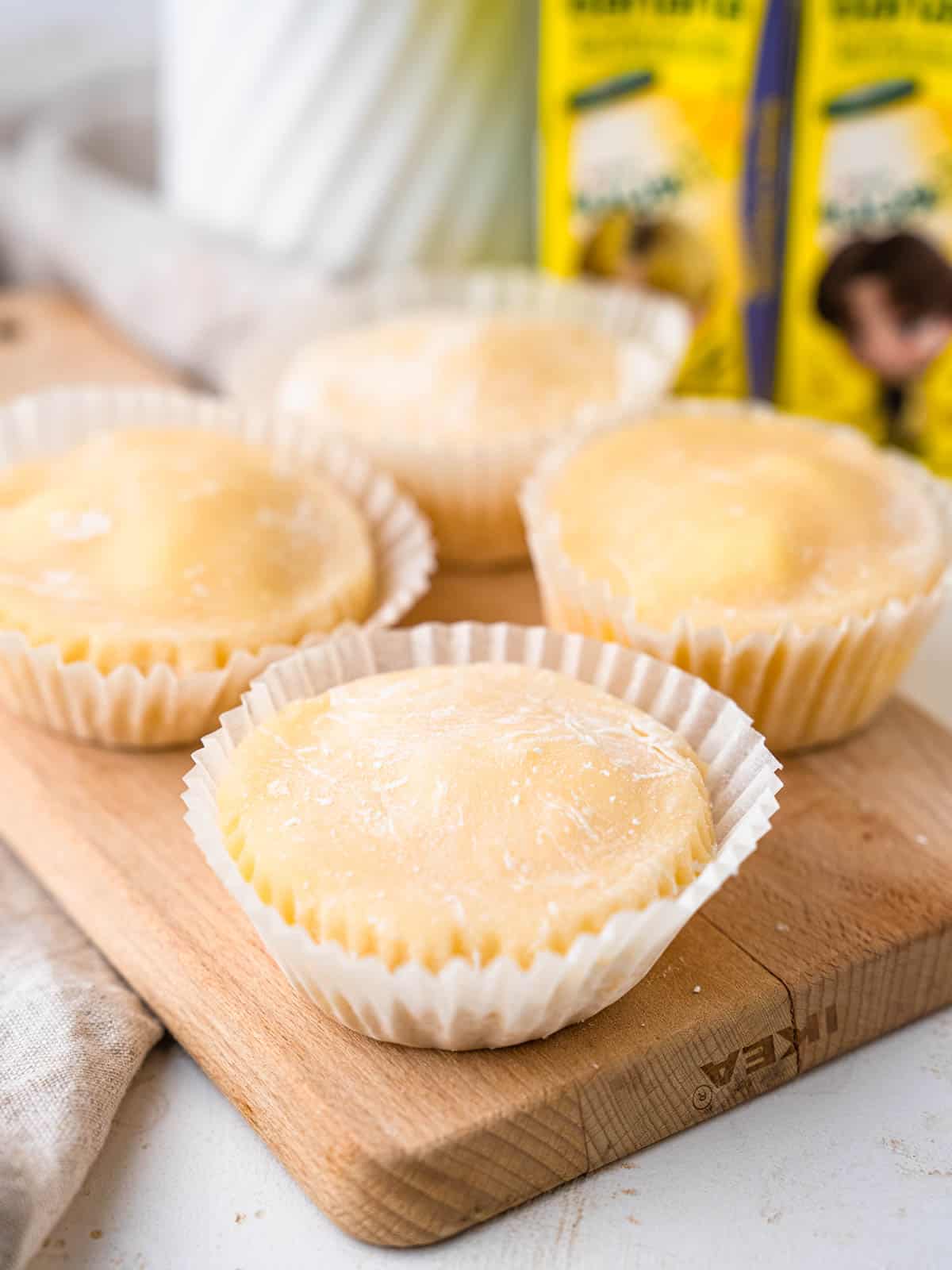
Serve the mochi with a chilled glass or carton of banana milk. It doubles down on that creamy banana flavour.
This is the full banana milk moment. Soft, chewy, creamy, and very snackable.
Cut One Open For Photos
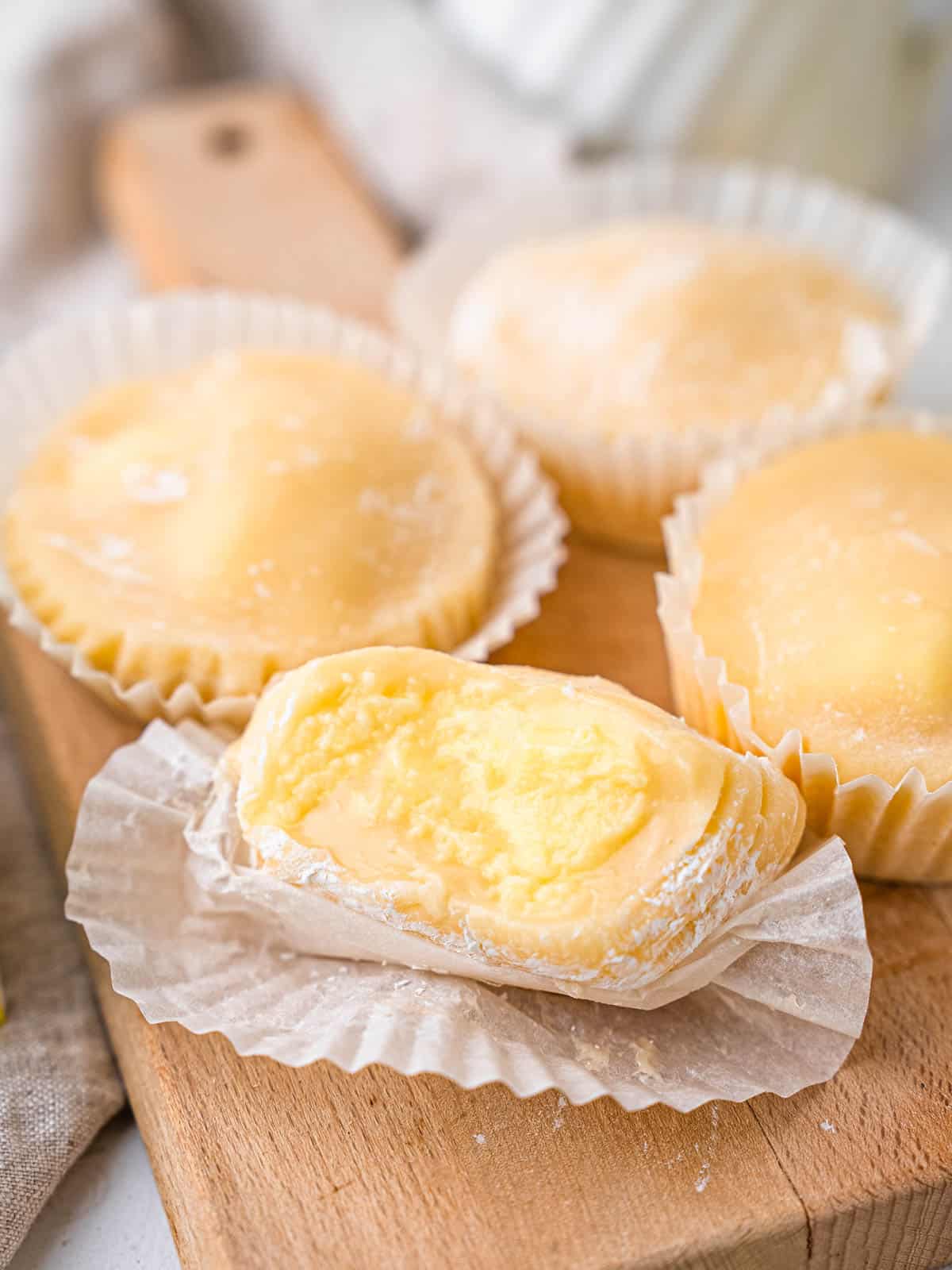
Slice one mochi in half to show the banana custard centre. The soft skin and creamy filling make it look so inviting.
If I were filming this, I would cut one slowly and let the custard peek out. That is the money shot.
Serve In Cupcake Liners
Place each mochi in a small cupcake liner or candy cup. It keeps them neat and makes them easier to pick up.
This is especially handy for parties. Mochi is cute, but it is still sticky at heart.
Pair With Iced Milk Tea
Banana mochi works beautifully with iced milk tea. The tea balances the sweet custard and chewy mochi.
At TuCha, I always think about the drink with the dessert. A good pairing makes the whole bite feel more complete.
Add Fresh Strawberries On The Side
Strawberries add colour and a little tartness. They make the banana flavour taste brighter.
Keep them on the side unless you are serving right away. Fresh fruit brings moisture, and mochi remembers everything.
Serve Slightly Chilled, Not Ice-Cold
Mochi can firm up in the fridge. Let it sit for a few minutes before eating so it softens.
You want it cool, soft, and chewy. Straight-from-the-fridge mochi can feel a bit stiff.
Make A Mochi Dessert Platter
Serve banana mochi with strawberry mochi, matcha mochi, fresh fruit, and little cups of tea. Keep the pieces small and soft.
This makes the dessert feel playful without much extra work. Very café table, very shareable.
Dust With Kinako Before Serving
Kinako gives the outside a soft, nutty finish. It also makes the mochi look warm and cosy.
A light dusting is enough. Too much powder can hide the lovely chew.
Serve With Chocolate Sauce On The Side
A little chocolate sauce makes the banana flavour feel richer. Keep it on the side so the mochi does not get messy too soon.
This is a fun one for kids or dessert boards. Dip, bite, smile quietly.
Pack Into Small Gift Boxes
Place each mochi in a liner, then pack them in a shallow box. Add a note that they are best eaten fresh.
Mochi is soft and delicate, so do not stack them. Tiny desserts still need personal space.
Serve With Hot Hojicha
Hot hojicha gives a roasted, nutty contrast to the sweet banana custard. It keeps the whole dessert from feeling too sweet.
This pairing feels gentle and calm. Very soft afternoon tea energy.
Add A Cut Open Mochi To The Top Of The Plate
Place one whole mochi and one cut mochi together. It shows the shape and the filling in one glance.
This is the kind of dessert that looks calm on a plate but gives that stretchy mochi pull on camera.
Common Mistakes to Avoid – Lessons I’ve Learned After Dozens of Batches
Not Cooking The Custard Long Enough
If the banana custard is runny, it will leak when you wrap it. Cook it until it is thick and scoopable.
The filling should hold its shape. If it looks loose, it needs more time.
Wrapping While The Filling Is Warm
Warm filling softens the mochi and makes sealing harder. It can also make the mochi tear.
Cool the filling first. Waiting is boring, but leaking mochi is worse.
Using Too Much Filling
It is tempting to pack in extra custard, but overfilled mochi is hard to seal. Start with about 1 tablespoon.
Once you feel confident, you can add a little more. Mochi needs trust, not chaos.
Flattening The Centre Too Thin
Thin mochi can tear when you add the filling. Keep the centre a little thicker for support.
Thin edges are fine. Thin centre is danger town.
Not Pinching The Seam Properly
A loose seam lets the custard leak out. Pinch the edges together in small sections, then roll the mochi seam-side down.
A good seal is like a tiny dessert handshake. Gentle, firm, and no gaps.
Using Regular Rice Flour
Regular rice flour will not give you the same chewy stretch. You need glutinous rice flour or mochiko.
Check the packet before you start. This is one ingredient you do not want to freestyle.
Letting The Mochi Get Too Cold Before Shaping
Cold mochi is less stretchy and can tear more easily. Shape it while it is warm enough to bend.
You want warm and soft, not hot and sticky or cold and stubborn.
Using Too Much Dusting Starch
Too much starch can make the outside dry and powdery. Use enough to stop sticking, then brush off the extra.
The goal is soft and chewy, not chalky.
Adding Fresh Banana Too Early
Fresh banana can brown and release moisture. If using banana slices, serve the mochi soon.
This version is gorgeous, but it has a shorter life. Fresh banana is a little dramatic that way.
Leaving Mochi Uncovered
Mochi dries out when exposed to air. Keep shaped pieces covered while you work.
A dry surface can turn tough. Soft mochi needs a little protection.
Using Watery Homemade Banana Milk
Homemade banana milk can be thinner than store-bought banana milk. If it is too watery, the mochi and custard may feel loose.
Use ripe banana, blend well, and strain it. Smooth banana milk gives better mochi.
Forgetting That Mochi Is A Same-Day Dessert
Mochi firms up over time, especially in the fridge. It can still be eaten later, but the soft bounce is best on day one.
I’d rather be honest here because mochi texture is everything.
Let’s Get Cooking
If you liked this recipe make sure to leave me a comment and rating down below. I’d love to know how it went! Also, don’t forget to tag me on Instagram @catherine.desserts.
Follow me on Facebook, Pinterest, YouTube, and TikTok for more of my baking creations and updates!
Banana Mochi
Soft and chewy mochi skin filled with a sweet banana custard, take your banana milk to the next level with these!
- Prep Time: 30 minutes
- Cook Time: 5
- Total Time: 35 minutes
- Yield: 8 Mochi 1x
- Category: Mochi
- Method: Easy
- Cuisine: Asian Fusion
Ingredients
Banana Milk Filling
- 360ml Banana milk (1 1/2 cups)
- 30g Cornstarch (1/4 cup)
- 65g Granulated sugar (1/3 cup)
Mochi
- 200g Glutinous rice flour (1 1/2 cup)
- 65g Granulated sugar (1/3 cup)
- 40g Corn starch (1/3 cup)
- 360ml Banana milk (1 1/2 cup)
- 1 1/2 tbsp Vegetable oil
Assembly
- Corn starch or potato starch, for dusting
Instructions
Banana Milk Filling
- Heat the banana milk in a medium-sized pan over medium heat until steaming
- Combine the cornstarch and granulated sugar together in a bowl and whisk to combine
- Add the dry ingredients to the milk and whisk until smooth
- Continue to mix over medium heat for approx 5-10 minutes, or until the ube filling mixture has thickened to a thick custard-like consistency
- Remove from the heat, transfer to a bowl, cover with cling wrap and cool completely
Mochi
- Combine the glutinous rice flour, sugar, and cornstarch in a medium-sized microwave-safe bowl, and whisk to combine
- Add the banana milk and whisk until smooth
- Cover the mochi mixture with cling wrap and microwave for 2 minutes on high
- Uncover and stir
- Then re-cover and microwave for another 2 minutes, the mochi dough should be semi-translucent
- If the mochi is still slightly liquidy/milky re-cover it and microwave at 1-minute intervals until cooked through
- Allow the mochi to room temperature, or until it’s cool enough to handle
- Add the vegetable oil and using gloved or oiled hands knead until smooth
- Prepare a baking tray lined with parchment paper
- Divide the mochi into 8 equal portions and place on the baking sheet.
Assembly
- Prepare a shallow bowl with cornstarch
- Using oiled or gloved hands flatten a portion of mochi between your palms and scoop 1 tbsp of the ube filling into the centre
- Bring the edges of the mochi together to enclose the filling and roll it into a ball
- Dust the ball in cornstarch and repeat with the remaining filling and mochi
- Dust off any excess cornstarch from the mochi balls and enjoy!
Love mochi? Find every type in one place in our complete guide to mochi recipes.