
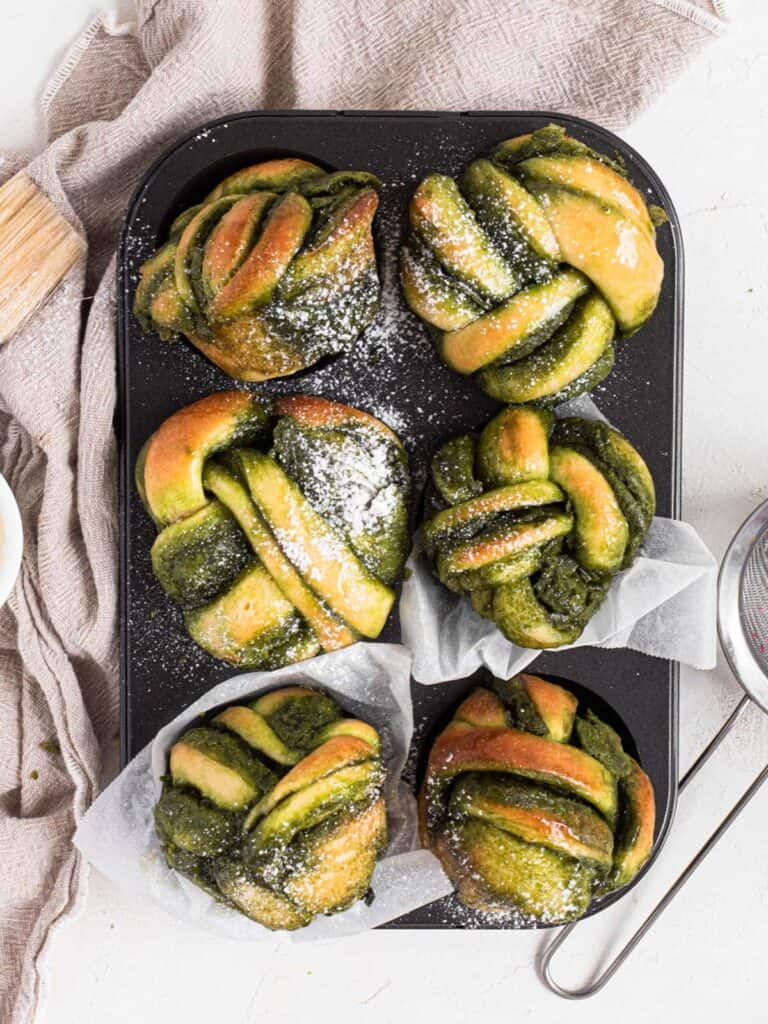
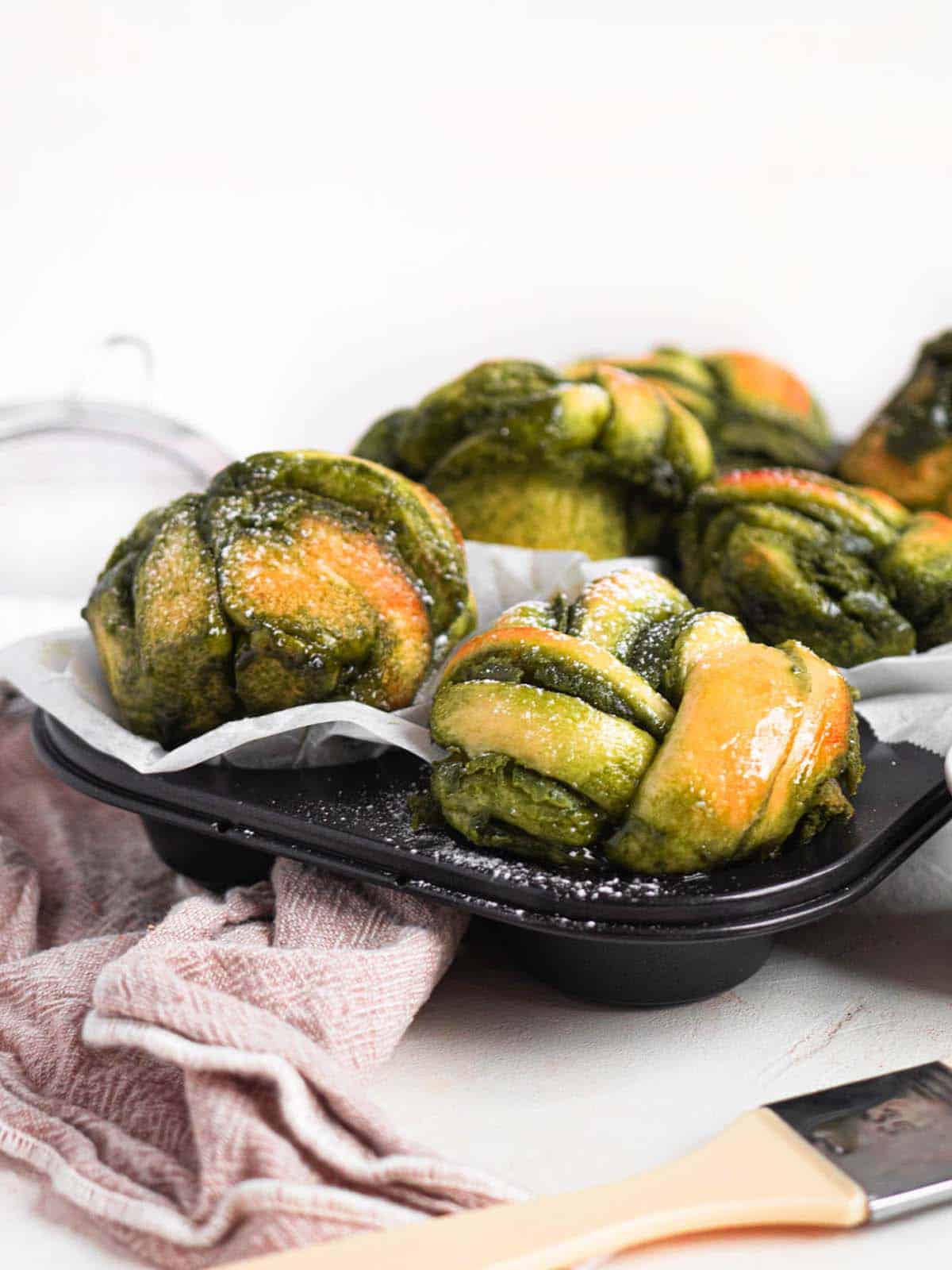
Soft and fluffy bread rolls twisted into a knot filled with a sweet matcha spread. These Matcha buns are the perfect parcel of bittersweet fluffiness!
Recently I’ve been on a little bit of a bread roll (pun intended ????). There is something so satisfying about kneading, forming, proofing and then baking your own fluffy buns.
I’ve got a couple of bread recipes on this blog, but I’m missing one of my favourite flavours… matcha! I wanted this matcha bun recipe to be based on a rich, flavourful but fluffy bun, so I thought my apple cinnamon babka recipe would work best as a base!
The bittersweet fragrance of the matcha spread pairs perfectly with the fluffy enriched bread dough to create these perfect buns that would be amazing for breakfast or snack.
At-a-Glance, What You’ll Need Before We Start Rolling
| Yield | Prep Time | Cook Time | Difficulty | Storage |
|---|---|---|---|---|
| 14 buns | 60 minutes (plus overnight rest) | 20 to 25 minutes | Intermediate but forgiving | Airtight at room temp 2 days, fridge 5 to 7 days, freezer friendly |
Main Ingredients
These are the non-negotiables that make the buns soft, rich, and fluffy.
- Plain flour, sugar, yeast, eggs, water, salt, butter
Tip: I’ve tested this dough countless times. Don’t rush the kneading. That’s where the softness really starts. - Culinary-grade matcha powder
Tip: If it smells grassy and looks bright green, you’re on the right track. Dull matcha means dull flavour.
Optional, My Favourite Extras That Add a Little Magic
These aren’t required, but they’re lovely if you want to level things up.
- Vanilla extract
Tip: Just a splash rounds out the bitterness of matcha beautifully. - White chocolate chips
Tip: I use these at TuCha when customers want something sweeter without overpowering the tea flavour. - Cream cheese
Tip: Adds a gentle tang that makes the buns feel more dessert-like.
Substitutions, Smart Ingredient Swaps That Still Taste Amazing
Life happens. These swaps still work.
- Dairy milk → Oat or soy milk
Tip: I’ve tested both. Oat milk gives the softest crumb. - Butter → Coconut oil or vegan butter
Tip: Use refined coconut oil if you don’t want a coconut flavour sneaking in. - Sugar → Light brown sugar
Tip: This adds a warmer note that pairs nicely with matcha.
Tips on Filling
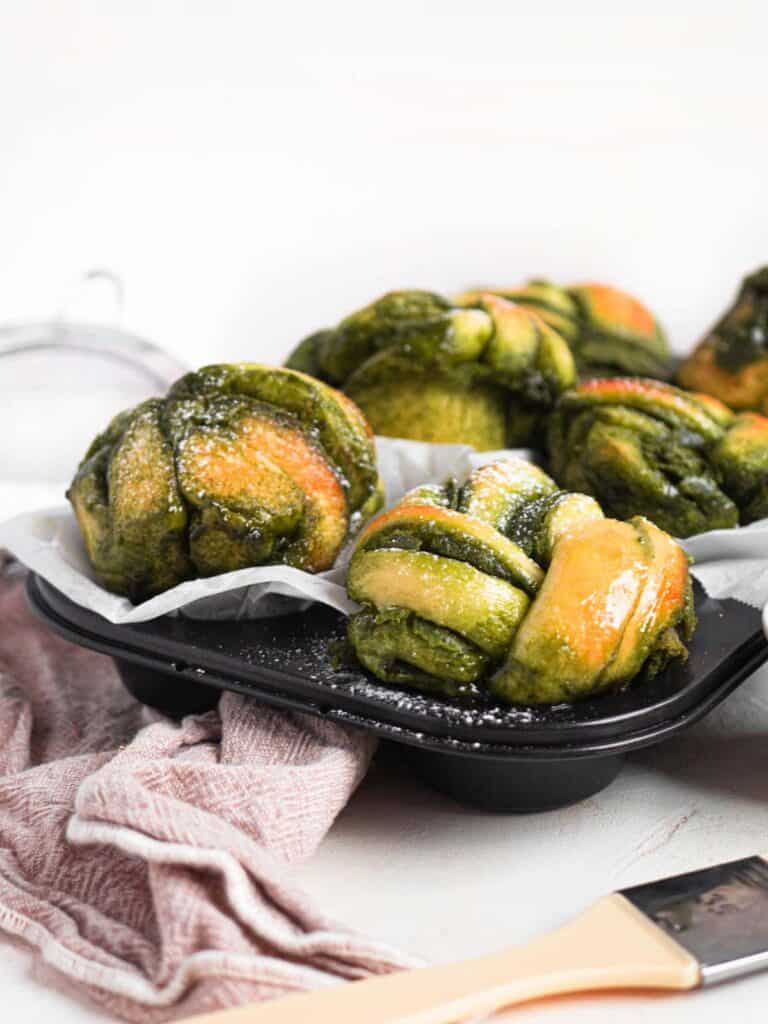
The filling in these buns is essentially a fluffy mixture of butter, sugar and matcha. But when baked together in the bun they meld together to form a gooey sort of matcha spread that is absolutely delicious.
The trick to spreading this evenly all over the dough is whipping the butter.
The butter should be whipped with the matcha powder and icing sugar so that it is light and fluffy. This makes spreading the matcha mixture over the soft bread dough much easier.
Tips on Bread Dough
The kneading of the bread dough is one of the most important steps when making these as it is the deciding factor between a soft and fluffy bun or a rock hard one.
As this recipe is based off my apple cinnamon babka, head to the tips section in that recipe for an in depth explanation on the steps required to knead this dough.
Tips on Assembly
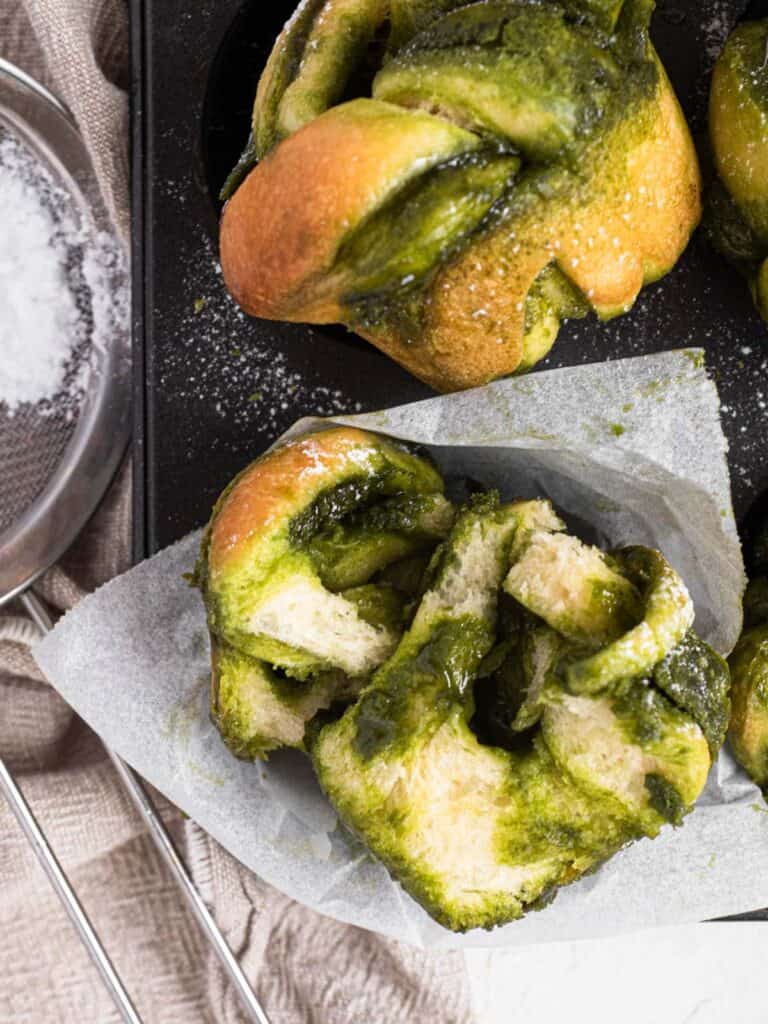
This little bun may look challenging to assemble but once you understand the basics of it you’ll be making these at the speed of light.
There are a couple of things that will make your life easier when assembling these buns…
Use chilled dough
It is so important to use chilled dough when making these buns. As the bread dough has a significant amount of butter in it, at room temperature the dough will become soft and hard to handle. If working with the dough straight from the fridge it will be firm enough to roll out, fold and braid without much trouble.
Work with half the dough at a time
There are two reasons why you should work with half of your dough at a time. The first follows on from tip #1. Working with half will keep the other half of the dough chilled and easy to work with while you are forming the first lot of buns.
Second is because it’s SO much easier. Rolling out the dough can be difficult when you have a lot to work with. Unless you have a large benchtop with lots of space and a super long rolling pin it’ll probably be better to stick with half the dough at a time. Working with smaller quantities gives you more control on the thickness, folding and shaping of the dough!
Work quickly
As the dough will soften up at room temperature it is important to work quickly before it softens entirely. Make sure you understand the assembly process before you remove your dough from the fridge and then work as quick and efficiently as possible!
Troubleshooting, Quick Fixes I’ve Learned from My Bakery Kitchen
| Problem | What’s Going Wrong | Quick Fix |
|---|---|---|
| Dough feels stiff | Too much flour | Lightly oil your hands instead of adding more flour |
| Buns are dense | Under-proofed dough | Let them rise until slightly jiggly |
| Bitter flavour | Too much matcha | Reduce matcha and balance with a touch more sugar |
| Filling leaks out | Spread too thick | Keep the filling thin and even |
| Dry buns next day | Not enough moisture | Brush generously with sugar syrup |
Comparison, How This Recipe Stacks Up Against Other Desserts
| Dessert | Texture & Flavour | When I’d Choose It |
|---|---|---|
| Matcha Buns (this recipe) | Soft, fluffy, gently bitter-sweet | When I want comfort with a bit of elegance |
| Matcha Cinnamon Rolls | Sticky and very sweet | Weekend brunch with coffee |
| Steamed Matcha Mantou | Light, chewy, less rich | When I want something simple and nostalgic |
Additional Tips for Perfect Matcha Buns
Use the Tangzhong Method for Lasting Softness
A small step with big results, the tangzhong or water-roux method transforms your buns into pillowy clouds. By cooking a simple mixture of flour and liquid before adding it to the dough, you lock in moisture that keeps the bread soft for days. It’s one of those little baking secrets that feels like magic the first time you try it.
This same tangzhong softness is what gives classic Asian buns like my egg custard buns their signature pillowy bite.
Choose a Bright Culinary-Grade Matcha
Not all matcha is created equal. Look for a culinary-grade powder that’s vibrant green with a clean, grassy aroma. High-quality matcha will bake beautifully, giving your buns a natural color and smooth, earthy sweetness without bitterness. Think of it as painting with flavor, the brighter the hue, the fresher the taste.
Weigh Ingredients for Consistency
Precision is what separates professional-quality bread from the rest. Measuring ingredients by weight ensures a consistent dough texture every time. Flour can compress when scooped, but grams tell the truth, helping your buns stay evenly risen and perfectly soft.
Monitor Dough Temperature and Proofing
The warmth of your kitchen affects how your dough rises. If it’s chilly, find a cozy corner near the oven or use a proofing box. Over-proofing can cause collapsed buns, while under-proofing keeps them dense. The trick is the gentle poke test: if the dent springs back slowly, it’s ready to bake.
Create Steam for an Airy Crumb
A burst of steam at the start of baking encourages the dough to rise fully before the crust sets. Place a tray of hot water on the lower rack of your oven during the first ten minutes. The result is an airy interior with a delicate crust, light, moist, and wonderfully soft.
Rest the Dough Before Shaping
After kneading, let the dough rest in the refrigerator for fifteen minutes. This pause relaxes the gluten and makes the dough easier to handle. You’ll get smoother braids, neater swirls, and buns that look as good as they taste.
Avoid Over-Flouring During Kneading
A little stickiness in dough is not your enemy. Adding too much flour while kneading can dry out your buns and toughen their texture. Lightly oil your hands or the work surface instead, and the dough will reward you with softness and elasticity.

Variations to Try
Matcha Custard Buns
Swap the butter filling for a creamy matcha custard. Made with milk, sugar, egg yolks, and cornstarch, it bakes into a silky center that melts at every bite. It’s like having dessert tucked inside a bun.
Red Bean Matcha Rolls
Spread a thin layer of sweet red bean paste before rolling the dough. The mild bitterness of matcha balances beautifully with the earthy sweetness of anko, creating a nostalgic flavor that feels both classic and comforting.
White Chocolate Matcha Knots
Fold white chocolate chips into the dough before shaping. As the buns bake, the chocolate melts into soft, sweet pockets that contrast with the deep green tea flavor. This version is rich, creamy, and utterly indulgent.
Matcha Cheesecake Swirls
Add a spoonful of sweetened cream cheese filling in the center of each bun. The tangy cream balances the matcha’s earthiness and gives every bite a decadent, dessert-like touch.
If you love matcha paired with creamy textures, my light and airy matcha sponge cake is another gentle, tea-time favourite.
Vegan Matcha Buns
Replace butter with coconut oil and dairy milk with oat or soy milk. The result is a slightly tropical note that complements matcha beautifully, while keeping the buns tender and full of flavor.
Glazed Matcha Buns
After baking, drizzle with a glossy icing made from powdered sugar, a splash of milk, and a pinch of matcha powder. The glaze sets into a delicate sheen and adds a hint of sweetness with a soft green glow.
Serving Suggestions
Breakfast on a Calm Morning
Serve your matcha buns warm with a thin spread of butter or honey. The comforting aroma of baked bread mixed with green tea makes mornings feel calm and centered.
Afternoon Tea Pairing
Pair with a pot of green tea, jasmine tea, or earl grey milk tea. The light bitterness of the drink balances the gentle sweetness of the bun for a perfect tea-time ritual.
Dessert Style
Warm a bun slightly and serve it with a scoop of vanilla or matcha ice cream. Add a light dusting of powdered sugar for a bakery-style presentation that feels simple yet elegant.
Gifting and Sharing
Wrap each bun in parchment paper and tie it with a bit of twine. They make thoughtful, homemade gifts that show care and creativity, perfect for birthdays or holidays.
Brunch Platter Highlight
Arrange sliced matcha buns on a wooden board with seasonal fruits, yogurt, and spreads. Their green hue adds color and charm to any brunch table.
Freezer-Friendly Storage
Freeze baked buns once cooled. When ready to serve, reheat them in a preheated oven at 160°C for about seven minutes. They return to their original soft and fluffy state effortlessly.

Common Mistakes to Avoid
Overheating the Liquid Ingredients
If milk or water is too hot, it can kill the yeast. Always use liquids that are warm, not hot, around body temperature is perfect.
Using Expired Yeast
Old yeast won’t activate properly, leaving you with flat, dense buns. Test it by mixing a little with warm water and sugar; if it foams within minutes, it’s good to use.
Rushing the Proofing Process
Let the dough take its time. Cutting the proofing period short leads to tight, heavy crumbs instead of a light, airy texture.
Adding Excess Matcha Powder
More matcha doesn’t mean more flavor. Too much can create a bitter aftertaste and dull color. A balanced amount keeps flavor and color in harmony.
Forgetting to Cover the Dough
Uncovered dough dries quickly, forming a crust that restricts rising. Always cover with plastic wrap or a damp towel during proofing.
Ignoring Oven Calibration
If your oven runs hotter or cooler than indicated, the buns can brown too quickly or stay underbaked. Use an oven thermometer for accurate results every time.
PrintLet’s Get Cooking
If you liked this recipe make sure to leave me a comment and rating down below. I’d love to know how it went! Also, don’t forget to tag me on Instagram @catherine.desserts.
Follow me on Facebook, Pinterest, YouTube, and TikTok for more of my baking creations and updates!
Soft and Fluffy Matcha Buns

Soft and fluffy bread rolls filled with a sweet matcha spread, twisted into a knot.
- Prep Time: 60 minutes
- Cook Time: 25 minutes
- Total Time: 1 hour 25 minutes
- Yield: 14 1x
- Category: Bread
- Method: Intermediate
- Cuisine: Asian Fusion
Ingredients
Bread Dough
- 530 g Plain flour (3 3/4 cups)
- 100 g Granulated sugar (1/2 cups)
- 1 tbsp Instant yeast
- 3 Large eggs
- 120 g Water (1/2 cup)
- 1 tsp Salt
- 150 g Unsalted butter, cubed and room temperature (2/3 cup)
Matcha Filling
- 2 tbsp Matcha powder
- 200g Icing sugar (1 1/2 cups)
- 120g Unsalted butter, softened (1/2 cup 1 tbsp)
Sugar Syrup
- 100g Sugar (1/2 cup)
- 80g Water (1/3 cup)
Assembly
- Butter to grease the tins
Instructions
Bread Dough
- Combine the flour, sugar and yeast in the bowl of a stand mixer fixed with a dough hook and combine
- Add the eggs and water and mix on medium until the dough comes together
- Continue to mix for 5 minutes until the dough is smooth
- Add salt, then the butter one cube at a time until fully incorporated and dough is smooth and elastic (see tips above for further guidance)
- Oil a medium sized bowl and place the dough in it, cover with cling wrap and let rest in the fridge overnight or for at least 8 hours
Matcha Filling
- Combine the unsalted butter, icing sugar and matcha together in the bowl of a stand mixer and beat on medium-high until light and fluffy
- Taste and add more or less sugar to your taste
Sugar Syrup
- Combine water and sugar in a small saucepan over high heat and bring to a boil
- Boil, stirring occasionally until all the sugar has dissolved
- Remove and cool
Assembly
- Grease your muffin tins with butter
- Remove dough from the fridge and divide the dough in half (leave one half in the fridge while working with the other)
- Roll the dough into a rectangle (approx. 28 x 38 cm, with the long side facing you) and spread the matcha mixture evenly across the dough
- Visually divide the dough into thirds horizontally
- Fold the bottom third into the middle, then fold the top third over the bottom one
- Trim the edges and cut into 7 pieces
- Visually divide each piece into thirds vertically, and make two incisions while leaving the top intact (you should have a small rectangle with three strands)
- Braid the three strands, then tuck the top and bottom underneath each other in the cavity of the greased muffin tray*
- Repeat with the other pieces, and the other half of the dough
- Leave in a warm place (like a turned off oven) and allow to proof for 1-1 ½ hours
- The dough should have doubled in size, and become soft and slightly jiggly
- Place in an oven preheated at 180 °C (356°C) and bake for 20-25 minutes
- Remove when golden brown and a skewer inserted comes out free from raw dough
- Immediately brush generously with sugar syrup
- Store in an airtight container for up to 2 days**
Notes
* The twisting of the babka can be a bit confusing. As I am more of a visual learner I found it a lot easier to watch a few videos before I attempted it for the first time, just type ‘cinnamon knots’ in google to find a whole range of videos to help you!
** To keep this for longer you can store it in the fridge for up to a week, simply reheat it in the oven or microwave before you eat it. This dough also freezes really well, so you can make them in advance and reheat then when needed!
Love matcha? Find every matcha dessert in one place in our complete guide to matcha desserts.
Craving more? Browse every bread recipe in one place.



Catherine!!!!
Sorry, It’s been a while. You have been busy as usual and it’s good to see your amazing skills and creative genius on display once again!! These look super delicious and can’t wait to give it a try!!! Also, great job on your white chocolate cookies!!!! Stay safe and thanks again for all you do and for sharing your hard work and talent with all of us!!! Can’t wait to see what’s next!!
And…
As always,
Kindest regards,
KStep
KStep!!
Thank you for stopping by again, if you love matcha you will love these. Just wanted to say thank you again for the birthday gift! Been slowly working my way through the ice-cream… ????
Catherine
Catherine!!!!
It’s always fun to stop by and see what you’ve been up to! Just saw your YouTube video! That must have been really cool to get back together with the crew and see Zumbo again and to do a Demo, AND the shoot with Loyal! You’ve been so busy! Anyway, seems like things are going great for you!!! Hope you capture all your dreams and live your best life! You’re awesome!
As always,
Kindest regards
KStep
Does plain flour mean all purpose flour or should we use bread flour?
Hi Mari, Plain flour is the same as all-purpose flour! ????
I made these buns and they were absolutely delicious! I’m hoping to make some in advance and freeze them so I can bake them fresh for Christmas. If this is possible, should I shape them into buns first before freezing them unbaked and let them rise upon thawing? Or should I freeze the dough as a ball and do the remaining steps after thawing? Or is it better to complete all the steps and freeze as baked buns? Thanks in advance!
Hi Jo! So sorry for my late reply. I would definitely recommend freezing the baked buns. The freezing process can interact with the yeast and change the dough consistency. Hope they went well!
Hi Yusra, Glad they turned out well!!
If I use a standard 12-cavity muffin tin, how many buns would this recipe yield? I would like to make about 18-24 breads. Thank you.
hey Catherine, I am making these right now and have just put my dough in the fridge for overnight but wondering if i stopped kneading at the right stage…my dough is very elastic and smooth, and can be pulled cleanly off surfaces but it also spreads out rather than maintains a ball shape when in a container. the cinnamon babka recipe is not available so can’t see the tips for checking if the dough was kneaded to the correct state. can you confirm if he dough should maintain a ball shape before i stop kneading?