A matcha roll cake is the cleanest way I know to show off good matcha: a thin, bouncy green sponge rolled tight around barely sweet cream, with a spiral you can see from across the room.
I have thirty odd matcha recipes on this site and six roll cakes, and somehow I had never put the two together. A reader pointed that out in the comments on my Swiss roll cake post, which is fair, because a matcha roll cake is the obvious thing to make and I had simply not got to it. So I spent a weekend on it, and the result is better than the plain version it came from.
The first two attempts cracked. Badly, right across the middle, the kind of crack you cannot photograph your way out of. I had baked the sponge for sixteen minutes because the top looked pale and I did not trust it, and by the time I rolled it the surface had dried out into a sheet that was never going to bend. Twelve minutes and rolling it while it is still properly warm solved it completely, and I have not had a crack since. A matcha sponge reads lighter than a vanilla one, so you cannot judge it on colour at all.
What Is a Matcha Roll Cake
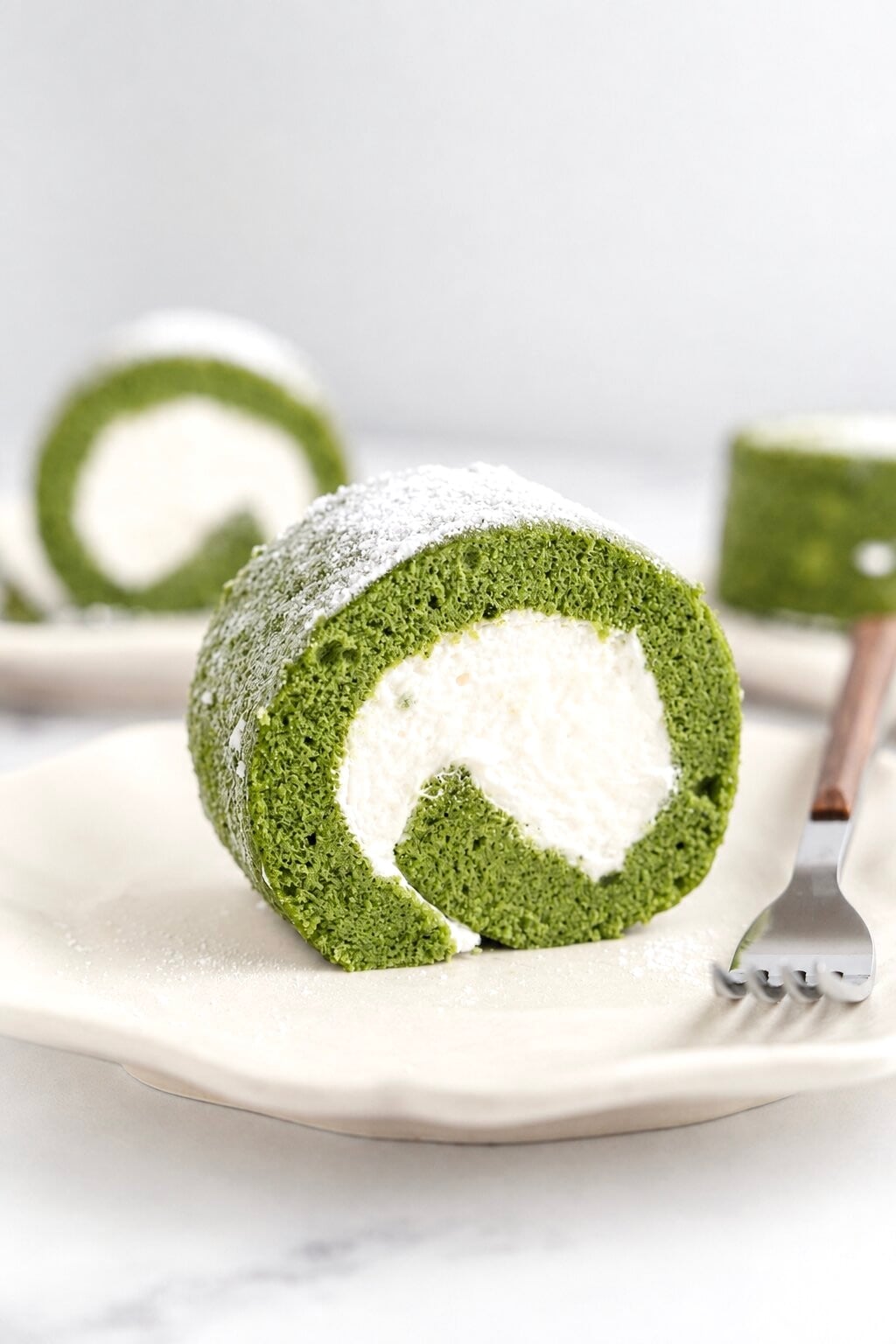
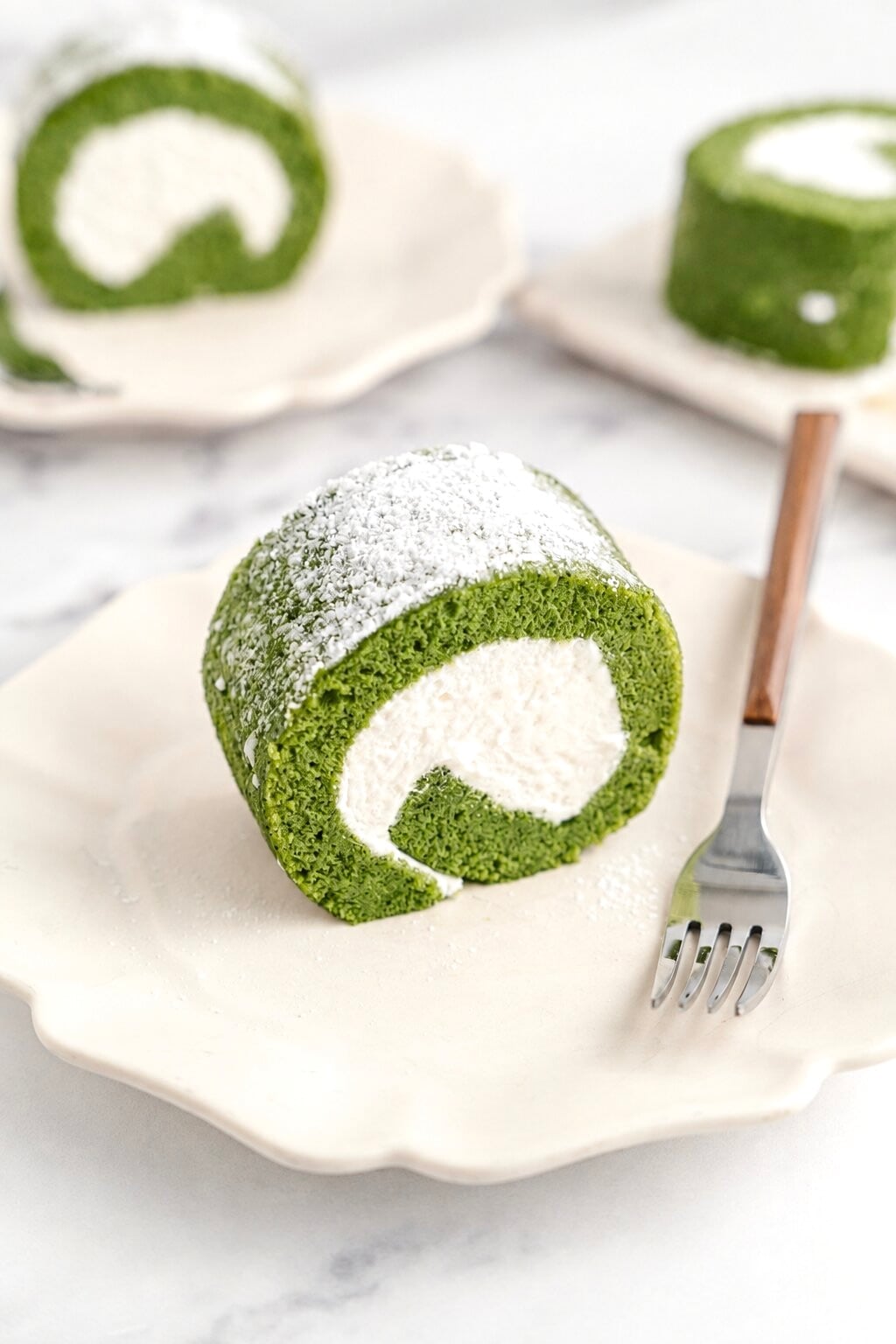
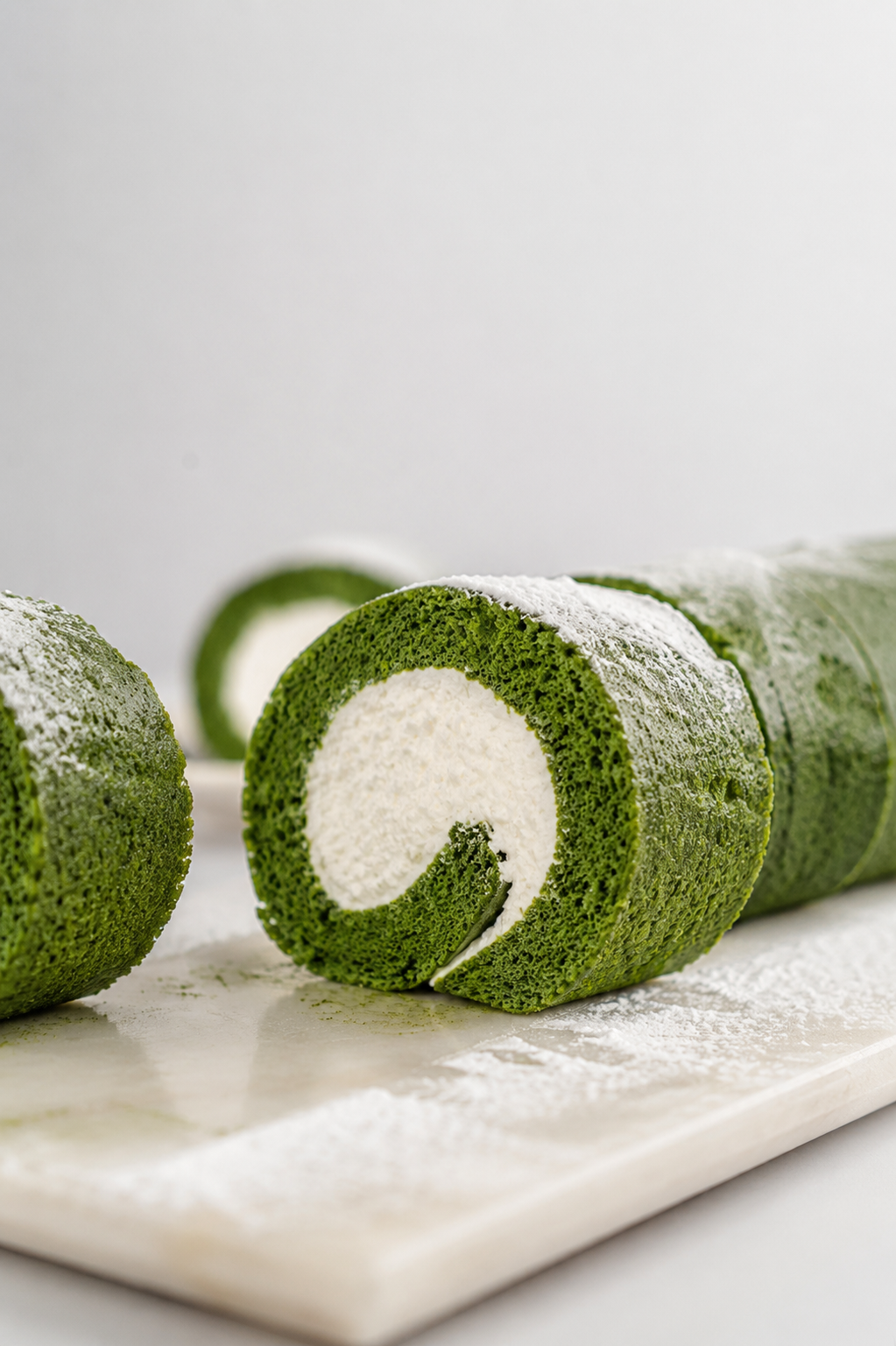
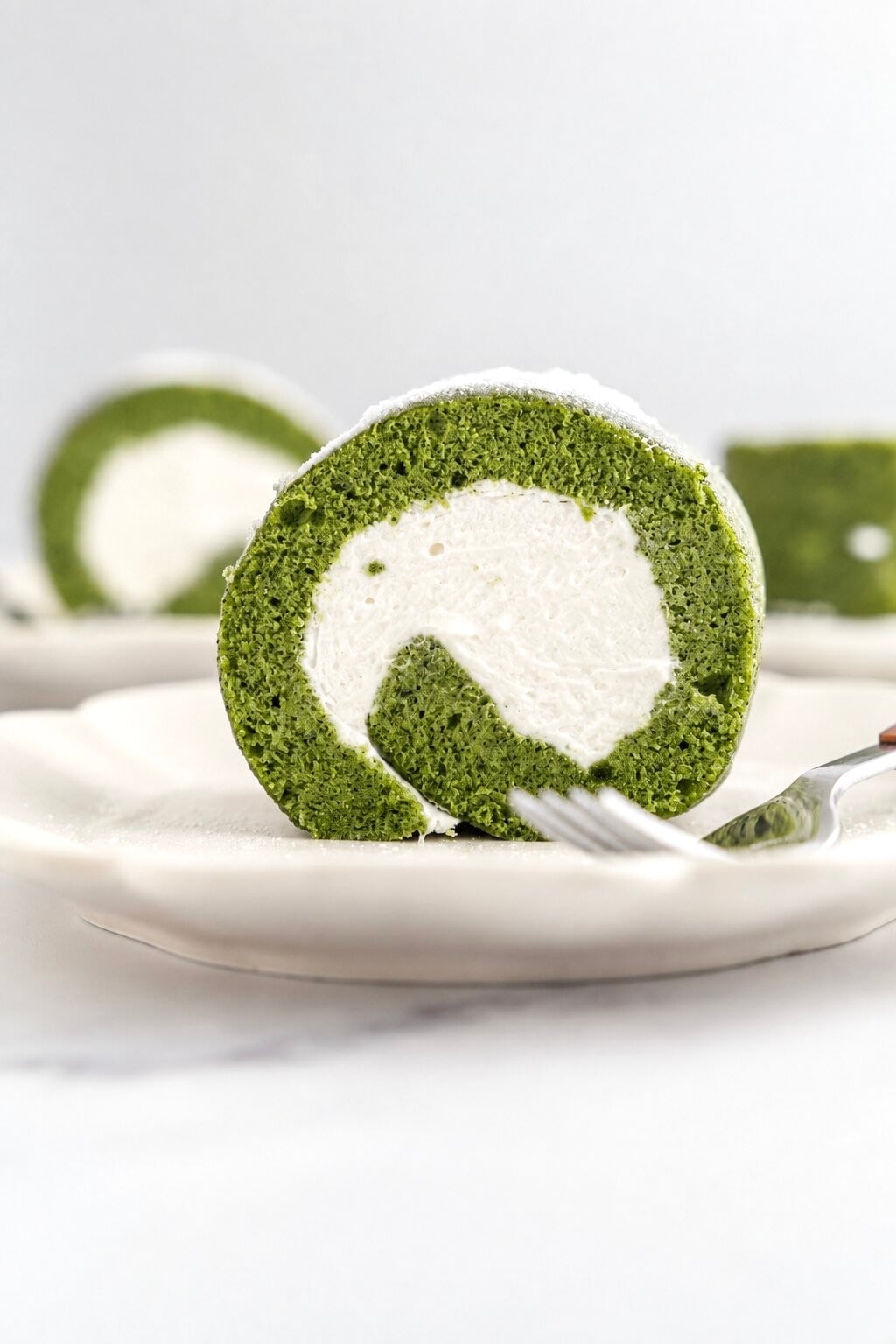
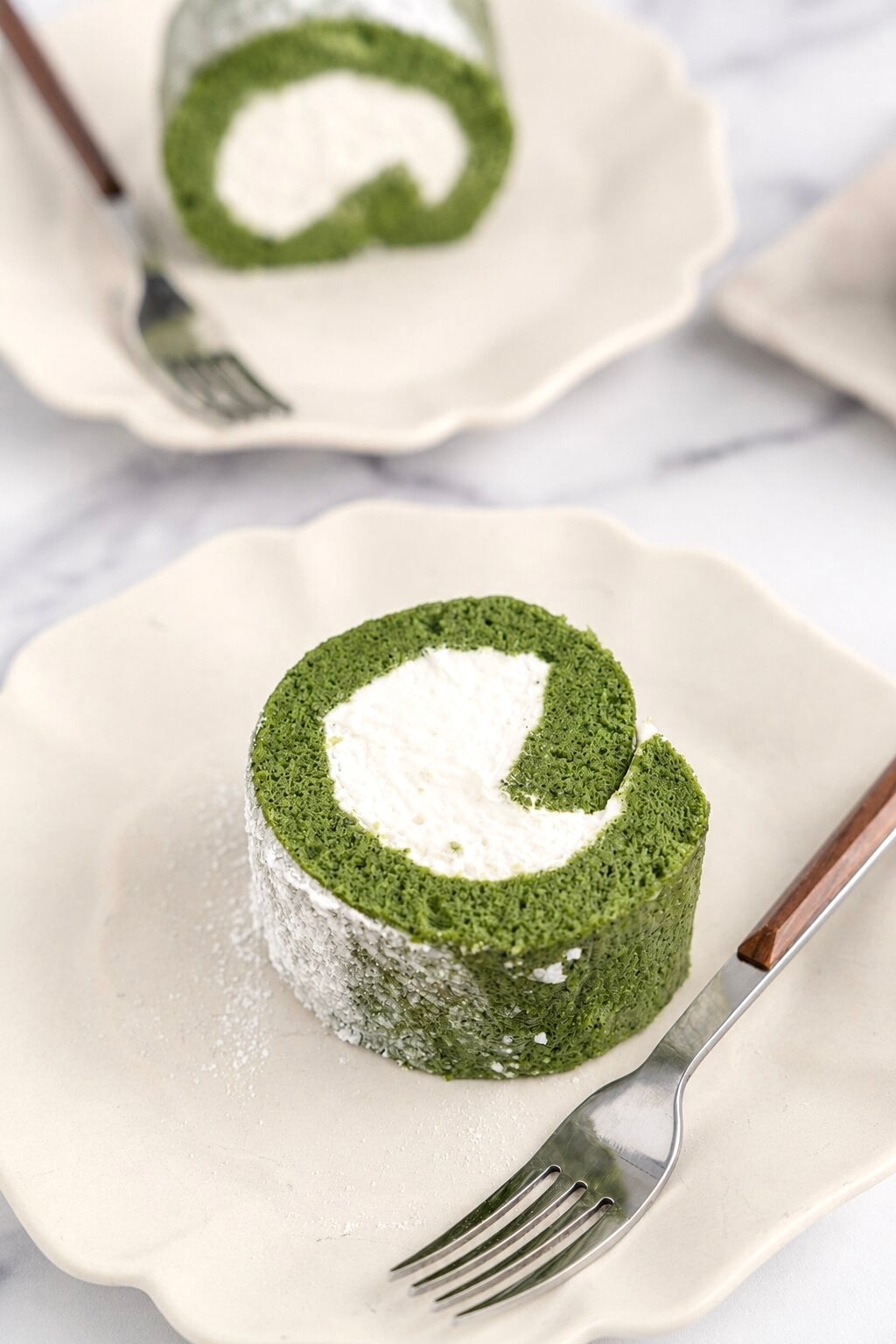
A matcha roll cake is a thin sponge baked flat in a shallow tray, flavoured with matcha powder, then spread with whipped cream and rolled into a log. Slice it and each round shows a tight spiral of green sponge against white cream. It goes by a few names depending on where you are: matcha Swiss roll, matcha roll cake, and in Japan simply matcha roll.
The sponge is a separated egg method, which means the yolks and whites are whipped apart and folded back together at the end. That is what gives it the bouncy, slightly cottony texture that bends without breaking, and it is the same technique behind my matcha cotton soft sponge cake. The cream is deliberately under sweetened so the matcha stays bitter enough to be interesting.
Where the Roll Cake Comes From
The rolled sponge cake is European in origin, most likely Central European rather than Swiss despite the name, and it reached Japan in the Meiji period along with a lot of other Western baking. Japanese bakers then rebuilt it: a lighter sponge, much less sugar, and a soft cream filling instead of jam or buttercream.
Matcha as a cake flavour is more recent than people assume. For centuries matcha was strictly a tea ceremony ingredient, and using it in Western style baking only became common in Japan from the mid twentieth century. If you want the longer version of how the grades differ and which one to bake with, I wrote it up in what is matcha.
How to Make a Matcha Roll Cake
Whip the yolks with a third of the sugar, add the milk and oil, then sift the cake flour and matcha straight in. Separately whip the whites to firm glossy peaks with the rest of the sugar, fold the two together gently, and spread the batter into a lined tray. It bakes in twelve to fourteen minutes, and the moment it comes out you turn it onto sugared parchment and roll it up warm.
That warm roll is the trick the whole recipe hinges on. It trains the sponge to hold a curve while the crumb is still flexible, so when you unroll it half an hour later to spread the cream, it goes back into shape without fighting you. Fill it, re roll it firmly, wrap it and chill it for two hours before slicing.
At a Glance: Matcha Roll Cake
| Prep | Cook | Chill | Total | Serves |
|---|---|---|---|---|
| 25 minutes | 13 minutes | 2 hours | 2 hours 40 minutes | 8 to 10 |
Ingredients
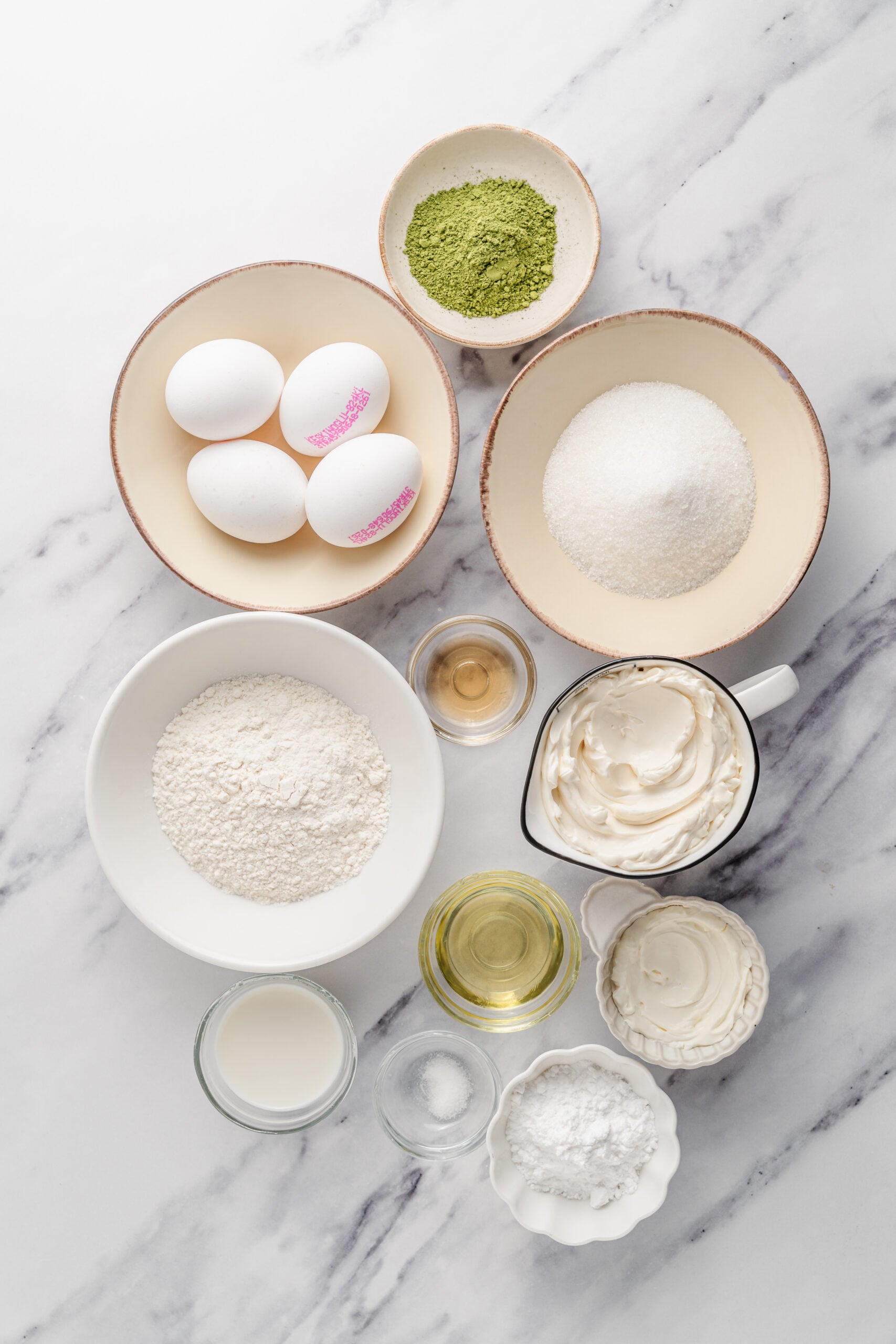
Quantities live in the recipe card at the bottom of the post. What follows is what each ingredient is actually doing, which matters more than usual here because a roll cake has almost nowhere to hide.
Matcha Sponge
- Eggs: separated and at room temperature. The yolks carry the fat and colour, the whites are the entire leavening, since there is no baking powder anywhere in this cake. Cold whites whip to a smaller, denser foam, so take them out half an hour ahead.
- Granulated sugar: split between the yolks and the whites. The portion in the meringue stabilises it so the foam survives the folding, which is why the recipe divides it rather than dumping it in one go.
- Cake flour: lower in protein than plain flour, so the crumb stays tender and flexible. This is the single biggest factor in whether your sponge bends or cracks.
- Matcha powder: culinary grade, and 8 g is enough to be assertive without turning the sponge bitter. Sift it, every time. Matcha clumps and any lump shows up as a dark fleck in the finished spiral.
- Whole milk and neutral oil: together they keep the sponge moist for a second day. Oil stays liquid at fridge temperature in a way butter does not, so the chilled cake is still soft when you slice it.
- Fine salt: a pinch in the yolk batter. It sharpens the matcha rather than making anything taste salty.
Whipped Cream Filling
- Heavy cream: well chilled, and the bowl chilled too if your kitchen is warm. Anything under 35 percent fat will not hold firm peaks and will weep into the sponge overnight.
- Powdered sugar: only 25 g, which is much less than a Western filling would use. The cream is meant to be a cool, creamy counterweight to the matcha, not a second sweet layer.
- Vanilla extract: rounds the dairy off and keeps the cream from tasting flat next to a strong sponge.
- Mascarpone: technically optional, and I would not skip it. It stiffens the cream just enough that the spiral stays crisp at the cut instead of smearing, and it holds up much better on day two.
Optional: My Favourite Extras That Add a Little Magic
- Halved strawberries: laid in a line along the cream before rolling, so every slice has fruit at the centre. It is the version that travels furthest on Pinterest and it genuinely tastes better, the way my strawberry roll cake does.
- Sweetened red bean paste: a thin layer under the cream. Very traditional in Japan, and the earthy sweetness sits beautifully under matcha.
- A splash of matcha in the cream: 2 g sifted in, for a two tone green slice and a stronger tea note all the way through.
- Toasted black sesame seeds: scattered over the cream before rolling. A small amount of crunch in an otherwise very soft cake.
Substitutions: Smart Ingredient Swaps That Still Taste Amazing
- No cake flour: measure 60 g of plain flour, remove 8 g of it and replace that with cornstarch, then sift the mixture twice. Close enough that most people could not pick it.
- No mascarpone: cream cheese, beaten smooth first, at the same weight. It is tangier and slightly firmer, which some people prefer.
- Dairy free: a well chilled coconut cream whips acceptably and the coconut flavour is a natural partner for matcha. Use oat milk in the sponge in place of the whole milk.
- Ceremonial grade matcha: it will work and it will look greener, but its delicate flavour is largely destroyed by the oven. Save it for drinking and bake with culinary grade.
Steps
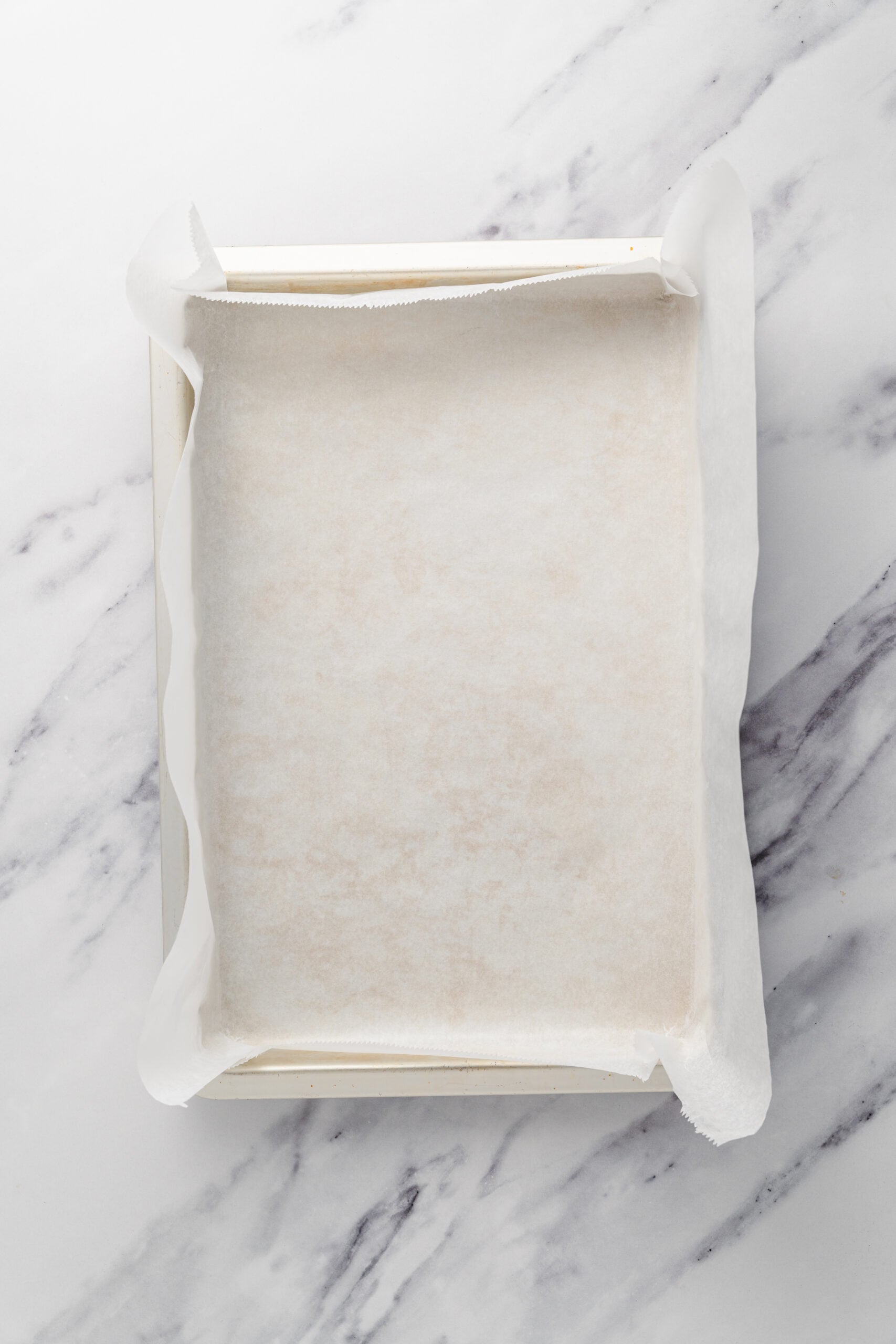
- Heat the oven to 175 C (350 F). Line a 33 by 23 cm jelly roll pan with parchment, leaving a small overhang on the long sides so you can lift the sponge out.
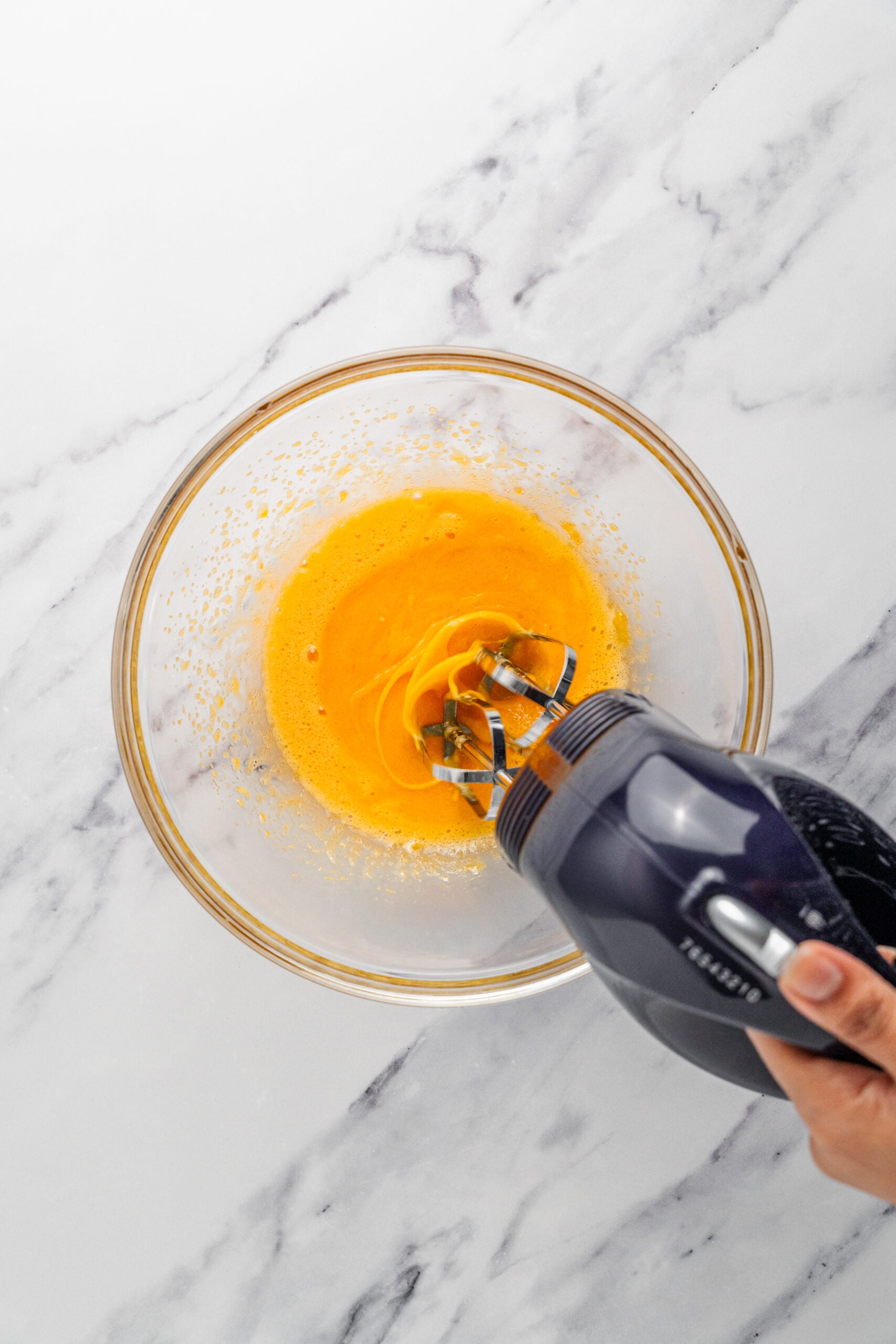
- Whisk the egg yolks with 30 g of the sugar until pale and slightly thickened. Whisk in the milk and the oil.
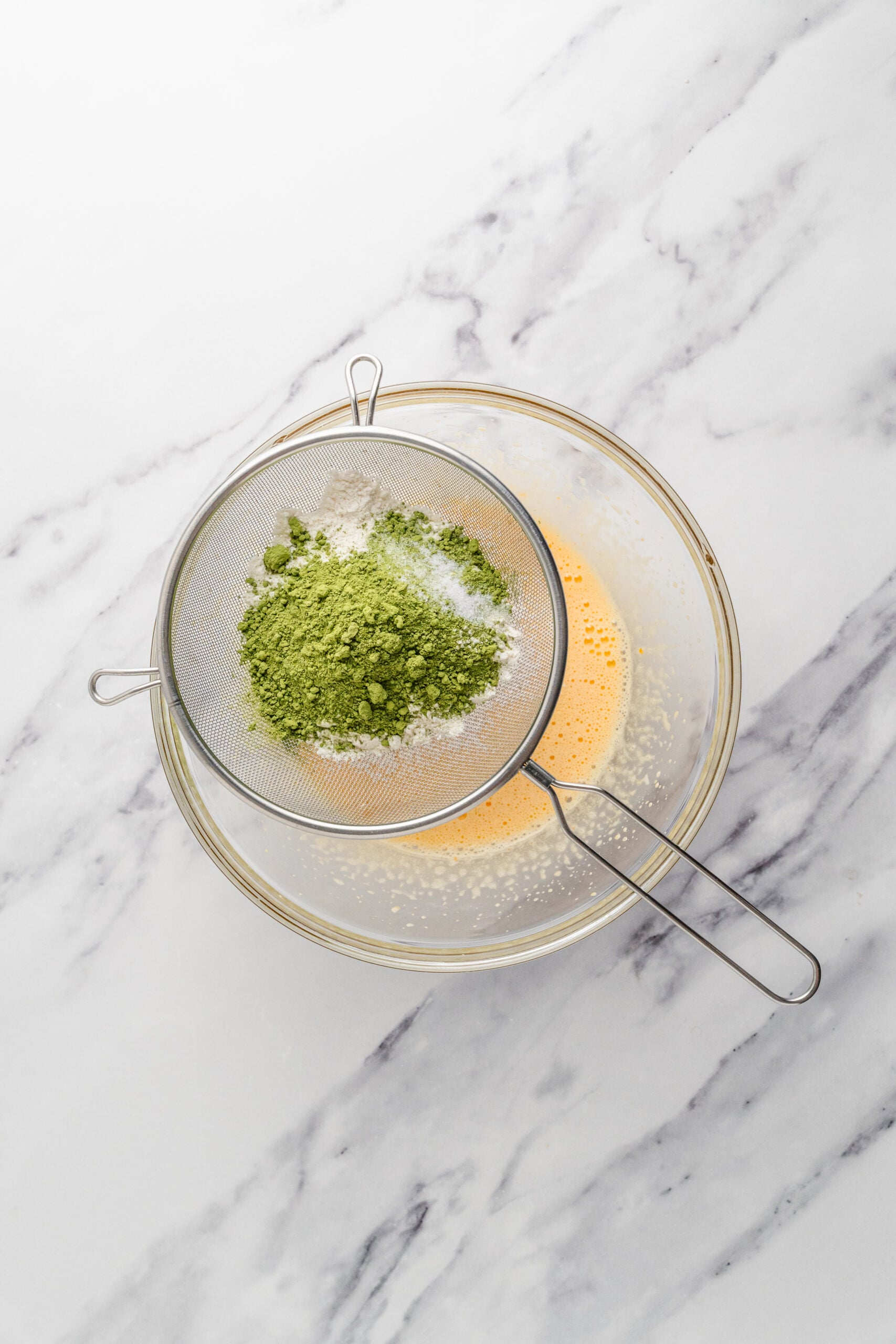
- Sift the cake flour, matcha and salt directly into the yolk mixture. Whisk just until smooth. Sifting matters here, because matcha clumps and any lump shows as a dark fleck in the finished spiral.
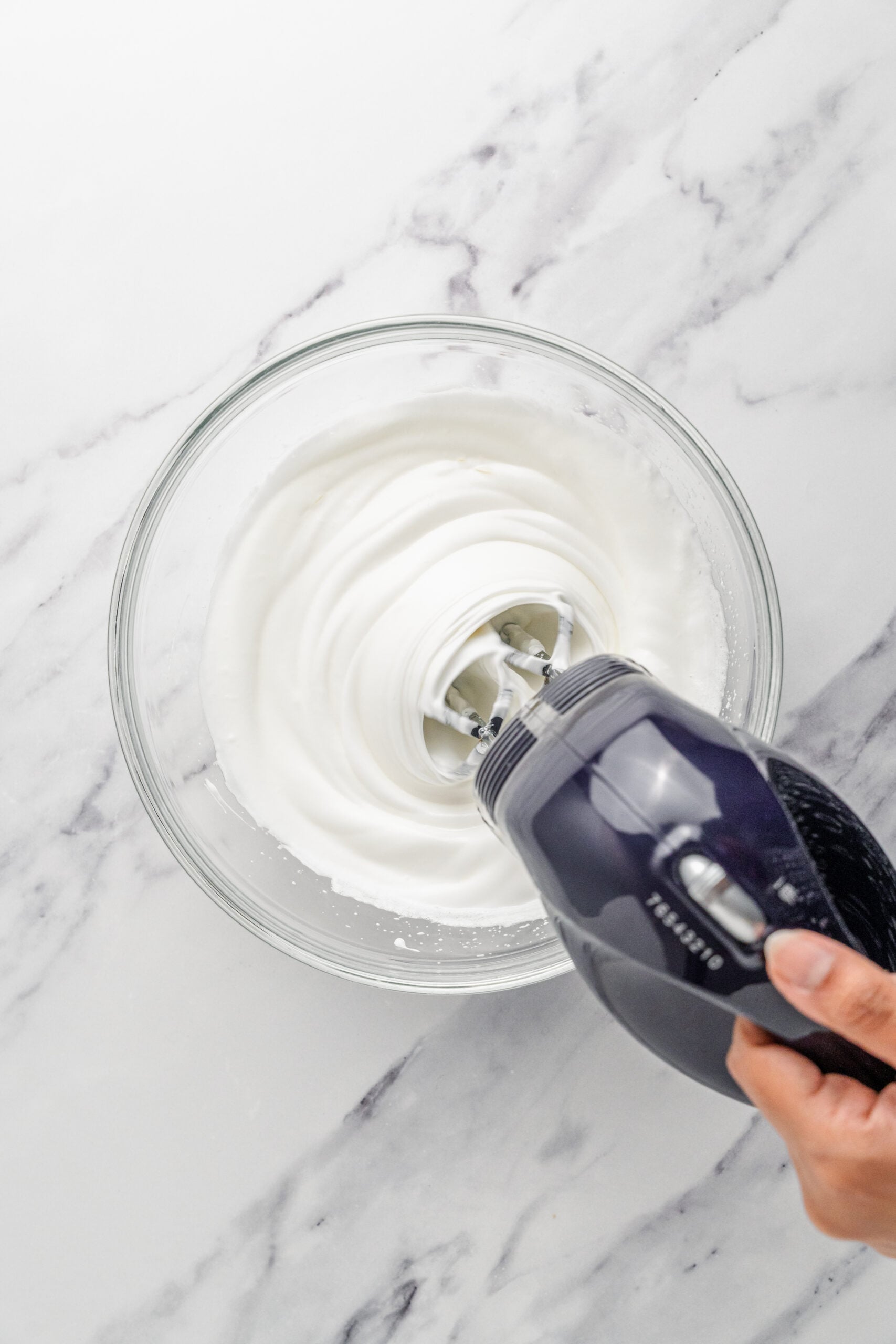
- In a clean bowl, whip the egg whites to soft peaks. Add the remaining 60 g of sugar in three additions, whipping to firm peaks that still look glossy rather than dry and grainy.
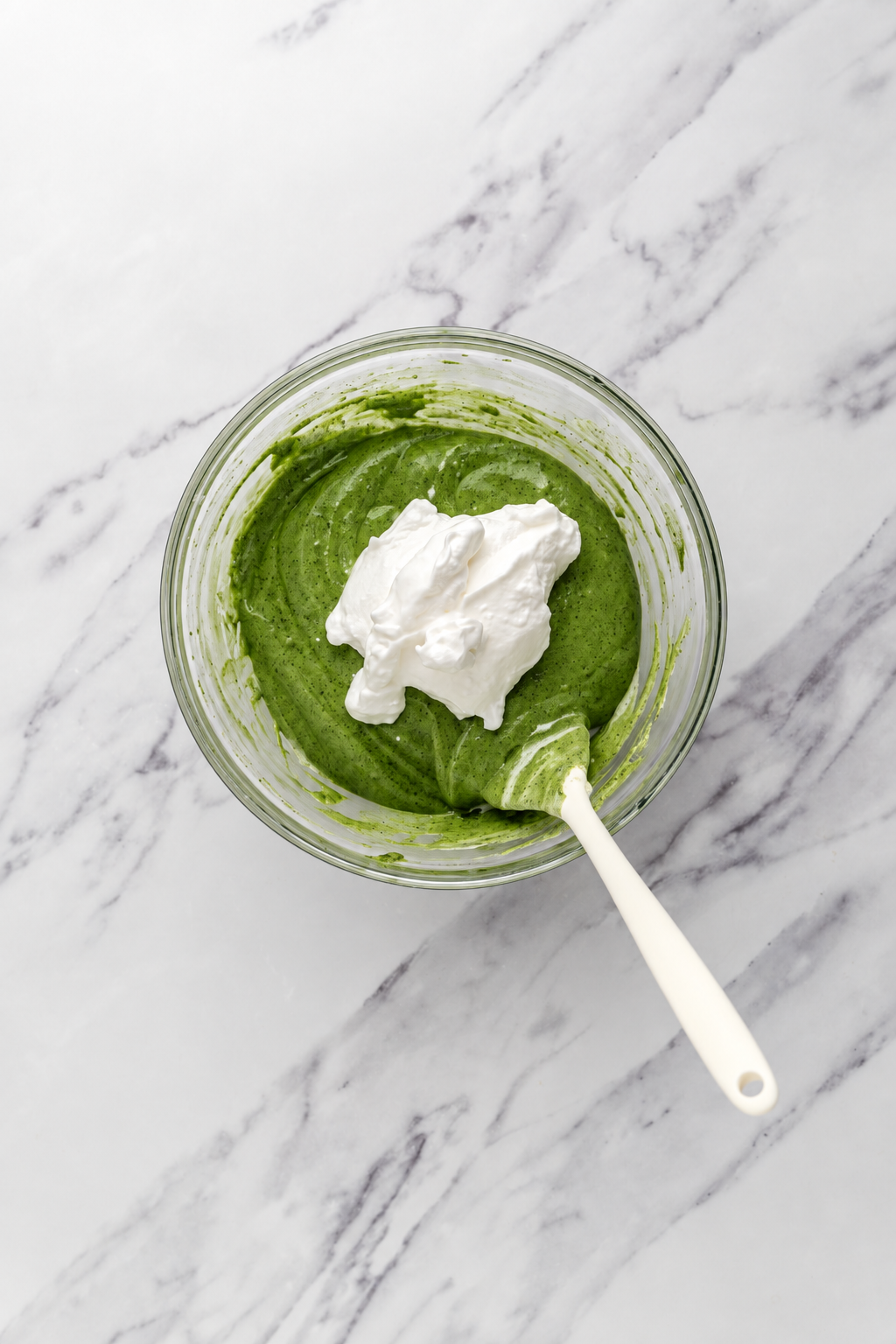
- Fold a third of the meringue into the yolk batter to loosen it, then fold in the rest in two additions. Stop as soon as no white streaks remain.
- Pour into the lined pan and spread level with an offset spatula, right into the corners so the sponge bakes evenly.
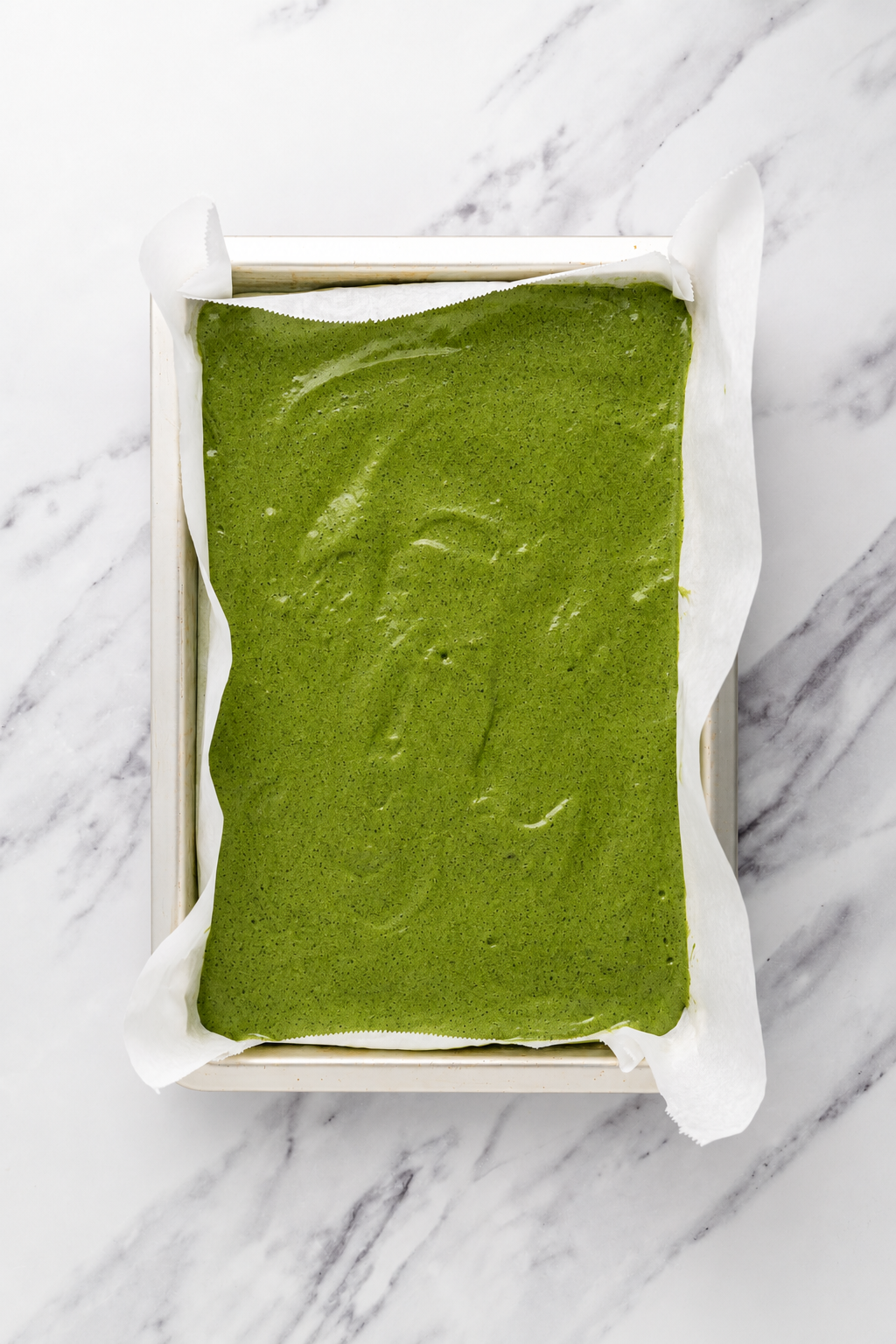
- Tap the pan firmly on the counter twice to release the large bubbles, then bake for 12 to 14 minutes, until the surface springs back when pressed lightly. Do not overbake, because a dry sponge is what cracks.
- Lay a sheet of parchment on the counter and dust it with powdered sugar. Turn the hot cake out onto it and peel away the lining paper.
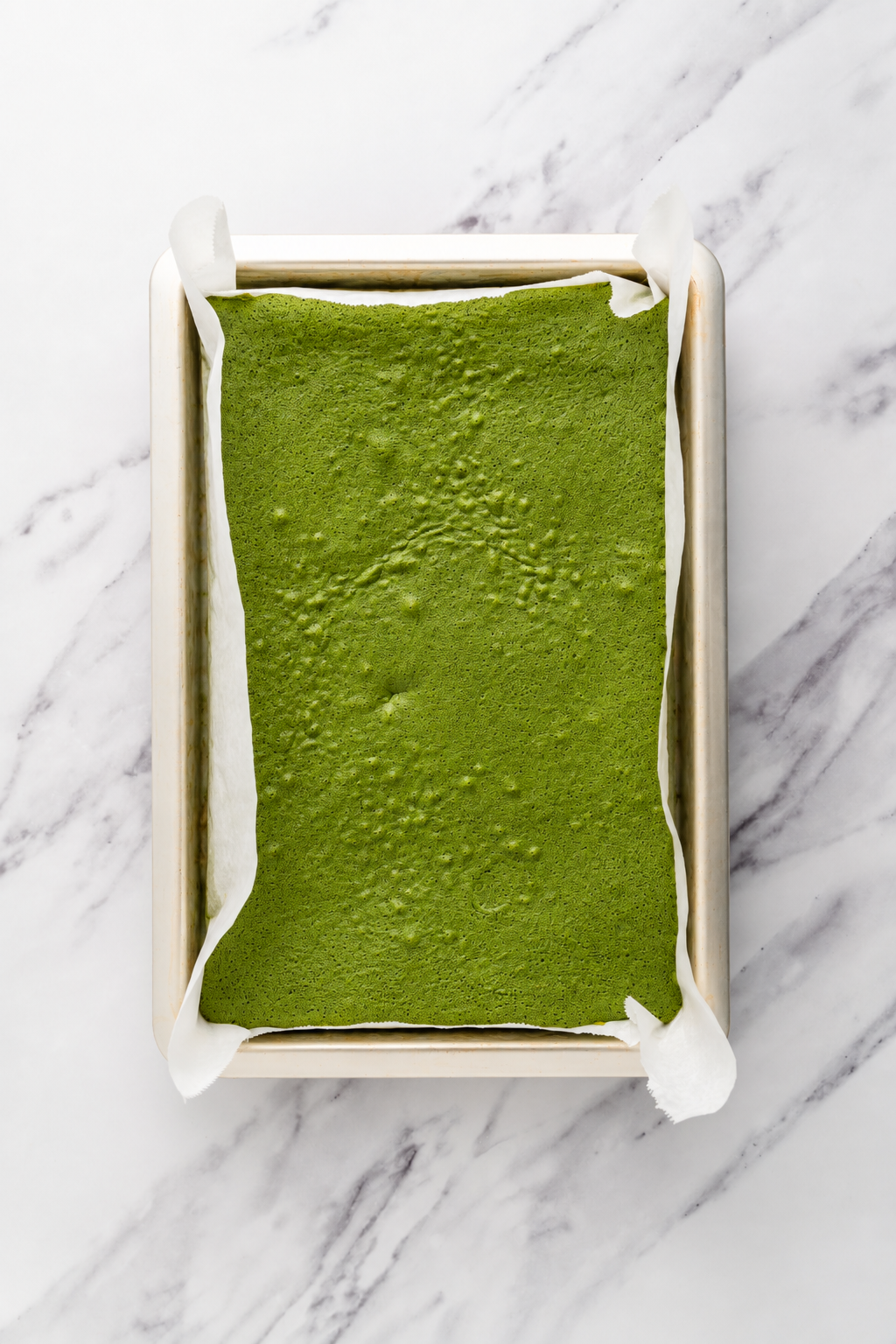
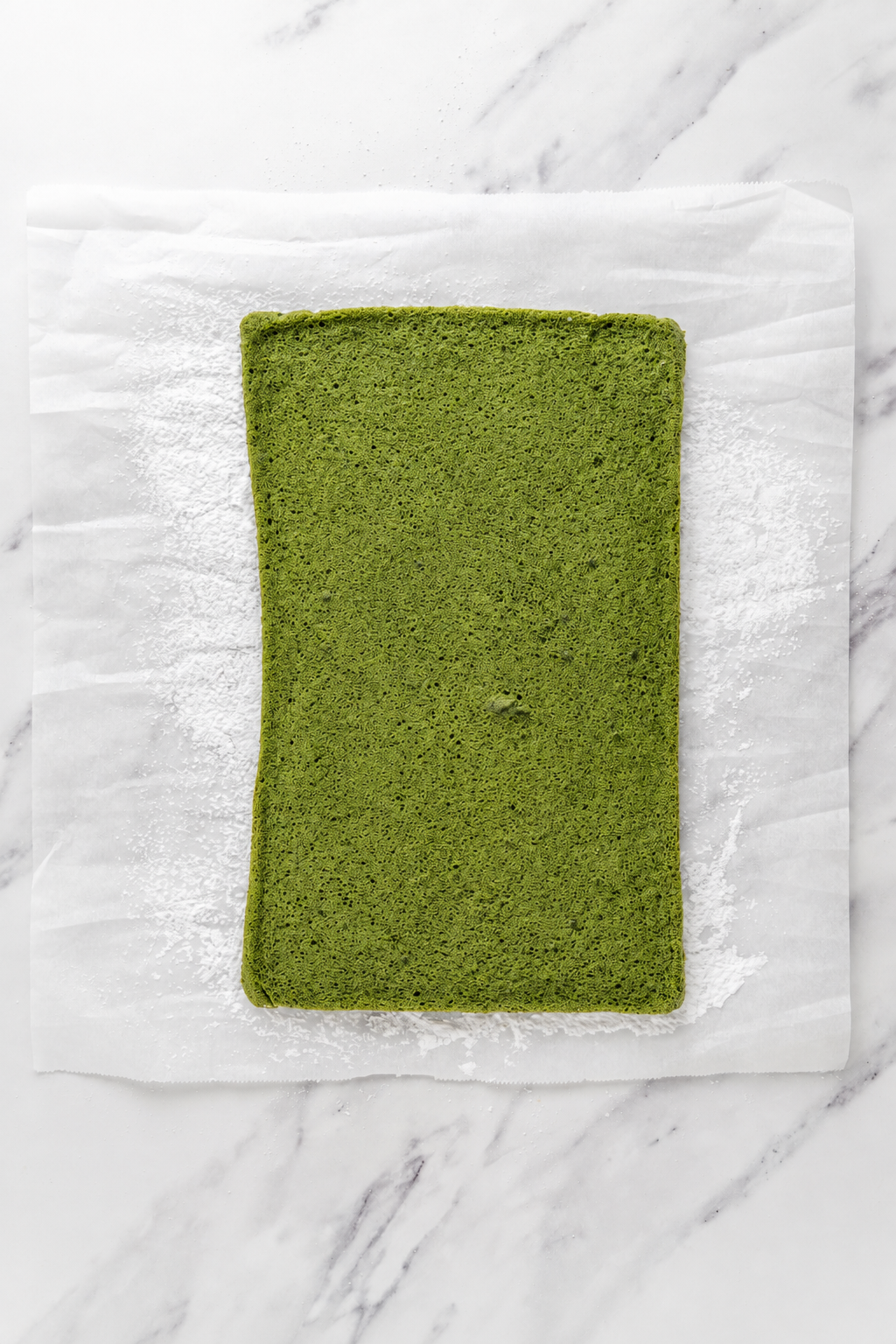
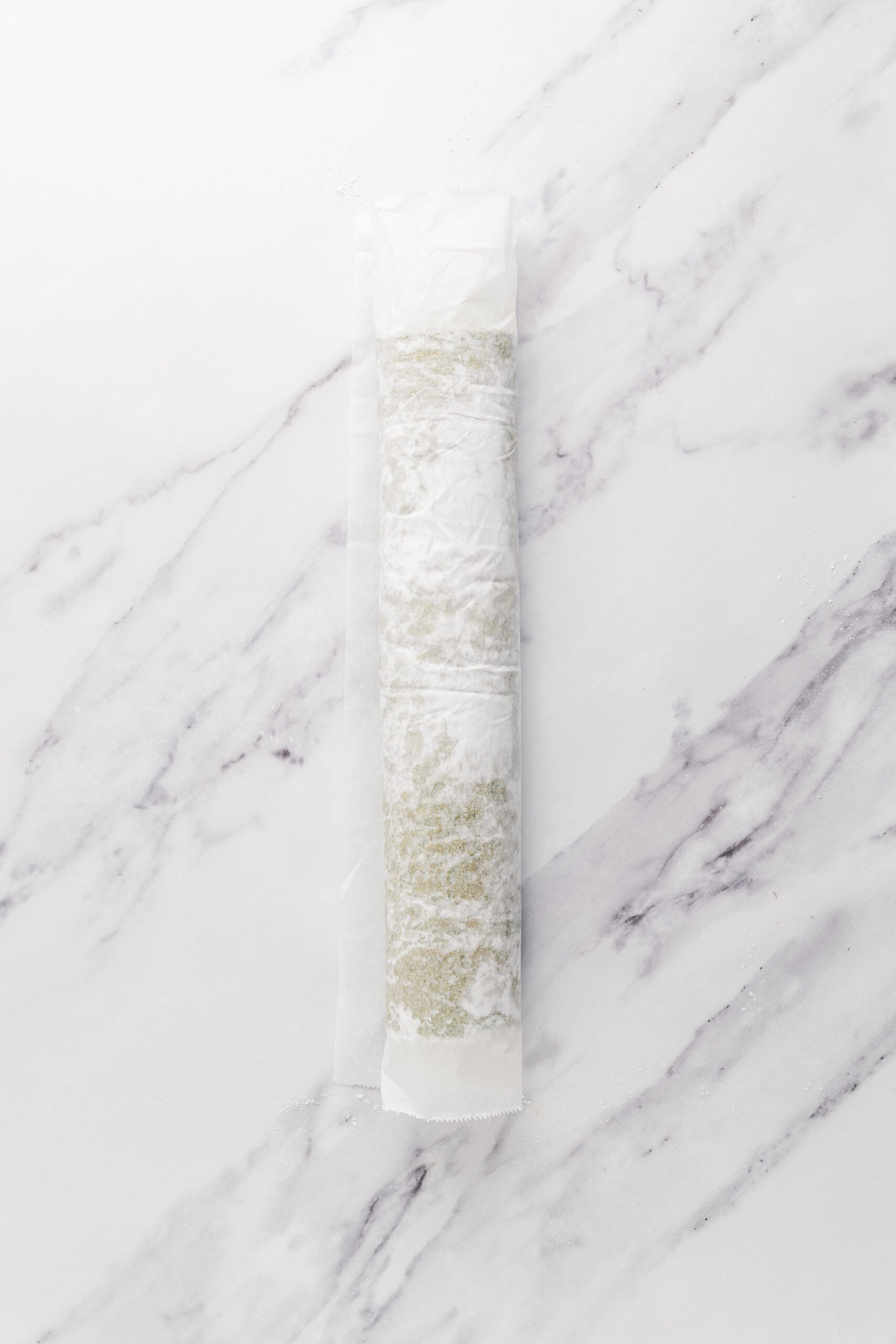
- While it is still warm, roll the cake up loosely from a short side, rolling the fresh parchment inside it. Leave it to cool completely in this shape, about 30 minutes. This trains the sponge to curve and is the single best insurance against cracking.
- Whip the cream, powdered sugar, vanilla and mascarpone together to firm peaks.
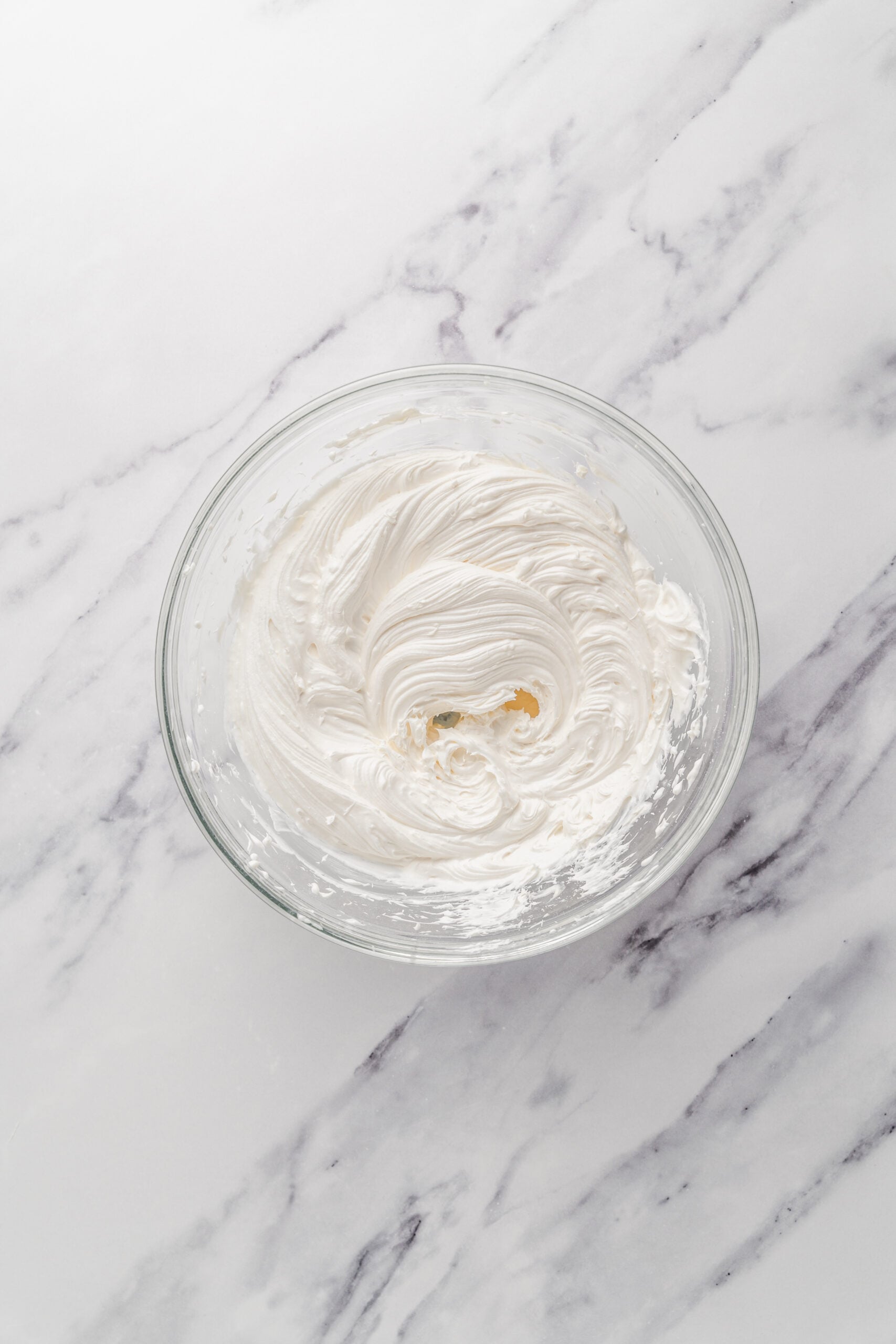
- Gently unroll the cooled cake. Spread the cream evenly, leaving a 2 cm clear border along the far edge so it does not squeeze out as you roll.
- Re roll firmly but without crushing, finishing seam side down. Wrap in parchment and chill for at least 2 hours.
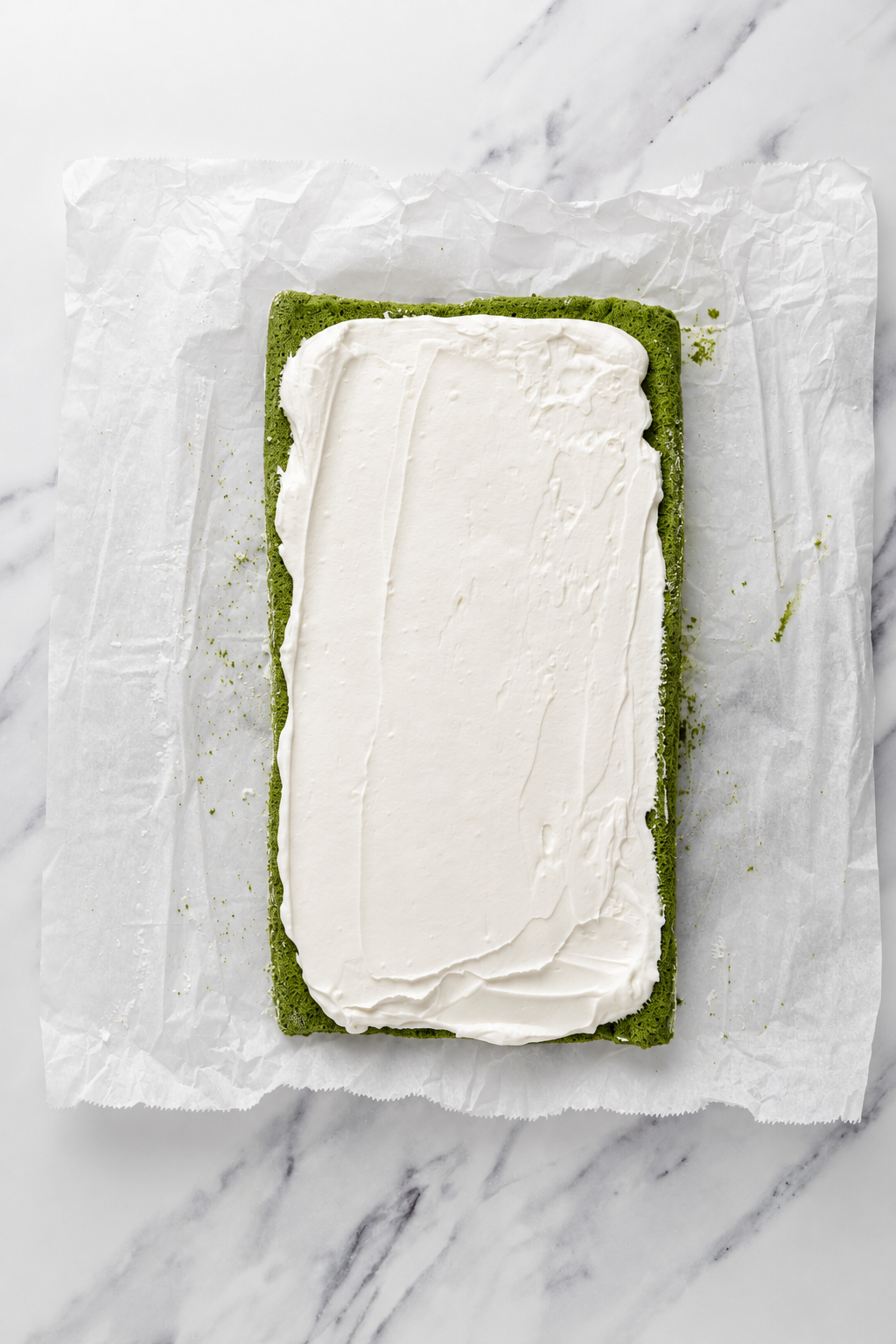
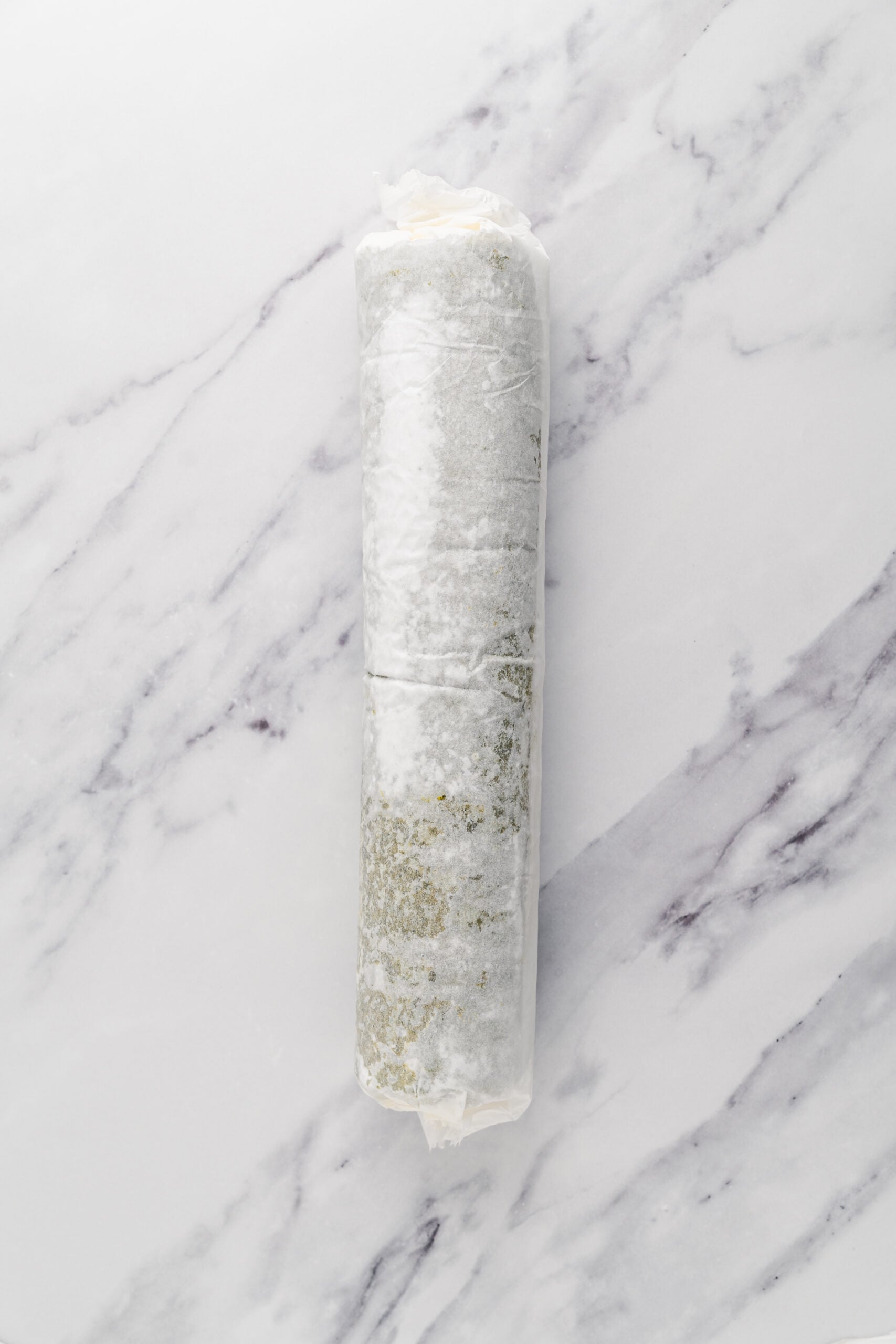
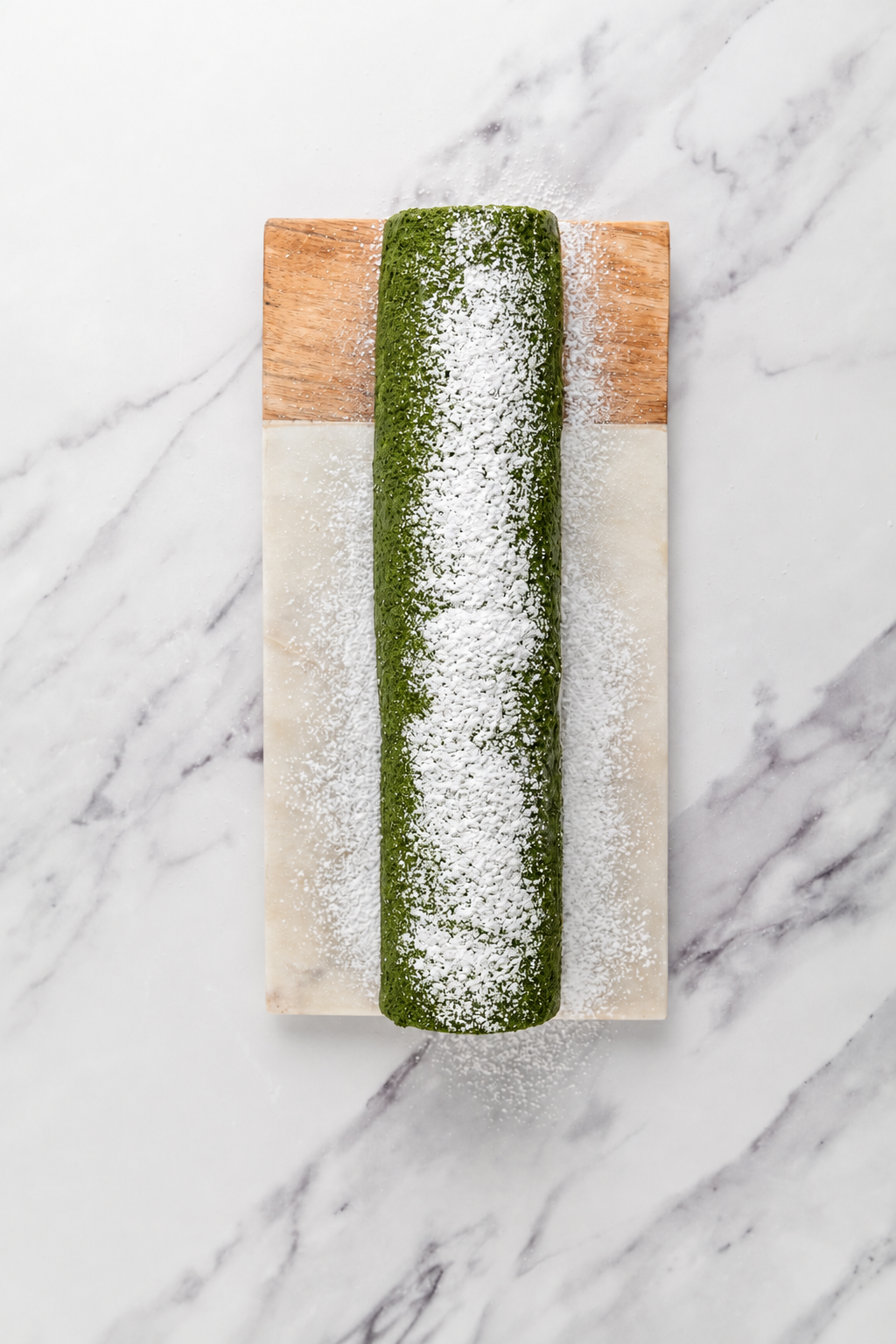
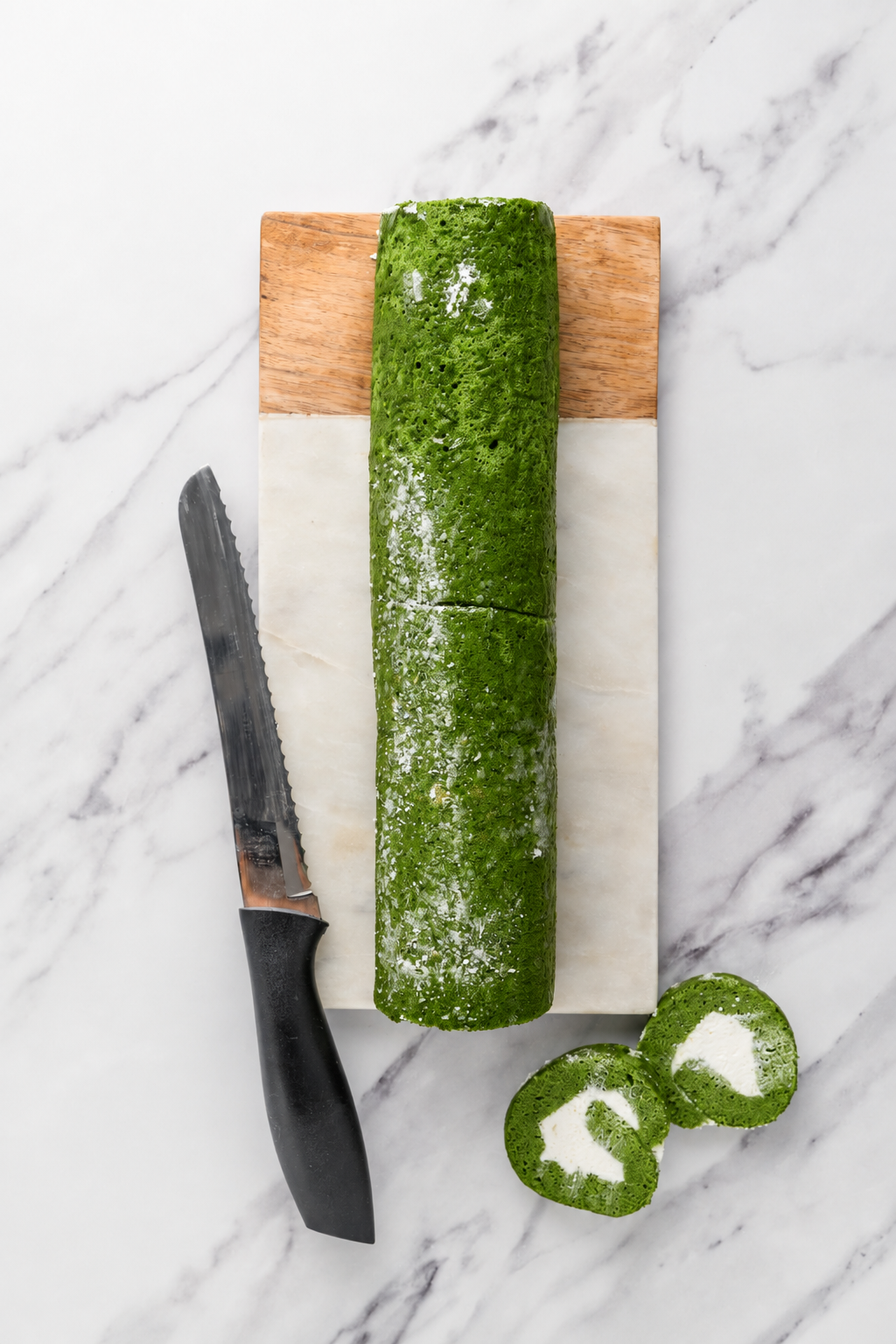
- Trim both ends with a hot dry knife, dust with powdered sugar and slice to serve. Wipe the blade between every cut or the cream drags across the spiral.
Troubleshooting
| What went wrong | Why | What to do |
|---|---|---|
| The sponge cracked when you rolled it | Overbaked, or rolled after it had cooled flat | Pull it at 12 minutes and roll it while it is still hot. A crack can be hidden seam side down with a dusting of sugar. |
| The sponge is dull olive, not green | Old matcha, or matcha stored in the light | Buy smaller tins and keep them sealed in the fridge. Age is almost always the cause, not your technique. |
| Dark flecks through the spiral | The matcha was not sifted | Sift it into the yolk batter through a fine mesh sieve, every time, even if the powder looks loose in the tin. |
| The cream squeezed out of the ends | Overfilled, or the border was not left clear | Leave a clear 2 cm border along the far edge and resist adding extra cream in the middle. |
| The spiral is loose with a gap in the centre | The first warm roll was too loose, or the re roll was too gentle | Roll snugly both times. Firm pressure, just short of squashing the sponge flat. |
| The slices smear instead of cutting clean | The cake was not chilled long enough, or the knife was cold | Two hours minimum in the fridge, and dip the knife in hot water and dry it between every cut. |
Tips for the Best Matcha Roll Cake
Buy Matcha You Would Actually Drink
Culinary grade does not mean bad grade, it means a stronger, more astringent tea that can stand up to sugar and flour. What you want to avoid is old matcha, which goes from bright green to khaki and tastes like hay. Check for a harvest or best before date on the tin, buy the smallest size you will get through in a couple of months, and keep it sealed in the fridge.
Underbake on Purpose
Twelve minutes will look wrong. The top will be pale and slightly tacky and every instinct will tell you to give it two more minutes. Press it lightly in the centre instead: if it springs back, it is done. Those extra two minutes are exactly the moisture you need for the roll, and once they are gone you cannot get them back.
Fold With a Spatula, Not a Whisk
A whisk feels faster and it tears the air straight out of the meringue. Use a large flexible spatula, cut down through the middle, sweep along the bottom of the bowl and turn the batter over on itself, rotating the bowl a quarter turn each time. Around twenty folds should do it. Stop the moment the white streaks vanish and accept a little unevenness rather than a deflated batter.
Chill Everything for the Cream
Cream whips on temperature as much as on speed. A cold bowl, cold beaters and cream straight from the fridge will reach firm peaks in about ninety seconds, while warm equipment can take three times as long and often ends up grainy on the way to butter. Ten minutes with the bowl in the freezer is worth it.
A roll cake is not a difficult cake. It is a cake with one narrow window, and everything you do before it opens is what decides how it goes.
Variations
Matcha and Strawberry
Lay eight halved strawberries cut side down in a line along the centre of the cream before you roll. Every slice comes out with a red heart in the middle of the spiral, and the acidity is a good foil for the matcha. Pat the fruit dry first, or the moisture will loosen the cream overnight.
Matcha and Red Bean
Spread 100 g of smooth red bean paste over the sponge first, then the cream on top of it. This is the most Japanese version of the cake and the one I would serve to my grandmother. The paste is sweet, so drop the powdered sugar in the cream to 15 g.
Hojicha Roll Cake
Swap the matcha for 10 g of hojicha powder, which is roasted green tea. The sponge bakes to a warm brown instead of green and tastes toasty and caramelised rather than grassy. It is much less bitter, so it is the version to make for people who find matcha too strong.
Matcha Chocolate
Fold 40 g of finely chopped white chocolate into the cream. White chocolate and matcha is a pairing I use constantly, including in my matcha white chocolate cookies, and it works just as well here. Chop it small or the slices drag.
Serving Suggestions
Cold, in Thick Slices
Straight from the fridge, cut about 2.5 cm thick. Thin slices fall apart and lose the drama of the spiral. A hot dry knife, wiped between cuts, gives you edges clean enough that you do not need to decorate anything.
With Unsweetened Tea or Black Coffee
The cake is barely sweet, so a sweet drink flattens it. Hojicha, plain sencha or an espresso all work. If you are serving it after a heavy meal, hot tea is the better call because it cuts the cream.
As Part of a Cake Board
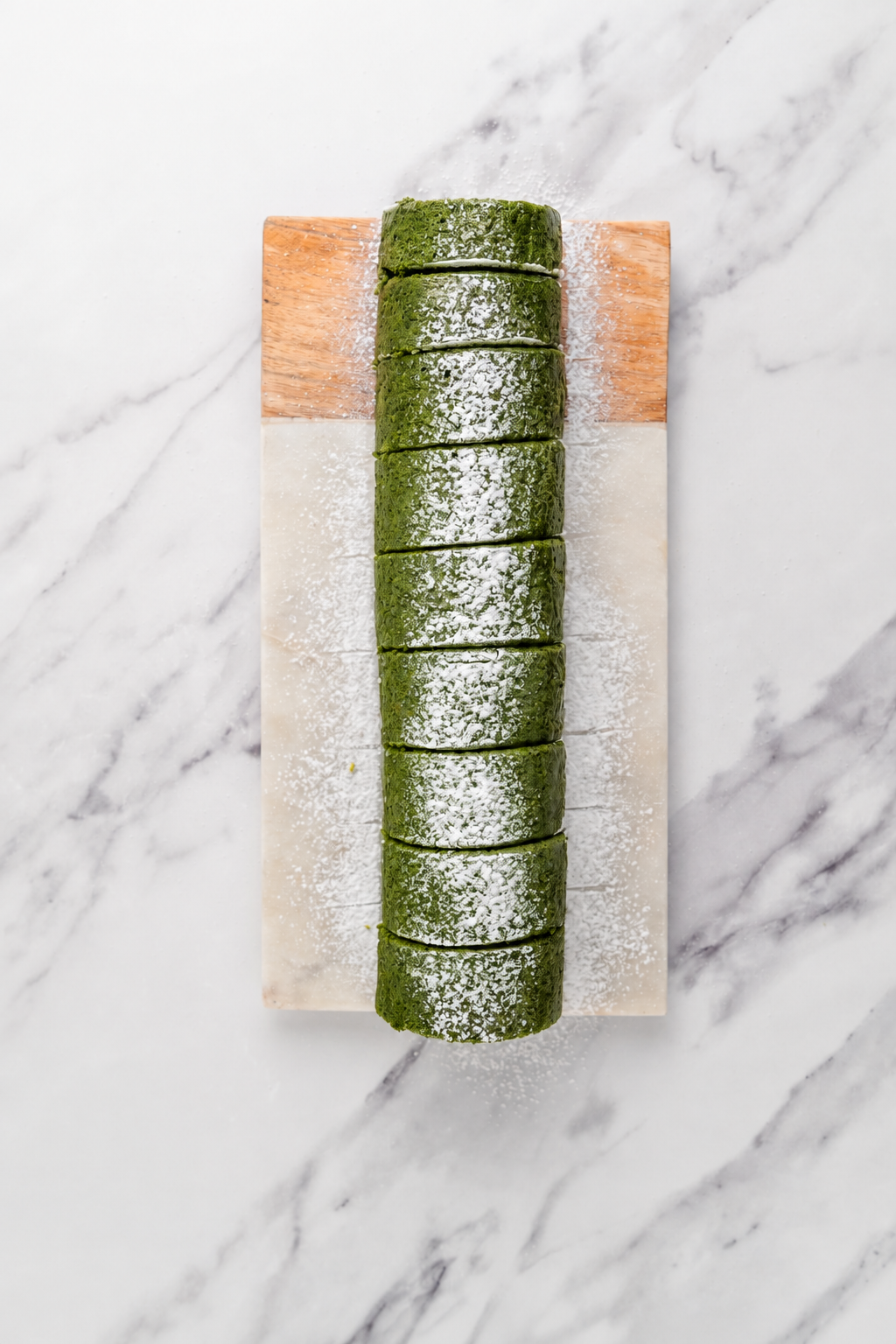
Sliced rounds laid flat on a long plate look far better than a whole log, and they let people take one without a server or a knife. Dust them right before they go out, because the powdered sugar dissolves into the sponge within about twenty minutes.
How to Store Matcha Roll Cake
Wrapped tightly in parchment and then in plastic, the filled cake keeps for 2 days in the fridge. It slices best on day one, when the cream is at its firmest and the sponge is at its softest. By the end of day two the cream has started to soften into the crumb, which is not unpleasant but does blur the spiral.
Do not leave it out. There is a lot of unstabilised whipped cream in this cake and it will not hold at room temperature for more than about an hour, less in summer. Take it out of the fridge maybe ten minutes before serving, just enough to take the hard chill off the sponge.
The unfilled sponge freezes very well, which is how I get ahead for a party. Roll it warm as usual, cool it completely, then wrap the rolled sponge in plastic and freeze it for up to a month. Thaw it in the fridge overnight, unroll, fill and chill as normal. I do the same thing with the sponge for my ube roll cake when I want two flavours on the table at once.
Common Mistakes to Avoid
Baking Until It Looks Golden
It never will. A matcha sponge stays green and pale on top no matter how long it is in there, so anyone baking by colour ends up with a dried out sheet at sixteen or seventeen minutes. Use the spring back test and the clock, and trust them over your eyes.
Rolling It Cold
A sponge that has cooled flat has set flat, and asking it to curve afterwards is asking it to crack. The first roll happens within a minute or two of the cake leaving the oven, while it is hot enough that you are working quickly to avoid burning your fingers. That is the correct amount of urgency.
Skipping the Sift
Matcha is fine enough to look perfectly smooth in the tin and still clump the second it hits liquid. Unsifted, you get dark bitter specks through the sponge, and they are very visible against a pale green crumb. Thirty seconds with a sieve prevents it entirely.
Over Whipping the Cream
Firm peaks, not stiff ones. Cream taken too far turns grainy and then splits into butter and buttermilk, and a split filling will weep through the sponge within hours. Stop when the beaters leave a clear track that holds its shape, then finish the last few turns by hand if you are unsure.
Cutting It Too Soon
Two hours in the fridge is a minimum, not a suggestion. The cream needs to set enough to hold the spiral when the knife goes through, and a warm roll cake will squash into an oval and push its filling out of the ends. If you are short on time, an hour in the freezer will get you there instead.
Frequently Asked Questions
Why did my matcha roll cake crack?
Nearly always one of two things: the sponge was overbaked, or it was rolled after it had cooled flat. Pull the cake at 12 minutes, when the surface springs back but still looks pale, and roll it up in fresh parchment within a minute or two of it leaving the oven. That warm roll sets the curve while the crumb is still flexible. A crack that does appear can be hidden by finishing the cake seam side down and dusting it with powdered sugar.
What grade of matcha should I use for baking?
Culinary grade, which is what this recipe is built around. It is stronger and more astringent, so it survives being mixed with sugar, flour and cream, and it costs a fraction of ceremonial grade. Ceremonial matcha will give you a brighter green sponge but its delicate flavour is mostly destroyed by the oven, so it is wasted money here.
Why is my matcha sponge olive coloured instead of green?
Age, almost certainly. Matcha oxidises quickly once it is opened and goes from bright green to a dull khaki, and it starts tasting flat and hay like at the same time. Buy the smallest tin you will get through in a couple of months, keep it sealed in the fridge, and check for a harvest date rather than just a best before.
Can I make a matcha roll cake without cake flour?
Yes. Measure out 60 g of plain flour, take away 8 g of it and replace that with 8 g of cornstarch, then sift the mixture twice so it is properly combined and aerated. The cornstarch lowers the protein content, which is the whole reason cake flour is specified, and the finished crumb is close enough that most people would not pick the difference.
How far ahead can I make it?
The filled cake keeps 2 days in the fridge, wrapped in parchment and then plastic, and it slices best on day one. For a longer lead time, freeze the sponge instead: roll it warm, cool it, wrap the rolled sponge and freeze it for up to a month, then thaw it in the fridge overnight before filling.
Do I have to use mascarpone in the filling?
No, but it earns its place. Mascarpone stiffens the whipped cream just enough that the spiral cuts clean instead of smearing, and it stops the filling weakening overnight. Beaten cream cheese at the same weight is a good substitute if that is what you have, though it is tangier and a little firmer.
Let’s Get Cooking
If you liked this recipe make sure to leave me a comment and rating down below. I’d love to know how it went! Also, don’t forget to tag me on Instagram @catherine.desserts.
Follow me on Facebook, Pinterest, YouTube, and TikTok for more of my baking creations and updates!
Matcha Roll Cake
A soft, bouncy matcha sponge rolled around barely sweet whipped cream, with a tight green and white spiral in every slice. The warm roll is what stops it cracking.
- Prep Time: 25 minutes
- Chill Time: 2 hours
- Cook Time: 13 minutes
- Total Time: 2 hours 40 minutes
- Yield: 8 to 10 slices 1x
- Category: Dessert
- Method: Baking
- Cuisine: Japanese
Ingredients
Matcha sponge
- 4 large eggs, separated, at room temperature
- 90 g granulated sugar, divided
- 60 g cake flour
- 8 g culinary grade matcha powder
- 30 ml whole milk
- 30 ml neutral oil
- Pinch of fine salt
Whipped cream filling
- 250 ml heavy cream, well chilled
- 25 g powdered sugar
- 1 teaspoon vanilla extract
- 50 g mascarpone, optional but recommended
To finish
- Powdered sugar, for dusting
Instructions
- Heat the oven to 175 C (350 F). Line a 33 by 23 cm jelly roll pan with parchment, leaving a small overhang on the long sides.
- Whisk the egg yolks with 30 g of the sugar until pale and slightly thickened. Whisk in the milk and oil.
- Sift the cake flour, matcha and salt directly into the yolk mixture. Whisk just until smooth.
- In a clean bowl, whip the egg whites to soft peaks. Add the remaining 60 g sugar in three additions, whipping to firm peaks that still look glossy rather than dry and grainy.
- Fold a third of the meringue into the yolk batter to loosen it, then fold in the rest in two additions. Stop as soon as no white streaks remain.
- Pour into the lined pan and spread level with an offset spatula. Tap the pan firmly on the counter twice to release large bubbles.
- Bake for 12 to 14 minutes, until the surface springs back when pressed lightly. Do not overbake, because a dry sponge is what cracks.
- Lay a sheet of parchment on the counter and dust with powdered sugar. Turn the hot cake out onto it and peel away the lining paper.
- While still warm, roll the cake up loosely from a short side, rolling the fresh parchment inside it. Leave to cool completely in this shape, about 30 minutes.
- Whip the cream, powdered sugar, vanilla and mascarpone together to firm peaks.
- Gently unroll the cooled cake. Spread the cream evenly, leaving a 2 cm clear border along the far edge so it does not squeeze out.
- Re roll firmly but without crushing, finishing seam side down. Wrap in parchment and chill for at least 2 hours.
- Trim both ends with a hot dry knife, dust with powdered sugar and slice to serve.
Notes
- Matcha choice: culinary grade is right here and far cheaper. Ceremonial grade gives a brighter green but its flavour is wasted once baked. A dull olive sponge usually means old matcha rather than a technique problem.
- No cake flour: measure 60 g of plain flour, remove 8 g and replace it with cornstarch, then sift twice.
- Cracking: almost always overbaking, or rolling the sponge after it has cooled flat. Pull it at 12 minutes and roll it warm.
- Make ahead: the rolled and filled cake holds 2 days refrigerated and slices best on day one. The unfilled sponge can be rolled, cooled, wrapped and frozen for a month.
- Variation: a line of halved strawberries laid along the cream before rolling gives a fruit centre in every slice.
- Slicing: dip the knife in hot water and wipe it dry between every cut, or the cream drags across the spiral.
Nutrition
- Serving Size: 1 slice