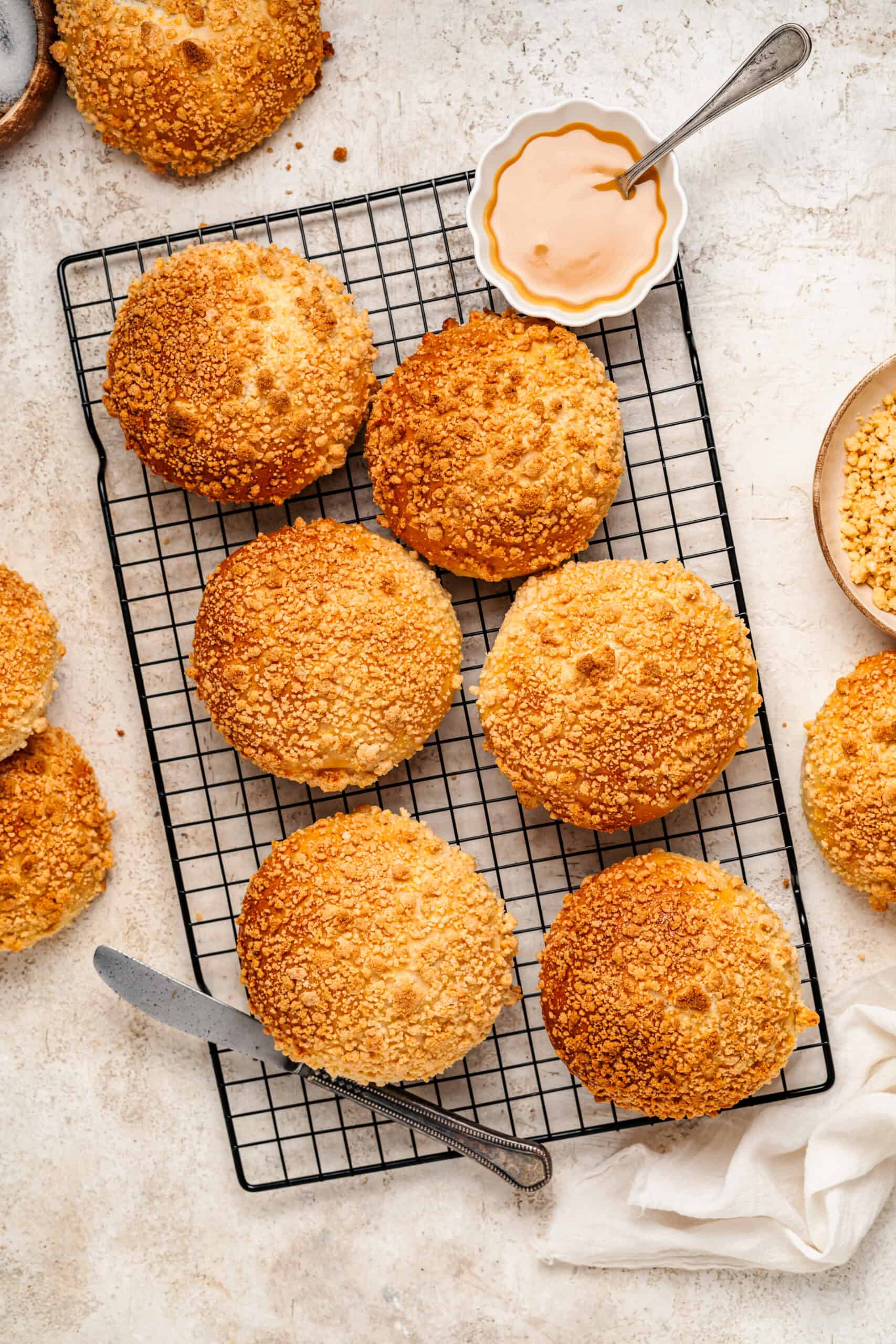
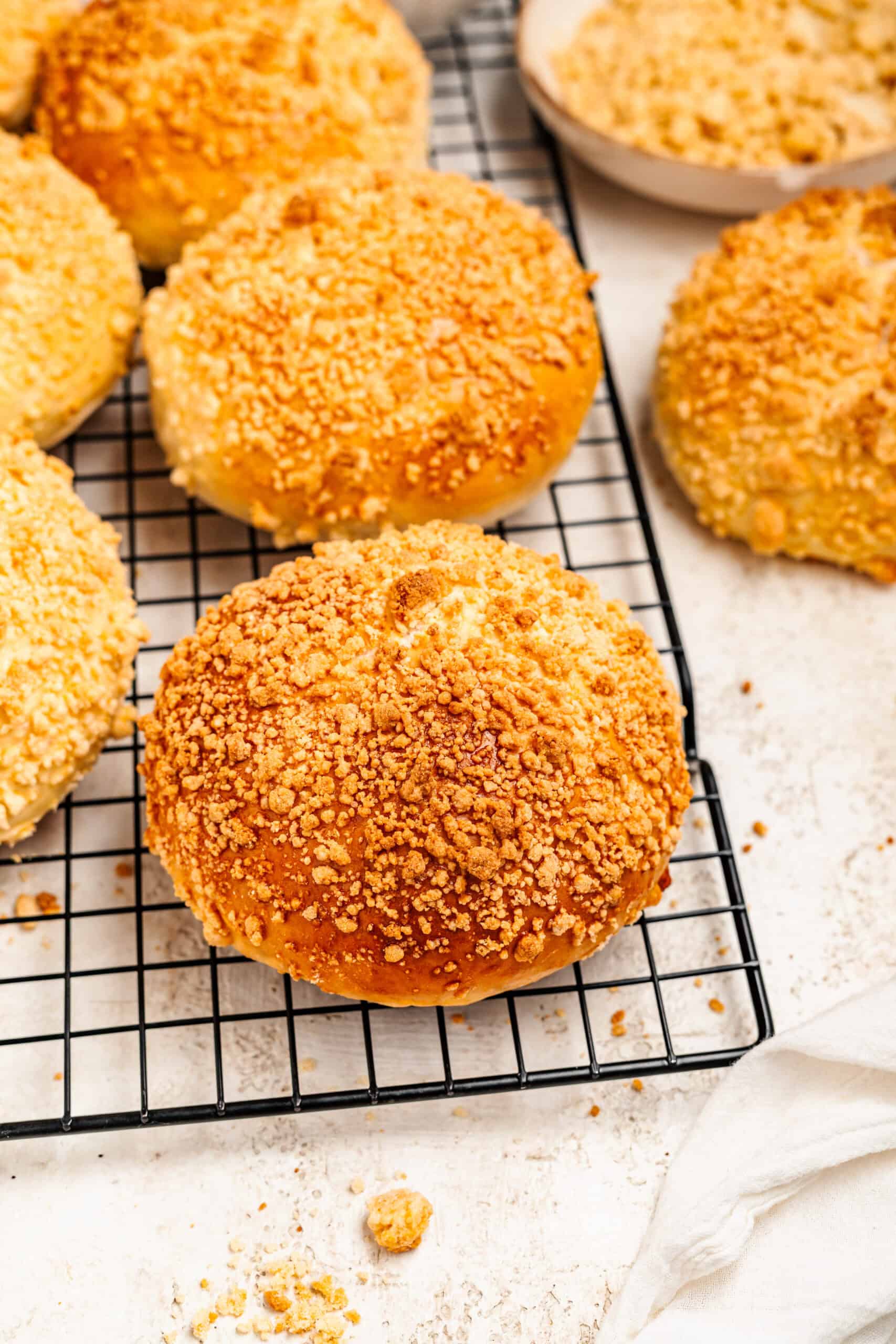
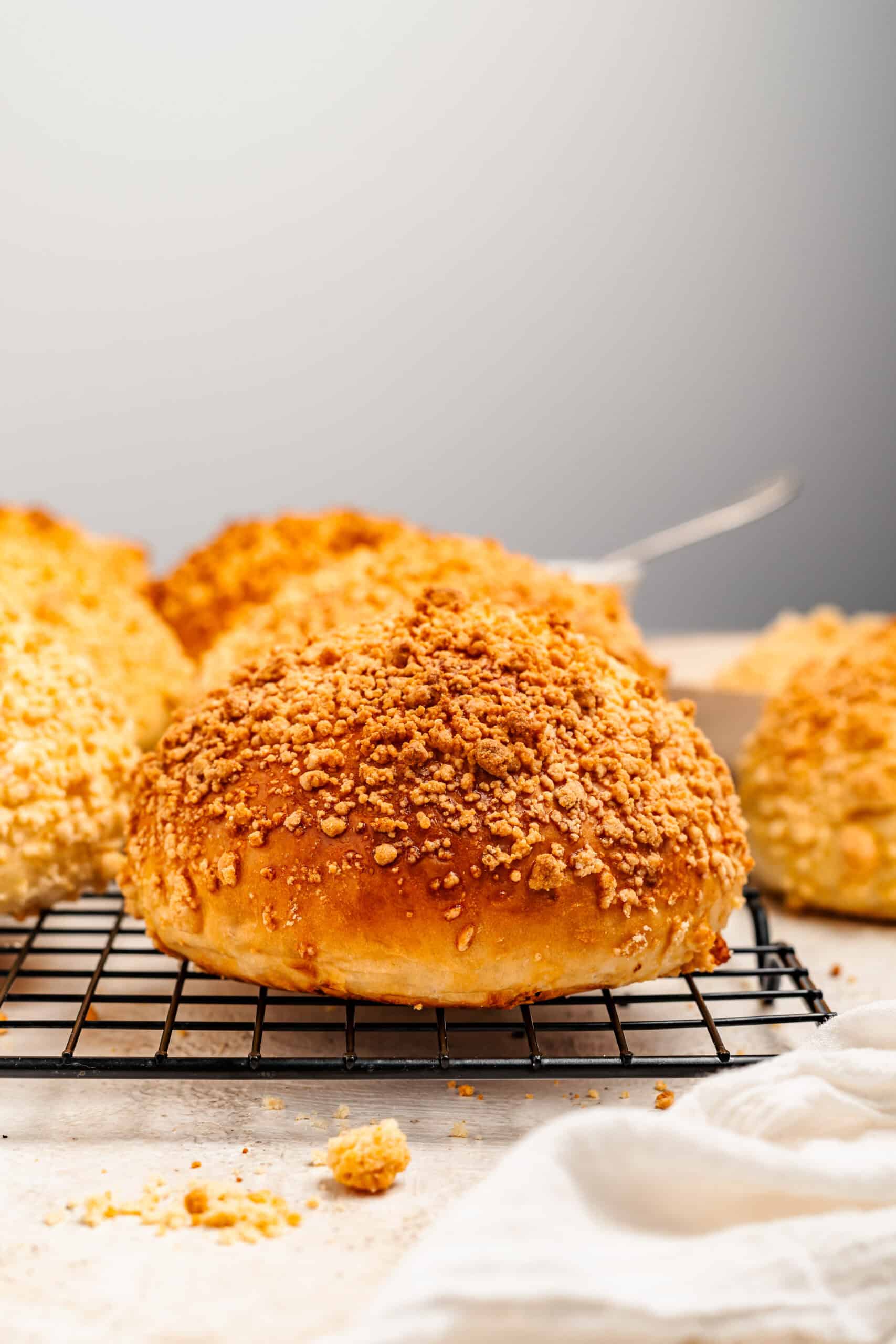
Soboro bread is the one Korean bakery bun I cannot walk past, a pillow soft milk bun buried under a thick, crackly crown of peanut streusel that shatters the second you bite in.
The first time I pulled a tray of soboro bread out of my own oven I actually laughed out loud, because the tops had that exact pebbled, golden crackle I grew up staring at through the glass case at my local Korean bakery. For years I assumed that crust was some professional trick I would never crack at home. It turns out the whole thing hides one small secret, and once I found it I could not stop making these.
I tested this recipe far more times than I would like to admit. My early batches tasted lovely but went sad and soft by the next morning, the streusel slumping into something closer to a damp cookie top. The fix was almost annoyingly simple, and it lives down in the topping section below. If you have ever made my Japanese milk bread, the dough here will feel like a familiar friend, just shaped small and given a crunchy peanut hat.
What is Soboro Bread
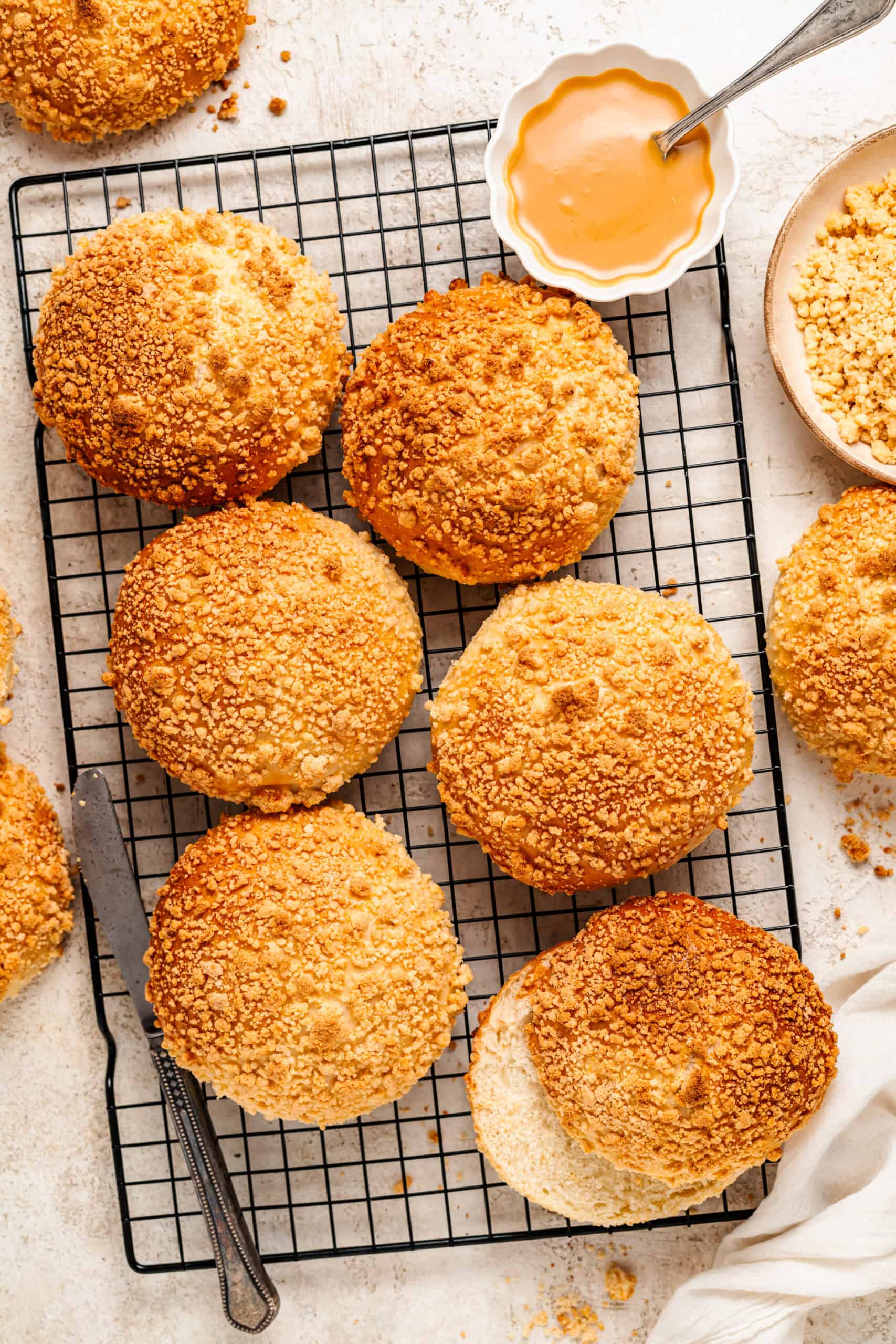
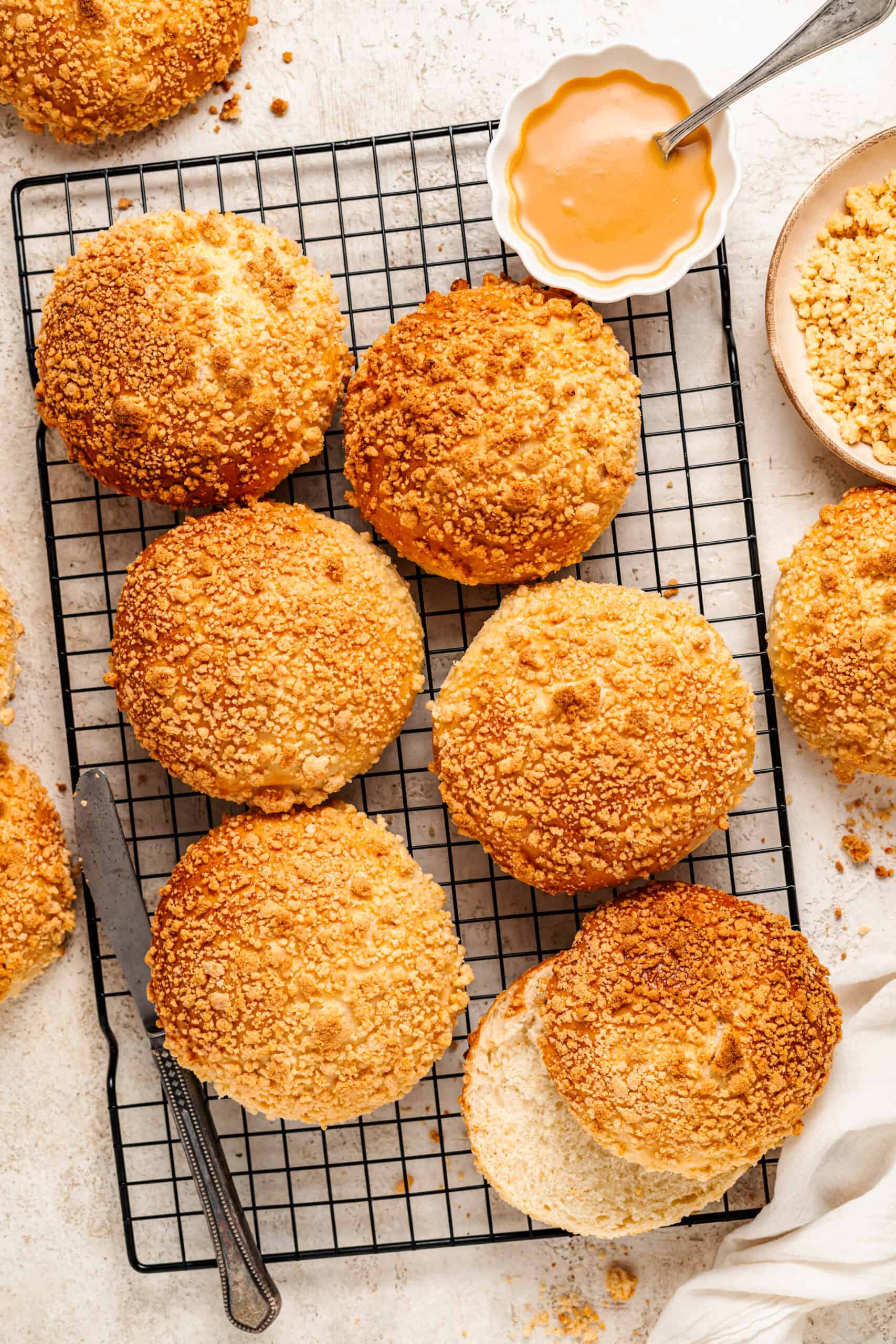
Soboro bread, or soboro ppang in Korean, is a classic bakery bun made from a soft enriched milk dough and finished with a heavy layer of crumbly peanut streusel. The word soboro means crumbled, which is exactly what that topping is: coarse, sandy clusters of sweet dough pressed all over the dome so it bakes up looking like a little golden brain. The contrast is the whole point. Underneath the crunch sits a cloud soft, faintly sweet crumb, and the two textures together are what make people reach for a second one before they have finished the first.
Where soboro bread comes from
Soboro ppang is a fixture of Korean neighborhood bakeries, part of a whole family of sweet, pillowy buns that came out of the mid twentieth century Korean baking boom. It sits happily beside other bakery case icons like the pineapple bun and the coconut cream bun, all of them built on the same idea of a tender enriched dough dressed up with a textured, sweet top. Peanut is the traditional flavor for the crumb, though sesame and plain versions show up too. If you love a topped bakery bun, my coffee buns come from the same corner of my heart.
How to make soboro bread
There are three moving parts and they are easy to stagger. First you cook a quick water roux, a cooked flour paste that keeps the buns soft for days. While it cools you mix and knead the milk dough, then let it proof. During that proof you throw together the peanut soboro crumbs, which take about four minutes. After that it is just shaping, an egg wash, a firm press into the crumbs, a short second proof, and a hot oven. None of the steps are fussy, they just want to happen in the right order.
At a Glance: Soboro Bread Times and Yield
| Makes | Prep | Cook | Proof and cool | Total |
|---|---|---|---|---|
| 10 buns | About 45 min active | 15 min | Roux 1 hr, proofs 2 to 3 hr | About 5 hr, mostly hands off |
Ingredients
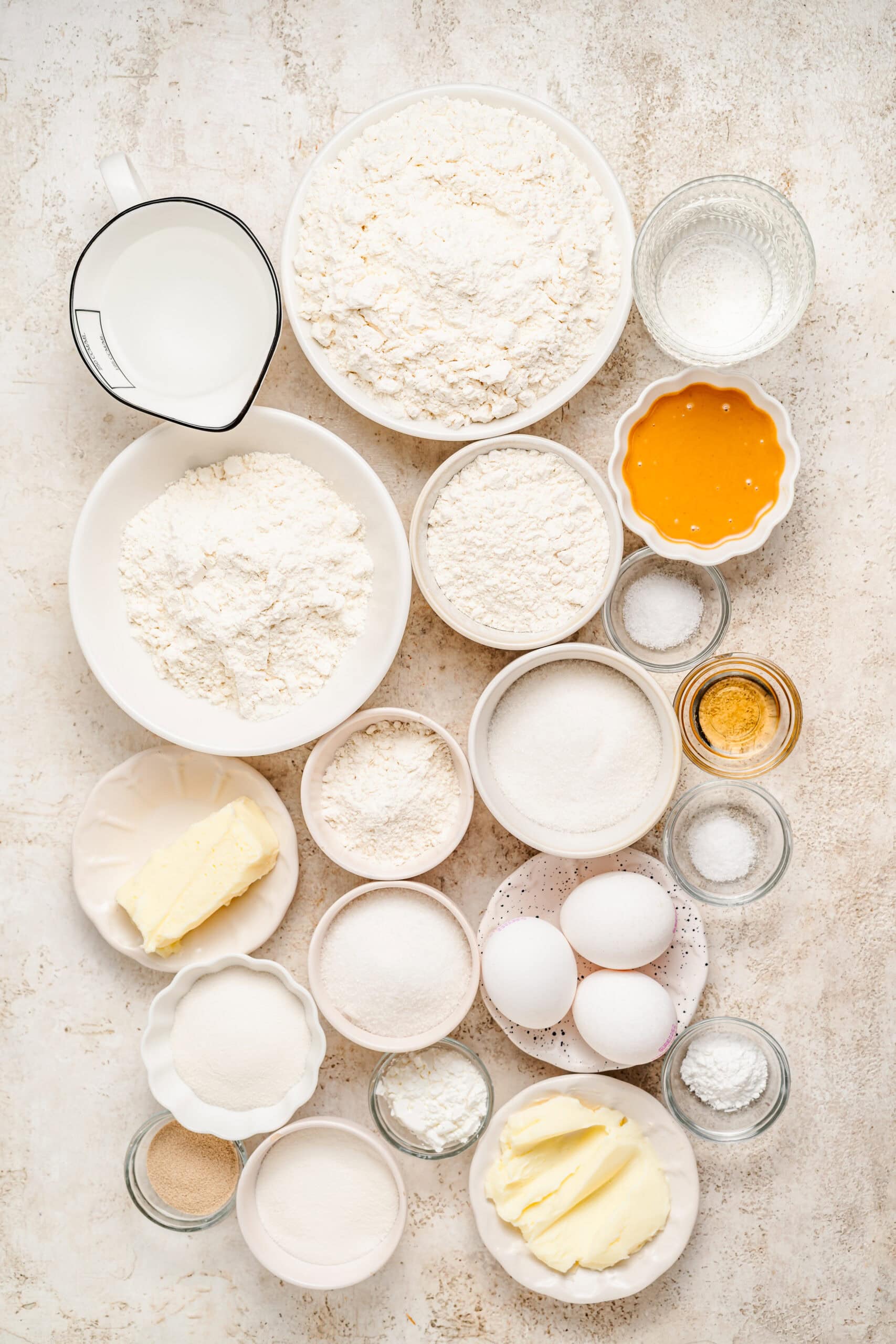
Quantities live in the recipe card at the bottom of this post. Here I want to walk you through what each part actually does, because a couple of these ingredients are doing quiet, important work.
Water roux
- Bread flour: cooked with water into a smooth paste, it pre gelatinizes the starch so the finished buns hold on to moisture and stay tender well past day one.
- Water: the liquid that lets the flour swell into a soft, puddinglike roux over gentle heat.
Milk bun dough
- Bread flour: the backbone of the dough, its higher protein builds the stretchy gluten that gives these buns their signature fluffy pull.
- All purpose flour: softens the crumb slightly so the buns are tender rather than chewy or tough.
- Milk powder: deepens that milky bakery flavor and helps the crust brown to a rich gold.
- Granulated sugar: feeds the yeast and lends the gentle sweetness that reads as bakery, not dessert.
- Salt: tightens the gluten and keeps the whole bun from tasting flat.
- Instant dry yeast: the lift, mixed straight into the dry ingredients so it disperses evenly.
- Egg: adds richness and structure and gives the crumb its soft golden color.
- Lukewarm water: hydrates the dough at body temperature so the yeast wakes up without being shocked.
- Unsalted butter: kneaded in last for a plush, enriched texture and a clean buttery finish.
Peanut soboro streusel topping
- Unsalted butter: the fat that binds the crumbs and carries flavor while keeping them tender and short.
- Caster sugar: sweetens the topping and helps it crisp as it bakes.
- Smooth peanut butter: the star flavor, so use a tight, thick natural style rather than a runny one or the crumbs will not clump.
- Egg yolk: just enough to bind the crumbs into pea sized clusters without turning them to paste.
- Vanilla: rounds out the peanut and butter into something warm and bakery sweet.
- Cake flour: its low protein keeps the streusel delicate so it crumbles instead of turning bready.
- Milk powder: a second hit of that creamy, milky note right in the crust.
- Cornstarch: the one ingredient I beg you not to skip, it is what keeps the topping shatteringly crisp overnight instead of going soft.
- Baking powder: a touch of lift so the crumbs bake up light rather than dense.
- Fine sea salt: sharpens the peanut flavor and balances the sugar.
Optional: My Favourite Extras That Add a Little Magic
- Sweet red bean paste: tuck a spoonful into the center of each bun before topping for the classic filled bakery version. My homemade red bean buns use the same anko if you want to make a batch.
- Chopped roasted peanuts: press a few into the crumb coat for extra crunch and a stronger nutty look.
- Flaky sea salt: a pinch scattered over the wet crumbs before baking makes the sweetness pop.
Substitutions: Smart Ingredient Swaps That Still Taste Amazing
- Tahini for peanut butter: use the same weight of tahini for a sesame soboro that is just as crunchy and lovely for anyone avoiding peanuts.
- Cookie butter for peanut butter: swap in Biscoff spread for a warm, spiced topping that tastes like the holidays.
- Cake flour swap: if you have none, use all purpose flour with 2 tsp of the flour removed and replaced with cornstarch per cup to soften it.
- Whole milk for the water in the dough: works beautifully and pushes the flavor even richer, just warm it to body temperature first.
How to Make Soboro Bread Step by Step
Read through once before you start so the timing clicks. I have grouped the steps in pairs with the photos that go with them so you can see exactly what each stage should look like.
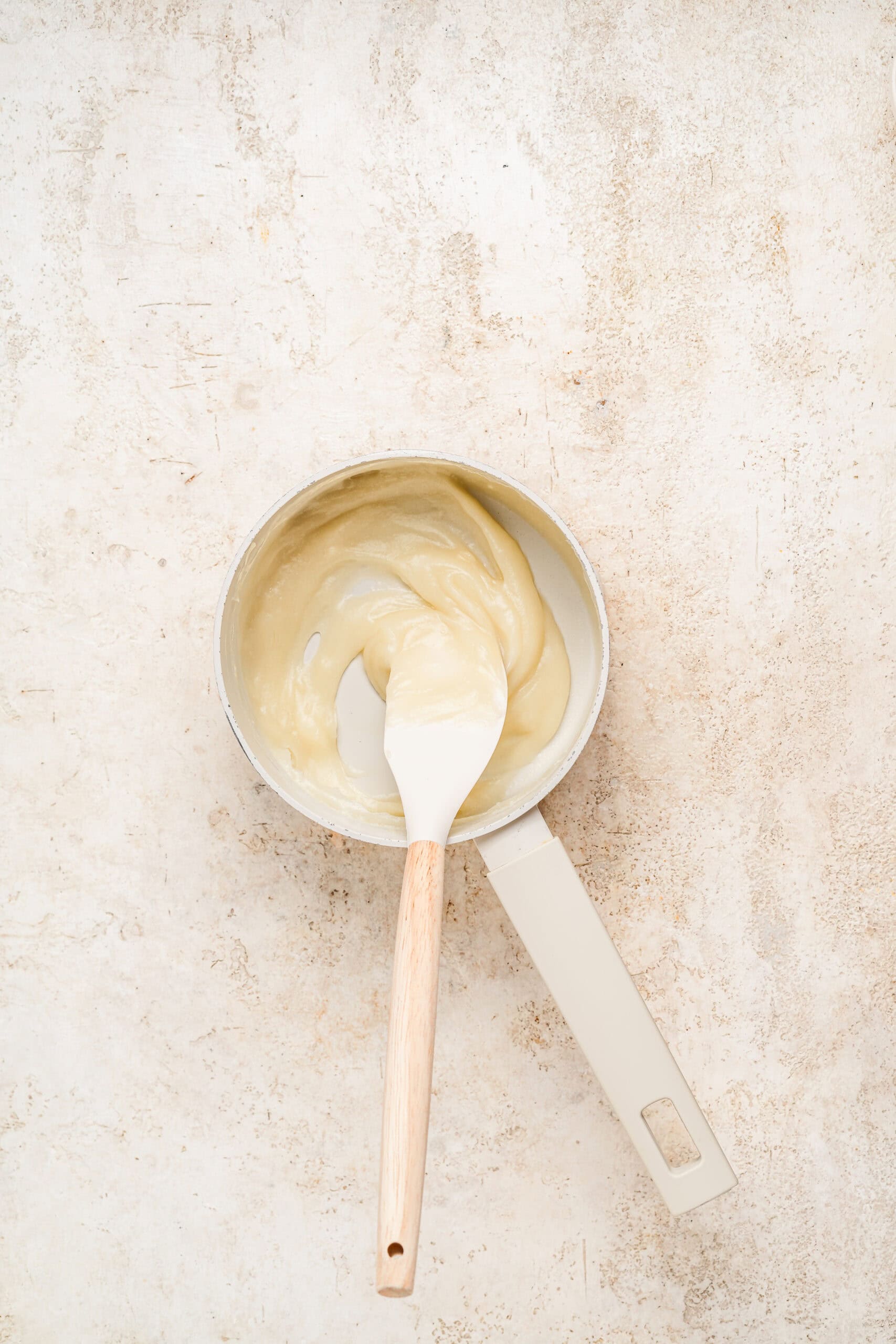
- Make the water roux. Whisk the bread flour and water together in a small saucepan over medium heat for about 5 minutes, until it thickens into a smooth, semi translucent paste and the whisk leaves clear tracks.
- Cool it fully. Scrape the roux into a small bowl, press cling wrap right onto the surface so it does not form a skin, and leave it for about 1 hour until it reaches room temperature.
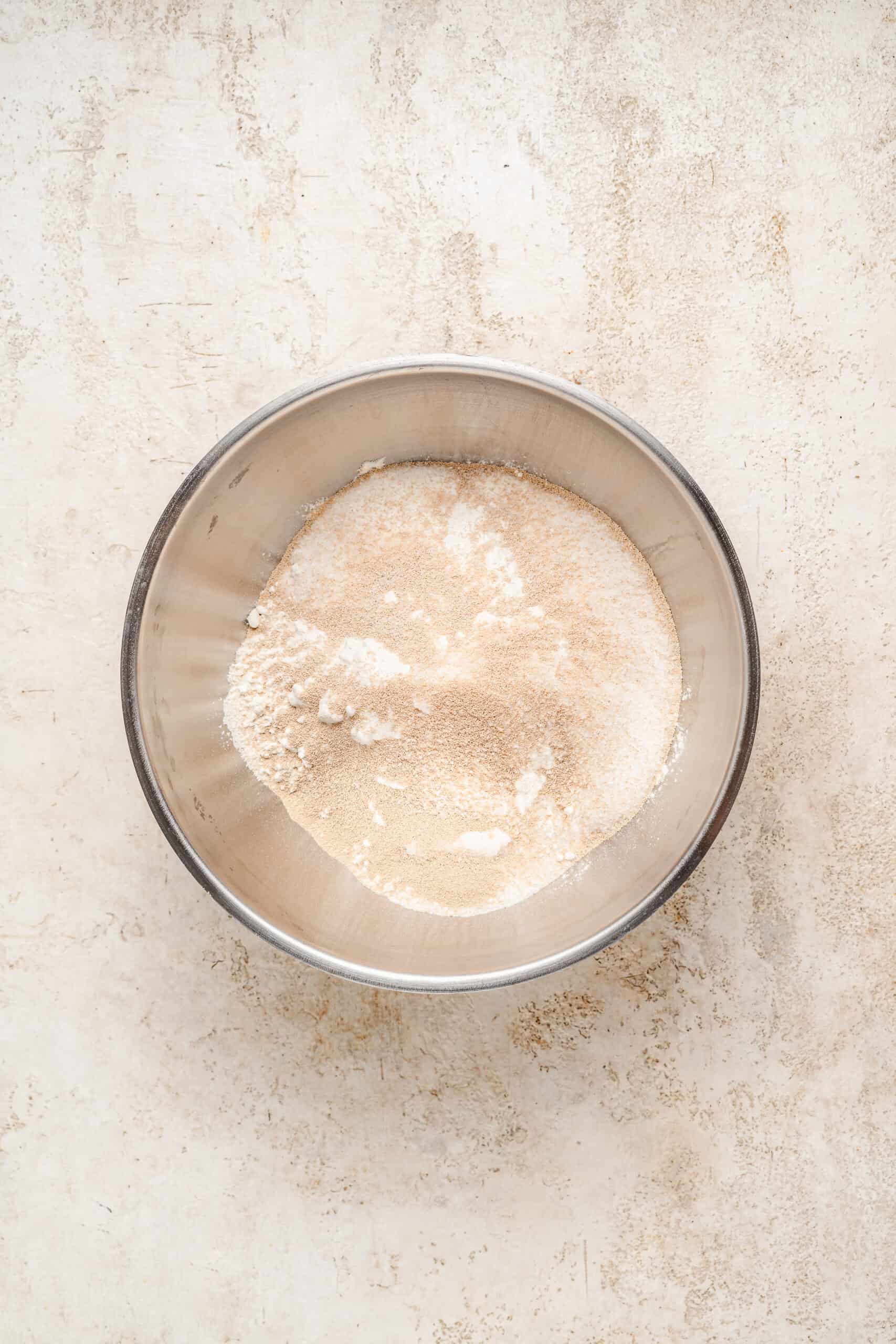
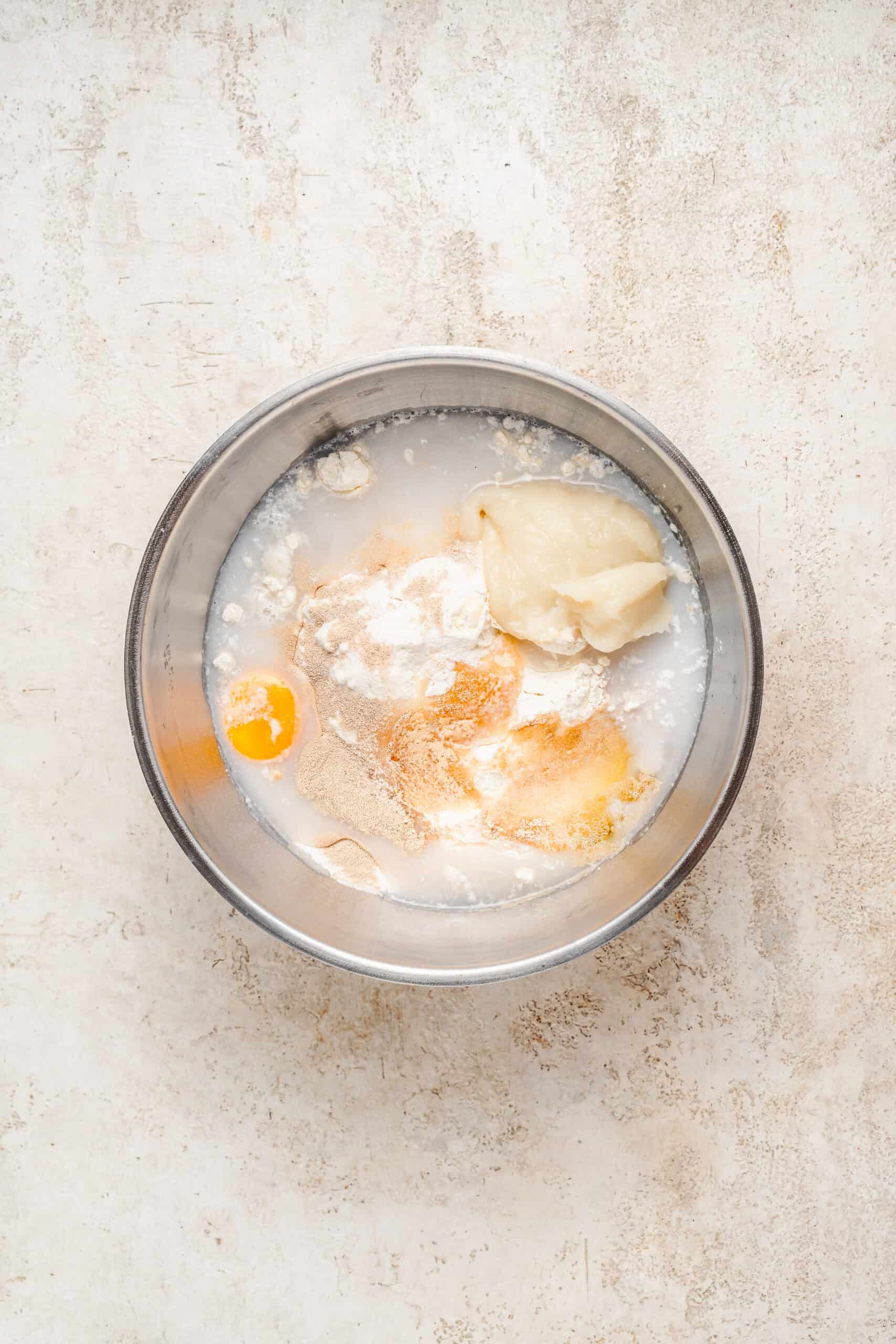
- Mix the dough. In a stand mixer with the dough hook, stir together the bread flour, all purpose flour, milk powder, sugar, salt and yeast, then add the egg, lukewarm water and cooled roux. Mix on medium for about 3 minutes to a shaggy, rough dough.
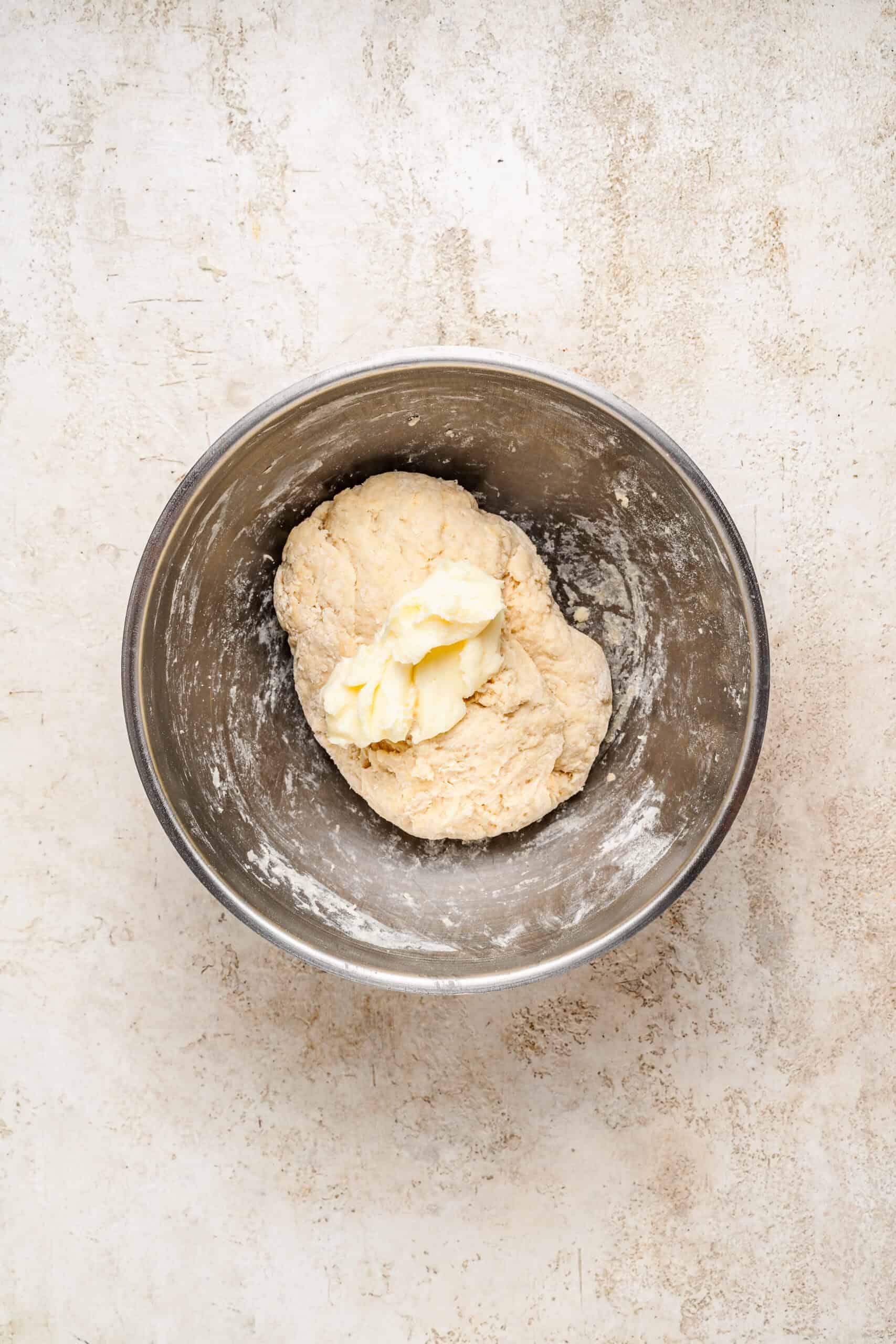
- Knead and first proof. Add the softened butter and knead on medium for about 20 minutes until the dough is smooth and passes the windowpane test, then shape it into a ball and proof in an oiled bowl in a warm spot for 1 to 2 hours until doubled.
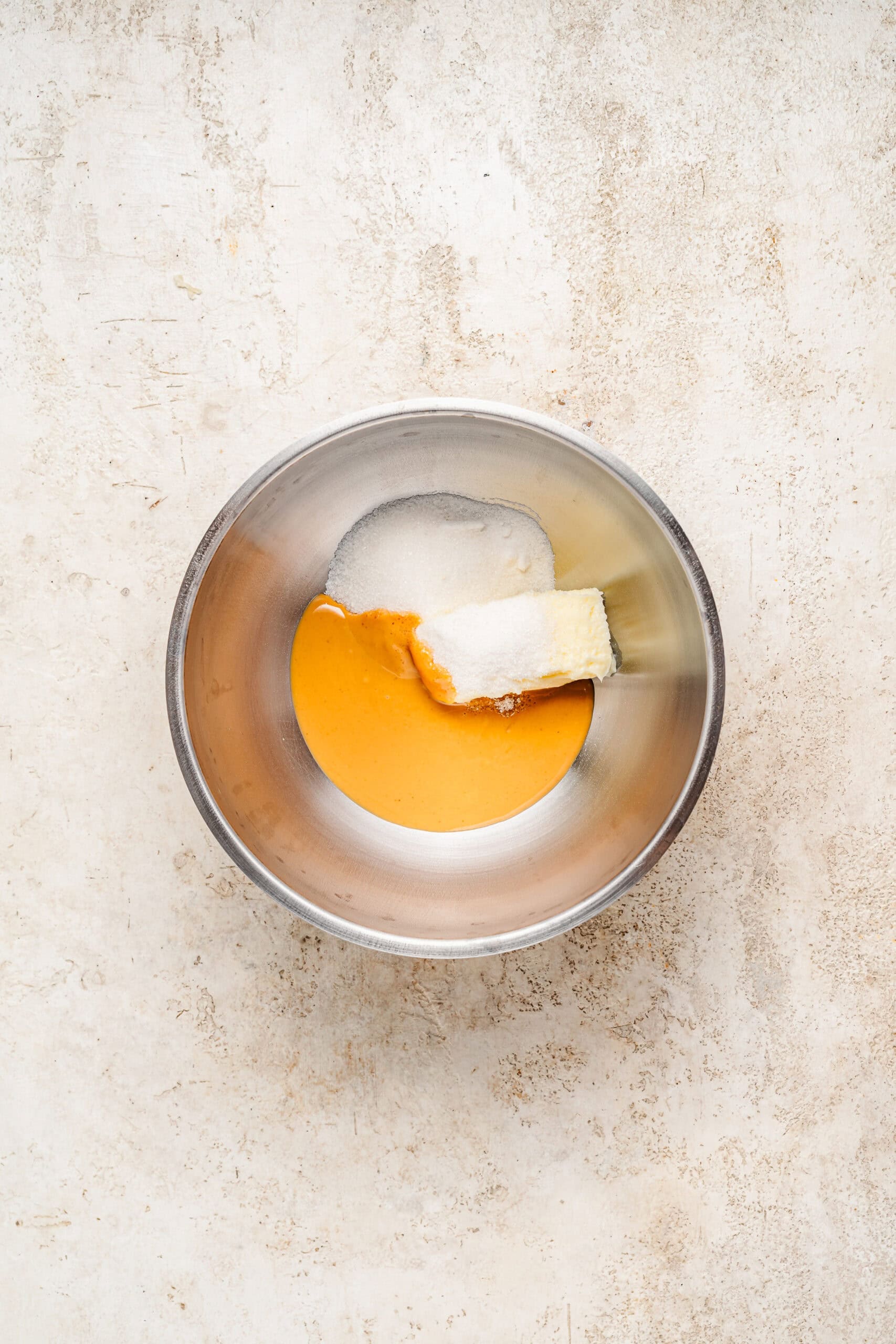
- Cream the soboro base. While the dough proofs, beat the butter, caster sugar and peanut butter until light and fluffy, about 2 minutes, then beat in the egg yolk and vanilla.
- Make the crumbs. Add the cake flour, milk powder, cornstarch, baking powder and salt all at once and mix on low for just 15 to 20 seconds, until the mixture looks like coarse damp sand with pea sized clumps. Stop there and chill the crumbs uncovered.
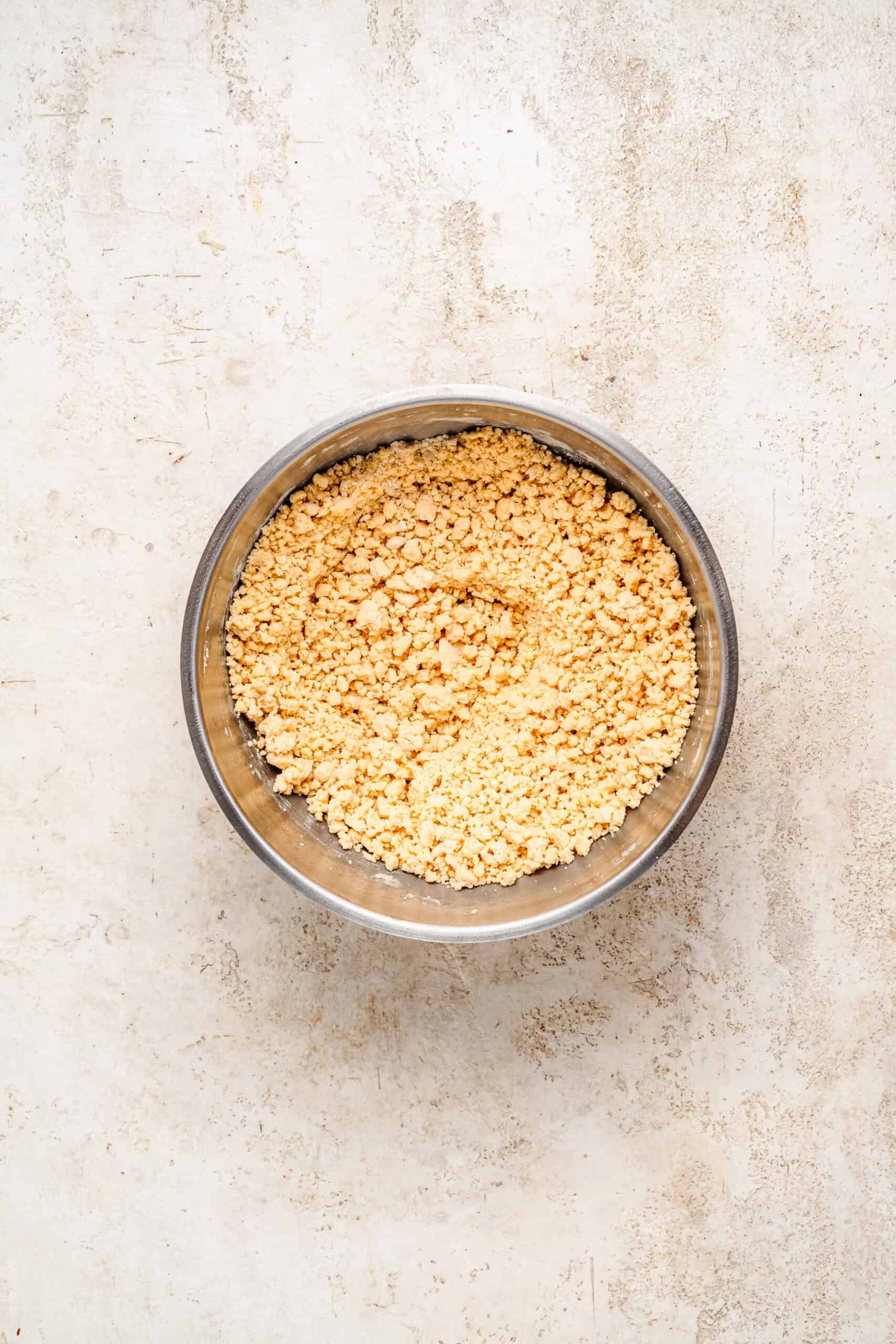
- Divide the dough. Press the air out of the proofed dough, divide it into 10 equal pieces of about 80 g, roll each into a tight smooth ball, and rest them for 10 minutes under cling wrap.
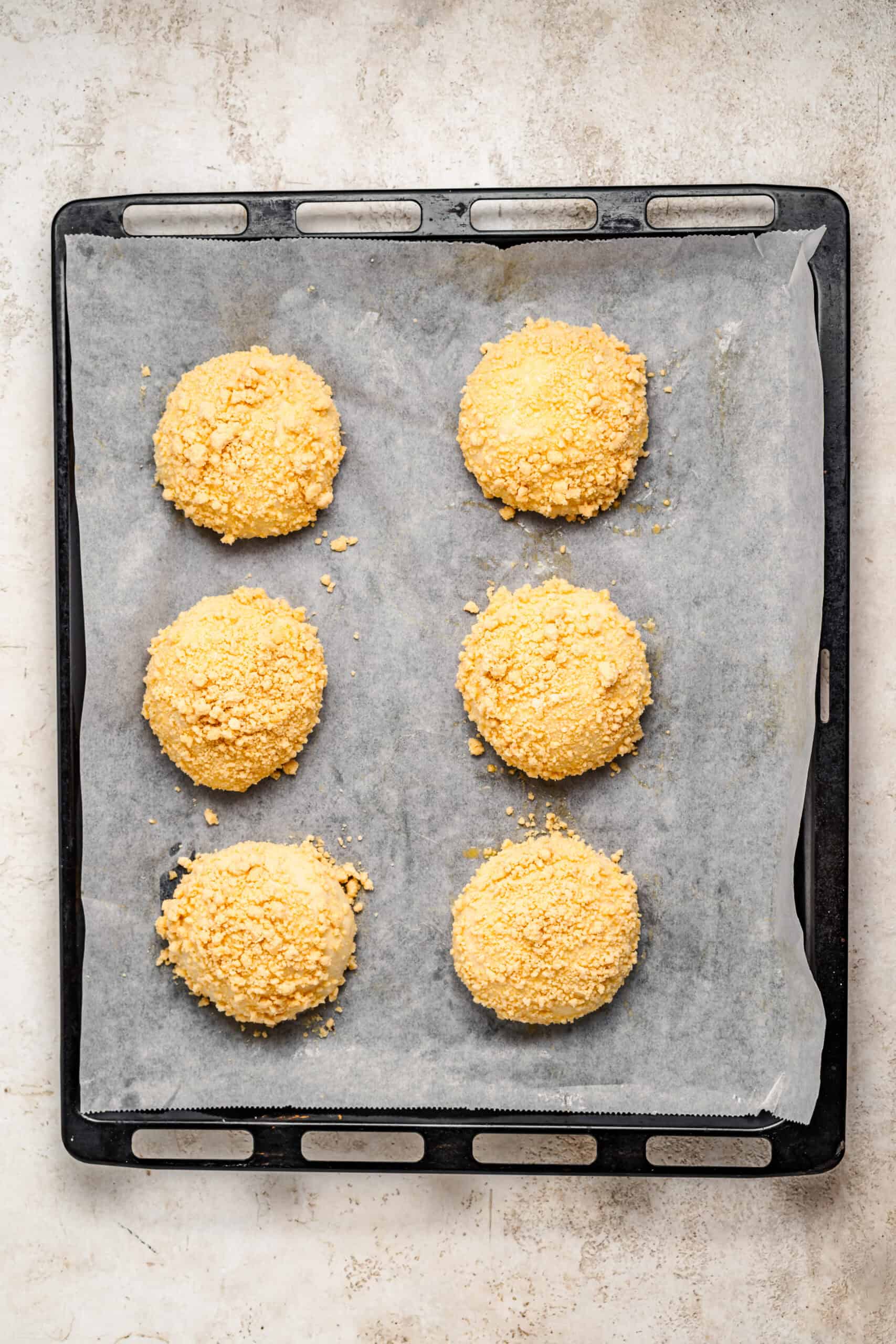
- Egg wash and coat. Brush the top half of each ball generously with egg wash, then press the wet top firmly down into the soboro crumbs and rotate to coat the whole dome thickly before setting on a lined tray.
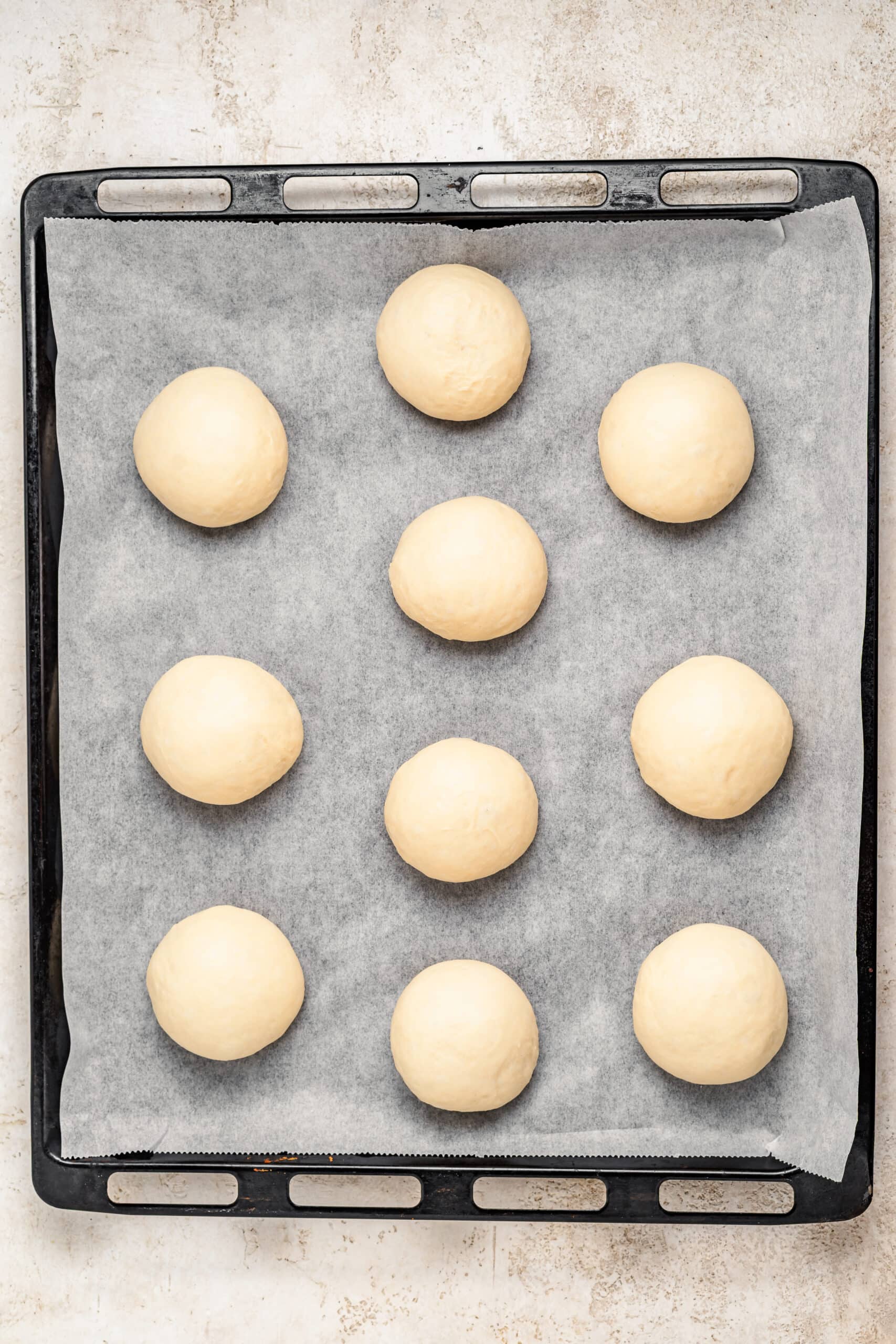
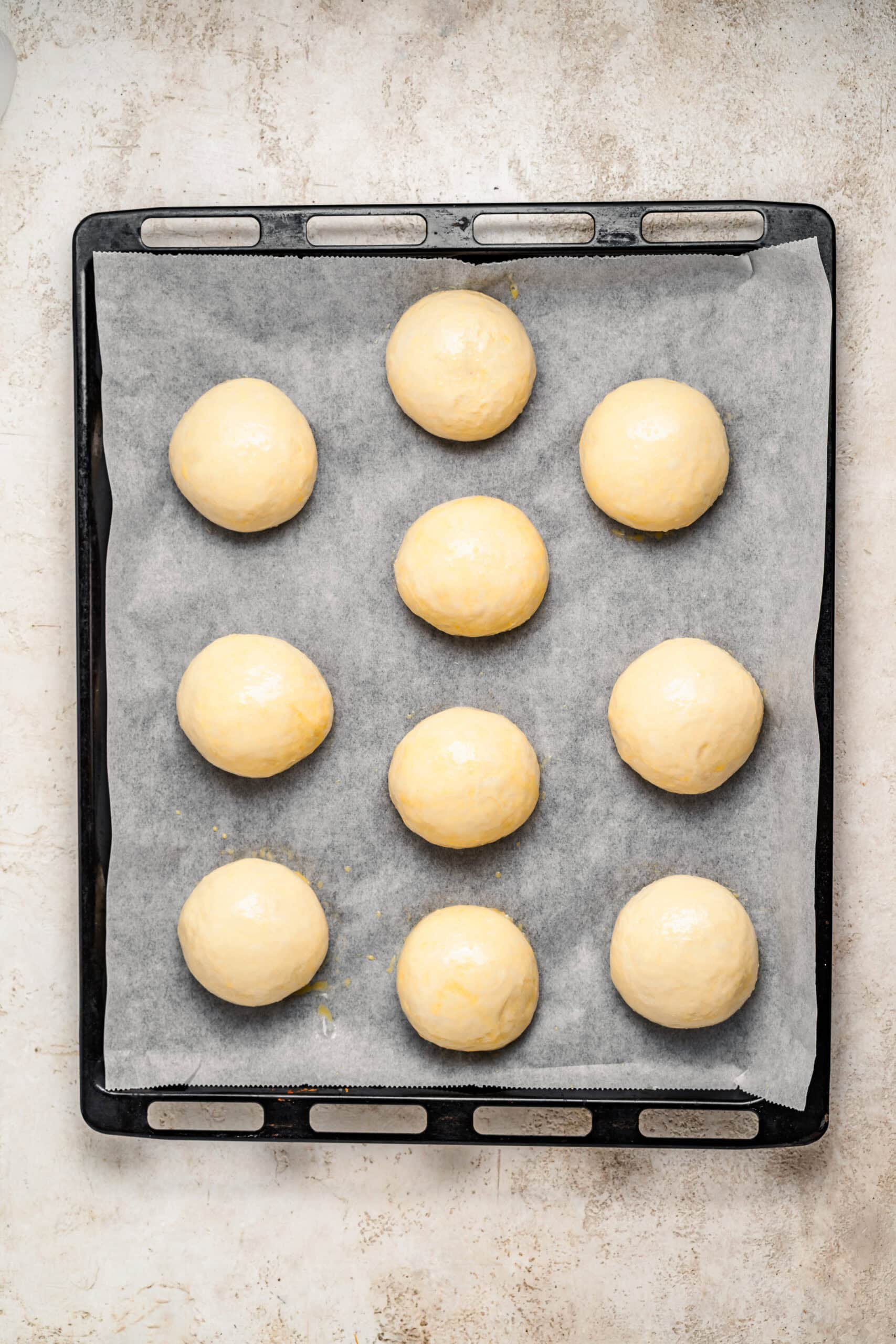
- Second proof. Cover the tray loosely and proof in a warm spot for 30 to 45 minutes, until the buns look visibly puffed. They do not need to fully double, and a little restraint here keeps the crust from cracking apart.
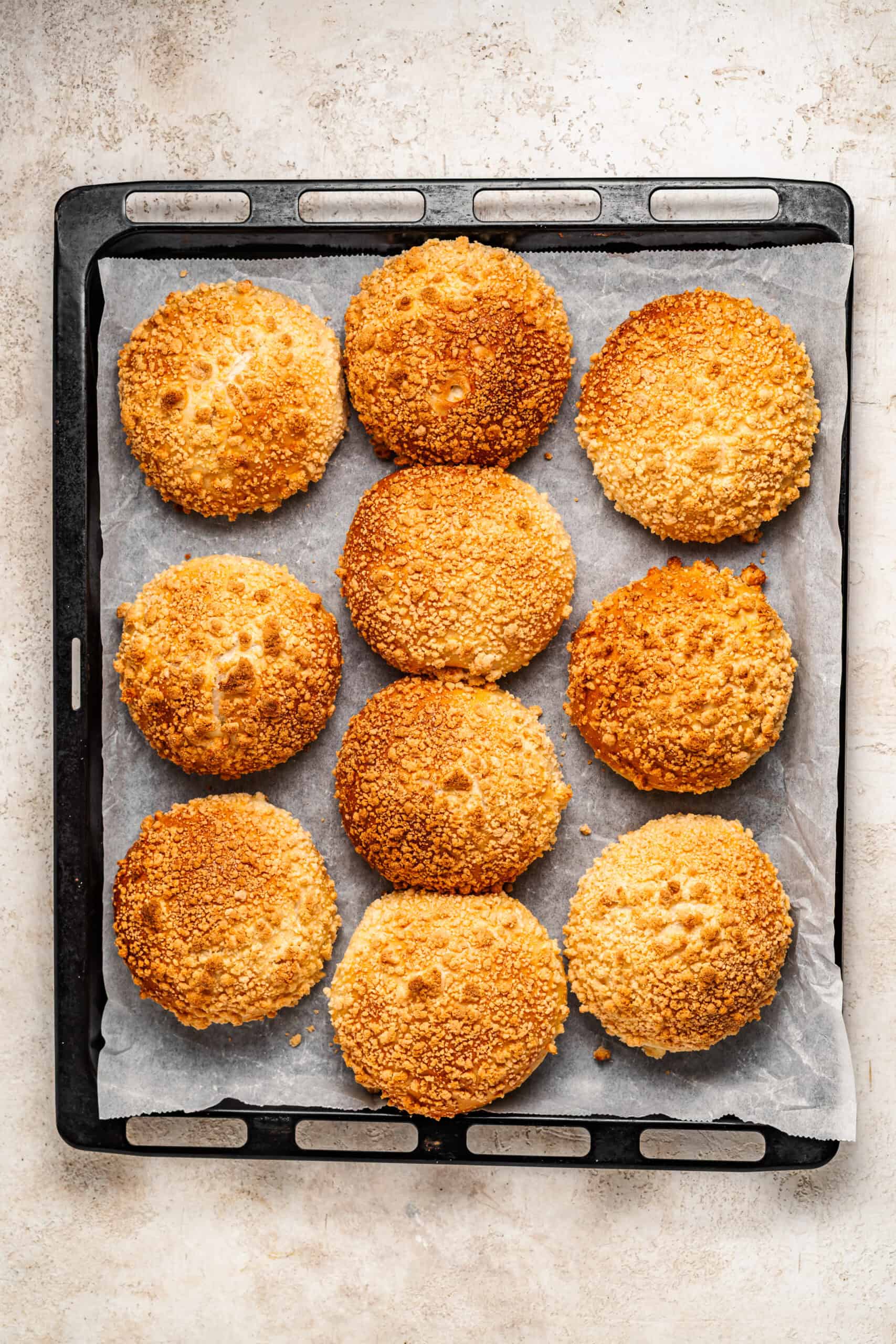
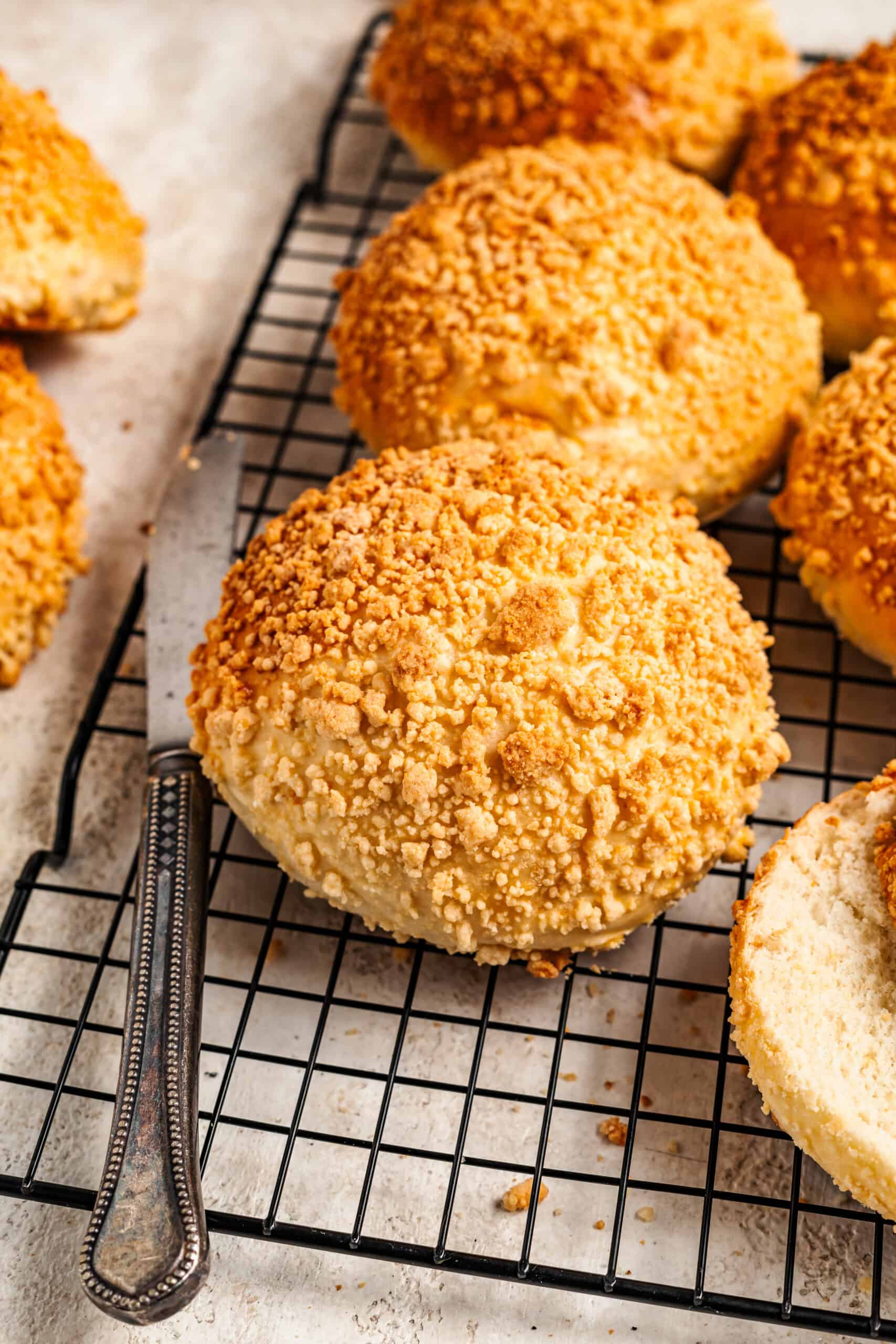
- Bake. Bake at 180C (350F) for 14 to 16 minutes, until the topping is deep golden brown and the base sounds hollow when you tap it, then cool on a rack for at least 10 minutes.
Troubleshooting Your Soboro Bread
| What went wrong | Why | The fix |
|---|---|---|
| Streusel went soft overnight | No cornstarch, or crumbs over mixed into paste | Keep the cornstarch and stop mixing at the coarse sand stage |
| Topping slid off in the oven | Tops were too dry when dipped | Brush a generous, even coat of egg wash right before pressing into the crumbs |
| Crust cracked into big plates | Buns over proofed on the second rise | Stop the second proof when just puffed, not fully doubled |
| Dense, heavy crumb | Under kneaded dough or dead yeast | Knead to a clear windowpane and check your water is only lukewarm |
Tips for the Best Soboro Bread
Cool the roux completely
A warm roux will heat your dough and throw off the yeast, and it also makes the dough sticky and hard to handle. I make the roux first thing, spread it thin in a shallow bowl to speed cooling, and only start the dough once it is properly at room temperature. If you are short on time you can make the roux a day ahead and keep it in the fridge, just bring it back to room temperature before mixing.
Respect the windowpane
The single biggest difference between a good milk bun and a great one is kneading to a true windowpane. Pinch off a walnut of dough and stretch it slowly, and it should thin into a translucent sheet you can almost see through without tearing. In my mixer that takes a full 20 minutes after the butter goes in, and it is worth every noisy second for that soft, feathery pull.
Stop mixing the crumbs early
The crumbs go from perfect to ruined in about ten seconds of extra mixing. The moment they look like coarse wet sand with a few pea sized clumps, stop the mixer and walk away. If you keep going they turn into a smooth dough that bakes flat and soft instead of into that crackly crown.
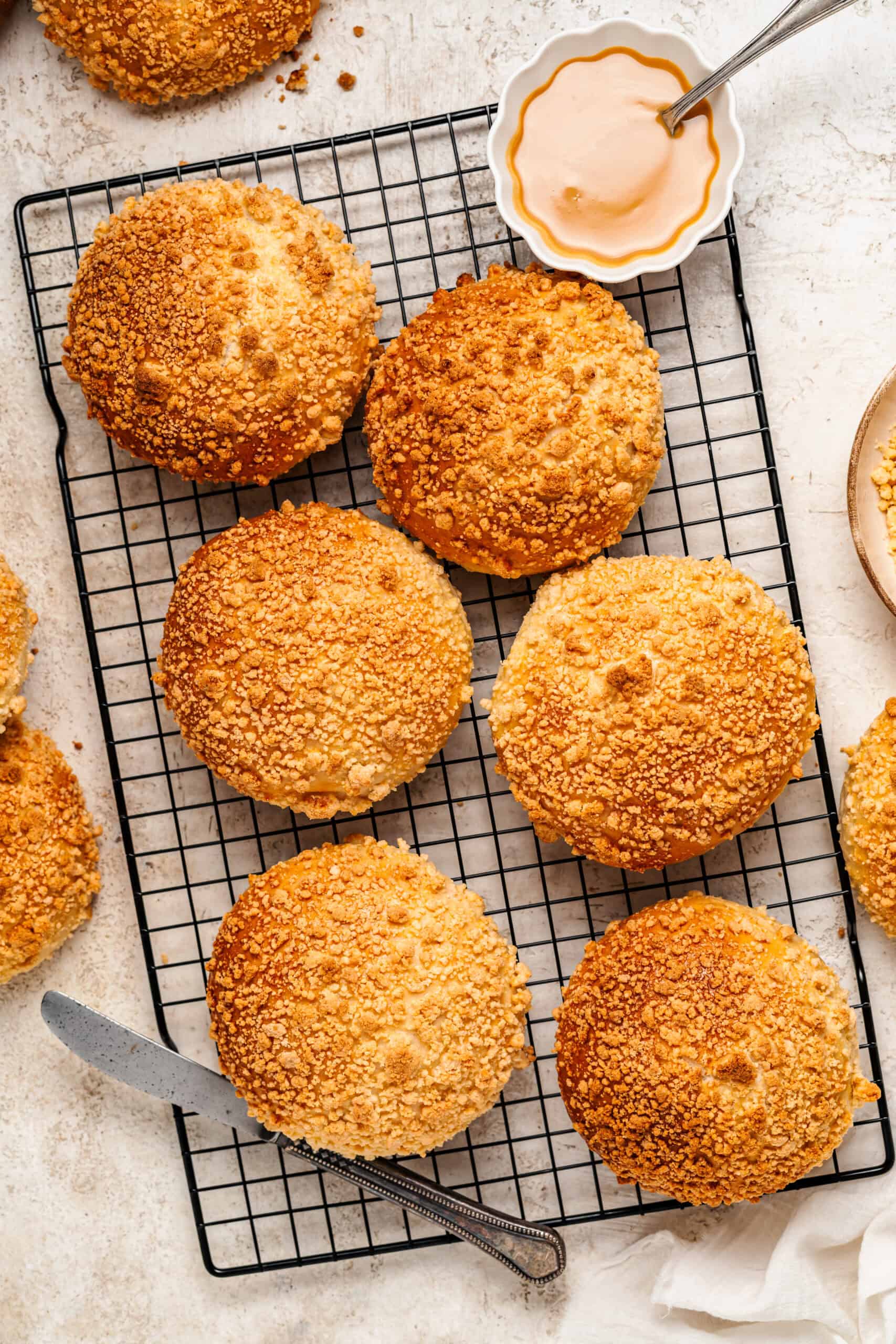
The cornstarch in the streusel is the whole secret. It is the difference between a topping that stays crisp for days and one that goes soft by breakfast.
Soboro Bread Variations
Red bean filled soboro
This is the version I grew up with. Flatten each dough ball, spoon in about a teaspoon of sweet red bean paste, pinch it closed, and roll it smooth again before the egg wash and crumb coat. The soft anko center against the crunchy peanut top is pure nostalgia, and it turns a snack bun into something closer to dessert.
Sesame soboro
Swap the peanut butter for the same weight of tahini and you get a nutty, faintly bitter topping that leans grown up and toasty. It pairs beautifully with a filling of black sesame paste if you want to double down on that flavor.
Biscoff soboro
Use cookie butter in place of the peanut butter for a warm, cinnamon spiced crust that smells incredible while it bakes. This one disappears fastest at my house, especially in colder months alongside a hot drink.
Serving Suggestions
With coffee or tea
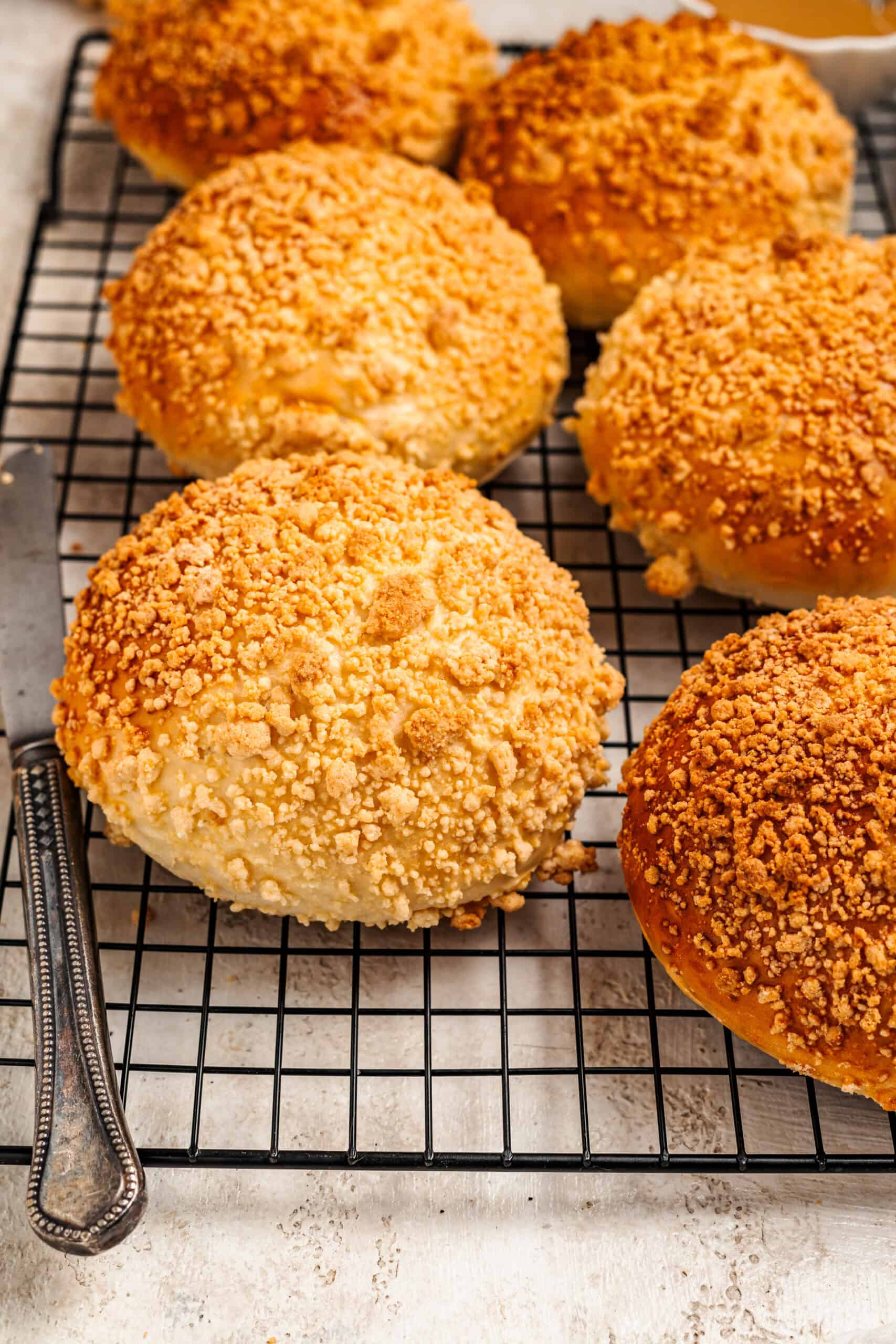
Soboro bread was made for a mid afternoon coffee break. The sweet peanut crust and soft crumb sit perfectly against a slightly bitter Americano or a cup of barley tea, which is exactly how I like to eat them while they are still barely warm. A milky latte works just as well if you want something cozier.
Warm and split
If you have leftovers, split a bun and give the cut sides a quick toast, then add a thin smear of butter or a little more peanut butter. The warm, nutty interior against the crisp top is one of my favorite quiet breakfasts, right up there with a slice of my Korean cream cheese garlic bread on a slow weekend.
As part of a bakery spread
For a party I like to pile these on a board with a few other soft buns so everyone can graze. They hold their shape and look beautiful stacked, and the pebbled tops give the whole table texture and height.
How to Store Soboro Bread
Keep the buns in an airtight container at room temperature for up to 3 days. Thanks to the water roux the crumb stays soft, and thanks to the cornstarch the topping stays crisp far longer than you would expect. Avoid the fridge, which dries bread out fast and makes the crumb stale. To freeze, wrap each cooled bun well and freeze for up to 1 month, then thaw at room temperature. To bring back that fresh baked crackle, warm a bun for 5 minutes in a 150C (300F) oven rather than the microwave, which turns the topping rubbery.
Common Mistakes to Avoid
Skipping the cornstarch
I know it seems like a tiny amount that could not matter, but the cornstarch is doing the most important job in the whole topping. Leave it out and you will get a soft, cakey cap that slumps overnight instead of the crisp crackle that makes soboro bread special.
Water that is too hot
Reaching for hot water to speed the yeast along is the fastest way to kill it. Your water should feel barely warm, right around body temperature, so when you dip a clean finger in it feels neutral rather than warm. Too hot and the buns simply will not rise.
Over proofing the shaped buns
It is tempting to let the coated buns balloon, but an over proofed bun bakes up with a cracked, shattered topping that falls off in pieces. Stop the second proof the moment they look puffed and a little jiggly, and you will get that clean, pebbled dome instead. If your kitchen runs warm, this can happen faster than the recipe suggests, so watch the buns and not the clock, the same way I do with my shio pan salt bread.
Frequently Asked Questions
What is the secret to crunchy soboro bread topping?
The secret is cornstarch in the streusel. It keeps the peanut crumbs shatteringly crisp for days instead of going soft overnight. The second key is to stop mixing the crumbs while they still look like coarse sand, because over mixing turns them into a paste that bakes soft.
Can I make soboro bread without a stand mixer?
Yes, though it takes some arm work. Knead the enriched dough by hand for about 25 to 30 minutes until it passes the windowpane test, and make the crumbs by rubbing the butter into the dry ingredients with your fingertips until coarse and clumpy. The dough is soft and a little sticky, so resist adding extra flour.
Why did my soboro topping fall off during baking?
Usually the tops were too dry when you dipped them. Brush a generous, even layer of egg wash right before pressing each bun firmly into the crumbs, and press any loose crumbs back in place. A confident firm press is what locks the crown on.
Can I use crunchy peanut butter for the soboro?
Smooth peanut butter gives the most even crumb, but a thick crunchy style works too and adds little bits of texture. Avoid runny natural peanut butter that has separated, since the extra oil stops the crumbs from clumping into pea sized clusters.
How do I store soboro bread and keep it fresh?
Keep the buns in an airtight container at room temperature for up to 3 days, never in the fridge, which dries them out. To freeze, wrap each bun well and freeze for up to 1 month. Warm a bun for 5 minutes in a 150C (300F) oven to bring back the crisp topping.
Can I add a filling to soboro bread?
Absolutely. The classic move is to tuck a teaspoon of sweet red bean paste into the center of each ball before topping. Custard or a cube of cream cheese also work beautifully. Just pinch the dough closed around the filling and roll smooth before the egg wash and crumb coat.
Let’s Get Cooking
If you liked this recipe make sure to leave me a comment and rating down below. I’d love to know how it went! Also, don’t forget to tag me on Instagram @catherine.desserts.
Follow me on Facebook, Pinterest, YouTube, and TikTok for more of my baking creations and updates!
Soboro Bread (Korean Peanut Streusel Buns)
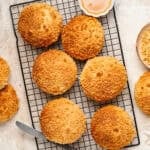
Soboro bread is the iconic Korean bakery bun: a pillowy milk bread base under a heavy crown of crunchy peanut streusel that stays crisp thanks to a little cornstarch.
- Prep Time: 45 minutes
- Proofing and cooling: 3 hours 30 minutes
- Cook Time: 15 minutes
- Total Time: 5 hours
- Yield: 10 buns 1x
- Category: Bread
- Method: Baking
- Cuisine: Korean
Ingredients
Water roux (make first, cool fully):
- 3 tbsp (24 g) bread flour
- ½ cup (120 ml) water
Milk bun dough:
- 2¾ cups (380 g) bread flour
- ¾ cup (90 g) all purpose flour
- ¼ cup (27 g) milk powder
- ⅓ cup plus 1 tbsp (78 g) granulated sugar
- ¾ tsp salt
- 2¼ tsp (7 g) instant dry yeast
- 1 large egg, lightly beaten
- ⅔ cup (160 ml) water, lukewarm (body temperature)
- All of the cooled water roux
- 3 tbsp (45 g) unsalted butter, softened and cubed
Peanut soboro streusel topping:
- 80 g unsalted butter, softened
- 80 g caster sugar
- 60 g smooth peanut butter
- 1 large egg yolk
- ½ tsp vanilla extract
- 140 g cake flour
- 30 g milk powder
- 1 tbsp cornstarch
- 1 tsp baking powder
- ½ tsp fine sea salt
To assemble and finish:
- 1 large egg, beaten with 1 tsp water
Instructions
- Make the water roux. Whisk the bread flour and water together in a small saucepan over medium heat for about 5 minutes, until thickened and semi translucent. Scrape into a small bowl, press cling wrap onto the surface, and cool for 1 hour to room temperature.
- Make the dough. In a stand mixer with the dough hook, combine the bread flour, all purpose flour, milk powder, sugar, salt and yeast. Add the egg, lukewarm water and cooled roux. Mix on medium for about 3 minutes to a rough dough.
- Add the softened butter and knead on medium for about 20 minutes, until the dough passes the windowpane test and stretches into a thin sheet without tearing.
- Shape into a ball, place in an oiled bowl, cover, and first proof in a warm spot for 1 to 2 hours, until doubled. A floured finger pressed into the center should leave a hole that does not spring back.
- While the dough proofs, make the peanut soboro. Cream the butter, caster sugar and peanut butter on medium until light, about 2 minutes. Beat in the egg yolk and vanilla.
- Add the cake flour, milk powder, cornstarch, baking powder and salt all at once. Mix on low for 15 to 20 seconds only, just until the mixture forms coarse sandy crumbs and pea sized clumps. Do not mix into a smooth paste. Chill the crumbs uncovered until needed.
- Turn the proofed dough out, press out the air, and divide into 10 equal portions of about 80 g. Roll into tight smooth balls, cover, and rest 10 minutes.
- Brush the top half of each ball generously with egg wash. Press the wet top firmly into the soboro crumbs, rotating to coat the whole top thickly. Transfer to a parchment lined tray, leaving 8 cm between buns.
- Cover loosely and second proof in a warm spot for 30 to 45 minutes, until visibly puffed. They do not need to fully double.
- Preheat the oven to 180C (350F).
- Bake for 14 to 16 minutes, until the soboro topping is deep golden brown and the base sounds hollow when tapped. Cool on a wire rack for at least 10 minutes before serving.
Notes
- Cornstarch is the secret to a shatteringly crisp soboro that stays crunchy. Leave it out and the topping goes soft and cobbler like by the next morning.
- Stop mixing the soboro the moment it looks like coarse damp sand or pea sized crumbs. Over mixing makes a paste that bakes into a soft cap instead of a crunchy crown.
- Make ahead: the soboro crumbs keep sealed in the fridge for 5 days or frozen for 1 month. The dough is best made fresh.
- To revive day old buns, warm them for 5 minutes in a 150C (300F) oven. Microwaving turns them rubbery.
- Classic bakery variation: tuck 1 tsp sweet red bean paste into each ball before topping, pinch closed, then egg wash and coat.
- Peanut allergy: swap the 60 g peanut butter for 60 g tahini for a sesame soboro, or cookie butter for a Biscoff style topping.
Nutrition
- Serving Size: 1 bun
Craving more? Browse every bread recipe in one place.