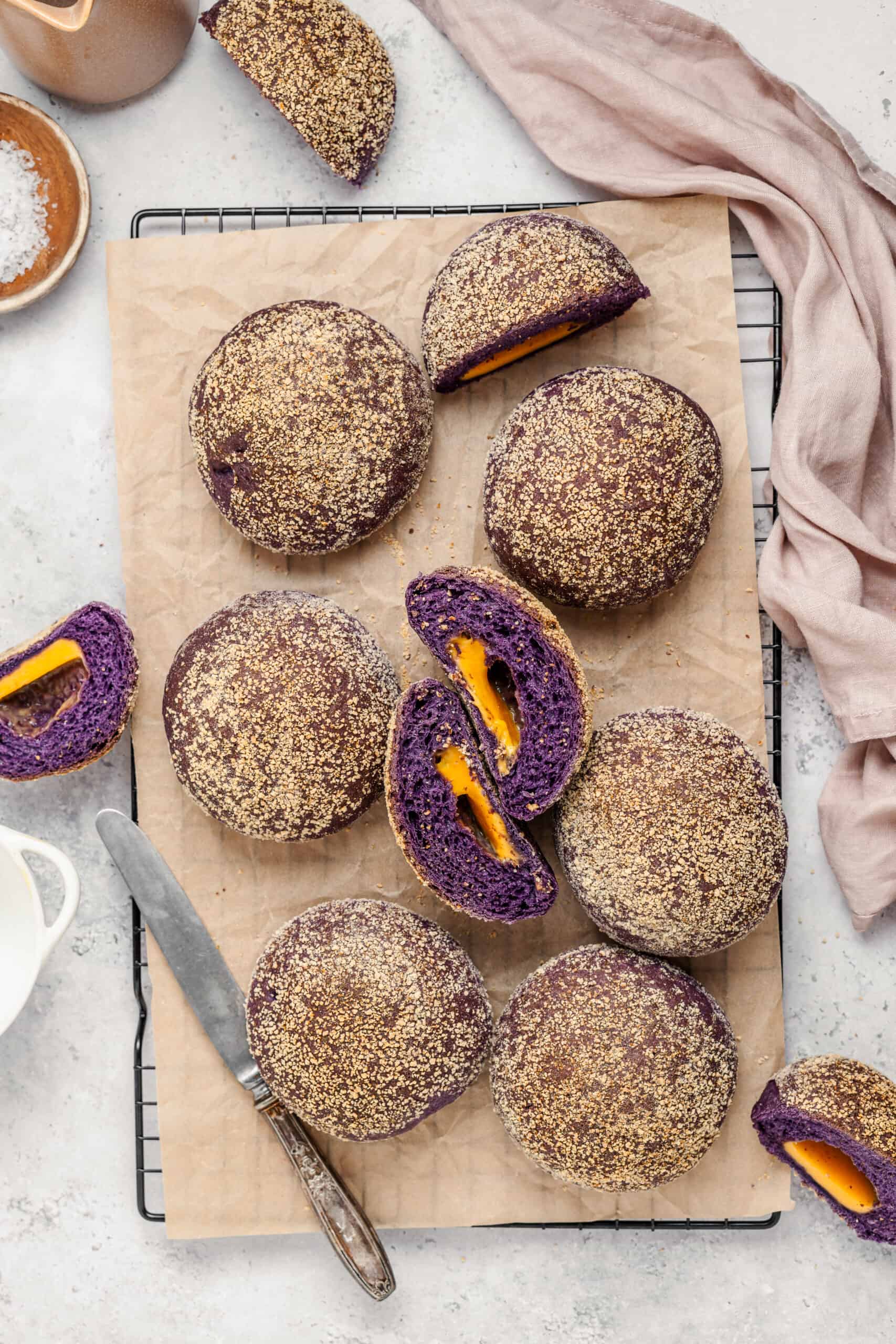
Ube cheese pandesal is what happens when the softest purple Filipino breakfast roll wraps itself around a molten pocket of cheese, and I am fairly sure it is the best thing I have pulled out of my oven this year.
I first fell for pandesal in a tiny Filipino bakery where the trays came out warm every couple of hours and the whole room smelled of toasted breadcrumbs and sweet milk. The ube cheese version was the one that sold out first, and once I split one open and watched the vivid purple crumb give way to a salty cheese center, I understood why. It is soft, a little sweet, savoury in the middle, and completely impossible to eat just one.
It took me four batches to get this right at home. My first dough was too dry and the rolls baked up dense. My second had gorgeous colour but the cheese leaked out and welded itself to the tray. Batch three taught me that the breadcrumb coating is not optional and that sealing the dough properly is the whole game. By the fourth I had soft, springy ube cheese pandesal with a clean cheese pocket in the middle, and that is the recipe I am handing you here. Everything I learned the hard way is written into the steps.
What Is Ube Cheese Pandesal
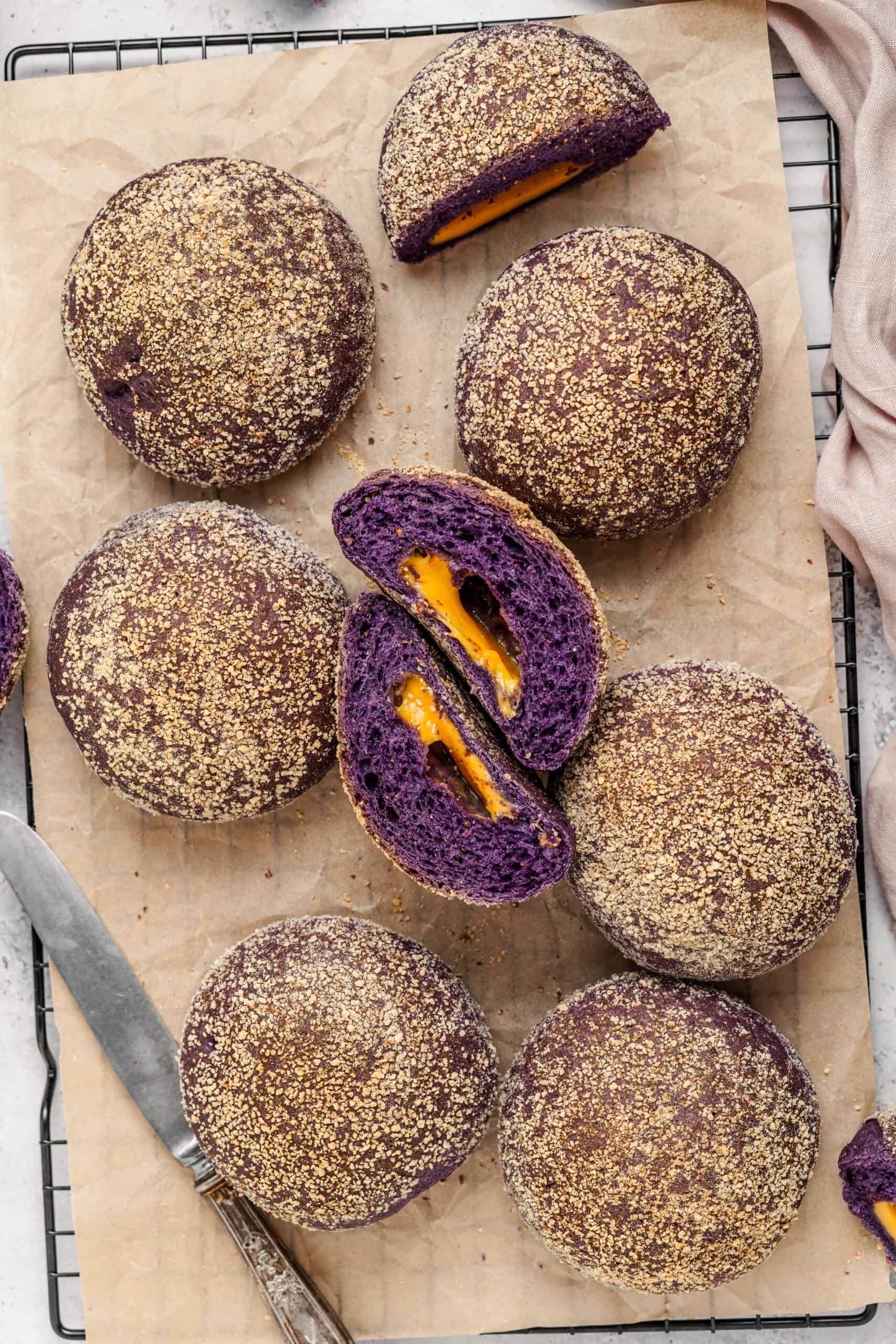
Pandesal, which means bread of salt in Spanish, is the everyday breakfast roll of the Philippines. It is soft, faintly sweet, and rolled in fine breadcrumbs before baking so the tops turn craggy and golden. Ube cheese pandesal takes that classic and does two things to it: it tints the dough deep purple with ube, the Filipino purple yam, and it hides a cube of cheese inside each roll for the salty and sweet contrast that Filipino baking does so well.
If you have baked with ube before, through an ube cake or a batch of ube mochi, you already know how that soft vanilla and coconut flavour behaves. Here it plays against milky bread dough and sharp cheese instead of sitting in something sweet, and the result feels both familiar and a little new.
Where Ube Pandesal Comes From
Pandesal arrived in the Philippines through Spanish colonial baking and became the national breakfast bread, sold from neighbourhood bakeries in the early morning and eaten dipped in hot coffee. The ube version is a more modern riff that leans on ube, the purple yam that has been part of Filipino sweets like halaya and ice cream for generations. Stuffing it with cheese follows the beloved Filipino love of salty and sweet together, the same instinct behind ensaymada and cheese topped ice cream.
For the record, ube is not taro and not the same as ordinary sweet potato. It is its own root with a gentle, almost floral flavour. If you want the full story on colour, flavour and how to bake with it, I wrote a whole guide on what ube actually is.
How To Make Ube Cheese Pandesal
The method is a straightforward enriched dough with two friendly proofs, from the same soft and milky family as my Japanese milk bread. You build a soft milk dough coloured with ube halaya and ube extract, knead in butter until it is stretchy and smooth, then let it double. After that you divide it, wrap each piece around a cube of cheese, seal it well, roll it in breadcrumbs, and give it a second short proof before baking. Nothing here is difficult, but the sealing step and the dough hydration are the two places worth slowing down for.
Ube Cheese Pandesal At A Glance
| Makes | Prep | Bake | Proofing | Total |
|---|---|---|---|---|
| 12 rolls | 30 minutes | 18 to 20 minutes | 1.5 to 2.5 hours | About 3.5 hours |
Ingredients
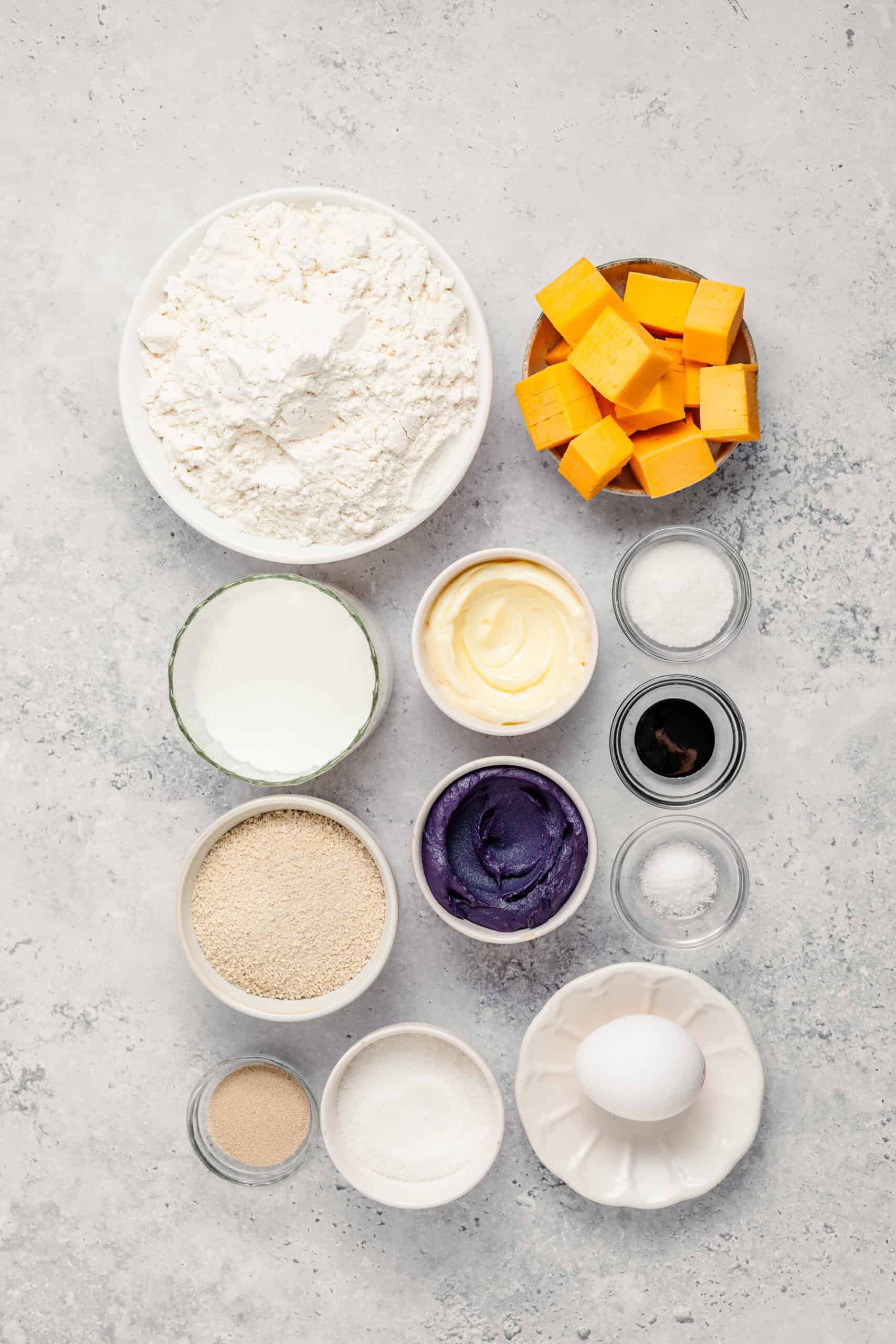
Full quantities live in the recipe card at the bottom. Here is what each part is doing so you can shop and swap with confidence.
For The Ube Dough
- Bread flour: the higher protein builds the gluten that gives pandesal its soft, pillowy chew. Plain flour works in a pinch but the rolls will be a touch less springy.
- Whole milk: warmed to body temperature, it feeds the yeast and keeps the crumb tender. Cold milk slows the rise, so take the chill off it first.
- Instant dry yeast: mixed straight into the flour for a reliable lift with no separate blooming step.
- Ube halaya: the sweet purple yam jam that carries most of the real ube flavour and adds moisture to the dough.
- Ube extract: this is what delivers the vivid purple. Halaya alone gives a muddy mauve, so you want both working together.
- Egg and butter: they enrich the dough, so the rolls stay soft for days rather than drying out by lunchtime.
For The Filling And Coating
- Cheese: queso de bola is the traditional choice, an Edam style waxed cheese with a firm, salty bite. Sharp cheddar is an easy and delicious stand in.
- Fine breadcrumbs: the signature pandesal coating that toasts up craggy and golden. Blitz panko fine or use plain unseasoned crumbs.
- A little sugar: tossed through the breadcrumbs so the coating caramelises just slightly in the oven.
Optional: My Favourite Extras That Add A Little Magic
- A pinch of ube flavour boost: a little extra halaya brushed on after baking deepens both colour and aroma if you want them louder.
- Flaky salt on the cheese: a few grains on the cheese cube before you seal it makes the savoury centre pop against the sweet crumb.
- Condensed milk glaze: a thin brush of sweetened condensed milk on the warm tops gives a soft sheen and a bakery finish.
Substitutions: Smart Ingredient Swaps That Still Taste Amazing
- No ube halaya: use an extra teaspoon of ube extract plus a spoonful of mashed cooked purple yam or a little extra milk for moisture. The flavour is slightly lighter but still lovely.
- Dairy free: swap the milk for warm oat milk and use a firm plant based cheese and vegan butter. The crumb is a fraction less rich but still soft.
- No bread flour: all purpose flour works, just knead a couple of minutes longer to build enough structure.
How To Make Ube Cheese Pandesal Step By Step
Read through once before you start so the fast moving parts, sealing and coating, feel easy when you get there.
- Whisk the bread flour, sugar, salt and yeast together in the bowl of a stand mixer fitted with the dough hook.
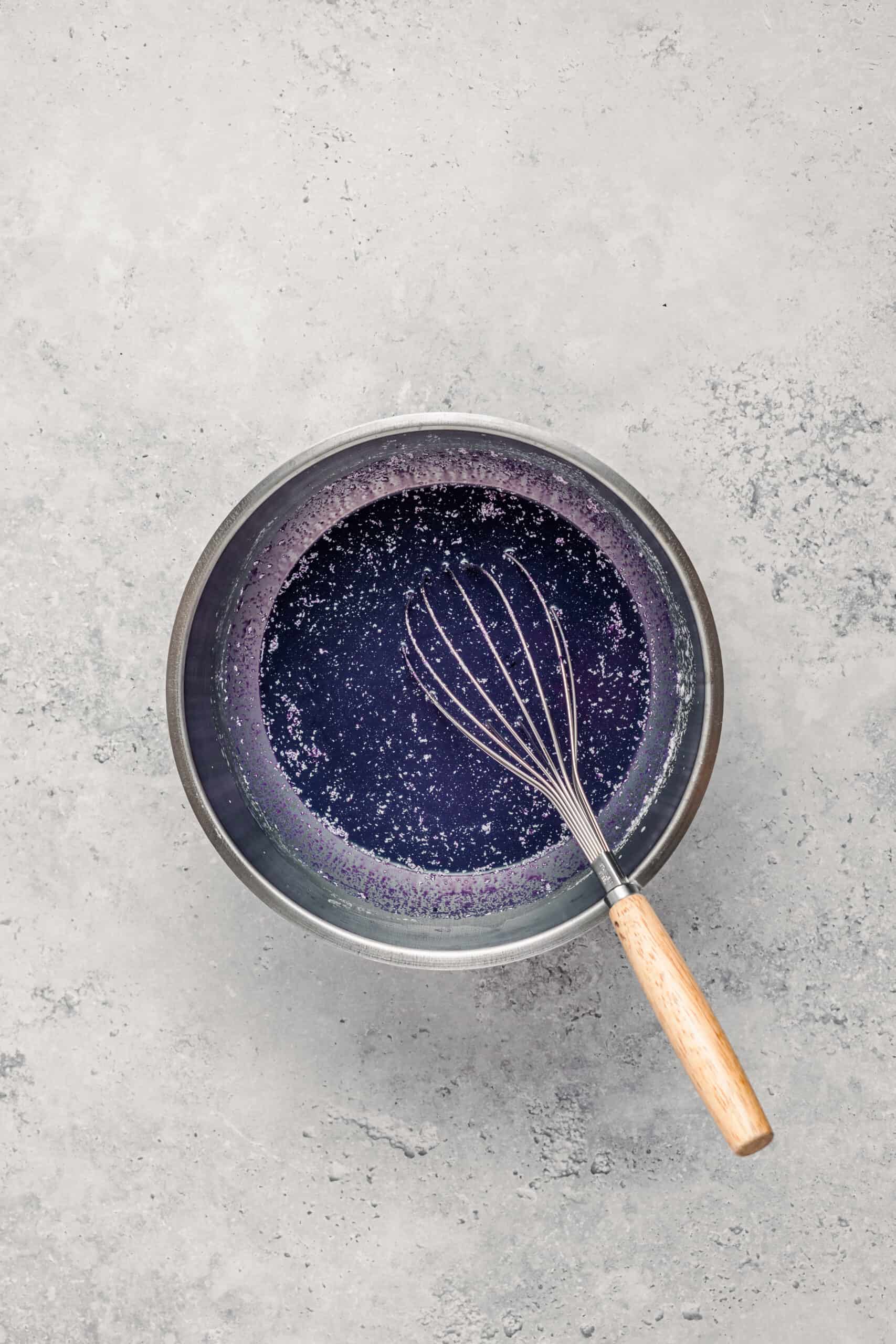
- In a separate bowl, whisk the warm milk with the ube halaya and ube extract until smooth and evenly purple, then whisk in the beaten egg.
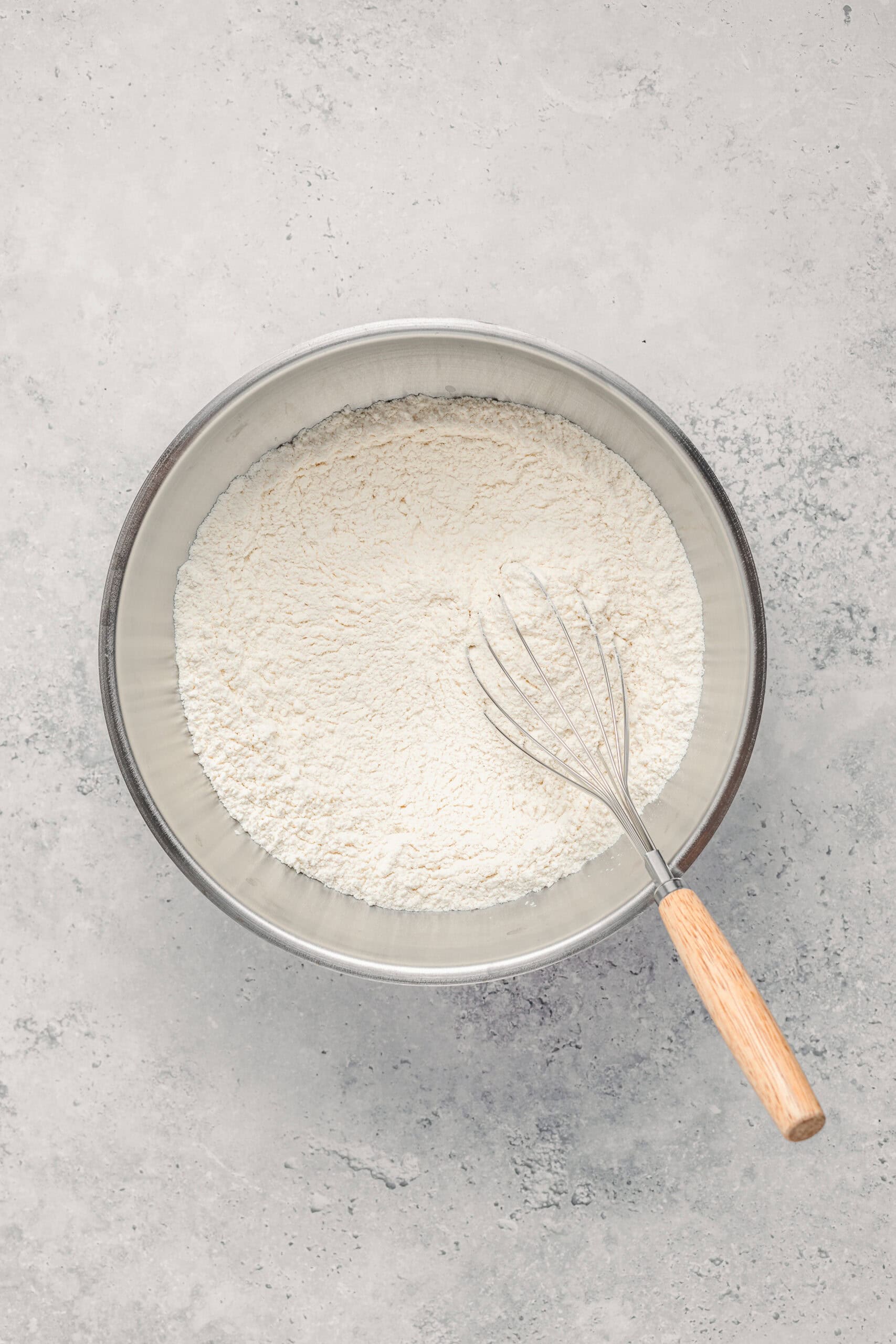
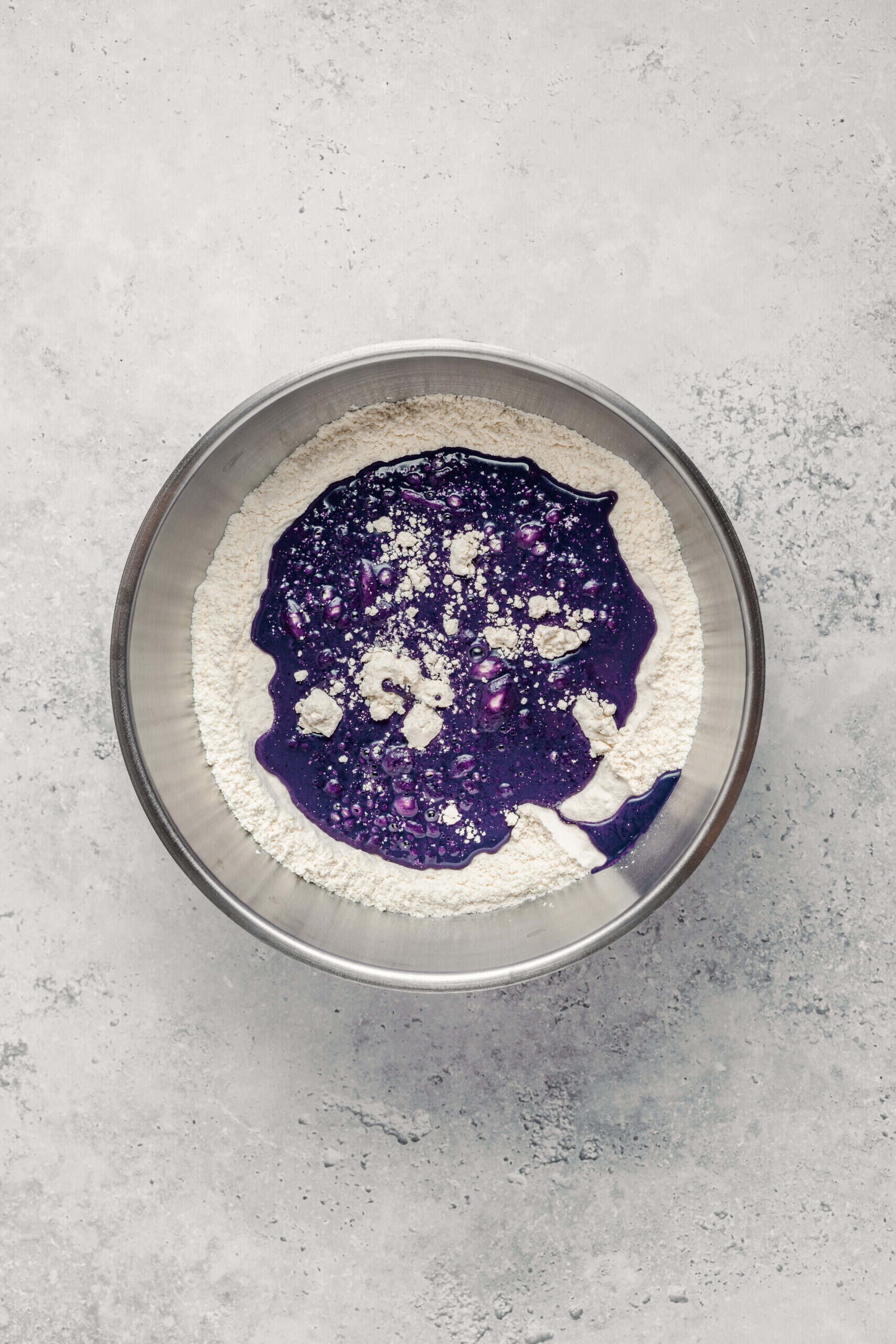
- Pour the wet mixture into the dry ingredients and mix on low for about 3 minutes, until a rough, shaggy dough comes together.
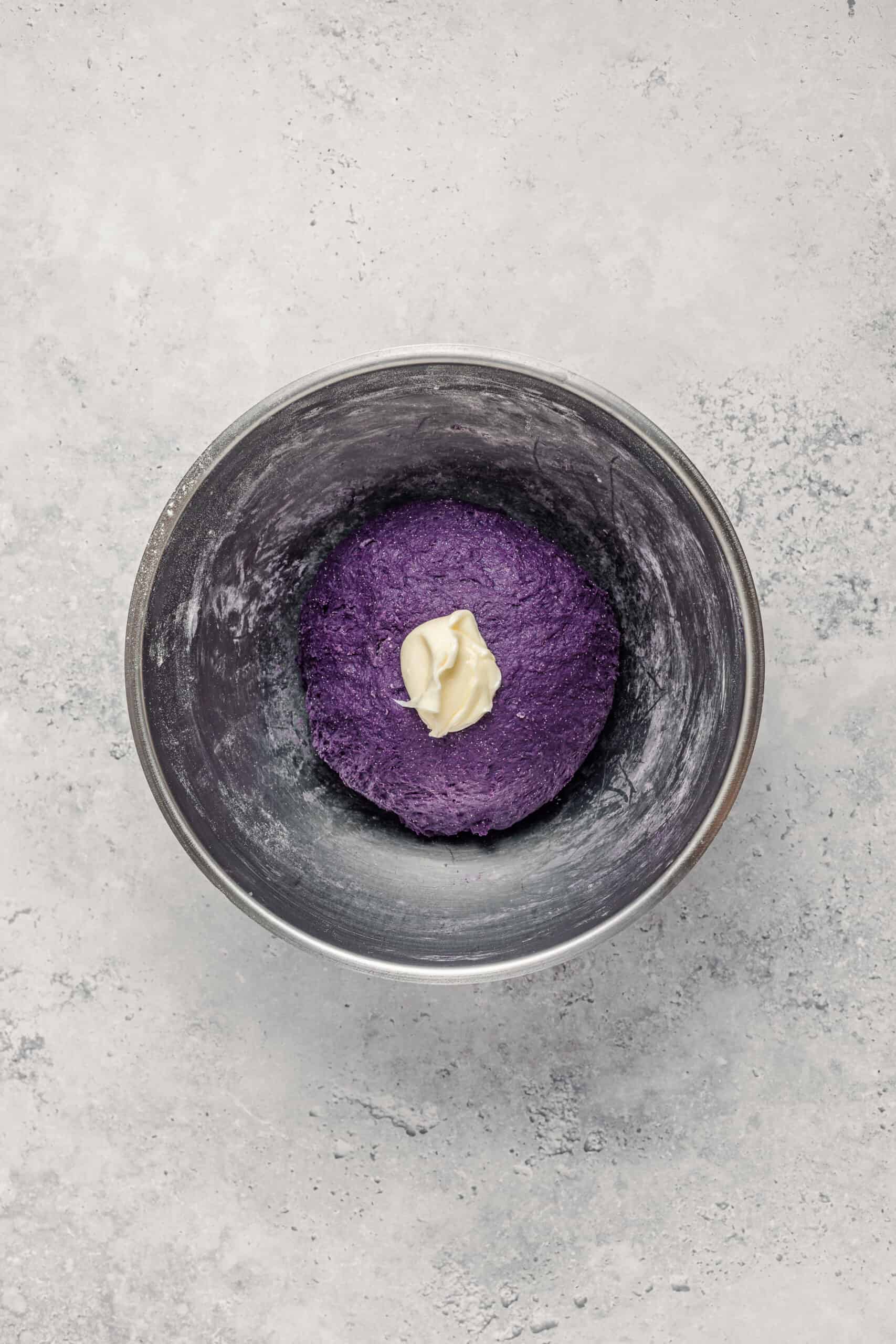
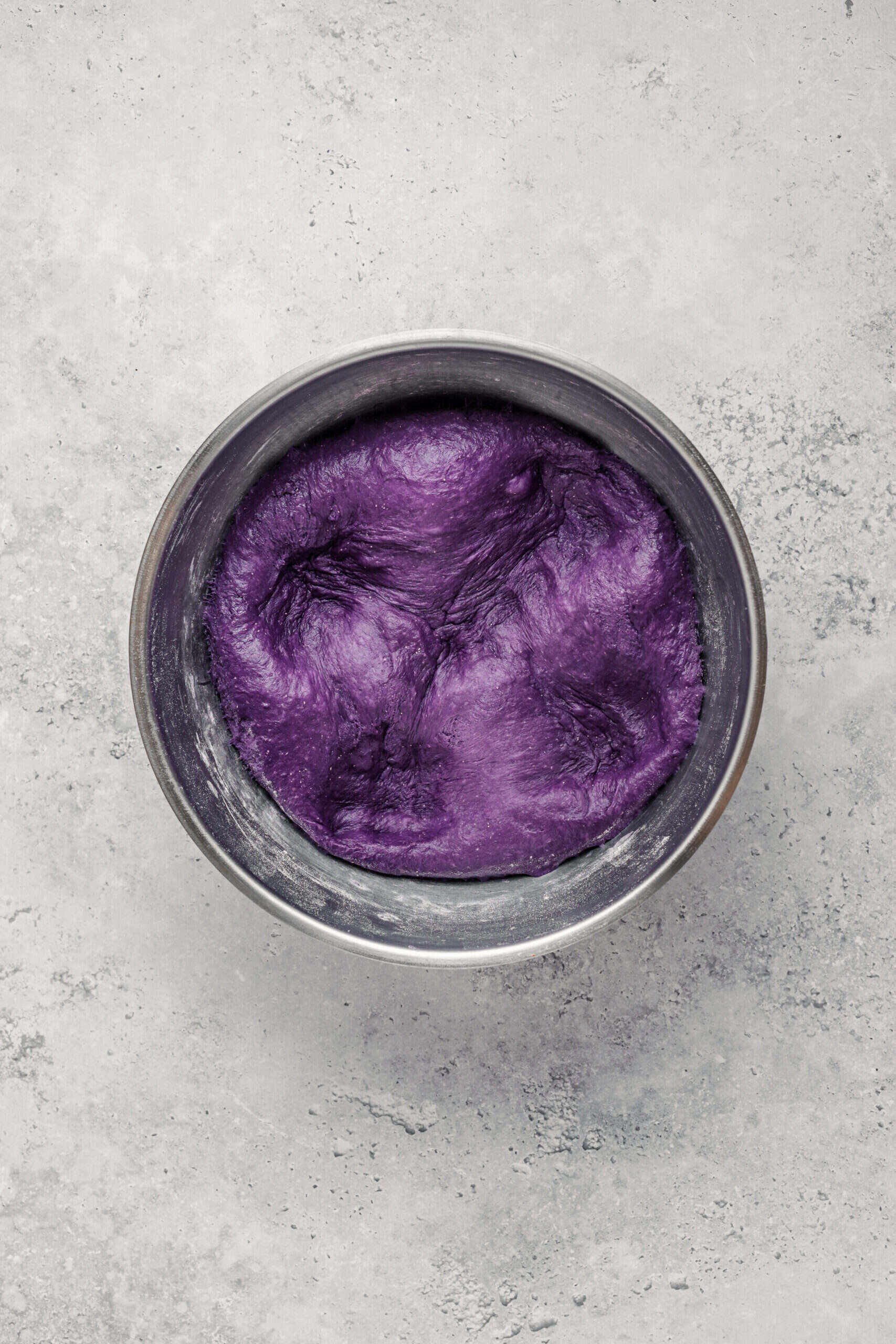
- Add the softened butter one cube at a time, letting each piece disappear before the next, then knead on medium for 12 to 15 minutes until the dough is smooth, tacky and passes the windowpane test.
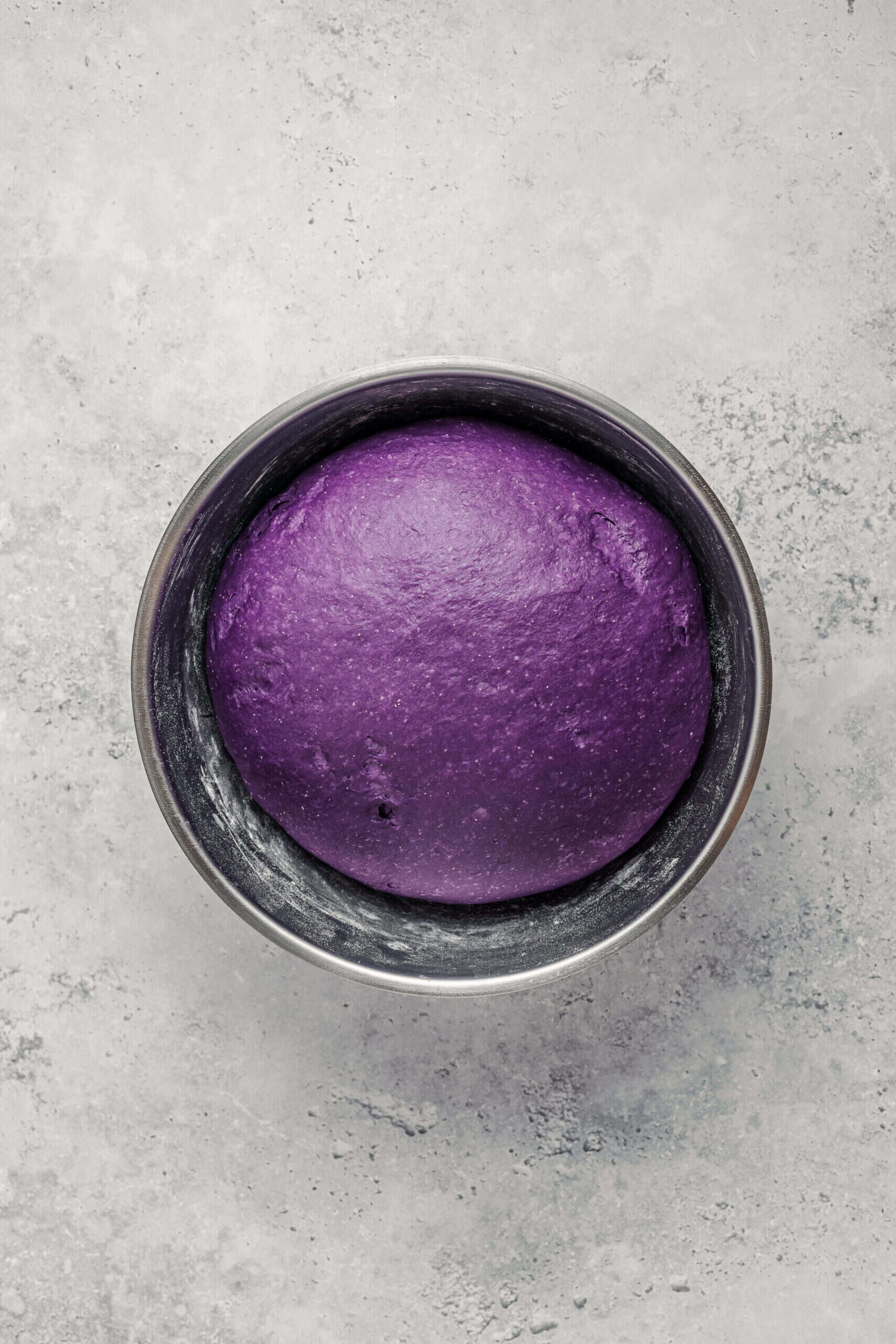
- Shape the dough into a ball, place it in an oiled bowl, cover, and let it proof in a warm spot for 1 to 1.5 hours until doubled.
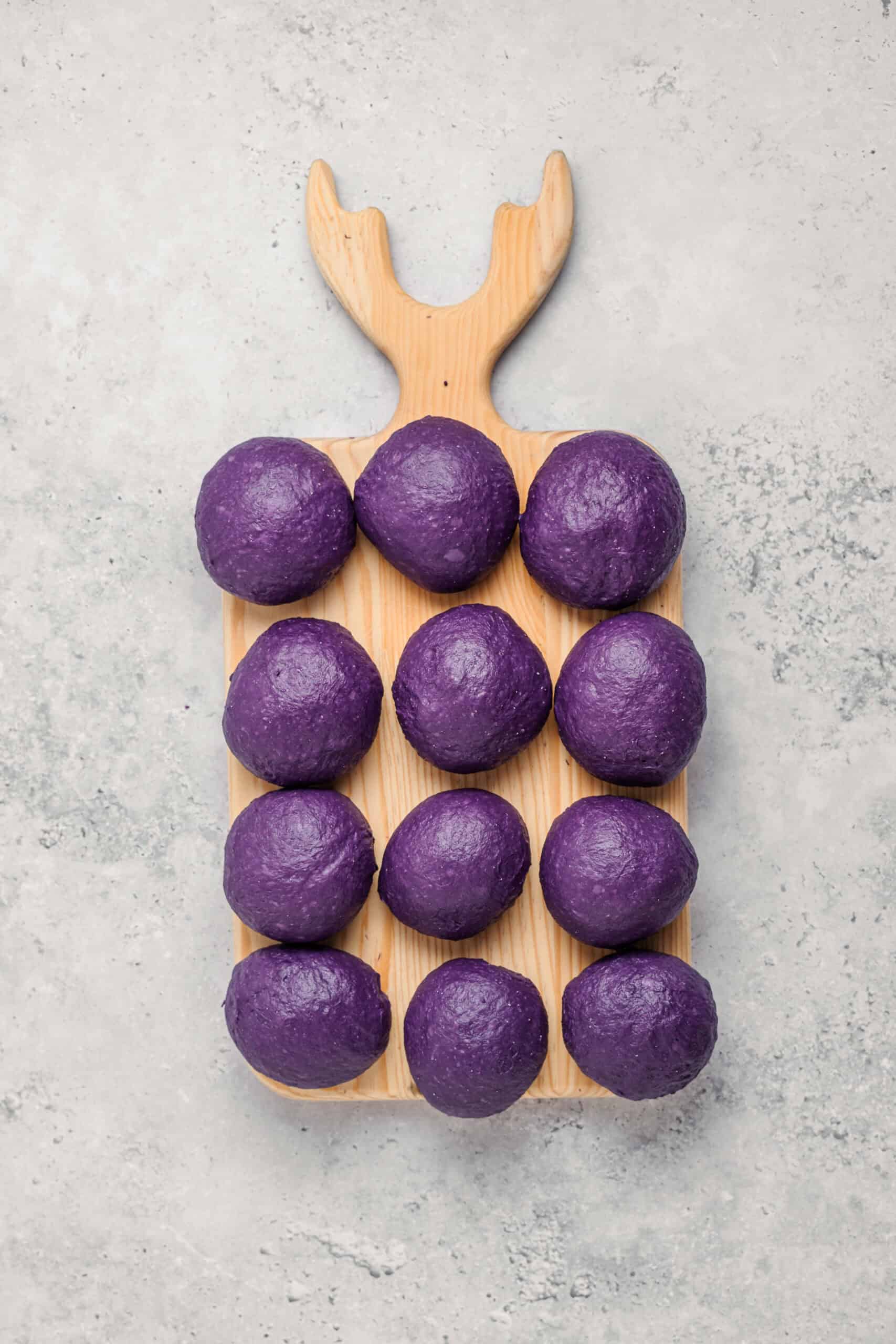
- Turn it out, press the air out gently, and divide into 12 even pieces of about 70 g each.
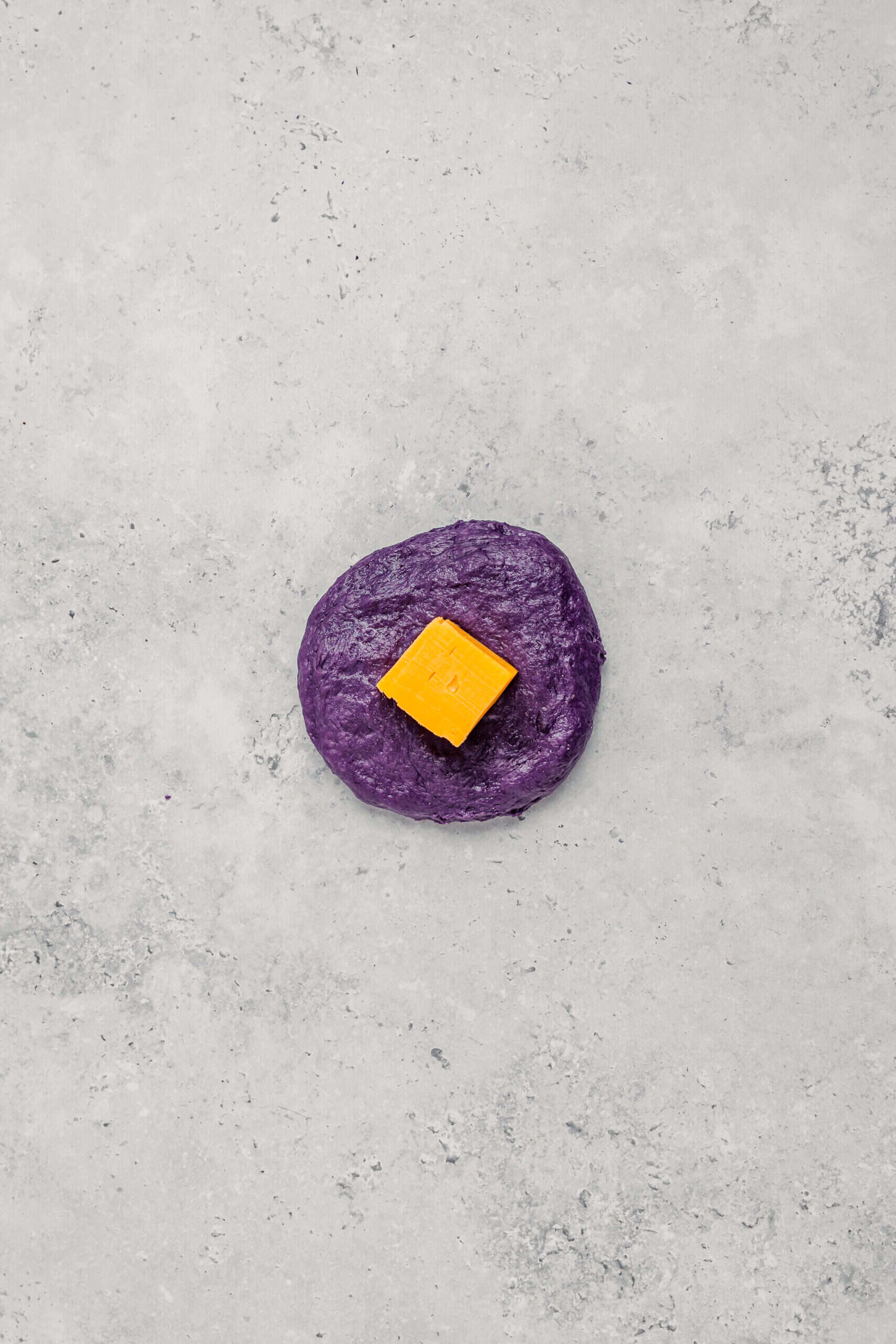
- Flatten a piece into a disc about 8 cm wide, set a cheese cube in the middle, gather the edges up over the top and pinch firmly to seal, then roll it smooth between your palms and set it seam side down.
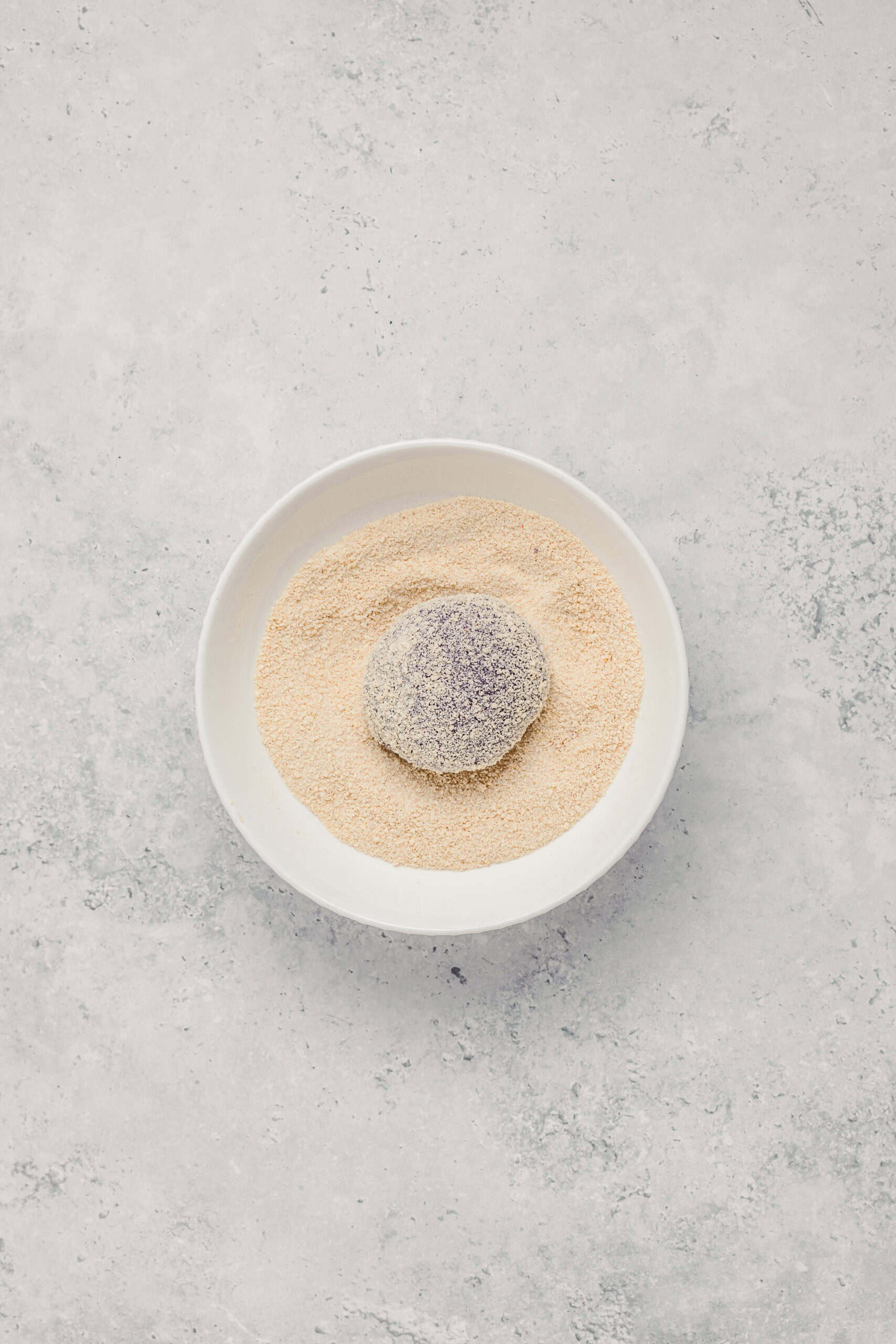
- Stir the breadcrumbs with a spoonful of sugar in a shallow bowl and roll each sealed ball to coat it all over.
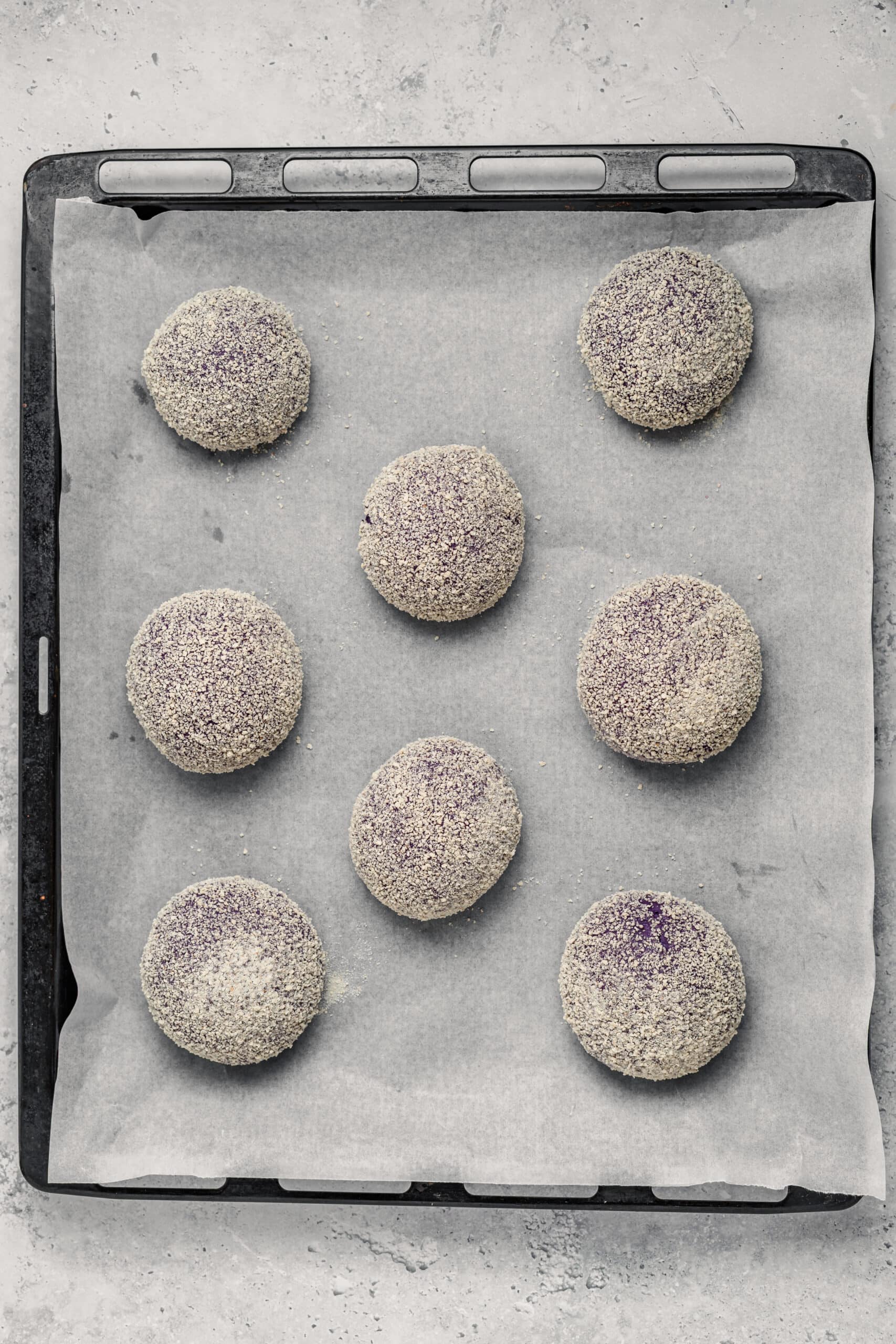
- Space the coated rolls on parchment lined trays, cover loosely, and proof again for 45 minutes to 1 hour until visibly puffed.
- Heat the oven to 180C or 350F and bake for 18 to 20 minutes, until the tops are deeply golden and a roll sounds hollow when you tap the base.
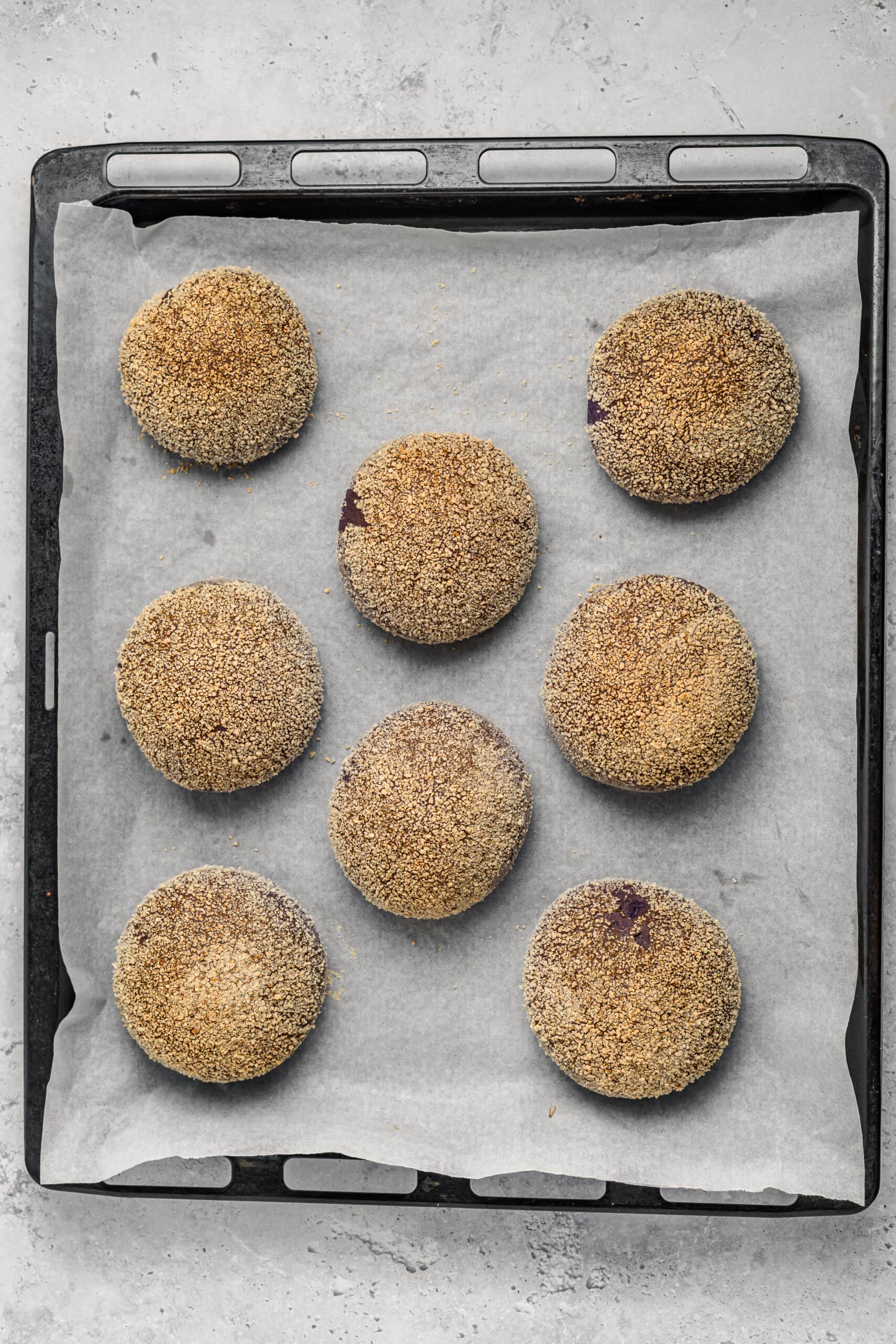
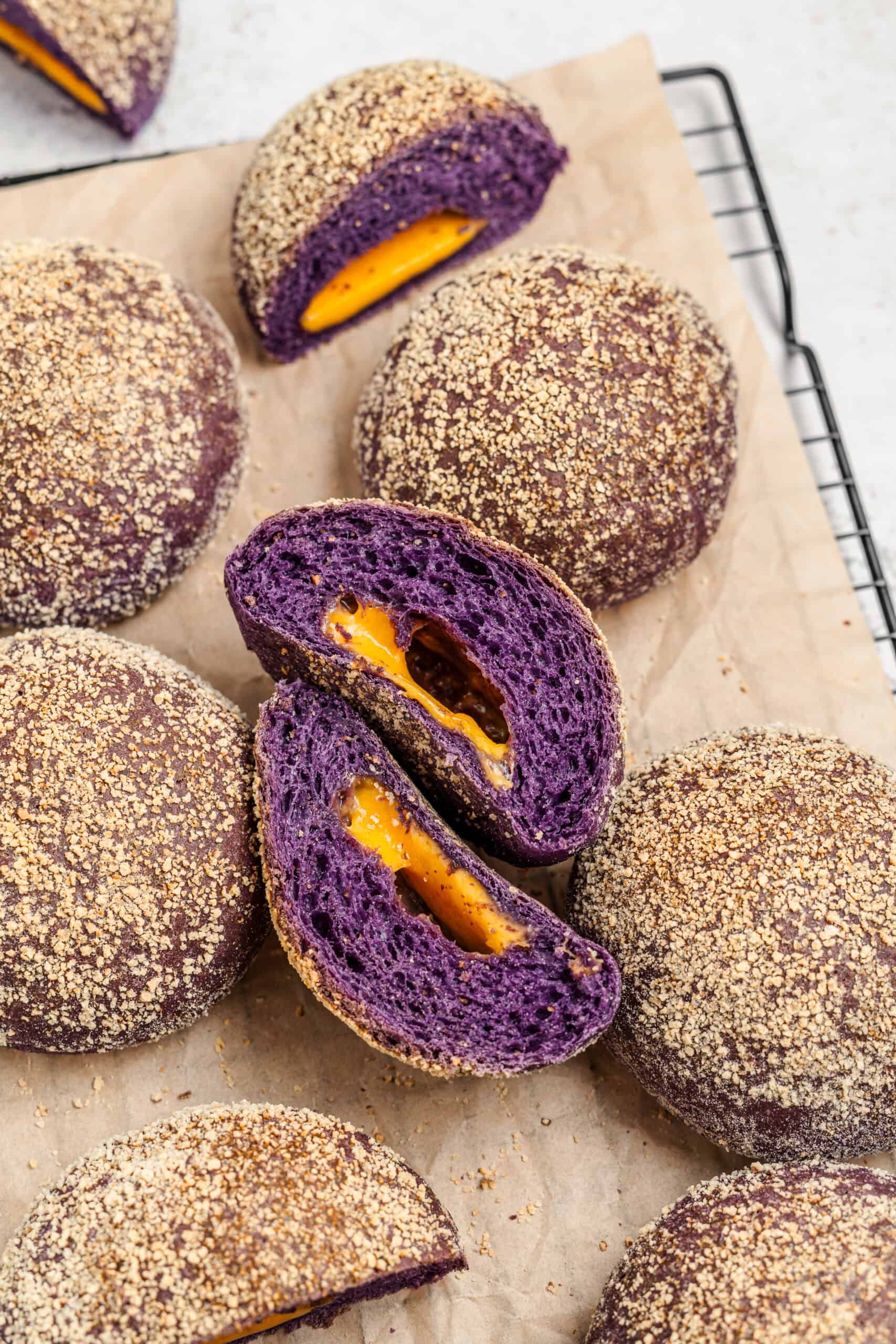
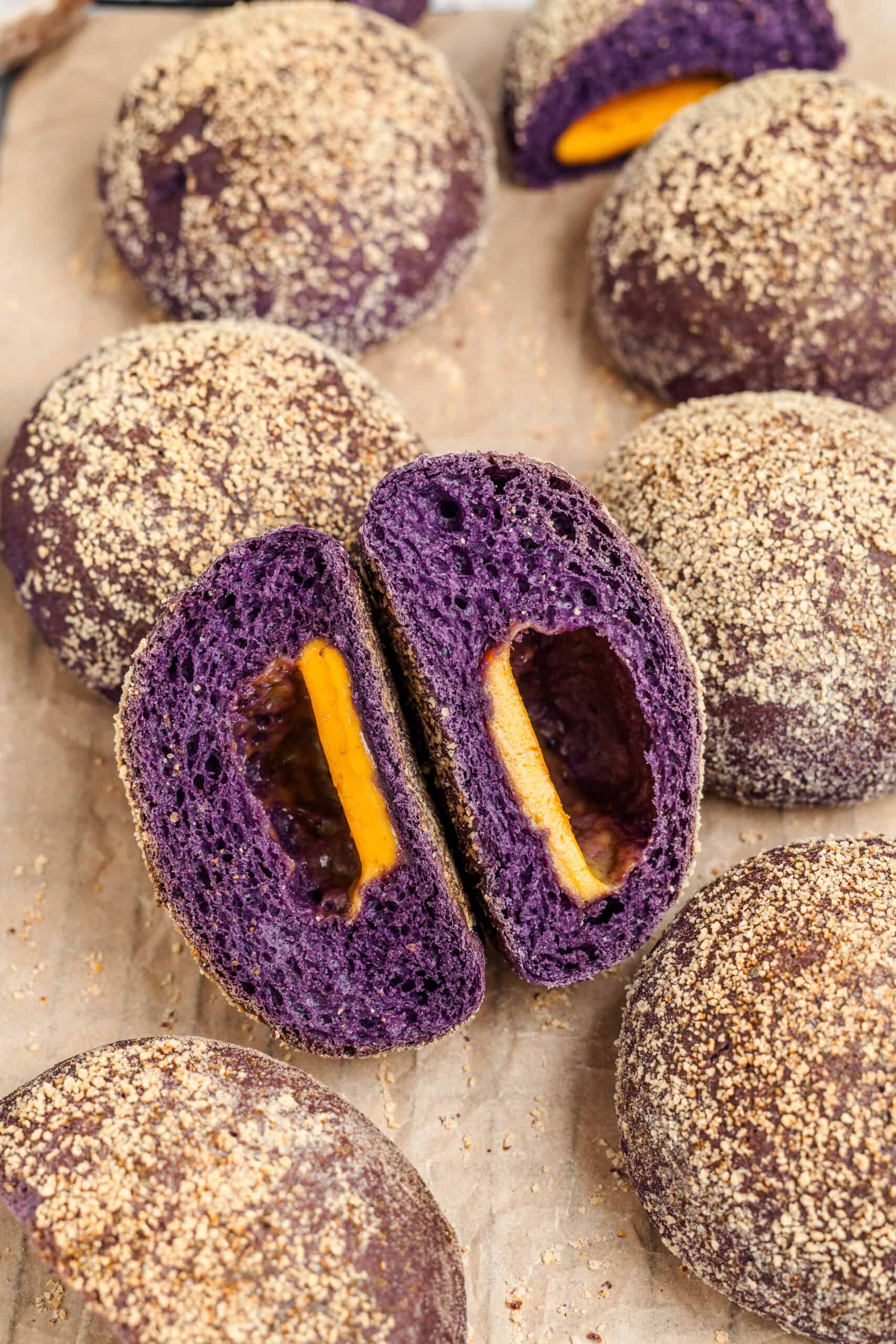
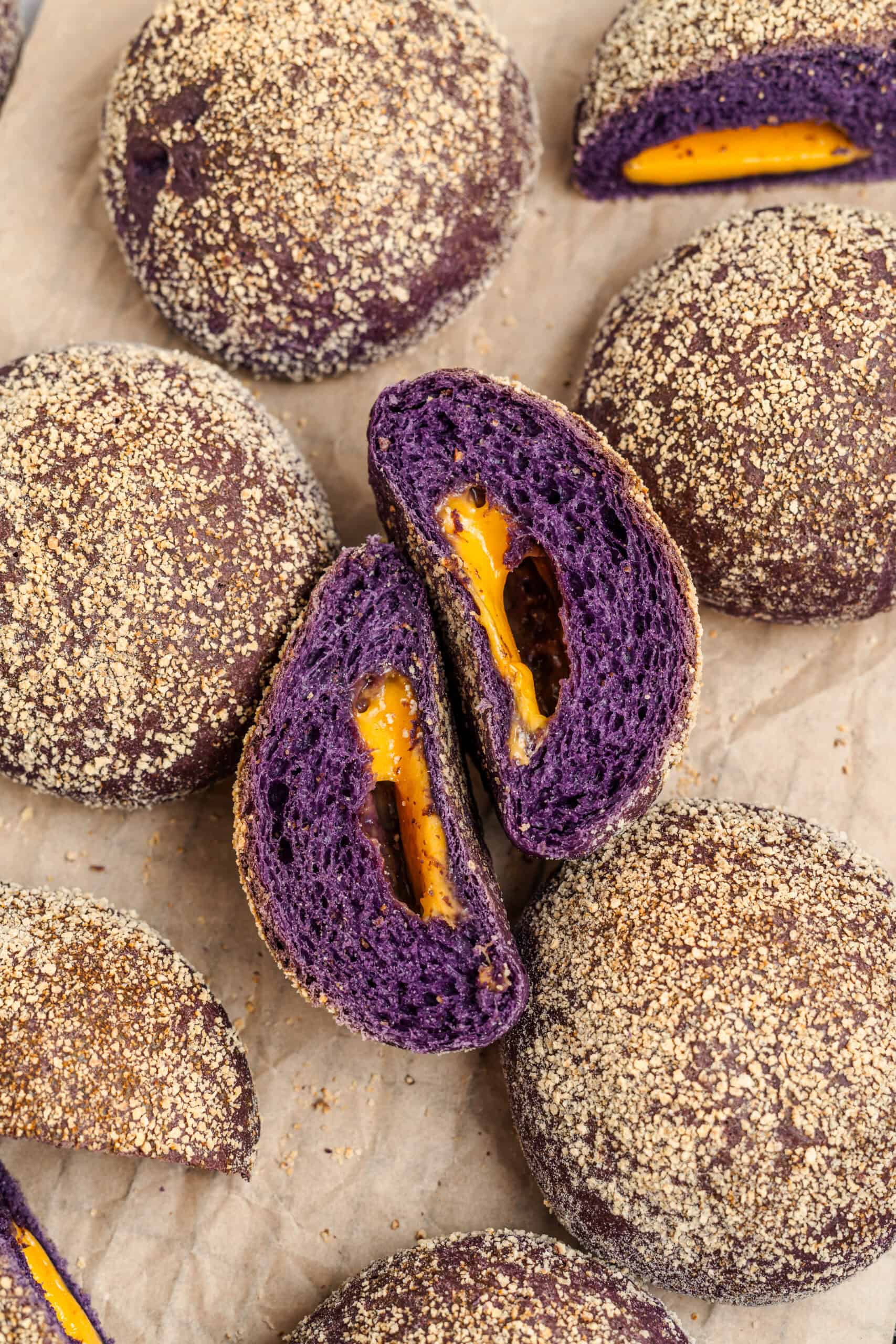
Let them cool on a rack for about 10 minutes, then split one open while the cheese is still soft. That first warm bite, purple crumb and melting cheese, is the whole reason you made them.
Troubleshooting
These are the exact problems I ran into across my test batches and the fixes that solved them.
| Problem | Why it happens | How to fix it |
|---|---|---|
| Cheese leaked out while baking | The seam was not sealed fully or mozzarella was used | Pinch the edges hard and roll smooth, and choose a firmer cheese like queso de bola or sharp cheddar |
| Dense, heavy rolls | The dough was too dry or underproofed | Keep the dough soft and tacky, and let both proofs run until truly puffed, not just a little bigger |
| Pale, muddy colour | Only halaya was used, or too little extract | Use both ube halaya and ube extract, and add the extract to the milk so it disperses evenly |
| Coating fell off | The dough surface was too dry to grip the crumbs | Coat right after shaping while the surface is still slightly tacky, and press the crumbs on gently |
Tips For The Softest Ube Cheese Pandesal
Nail The Dough Hydration
Enriched dough should feel soft and slightly tacky, never stiff or dry. If it is clinging to the bowl in a stringy way after kneading, that is exactly what you want. Resist the urge to add flour, since a dry dough is the number one cause of heavy pandesal. If anything, a wetter dough bakes up softer.
Seal Like You Mean It
The single biggest fix in my testing was sealing properly. Gather every edge of the disc up to the top and pinch it into a tight knot, then roll the ball seam side down so the weight helps hold it closed. A lazy seal is how you end up scraping welded cheese off the tray.
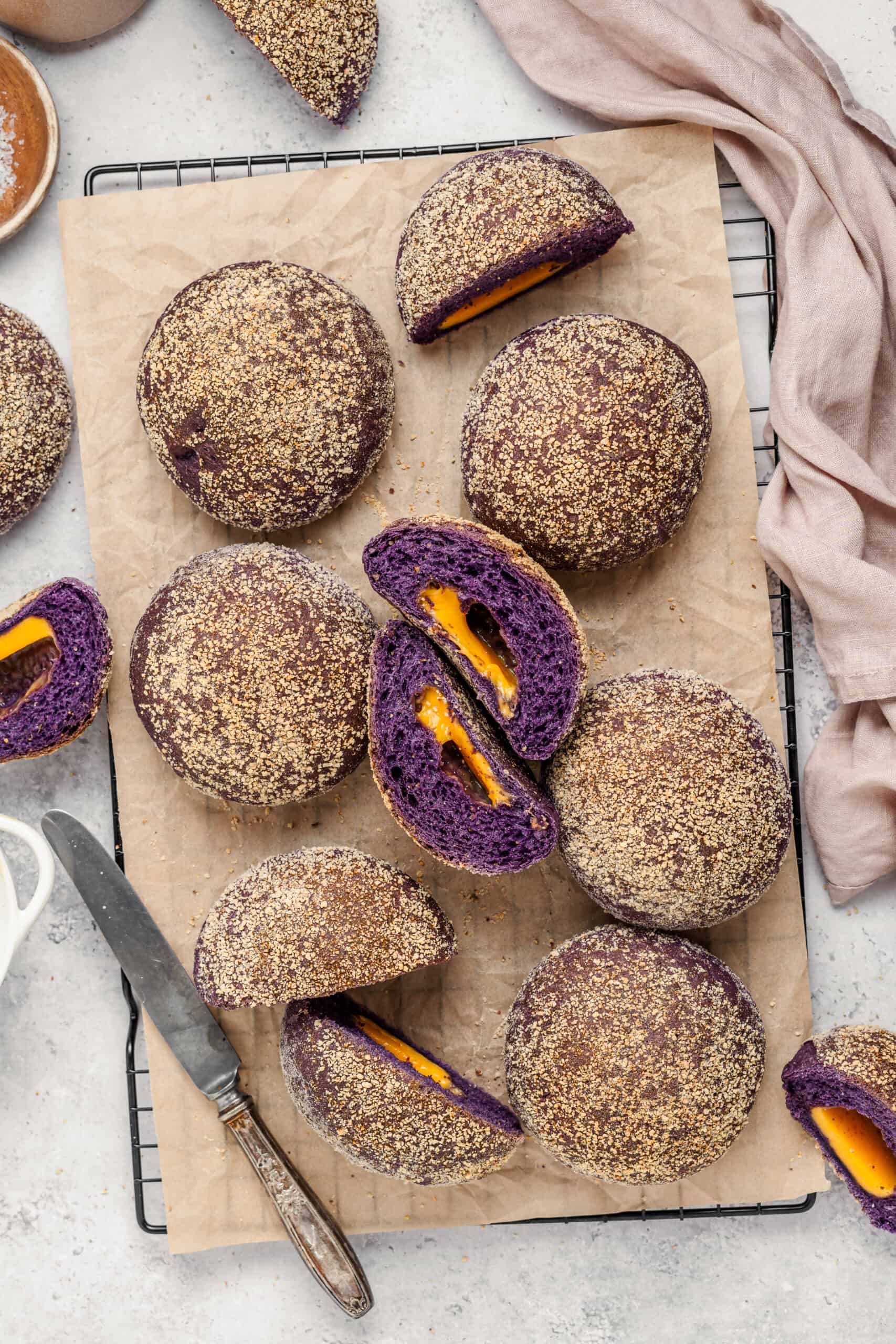
Warm pandesal, split and buttered, dipped into strong black coffee is breakfast in the Philippines. Make a batch and you will understand the ritual instantly.
Judge The Second Proof By Feel
The rolls are ready to bake when they look puffed and spring back slowly when you press one gently. Underproofed rolls bake up tight and heavy, while a full second proof gives you that cloud soft interior. In a cool kitchen this can take the full hour, so go by the look rather than the clock.
Variations
Plain Ube Pandesal
Leave the cheese out entirely and you have classic ube pandesal, soft purple rolls that are wonderful with butter and jam. Everything else stays the same, so it is the easiest variation to make if you are baking for someone who prefers their bread sweet rather than savoury.
Ube And Salted Egg
Swap the cheese cube for a small piece of salted egg yolk, or tuck one in alongside the cheese. The rich, savoury yolk against the sweet purple crumb is a very Filipino flavour pairing and feels a little festive.
Extra Cheesy Tops
Press a little shredded cheese onto the tops in the last 5 minutes of baking for a crisp, lacy cheese crown. It makes the rolls look bakery finished and adds another hit of savoury flavour on top of the hidden pocket, a bit like the cheesy pull on my milk bread garlic rolls.
Serving Suggestions
The Classic Coffee Pairing
Split a warm roll, spread it with cold salted butter, and dip it into hot black coffee. The butter melts into the craggy top and the coffee softens the crumb just enough. This is how pandesal is eaten across the Philippines and it is genuinely hard to beat.
A Filipino Breakfast Spread
Serve them alongside other Filipino favourites for a proper merienda or breakfast table. They sit happily next to something sweet and chewy, so a plate of these with a few pieces of ube crinkles makes a very purple, very happy spread. If you want something hot on the same table, crispy turon is the Filipino banana lumpia that goes with it, caramelised on the outside and soft in the middle.
Warm Or Room Temperature
These are best within a few hours of baking while the cheese is soft, but they are still lovely at room temperature the next day. A quick 5 minutes in a warm oven brings back the just baked softness and re melts the cheese center.
How To Store Ube Cheese Pandesal
Keep the rolls in an airtight container at room temperature for up to 2 days. Because they are enriched with milk, egg and butter, they stay soft longer than lean bread, but they are always best warmed before eating. Avoid the fridge, which dries bread out and turns the crumb gummy.
To freeze, cool the rolls completely and seal them in a zip top bag for up to 1 month. Reheat from frozen or day old in a 150C or 300F oven for about 5 minutes, which softens the crumb and brings the cheese back to that melty state. If you like a softer crust, wrap them loosely in foil while they warm.
Common Mistakes To Avoid
Adding Too Much Flour
It is tempting to keep dusting in flour when the dough feels sticky, but that is how soft pandesal turns into a dense bun. Trust the tackiness and use a bench scraper instead of extra flour when you handle it.
Skipping The Breadcrumb Coating
Without the crumb coating these are just purple cheese buns. The fine breadcrumbs are what give pandesal its signature craggy, golden top and slightly sandy texture, so do not leave them off even if you are tempted to simplify.
Using A Melty Cheese
Soft cheeses like mozzarella melt too fully and escape through any weak point in the seal. A firmer cheese holds its shape, gives you a defined pocket, and is far more forgiving if your sealing is not perfect yet.
Frequently Asked Questions
What is ube cheese pandesal?
Ube cheese pandesal is a soft Filipino breakfast roll made with ube, the purple yam, and stuffed with a cube of cheese. The dough is tinted vivid purple, rolled in fine breadcrumbs before baking, and delivers the salty and sweet contrast that Filipino baking is loved for. It is best eaten warm while the cheese center is still soft.
Can I make ube pandesal without the cheese?
Yes. Leave the cheese cube out and you have classic ube pandesal, soft purple rolls that are lovely with butter and jam. Every other step stays exactly the same, so it is an easy change to make for anyone who prefers their bread sweet rather than savoury.
Do I really need both ube extract and ube halaya?
For the best result, yes. The ube extract provides the vivid purple colour, while the ube halaya adds real flavour and moisture to the dough. Using only one gives you either a muddy colour or a weaker flavour, so the two work together.
What is the best cheese to use?
Queso de bola, an Edam style waxed cheese, is the traditional choice for its firm, salty bite. Sharp cheddar is an excellent and easy substitute. Avoid mozzarella, which melts too fully and tends to leak out through the seal during baking.
Why did my cheese leak out while baking?
Leaking almost always comes down to a weak seal or a cheese that melts too much. Pinch every edge of the dough firmly into a tight knot, roll the ball seam side down, and choose a firmer cheese like queso de bola or cheddar. A well sealed roll keeps its cheese pocket neatly inside.
How do I store and reheat ube cheese pandesal?
Keep them in an airtight container at room temperature for up to 2 days, or freeze for up to 1 month. Avoid the fridge, which dries the crumb out. To serve, warm day old or frozen rolls in a 150C or 300F oven for about 5 minutes to soften the crumb and bring the cheese back to a melty state.
Let’s Get Cooking
If you liked this recipe make sure to leave me a comment and rating down below. I’d love to know how it went! Also, don’t forget to tag me on Instagram @catherine.desserts.
Follow me on Facebook, Pinterest, YouTube, and TikTok for more of my baking creations and updates!
Ube Cheese Pandesal
Soft Filipino ube pandesal rolls tinted vivid purple with ube halaya and ube extract, stuffed with a melting cube of cheese and finished with the classic breadcrumb coating. Best warm from the oven with hot coffee.
- Prep Time: 30
- Proofing: 160
- Cook Time: 20
- Total Time: 210
- Yield: 12 rolls 1x
- Category: Bread
- Method: Baking
- Cuisine: Filipino
Ingredients
Dough:
- 375 g bread flour
- 40 g granulated sugar
- 1 tsp fine sea salt
- 2 1/4 tsp (7 g) instant dry yeast
- 240 ml lukewarm whole milk
- 60 g ube halaya
- 2 tsp ube extract
- 1 large egg, lightly beaten
- 45 g unsalted butter, softened and cubed
Cheese filling:
- 150 g queso de bola or sharp cheddar, cut into 12 cubes
Breadcrumb coating:
- 100 g fine breadcrumbs
- 1 tbsp granulated sugar
Instructions
- Whisk the bread flour, sugar, salt and yeast together in the bowl of a stand mixer fitted with the dough hook.
- In a separate bowl, whisk the lukewarm milk with the ube halaya and ube extract until smooth and evenly purple, then whisk in the beaten egg.
- Pour the wet mixture into the dry ingredients and mix on low for about 3 minutes, until a rough dough forms.
- Add the softened butter one cube at a time, letting each piece disappear before adding the next. Increase to medium speed and knead for 12 to 15 minutes, until the dough is soft, tacky and passes the windowpane test.
- Shape into a ball, place in an oiled bowl, cover and proof in a warm spot for 1 to 1.5 hours, until doubled.
- Turn the dough out, press the air out gently and divide into 12 pieces of about 70 g each.
- Flatten each piece into a disc about 8 cm across, set a cheese cube in the middle, gather the edges up and pinch firmly to seal, then roll smooth and set seam side down.
- Stir the breadcrumbs and 1 tbsp sugar together in a shallow bowl and roll each ball to coat all over.
- Space the coated rolls on parchment lined trays, cover and proof for 45 minutes to 1 hour, until visibly puffed.
- Heat the oven to 180°C / 350°F.
- Bake for 18 to 20 minutes, until deeply golden and hollow sounding when tapped underneath.
- Cool on a wire rack for 10 minutes and eat warm while the cheese is still soft.
Notes
- You need both ube extract and ube halaya. The extract brings the vivid purple, the halaya brings flavour and moisture, and neither one does the whole job alone.
- Queso de bola is the traditional cheese here. Sharp cheddar is a great stand in. Skip mozzarella, it melts too much and leaks out.
- For plain ube pandesal, leave the cheese out and follow every other step exactly.
- Do not skip the breadcrumb coating. It is the small detail that makes these read as pandesal rather than generic sweet buns.
- Store airtight at room temperature for up to 2 days, or freeze for up to 1 month. Warm day old or frozen rolls in a 150°C / 300°F oven for 5 minutes to bring back the fresh baked texture.
Nutrition
- Serving Size: 1 roll
Want more? Browse every ube recipe in one place.
Craving more? Browse every bread recipe in one place.