Biko is the Filipino coconut sticky rice cake that lives or dies on its latik, and once you have made the topping properly you will never pour plain coconut milk over rice again.
The first biko I ever ate came out of a foil tray at a friend’s birthday in Sydney, cut into diamonds, sitting under a scatter of something crisp and golden that I could not identify. I asked. Her mum said latik, said it like it was obvious, and handed me a second piece. It took me another four years and a lot of scorched coconut cream to understand that those little curds are not a garnish, they are the entire point.
I have made this eight times now and the batch that finally clicked was the one where I stopped being brave with the latik and pulled it off the heat a full shade earlier than looked right. Coconut solids carry an enormous amount of residual heat. The pan keeps cooking them after the stove is off, and the gap between deep gold and acrid is about forty seconds. Everything else in biko is forgiving. That bit is not.
What Is Biko
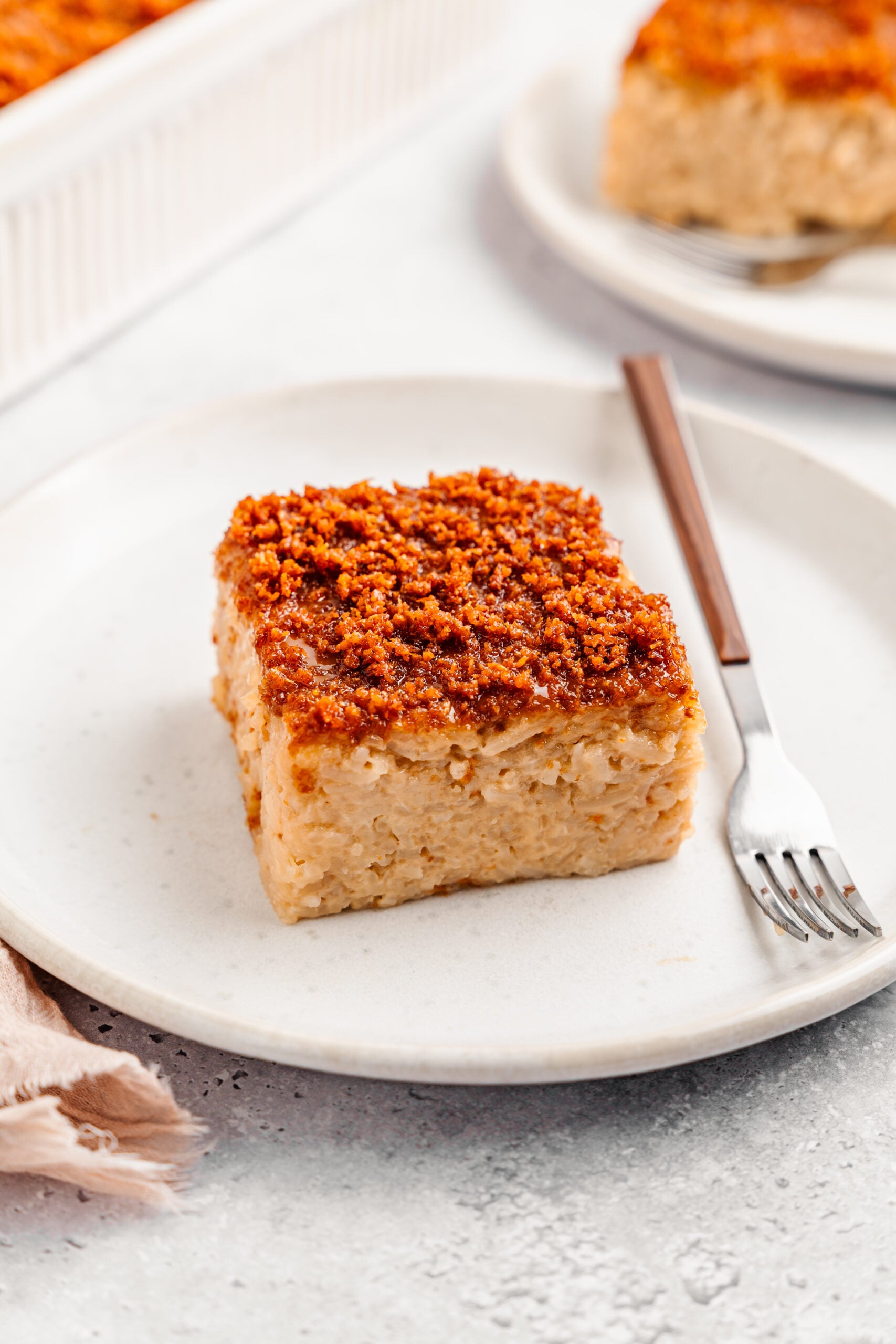
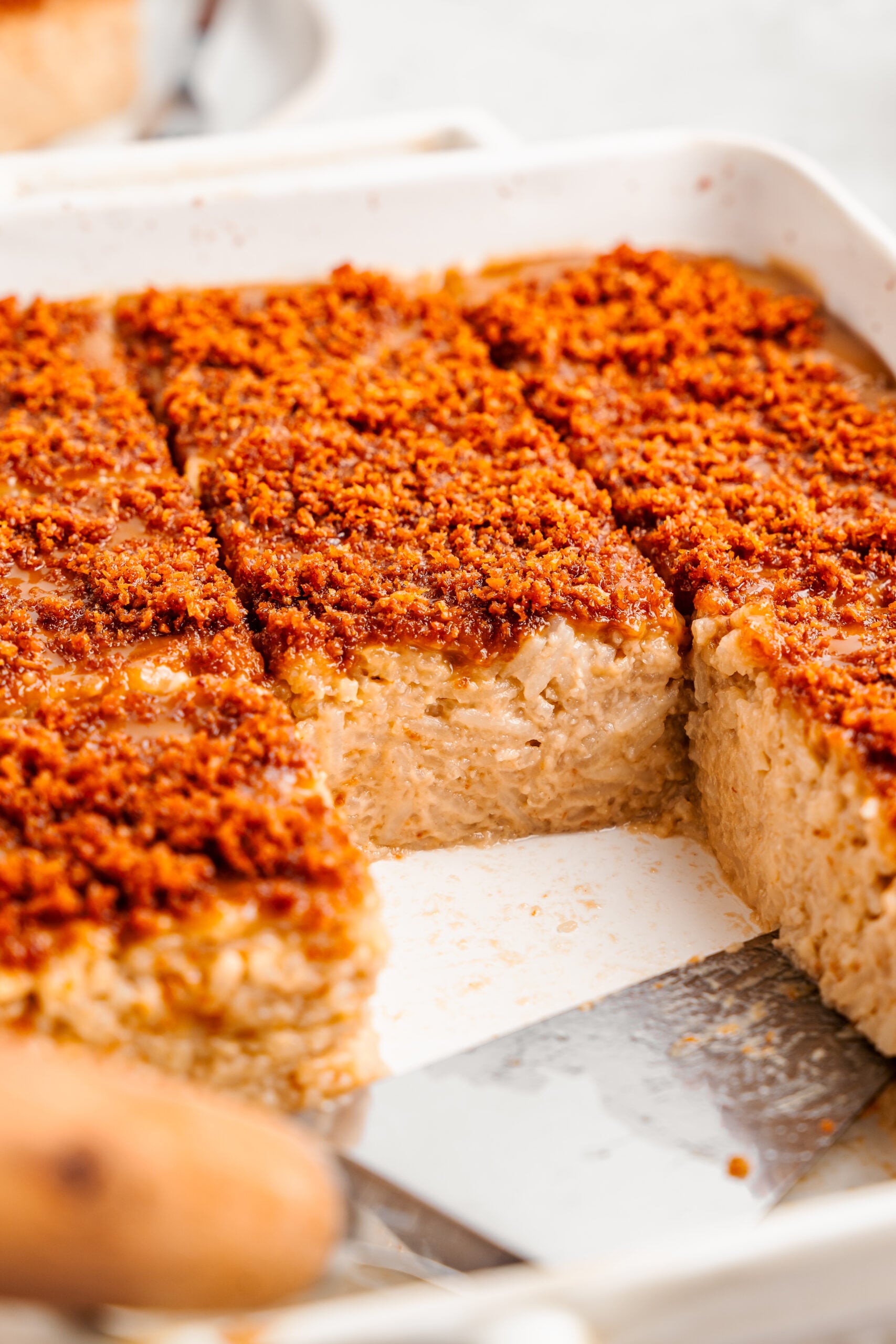
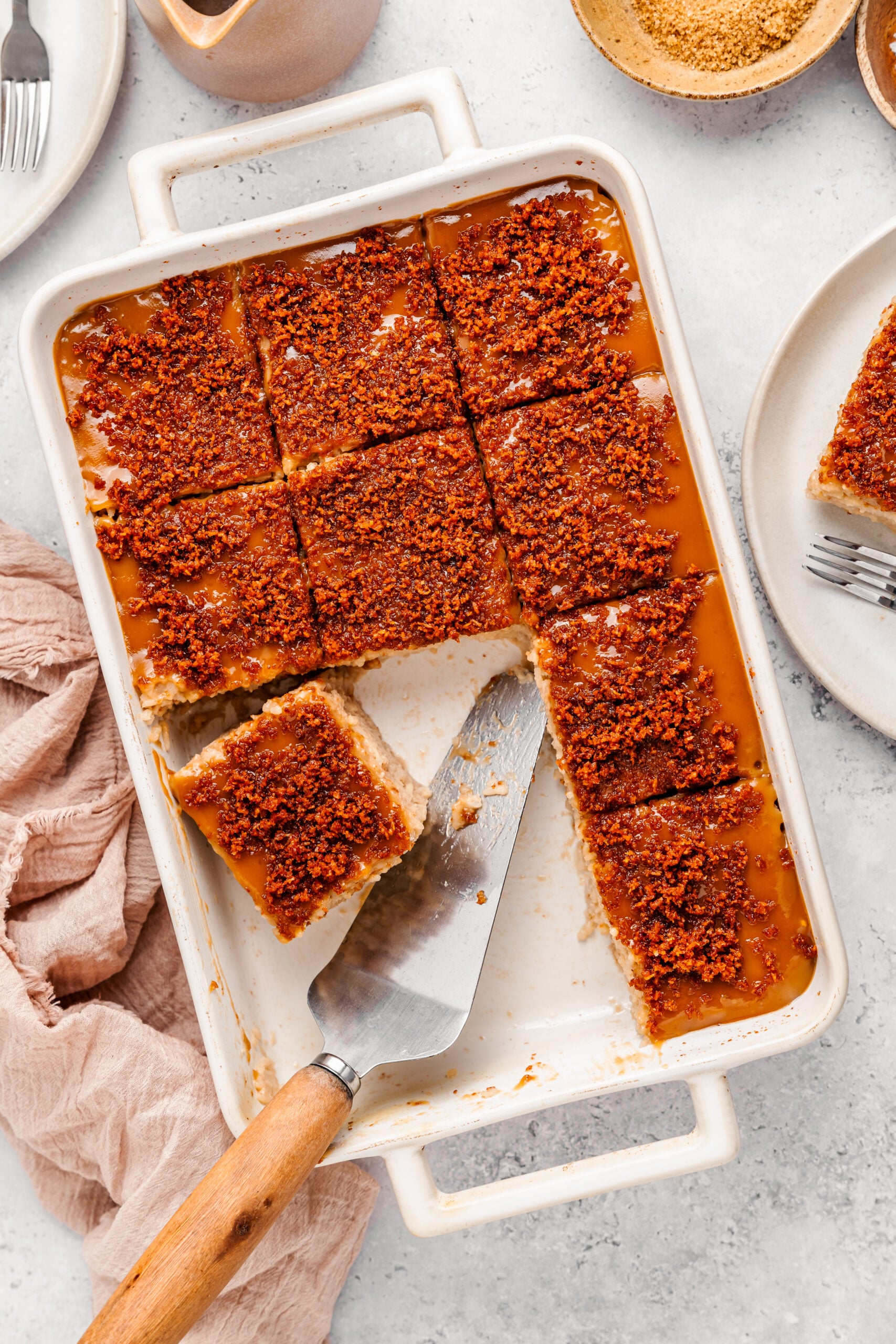
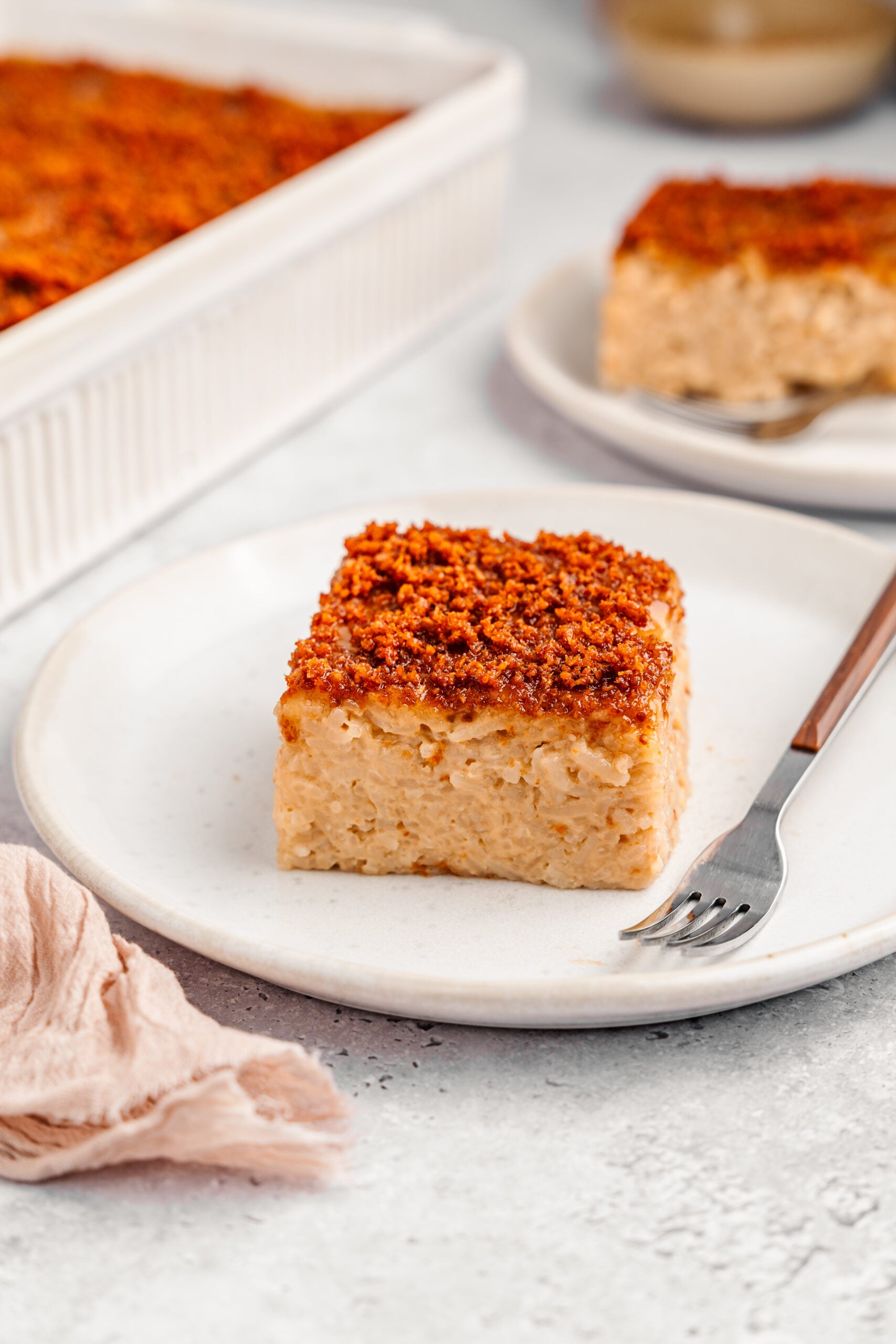
Biko is a Filipino kakanin, a rice cake, made by cooking glutinous rice in coconut milk and then folding it through a dark caramel of coconut milk and brown sugar until the whole thing pulls together into one thick glossy mass. It is pressed into a tray, topped with more caramel, scattered with latik, and cut into squares or the traditional diamonds. It is chewy rather than soft, sweet but not cloying, and it tastes overwhelmingly of coconut and molasses.
Three core ingredients do almost all of the work: glutinous rice, canned coconut milk and dark brown sugar. There is no oven, no mixer and no special equipment beyond a wide heavy pan and a wooden spoon you do not mind working hard. If you have already made mango sticky rice, you own everything you need.
Where Biko Comes From
Biko belongs to the kakanin family, the broad Filipino category of rice and coconut based sweets that includes suman, sapin sapin, puto and kutsinta. These are fiesta foods and merienda foods, made in big trays for birthdays, town feasts and Christmas, traditionally cooked in a wide wok over a wood fire and lined with banana leaf.
The name shifts by region. In parts of the Visayas a very similar dish is called kalamay, and some households use the two names for the same tray. What stays constant is the method: rice, coconut, dark sugar, and a very long stir. It sits in the same broad tradition as Chinese nian gao, another sticky rice cake built for celebrations, though the flavours go in completely different directions.
How to Make Biko
There are three separate jobs and they overlap, so read them once before you start. The latik goes first because it takes the longest and it happily sits at room temperature. Coconut cream simmers until it splits into clear oil and pale solids, then those solids toast into crisp golden curds that you strain out and drain.
While that reduces, the rinsed glutinous rice cooks in water and a can of coconut milk until the liquid is absorbed. Then a second can of coconut milk simmers with dark brown sugar and salt into a loose caramel. You hold back a third of a cup for the top, add the cooked rice to the rest, and stir for ten to fifteen minutes until it comes away from the sides of the pan in one piece. Press, top, scatter, cool, cut.
Biko At a Glance
| Serves | Prep | Cook | Cool | Total |
|---|---|---|---|---|
| 12 squares | 10 minutes | 1 hour | 20 minutes | 1 hour 30 minutes |
Ingredients
For the Sticky Rice
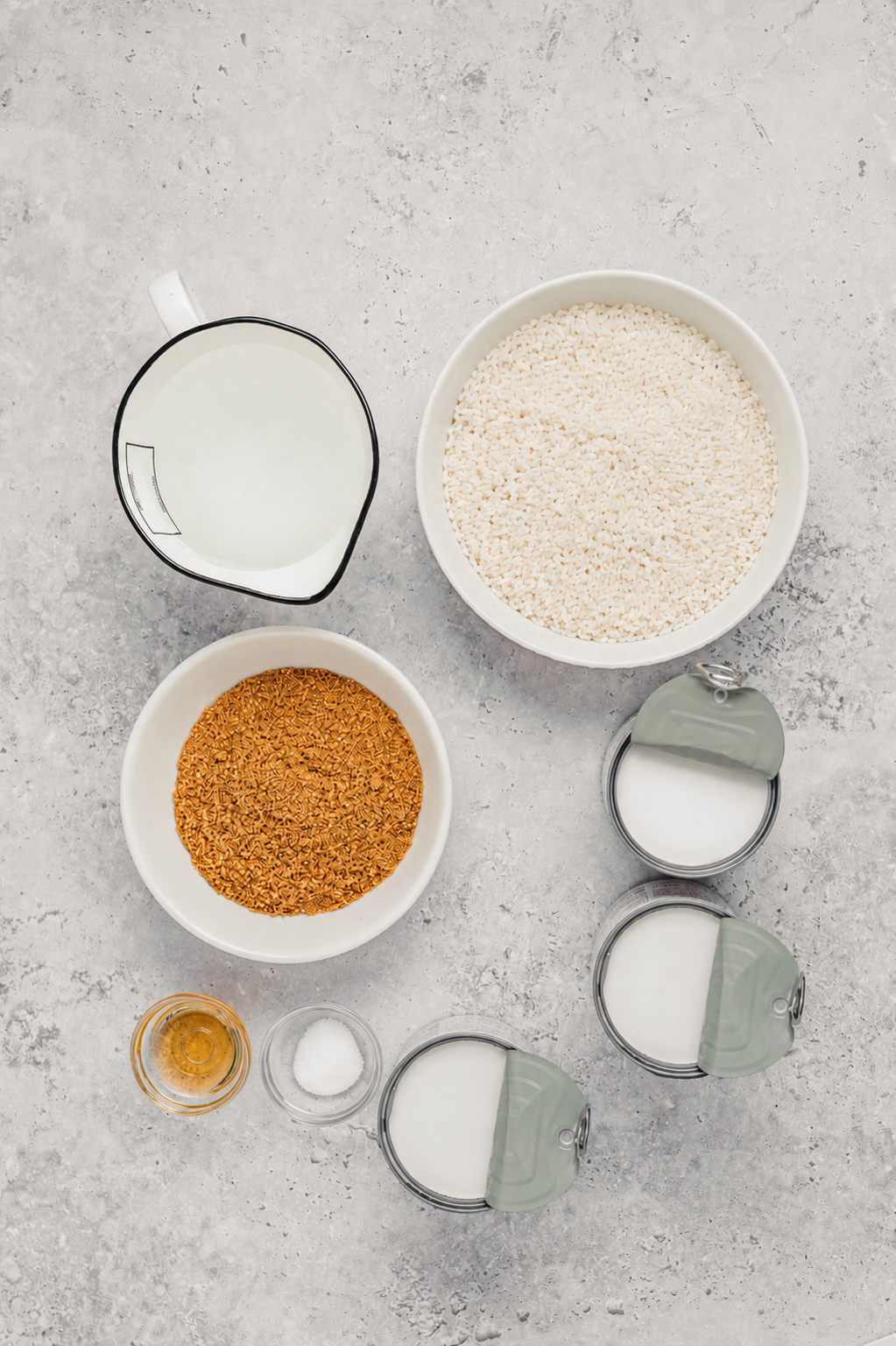
- Glutinous rice: the backbone of the dish and genuinely not substitutable. Its waxy starch is what makes biko hold together in a sliceable square instead of collapsing into pudding. It is sold as glutinous, sweet or sticky rice, and despite the name it contains no gluten.
- Water: paired with the first can of coconut milk so the rice cooks through without the coconut catching on the base. Straight coconut milk alone tends to scorch before the grains are tender.
- Full fat coconut milk: cooked into the rice from the start so every grain is seasoned rather than just coated at the end. Use full fat from a can. Light coconut milk has too little fat to do anything useful here.
For the Caramel Base
- Full fat coconut milk: the second can, simmered with sugar into the caramel that binds everything. As it reduces the fat separates slightly and gives the finished biko its gloss.
- Dark brown sugar or muscovado: this single choice decides what colour your biko turns out. Muscovado gives the deep mahogany you see in Filipino bakeries and a strong molasses flavour. Ordinary dark brown sugar gives a lighter caramel colour and a cleaner taste. Both are correct.
- Fine salt: half a teaspoon, and it is doing real work. Without it the caramel is flatly sweet and the coconut disappears behind the sugar.
- Vanilla extract: optional and not traditional, but a teaspoon stirred in at the end rounds the molasses edge off nicely. Leave it out if you want the straightforwardly Filipino version.
For the Latik Topping
- Coconut cream: the whole topping, and the best thing in the dish. Simmered slowly it splits into clear oil and pale solids, and those solids toast into crisp golden curds. Keep the strained oil, it is perfect for greasing the tray.
Optional: My Favourite Extras That Add a Little Magic
- Banana leaf: the traditional liner, and frozen leaves are easy to find in Asian grocers. It adds a light grassy scent to the base and makes the tray look properly festive. Greased paper works perfectly well, so treat this as a bonus rather than a requirement.
- Pandan: a knotted pandan leaf dropped into the rice as it cooks, then fished out, gives the whole tray a soft vanilla and grass aroma that suits the coconut enormously.
- Toasted sesame seeds: scattered over with the latik for extra crunch and a nutty note that stops the sweetness feeling one dimensional.
- Flaky salt: a light pinch across the finished tray just before cutting. It sharpens the caramel and makes the whole thing taste less like a sugar hit.
Substitutions: Smart Ingredient Swaps That Still Taste Amazing
- Coconut cream for the latik: if your cream refuses to split it was probably stabilised. Chill two cans of full fat coconut milk overnight, skim the thick solids off the top, and toast those instead. This always works.
- Dark brown sugar for muscovado: a completely fine swap that simply gives a paler, cleaner result. If you want the colour without the molasses intensity, use dark brown sugar plus a tablespoon of treacle.
- Jaggery or coconut sugar: both work and both push the flavour more caramel and less molasses. Coconut sugar in particular is a natural fit given everything else in the pan.
- Shop bought toasted coconut: not the same thing as latik and I would rather you made the real version, but desiccated coconut toasted dry in a pan will give you crunch on top in five minutes if you are out of time.
Steps
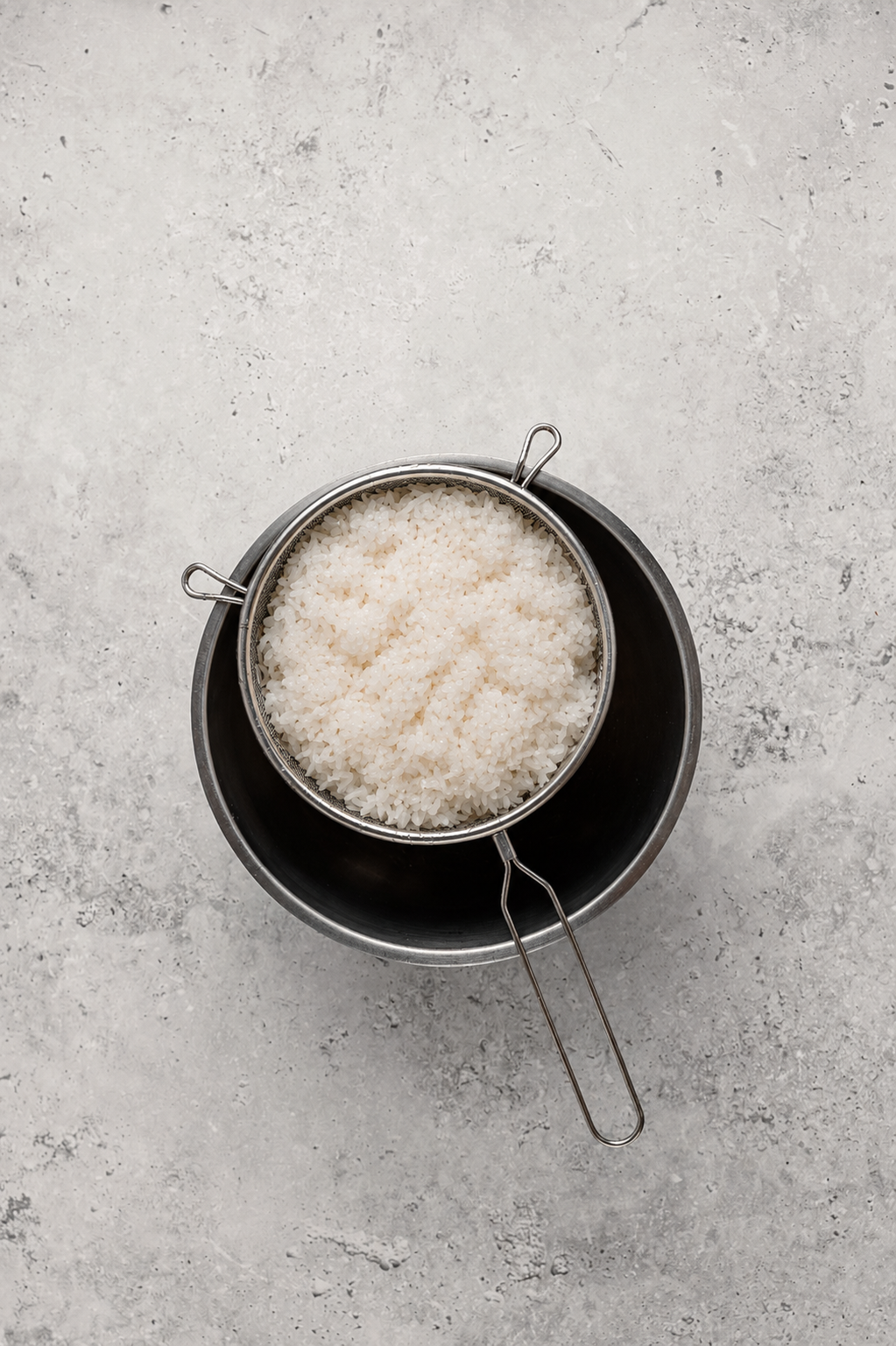
- Rinse the glutinous rice in cold water two or three times, until the water runs mostly clear, then drain well. Do not soak it. The rice needs to absorb the coconut milk rather than arriving at the pan already full of water.
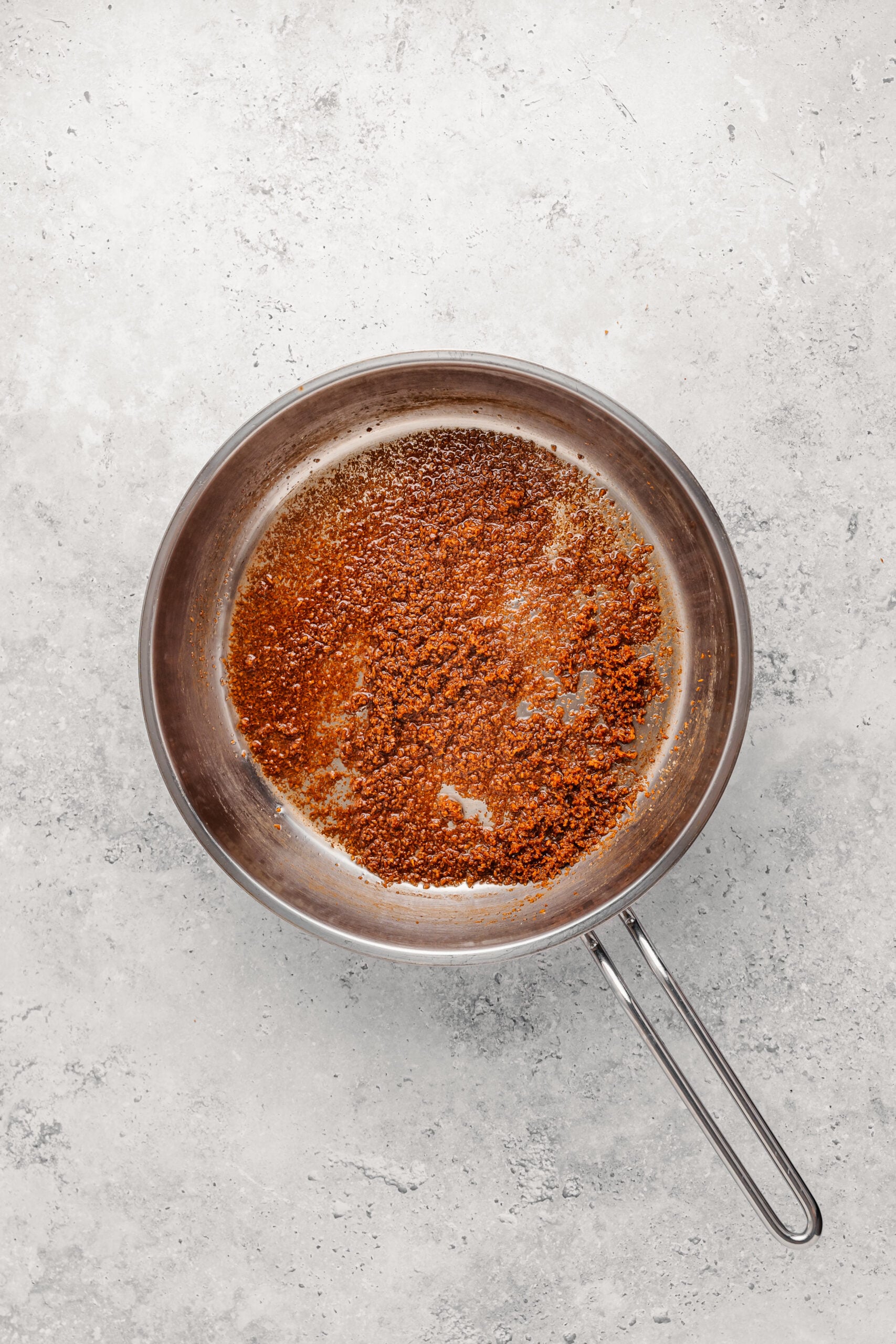
- Make the latik first, because it takes the longest and it can sit. Pour the coconut cream into a small saucepan over medium low heat and simmer, stirring every few minutes, for 25 to 35 minutes. It will thicken, then split into clear oil and pale solids, then the solids will start to colour.
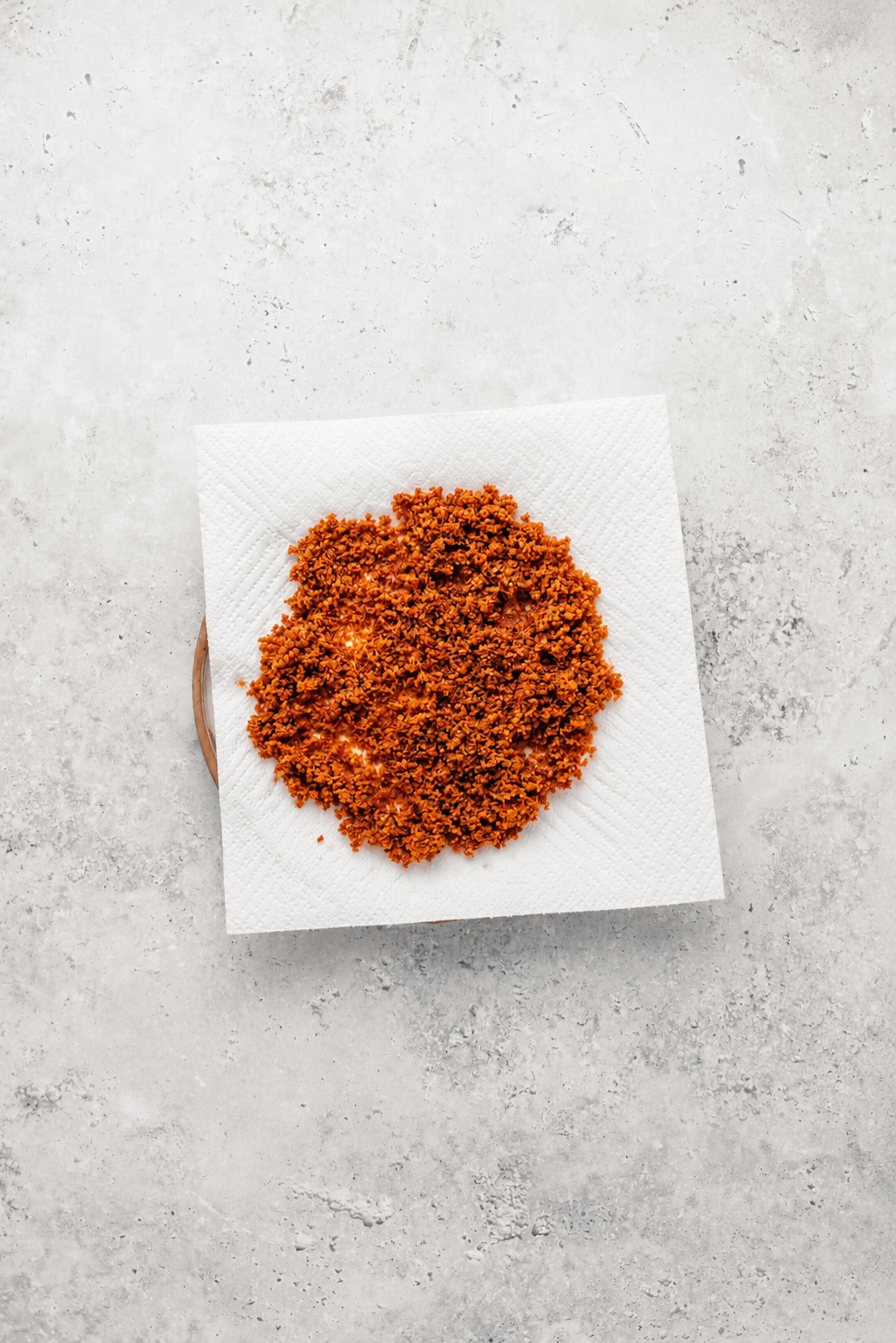
- The moment the curds are deep gold, strain them out and spread them on paper towel. They keep toasting in the residual heat and turn bitter if you leave them in the pan, so pull them a shade earlier than looks right. Keep the strained coconut oil for greasing the dish.
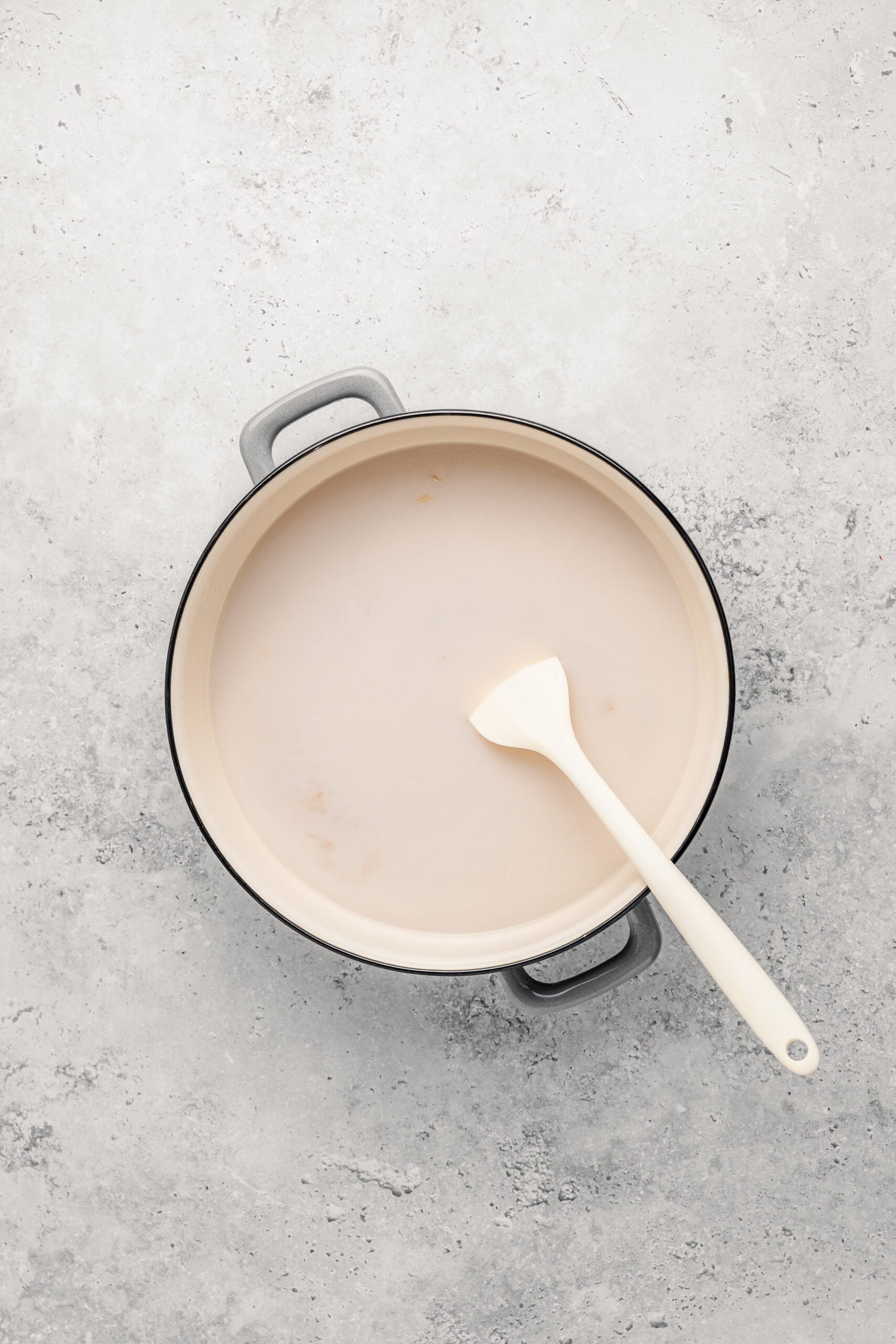
- Put the rinsed rice, water and the first can of coconut milk in a heavy based pot. Bring to a boil, then turn the heat to low, cover, and cook for 15 to 18 minutes, until the liquid is absorbed and the rice is just tender with a slight bite. Take it off the heat and leave it covered.
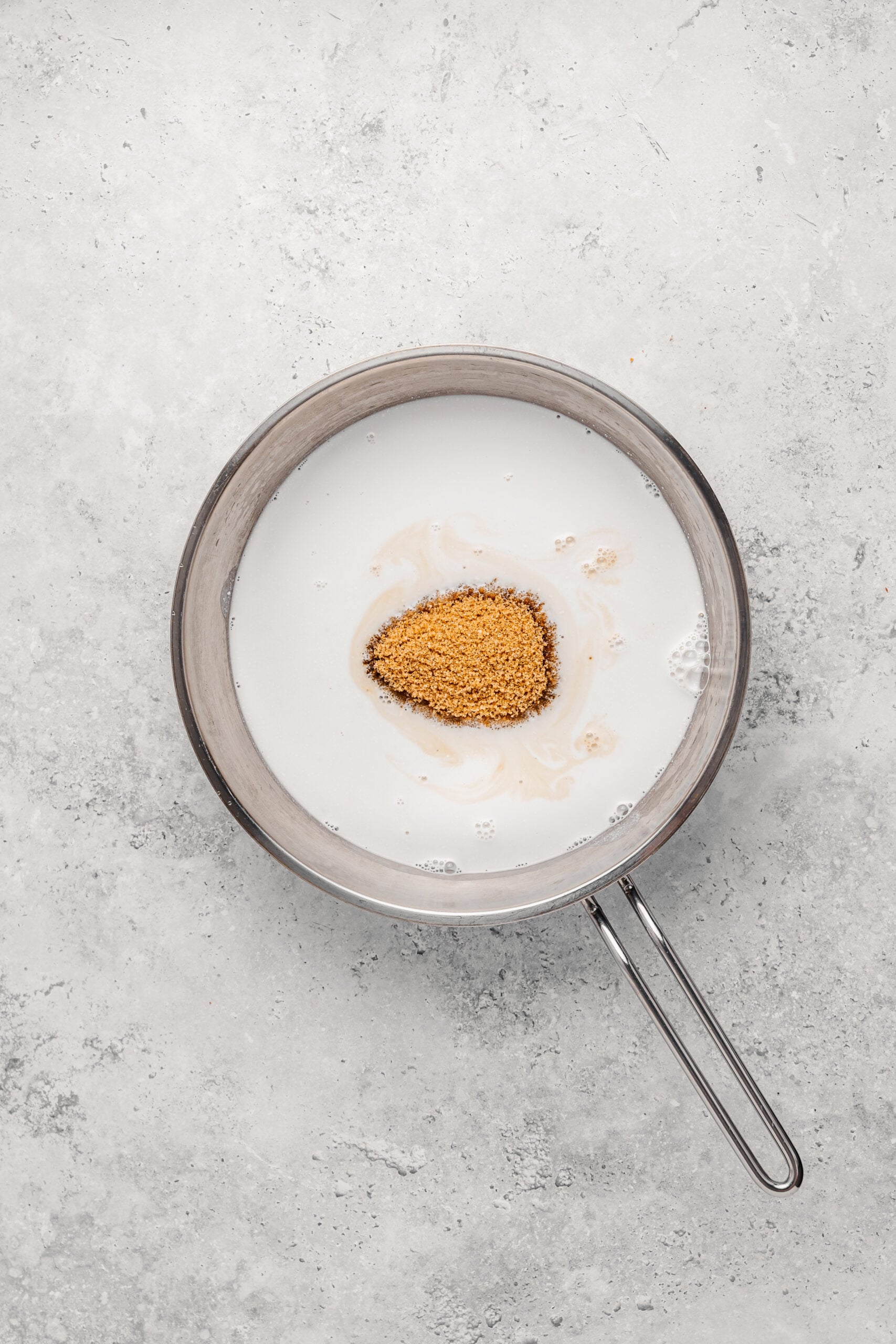
- In a wide, heavy pan or wok, combine the second can of coconut milk, the brown sugar and the salt. Bring to a simmer over medium heat, stirring until the sugar has completely dissolved.
- Keep it simmering for 12 to 15 minutes, stirring often, until it thickens into a loose caramel that coats the back of a spoon and darkens noticeably. Scoop out about 1/3 cup and set it aside, this becomes the glossy top layer.
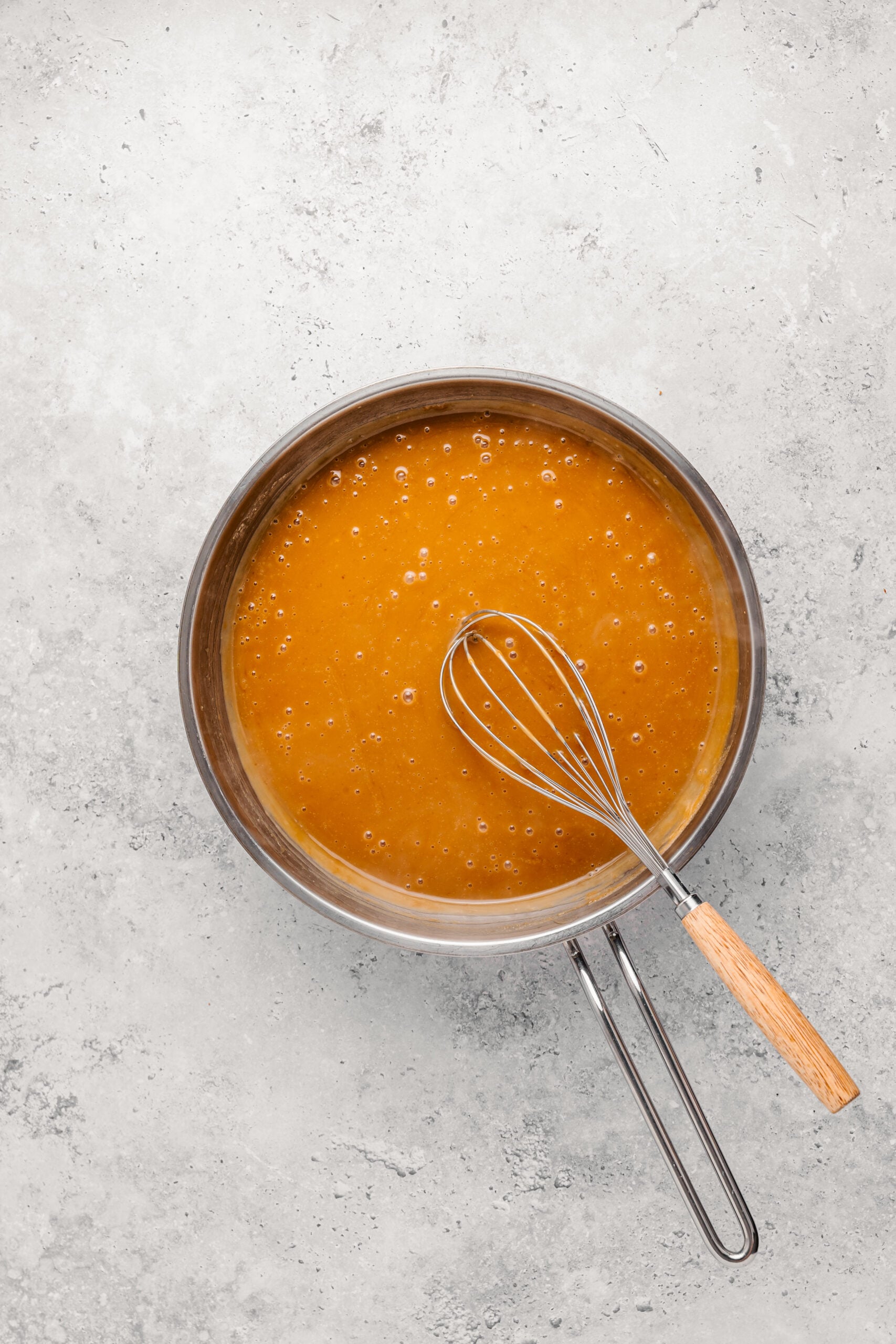
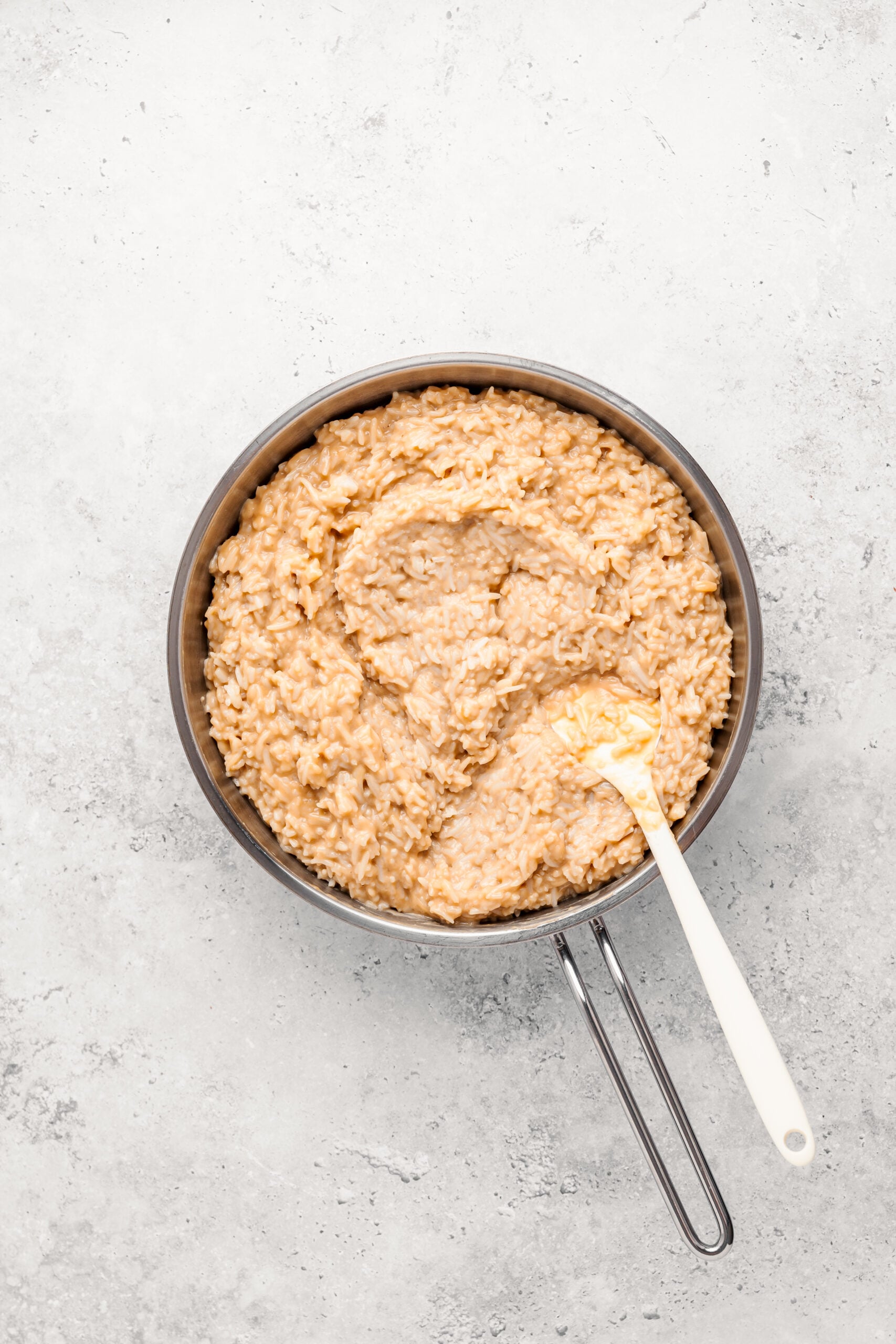
- Add the cooked rice to the remaining caramel in the pan. Stir and fold constantly with a sturdy wooden spoon for 10 to 15 minutes. It will look far too wet at first and will gradually pull together into a thick, glossy, sticky mass that comes away from the sides of the pan in one piece. That is the finish point.
- Stir through the vanilla if using. Grease a 23 by 33 cm (9 by 13 inch) dish with the reserved coconut oil and press the mixture in firmly with the back of an oiled spoon or oiled hands, levelling the top as you go.
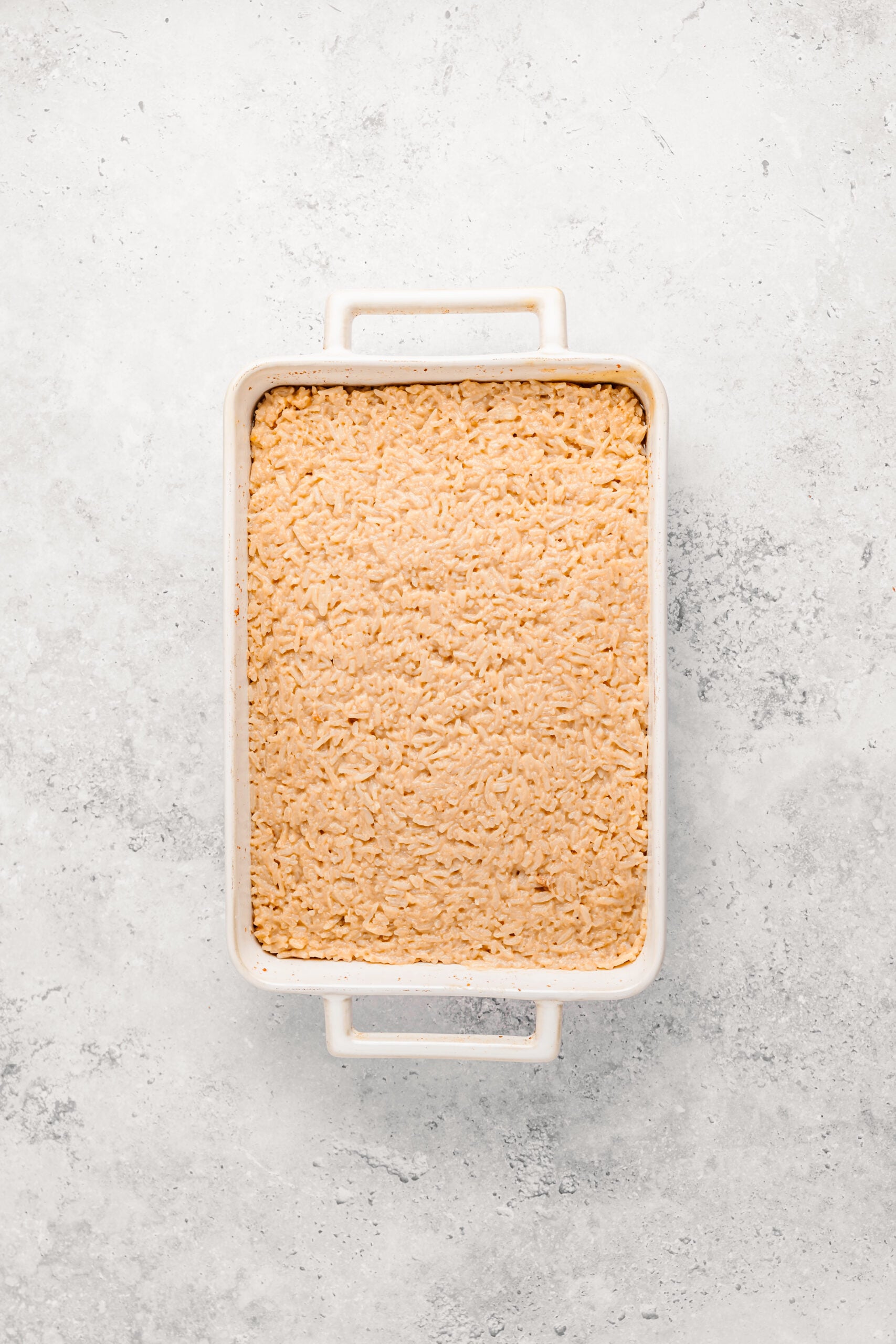
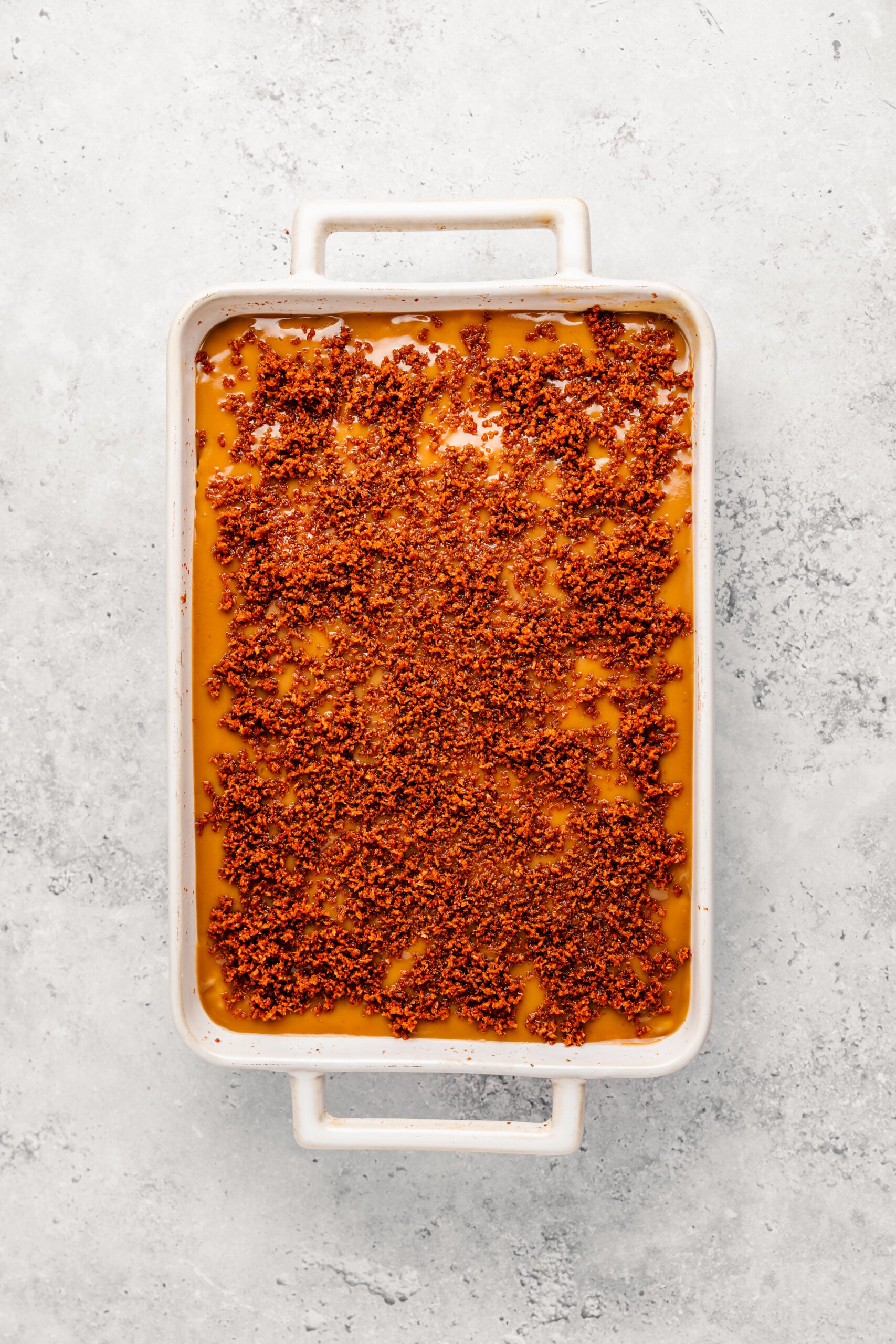
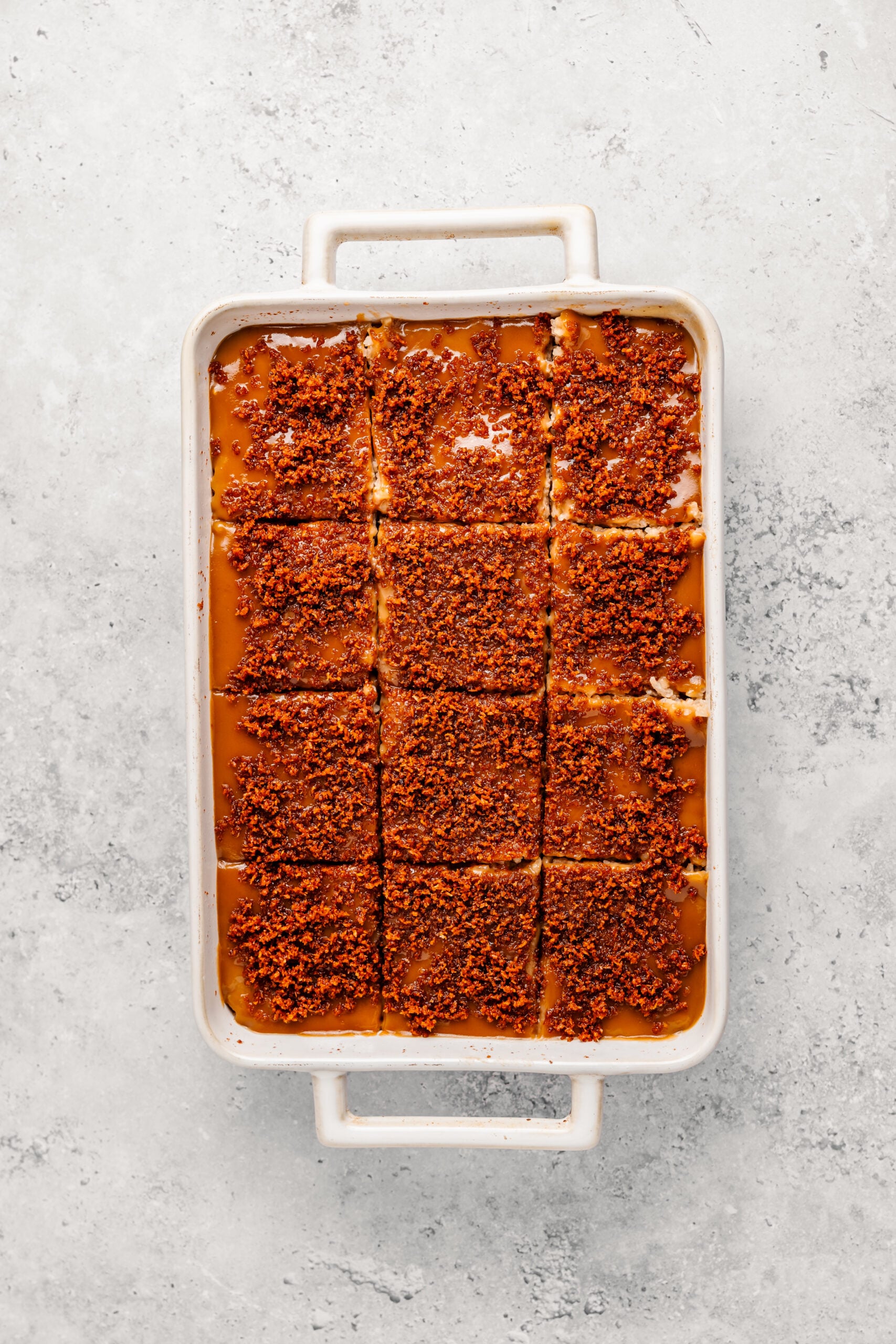
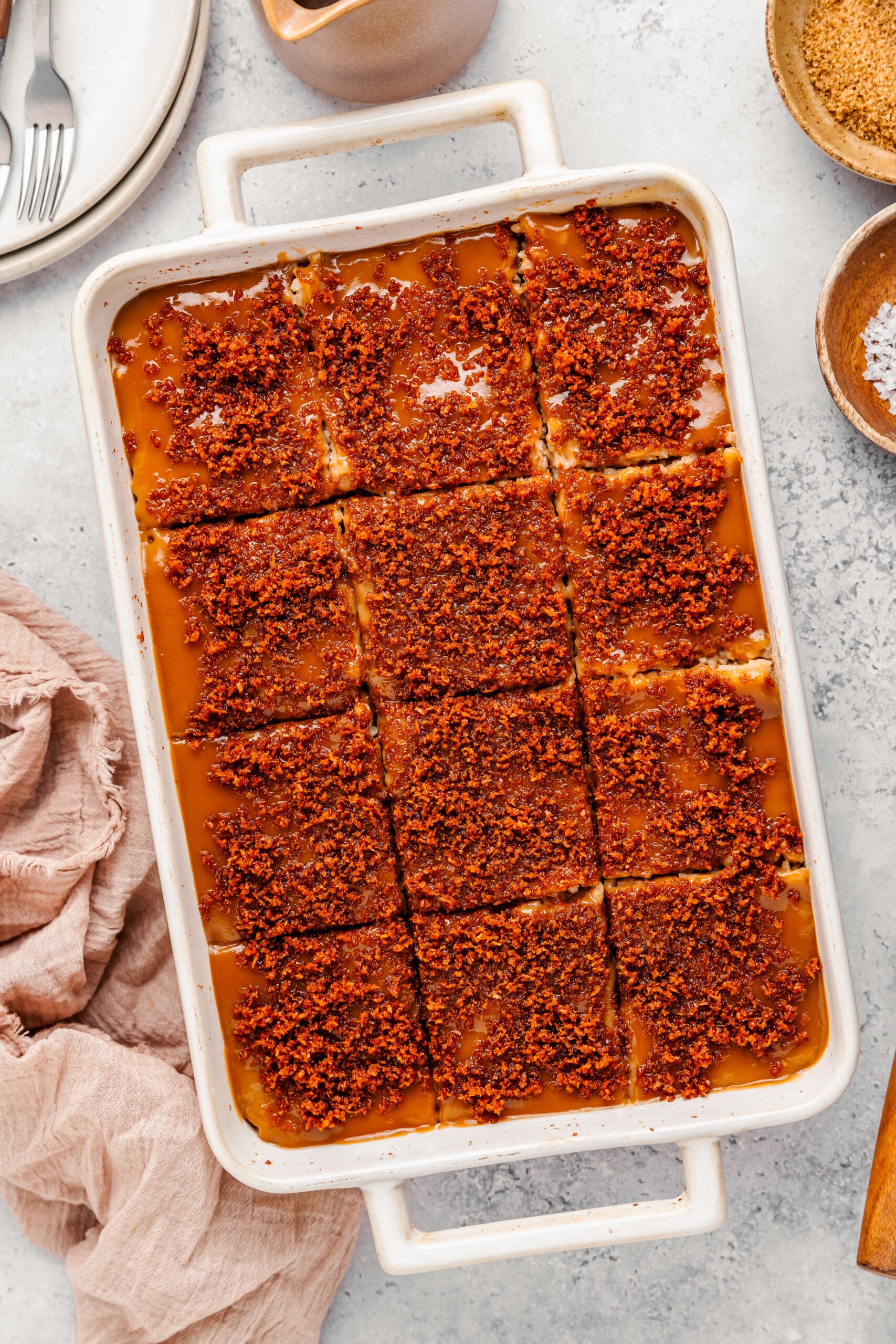
- Spread the reserved 1/3 cup of caramel over the surface in an even layer, right into the corners, then scatter the latik generously across the whole thing.
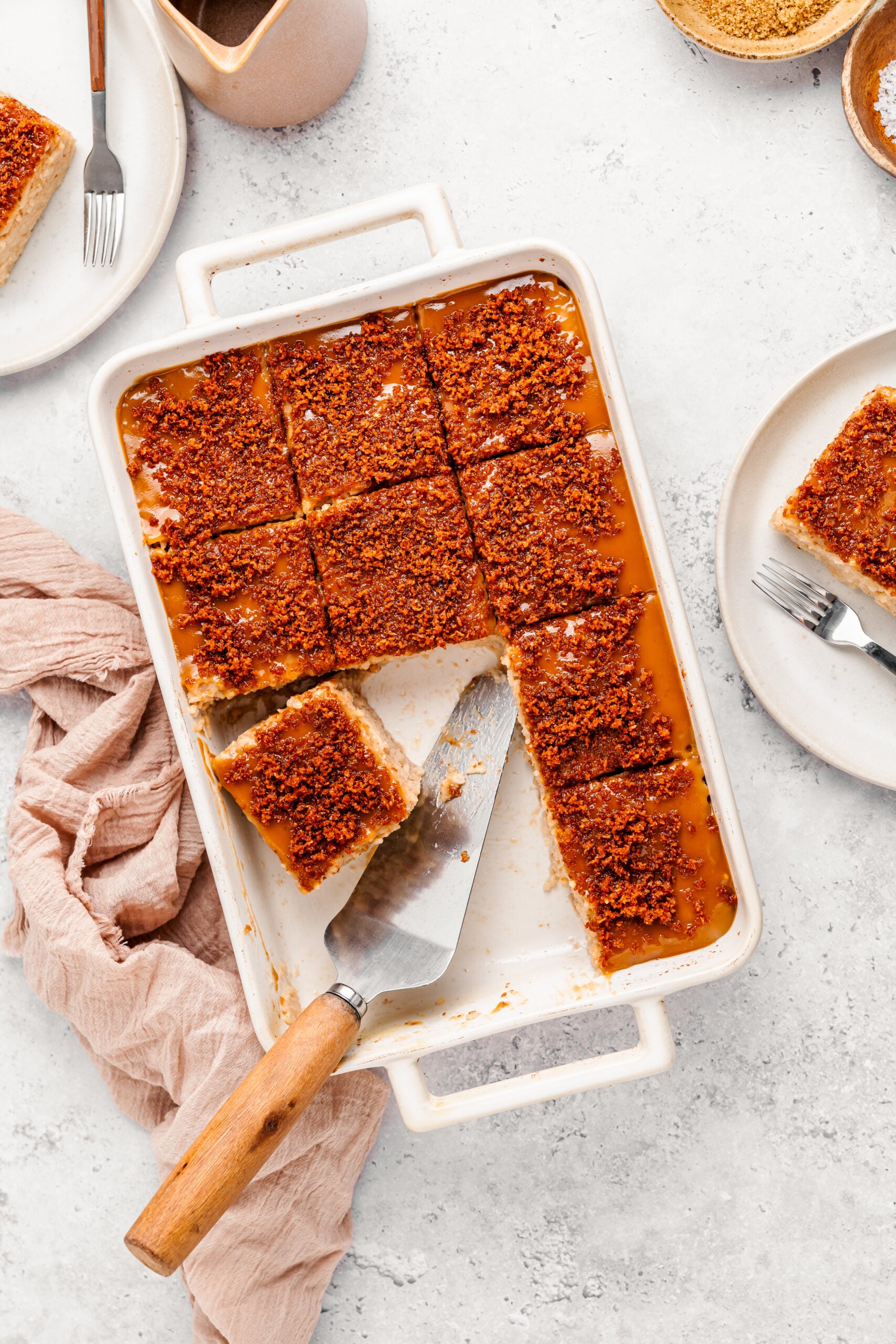
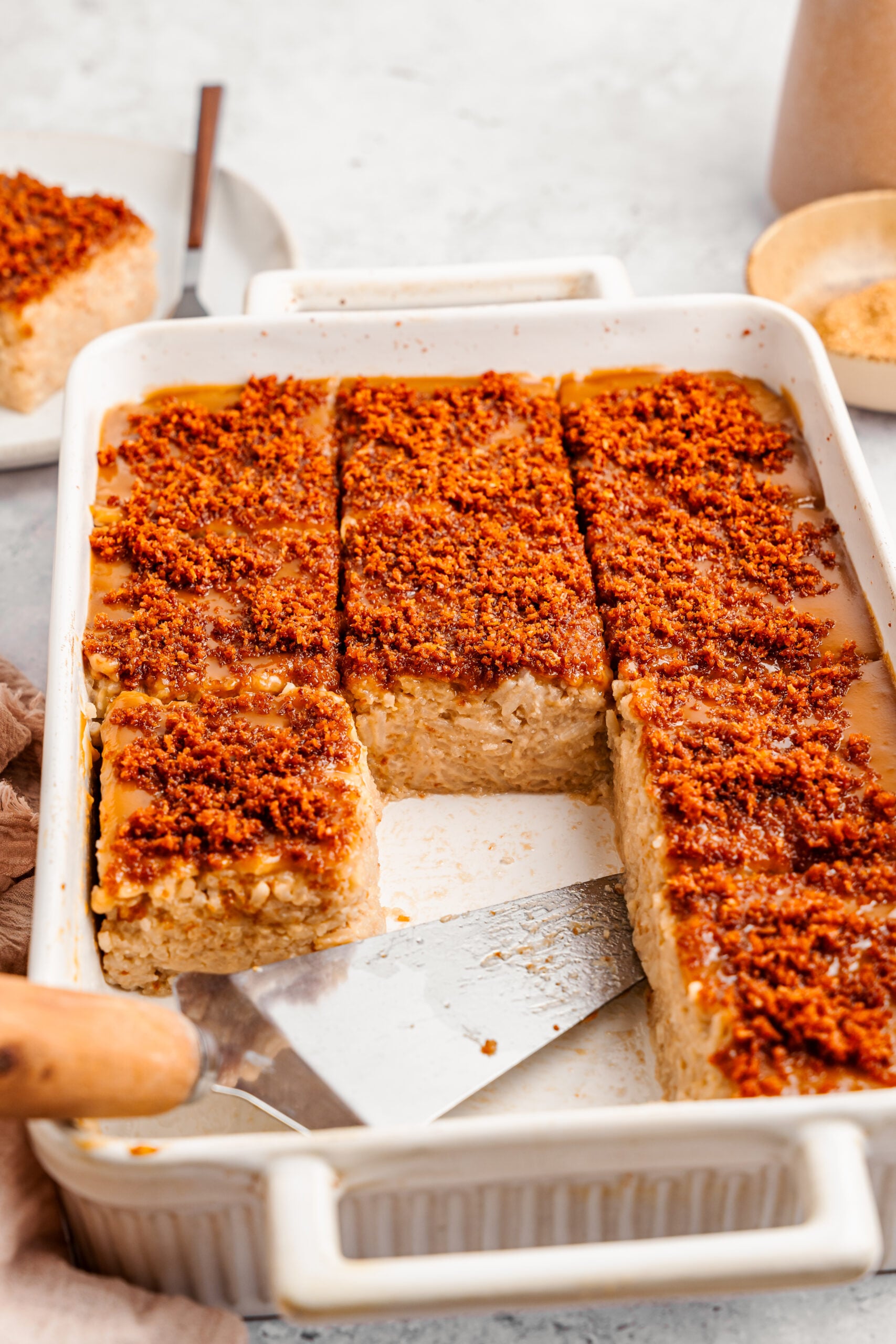
- Cool for at least 20 minutes before cutting into 12 squares or the traditional diamonds with an oiled knife. Serve warm or at room temperature.
Troubleshooting
| What went wrong | Why it happened | How to fix it |
|---|---|---|
| Dry and crumbly | The rice was overcooked, or too much liquid evaporated in step 4 | Pull the rice while it still has a slight bite. It finishes cooking in the caramel |
| Loose and soupy, will not set | The caramel and rice were not cooked together long enough | Keep stirring over the heat. It will come together, it just takes longer than you expect |
| Bitter latik | The curds sat in the hot pan past deep gold | Strain them out a shade earlier than looks right. Residual heat carries them further |
| The coconut cream never split | It was stabilised, which many supermarket brands are | Chill two cans of full fat coconut milk, skim the solids off the top and toast those instead |
| Will not hold a clean square | It needed longer to cool, or it was spooned in loosely rather than pressed | Press firmly with oiled hands and give it the full 20 minutes |
| Pale and beige rather than mahogany | Ordinary light brown sugar was used | Use muscovado, or dark brown sugar with a tablespoon of treacle |
Tips for the Best Biko
Pull the Latik Early
This is the tip that matters most and the one everybody learns the hard way. Coconut solids hold heat, so they keep browning for a good half minute after the pan leaves the stove. Strain them out when they are a shade lighter than the colour you actually want and let carryover finish the job. Burnt latik is bitter in a way that no amount of caramel underneath can hide.
Do Not Rush the Final Stir
Ten to fifteen minutes of folding rice through caramel feels absurd while you are doing it, and it is the step that turns sweet coconut rice into actual biko. The starch needs that time and that friction to release and bind everything together. It is ready when you drag the spoon through the middle and the channel stays open for a second before closing.
Oil Everything
Biko sticks to whatever it touches. Grease the dish with the reserved coconut oil, oil the back of the spoon you press with, oil your hands, and oil the knife before every single cut. Wiping the blade between cuts as well is what gives you clean edges instead of dragged, torn squares.
Try the Two Sugars Side by Side
If you make biko more than once, split a batch and do half with muscovado and half with ordinary dark brown sugar. The muscovado tray comes out deep mahogany with a strong molasses backbone, the brown sugar tray is lighter and cleaner and lets the coconut through. Neither is wrong and you will find out quickly which one is yours.
Latik is not a garnish. It is the reason the dish has a texture worth talking about.
Variations
Pandan Biko
Knot two pandan leaves and cook them in with the rice, then remove them before the rice goes into the caramel. The tray takes on a soft grassy vanilla scent that works beautifully with coconut and makes the whole thing taste greener and less heavy. This is my most requested version.
Ube Biko
Fold 1/2 cup of ube halaya through the rice along with the caramel for a purple streaked tray with a mellow, nutty sweetness. If you are not sure what you are working with, I wrote a whole explainer on what ube actually is and how it behaves in baking. Keep the latik on top regardless, the contrast is what makes it.
Biko With Salted Egg
A Visayan touch that sounds strange and is excellent. Lay thin slices of salted duck egg over the caramel before the latik goes on. The saline richness cuts straight through the molasses and turns a very sweet tray into something you can eat a proper square of.
Chocolate Biko
Whisk two tablespoons of cocoa into the caramel as it simmers. It is not traditional in the slightest, but cocoa and dark muscovado are natural allies and the result tastes like a chewy coconut brownie. My kids vote for this one every time.
Serving Suggestions
Warm, With Coffee
Biko is merienda food, the Filipino afternoon snack, and the classic pairing is strong black coffee. Serve it barely warm so the caramel is still soft and the latik still crisp. The bitterness of the coffee is doing the same job the salt does, keeping the sweetness in check.
As Part of a Kakanin Spread
At a party, biko rarely appears alone. Put it out alongside other Filipino sweets and let people take a small piece of each, which is genuinely how it is meant to be eaten. My ube cheese pandesal works well on the same table for something soft and savoury to break up all the sugar.
With Ice Cream
A warm square with a scoop of no churn coconut ice cream melting into the caramel is not remotely traditional and is extremely good. The temperature contrast makes the chew of the rice more obvious rather than less. Add flaky salt.
Cut Small, for a Crowd
Biko is rich, so for a party I cut the tray into 24 small diamonds rather than 12 squares. People take one, then come back, which is a better outcome than a half eaten large piece left on a plate. Cut them with an oiled knife and lift them out with a small palette knife.
How to Store Biko
Covered at room temperature it keeps for 2 days and in the fridge for 5. Store the latik separately in a jar if you have any spare, because the curds soften once they sit on the damp caramel overnight. The tray itself is fine either way, it is only the crunch on top that suffers.
Biko firms up considerably when cold, which is normal and completely reversible. Microwave a square for 15 to 20 seconds and the chew comes straight back. For longer storage, freeze cut squares wrapped individually for up to 2 months and reheat from frozen in the microwave for about a minute. Like mango sago, it is a dessert that survives being made ahead far better than it looks like it should.
Common Mistakes to Avoid
Soaking the Rice
Every instinct from cooking other rice dishes says to soak, and here it works against you. Soaked grains arrive at the pot already saturated with water, which means they cannot take up the coconut milk. Rinse until the water runs mostly clear, drain properly, and go straight into the pot.
Using the Wrong Rice
Jasmine, basmati and ordinary short grain will not work. None of them have the waxy starch that makes biko cohere, and you will end up with a tray of sweet loose rice that falls apart on the knife. Look for bags labelled glutinous, sweet or sticky rice in the rice aisle.
Walking Away From the Latik
Twenty five minutes of gentle simmering lulls you into thinking you have time, and then the last two minutes happen very fast. Stay near the pan once the mixture splits and the solids start to colour. That is the window where the whole topping is either made or ruined.
Stopping the Stir Too Early
The rice and caramel look done long before they are. If the mixture still slumps back to fill the space when you drag a spoon through it, it needs more time. Pressing it into the tray at that stage gives you a square that never fully sets.
Spooning It In Instead of Pressing
Loosely spooned biko has air pockets running through it, and those pockets are where the squares break apart when you cut them. Press it in firmly with oiled hands, working right into the corners, and level the top properly before the caramel goes on.
Frequently Asked Questions
What is latik and can I skip it?
Latik is coconut cream simmered until it splits and the solids toast into crisp golden curds. You can technically skip it and just pour reduced coconut milk over the top, which is what a lot of recipes do, but you lose the texture contrast that makes biko interesting. It is the best part of the dish and it costs you one can and half an hour.
Can I use regular rice instead of glutinous rice?
No, and this is the one substitution that genuinely does not work. Jasmine, basmati and ordinary short grain rice lack the waxy starch that makes biko bind into a sliceable cake, so you end up with sweet loose rice instead. Look for bags labelled glutinous, sweet or sticky rice. Despite the name it contains no gluten.
Why is my biko pale instead of dark mahogany?
It is the sugar. Muscovado gives the deep mahogany colour and heavy molasses flavour you see in Filipino bakeries, while ordinary dark brown sugar produces a lighter caramel colour and a cleaner taste. Neither is wrong. If you want the colour without hunting for muscovado, use dark brown sugar plus a tablespoon of treacle.
What is the difference between biko and kalamay?
The names overlap and usage shifts by region. Broadly, biko keeps the grains of rice visible and distinct, while kalamay is cooked further, often with ground rice, until it is a smooth sticky paste. In parts of the Visayas the same tray gets called either name, so do not be surprised by the crossover.
How do I stop my latik turning bitter?
Take it off the heat earlier than looks right. Coconut solids hold a lot of residual heat and keep browning for another half minute after the pan leaves the stove, so if you wait until they look perfect in the pan they will be too dark by the time they drain. Strain them out at deep gold and let carryover finish the job.
Can I make biko ahead of time?
Yes, and it holds up well. It keeps covered at room temperature for 2 days and in the fridge for 5, and it firms up when cold, which a 15 to 20 second stint in the microwave fixes completely. Store the latik separately in a jar if you can, because the curds soften once they have sat on the damp caramel overnight.
Let’s Get Cooking
If you liked this recipe make sure to leave me a comment and rating down below. I’d love to know how it went! Also, don’t forget to tag me on Instagram @catherine.desserts.
Follow me on Facebook, Pinterest, YouTube, and TikTok for more of my baking creations and updates!
Biko (Filipino Coconut Sticky Rice Cake with Latik)
Biko is the Filipino coconut sticky rice cake: glutinous rice cooked down in coconut milk and dark brown sugar, pressed into a tray and scattered with crisp golden latik. One pan, three core ingredients, no oven.
- Prep Time: 10 minutes
- Cool: 20 minutes
- Cook Time: 1 hour
- Total Time: 1 hour 30 minutes
- Yield: 12 squares 1x
- Category: Dessert
- Method: Stovetop
- Cuisine: Filipino
Ingredients
Sticky Rice
- 2 cups (400 g) glutinous rice
- 1 1/2 cups (375 ml) water
- 1 can (400 ml) full fat coconut milk
Caramel Base (Kalamay)
- 1 can (400 ml) full fat coconut milk
- 1 1/4 cups (250 g) dark brown sugar, or muscovado
- 1/2 teaspoon fine salt
- 1 teaspoon vanilla extract, optional
Latik Topping
- 1 can (400 ml) coconut cream
Instructions
- Rinse the glutinous rice in cold water two or three times, until the water runs mostly clear. Drain well. Do not soak it.
- Make the latik first. Pour the coconut cream into a small saucepan over medium low heat and simmer, stirring every few minutes, for 25 to 35 minutes, until it splits into clear oil and pale solids and the solids toast to golden curds.
- The moment the curds are deep gold, strain them out and spread them on paper towel. Keep the strained coconut oil for greasing the dish.
- Put the rinsed rice, water and the first can of coconut milk in a heavy based pot. Bring to a boil, then turn the heat to low, cover, and cook for 15 to 18 minutes, until the liquid is absorbed and the rice is just tender. Take it off the heat and leave it covered.
- In a wide, heavy pan or wok, combine the second can of coconut milk, the brown sugar and the salt. Bring to a simmer over medium heat, stirring until the sugar dissolves.
- Keep it simmering for 12 to 15 minutes, stirring often, until it thickens to a loose caramel that coats the back of a spoon. Scoop out about 1/3 cup and set it aside for the top.
- Add the cooked rice to the remaining caramel. Stir and fold constantly with a sturdy wooden spoon for 10 to 15 minutes, until it pulls together into a thick, glossy mass that comes away from the sides of the pan.
- Stir through the vanilla if using. Grease a 23 by 33 cm (9 by 13 inch) dish with the reserved coconut oil and press the mixture in firmly with an oiled spoon or oiled hands, levelling the top.
- Spread the reserved 1/3 cup of caramel over the surface, then scatter the latik generously across the whole thing.
- Cool for at least 20 minutes before cutting into 12 squares or diamonds with an oiled knife. Serve warm or at room temperature.
Notes
- Glutinous rice only. Jasmine, basmati and ordinary short grain do not have the waxy starch that makes biko hold together. Despite the name it contains no gluten.
- Sugar changes everything. Muscovado gives the deep mahogany colour seen in Filipino bakeries. Ordinary dark brown sugar gives a lighter caramel colour and a cleaner flavour. Both are correct.
- Latik shortcut: if the coconut cream refuses to split it was probably stabilised. Skim the thick solids off two chilled cans of full fat coconut milk and toast those instead.
- Do not rush the final stir. The 10 to 15 minutes of folding rice through caramel is what takes it from sweet rice pudding to biko.
- Banana leaf is traditional as a liner and adds a light grassy scent, but greased paper works perfectly well.
- Keeps covered at room temperature for 2 days and in the fridge for 5. It firms up cold, so microwave a square for 15 to 20 seconds to bring back the chew. Store the latik separately or it softens.
- Freeze cut squares wrapped individually for up to 2 months. Reheat from frozen in the microwave for about a minute.
Nutrition
- Serving Size: 1 square