Kuromitsu is the glossy Japanese black sugar syrup that turns a plain scoop of ice cream or a wobble of warabi mochi into something you think about for days, and it takes about twelve minutes on the stove.
I first tasted real kuromitsu in a tiny dessert shop where it came in a little pitcher beside a bowl of warabi mochi and a dusting of kinako. I expected it to taste like maple syrup. It did not. It was darker and rounder, with this faint smoky, almost mineral edge that made the back of my throat hum. I went home a little obsessed, and the first few batches I made were honestly too thin. I treated it like caramel and rushed it. The syrup looked right in the pan and then slid off the spoon like watery coffee once it cooled.
The fix turned out to be patience and one small test I now do every single time, which I will walk you through below. After a dozen tries, I landed on two reliable versions: the traditional one made with Okinawan kurozato, and a brown sugar pantry version for the weeks when I cannot get to the Japanese grocery. Both keep in the fridge for a month, both taste far better than anything bottled, and both have quietly become the thing I reach for whenever a dessert needs a little depth. This is the kuromitsu recipe I wish I had started with.
What Is Kuromitsu
Kuromitsu (黒蜜) literally means “black honey,” though there is no honey in it at all. It is a thick, dark syrup made by simmering Japanese black sugar with water until it reduces into something pourable and intense. Compared to maple syrup it is less sweet and more complex, and compared to caramel it is thinner and far less buttery. The flavor leans toward molasses, dark muscovado, and a whisper of bitterness, which is exactly what keeps it from being cloying. A little goes a long way.
Where Kuromitsu Comes From
The soul of kuromitsu is kurozato, the unrefined black cane sugar made in Okinawa and the surrounding islands. Because the cane juice is boiled down without being stripped and refined, kurozato holds on to its minerals and that signature smoky, savory depth. Kuromitsu shows up all over Japanese sweets: pooled over kakigori shaved ice, spooned into anmitsu with red bean paste and little cubes of kanten jelly, and most famously drizzled over warabi mochi with toasted soybean flour.
How to Make Kuromitsu
The method could not be simpler. You dissolve black sugar in water with a pinch of salt, bring it to a gentle simmer, and cook it until it coats a spoon. The only real skill is knowing when to stop, because the syrup keeps thickening as it cools. Pull it too early and it stays watery, push it too far and it sets into a hard block in the fridge. The coat test in the steps below takes the guesswork out of it.
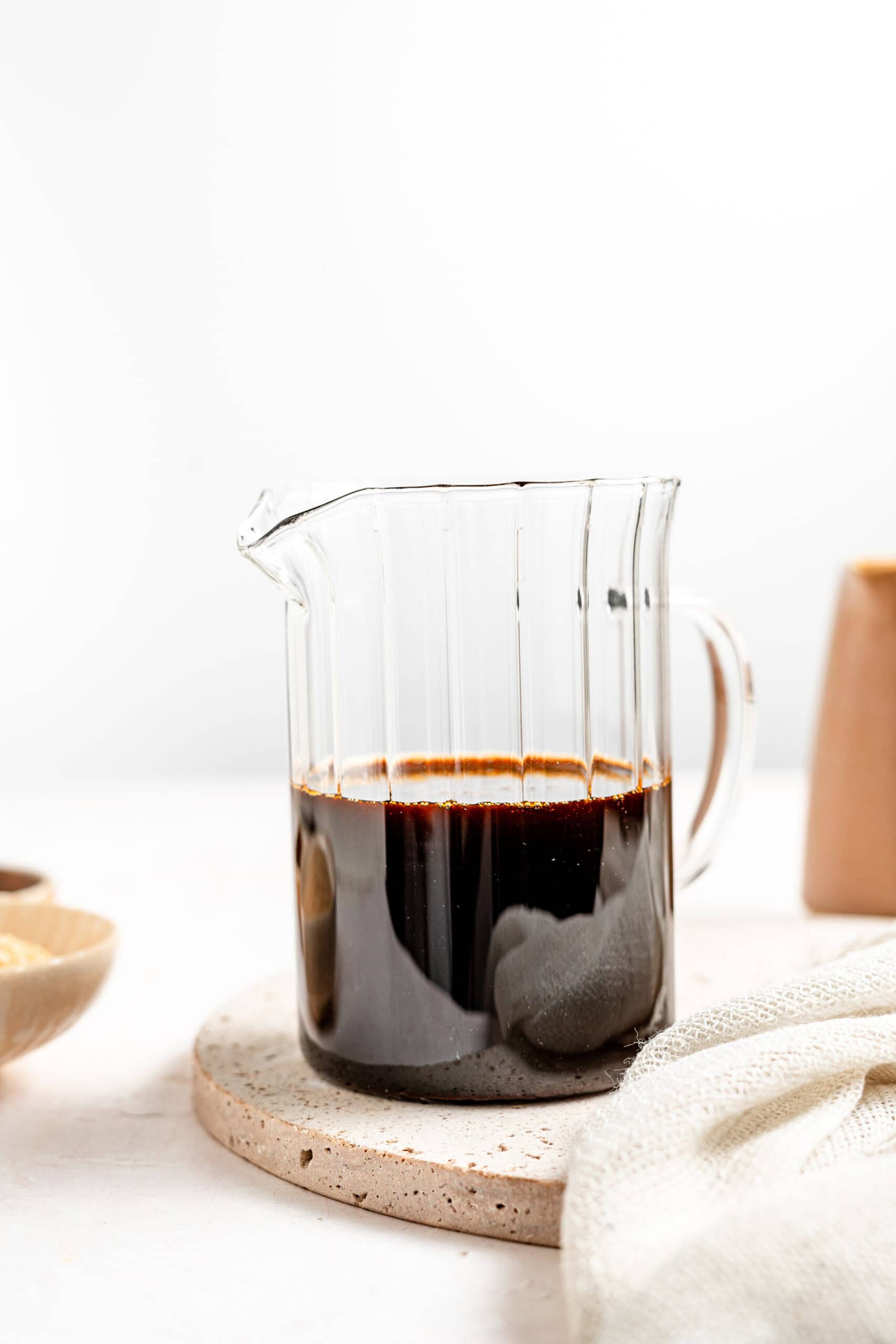
At a Glance: Times and Yield
| Prep | Cook | Cool | Total | Makes |
|---|---|---|---|---|
| 5 minutes | 12 minutes | 30 minutes | 47 minutes | 1 cup (240 ml) |
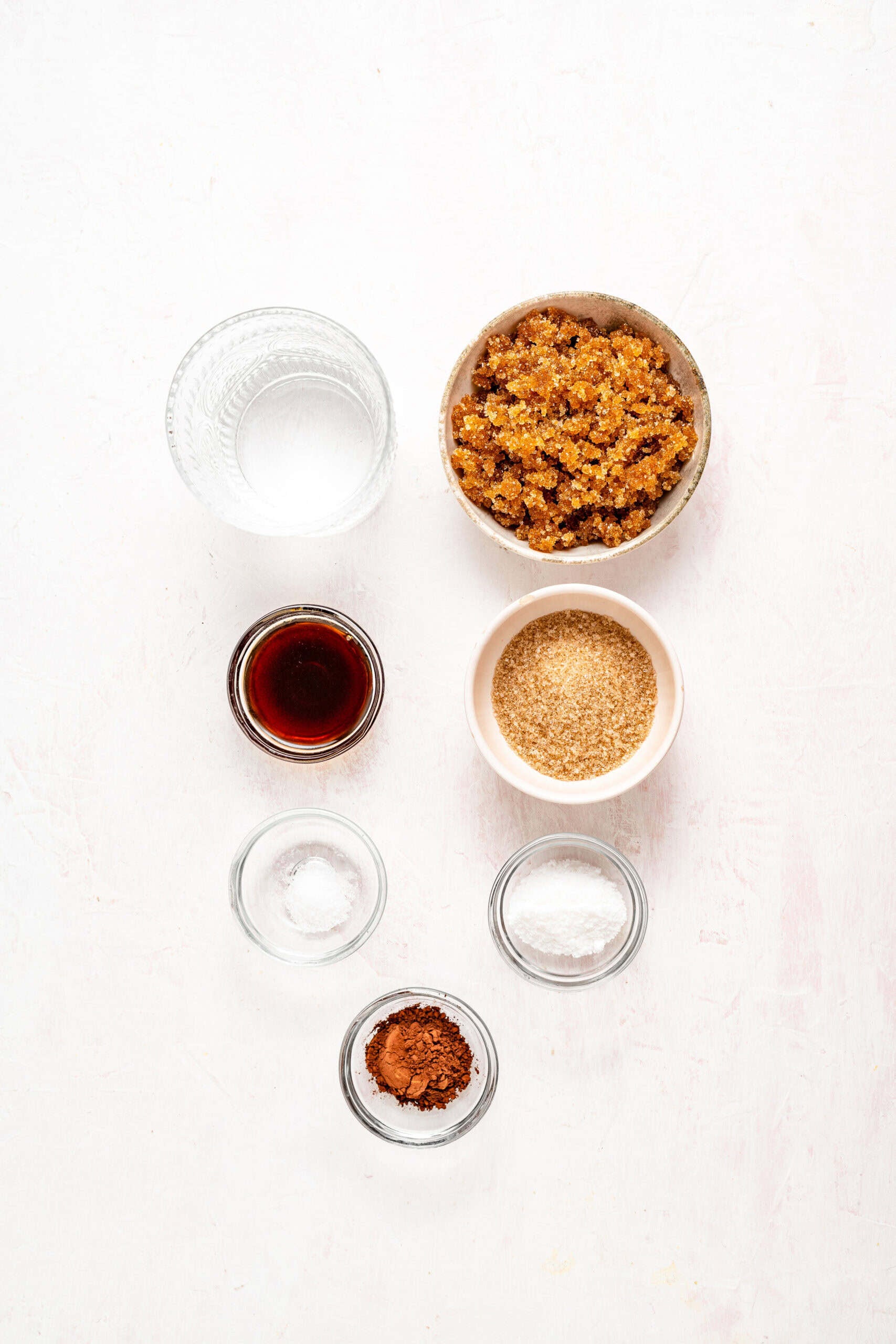
Ingredients for Kuromitsu
Traditional Version with Kurozato
- Okinawan kurozato: the unrefined black cane sugar that gives kuromitsu its real identity, all smoke, minerals, and gentle bitterness. Buy it in chunks or powder from a Japanese grocer.
- Water: the only liquid here, there to dissolve the sugar and control how thick the finished syrup turns out.
- Fine sea salt: just a pinch, but it sharpens the sugar and keeps the syrup from tasting flat and one note.
Brown Sugar Pantry Version
- Dark muscovado sugar: the wet, sticky kind does the heavy lifting, standing in for kurozato with its deep toffee character.
- Dark brown sugar: rounds out the muscovado and keeps the syrup from turning too bitter or too dense.
- Blackstrap or unsulphured molasses: the secret weapon that carries the mineral depth kurozato gives for free. Please do not skip it.
- Water and fine sea salt: same job as in the traditional version, dissolving the sugar and balancing the sweetness.
Optional: My Favourite Extras That Add a Little Magic
- Dutch process cocoa or instant espresso: a tiny amount in the brown sugar version pushes the flavor much closer to true kuromitsu, adding shadow without making it taste like chocolate or coffee.
- Wasanbon sugar: a finishing pinch stirred in at the end gives the syrup a soft shine and a slightly drier, more refined finish.
Substitutions: Smart Ingredient Swaps That Still Taste Amazing
- No muscovado: use all dark brown sugar plus an extra ½ teaspoon of molasses, though the syrup will read a touch lighter.
- No molasses at all: honestly, make a different syrup that day, because without it the brown sugar version loses the very thing that makes it taste like kuromitsu.
- Want it vegan: good news, every version here already is, since there is no honey or dairy anywhere in the pan.
How to Make Kuromitsu Step by Step
- If your kurozato comes in solid chunks, chop it roughly so it dissolves evenly. For the brown sugar version, simply measure everything out and line it up by the stove.
- Tip your chosen sugars, the water, and a pinch of salt into a small heavy bottomed saucepan, adding the cocoa or espresso now if you are using it. Set the pan over medium low heat.
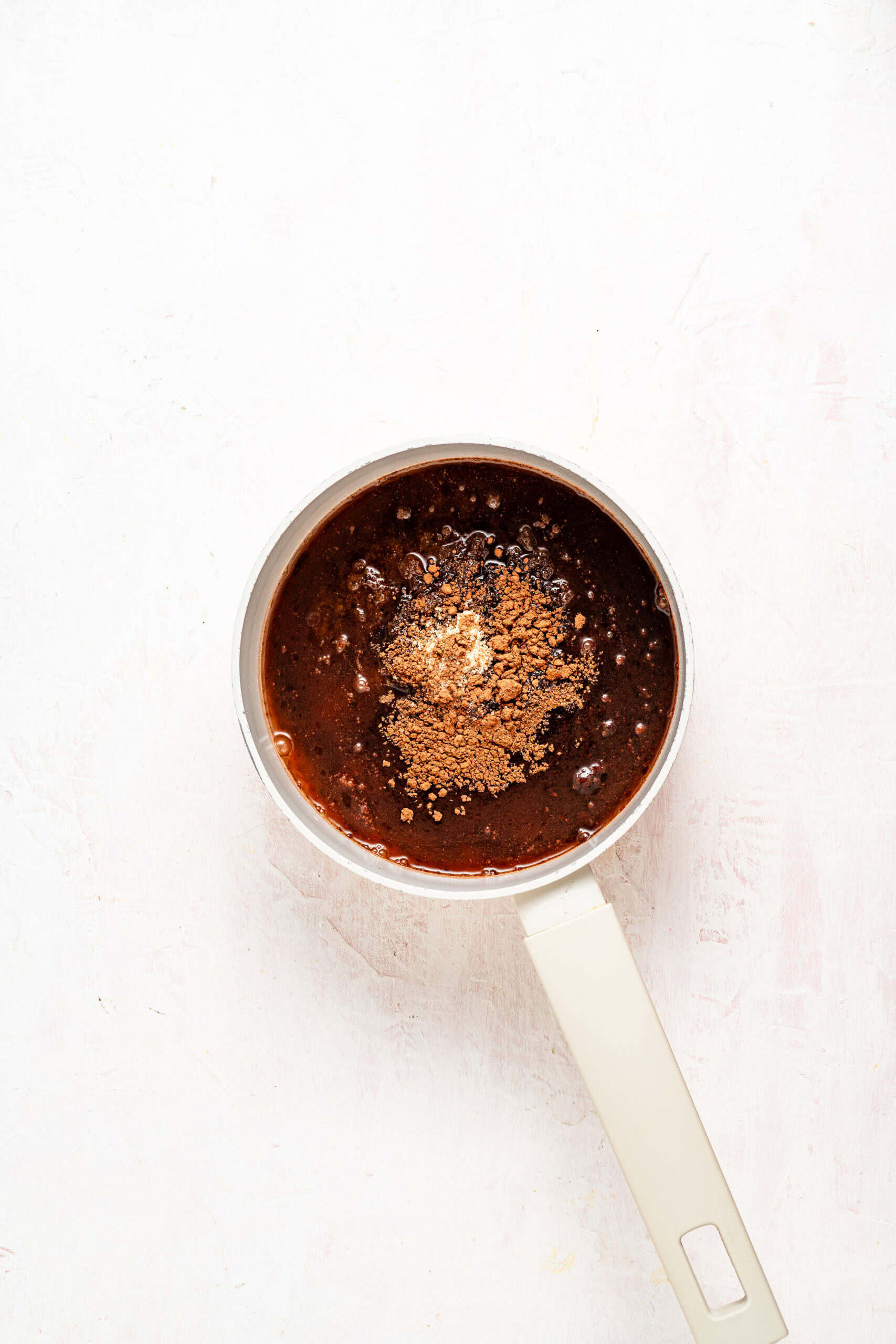
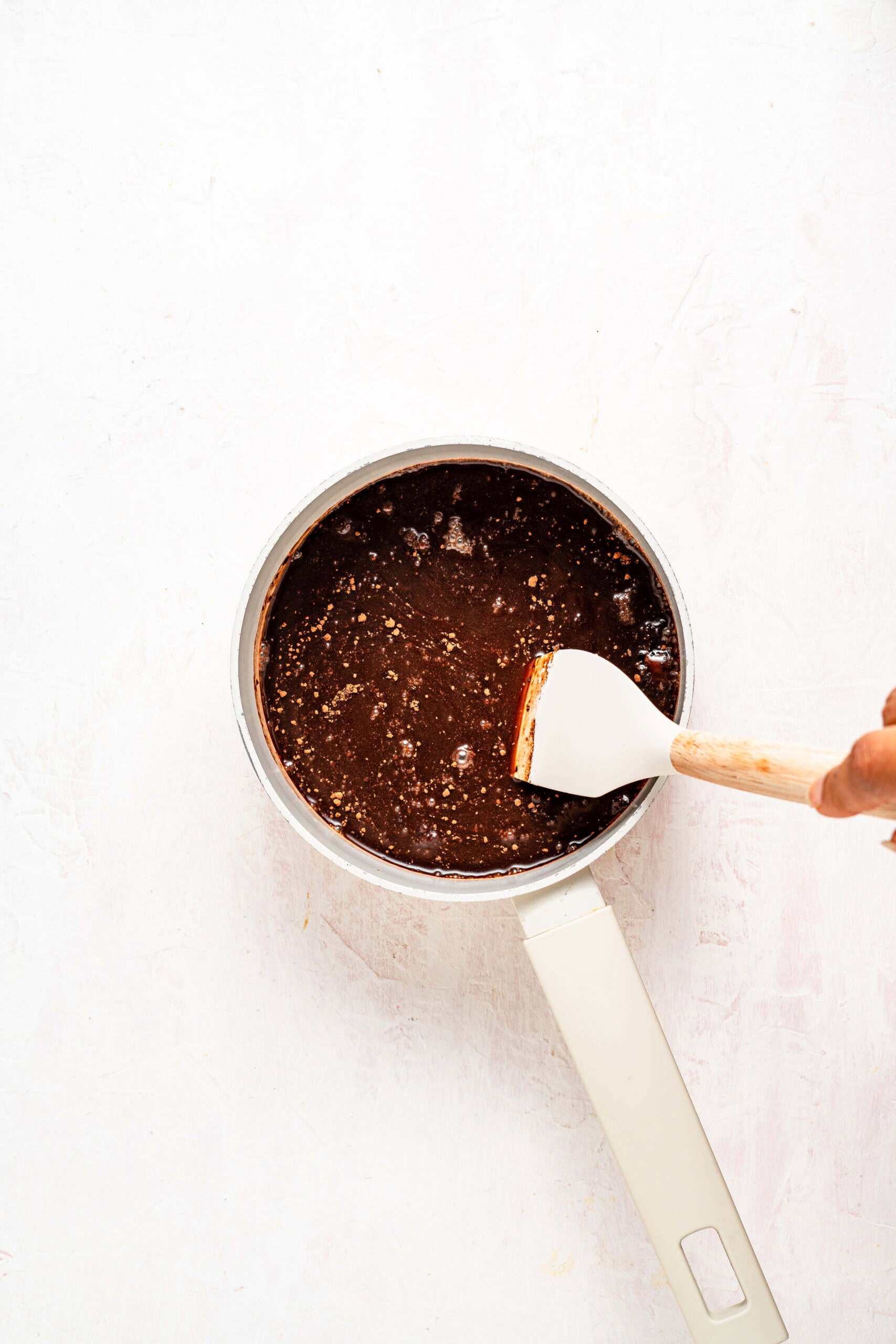
- Stir constantly with a heat safe spatula until every grain dissolves, about 3 to 4 minutes for kurozato or 2 to 3 minutes for the brown sugar version. The liquid should look like very dark coffee.
- Bring it up to a gentle simmer, just small bubbles around the rim and not a rolling boil. Now stop stirring and let it cook for 8 to 12 minutes, watching as it thickens and darkens.
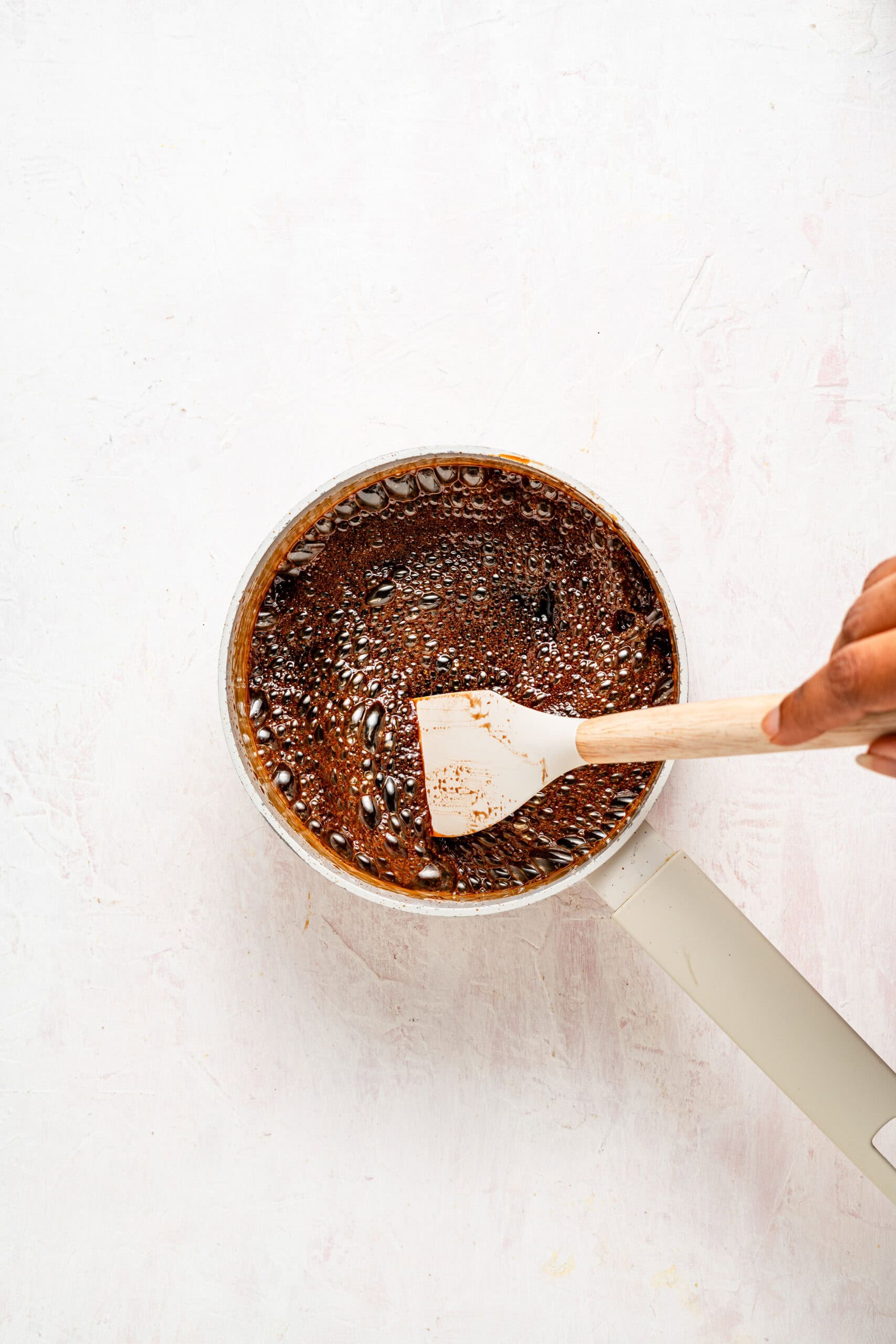
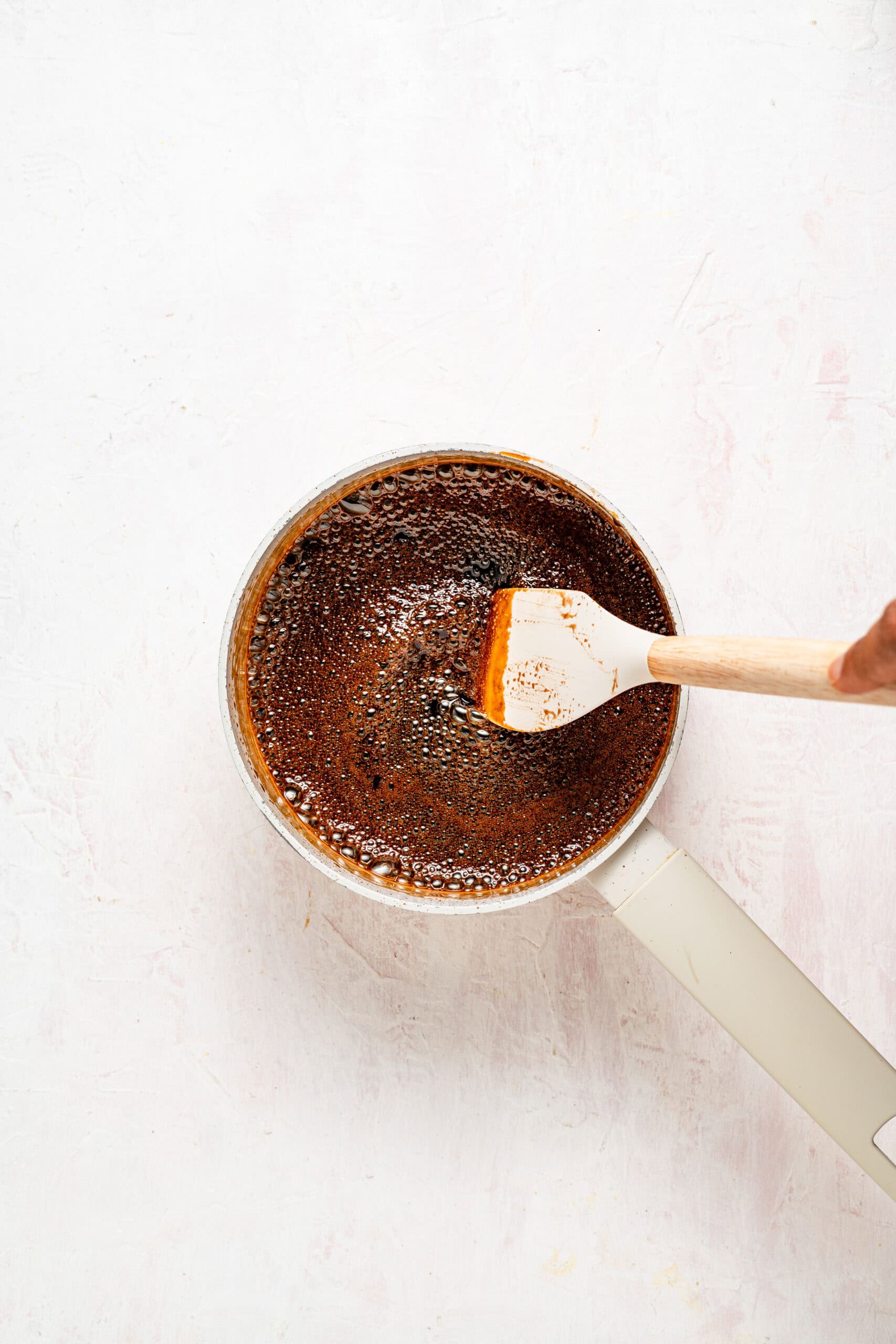
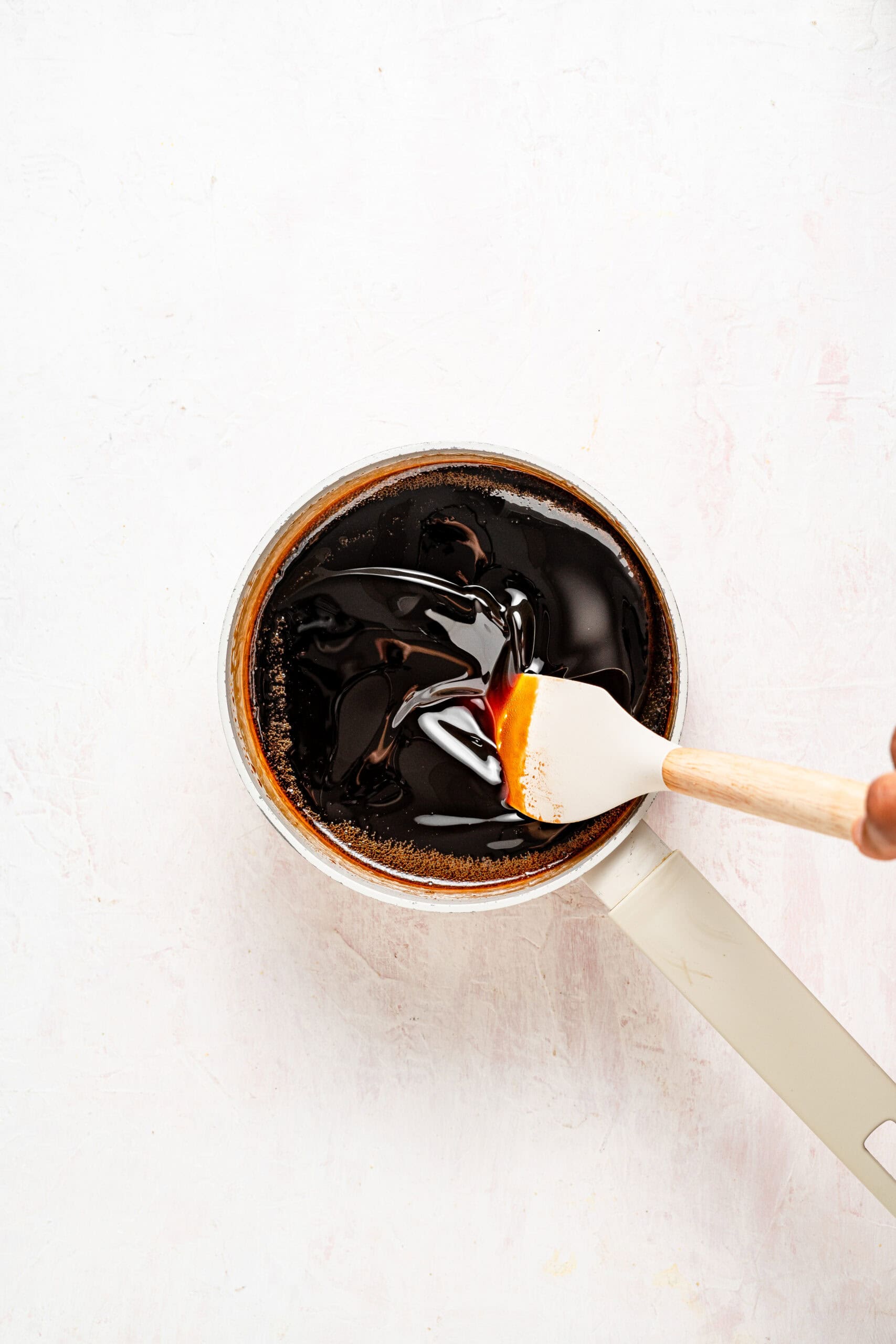
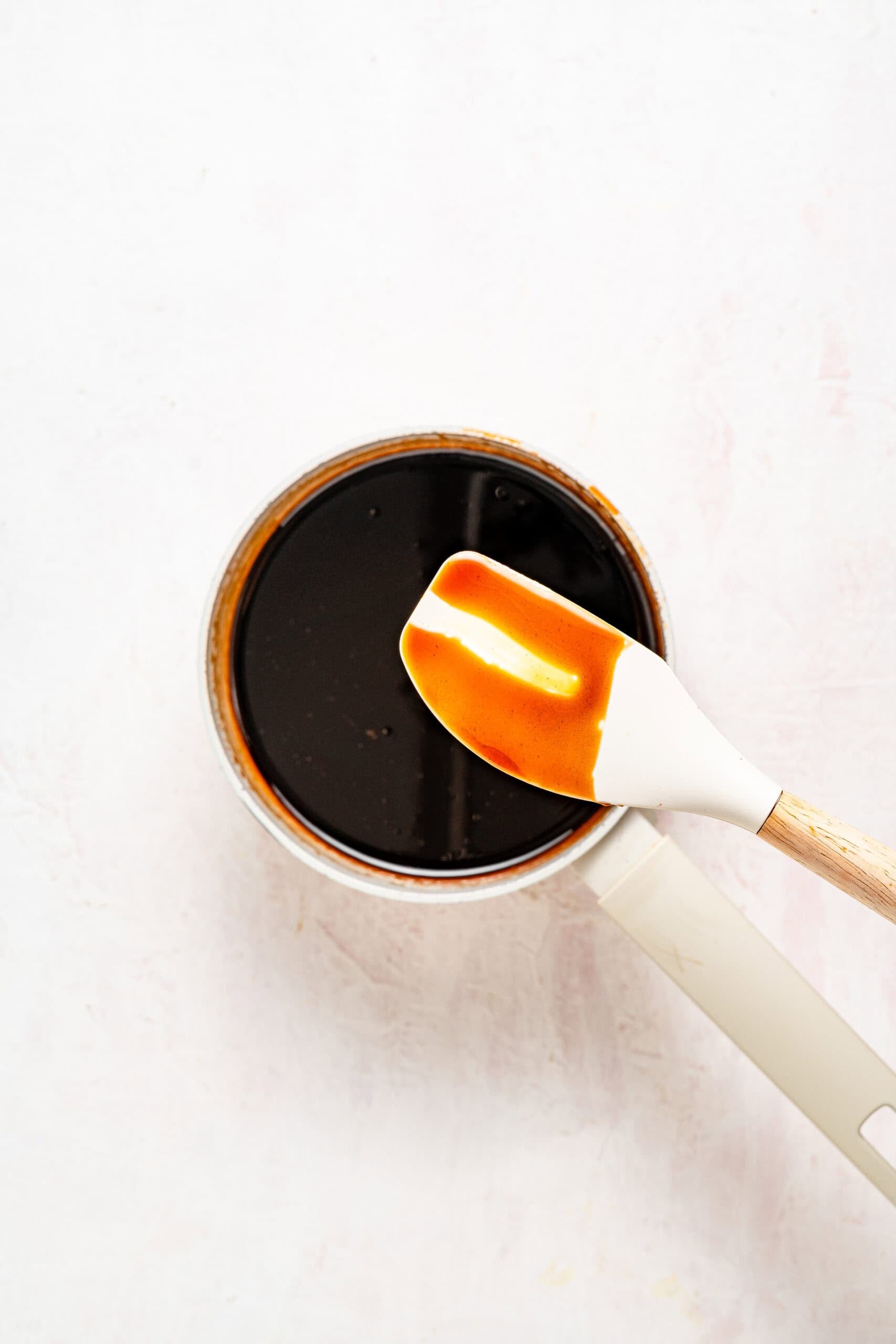
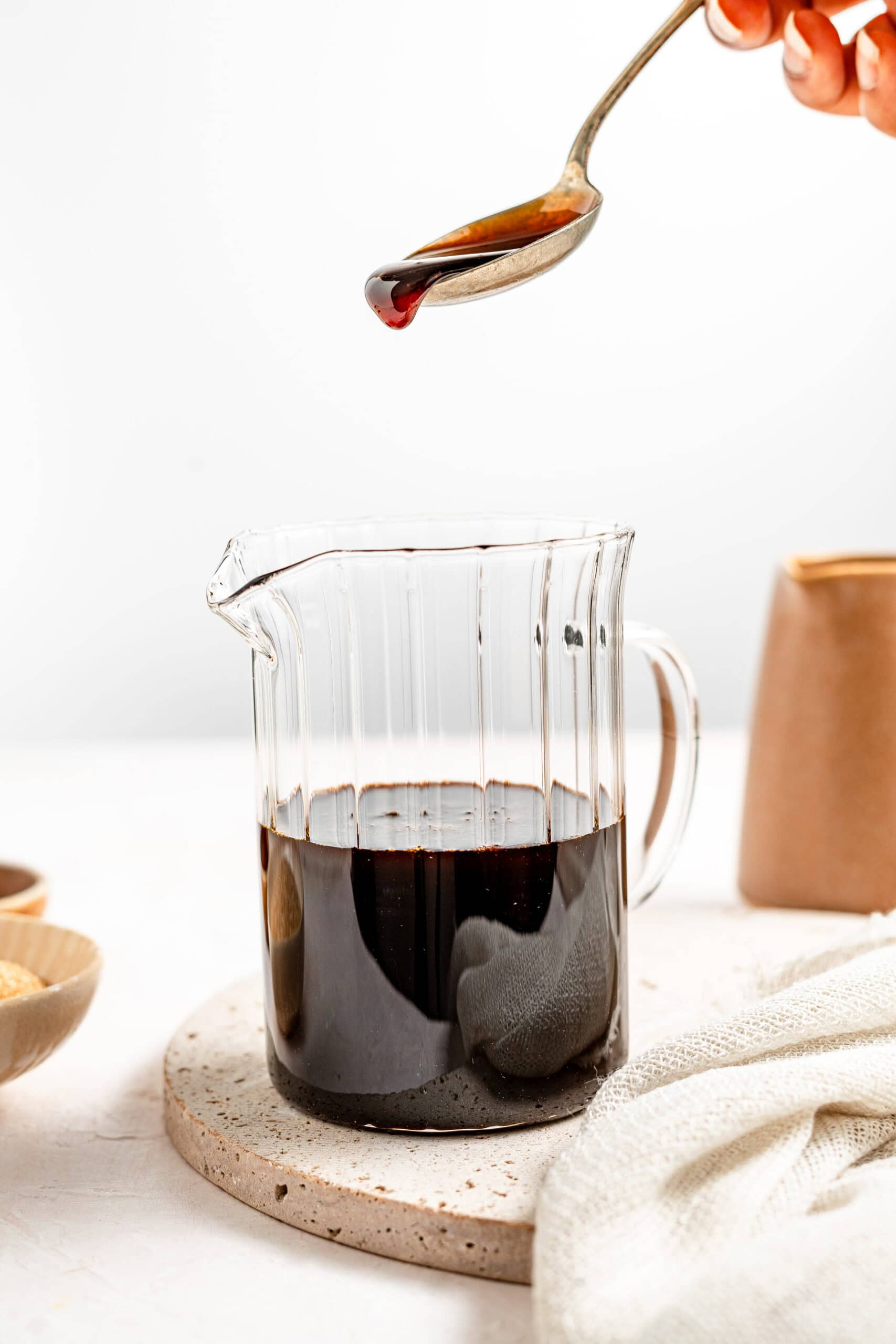
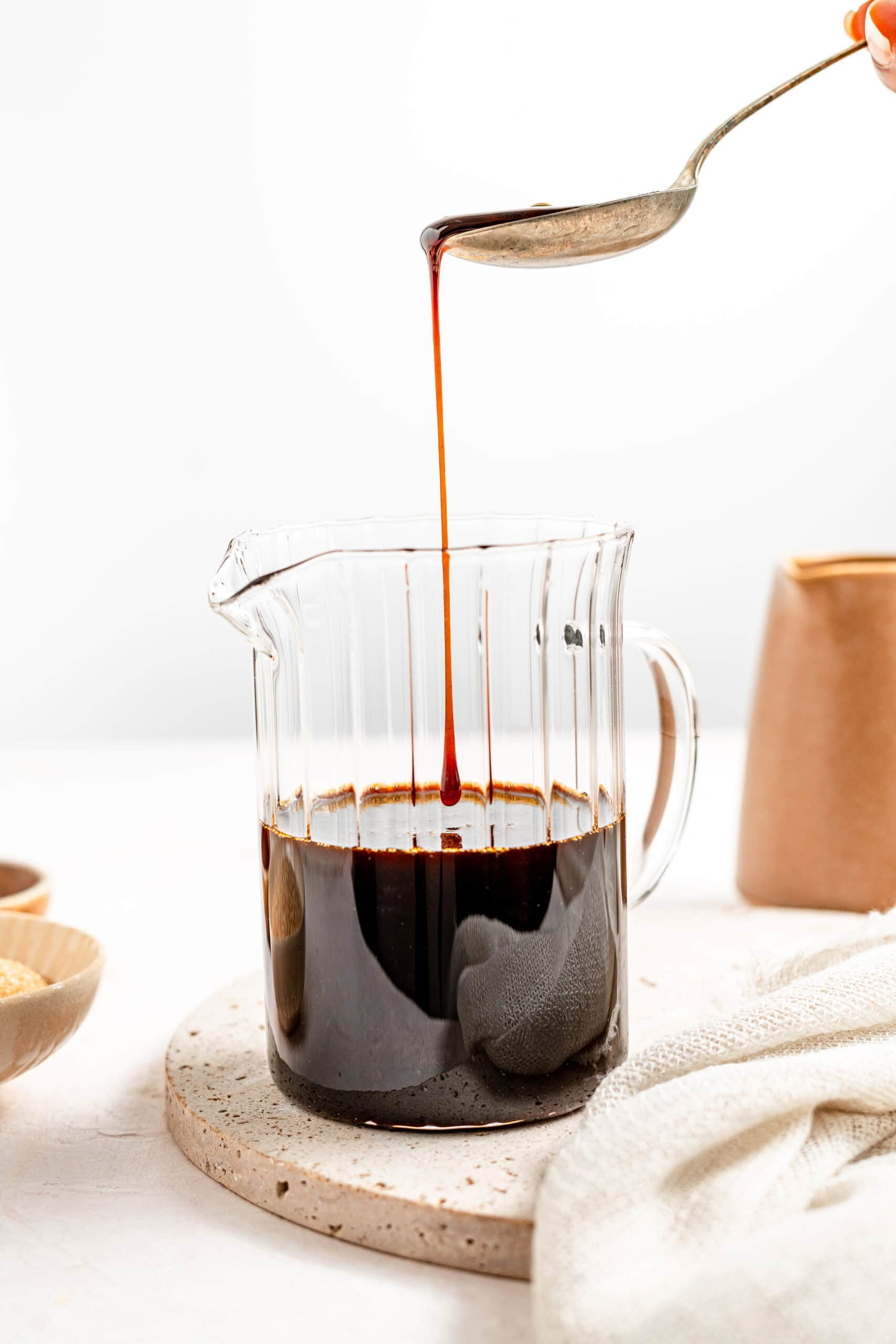
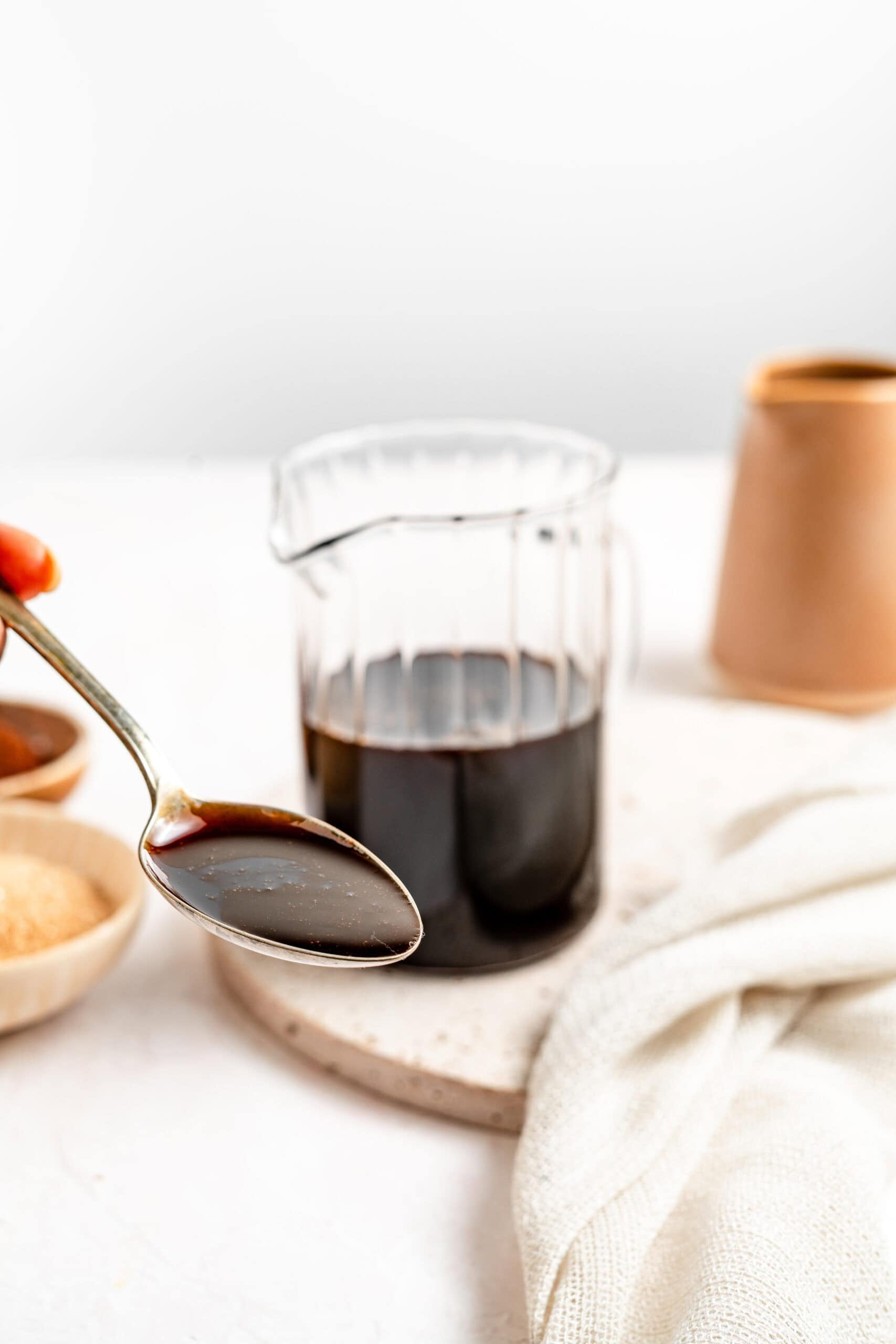
- Test for doneness by lifting the spatula and letting a few drops fall back. The syrup is ready when it runs in a thick stream and coats the back of the spatula, and a finger drawn through that coating leaves a line that holds for 1 to 2 seconds. Remember to pull it slightly thinner than you want, because it firms up as it cools.
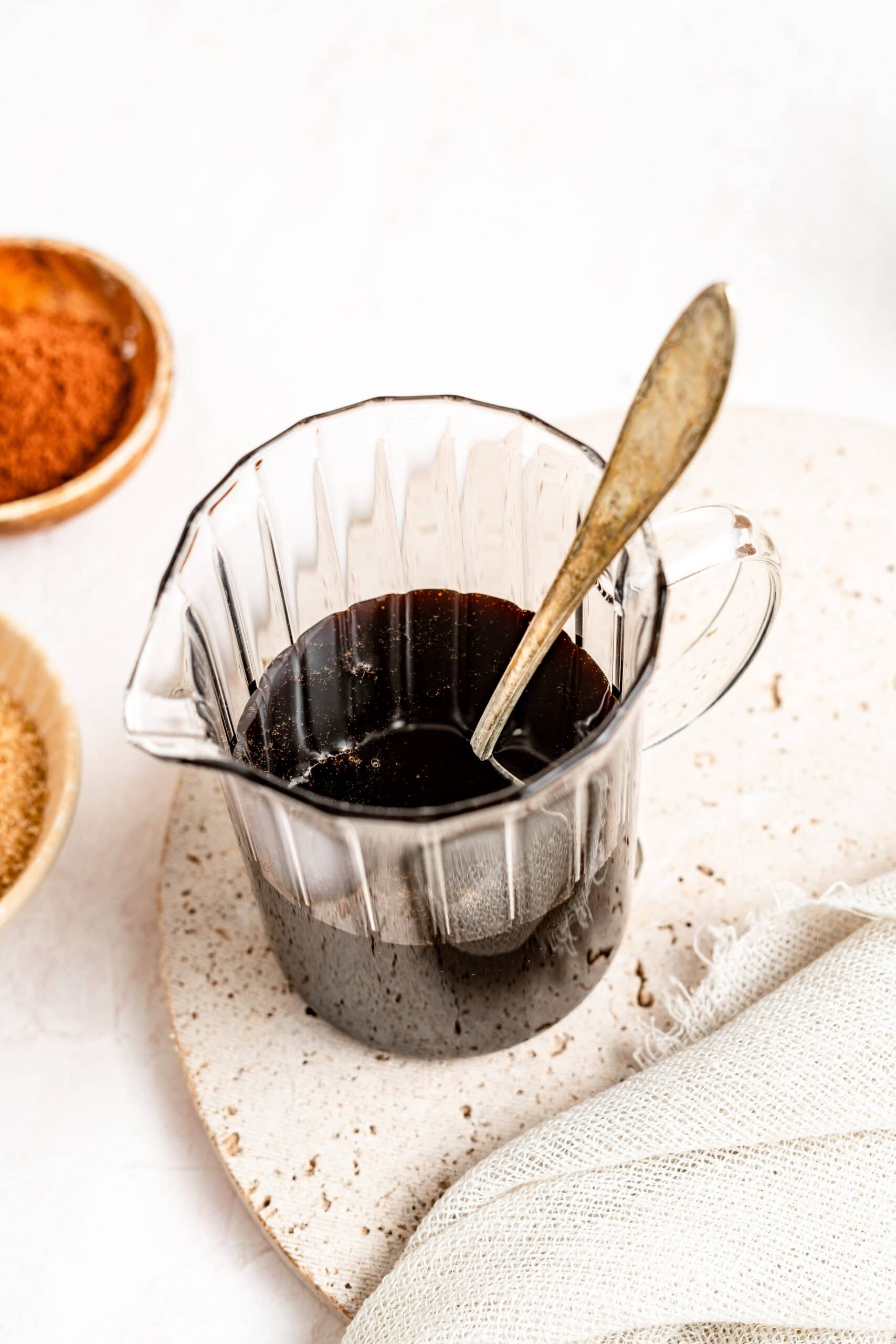
- Take the pan off the heat, stir in the wasanbon if using, then let it sit for 20 minutes before straining through a fine sieve into a clean jar. Cool it fully before sealing and refrigerating.
Troubleshooting Your Kuromitsu
| What happened | Why | How to fix it |
|---|---|---|
| Syrup is watery once cooled | You pulled it off heat too soon | Return it to a gentle simmer and cook a few more minutes, then retest the coat |
| It set into a hard block in the fridge | Overcooked and crystallized | Warm the jar in hot water and stir in 1 to 2 teaspoons of water to loosen |
| Gritty texture | Sugar did not fully dissolve before simmering | Strain it now, and next time keep stirring on low until completely smooth |
| Tastes flat or just sweet | Not enough depth in the sugar | Add the molasses and a pinch more salt, or switch to true kurozato |
My Best Tips for Perfect Kuromitsu
Trust the Spoon, Not the Clock
Every stove, pan, and batch of sugar behaves a little differently, so the timer is only a rough guide. The coat test is the real measure. Once you have made it twice, your eye will know the exact moment the stream thickens.
Stop Early on Purpose
This is the lesson that took me three batches to learn. Hot syrup always looks thinner than the cold syrup you will actually use. Pull the pan when it is just slightly looser than your ideal, and the fridge will do the rest.
The first time I let kuromitsu cool all the way before judging it, I finally understood why mine kept turning out wrong. Cold is the only honest test.
Variations to Try
Coffee Kuromitsu
Stir in an extra ½ teaspoon of instant espresso for a grown up syrup that is wonderful over vanilla ice cream or swirled into iced milk.
Matcha and Hojicha Sweetener
A spoonful of kuromitsu sweetens a latte beautifully without the chalkiness of plain sugar. It is one of my favourite ways to round out a bitter cup, and it plays especially well with the bolder drinks in my collection of matcha recipes.
Ginger Kuromitsu
Drop two coins of fresh ginger into the simmer and fish them out before straining. The warmth is lovely in winter over warm mochi.
Serving Suggestions
Over Mochi and Soft Desserts
The classic pairing is warabi mochi with kinako, and the syrup is just as good over any chewy rice cake. If you are new to that world, my guide to injeolmi, the roasted soybean mochi, is a gentle place to start.
On Ice Cream and Pancakes
Pooled over a scoop of no churn coconut ice cream it is honestly hard to beat, and a slow drizzle over a stack of my fluffy Japanese souffle pancakes is the brunch I make when I want to show off.
As a Glaze and a Drizzle
Brush it over a warm souffle castella cake for shine and depth, or thin it slightly and spoon it over a bowl of mochi ice cream for an easy anmitsu feeling at home.
How to Store Kuromitsu
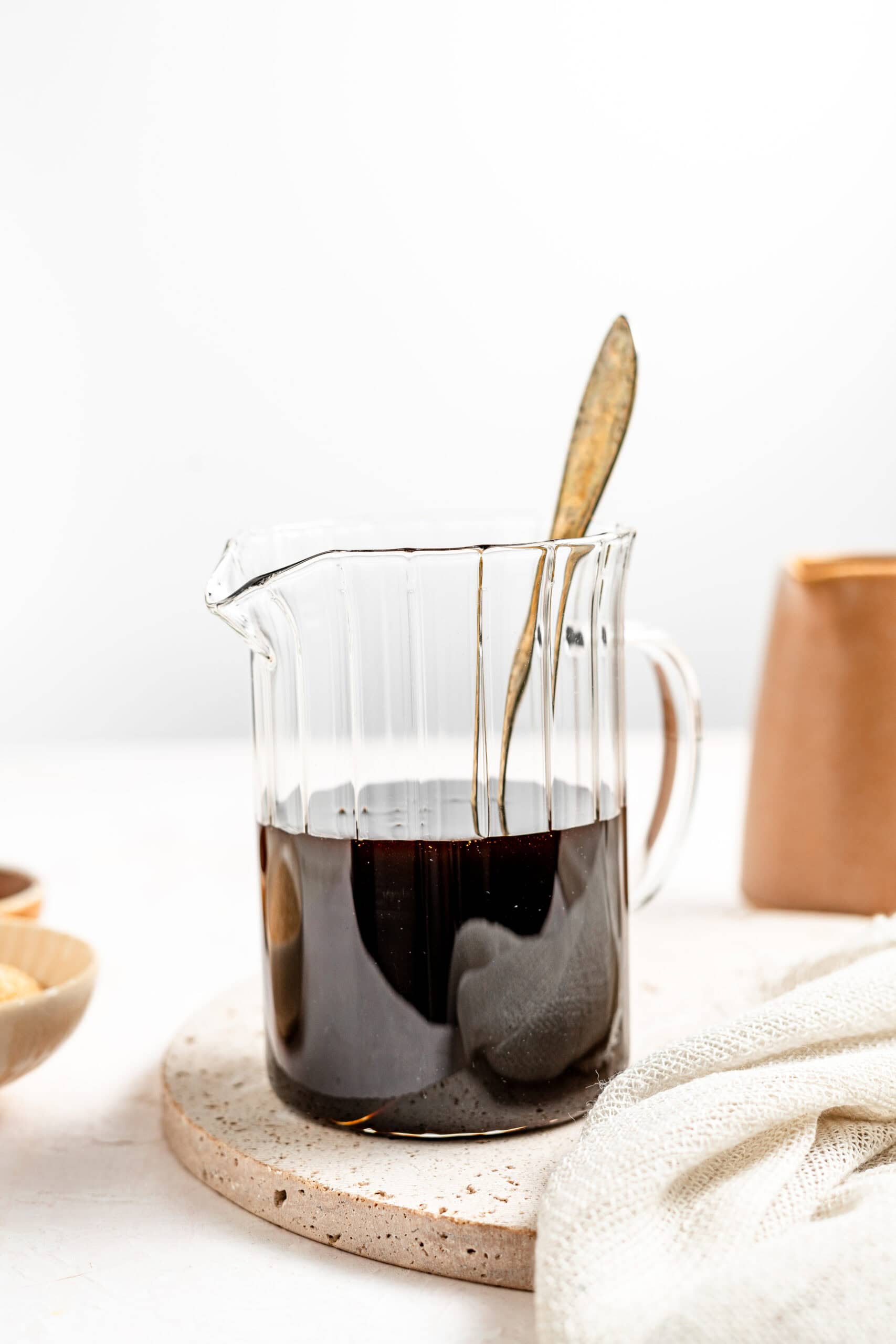
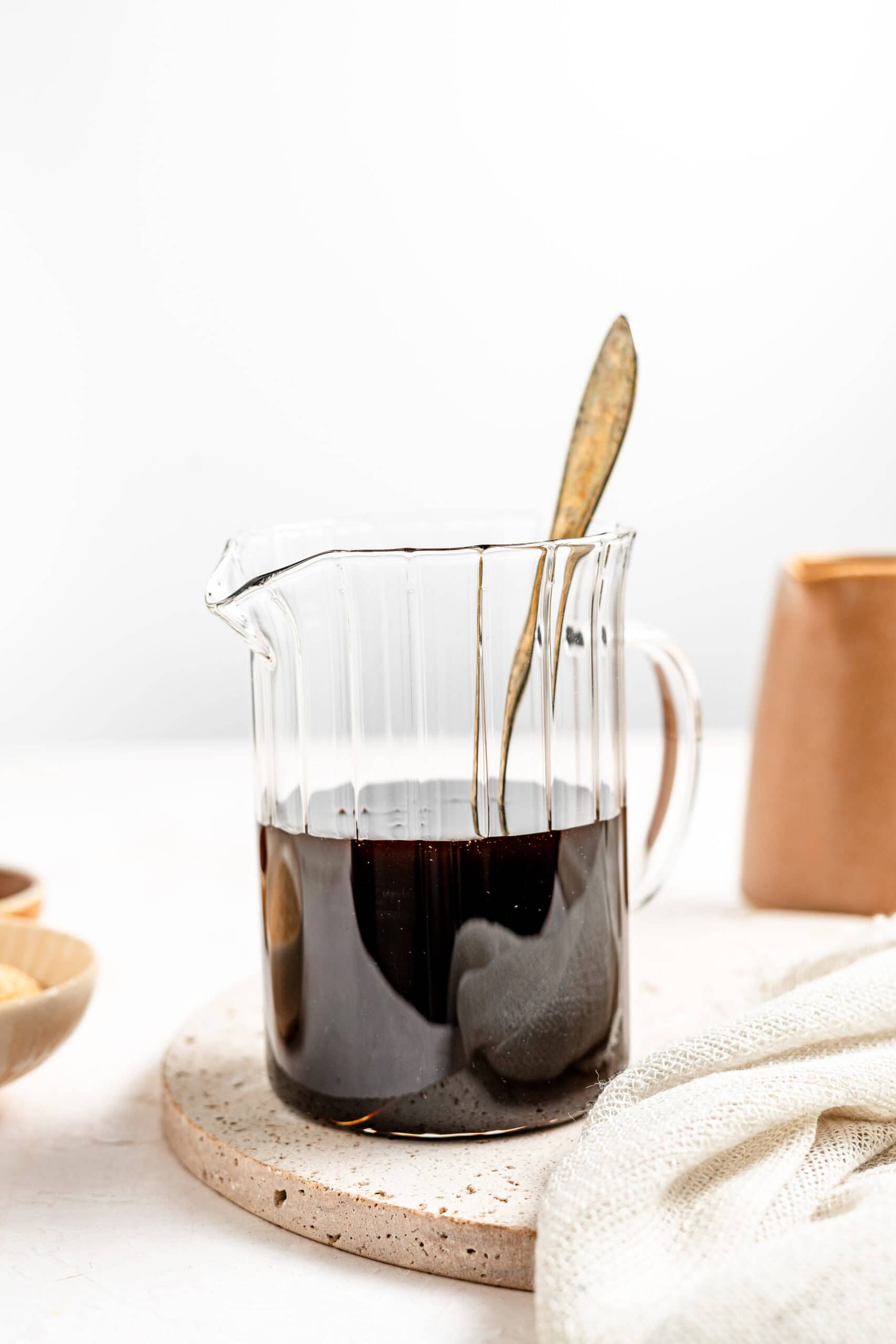
Keep kuromitsu in a sealed glass jar in the fridge, where it stays good for about a month. If it thickens too much to pour, set the jar in a bowl of hot water for 5 minutes and it loosens right back up. I do not recommend freezing it, since the texture goes grainy and you gain nothing over simply keeping it chilled.
Common Mistakes to Avoid
Rushing the Simmer
A hard boil scorches the sugar and makes the syrup taste burnt and sharp. Keep it at a lazy simmer the whole way through.
Skipping the Molasses
In the pantry version the molasses is not optional flavoring, it is the entire point. Without it you have brown sugar water, not kuromitsu.
Judging It Hot
If you decide it is done while it is still steaming, you will almost always end up with syrup that is too thin. Let a test spoonful cool for a minute before you commit.
Frequently Asked Questions
What is kuromitsu made of?
Traditional kuromitsu is just Okinawan black sugar (kurozato), water, and a pinch of salt simmered into a syrup. My pantry version swaps in dark muscovado, dark brown sugar, and molasses when kurozato is hard to find.
What does kuromitsu taste like?
It tastes like a deeper, less sweet molasses syrup with a faint smoky, mineral edge and a touch of bitterness. That bitterness is what stops it from feeling cloying.
What is the difference between kuromitsu and kurozato?
Kurozato is the solid unrefined black sugar. Kuromitsu is the pourable syrup you make by dissolving and simmering that sugar with water and salt.
How long does kuromitsu keep?
Stored in a sealed jar in the fridge it stays good for about a month. Warm the jar in hot water for a few minutes if it thickens too much to pour.
What do you use kuromitsu for?
Drizzle it over warabi mochi with kinako, shaved ice, anmitsu, vanilla or coconut ice cream, and souffle pancakes, or stir a spoonful into a matcha or hojicha latte.
Can I make kuromitsu without kurozato?
Yes. The brown sugar and molasses version is the closest pantry approximation. It tastes like a very good complex caramel syrup, and the molasses is what gives it that signature depth.
Let’s Get Cooking
If you liked this recipe make sure to leave me a comment and rating down below. I’d love to know how it went! Also, don’t forget to tag me on Instagram @catherine.desserts.
Follow me on Facebook, Pinterest, YouTube, and TikTok for more of my baking creations and updates!
Kuromitsu (Japanese Black Sugar Syrup)
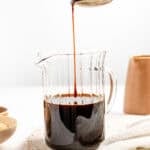
Kuromitsu is a glossy Japanese black sugar syrup with deep molasses notes. Three ingredients, about 12 minutes on the stove, and it keeps for a month in the fridge.
- Prep Time: 5 minutes
- Cooling: 30 minutes
- Cook Time: 12 minutes
- Total Time: 47 minutes
- Yield: 1 cup (240 ml) 1x
- Category: Dessert Sauce
- Method: Stovetop
- Cuisine: Japanese
Ingredients
Traditional version with kurozato:
- 150 g Okinawan kurozato (unrefined black cane sugar), roughly chopped if in chunks
- 120 ml (1/2 cup) water
- 1 small pinch fine sea salt
Brown sugar pantry version:
- 120 g dark muscovado sugar (the wet, sticky kind)
- 30 g dark brown sugar
- 1 tsp blackstrap or unsulphured molasses
- 120 ml (1/2 cup) water
- 1 small pinch fine sea salt
- Optional: 1 tsp Dutch process cocoa powder or 1/2 tsp instant espresso, for depth
Optional finishing (either version):
- 1 tsp wasanbon sugar, for shine and a slightly drier finish
Instructions
- If using kurozato in solid chunks, roughly chop it so it dissolves evenly. The brown sugar version needs no chopping.
- Combine your chosen sugars, the water, and salt in a small heavy bottomed saucepan. If you are using the optional cocoa or espresso with the brown sugar version, add it now. Set over medium low heat.
- Stir constantly with a heat safe spatula until the sugar fully dissolves, about 3 to 4 minutes for kurozato or 2 to 3 minutes for the brown sugar version. The mixture will look like dark coffee.
- Bring to a gentle simmer with small bubbles around the edges, not a hard boil. Cook without stirring for 8 to 12 minutes (7 to 10 minutes for the brown sugar version), until the syrup thickens visibly.
- Test for doneness: lift the spatula and let a few drops fall back into the pan. The syrup is ready when it falls in a thick stream and coats the back of the spatula. Drawing a finger through the coating should leave a line that holds for 1 to 2 seconds. Pull it off heat slightly thinner than you want, since it thickens as it cools.
- Remove from heat. If using wasanbon, sprinkle it over the surface and stir to dissolve.
- Cool in the pan for 20 minutes, then strain through a fine mesh sieve into a clean glass jar or squeeze bottle.
- Cool fully to room temperature before sealing and refrigerating.
Notes
- Real Okinawan kurozato gives the most authentic mineral, smoky, slightly bitter flavor. Look for Tokunoshima, Tarama, or any Okinawan labeled kurozato.
- The brown sugar version with molasses (and optional cocoa or espresso) is the closest pantry approximation. It tastes like a very good complex caramel syrup. The molasses carries the mineral depth, so do not skip it.
- Trust the visual coat test over the timer. Fresh soft kurozato may need a couple of minutes less, older drier kurozato a couple more.
- If overcooked syrup crystallizes hard in the fridge, warm the jar in hot water and stir in 1 to 2 tsp water to loosen.
- Keeps 1 month refrigerated in a sealed jar. Warm the jar in hot water for 5 minutes to bring it back to a pourable consistency.
Nutrition
- Serving Size: 1 tablespoon